A 200 amp plasma cutter can cut thick steel, but clean cutting and severance are not the same thing. You’ll get the best results when you match amperage, air supply, duty cycle, and torch setup to the plate thickness. In most shop settings, plan for clean production cuts around 3/8–1 in steel, with slower and rougher cuts as you move toward 1-1/2 in. Compare rated cut thickness against real production needs before you choose plasma over oxy-fuel.
Quick Answer
A 200 amp plasma cutter usually works best on steel from 3/8 in to 1 in when you want clean, steady results. It may sever thicker plate near 1-1/2 in, but the cut often slows down and needs more cleanup. Clean, dry air, correct consumables, enough input power, and duty cycle matter as much as amperage.
Key Takeaways
- Use 3/8–1 in steel as the practical clean-cut range for most 200 amp plasma work.
- Treat 1-1/2 in cuts as severance or occasional work unless your machine rates higher.
- Keep air clean, dry, and flowing at the torch to reduce dross and consumable wear.
- Check duty cycle before long cuts because heat buildup can slow shop output.
- Choose oxy-fuel or a higher-capacity plasma system when thick plate becomes routine.
Practical Cutting Limits for 200 Amp Plasma Cutters
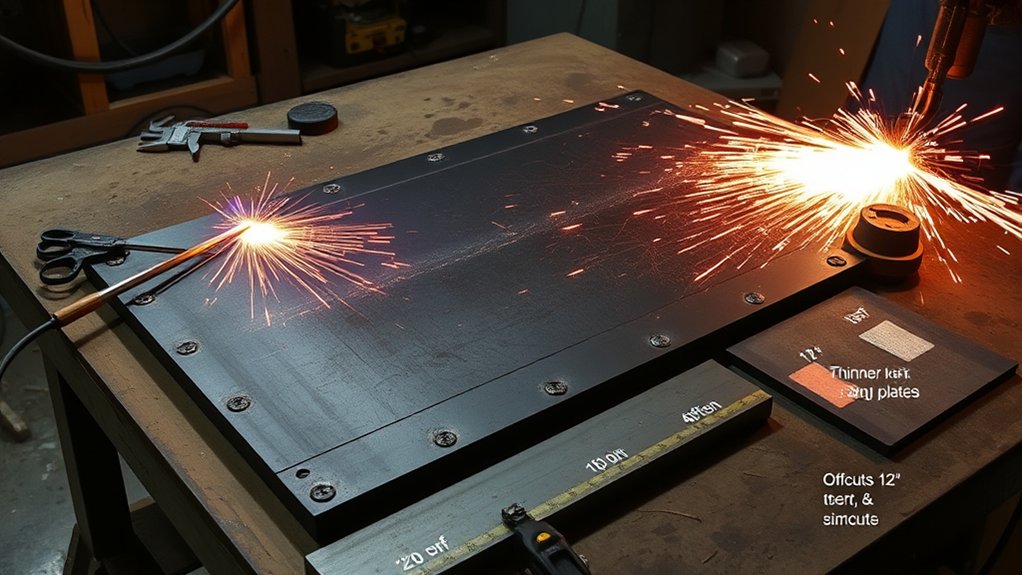
For most 200 amp plasma systems, practical cutting limits center on 3/8–1 in steel for efficient, clean results. One inch usually sits near the top of ideal performance, while 1-1/2 in becomes a marginal cut for many setups. You should plan around this range and confirm results with test cuts and manufacturer charts.
At 3/8–1/2 in, you can reach high travel speeds and cleaner kerfs. By 1 in, you’ll need slower speed, steady torch height, and tighter process control. Past 1 in, especially near 1-1/2 in, expect dross, bevel, and frequent restarts.
Match cutting techniques to the metal type and thickness. Use the right consumables, correct standoff, dry air, and amperage that matches the nozzle rating.
Watch the duty cycle during long cuts near 1 in. Continuous arc time can trigger cool-down periods and reduce output. Higher-strength steel and poor surface conditions can also lower cut quality at the same thickness.
Maintain proper arc voltage and gas flow, and avoid unnecessary torch lead length where possible. Check cut edges against your tolerance, bevel, and kerf needs before you commit to a production run.
Products Worth Considering
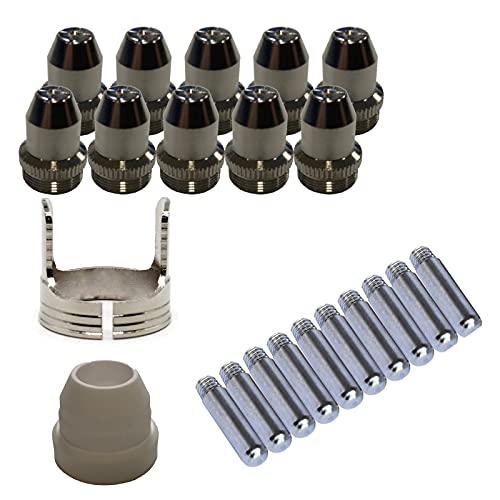
Only Compatible with BROWN Color Lotos LTP5800D , LTP5000D, LTPDC2000D.

⚡【Precision Compatibility】 Exact fit for YESWELDER CUT 55DS Pro & 65DS (2019-2024 models). Replaces OEM# IPT40-55DS/65DS.

[Achieve Precise Cuts] PT31 Plasma Cutting Consumables – Your Essential Tool for Efficient Cutting! Whether you're working with sheet metal, steel, or any other material, superior cutting performance ensure clean, accurate, and smooth cuts.
Recommended Thickness by Application and Material
One clear rule helps with application planning. Target 1/2–3/4 in as the primary production range, reserve 1 in for heavier work, and treat 1-1/2 in as a reduced-quality capability.
For carbon steel, specify 1/2–3/4 in when you need repeatable, low-slag edges. You can use drag or standoff cutting techniques, depending on your torch and consumables. Use 1 in for occasional structural parts when post-cut grinding or cleanup fits the job.
For stainless steel, keep primary work around 1/2–5/8 in to limit heat tint and taper. You can cut 3/4–1 in stainless with slower travel and better setup control.
For aluminum, prioritize 3/8–5/8 in because higher thermal conductivity pulls heat away from the cut. You can cut 3/4–1 in aluminum with careful pierce timing, correct gas flow, and steady travel speed.
Duty Cycle, Air Supply, and Power Requirements
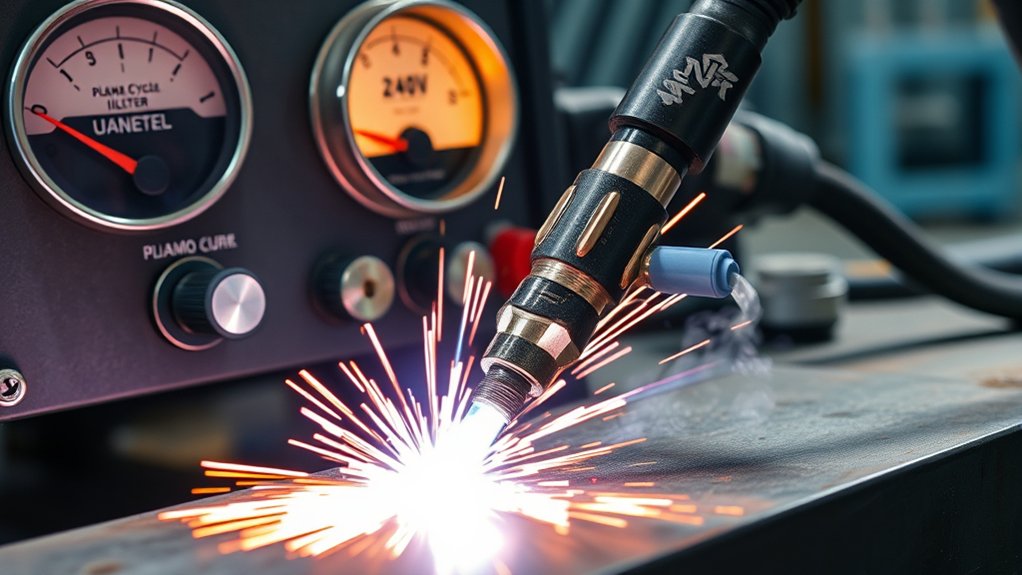
Cutting capacity gets attention, but your uptime and cut quality depend on duty cycle, air supply, and power. Check the duty cycle first because many units rate output at a specific temperature. Plan arc-on time and cooling breaks so you avoid thermal shutdowns.
For air, hold pressure at the torch while air flows, not while the system sits idle. Many plasma setups call for clean, dry compressed air within the machine’s rated pressure and cubic feet per minute range. Moisture and oil can cause double arcs, dross, and fast consumable wear.
Use a dryer, filters, and a compressor that can keep up with the cutter. Match power to the nameplate, including voltage, phase, breaker size, cord length, and grounding. Poor connections can cause voltage sag, weak arcs, and nuisance trips.
Warning: High-amperage plasma cutting creates heat, sparks, fumes, and electric shock risk, so follow your machine manual and local electrical code.
| Parameter | Target/Action |
|---|---|
| Duty cycle | Check machine rating and manage heat |
| Air pressure | Set pressure under flow at the torch |
| Air quality | Use clean, dry air with dryer and filters |
| Power | Match voltage, breaker, cord, and grounding to the nameplate |
Model Comparisons and Recommended Cuts
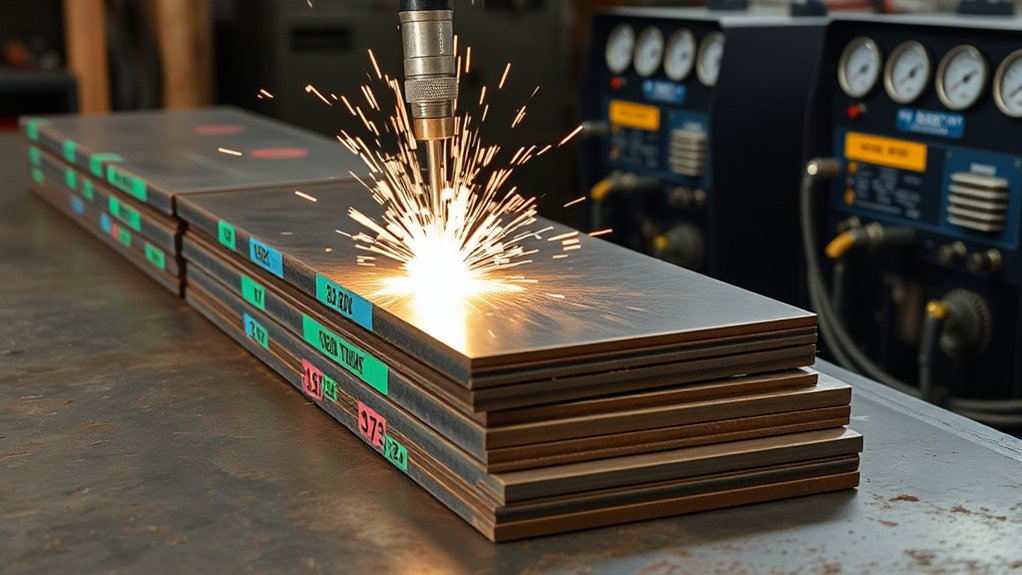
When you match plasma models to target thickness, use manufacturer-rated recommended cuts instead of severance ratings alone. Recommended cut ratings give you a better view of speed, edge quality, and repeatable shop performance.
For heavy-duty work, a Powermax125-class machine can act as a useful benchmark because it targets thicker plate than smaller shop units. Machines in this class can keep better cut speed, squareness, and kerf quality on plate where lower-amperage cutters slow down.
For mid-heavy work, a Miller Spectrum 875-class cutter fits many fab shop and light industrial needs. A Lincoln Tomahawk 1000-class machine can suit work around the 3/4 in range when the setup matches the material.
For 1/2–5/8 in plate, a Hypertherm Powermax45 XP-class cutter can work well when you use the right consumables and settings. Lightweight jobs suit compact machines such as the Miller Spectrum 375 X-Treme class, but you must confirm compressor needs before buying.
- Match amperage to thickness, such as about 60–90 A for 1/2–5/8 in, 90–120 A for 3/4–7/8 in, and 125–200 A for thicker plate.
- Prioritize duty cycle at your target thickness so you can sustain cuts without frequent thermal trips.
- Verify air quality and flow to support cut speed, dross control, and edge angularity.
Pro tip: Run a test coupon in the same material before you cut finished parts or customer work.
Products Worth Considering

2 IN 1 Multi-functional Design:FEMEROL integrates 60A plasma cutter and 200A MMA stick welder in one unit, supporting plasma cutting and MMA welding dual modes to meet various working needs. It works perfectly for stainless steel, alloy steel, mild steel, copper, aluminum and most common metal materials.

【HF Non-Touch Pilot Arc Function】The HIZONE 65A plasma cutter features a pilot arc function. It utilizes a high-frequency non-touch arc starting mode. The torch head does not need to touch the metal plate, reducing energy consumption during non-cutting work, minimizing electrode burning, and extending service life.

200A 7 PROCESS WELDER: The RB360 merges gas MIG, flux core, stick, LIFT TIG, plasma cutting, spot welding, and aluminum welding, a space saving solution for weekend DIYers and everyday ranch maintenance. (Note: Lift TIG torch requires separately purchase.)
When to Choose Oxy-Fuel or Higher-Capacity Machines
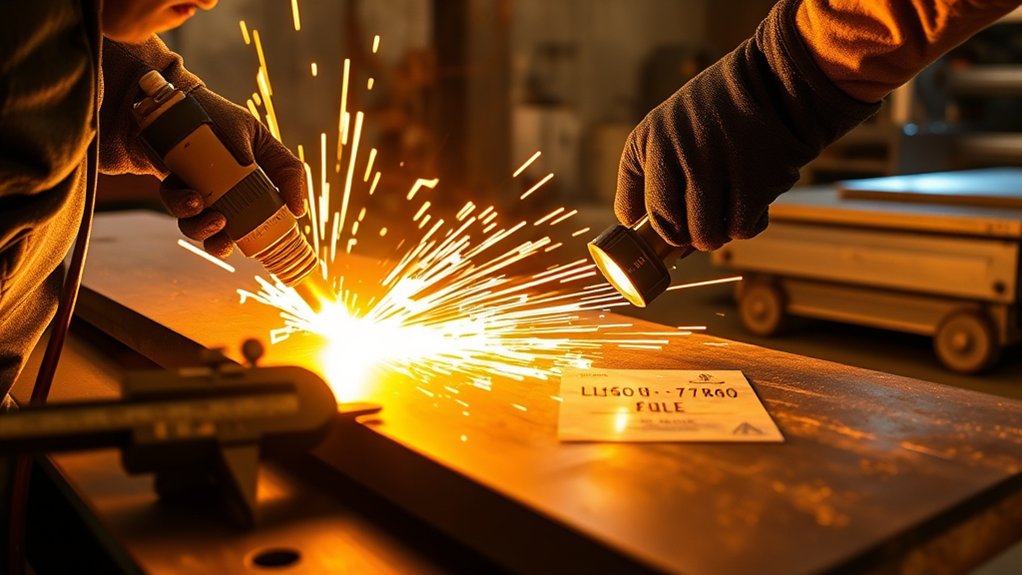
For plate beyond 1 in, consider oxy-fuel or a higher-capacity plasma source if you need speed, edge quality, and steady duty cycle. Standard shop plasma can still work, but it may demand slower travel and more cleanup.
At 3/4–1-1/2 in, step up to a system that matches the cut class. Higher-amperage systems hold cut speed and kerf consistency better than 100–150 A units at the top of their range.
Recognize plasma cutter limitations. Even a heavy shop unit may sever 1-1/2 in, but you should expect slower travel, more dross, and shorter consumable life near the top end.
Choose oxy-fuel for thick carbon steel when the job favors heavy-plate productivity over narrow kerf width. Oxy-fuel can also suit jobs where preheat, heat input, and straight-cut bevels fit the part requirements.
Use plasma when you need tighter tolerances and cleaner edges on thinner stock. Use oxy-fuel when thicker carbon steel, simple torch maintenance, and heavy-section cutting matter more.
Match amperage, gas selection, and torch height to the thickness. This helps you meet production-rate, edge-squareness, and duty-cycle targets.
Common Mistakes That Reduce Cut Quality
Many poor cuts come from setup problems, not from a weak machine. Wet air, worn consumables, wrong standoff, poor work clamp contact, and fast travel can all create bevel or heavy dross.
Check the simple items before you blame the cutter. Replace damaged consumables, dry the air, clean the work surface, and confirm the torch height. Then adjust speed and amperage with a test cut.
Frequently Asked Questions
How Does Pierce Capacity Differ From Edge-Start Cutting Capacity?
Pierce capacity runs lower than edge-start cutting capacity because the torch must punch through the full plate first. With an edge start, you begin at the material edge and avoid that first full penetration step. Check manufacturer charts for pierce delay, standoff, duty cycle, and gas flow.
What Consumable Lifespan Should I Expect at 200 Amps?
Consumable life at 200 amps can vary widely because air quality, pierce starts, standoff, travel speed, and operator technique all matter. You’ll get longer life with clean, dry air, correct amperage, steady torch height, and clean starts. Replace tips and electrodes when cut quality drops instead of forcing worn parts to continue.
How Does Torch Lead Length Affect Cut Quality and Voltage Drop?
Longer torch leads can increase voltage drop and make the arc less stable. That can widen the kerf, add dross, and reduce cut quality. Use manufacturer-approved lead lengths, tight connections, and sound cable insulation.
Are CNC Automation Settings Different for 1/2-Inch Versus 1-Inch Cuts?
Yes. For 1 in cuts, you’ll usually slow the feed rate, raise current where the machine allows it, extend pierce delay, and adjust height control. These changes help stabilize the arc and improve edge quality.
What Safety PPE Is Essential for High-Amperage Plasma Cutting?
You need welding gloves, eye and face protection, flame-resistant clothing, leather boots, and hearing protection. Use fume extraction or a suitable respirator when ventilation does not control fumes. Keep a rated fire extinguisher nearby and work on a dry, insulated surface.
Safety Disclaimer: This article is for informational purposes only and does not replace professional training, your equipment manual, or local electrical and fire safety rules. Consult a qualified welding instructor, electrician, or safety professional before high-amperage plasma cutting.
Conclusion
A 200 amp plasma cutter works best when you treat clean cutting capacity and maximum severance as different limits. Plan for clean, fast cuts around 3/8–1 in steel, and expect more bevel, dross, and cleanup near 1-1/2 in.
Before you cut, match duty cycle, air quality, airflow, consumables, and input power to your machine’s manual. Compare models by recommended cut thickness and severance thickness, not by amperage alone.
When your parts get too thick for clean plasma work, choose oxy-fuel or a higher-capacity plasma system. That choice helps you protect cut quality, save time, and keep the job inside tolerance.