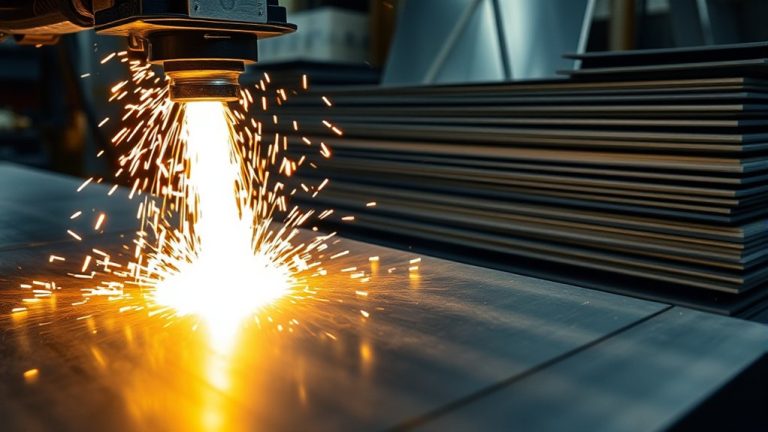
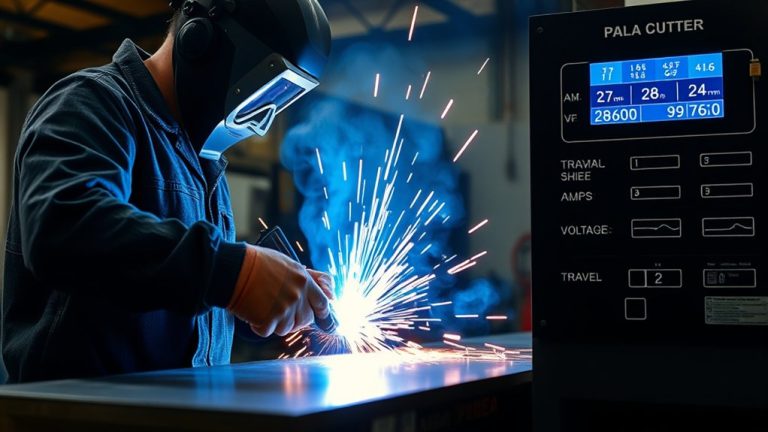
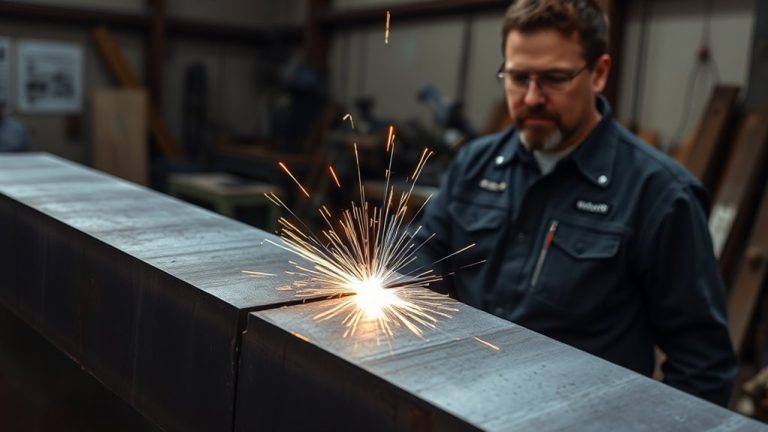
Imagine you’re tasked with plasma cutting a complex cast iron sculpture, and you quickly realize the challenges involved. The material’s high carbon content makes it brittle, increasing the risk of cracking. By preheating to 200°F to 400°F, you can minimize thermal stress, but that’s just one part of the puzzle. Maintaining precise cutting speed and arc length is essential for clean edges. Curious about optimizing edge quality further? Let’s explore this intricate process.
Understanding Cast Iron and Its Characteristics
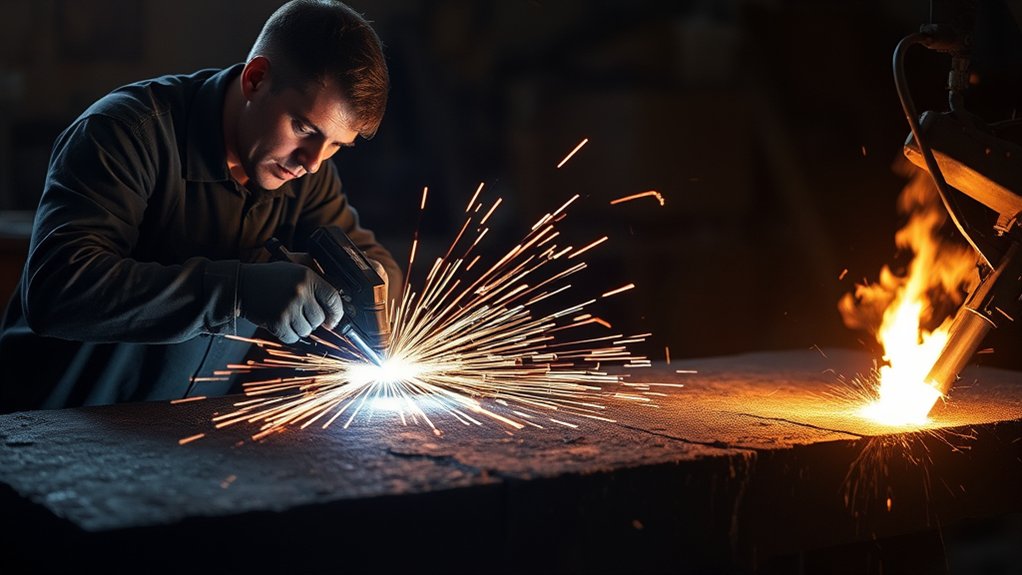
Cast iron is a versatile alloy composed primarily of iron, carbon, and silicon, with a carbon content between 2-4% that greatly impacts its properties. This high carbon content lowers the melting point to approximately 2,600°F (1,427°C), enhancing its castability and machinability.
With 2-4% carbon, cast iron’s castability and machinability are enhanced by its lowered melting point.
However, the brittleness inherent in cast iron requires careful consideration in applications. Its excellent wear resistance and fluidity when molten make it ideal for components such as engine blocks, pipes, and machinery bases.
Gray cast iron, the most common type, contains graphite flakes that improve machinability and damping capacity, making it suitable for vibration-dampening applications.
Ductile iron, with its nodular graphite structure, offers superior strength and toughness, expanding its use in more demanding environments.
Understanding these cast iron properties allows you to exploit its full potential while maneuvering its limitations, enabling innovative solutions and applications that align with your quest for liberation.
Challenges in Plasma Cutting Cast Iron
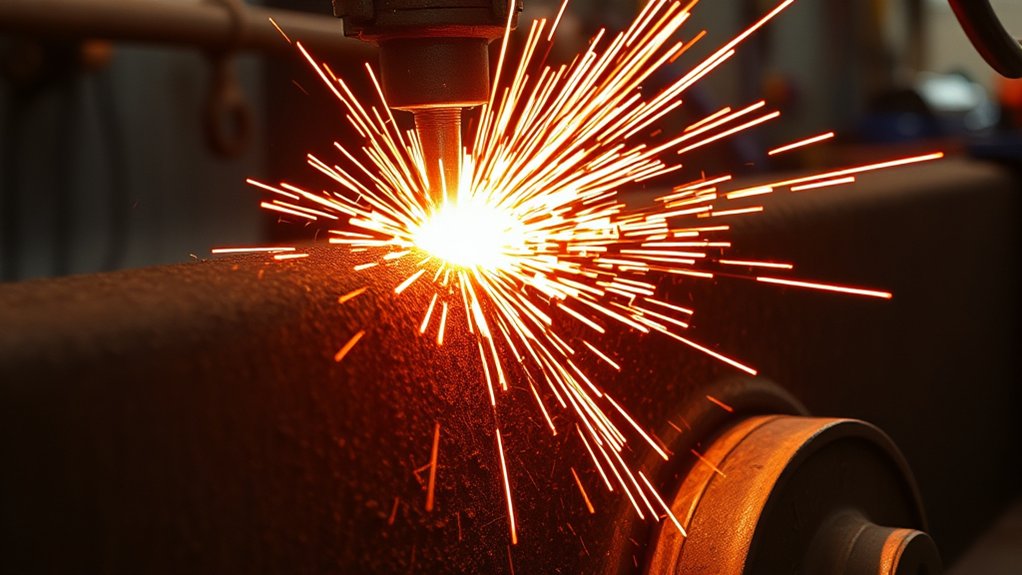
When plasma cutting cast iron, several challenges arise due to its inherent properties. The high carbon content leads to brittleness, increasing the risk of cracking under thermal stress. You’ll find that preheating the material to 200-300°F (93-149°C) can help mitigate this risk.
Material selection is essential; opting for less brittle variants can ease the process.
Cutting parameters must be precisely controlled to manage the high melting point and avoid slag formation, which complicates the removal of molten material and affects cut quality. The rough edges produced often require additional finishing to meet surface quality standards.
Choosing the right gas, such as nitrogen or argon, minimizes oxidation and improves arc stability, enhancing edge quality.
Mastering these challenges demands a keen understanding of the interplay between cutting parameters and material selection, liberating you to achieve ideal results in plasma cutting cast iron.
Importance of Controlling Cutting Speed
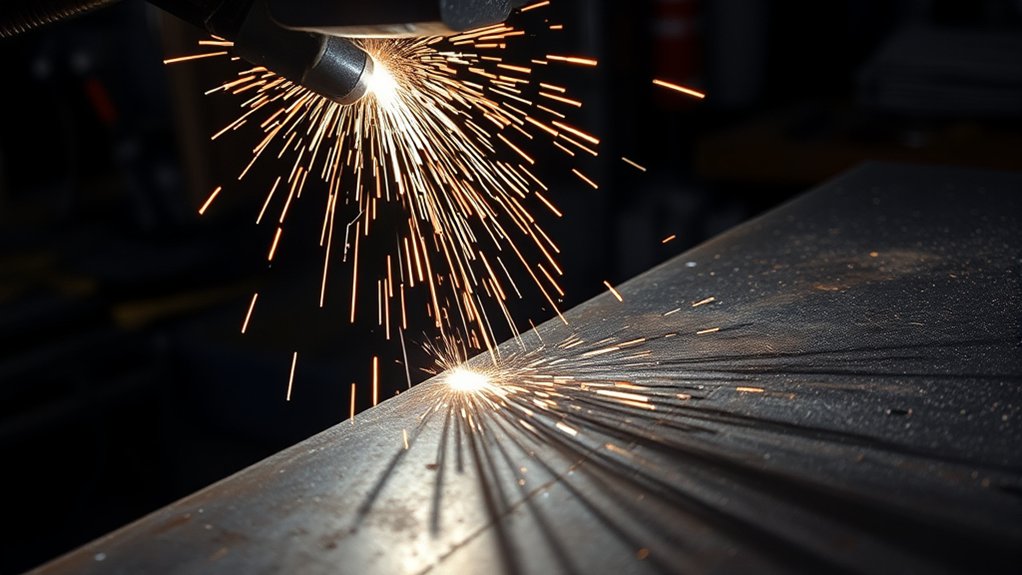
Although it might seem straightforward, controlling the cutting speed in plasma cutting cast iron is critical for producing high-quality cuts.
Mastering cutting techniques requires precise speed calibration to prevent issues like uneven edges and excessive dross. Here’s why maintaining ideal speed matters:
Precise speed calibration is key to avoiding uneven edges and excessive dross in plasma cutting.
- Ideal Range: Aim for a cutting speed between 300 to 800 inches per minute. This varies based on the thickness and type of cast iron.
- Speed Fluctuations: Deviating from this range affects edge quality. Too fast, and you’ll face rough edges and incomplete cuts. Too slow, and you risk burn-through or warping.
- Continuous Monitoring: Consistent speed ensures smooth operation, similar to a well-functioning milling machine. Automated systems offer advanced motion control for intricate designs.
- Liberation Through Precision: By mastering speed calibration, you achieve cleaner cuts, liberating your operation from inefficiencies and poor quality.
In essence, controlling cutting speed is a fundamental aspect of effective plasma cutting techniques.
Torch Height and Its Impact on Edge Quality
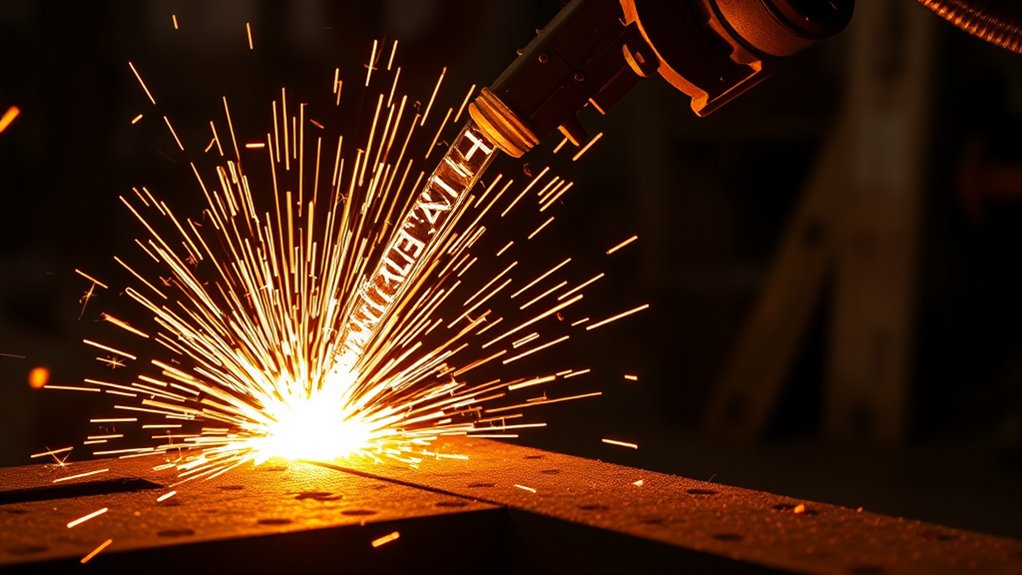
You’ll find that maintaining the ideal torch distance is pivotal in preventing unintended bevels and achieving a smooth edge when cutting cast iron.
By referencing cut charts and adjusting for material thickness, you can enhance edge smoothness and minimize dross.
Regular testing and fine-tuning of torch parameters guarantee that you balance cutting speed with edge quality, avoiding fluctuations that lead to uneven cuts.
Optimal Torch Distance
Achieving the right torch height is a vital factor for ensuring high-quality edges in plasma cutting cast iron. Proper torch height calibration is essential for arc stability maintenance, providing a consistent arc length that enhances edge definition and minimizes dross.
Here’s how you can optimize the torch distance:
- Maintain a Distance: Set the torch between 1/16 to 1/8 inch above the workpiece for the best results.
- Consult Cut Charts: Regularly refer to cut charts to adjust for material thickness and type, ensuring precise cuts.
- Conduct Tests: Experiment with different heights to account for variations in cast iron composition.
- Ensure Stability: Keep a constant arc length to prevent uneven cuts and extend the life of consumables.
These steps are vital for superior output.
Edge Smoothness Factors
Building on the importance of maintaining ideal torch distance, understanding edge smoothness factors is key to producing high-quality cuts in cast iron. Torch height directly influences edge quality and torch performance. When the torch is too high, expect uneven edges and potential bevels. If too low, you risk increased dross and poor edge definition. Consistency in torch-to-work distance is crucial. Use cut charts to guide your torch height based on material thickness and type for best results. Testing and adjusting these parameters guarantee that you achieve the desired edge finish, as cast iron’s properties can vary.
| Factor | Impact on Edge Quality |
|---|---|
| Torch Height | Consistency improves edges |
| Material Thickness | Guides best settings |
| Arc Length | Affects dross formation |
| Testing | Fine-tunes parameters |
Bevel Avoidance Techniques
Mastering torch height is crucial in preventing unwanted bevels during plasma cutting of cast iron. By maintaining the proper torch height, you achieve smooth, flat edges and enhance your cutting precision.
Here’s how you can improve torch height for bevel prevention:
- Consult Cut Charts: Establish the best torch-to-work distance as per cut charts. This guarantees consistent edge quality and minimizes dross.
- Maintain Arc Length: Keep a constant arc length to avoid fluctuations that cause beveled edges.
- Regular Testing: Fine-tune production settings through regular testing to achieve consistent cut quality and avoid edge distortion.
- Vigilant Monitoring: Continuously monitor the torch height during the cutting process. Any variation can greatly impact bevel and overall edge finish.
The Role of Preheating in Plasma Cutting
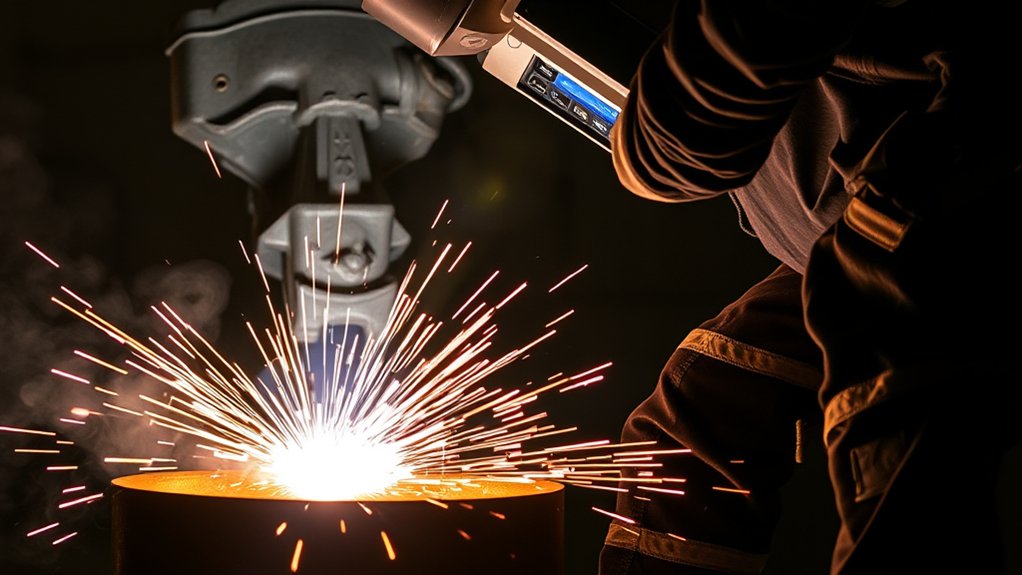
When plasma cutting cast iron, preheating plays an essential role in enhancing cut quality and minimizing the risk of material cracking. The preheating benefits are significant—by elevating the metal’s temperature to between 200°F and 400°F, you promote a more uniform thermal distribution. This uniformity is vital for preserving edge integrity and ensuring the plasma jet penetrates effectively, reducing slag and dross.
With proper preheating, you can minimize thermal stress, which often leads to brittle fractures in cast iron. The preheat temperature facilitates better fusion, allowing for cleaner cuts and less post-processing effort.
Furthermore, preheating is particularly advantageous for cutting thicker sections, where the risk of uneven temperature gradients is higher. By adopting this approach, you gain greater control over the cutting process, releasing the potential for high-quality results while mitigating the challenges typically associated with plasma cutting cast iron.
Techniques to Minimize Thermal Stress
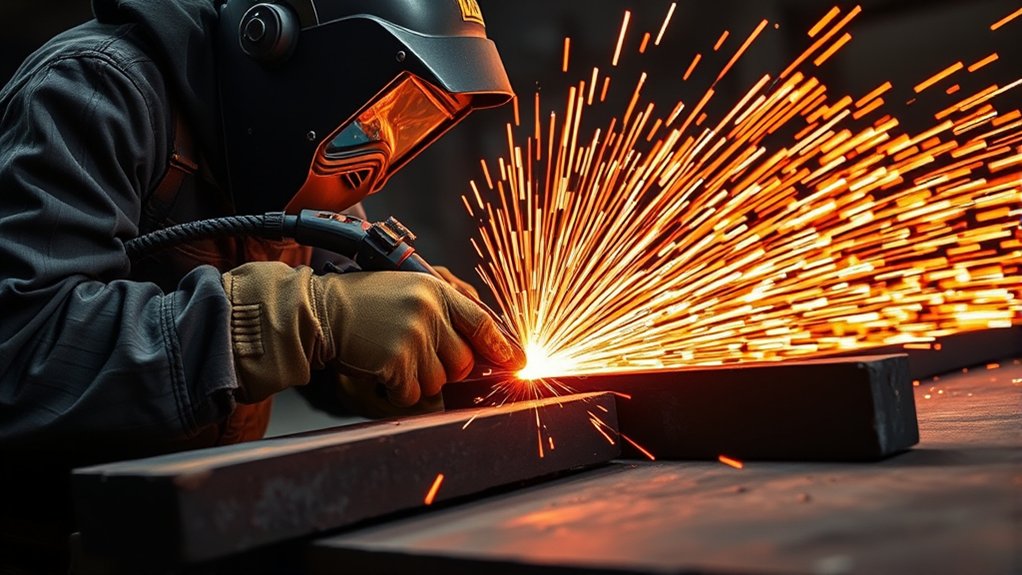
To effectively minimize thermal stress during plasma cutting of cast iron, you should control the preheat temperature to around 300°F (150°C) to mitigate cracking risks.
Implement controlled cooling methods such as water injection to maintain lower temperatures and reduce the likelihood of thermal distortion.
Additionally, consider stress-relief techniques like employing a slower cutting speed and using a lower arc voltage to guarantee heat dissipates efficiently and maintains structural integrity.
Preheat Temperature Control
- Select a Controlled Heating Source: Use a propane torch or oven for uniform heat distribution, which minimizes thermal gradients.
- Monitor Temperature Diligently: Utilize an infrared thermometer to maintain the recommended 200°F to 400°F (93°C to 204°C) range, preventing distortion.
- Maintain Steady Preheat Temperature: Fluctuations in temperature can cause varying thermal stresses, impacting material integrity.
- Adopt a Slow Cutting Speed: A gradual approach reduces rapid cooling, enhancing edge quality and minimizing stress.
These strategies liberate you from the constraints of material failure, empowering superior results.
Controlled Cooling Methods
Achieving precise control over preheat temperatures sets the stage for effective cooling strategies, which are crucial in minimizing thermal stress during plasma cutting of cast iron.
Controlled cooling methods, such as slow cooling in sand or utilizing water blankets, are essential cooling techniques. They effectively manage thermal gradients, reducing stress-induced defects.
Implement gradual cooling rates of 10-20°C per hour to prevent warping and cracking. Cooling jigs or fixtures maintain consistent temperatures across cut edges, enhancing thermal management and reducing defect risks.
An insulated chamber can provide a controlled cooling environment, promoting uniformity and improving edge quality by minimizing brittle microstructural formations.
These approaches allow you to achieve ideal results, liberating you from concerns of compromised component integrity.
Stress-Relief Techniques
While managing thermal stress during plasma cutting of cast iron can be challenging, employing effective stress-relief techniques is crucial to preserving the material’s integrity.
To minimize thermal gradients and guarantee peak performance, consider these techniques:
- Preheating: Heat the cast iron to 200°F-400°F before cutting. This reduces thermal gradients, minimizing cracking and warping.
- Controlled Cooling: Allow the cast iron to air cool slowly after cutting. This prevents thermal stress and distortion, maintaining structural integrity.
- Multi-Pass Cutting: Distribute heat more evenly with a multi-pass strategy, reducing localized thermal impact and enhancing edge quality.
- Post-Cutting Treatment: Use annealing to relieve residual stresses, bolstering the final product’s structural soundness.
Implementing these methods liberates your process from unnecessary setbacks, enhancing both precision and quality.
Achieving Optimal Edge Finish
To achieve an ideal edge finish when plasma cutting cast iron, it’s important to maintain a precise standoff distance. This guarantees accurate cutting parameters, reducing excessive beveling and promoting a smooth cut finish.
Preheating the material is advantageous, as it minimizes thermal stress, leading to improved edge quality. Utilize a nitrogen gas mixture during the cutting process to reduce oxidation, resulting in cleaner cuts.
Controlling the cutting speed is critical; a balance must be struck to prevent rough edges or dross from forming if too fast, and avoid burn-through or warping if too slow.
Regular edge inspection is essential to identify any imperfections early in the process, allowing for adjustments as needed.
Don’t overlook the importance of consumables. Frequently checking and replacing nozzles and electrodes guarantees consistent quality, as worn parts can compromise the precision of your cuts.
Managing Potential Cracking and Fractures
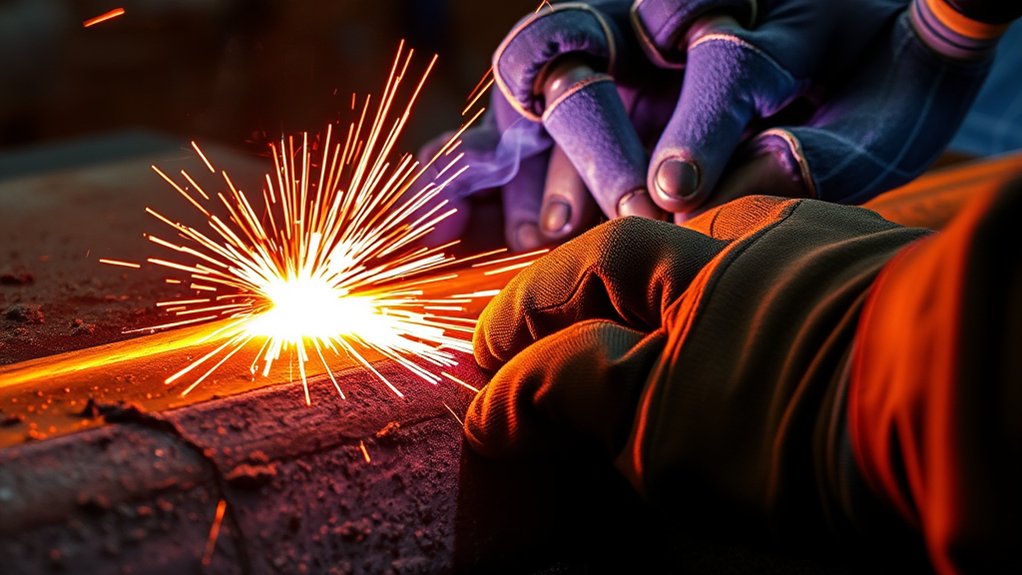
When plasma cutting cast iron, you must meticulously manage heat input to prevent cracking and fractures.
Implement preheating techniques to guarantee even temperature distribution, reducing thermal shock and stress concentration.
Additionally, monitor fracture indicators and adjust cutting parameters to optimize edge quality while minimizing micro-crack risks.
Preheating Cast Iron Techniques
Effective preheating is essential when preparing cast iron for plasma cutting to mitigate potential cracking and fractures. By employing precise preheat methods, you guarantee the material reaches an ideal temperature of 400-600°F (204-316°C), reducing thermal shock risks.
Utilize advanced heating equipment like an oven or heat blanket for controlled, even heating. Here’s how:
- Preheat Methods: Use ovens or heat blankets to maintain consistent temperatures, avoiding stress fractures.
- Temperature Monitoring: Employ infrared thermometers for accurate readings, making sure the cast iron stays within the perfect preheat range.
- Consistent Temperature: Avoid rapid cooling post-cutting to prevent edge hardening and brittleness.
- Quality Enhancement: Proper preheating improves edge quality, offering smoother cuts and less dross.
Master these techniques to achieve superior results in plasma cutting cast iron.
Stress Reduction Strategies
Many find that managing potential cracking and fractures in cast iron during plasma cutting requires a strategic approach.
Start by preheating the material to promote thermal stability, which helps distribute heat evenly and reduces thermal stress. Opt for a controlled cooling rate post-cutting; rapid cooling can cause fractures due to cast iron’s brittleness. Gradual cooling is essential for effective stress management.
Choose a plasma cutting technique with lower amperage settings to minimize heat input, further decreasing thermal stress risks. Water injection plasma cutting is another effective method, as it mitigates heat distortion and maintains a cooler cutting environment.
Finally, consider post-cutting treatments like annealing to relieve residual stresses, enhancing the structural integrity of the cast iron and preventing fractures.
Monitoring Fracture Indicators
After implementing stress reduction strategies, it’s important to focus on monitoring fracture indicators to manage potential cracking and fractures effectively.
By employing precise fracture detection and monitoring techniques, you can guarantee the integrity of cast iron during plasma cutting.
Consider these steps:
- Preheat Protocols: Proper preheating reduces thermal shock, minimizing temperature gradients and cracking risks.
- Visual Inspections: Regularly check for stress or micro-cracks to catch issues early, preventing significant failures.
- Speed Control: Utilize lower cutting speeds to control heat generation, preventing exacerbated cracking from excessive temperatures.
- Cooling Techniques: Implement post-cut cooling with controlled airflow to mitigate fracture development along cut edges.
These strategies empower you to monitor actively, fostering a precise approach and maintaining the quality of your cast iron projects.
Comparing Plasma Cutting With Alternative Methods
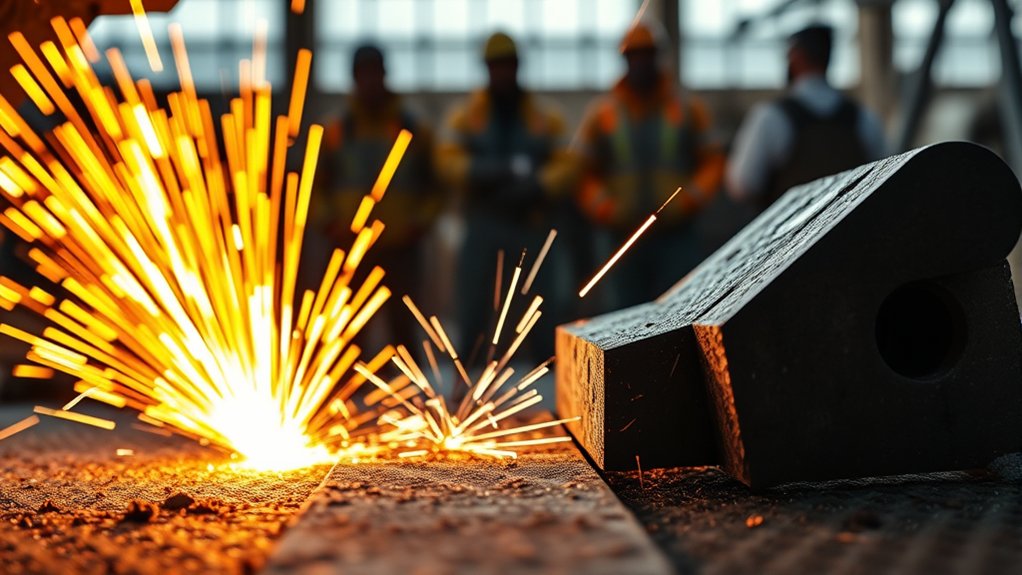
When comparing plasma cutting to alternative methods for processing cast iron, it’s essential to evaluate both the advantages and drawbacks each technique presents.
Plasma cutting excels with high-speed operations and is effective on thicker sections up to 50 mm. However, it often leaves rough edges and slag, requiring additional finishing.
In contrast, waterjet cutting offers smoother edges without thermal distortion, providing cleaner results without post-processing, vital for maintaining material integrity.
Plasma cutting can introduce heat-affected zones, altering cast iron’s mechanical properties. This isn’t an issue with waterjet or abrasive cutting, which preserve the material’s original state.
While plasma cutting’s speed is undeniable, its precision can vary based on parameters like gas type and cutting speed.
Laser cutting, though, offers superior precision with minimal post-processing.
For those seeking cost-effectiveness on thick materials, oxy-fuel cutting remains a viable option but sacrifices speed and precision.
Best Practices for Quality Assurance in Plasma Cutting
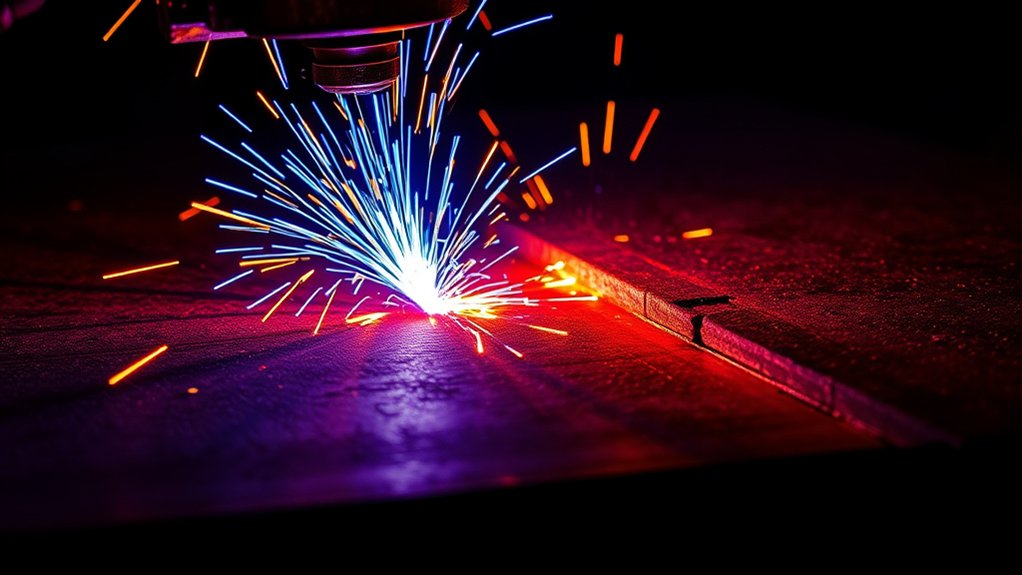
While evaluating various cutting methods, focusing on the specifics of plasma cutting reveals key practices that guarantee superior quality.
To achieve ideal results, you must embrace process optimization and uphold strict quality metrics. Here’s how:
- Arc Length Consistency: Maintain a consistent arc length to prevent uneven edges and minimize dross. Fluctuations can compromise cut integrity, demanding vigilant monitoring.
- Preheat Techniques: Properly preheat cast iron to alleviate cracking and enhance edge quality. This reduces thermal stress, ensuring a smoother cutting process.
- Consumable Management: Regularly monitor and replace consumables like electrodes and nozzles. This practice sustains performance and precision, crucial for high-quality cuts.
- Systematic Quality Assurance: Implement a structured protocol involving equipment calibration and cut quality assessments. This enhances production efficiency and minimizes rework, fostering a liberated workflow.
Frequently Asked Questions
What Safety Gear Is Needed for Plasma Cutting Cast Iron?
Make certain you wear plasma goggles to protect your eyes from harmful rays. Use protective gloves to shield your hands from hot metal and sparks. Safety gear empowers you to focus on precision and creativity during your work.
How Does Cast Iron Thickness Affect Cutting Parameters?
Verily, cast iron thickness directly influences cutting speed and arc stability. Thicker sections demand slower speeds and enhanced arc stability to maintain quality. Adjust parameters meticulously, ensuring liberation from suboptimal cuts and achieving precision in your craftsmanship.
Can Plasma Cutting Be Automated for Cast Iron?
Yes, you can automate plasma cutting for cast iron using advanced automation technology. This enhances plasma efficiency, liberating you from manual operations and providing precise cuts, increased productivity, and consistent quality, even with complex cast iron geometries.
What Environmental Concerns Arise From Plasma Cutting Cast Iron?
Imagine the air as a delicate tapestry torn by plasma cutting. You face environmental concerns like degraded air quality from emitted fumes and particles, and waste management challenges with metallic residues. These issues demand conscientious solutions for liberation.
How Do Different Types of Cast Iron Respond to Plasma Cutting?
When plasma cutting, ductile iron absorbs heat effectively, maintaining structural integrity, while gray iron may crack due to thermal stress. You must adjust techniques to liberate yourself from unwanted defects, optimizing efficiency for each iron type.
Conclusion
You’ve now mastered the art of plasma cutting cast iron, transforming potential pitfalls into opportunities for precision. By embracing ideal preheating, fine-tuning your cutting speed, and maintaining torch height, you’ve secured a seamless operation. With the right gas choice, oxidation becomes a mere shadow of its former self. While cast iron presents its quirks, your strategic approach minimizes surprises and enhances edge quality. Your dedication to these best practices assures a smooth, successful cutting journey.