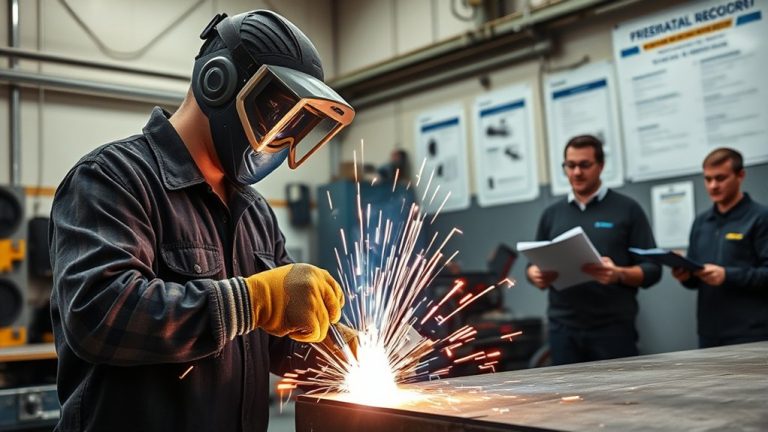
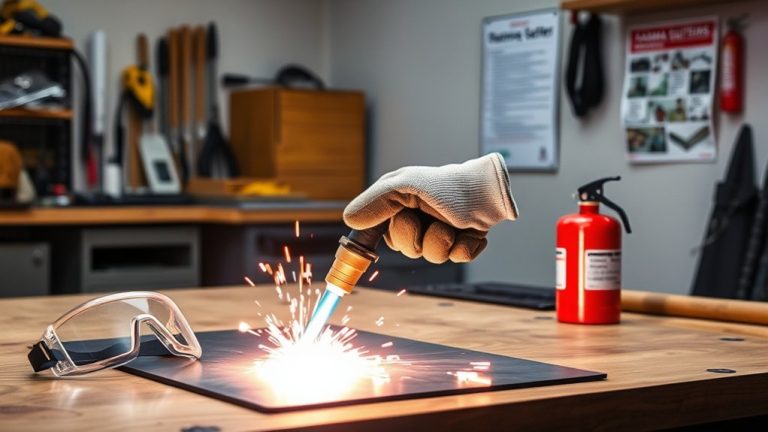
Imagine you’re tasked with fabricating custom metal parts for an industrial project. You opt for plasma cutting due to its precision and speed, but knowing how to optimize settings is essential. You’ll need to understand the interplay between amperage and material thickness while ensuring proper grounding. Additionally, consistent air pressure is key to achieving clean cuts. There’s more to explore about plasma cutting’s nuances and best practices for enhancing results.
Overview of Plasma Cutting
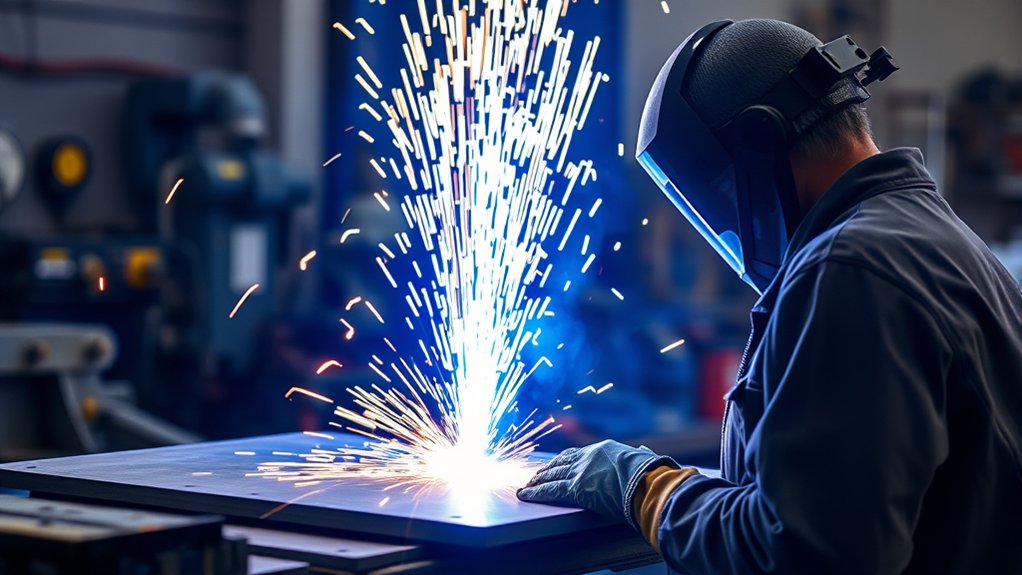
Plasma cutting is a fascinating process that harnesses the power of ionized gases at temperatures exceeding 20,000°C to slice through electrically conductive materials with precision and speed.
Originating in 1957, plasma cutting‘s history is marked by technological advancements that have enhanced its precision and durability since the late 1960s. You’ll find it especially effective for cutting materials like stainless steel, aluminum, and copper.
Its applications are diverse, ranging from industrial manufacturing to automotive repair and metal art. However, it’s important to note that plasma cutting is ineffective on non-conductive materials like glass and wood.
The process involves an electric arc passing through a gas, transforming it into plasma through a constricted nozzle, enabling efficient, high-speed cuts.
Its cost-effectiveness lies in faster speeds and lower maintenance compared to traditional methods like oxy-fuel cutting, making it a popular choice for many industries.
Working Principle of Plasma Cutting
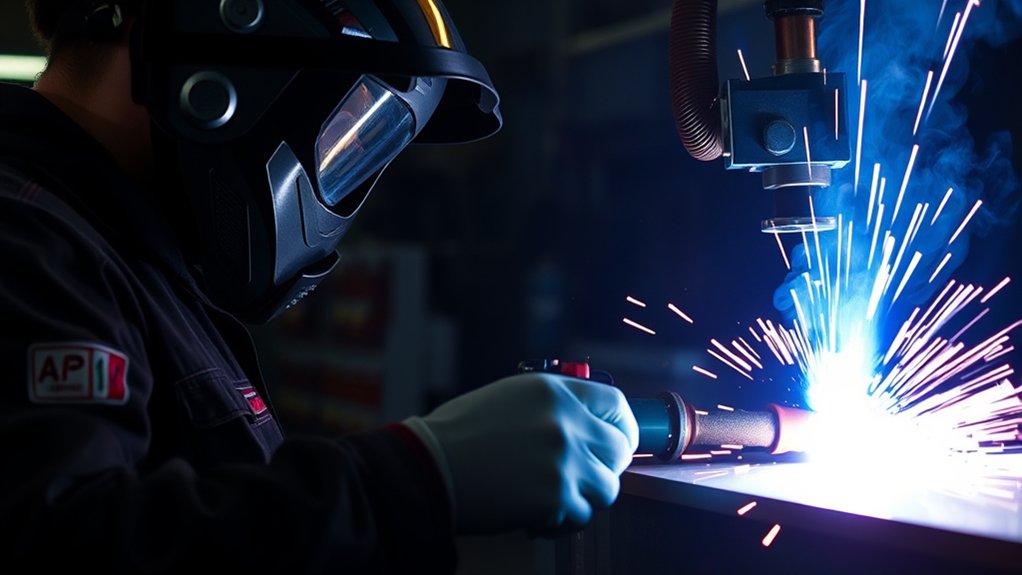
When you engage in plasma cutting, you initiate the process by sending an electric arc through a gas, ionizing it and generating a high-temperature plasma capable of melting metal.
This requires grounding the workpiece to close the circuit, ensuring effective cutting.
Understanding the plasma arc generation and high-temperature ionization is essential, as it directly influences the effectiveness and precision of your cutting operations.
Plasma Arc Generation
As you explore the fascinating world of plasma cutting, understanding the generation of the plasma arc is essential.
Plasma arc stability is achieved by sending an electric arc through a plasma gas, such as compressed air or argon. This highly ionized, conductive state, reaching over 20,000°C, cuts through metals with precision.
The process starts with a pilot arc generated by high-voltage current, which shifts to the main cutting arc when contacting the grounded workpiece. A constricted nozzle focuses the plasma jet, increasing energy density for precise cuts.
Plasma gas composition, including options like oxygen or nitrogen, plays a critical role in enhancing cutting speed and edge quality.
Proper grounding guarantees the arc forms consistently, maintaining efficient cutting performance.
High-Temperature Ionization
Although the core concept of plasma cutting revolves around high-temperature ionization, understanding its working principle involves a closer look at how gases transform into plasma. The ionization process heats gases like nitrogen or oxygen to over 20,000°C, converting them into a high-energy plasma jet. This plasma dynamics allows the jet to efficiently melt and cut through conductive materials. Initiating this process involves sending an electric arc through a gas, constricted by a nozzle, and necessitates the workpiece to be properly grounded.
Here’s a summary of key factors:
| Factor | Description |
|---|---|
| Ionization Process | Gases heated to plasma state at extreme temperatures. |
| Plasma Dynamics | Plasma jet melts and cuts metals efficiently. |
| Grounding Requirement | Guarantees conductivity for effective energy transfer. |
Types of Plasma Cutting Processes
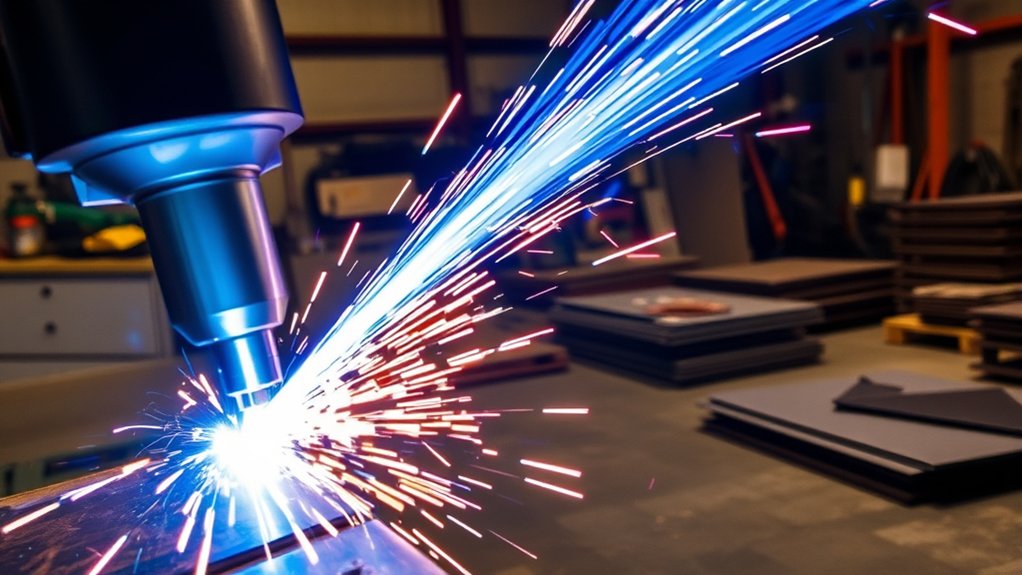
Plasma cutting processes are diverse, each offering unique advantages tailored to specific applications. Understanding the different plasma torch types can greatly enhance cutting efficiency.
High-Frequency Contact involves initiating the arc through direct contact, ideal for thinner materials due to its high-voltage spark that guarantees quick starts. However, it’s less effective on painted or rusty surfaces.
Pilot Arc stands out by creating a preliminary arc without direct contact, making it perfect for cutting through coatings or corrosion. This process uses lower voltage, allowing for a more controlled arc initiation and reducing wear on the torch.
The Spring Loaded Plasma Torch Head excels in maintaining a consistent distance from the workpiece, vital for precision in complex geometries. It automatically adjusts to material thickness, enhancing cutting consistency and quality.
Choosing the right process not only affects cutting speed but also the quality and heat-affected zone, optimizing your overall plasma cutting performance.
Gases Used in Plasma Cutting
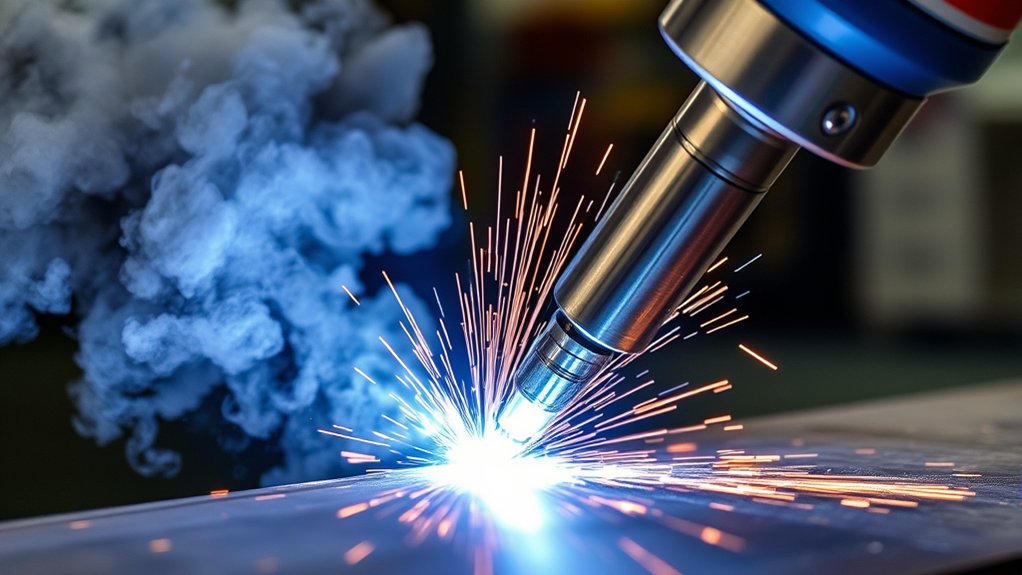
Choosing the right gases for plasma cutting can greatly influence the cutting speed and edge quality you achieve. Your gas selection plays an essential role in determining efficiency and precision.
Compressed air is the go-to for mild steel, stainless steel, and aluminum due to its cost-effectiveness. However, when cutting low-carbon steel, oxygen increases cutting speed but requires careful oxidation control and high-temperature resistant electrodes.
Consider these gas options:
- Nitrogen: Offers cleaner cuts with minimal oxidation, ideal for stainless steel and aluminum, enhancing edge quality.
- Argon: Provides stable plasma arcs and extends electrode life, though it’s not effective alone for cutting.
- Argon-Hydrogen Mixture: Maximizes cutting capabilities for thick stainless steel and aluminum, albeit at a higher cost.
Effective gas selection guarantees optimal outcomes by balancing speed, quality, and oxidation control.
Materials Suitable for Plasma Cutting
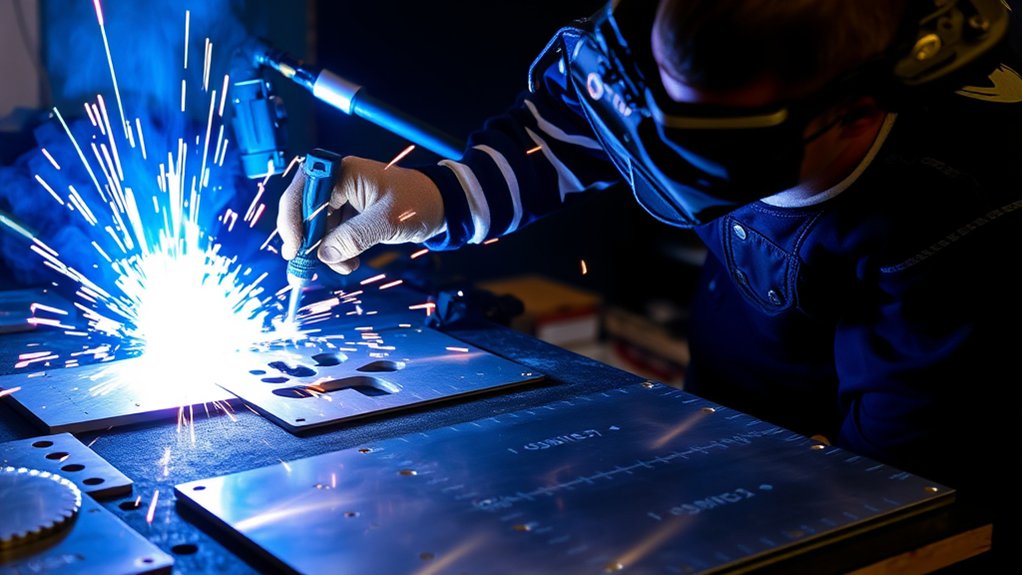
With a clear understanding of gas selection, you can now focus on the materials best suited for plasma cutting. Conductive metals like aluminum, mild steel, stainless steel, brass, and copper are prime candidates.
Aluminum is particularly advantageous due to its superior conductivity and cost-effectiveness. It allows for efficient processing with an aluminum thickness of up to 160mm.
Aluminum stands out for its excellent conductivity and affordability, enabling efficient cutting up to 160mm thick.
Mild steel, known for its low carbon content and high impact strength, is frequently used in plasma cutting due to its excellent weldability.
Stainless steel is another ideal material, effectively cut with plasma up to 30mm thick. Grades such as 304 and 316 are commonly chosen, appreciated for their remarkable corrosion resistance.
Copper, while offering excellent heat and electrical conductivity, requires careful handling to achieve clean cuts and demands good ventilation to manage fumes.
Each material presents unique properties that influence the efficiency and quality of the plasma cutting process.
Advantages of Plasma Cutting
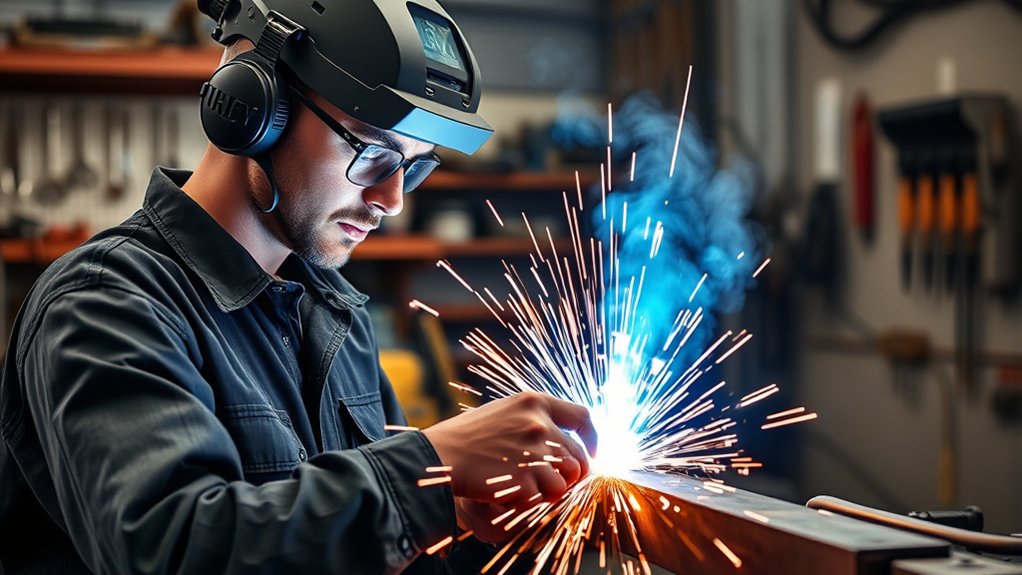
With plasma cutting, you achieve high precision due to its ability to produce clean cuts with minimal residual scum and a reduced heat-affected zone.
The speed of the process is unparalleled, operating up to 100 times faster than laser cutting and 10 times faster than oxy-fuel methods.
Versatility is a key advantage, allowing you to efficiently cut various electrically conductive materials like aluminum, stainless steel, and copper, regardless of thickness.
High Precision Cutting
Although traditional methods of metal cutting have their place, plasma cutting stands out for its high precision and efficiency. With plasma cutting, you can achieve remarkable accuracy, vital for crafting intricate designs and complex geometries. This precision is due to:
- Minimal Heat-Affected Zones: Plasma cutting produces cleaner edges with less thermal distortion, reducing post-processing requirements.
- Consistent Repeatability: Advanced technology guarantees each cut maintains the same high quality, essential for industrial applications requiring uniformity.
- Versatile Metal Cutting: It handles various conductive metals like aluminum and stainless steel, accommodating different thicknesses without compromising precision.
Continuous advancements enhance automation and power efficiency, further solidifying plasma cutting as the superior choice for high-precision tasks.
This makes it indispensable in industries demanding detailed craftsmanship and reliability.
Speed and Versatility
Building on the high precision that plasma cutting offers, it’s equally remarkable in speed and versatility, making it a powerhouse in various industrial settings.
With speed efficiency up to 100 times faster than laser cutting and 10 times quicker than oxy-fuel, you’ll see productivity soar. This process doesn’t just stop at speed; its versatile applications allow it to cut through diverse conductive metals like aluminum, mild steel, and stainless steel.
High-definition plasma technology guarantees cleaner cuts with minimal heat-affected zones, enhancing surface quality and minimizing post-processing needs.
Cost-effective and adaptable, plasma cutting systems facilitate swift adjustments for different material types and thicknesses, supporting a broad spectrum of projects—from intricate designs to robust, heavy-duty tasks.
Disadvantages of Plasma Cutting
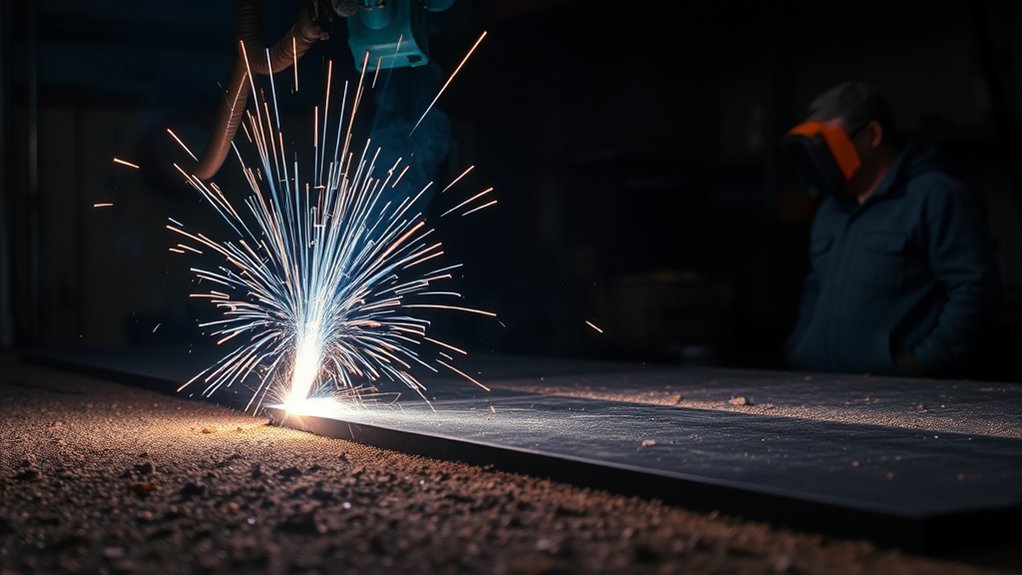
While plasma cutting offers many advantages, it does come with several notable disadvantages that you should consider.
Plasma cutting has notable disadvantages that should be considered despite its many advantages.
First, there are significant limitations in material compatibility. Plasma cutting is restricted to electrically conductive materials, rendering it ineffective for non-conductive options like stone, glass, and plastics. This limits its versatility across various projects.
Second, safety concerns arise due to the bright flashes emitted during operation, posing eye safety risks. You must use proper eye protection to mitigate these hazards. Additionally, the cutting process generates considerable noise, which can be disruptive and require hearing protection.
Third, the method isn’t ideal for cutting thick materials, particularly those exceeding 150mm. This constraint limits its application in heavy industrial uses where thicker materials are common.
- Material Limitations: Only works on conductive materials.
- Safety Concerns: Bright flashes and noise.
- Thickness Restrictions: Not suitable for materials over 150mm.
Key Settings for Optimal Plasma Cutting
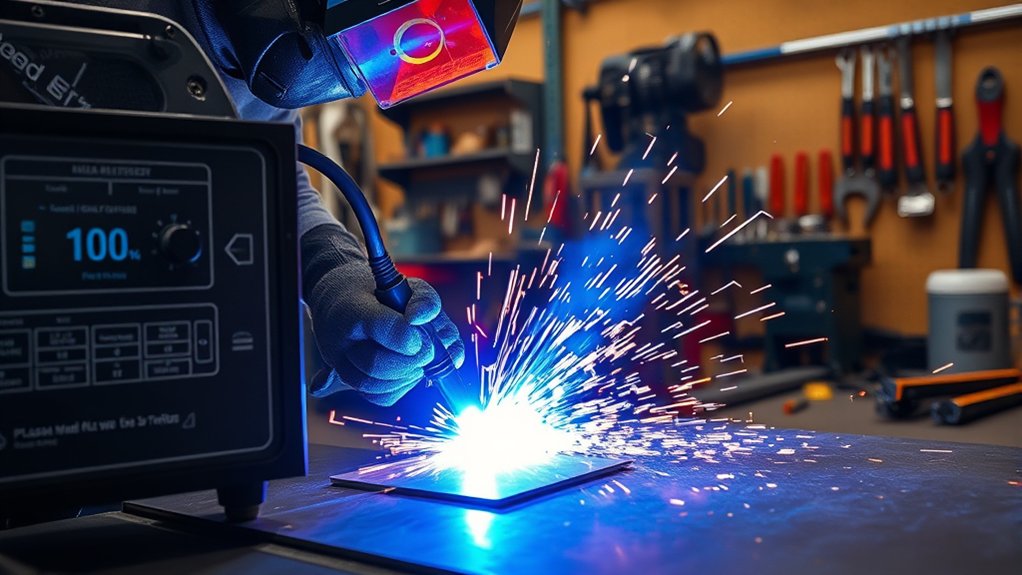
To achieve ideal results with plasma cutting, understanding and adjusting key settings are essential. The amperage setting is critical; it’s your tool’s power source. For thicker materials, increase the amperage—machines like the Hypertherm Power Max 45 XP excel here.
Conversely, lower amperage suits thinner gauges, with the Power Max 30 being a prime choice. Travel speed is equally important. It dictates the quality of your cut; aim for sparks trailing slightly behind. If you cut too fast, you’ll face poor-quality edges and consumable clogs.
To complement these settings, make sure air pressure remains consistent; this prevents dross and maintains clean cuts. Consider using a ruler or straight edge as a guide for accuracy, and stabilize your material with clamps.
Before tackling your main project, perform test cuts on scrap materials. This practice helps fine-tune your settings, guaranteeing you achieve the highest quality cut possible.
Best Practices for Plasma Cutting
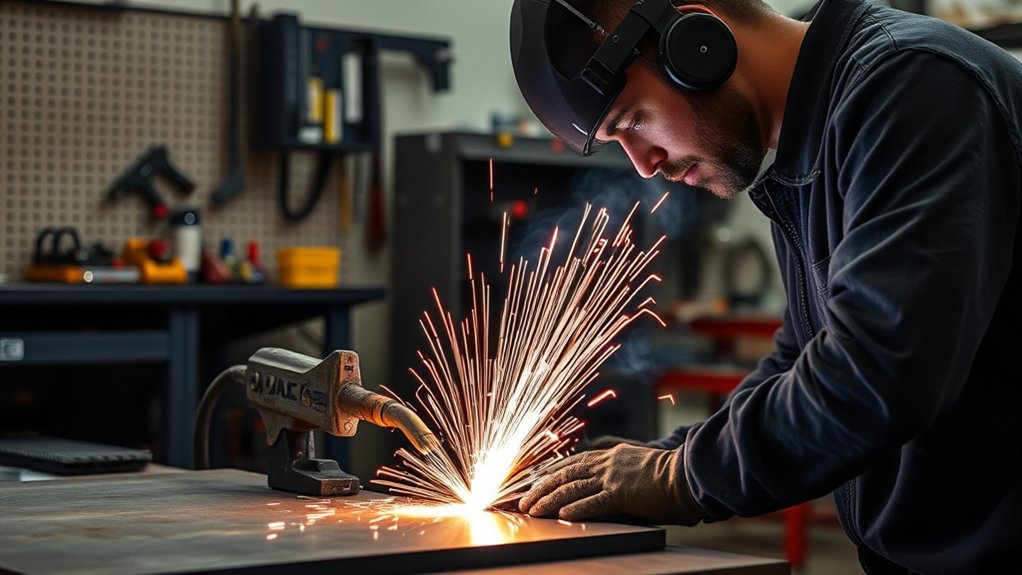
Mastering plasma cutting requires attention to several best practices that guarantee precision and efficiency. First and foremost, prioritize safety precautions by wearing appropriate protective gear and making sure your workspace is free from flammable materials.
To avoid common mistakes, remember these key practices:
- Use a Cutting Guide: Always employ a ruler or cutting guide for straight cuts. Secure it firmly with clamps to maintain stability and accuracy. Neglecting this can lead to uneven cuts and wasted materials.
- Check Air Pressure: Consistently monitor and adjust air pressure settings. Proper air flow is essential for high-quality cuts, and incorrect settings can result in dross or a poor finish.
- Test on Scrap Materials: Conduct test cuts to refine travel speed and amperage settings. This step helps prevent quality issues and guarantees clean, precise cuts.
Regular maintenance of your tools and understanding air swirl dynamics further enhance cutting efficiency and tool longevity.
Frequently Asked Questions
How Does Plasma Cutting Affect Material Microstructure?
Plasma cutting affects material microstructure by altering material properties through intense thermal effects. You’ll notice changes like grain growth or phase transformation as high temperatures and rapid cooling impact the integrity and mechanical properties of the cut edges.
What Maintenance Is Required for Plasma Cutting Torches?
You’ll need to regularly clean the torch and replace consumables. Inspect the nozzle and electrode for wear and guarantee proper alignment. Regular maintenance reduces downtime and enhances cutting performance, making certain your plasma cutter operates efficiently and effectively.
Is Plasma Cutting Environmentally Friendly?
Imagine a bright, intense spark cutting through metal. Plasma cutting isn’t always eco-friendly due to plasma emissions and high energy consumption. However, proper settings and efficient machines can greatly reduce environmental impact, making it more sustainable.
Can Plasma Cutting Be Automated for Industrial Use?
Yes, you can automate plasma cutting for industrial use. By using robotic integration, you’ll enhance precision and boost industrial efficiency, allowing consistent, high-quality cuts with reduced waste and increased throughput in your manufacturing processes.
How Does Air Quality Impact Plasma Cutting Performance?
Air quality greatly affects plasma cutting. You need effective air filtration to remove contaminants and maintain clean airflow. Humidity control is essential as moisture can cause arc instability, affecting precision and reducing consumable lifespan in your cutting process.
Conclusion
You’ve grasped the great gains of plasma cutting, a precise process that slices smoothly through metals with meticulous mastery. By balancing amperage and air pressure, you’re ensuring effective efficiency and exceptional edge quality. Ground your gear, guard with goggles, and give consistent care to your cutting tools for sustained success. With plasma’s powerful potential, you’re equipped to execute expert cuts, elevating your expertise and enhancing your endeavors in the electrifying world of metalwork.