Disclosure: As an Amazon Associate, we earn from qualifying purchases. If you click a link on this page and make a purchase, we may receive a small commission at no extra cost to you.
Portable Welding Machine Review: Lightweight 20–120A Inverter Welder for Small Projects
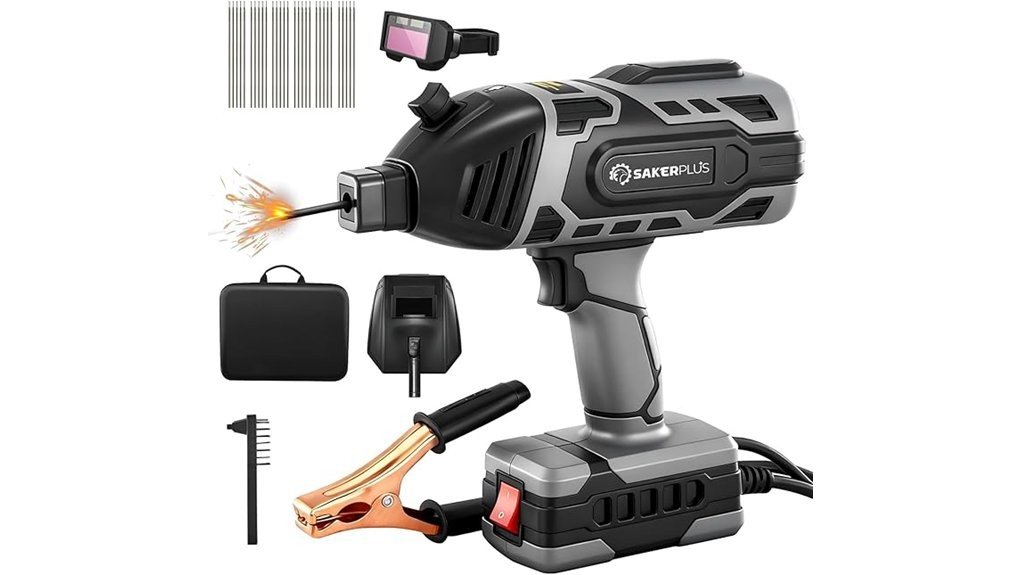
Small welding jobs can be frustrating when your welder is too heavy to move or too limited to control heat well. The Portable Welding Machine focuses on a light 3.75 lb body, a 20A to 120A output range, and a starter accessory kit for basic steel work.
This review helps you decide whether its compact inverter design fits home repairs, beginner practice, and light workshop tasks. Its strongest point is portability, but you should not treat it as a substitute for a full-size industrial welder.
Quick Verdict
Rating: 8/10
Best For: Beginners, DIY users, mobile repair users, and light fabrication work
Bottom Line: This compact welder is easy to carry and gives you simple current control for small steel jobs. The tradeoff is limited heavy-duty capacity, a short 6 ft power cable, and no confirmed duty-cycle details in the source article.
Key Specifications
| Specification | Detail |
|---|---|
| Product Type | Portable inverter welding machine |
| Current Range | 20A to 120A |
| Adjustment Levels | 5 variable current settings |
| Weight | 3.75 lbs (approx. 1.7 kg) |
| Technology | IGBT inverter technology |
| Compatible Materials Listed | Carbon steel, alloy steel, iron |
| Max Thickness Claim | Up to 1/4 inch, depending on setup and technique |
| Included Accessories | Welding rods, helmet, goggles, brush, chipping hammer, carry case |
| Power Cable | 6 ft |
| Best Use | Home repairs, beginner practice, mobile light-duty work, and occasional small fabrication |
| Safety Note | Use proper welding PPE, stable power, ventilation, and the product instructions before operation |
What Is the Portable Welding Machine?
The Portable Welding Machine is a compact inverter-style welder designed for light to medium steel tasks. It uses IGBT inverter technology to help stabilize current output, which can make the arc feel more controlled during small repairs and practice work.
The listed 20A to 120A range gives you five current levels to match thinner or thicker metal within the machine’s limits. Lower settings help you reduce burn-through on thinner material, while higher settings support better penetration on small steel parts.
This model makes the most sense for users who value mobility over raw output. At 3.75 lbs, it is easier to carry around a garage, shed, farm area, or small workshop than a larger shop welder.
Who Should Buy It?
Best For
- DIY users fixing small steel parts, gates, brackets, and light frames
- Beginners who want simple current adjustment while learning arc control
- Mobile users who need a 3.75 lb welder that stores and carries easily
Skip If
- You need long continuous welds or heavy industrial production work
- You mostly weld thick structural steel or critical load-bearing parts
- You need verified duty-cycle, electrode-size, or certification data before buying
Before You Buy: The source article lists a claimed 1/4 inch maximum thickness, but welding results depend on the electrode, preparation, power supply, operator skill, and duty cycle. Choose a larger welder for thick, structural, or safety-critical welds.
Key Features Breakdown
Power Control and Current Settings
The machine offers five variable current levels across a 20A to 120A range. That range gives you a basic way to match heat to the metal, which matters when you switch between thin repair parts and slightly heavier steel pieces.
The lower end is useful when you want better heat control on thin material. The upper end helps with penetration on small steel jobs, but it still has less headroom than a larger shop welder.
Lightweight Portability
The 3.75 lb listed weight is the main reason to consider this welder. You can carry it with one hand, move it between work areas, and store it without giving up much shelf or bench space.
That portability helps when your repair is not near your main workbench. The tradeoff is that small welders often have less sustained output than heavier machines, so you should plan shorter work sessions.
IGBT Inverter Performance
IGBT inverter control is designed to keep current output more stable than a basic uncontrolled setup. For a beginner, steadier output can make it easier to hold an arc and keep the bead more consistent.
The article also claims reduced spatter. You should still expect some cleanup, especially while learning, working on dirty metal, or using the wrong current setting for the rod and material.
Accessory Kit and Starter Value
The included accessories list covers welding rods, a helmet, goggles, brush, chipping hammer, and carry case. That is useful for a first-time buyer because it reduces the number of separate starter items you need to gather.
Even with included safety gear, you should confirm that every protective item fits correctly and meets your comfort needs. Many users eventually upgrade their helmet, gloves, jacket, or clamps after they gain experience.
Material Compatibility and Thickness Limits
The article lists carbon steel, alloy steel, and iron as compatible materials. That makes the welder better suited to common repair steel than to specialized metals or production welding setups.
The claimed maximum thickness is up to 1/4 inch. Treat that as an upper limit, not a guarantee for every joint, rod, or power source.
Pro Tip: Practice on scrap metal before repairing the final piece. Start low, increase current slowly, and clean rust, paint, or scale from the weld area for a steadier arc.
Setup Tips Before First Use
Check the Power and Work Area
The listed power cable is 6 ft, so your outlet location matters. Set up close enough to avoid cable strain, and use only a suitable extension cord if the product instructions allow it.
Prepare the Metal First
Clean the joint area before welding. Removing paint, rust, oil, and loose scale improves arc behavior and helps the weld bond to the base metal.
Match Current to the Job
Use the lowest setting that gives you a stable arc and enough penetration for the part. Too much current can burn through thin metal, while too little current can leave weak fusion.
Let the Machine Rest When Needed
The source article does not provide a verified duty cycle. For that reason, avoid long continuous welds and let the unit cool if it feels hot or performance becomes inconsistent.
Compatibility and Safety Notes
Welding creates heat, bright arc light, sparks, and fumes, so the included helmet and goggles should not be your only safety check. Use proper welding gloves, flame-resistant clothing, closed-toe footwear, and eye protection suited to the process.
Work in a ventilated area and keep flammable materials away from the weld zone. If you are welding a critical part, a trailer component, a vehicle structural area, or load-bearing steel, get help from a qualified welder instead of relying on a small hobby machine.
The article does not verify certifications, warranty terms, electrode sizes, or exact duty-cycle data. Check the product listing, manual, and safety label before your first use.
How It Performs in Real Use
For Home Repairs
This welder fits small repair work such as gates, brackets, simple stands, and light steel frames. Its low weight helps when the repair is outside the main workshop, but the 6 ft cord may require careful outlet planning.
For Beginner Practice
The five current settings make practice less intimidating because you can adjust heat in steps. Beginners should use scrap steel first, then move to actual repairs after they can strike and hold an arc consistently.
For Light Workshop Tasks
For occasional fabrication, the welder works best on smaller parts and short welds. It is less appealing when you need long beads, repeated welding throughout the day, or thick steel penetration.
For Mobile or Outdoor Use
The carry case and 3.75 lb body help when you need to move between a garage, shed, or outdoor work area. Outdoor use still requires dry conditions, stable power, safe grounding, and protection from wind that can affect arc behavior.
Pros and Cons
Pros
- Very lightweight 3.75 lb body is easy to carry and store
- 20A to 120A range gives beginners useful heat-control flexibility
- Five current settings make setup simpler than fully manual fine tuning
- IGBT inverter design supports steadier arc behavior for small jobs
- Includes rods, helmet, goggles, brush, hammer, and carry case for starter use
Cons
- Not suitable for heavy-duty industrial welding or long continuous sessions
- Claimed 1/4 inch capacity may vary with rod choice, setup, and skill level
- Short 6 ft power cable may limit placement in larger work areas
Want a compact welder for small repairs?
Is It Worth the Price?
This welder sits in the budget-friendly category based on its compact design and beginner-focused accessory kit. It offers strong value for the price if you need a light welder for short jobs and occasional repairs.
The best value goes to users who care more about portability, simple current control, and a starter kit than maximum power. The 3.75 lb weight and included carry case make it easy to keep ready for quick jobs.
It is not the best fit if you weld thick structural steel, need verified duty-cycle data, or expect shop-grade output all day. In those cases, a larger welder with published duty-cycle and electrode specifications is the safer buy.
How It Compares to Alternatives
Compared with larger MIG welders, this portable inverter machine is easier to carry and store, but it does not offer the same speed, wire-feed convenience, or sustained output. Compared with full-size stick welders, it favors mobility over heavy-duty capacity.
A transformer-based welder may make more sense for demanding shop work, while a higher-output inverter welder may suit thicker steel. This Portable Welding Machine makes the most sense when your priority is light-duty repair, beginner practice, and fast setup.
Frequently Asked Questions
Is this Portable Welding Machine good for beginners?
Yes, it can work well for beginners because it has five current settings and a light 3.75 lb body. You should practice on scrap steel first so you can learn arc control before making a repair.
What thickness can it weld?
The article lists a claimed maximum of up to 1/4 inch. Actual results depend on metal prep, electrode choice, current setting, joint design, and operator skill.
What materials is it listed to work with?
The article lists carbon steel, alloy steel, and iron as compatible materials. It does not verify aluminum, copper, or specialized metal compatibility.
Does it include safety gear?
Yes, the article lists a helmet and goggles, along with rods, a brush, chipping hammer, and carry case. Confirm that the safety gear fits properly and follow the product instructions before welding.
Can you use it outdoors?
You can use a portable welder outdoors only when conditions are safe, dry, and stable. Keep the machine protected, use proper grounding, and avoid welding near flammable materials.
Is the 6 ft power cable long enough?
The 6 ft cable is enough for close outlet setups, but it may feel short in a larger garage or outdoor work area. Use only a suitable extension cord if the manual or product instructions allow it.
Can it replace a full-size shop welder?
No, it is better viewed as a portable light-duty option. A larger welder is a better choice for long welds, thick steel, and repeated shop use.
Who should skip this welder?
Skip it if you need verified industrial specs, long duty cycles, or heavy structural welding capacity. It is also not the right choice for critical repairs that require certified weld quality.
The Bottom Line
The Portable Welding Machine earns its 8/10 rating as a light, simple, beginner-friendly welder for small steel repairs and short practice sessions. Its best strengths are the 3.75 lb body, 20A to 120A current range, and starter accessories.
You should skip it if you need heavy fabrication power, verified duty-cycle data, or dependable performance on thick structural steel. For casual DIY welding and portable light-duty work, it is worth considering with those limits in mind.