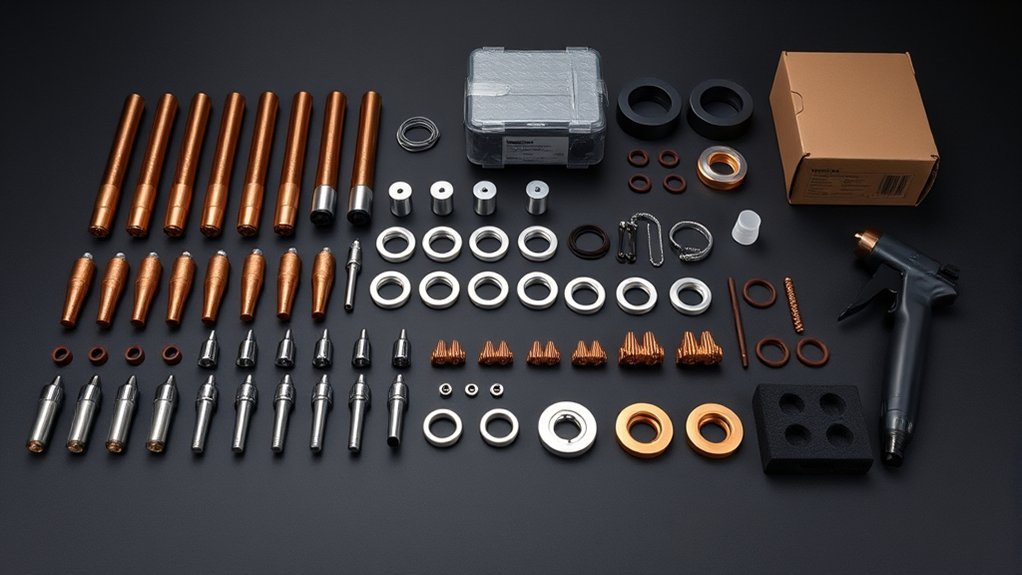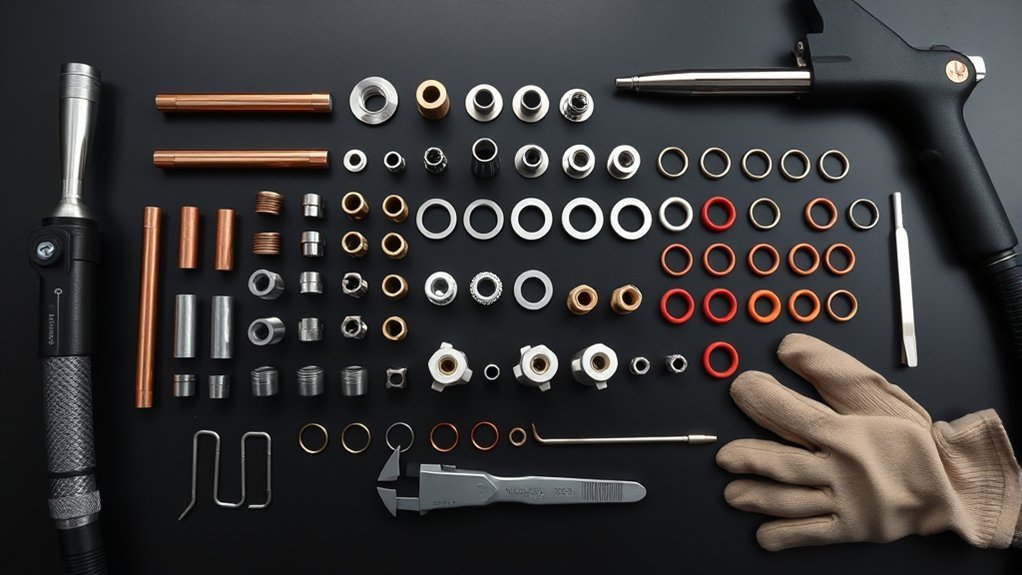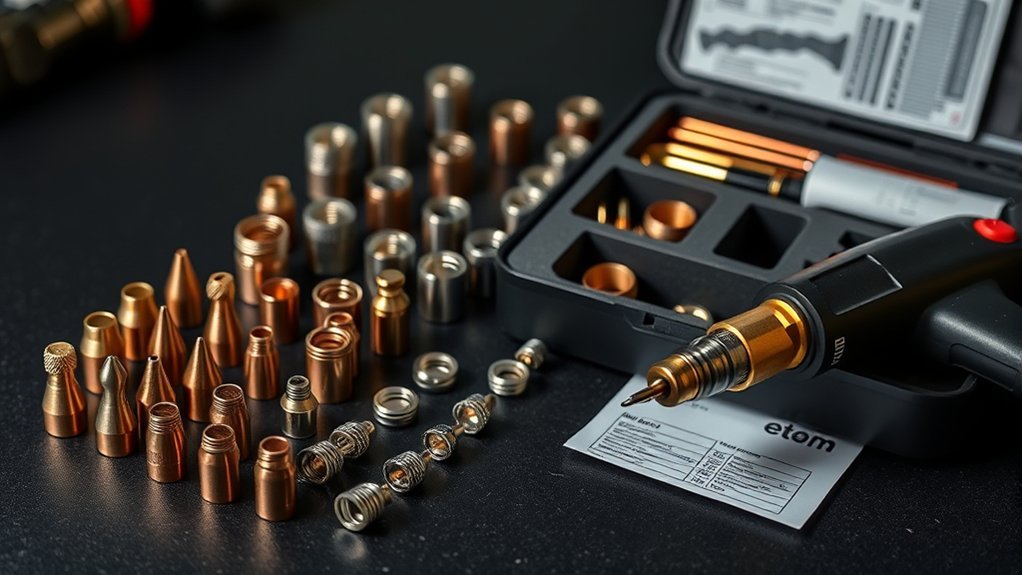
Choosing the correct Powermax65 consumables starts with identifying which Powermax65 you own, which Duramax or SmartSYNC torch is installed, and whether you are hand cutting, machine cutting, gouging, or using a specialty process. The right matched set improves cut quality and parts life; a mixed or incorrectly rated stack can cause poor starts, excess dross, bevel, and premature wear.
Quick Answer
For a legacy Powermax65 with a Duramax torch, match the shield, retaining cap, nozzle, electrode, and swirl ring to one process and amperage. FineCut runs at 40–45 A, not 65 A. CopperPlus electrode 220777 is a long-life cutting option for metal 12.5 mm (1/2 inch) and thinner; use the specified standard electrode for gouging.
Key Takeaways
- Identify the system first: The discontinued legacy Powermax65 uses a Duramax torch and a five-piece consumable stack; Powermax65 SYNC uses single-piece cartridges with SmartSYNC torches.
- Never mix processes: A drag shield, FineCut nozzle, gouging electrode, and mechanized cap do not form a valid set simply because the pieces fit.
- FineCut is a 40–45 A process: Use it for thin sheet and fine features, then follow the applicable cut chart for height and travel speed.
- Replace by condition, not a fixed hour count: Inspect consumables daily and replace cracked, burnt, deformed, excessively pitted, or oval-orifice parts.
- Air quality is part of the consumable system: Supply clean, dry, oil-free air or nitrogen at the pressure and flow required by the machine.
At a Glance
| Time Required | About 10–15 minutes to identify the torch, select a matched set, and inspect the parts |
| Difficulty | Beginner for hand-torch selection; intermediate for mechanized and ohmic setups |
| Tools Needed | Machine and torch model labels, operator manual or cut chart, clean cloth, good lighting, and a pit-depth gauge if available |
| Cost | Varies by process, pack size, and whether you use traditional parts or an adapter with cartridges |
Warning: Turn the plasma system off and disconnect input power before removing or installing torch consumables. Do not rely on the cap sensor as the primary disconnect. Wear suitable eye, face, hearing, hand, and body protection, control sparks and fire hazards, and use effective fume extraction for the material being cut.
Identify Your Powermax65 and Torch Before Ordering
The name Powermax65 now refers to two different consumable platforms. Confirm the label on the power supply and the torch before using any part-number list.
Legacy Powermax65 With a Duramax Torch
The original Powermax65 power supply is a legacy model that Hypertherm stopped manufacturing in December 2021. Hypertherm still lists original torches, service parts, consumables, and technical support for it. Its standard Duramax torch uses a separate shield or deflector, retaining cap, nozzle, electrode, and swirl ring.
Powermax65 SYNC With a SmartSYNC Torch
Powermax65 SYNC uses a color-coded, single-piece cartridge. When the cartridge is installed on a SmartSYNC torch, the system can identify the process and amperage automatically. Do not order the legacy five-piece stack for a SmartSYNC torch.
Legacy Duramax Torch With a Cartridge Adapter
A legacy Powermax65 Duramax hand, machine, or robotic torch can use Hypertherm cartridges with adapter 428951. The adapter simplifies inventory and installation, but a legacy Duramax torch does not gain SmartSYNC automatic process setup or cartridge data transfer.
Note: The machine’s maximum output is 65 A. A part may also fit Powermax85 or Powermax105, but that does not make an 85 A or 105 A process valid on a Powermax65.
Choosing the Right Consumables for Powermax65
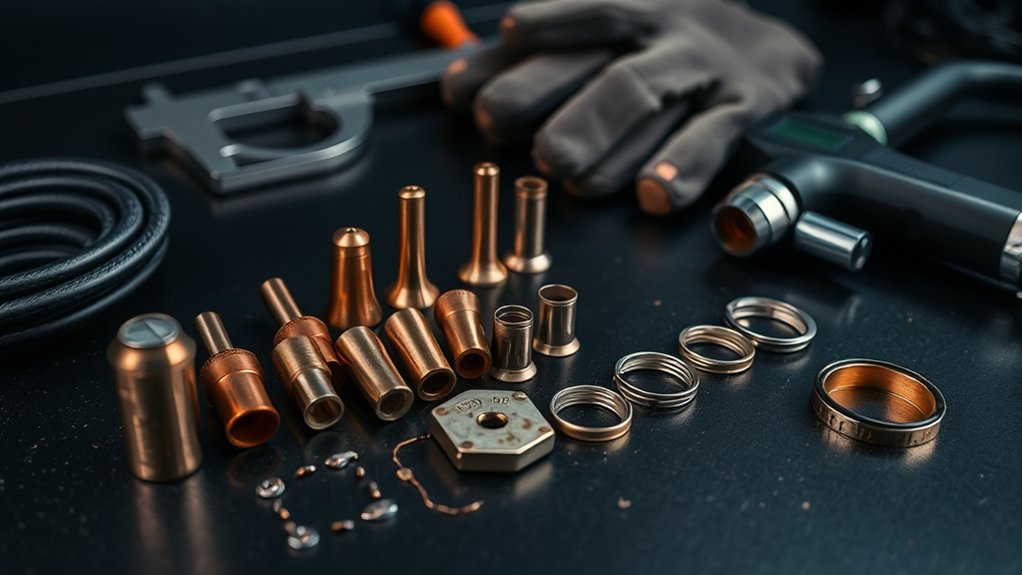
Choose consumables in this order: system generation, torch style, process, amperage, and then specialty features such as ohmic sensing, HyAccess, or FlushCut. Hypertherm identifies incorrect consumable selection as a leading cause of poor torch performance, so use the operator manual or the manufacturer’s Powermax65 consumables selector as the final authority.
Common Legacy Powermax65 Duramax Consumable Sets
| Process | Shield / Deflector | Retaining Cap | Nozzle | Electrode | Swirl Ring |
| 65 A hand drag cutting | 220818 | 220854 | 220819 | 220842 or CopperPlus 220777 | 220857 |
| 45 A hand drag cutting | 220818 | 220854 | 220941 | 220842 or CopperPlus 220777 | 220857 |
| FineCut hand cutting, 40–45 A | 220931 | 220854 | 220930 | 220842 | 220947 |
| 65 A mechanized cutting | 220817 shield | 220854, or 220953 for ohmic sensing | 220819 | 220842 or CopperPlus 220777 | 220857 |
| Max-removal gouging, 45–65 A on this machine | 220798 | 220854 | 220797 | 220842 | 220857 |
| Max-control gouging, 45–65 A on this machine | 420480 | 220854 | 220797 | 220842 | 220857 |
For FineCut machine cutting, unshielded cutting, robotic torches, and specialty configurations, verify the complete set in the official selector. Ohmic retaining cap 220953 is used only where the machine’s height-control system requires electrical contact sensing.
Pro Tip: Keep complete matched sets together in labeled bins. Label each bin with the process, amperage, torch type, and part numbers rather than sorting all nozzles, caps, and shields only by appearance.
Electrode Options: Standard vs. CopperPlus
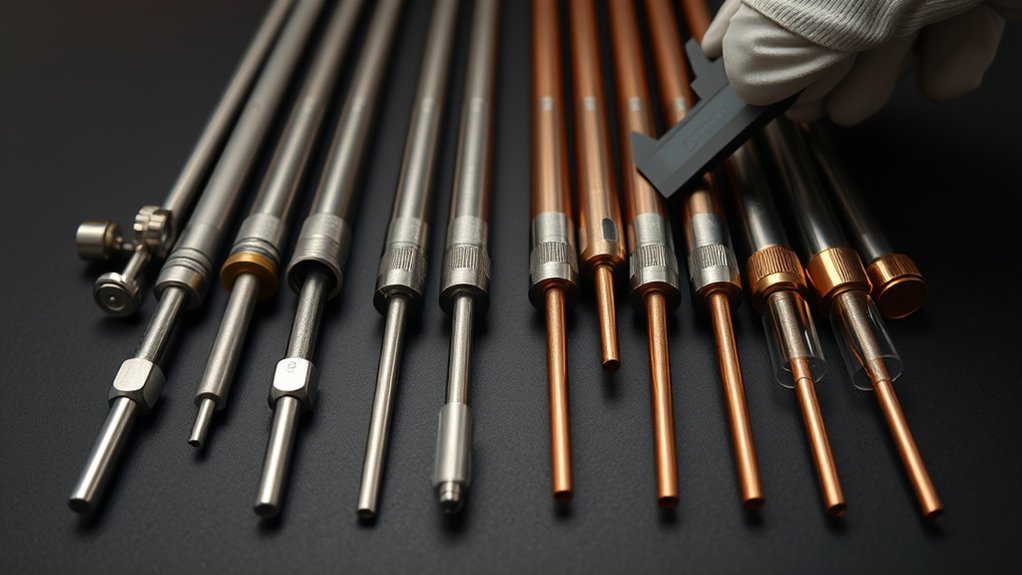
The standard Duramax electrode is 220842. The CopperPlus electrode is 220777. Hypertherm states that CopperPlus provides at least twice the life of the standard Duramax electrode in most cases when cutting metal 12.5 mm (1/2 inch) and thinner. Actual life varies with system, amperage, process, air quality, starts, pierces, technique, and material.
Where CopperPlus Fits
CopperPlus is a cutting-life upgrade for compatible Duramax and Duramax Lock torches. It can replace the standard electrode in the applicable 45 A and 65 A drag-cutting and mechanized-cutting stacks. It does not turn an incorrect stack into a correct one, and the official gouging stack specifies standard electrode 220842.
What CopperPlus Does Not Guarantee
The manufacturer’s documented benefit is longer electrode life on thinner material. It does not guarantee cleaner kerfs, less bevel, faster travel, or a higher gouging removal rate by itself. Those results depend on the entire consumable set, cut-chart settings, torch height, travel speed, gas quality, work-lead connection, and operator technique.
Cost-Per-Cut Comparison
Compare electrodes with a repeatable shop metric rather than purchase price alone:
Cost per acceptable part = (consumable cost + changeover labor + rework + scrap) ÷ acceptable parts produced.
For long contours, measuring cut length or arc-on minutes may be more useful than counting parts. Record the same material, thickness, amperage, pierce method, and acceptance standard for both electrodes. CopperPlus usually makes the strongest business case when the work stays within its 12.5 mm-and-under cutting range and changeover time is costly.
CopperPlus is a documented life upgrade, not a substitute for the correct nozzle, shield, cap, swirl ring, gas supply, and cut-chart settings.
Nozzles for 45 A, 65 A, and FineCut Applications
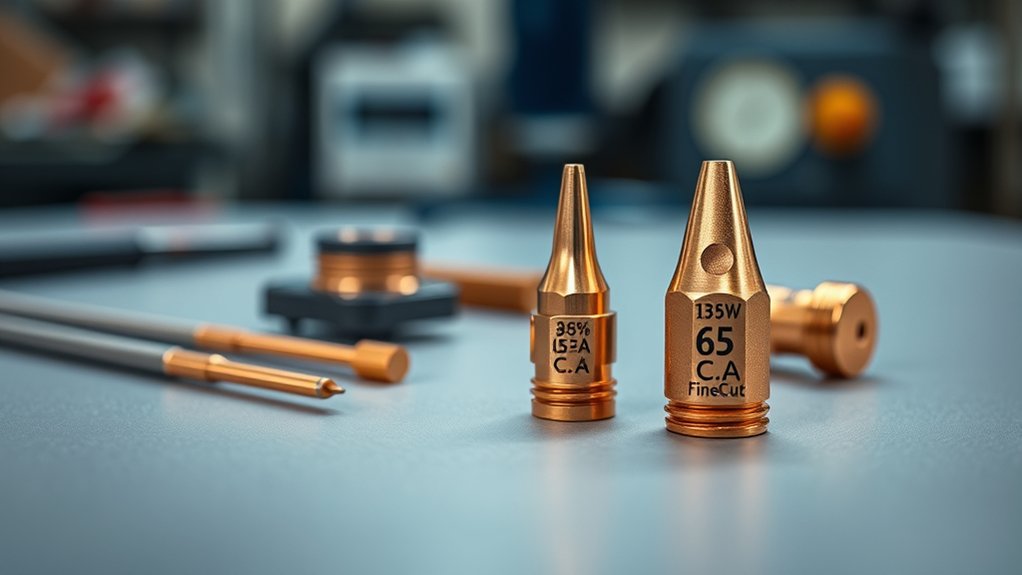
Nozzle selection controls the amperage range and arc shape. Set the machine within the nozzle’s rated range and use the matching shield, electrode, retaining cap, and swirl ring.
45 A Drag Cutting
Use nozzle 220941 for standard 45 A hand or machine cutting with the correct companion parts. This lower-current option is useful when the material and cut chart favor a smaller kerf or lower heat input than a 65 A process. A drag shield allows the hand torch to stay in contact with the work where the manual permits it.
65 A Production Cuts
Use nozzle 220819 for 65 A cutting. The legacy Powermax65 is rated for recommended hand cutting on mild steel up to 20 mm (3/4 inch), but that system rating is not a universal nozzle-selection rule. Material type, thickness, edge-quality target, pierce method, and torch type still determine the proper process.
Hypertherm describes its published production speeds as approximately 80% of maximum speed. That does not mean every operator should multiply an arbitrary maximum by 0.8. Use the material-specific cut chart and then make small adjustments for the actual plate and machine condition.
FineCut Precision Work
Legacy FineCut nozzle 220930 is a 40–45 A process. It is not a 65 A nozzle. FineCut is intended for thin material, narrow kerfs, small holes, and fine features where a standard higher-current process would add unnecessary heat or remove too much material.
- Install the complete FineCut set: Hand cutting commonly uses shield 220931, retaining cap 220854, nozzle 220930, electrode 220842, and swirl ring 220947.
- Set 40–45 A: Never run the FineCut nozzle at 65 A.
- Use the FineCut chart: Follow the specified torch height, pierce height, delay, and travel speed for the material.
- Inspect the small orifice often: FineCut quality falls quickly when the nozzle opening becomes nicked, oval, enlarged, or contaminated.
Shields and Deflectors: Drag, Mechanized, and Unshielded
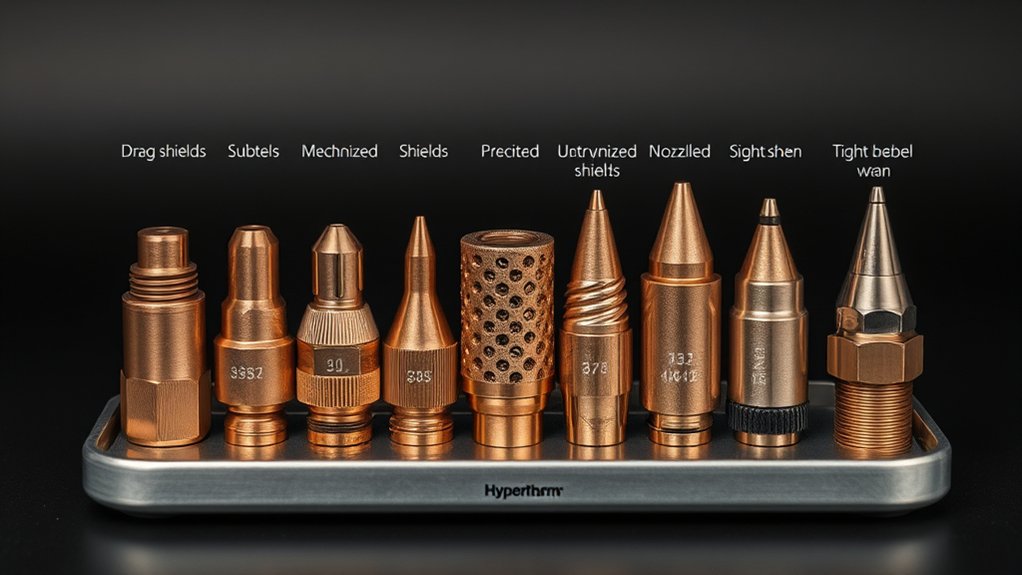
The front-end part must match the way the torch is used.
- Drag shield: Protects the nozzle and maintains the designed geometry while the hand torch rides on the workpiece. Standard 45 A and 65 A hand drag cutting commonly uses shield 220818.
- Mechanized shield: Protects the nozzle at the cut height set by the table or torch-height controller. Standard 45 A and 65 A machine cutting commonly uses shield 220817.
- Deflector: Used for specified unshielded or FineCut machine configurations where the torch must maintain a standoff. It is not a universal gouging part.
- Gouging shield: Shapes and protects the front end for either max-removal or max-control gouging. Use the shield listed for the desired profile.
A shield does not correct wrong amperage, low gas flow, poor pierce height, or a worn nozzle. Treat it as one part of a matched aerodynamic system.
Retaining Caps and Ohmic-Sensing Components
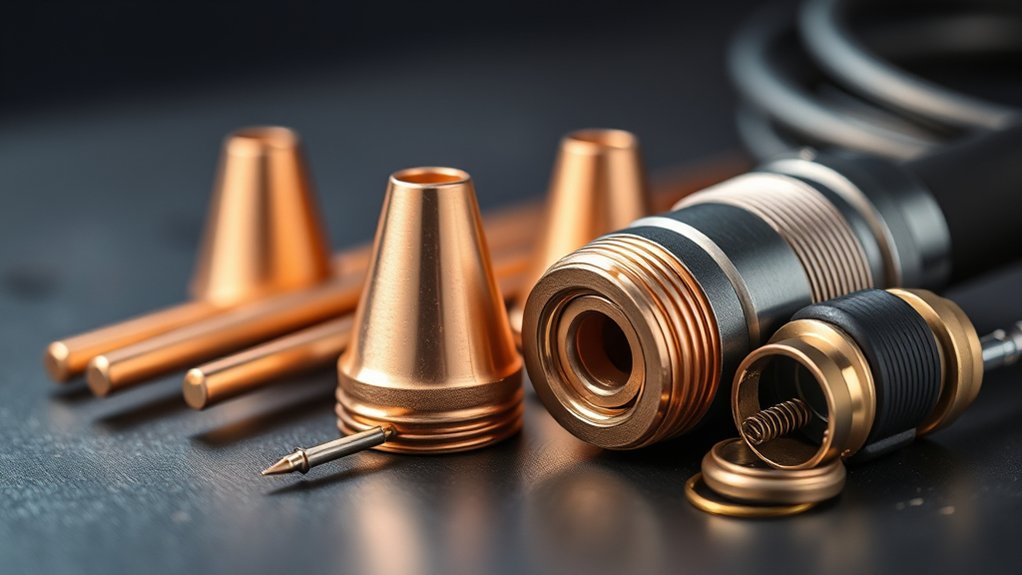
The retaining cap holds the consumable stack in the correct position and completes the torch’s cap-sensing arrangement. It should be installed finger-tight. Overtightening can compress or damage the swirl ring.
Standard and Ohmic Retaining Caps
- 220854: Standard Duramax retaining cap for applicable cutting and gouging stacks.
- 220953: Ohmic retaining cap for compatible mechanized systems that use electrical contact with conductive plate to establish the surface position.
Ohmic sensing improves the repeatability of initial height sensing when the plate surface is electrically conductive and the controller is configured correctly. It does not stabilize the cutting arc or make a worn consumable set perform like a new one. Water, heavy rust, paint, scale, film, or poor electrical continuity can make ohmic sensing unreliable, so a mechanical backup method may still be needed.
HyAccess and FlushCut Are Specialty Systems
- 420413 is a HyAccess retaining cap: It belongs with HyAccess electrode 420408 and cutting nozzle 420410 or gouging nozzle 420412. It is not an ohmic cap.
- 420536 is a FlushCut retaining cap: It belongs with the complete FlushCut consumable set for cutting attachments close to a base plate. Do not combine it with a standard nozzle merely because the cap fits the torch.
Replace a cap when it is cracked, burnt, warped, badly eroded, has damaged threads, or no longer seats correctly. There is no valid rule that a retaining cap must be discarded after five or ten uses.
Swirl Rings and Gas Flow Considerations
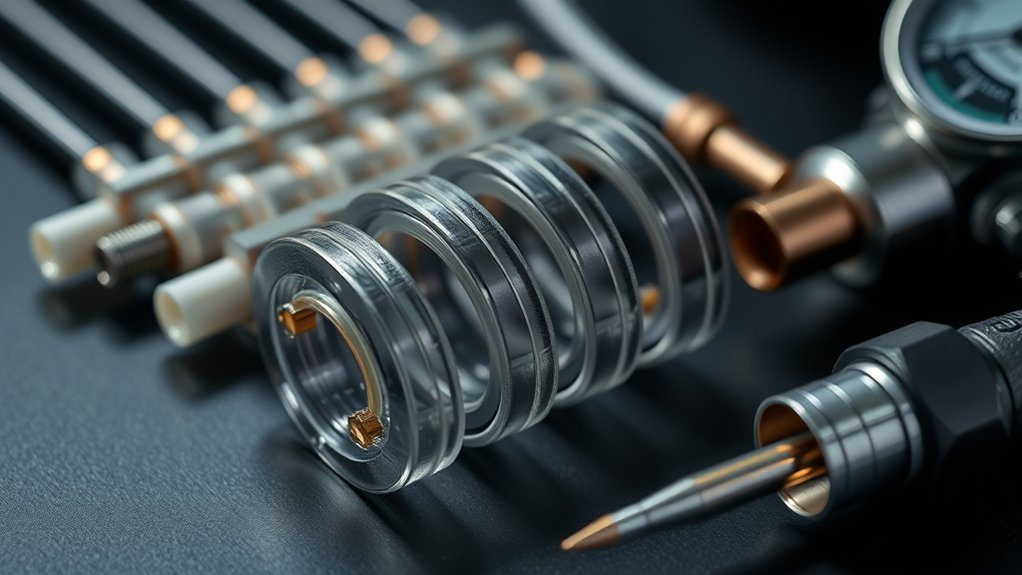
The swirl ring meters and rotates the gas around the electrode so the arc remains centered through the nozzle. Standard 45 A and 65 A cutting and gouging commonly use swirl ring 220857; handheld FineCut uses 220947.
For the legacy Powermax65, Hypertherm specifies clean, dry, oil-free air or nitrogen. The published inlet requirement is 189 l/min (400 scfh or 6.7 scfm) at 85 psi for cutting and 212 l/min (450 scfh or 7.5 scfm) at 70 psi for gouging. These are inlet requirements; restrictions, undersized hose, a loaded filter, moisture, oil, or pressure drop while the arc is on can still starve the torch.
- Check pressure while gas is flowing: Static regulator pressure can look correct even when the system cannot maintain flow under load.
- Drain and filter the air system: Moisture and oil contamination can leave black residue, disrupt gas flow, and shorten electrode and nozzle life.
- Inspect the swirl ring daily: Replace it if cracked, heat damaged, deformed, or blocked. Do not probe precision gas holes with an object that can enlarge them.
- Inspect the torch O-ring: Use only the lubricant and amount specified by Hypertherm; excess lubricant can contaminate the gas path.
Gouging Consumables: Deep vs. Shallow Profiles
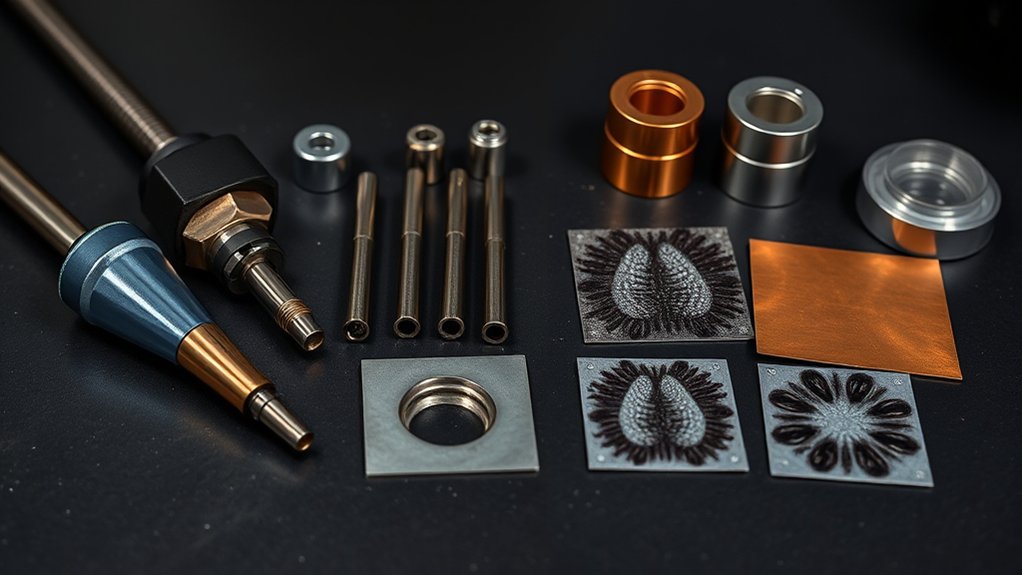
Choose the gouging set by the groove you need, not by the cutting nozzle already on the torch.
- Max-removal gouging: Uses shield 220798 with nozzle 220797, standard electrode 220842, retaining cap 220854, and swirl ring 220857. It produces a deeper, wider groove for rapid weld removal and heavy washing.
- Max-control gouging: Uses shield 420480 with the same standard gouging nozzle, electrode, cap, and swirl ring. It produces a narrower, shallower groove for controlled removal and blending.
The legacy Powermax65 product specification lists a typical gouging removal rate of 4.8 kg/hr (10.7 lb/hr) with a typical groove of about 3.5 mm deep by 6.6 mm wide. That is a system-level reference under appropriate conditions, not a guaranteed rate for every angle, material, consumable condition, or operator.
Hold the torch at the angle recommended in the manual, direct sparks away from yourself and nearby people, and adjust travel speed to control depth. A steeper angle and slower travel generally increase depth, but poor technique can overheat the torch or damage the work.
Recommended Kits, Bulk Packs, and Starter Sets
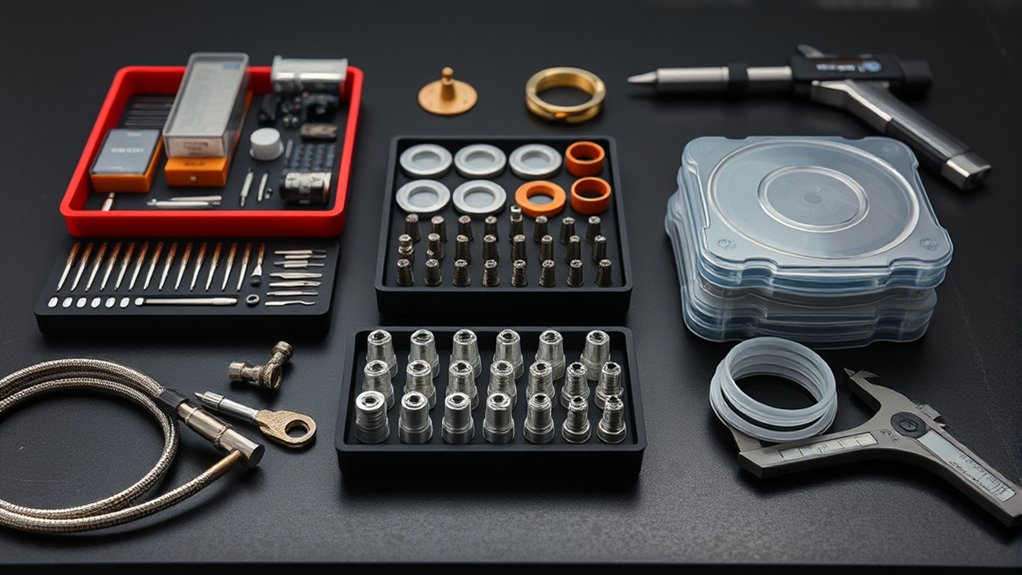
Buy a kit that matches a real process you perform. Avoid choosing a kit solely because the package says Powermax65.
- HyAccess kit 428414: Includes two 420408 electrodes and one each of cutting nozzle 420410, gouging nozzle 420412, retaining cap 420413, and swirl ring 220857.
- HyAccess cutting starter pack 428445: Includes one each of 420413, 420410, and 420408.
- HyAccess gouging starter pack 428446: Includes one each of 420413, 420412, and 420408.
- CopperPlus bulk pack 228934: Contains 25 CopperPlus 220777 electrodes for compatible cutting work.
- Gouging nozzle bulk pack 228762: Contains 25 nozzles 220797 for shops with steady gouging demand.
Prices change by distributor, region, and date, so calculate value from verified contents and your actual usage. A bulk pack saves money only when the parts match your torch and process and can be stored clean and dry until used.
Products Worth Considering

Package Include: 10 Shield Cups, 50 Nozzles, 20 Swirl Baffle, and 30 Electrodes.

[Achieve Precise Cuts] PT31 Plasma Cutting Consumables – Your Essential Tool for Efficient Cutting! Whether you're working with sheet metal, steel, or any other material, superior cutting performance ensure clean, accurate, and smooth cuts.

High-Quality Material:Made of high quality material to ensure a longer lifespan and superior performance.
Powermax65 SYNC Cartridge Reference
| Cartridge Process | Part Number |
| 65 A hand drag cutting | 428931 |
| 45 A hand drag cutting | 428927 |
| FineCut hand cutting | 428928 |
| 65 A mechanized cutting | 428930 |
| 45 A mechanized cutting | 428925 |
| FineCut mechanized cutting | 428926 |
| Max-removal gouging | 428932 |
| Max-control gouging | 428933 |
Maintenance Schedule and Replacement Indicators
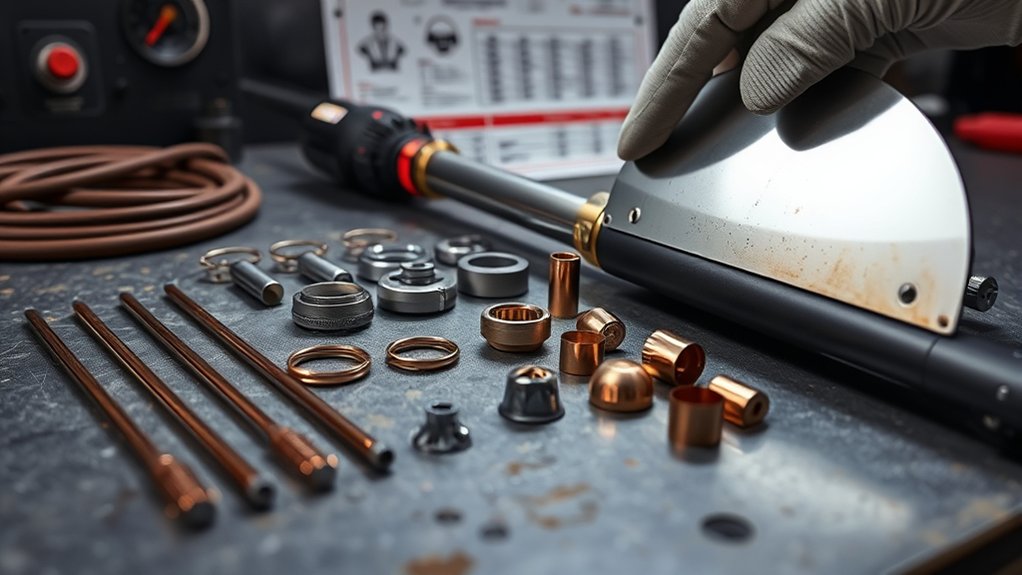
Do not replace Powermax65 consumables by a universal five-hour, twenty-hour, or thirty-hour schedule. Arc-on time, pierces, material, amperage, gas quality, torch height, and technique can change life dramatically. Hypertherm recommends daily inspection and condition-based replacement.
Daily Consumable Inspection
- Disconnect input power. Let hot components cool and remove the front-end parts on a clean surface.
- Inspect the shield or deflector. Replace it for cracks, burns, blocked holes, severe erosion, or arc marks where they should not appear.
- Inspect the nozzle and electrode as a pair. Replace a nozzle with a non-round, nicked, enlarged, or deformed orifice. Replace an electrode when the hafnium pit exceeds 1.6 mm (1/16 inch), or earlier if wear is abnormal or cut quality has deteriorated.
- Inspect the swirl ring. Its holes must be clean and undeformed, and the body must be free of cracks and heat damage.
- Inspect the torch O-ring, threads, body, lead, and trigger. Stop using damaged equipment and obtain the correct service parts.
- Reassemble finger-tight. Confirm that every part belongs to the same process and amperage before restoring power.
What Wear Patterns Can Tell You
- Electrode and nozzle both badly worn: The electrode may have been run past end of life, allowing molten material to damage the nozzle.
- New-looking electrode with a destroyed nozzle: Check for double arcing, low pierce height, torch contact with the plate, or insufficient gas pressure.
- Black residue: Check the air supply for oil or moisture contamination.
- Keyhole or slot inside the nozzle: Check for low gas pressure, restrictions, leaks, or poor flow under load.
- Frequent hard starts with usable-looking parts: Confirm correct assembly, cap condition, gas settings, work-lead contact, and any displayed fault code before discarding the parts.
Maintenance Beyond the Consumables
Inspect the air filter and bowl for oil, water, dirt, and damaged seals. Clean the machine’s dirty side at the interval in the operator manual; Hypertherm’s general preventive-maintenance guidance uses a six-month internal inspection as a baseline, with more frequent service in dusty or high-duty environments.
Upgrades, Adapters, and Compatible Accessories
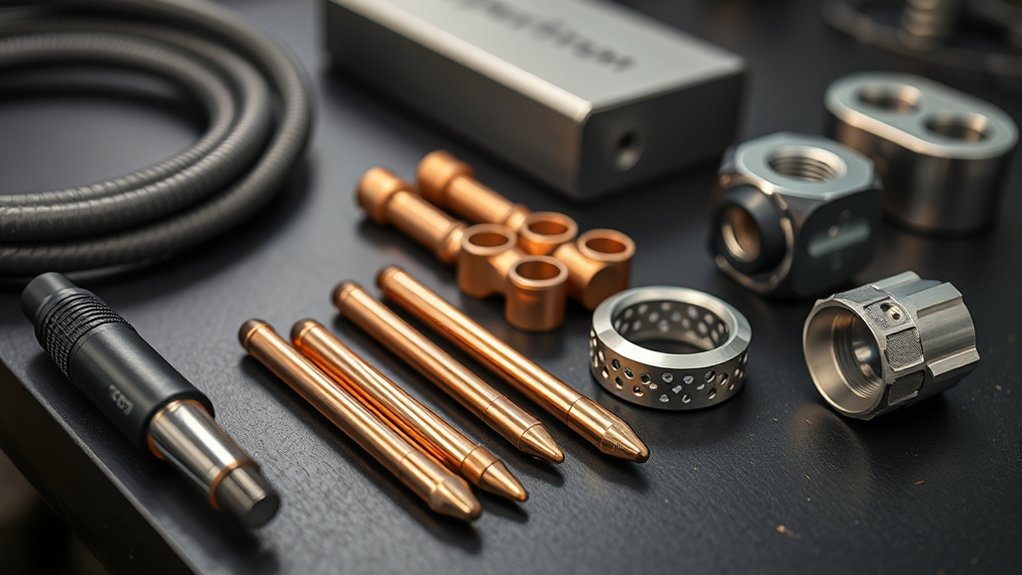
The most practical consumable-platform upgrade for a legacy Powermax65 is the 428951 cartridge adapter. It allows a Duramax hand, machine, or robotic torch to use compatible Hypertherm cartridges. Because the legacy torch lacks SmartSYNC communication, automated process setup and cartridge data transfer are not available.
- Air treatment: Add appropriately sized water separation and coalescing filtration when the compressor or piping cannot deliver clean, dry, oil-free air at the required flow.
- Cutting guides: Circle guides and straightedge guides can improve hand-cut consistency without changing the required consumable set.
- Torch-height control: Mechanized cutting benefits from correct initial-height sensing, pierce height, cut height, delay, and voltage control. Use ohmic components only with a compatible control system and conductive plate.
- Specialty consumables: Use HyAccess for extended reach and FlushCut for close attachment removal. Each requires its own complete matched set.
- Genuine parts and warranty: Hypertherm states that damage or injury caused by non-genuine parts is not covered by its warranty and is considered misuse of the product.
Products Worth Considering

1Pcs 428927 Cartridge or Adapter

3Pcs 428927 Cartridge or Adapter

3Pcs 428926 Mechanized Cartridge or Adapter Plasma Consumable
Frequently Asked Questions
How can I tell whether I have a legacy Powermax65 or Powermax65 SYNC?
Read the power-supply and torch labels. A legacy Powermax65 normally has a Duramax torch and uses five separate front-end consumables. Powermax65 SYNC uses a SmartSYNC torch and a single-piece cartridge. A legacy Duramax torch may also have adapter 428951 installed for cartridge use, so inspect the torch front end before ordering.
Can I run a legacy FineCut nozzle at 65 A?
No. Legacy FineCut nozzle 220930 is used at 40–45 A with the matching FineCut parts. Running it at 65 A can damage the nozzle quickly and produce poor or unsafe results.
How do ambient temperature and humidity affect consumable life?
Ambient conditions matter mainly through air quality, compressor performance, condensation, and machine cooling. High humidity can increase water in compressed air, while high shop temperature can reduce duty-cycle margin. Keep the air clean, dry, and oil-free, drain the system, maintain filters, and operate the cutter within the environmental limits in its manual.
Can mixed-brand consumables void the warranty?
Using a non-genuine part does not automatically erase every unrelated warranty right, but Hypertherm states that damage or injury caused by non-genuine parts is not covered and constitutes misuse. Keep purchase records and use the manufacturer-specified stack when warranty coverage and traceability matter.
What storage conditions protect electrodes and nozzles?
Store consumables in their original packaging or clean, closed bins in a dry area away from grinding dust, oil mist, moisture, and corrosive chemicals. Handle precision surfaces with clean hands, keep matched sets separated, and avoid loose storage where nozzle orifices and sealing surfaces can be nicked.
How do power-supply voltage problems affect cut quality and wear?
Low, unstable, or incorrectly connected input power can cause faults, reduced output, difficult starts, or inconsistent performance. Use the circuit, conductor size, grounding, disconnect, and generator capacity specified for the exact Powermax65 version. Do not add a line conditioner or phase-conversion device unless Hypertherm and a qualified electrician confirm compatibility.
Are there special consumables for lower fumes or noise?
Consumables should be selected for the required cut, not as the primary fume or noise control. Use source capture, a suitable downdraft or water-table system where approved, adequate general ventilation, hearing protection, and material-specific hazard controls. Coatings and metals such as galvanized steel, stainless steel, lead-painted material, and cadmium-plated material may require additional controls.
Conclusion
The correct Powermax65 consumables are a matched system, not a collection of individually compatible-looking parts. First distinguish the legacy Duramax platform from Powermax65 SYNC, then match the process and amperage. Use FineCut only at 40–45 A, reserve CopperPlus for its documented thin-material cutting-life benefit, and use the specified standard electrode for gouging.
For consistent results, inspect parts daily, replace them by visible condition, maintain clean and adequate gas flow, and record starts, arc-on time, cut length, material, and failure pattern. That shop data will show whether poor life comes from normal wear, air contamination, low pierce height, incorrect setup, or a consumable that was run too long.
Sources
- Hypertherm Powermax65 product and consumables page — legacy lifecycle, cut capacity, gas requirements, cartridge conversion, and standard consumable part numbers.
- Hypertherm CopperPlus electrode 220777 — compatibility and the documented life claim for metal 12.5 mm and thinner.
- Hypertherm cartridge consumable platform — SmartSYNC compatibility, adapter 428951, cartridge part numbers, and legacy limitations.
- Hypertherm Powermax preventive maintenance — daily inspection, 1.6 mm electrode pit limit, nozzle and swirl-ring wear, and finger-tight cap installation.
- Hypertherm warranty information — coverage language for damage caused by non-genuine parts.
- OSHA welding, cutting, and brazing hazards — fume, UV, burn, eye, electrical, and other workplace hazards.