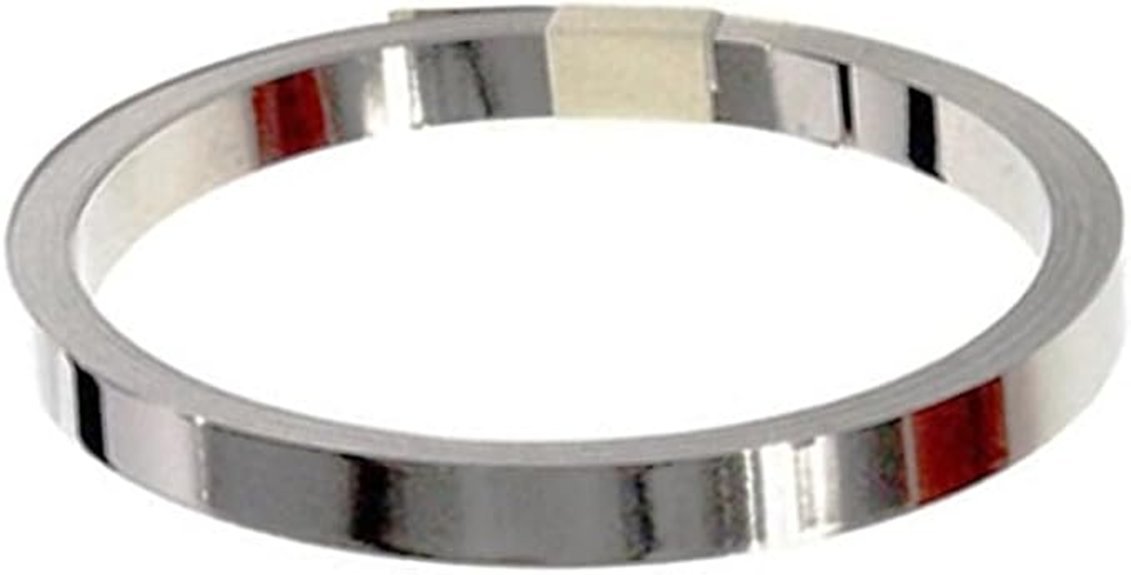
These 99.6% pure nickel strips are 0.12 mm thick, 8 mm wide and about 3 m (9.9 ft) long, sold for joining 18650 and 21700 cells in battery packs. This review is based on the Amazon listing, not hands-on testing. Pure nickel has lower electrical resistance than nickel-plated steel, so it is the better choice for packs that draw real current. The trade-off is that it needs a stronger spot welder and costs more per metre.
Quick specs of the 99.6% pure nickel strips
| Item | Detail |
|---|---|
| Material | Pure nickel, listed at 99.6% purity |
| Thickness | 0.12 mm |
| Width | 8 mm |
| Length | About 3 m (9.9 ft) |
| Typical cells | 18650 and 21700, per listing |
| Joining method | Spot welding (resistance welding) is standard |
Specs are taken from the seller listing and may change; confirm them on the current listing before you buy.
Pure nickel vs nickel-plated steel
Nickel strip comes as pure nickel or as nickel-plated steel. Pure nickel conducts current better and heats less at a given current, which is why serious pack builders prefer it. Plated steel is cheaper and stiffer but has higher resistance and can rust if the plating is damaged.
| Feature | Pure nickel | Nickel-plated steel |
|---|---|---|
| Resistance | Lower | Higher |
| Price | Higher | Lower |
| Spot welding | Needs enough pulse energy; conductive and reflective | Easier on small welders |
| Best for | Higher-current packs | Light-duty packs |
For a plated-steel option see our HARFINGTON nickel strip review.
How to choose the right thickness and width
- Estimate current per strip. Strip width and thickness set how much current it carries before heating. The listing gives no current rating, so size conservatively.
- Match your cells. 8 mm width fits the terminals of 18650 and 21700 cells. The listing mentions both.
- Match your welder. A weak capacitor welder may not weld 0.12 mm pure nickel reliably; many builders use a more powerful battery-powered spot welder. Check your welder rating and test weld on scrap.
- Use multiple strips or layers. For higher current you can stack strips or run them in parallel, but verify your welder can penetrate.
- Quantity. 3 m is a modest roll; calculate how much you need for the number of cells and connections.
Spot welding tips for pure nickel
- Clean the strip and cell terminals with isopropyl alcohol; oxidation and oils hurt weld quality.
- Start with low energy and increase until you get a firm weld without blowing through the strip.
- Make two weld spots per connection to improve strength and current path.
- Pull test sample welds; a good weld tears the strip, not the joint.
- Do not solder onto lithium cells; heat can damage them.
Battery safety
- Never short cells with the strip while you work. Cover exposed terminals.
- Add insulation (fish paper) around terminals and edges.
- Use a battery management system and a fuse sized for your pack.
- Do not weld on damaged, swollen or unlabelled cells.
- Wear eye protection; spot welding can eject sparks.
- Nickel can cause skin reactions in some people; wear gloves if you are sensitive.
Pros and limitations
- Lower resistance than plated steel
- Fits 18650 and 21700 cell terminals, per listing
- Flexible strip is easy to cut and bend
- A short roll if you build several packs
- Needs a capable spot welder
- Higher cost than plated steel
- Purity and thickness claims come from the seller
Related guides and alternatives
- HARFINGTON nickel strip review a plated steel alternative.
- Nickel-plated steel strips review another plated steel strip.
- Battery spot welder review for a spot welder to use with these strips.
- Faiuot dual-farad spot welder review another spot welder option.
Frequently Asked Questions
Is pure nickel better than nickel-plated steel for battery packs?
For higher-current packs, usually yes, because pure nickel has lower resistance and stays cooler. Plated steel is cheaper and fine for light loads. Size the strip for your current in either case.
Can I use these strips on 21700 cells?
The listing says the 8 mm strip is for 18650 and 21700 cells. Check that the width fits your cell terminals and that your spot welder is strong enough to weld 0.12 mm pure nickel.
Can I solder nickel strip to batteries?
Spot welding is preferred. Soldering heat can damage lithium cells and weaken seals, so avoid soldering directly to cell terminals. If you must solder, use a specialist method on cells designed for tabs.
How do I test my spot welds?
Weld a test piece to scrap, then try to peel the strip. A good weld pulls out a nugget of strip material. Weak or burned welds need adjusting energy, pressure or surface cleaning.
Bottom line
These 99.6% pure nickel strips are a good choice when you want lower resistance than plated steel and have a capable spot welder. Size the strip for current, weld not solder, and add proper battery protection. Check the current listing for roll length options.