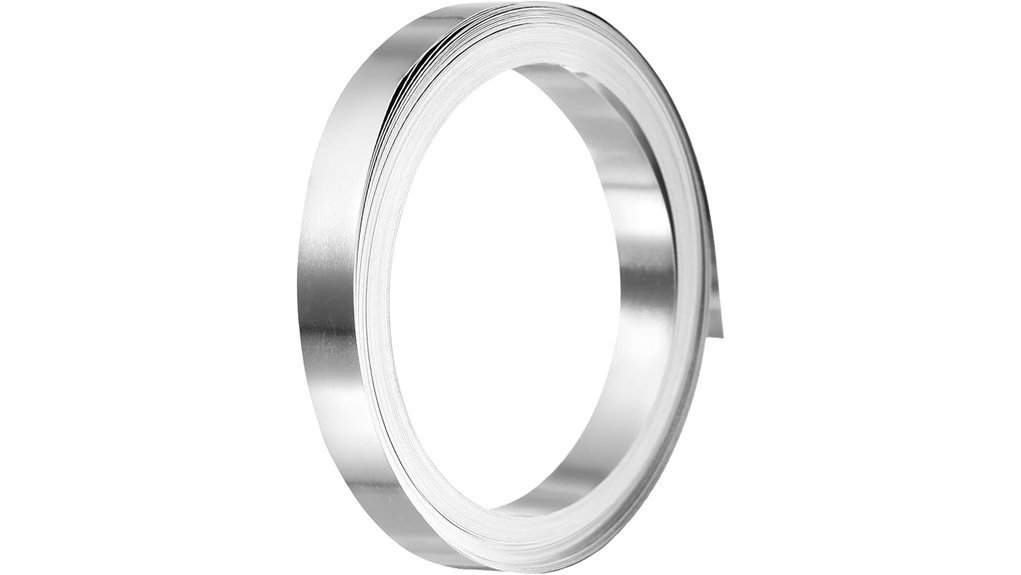
The HARFINGTON nickel strip is a 10 m roll of nickel-plated steel strip, 0.1 mm thick and 8 mm wide, sold for building battery packs from 18650 and similar cells. This review is based on the Amazon listing, not hands-on testing. It is a reasonable low-cost strip for light-duty packs spot welded with a small welder. It is not the right choice for high-current packs, where a thicker strip, pure nickel or busbars are better.
Quick specs at a glance
| Item | Detail |
|---|---|
| Material | Nickel-plated steel (per listing) |
| Thickness | 0.1 mm |
| Width | 8 mm |
| Length | 10 m |
| Typical use | 18650 and other lithium cell packs, small electronics projects |
| Joining method | Spot welding recommended; the listing also mentions tin wire |
Specs are taken from the seller listing and may change; confirm them on the current listing before you buy.
Check the current price on Amazon →
What the HARFINGTON nickel strip is, and what plated steel means
Battery strip comes in two main types. Pure nickel strip conducts better but costs more. Nickel-plated steel strip is cheaper and stiffer, but it has noticeably higher electrical resistance than pure nickel, so the same dimensions carry less current with more heating.
The HARFINGTON listing text talks about high conductivity. Treat that as relative to other cheap strips; plated steel is not a high-conductivity material. It suits low-drain packs such as remote devices, small power banks and DIY projects with modest current draw.
Current capacity: how to size the strip
At 0.1 mm x 8 mm the cross-section is small, so continuous current should stay low. Exact limits depend on length, temperature rise and how many strips run in parallel, and the listing gives no current rating, so do not assume one.
- For light loads, a single strip per cell connection may be fine.
- For heavier loads, use several strips in parallel, a thicker strip (often 0.15 mm or more), pure nickel or copper busbars.
- Keep strip runs short and avoid sharp bends that thin the material.
- Fit a BMS and fuse suited to the pack regardless of strip choice.
Check the current price on Amazon →
Compatibility checklist
- Cell size: 8 mm width suits the terminals of 18650 cells and many other small cylindrical cells. Check clearance for the terminal ring and vent area.
- Welder capability: a small capacitor or battery spot welder is usually needed. Very thick strip needs a more powerful machine.
- Material: if you want the lowest resistance, look at pure nickel. See our pure nickel strip review.
- Quantity: a 10 m roll covers a lot of pack building, but plan a cut list before you start.
- Pack design: count the series and parallel paths and the current each strip will carry.
Using nickel strip safely and correctly
- Spot weld rather than soldering directly to cells. Soldering heat can damage a lithium cell and seal.
- Cut with sharp snips and remove burrs so edges do not pierce cell wraps.
- Insulate with fish paper or cell spacers where a strip passes close to the opposite terminal.
- Never short a cell; keep metal tools away from a charged pack.
- Wear eye protection when spot welding because weld splash can fly.
- Charge and test finished packs with a suitable charger and BMS; stop if a cell gets hot.
Damaged or swollen lithium cells are a fire hazard. Do not weld to cells that are dented, leaking or of unknown origin.
Pros and limitations
- Low cost per metre in a long 10 m roll
- Suits spot welding of 18650 cells at light loads
- Flat, uniform strip is easy to cut and shape
- Plated steel has higher resistance than pure nickel
- 0.1 mm is thin for high-current use
- Instructions are not described in the listing
- Any plating quality claims are the seller’s
Check the current price on Amazon →
Related guides and alternatives
- Pure nickel strips review a pure nickel option with lower resistance.
- Nickel-plated steel strips review another plated steel strip to compare.
- Battery spot welder review for a spot welder to join strip to cells.
- 21700 cell spacer and holder review for holding and spacing cells in a pack.
Related reviews: 10 m nickel strip review for battery welding, SHONAN pure nickel strips review, nickel strips for battery welding review and SUIDI pure nickel strip review.
Frequently Asked Questions
Is the HARFINGTON strip pure nickel?
The listing describes it as nickel-plated steel, not pure nickel. Plated steel is stiffer and cheaper but has higher resistance, so it fits light-duty packs better than high-current ones.
Can I use 0.1 mm strip for 18650 packs?
Yes for light loads with a suitable spot welder. For higher-current packs, use thicker strip, pure nickel, parallel strips or busbars, and size them for the current. Ask the pack maker or use a trusted pack design guide.
Should I solder the strip to the cells?
Spot welding is the standard method. Soldering heat can damage lithium cells and is not recommended. The listing mentions tin wire, but avoid direct soldering to cell terminals.
How much current can the strip carry?
The listing gives no current rating. Capacity depends on width, thickness, material, length and heat. Use several strips in parallel and conservative design, and add a BMS and fuse.
Bottom line
The HARFINGTON nickel strip is a budget roll for light-duty 18650 packs and small projects. Treat it as plated steel, size it for current conservatively and spot weld it rather than soldering to cells.