Disclosure: As an Amazon Associate, we earn from qualifying purchases. If you click a link on this page and make a purchase, we may receive a small commission at no extra cost to you.
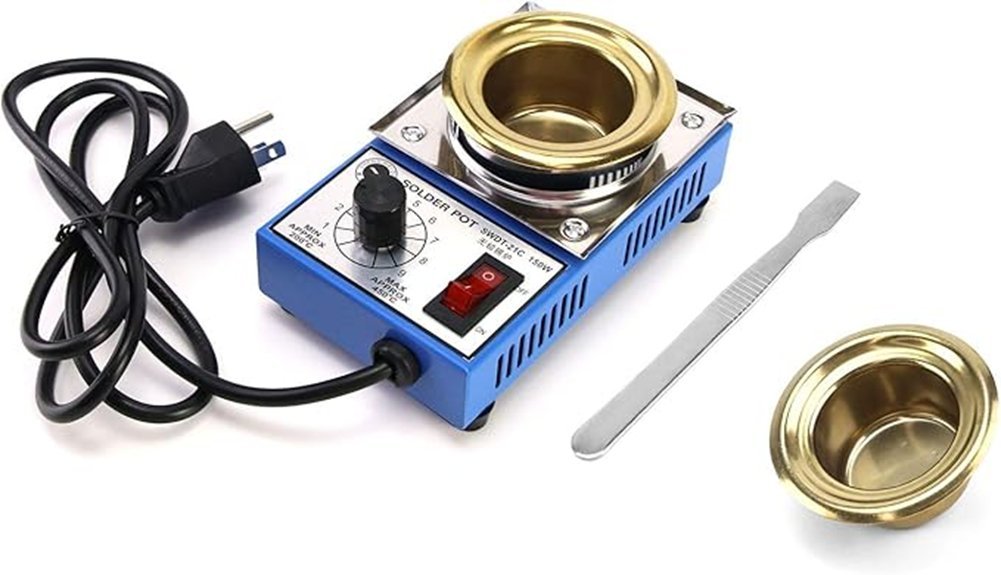
Small soldering jobs can get messy when you need to tin wire ends, dip components, or melt enough solder for repeat work. The QWORK Solder Pot is a compact 150W bench tool made for those small-batch solder melting tasks. It gives you a 200°C to 450°C adjustable range, a 50mm bath, and a listed capacity of up to 500g. This review helps you decide if its compact size and simple controls are enough for your bench, or if you should step up to a larger solder pot.
Quick Verdict
Rating: 8/10
Best For: Hobbyists, repair benches, and small production tasks that need a compact solder bath.
Bottom Line: The QWORK Solder Pot is worth considering if you need a small 150W solder pot with adjustable heat and a 500g listed capacity. Its main tradeoff is size, since the 50mm bath is better for wire tinning and small parts than larger assemblies.
| Specification | Detail |
|---|---|
| Brand | QWORK |
| Product type | Electric solder pot |
| Power | 150W |
| Temperature range | 200°C to 450°C |
| Control settings | 1 to 9 gear settings |
| Solder bath size | 50mm bath |
| Listed capacity | Up to 500g |
| Material | Stainless-steel construction with titanium plate bath |
| Weight | 1.28 lb |
| Length | 5.9 in |
| Best use | Wire tinning, dip soldering, electronics repair, and small bench soldering tasks |
| Safety note | Use with heat protection, ventilation, and solder manufacturer instructions. |
What Is the QWORK Solder Pot?
The QWORK Solder Pot is a small electric soldering bath designed to melt solder for dipping wires, leads, and small compatible parts. Instead of feeding solder by hand with an iron, you can heat a small pool of solder and dip the part into the bath. That can save time when you repeat the same tinning or solder preparation step many times.
Its key specs are a 150W power rating, a 200°C to 450°C temperature range, and a 50mm solder bath with a listed capacity of up to 500g. The compact 5.9-inch body and 1.28 lb weight make it easier to fit on a small repair bench than a larger industrial solder pot.
The design is simple, which is part of the appeal. You get 1 to 9 gear settings rather than a complex digital control panel, so it is better for practical shop use than lab-grade temperature logging.
Before You Buy: This is a hot molten-metal tool, not a general craft warmer. Check that the 50mm bath, 500g listed capacity, and 200°C to 450°C range match the solder and parts you plan to use.
Who Should Buy It?
Best For
- Hobbyists who tin wires or small component leads often.
- Repair benches that need a compact solder bath for repeat tasks.
- Users who want adjustable heat without a large industrial station.
Skip If
- You need a large bath for bigger assemblies or high-volume production.
- You need digital temperature readouts, presets, or advanced calibration.
- You are not prepared to handle molten solder, fumes, and hot metal safely.
Key Features of the QWORK Solder Pot
The strongest feature is the balance between size and capacity. The 50mm bath is small enough for a crowded bench, but the listed 500g capacity gives you more working volume than a tiny tinning cup.
The 150W power source supports fast heat-up for light to moderate soldering jobs. For small wires and repeated dipping tasks, that can help keep your workflow moving without waiting on a soldering iron for every piece.
The 200°C to 450°C range gives you room to work with solder materials that need different melting temperatures. You should still match the setting to the solder manufacturer’s guidance rather than turning the pot to maximum by default.
Temperature Control and Heating Performance
The QWORK Solder Pot uses 1 to 9 gear settings to adjust heat across its listed 200°C to 450°C range. This style of control is easy to understand, but it is not the same as a precise digital thermostat. For most bench jobs, you will likely choose a setting, let the solder fully melt, then make small adjustments based on flow and surface condition.
The titanium plate bath is designed to help with heat transfer and even melting. That matters because cold spots can make dipping inconsistent, especially when you are tinning multiple wires in a row.
For best results, give the solder time to stabilize after each adjustment. If the solder looks sluggish, stringy, or dull, the temperature or solder condition may need attention before you continue.
Build Quality and Materials
The article-supported materials are stainless steel and a titanium plate bath. Stainless steel helps resist rust and corrosion, which is useful around flux, residue, and workshop moisture. The titanium plate bath is the working surface that holds and heats the solder.
At 1.28 lb, the tool is light enough to move when needed, but you should still place it on a stable, heat-resistant surface. A light tool can shift if the cord is pulled or if you dip a part too aggressively.
The compact 5.9-inch length is helpful for small benches, but it also means you should plan your surrounding work area. Leave space for your solder, parts, flux, tools, and a safe cooling zone.
Capacity and Work Area
The listed maximum capacity is 500g, which is useful for small batch work. It is enough for many wire tinning and dip soldering tasks, but it is not meant to replace a larger production solder bath.
The 50mm bath size is the main limit to keep in mind. It works best when the part you are dipping can fit into the bath without touching the sides awkwardly or forcing you to tilt the tool.
If you often work with thick cable ends, large connectors, or oversized parts, measure your typical workpieces before buying. The solder pot may still be useful, but it may not be your only soldering setup.
Pro Tip: Start with a lower gear setting, let the solder fully melt, then increase heat only as needed. Running hotter than needed can increase oxidation, fumes, and residue.
How It Performs in Real Use
For Wire Tinning
This is one of the best fits for the QWORK Solder Pot. The 50mm bath lets you dip stripped wire ends into molten solder, which can produce more consistent tinning than feeding solder by hand for every wire.
For Electronics Repair
On a repair bench, the compact size is helpful because you can keep the pot nearby without giving up much work surface. It is most useful for repeated prep work, small leads, and compatible parts that fit the bath.
For Small Production Runs
The 150W power and 500g listed capacity make sense for light production workflows. It can help when you need repeatable dipping, but it is not the best match for large parts, continuous heavy use, or industrial throughput.
For Shared Workshop Use
The simple 1 to 9 gear control is easy for different users to understand. The tradeoff is that each user still needs to follow the same solder, flux, ventilation, and cleanup process to keep results consistent.
Setup Tips Before First Use
Place the solder pot on a flat, stable, heat-resistant surface before plugging it in. Keep the power cord away from the bath, hot metal, and the path where your hands will move during dipping.
Add only a suitable amount of solder for the job. Do not overfill the 50mm bath, because molten solder can splash or spill if the level is too high when you dip a part.
Let the solder melt completely before use. Once melted, skim residue carefully with an appropriate tool if needed, and follow the solder and flux manufacturer’s guidance for safe handling.
Compatibility and Safety
The QWORK Solder Pot should be used only for soldering materials and tasks that fit its temperature range and bath size. Its 200°C to 450°C range can cover many common soldering jobs, but your solder alloy, flux, and workpiece should guide the setting.
Lead-based solder requires extra care. Use ventilation, avoid skin contact with residue, wash hands after handling, and follow local rules for lead, fumes, and waste disposal. If you are unsure, choose solder and safety practices recommended by your workplace, instructor, or qualified professional.
Always wear suitable eye protection and heat-resistant hand protection. Keep children, pets, liquids, paper, fabric, and clutter away from the tool while it is hot.
Cleaning and Maintenance
Let the pot cool completely before cleaning or storage. Never wipe the bath while the solder is molten unless you are using the proper tool and following safe soldering practice.
After the unit is cool, remove loose residue gently and wipe exterior surfaces with a suitable non-abrasive cloth. Avoid harsh scraping on the bath surface, since rough cleaning can damage the working area.
Store the solder pot in a dry place after use. The stainless-steel construction helps resist rust, but clean storage still matters if the tool is used around flux residue or workshop humidity.
Pros and Cons
Pros
- 150W power is practical for small solder melting tasks.
- 200°C to 450°C range gives you flexibility for different soldering needs.
- 50mm bath with listed 500g capacity works well for wire tinning and small parts.
- Stainless-steel construction helps resist rust and corrosion.
- Compact 5.9-inch body is easy to fit on a small bench.
Cons
- 50mm bath may be too small for larger connectors or assemblies.
- Gear-style controls are simple, but not as precise as a digital readout.
- Requires careful ventilation, heat protection, and safe molten solder handling.
Is It Worth the Price?
The QWORK Solder Pot looks like a strong value for the price if you need a compact solder bath for small bench jobs. The mix of 150W power, a 500g listed capacity, and stainless-steel construction gives it the right feature set for hobby and light workshop use.
You get the most value if you regularly tin wires or repeat the same dipping task. If you only solder once in a while with a handheld iron, this may be more tool than you need.
It is not the best fit if you need advanced controls, a much larger bath, or a heavy-duty solder pot for continuous production. In that case, a larger bench unit with more precise temperature control may be worth comparing.
How It Compares to Alternatives
Compared with a handheld soldering iron, the QWORK Solder Pot is better for repeat dipping and wire tinning because it keeps a small pool of solder ready. A soldering iron is still better for point-to-point joints, PCB work, and jobs where you need to place solder in one exact spot.
Compared with larger industrial solder pots, this model is easier to store and more practical for small benches. Larger pots may be better when you need a wider bath, longer duty cycles, or tighter temperature monitoring.
Frequently Asked Questions
What is the maximum solder capacity of the QWORK Solder Pot?
The listed maximum solder capacity is up to 500g. That makes it useful for small bench tasks, but you should avoid overfilling the bath because molten solder can spill or splash.
Can this solder pot be used for lead-based solder?
The temperature range can support many soldering tasks, including alloys that melt within 200°C to 450°C. If you use lead-based solder, follow strict ventilation, handling, cleanup, and disposal guidance.
Is the 50mm bath big enough?
The 50mm bath is best for wire ends, small leads, and compact parts. It may feel limiting if you work with large cable ends, wide connectors, or oversized assemblies.
Is the QWORK Solder Pot suitable for beginners?
It can be suitable for careful beginners because the controls are simple. However, beginners must understand that the tool holds molten solder at high heat, so eye protection, ventilation, and a stable work area are not optional.
What safety features does the QWORK Solder Pot have?
The main safety-related feature noted in the article is adjustable temperature control. You still need safe placement, protective gear, ventilation, and careful handling because the bath contains hot molten solder.
How do you clean the solder pot after use?
Let the pot cool completely before cleaning. Remove loose residue gently and wipe surfaces with a suitable non-abrasive cloth, while following solder and flux safety guidance.
Who should skip this solder pot?
Skip it if you need a large solder bath, digital temperature display, or industrial-duty capacity. You should also skip it if you cannot provide a safe, ventilated soldering area.
The Bottom Line
The QWORK Solder Pot is a smart buy for everyday small soldering tasks if you want a compact 150W unit with a 50mm bath and adjustable 200°C to 450°C heat range. It is best for wire tinning, small electronics work, and light production prep, but you should skip it if you need a larger bath or digital temperature control. The 8/10 verdict fits its practical feature set, with the main limitation being its compact work area.