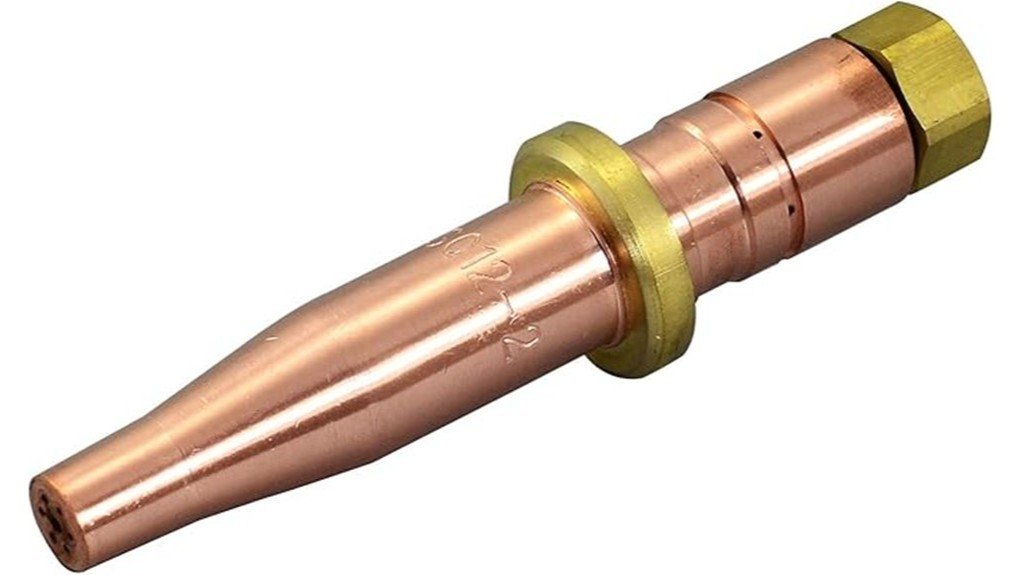
The Riverweld acetylene cutting tip (SC12-2) is a size 2 oxy-acetylene cutting tip described as compatible with Smith-style torches. This Riverweld SC12-2 cutting tip review draws on the Amazon listing: it suits owners of a matching Smith-style torch who need a spare, but fit and gas settings must be confirmed from your torch’s documentation. The Riverweld SC12-2 acetylene cutting tip fits compatible cutting torches.
Quick specs at a glance
| Item | Per the listing |
|---|---|
| Model | Riverweld SC12-2, acetylene cutting tip |
| Tip size | 2 |
| Orifice | 1.4 (units not stated clearly; likely mm) |
| Material | Copper |
| Listed weight | 3.87 oz (likely package weight) |
| Torch fit | Smith-style oxy-fuel cutting torches |
Check current price on Amazon →
What this tip is and who it suits
A cutting tip combines the preheat flames with a center oxygen jet that does the cutting. Size 2 is a mid-range size in many tip charts, so it is typically used for light to medium steel, but cutting thickness depends on the maker’s table.
It suits hobbyists and small shops running Smith-pattern cutting torches who want a lower-cost spare to the brand-name tip.
How to check it fits your torch
- Identify your torch model and look up the tip series it uses.
- Compare the SC12 designation and size 2 with the tip charts for your torch.
- Check the seat style and nut. Tips that seem to fit can still leak gas if the seat is slightly different.
- Confirm the fuel type: acetylene tip for acetylene, not for propane.
- Use the pressures and cutting speeds for that tip size from your torch maker.
After fitting, leak-test every connection with soapy water, never with a flame.
Pros and limitations
- Pros: Copper construction; defined size and orifice in the listing; a standard-style size 2 for general cutting.
- Limitations: Unclear units in the gas settings, no cutting-capacity chart on the listing, and compatibility is only described as Smith-style. Aftermarket tips can differ from OEM in seat finish.
Using a cutting tip safely
- Set acetylene working pressure no higher than 15 psi.
- Use flashback arrestors and check valves, and never use oil or grease around oxygen fittings.
- Light acetylene first, then add oxygen, following your torch manual, and adjust to neutral preheat flames.
- Wear a #3 to #5 shade for gas cutting, check your lens chart, plus gloves and flame-resistant clothing.
- Clean the tip orifices regularly and keep the cutting area free of flammables.
View this cutting tip on Amazon →
Alternatives and related guides
- Several sizes in one: Riverweld acetylene cutting tips review.
- Keep orifices clear with a cutting torch tip cleaner.
- Need a full setup? Read the oxygen acetylene cutting torch kit review.
Frequently Asked Questions
Does the Riverweld SC12-2 fit Smith torches?
The listing says it suits Smith-style oxy-fuel cutting torches. Torch heads, seats and mixer designs vary by model, so check your torch’s tip series and the SC12 designation against its manual or the seller’s compatibility notes before buying.
What do the numbers in the listing mean?
The listing shows a size of 2, an orifice of 1.4 and gas settings of 105-135 and 10, but units are not stated clearly. Do not guess pressures from them; use your torch maker’s chart for the tip size, and never exceed 15 psi acetylene.
Can I use this tip with propane or MAPP?
No, it is described as an acetylene cutting tip. Propane and MAPP tips are designed differently for the flame and gas mixing, so use the tip type that matches your fuel gas and your torch’s mixer.
How do I know the tip is damaged?
Look for a deformed or rounded end, enlarged or oval holes, cracked seats, or a flame that stays uneven after cleaning. If cleaning does not restore a clean, even preheat flame, replace the tip.
Verdict
A reasonable spare for a Smith-style torch if the size and seat match. If you cannot confirm that match, stick with the tip your torch maker specifies.
Check current price on Amazon →