Disclosure: As an Amazon Associate, we earn from qualifying purchases. If you click a link on this page and make a purchase, we may receive a small commission at no extra cost to you.
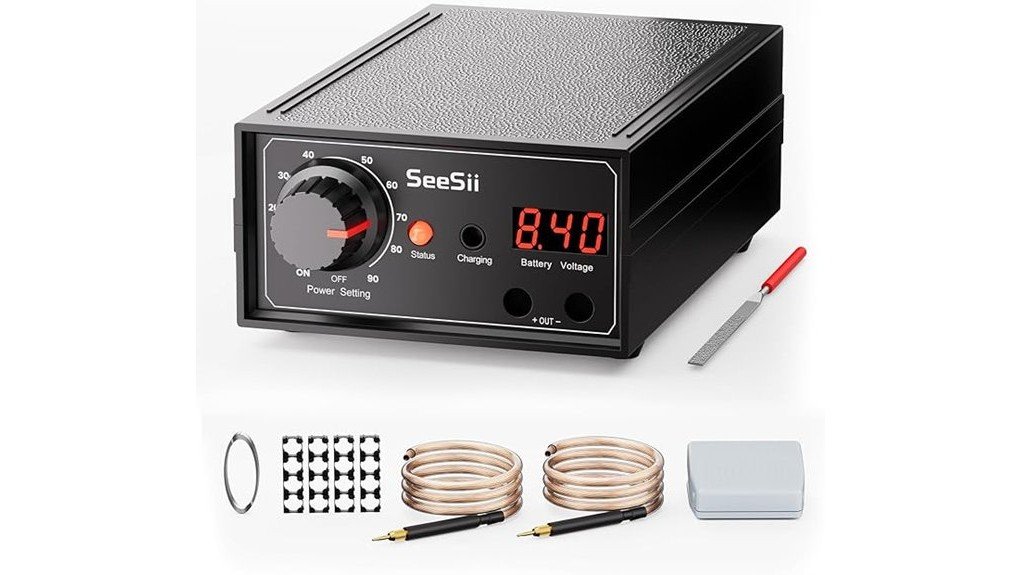
Battery-pack repairs demand more control than a soldering iron can provide, but a full-size bench welder can be excessive for occasional DIY work. The SEESII SEE-08 8000W Battery Spot Welder combines a rechargeable cordless design with dual-pulse output, 10 to 90 power gears, foot-pedal activation, and an LCD voltage display. It is designed mainly for joining thin nickel strip to cylindrical battery cells. This review explains where the SEE-08 is useful, which claims need careful interpretation, and why practice and battery-safety knowledge matter before you work on a live pack.
Quick Verdict
Rating: 8/10, Recommended with caveats
Best For: DIY battery-pack builders, electronics hobbyists, and repair users working with thin nickel strip.
Bottom Line: The SEE-08 gives you useful control through its 10 to 90 gear range, dual-pulse operation, foot pedal, and cordless form. Its limits are equally important: published thickness claims can vary by listing, weld quality depends on charge level and technique, and it is not a production-grade machine.
| Specification | Detail |
|---|---|
| Brand | SEESII |
| Model | SEE-08 |
| Product Type | Portable battery spot welder |
| Marketed Power Designation | 8000W |
| Battery Capacity | Built-in 9600mAh rechargeable battery, as identified on listings for this ASIN |
| Supported Nickel Thickness | Manufacturer states 0.1mm to 0.3mm nickel sheets; confirm the current listing and test your exact strip |
| Power Adjustment | 10 to 90 gears |
| Pulse System | Dual-pulse output |
| Activation | Foot-pedal switch |
| Display | LCD battery-voltage display |
| Primary Use | Joining nickel strip to cylindrical battery cells for pack assembly and repair |
| Manual-Listed Accessories | Welding pens, foot pedal, replacement needles, battery holders, nickel sheet, file, power adapter, and manual; package contents may vary |
| Recharge Point | Recharge when the display drops below 7.3V, according to the operating guidance |
What Is the SEESII SEE-08 Battery Spot Welder?
The SEESII SEE-08 is a compact, battery-powered resistance spot welder made for battery-pack assembly and small repair work. Instead of melting solder onto a cell terminal, it sends a brief electrical pulse through two welding tips to bond a nickel strip to the cell surface.
SEESII markets this model as an 8000W unit with dual-pulse output and a 10 to 90 gear adjustment range. The main selling point is not heavy fabrication power. It is the ability to position two welding pens, hold the strip in place, and trigger a controlled weld with the included foot pedal.
The manufacturer describes a 0.1mm to 0.3mm nickel-sheet range. Treat that figure as an upper compatibility claim, not a guarantee that every strip composition and thickness will weld equally well. Pure nickel, nickel-plated steel, layered strip, tip condition, cell condition, contact pressure, and battery charge can all change the result.
Who Should Buy It?
Best For
- DIY builders making or repairing small packs with compatible cylindrical cells and nickel strip.
- Electronics hobbyists who want cordless operation and finer output adjustment than a basic handheld welder.
- Occasional repair users willing to practice weld settings, inspect every joint, and follow lithium-battery safety procedures.
Skip If
- You need repeatable production output, thick-metal capacity, or continuous shop use.
- You lack the tools and knowledge to verify cell condition, polarity, insulation, and pack design.
- You need guaranteed performance on 0.3mm pure nickel or another difficult material without trial welds.
Before You Buy: Confirm that the Amazon page still shows model SEE-08 and the 10 to 90 gear version. SEESII sells several spot welders with different battery capacities, controls, and thickness limits, so a similar product photo does not guarantee the same specification.
Design and Portability
The built-in rechargeable battery lets you weld without keeping the main unit connected to a wall outlet. That reduces cable clutter on a small workbench and makes the welder easier to move between a garage, repair room, or electronics station.
Portability also creates a limitation. Weld energy can change as the internal battery voltage falls. The LCD display is therefore a working tool, not just a convenience feature. Check it before a session and during longer projects.
Dual-Pulse Welding and Power Control
The SEE-08 uses dual-pulse output. In practical terms, the welding cycle delivers controlled energy through the two tips rather than relying on a long, uncontrolled heat application. That is useful around battery cells because the goal is a firm metal-to-metal bond with limited heat transfer into the cell.
The 10 to 90 gear dial gives you a broad adjustment range. Start low on scrap material, then raise the setting in small steps. A setting that works on 0.1mm nickel-plated strip may not be right for thicker or pure nickel strip, and copying another user’s gear number can lead to weak welds or burn-through.
The “8000W” label should be read as the model’s marketed power designation, not as a promise of continuous 8000-watt output. Spot welders release energy in very short pulses, so pulse performance, electrode contact, and strip composition matter more than a single headline number.
LCD Display and Rechargeable Battery
The LCD display shows the welder’s internal battery voltage in real time. SEESII’s guidance says to recharge the unit when the display drops below 7.3V. Keeping the charge above that point helps reduce one source of inconsistent welds.
Listings tied to this ASIN identify a 9600mAh built-in battery. Because SEESII has several closely related models and marketplace pages can change, verify the capacity on the page you are buying from. Battery capacity alone does not tell you how many reliable welds you will get because higher settings, thick strip, temperature, and rest periods affect runtime.
Foot Pedal and Welding Pens
The foot pedal is one of the SEE-08’s most practical features. It lets you use both hands to place the welding tips and maintain even pressure before you trigger the pulse. That can improve repeatability compared with trying to position the tips and press a control on the welder at the same time.
Tip condition matters. Oxidized, dirty, loose, or badly worn welding needles increase resistance and can produce weak or erratic results. Inspect the points before each job and use the supplied file only as directed to clean the tips. Replace damaged needles rather than reshaping them indefinitely.
Keep the two tips separated except when each one is pressed against the intended weld area. Touching the tips together can create a direct short and damage the welder.
Compatibility and Material Limits
This welder is mainly intended for nickel strip and cylindrical battery-pack work. The manual material for the SEE-08 shows common cylindrical cells, including 18650-style applications, but cell size alone does not establish a safe pack design. You must also match cell chemistry, capacity, discharge rating, condition, and state of charge.
The manufacturer advertises welding on 0.1mm to 0.3mm nickel sheets. Marketplace titles for the same ASIN may show a narrower limit, so use the lower, more conservative expectation until your own peel tests prove otherwise. Do not assume the unit can weld copper, thick steel, stacked conductors, or unknown plated material.
For a repaired battery pack, the replacement strip and cells must suit the original electrical load. A strong-looking weld does not correct mismatched cells, an unsafe battery-management system, missing insulation rings, or an incorrect series-parallel layout.
Setup Tips Before First Use
Fully charge the welder, connect the welding pens and foot pedal securely, and review the controls before placing any live cell on the bench. Work in a clean, dry, ventilated area with safety glasses and a clear path to move away from a hot or venting cell.
Practice on scrap strip and a suitable test surface before touching a battery pack. Use the same strip type and thickness planned for the project. Make two weld points, let the material cool, and perform a peel test. A useful weld should resist peeling and leave evidence of a solid bond without puncturing the strip or overheating the surface.
Keep loose tools, rings, watches, wire scraps, and unused nickel strip away from exposed cell terminals. Cover completed connections with the correct insulating material as the pack is assembled instead of leaving multiple conductive points exposed.
Pro Tip: Record the strip type, thickness, battery voltage, gear setting, and peel-test result for each practice weld. That simple log gives you a safer starting point when you return to the same material later.
Compatibility and Safety
Battery spot welding carries fire, burn, electrical, and chemical risks. Inspect every cell before use. Do not weld a cell that is swollen, dented, corroded, leaking, overheated, deeply discharged, or of unknown history.
Verify polarity before every connection. One misplaced strip can create a direct short across a cell or pack. Use appropriate insulating rings, fish paper, cell holders, and pack insulation for the design. Keep a suitable emergency plan for lithium-battery incidents and never rely on a household method that conflicts with local fire-safety guidance.
SEESII warns against touching the two welding pins together during operation. The operating guidance also calls for a rest period if the welding pen temperature exceeds 65°C. Stop immediately if you notice excessive sparks, a burning smell, damaged insulation, unstable controls, or unusual heating.
How It Performs in Real Use
For Small 18650-Style Pack Projects
The SEE-08’s cordless body and foot pedal are well suited to small bench builds where you need to place several short nickel connections. The 10 to 90 gear control gives you room to tune the pulse, but the correct setting still depends on the actual strip and cell surface.
For Repair Practice
Beginners can learn how pressure, tip spacing, strip preparation, and gear level affect a weld. This is useful only when practice material is treated as disposable and every setting is validated with a peel test before it is used on a pack.
For Longer Sessions
The LCD voltage display helps you decide when to stop and recharge. Long runs at high settings can heat the pens and reduce consistency, so divide a large job into controlled batches instead of chasing speed.
Maintenance and Storage
After use, turn the welder off and allow the pens to cool. Wipe the unit and accessories with a clean, dry cloth. Remove metal dust and nickel fragments from the work area so they cannot bridge the welding tips or battery terminals during the next session.
Inspect the welding needles, cables, connectors, pedal, and case before each use. Clean light oxidation from the tips according to the manual and replace parts that are loose, burned, cracked, or heavily worn.
Pros and Cons
Pros
- 10 to 90 gear adjustment provides more tuning range than fixed-output mini welders.
- Dual-pulse operation is designed for controlled thin-strip battery welding.
- Foot-pedal activation keeps both hands available for tip placement and pressure.
- LCD voltage monitoring helps you identify when the internal battery needs charging.
- Cordless power makes the unit easier to position, transport, and store.
Cons
- Published battery-capacity and maximum-thickness details can differ across marketplace pages.
- Reliable results require scrap testing, peel tests, clean tips, and consistent pressure.
- Not intended for thick stock, continuous production, or users without battery-pack safety knowledge.
Is It Worth the Price?
The SEESII SEE-08 is worth considering as a budget-to-mid-range hobby tool when you need adjustable output, a foot pedal, and cordless operation in one package. Buyers doing occasional nickel-strip work get the most value from its portable setup and broad gear range.
Its value drops if you expect laboratory-style repeatability or guaranteed performance at the top of the advertised thickness range. A stronger capacitor-discharge system or a larger bench machine may make more sense for demanding materials, frequent pack building, or production work.
Check the current listing for the exact model, package contents, battery capacity, return policy, and warranty terms. Those details can change, and they matter more than a temporary discount.
How It Compares to Alternatives
A basic handheld mini welder is smaller and often cheaper, but it may provide fewer controls and no foot pedal. A capacitor-discharge welder can offer more repeatable energy delivery for experienced builders, while a large AC bench spot welder is better suited to stationary, high-volume work.
The SEE-08 makes the most sense between those categories. It is more adjustable than a simple pocket unit and easier to move than a full-size shop machine, but it still depends on an internal battery and careful setup.
Frequently Asked Questions
Can the SEESII SEE-08 weld 0.3mm nickel strip?
SEESII advertises a 0.1mm to 0.3mm nickel-sheet range for the SEE-08. Results at the upper limit can vary with strip composition, charge level, tip condition, and pressure, so test the exact material and use a peel test before working on a real pack.
Is the 9600mAh battery capacity confirmed?
Marketplace listings for ASIN B0DY7R9H44 identify a built-in 9600mAh battery. Because SEESII sells similar-looking versions with different capacities and controls, confirm the specification on the current Amazon page before ordering.
Does it stay plugged in while welding?
No. The internal rechargeable battery supports cordless welding. Do not operate it while charging unless the manual for your exact unit expressly permits that use.
Can you use it for 18650 battery packs?
The SEE-08 is intended for cylindrical battery-pack work, including common 18650-style projects. Safe use still requires matched cells, correct polarity, a suitable battery-management system, proper insulation, and a pack design that meets the intended load.
What gear setting should you start with?
Start at a low setting on scrap material that matches your project strip. Raise the output gradually until a peel test shows a firm bond without burn-through, excessive sparks, or damaging heat.
When should you recharge the welder?
SEESII’s guidance says to recharge when the LCD voltage falls below 7.3V. Recharge sooner if weld quality becomes inconsistent, and stop if the unit or pens show unusual heat or behavior.
Can it weld copper or stainless steel?
Treat nickel strip as the primary supported material. Do not assume reliable copper or stainless-steel performance unless the manual for your exact unit lists the material and thickness, and your controlled tests confirm a safe bond.
Who should not use this spot welder?
Skip it if you need industrial output, thick-material capacity, or nonstop production. You should also avoid battery-pack repair until you understand cell matching, polarity, insulation, battery-management systems, and lithium-battery emergency procedures.
The Bottom Line
The SEESII SEE-08 8000W Battery Spot Welder is a practical choice for careful hobbyists who want cordless operation, a foot pedal, LCD voltage monitoring, and 10 to 90 adjustable gears for thin nickel-strip work. Skip it for production welding, difficult thick materials, or projects that exceed your battery-pack safety skills.
Its main strength is accessible control in a portable package. Its main limitation is that successful welds still depend on the exact strip, charge level, tip condition, pressure, and disciplined testing, so the 8/10 verdict comes with real caveats.
Ready to Buy?
Check the latest model details, package contents, and price before you decide.