Disclosure: As an Amazon Associate, we earn from qualifying purchases. If you click a link on this page and make a purchase, we may receive a small commission at no extra cost to you.
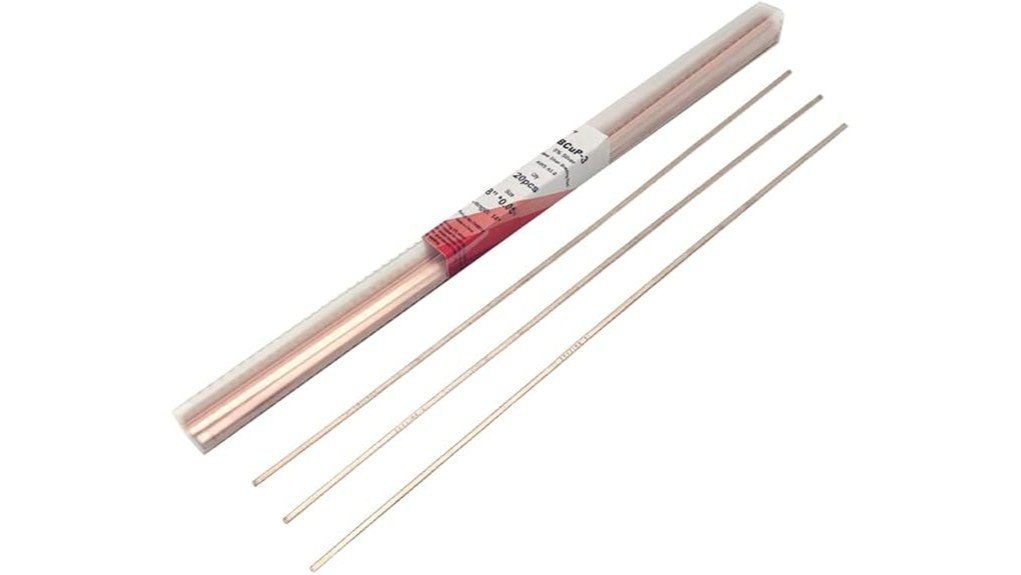
Choosing the right brazing rod matters when you need clean flow, strong copper joints, and a process that does not feel harder than it should. The Silver Brazing Rods 5% BCuP-3 are made for copper-to-copper brazing and selected copper-alloy work, with 5% silver, phosphorus, and copper in the filler metal. They stand out because they can be used without flux on copper-to-copper joints, but they are not a universal welding rod for every metal. This review helps you decide where these rods make sense, what to verify before buying, and which limitations matter most in real use.
Quick Verdict
Rating: 8.2/10, Recommended with caveats
Best For: Buyers brazing copper tubing, copper fittings, HVAC-style copper assemblies, and similar copper-to-copper joints.
Bottom Line: These 5% BCuP-3 silver brazing rods are worth considering if you want a copper-phosphorus-silver filler with good flow and no-flux use on copper-to-copper joints. You should skip them if you need aluminum welding rods, a general-purpose steel filler, or fully verified package details such as count, length, and brand from the listing.
Key Takeaways
- The Silver Brazing Rods 5% BCuP-3 are best suited for copper-to-copper brazing and selected copper-alloy applications.
- The article-supported composition is 5% silver, 6.5% to 7.0% phosphorus, and copper as the remaining balance.
- The rods are intended to flow into close-fitting joints, with a recommended joint clearance of 0.003 to 0.006 inches.
- No flux is required for copper-to-copper use, but you should follow the product label or professional guidance for brass, bronze, or mixed-metal work.
- They are not made for aluminum welding, steel welding, or jobs where a different filler metal is required.
| Specification | Detail |
|---|---|
| Product name | Silver Brazing Rods 5% BCuP-3 |
| Product type | Copper-phosphorus-silver brazing filler rods |
| Classification | BCuP-3 |
| Composition | 5% silver, 6.5% to 7.0% phosphorus, balance copper |
| Melting or brazing range | Article lists 718 to 816°C. Confirm the package label before critical work because BCuP-3 references may vary. |
| Source article temperature notes | Solidus temperature listed as 1189°F and liquidus temperature listed as 1419°F |
| Recommended joint clearance | 0.003 to 0.006 inches |
| Best use | Copper-to-copper brazing, copper tubing, copper fittings, and compatible copper-alloy jobs |
| Flux note | No flux required for copper-to-copper applications |
| Not designed for | Aluminum welding or general steel welding |
| Safety note | Use eye protection, heat-resistant gloves, ventilation, and the correct torch setup for your work area. |
What Is the Silver Brazing Rods 5% BCuP-3?
The Silver Brazing Rods 5% BCuP-3 are filler rods made for brazing, not welding in the usual fusion-welding sense. Brazing joins metal parts by melting the filler metal into a close-fitting joint while the base metals remain solid. That makes fit, heat control, and clean surfaces just as important as the rod itself.
This rod type uses a copper-phosphorus-silver composition. The 5% silver content helps with flow and joint formation, while phosphorus supports self-fluxing behavior on copper-to-copper joints. If you work mostly with copper tubing, copper fittings, refrigeration lines, or similar copper assemblies, this is the kind of filler metal you may compare against other BCuP options.
The main appeal is simple use on copper. You can avoid separate flux on copper-to-copper joints, which saves time and reduces cleanup. The tradeoff is that these rods still need proper joint clearance, clean surfaces, and the right metal match to perform well.
Who Should Buy It?
Best For
- You braze copper-to-copper joints and want a self-fluxing filler for that specific use.
- You need a BCuP-3 style rod with 5% silver for copper tubing, fittings, or repair work.
- You prefer a filler that can flow into close joint clearances instead of building a bulky bead.
Skip If
- You need rods for aluminum welding, steel welding, or stainless steel welding.
- You cannot verify the package count, rod length, or seller-specific details before buying.
- Your joint has poor fit-up, heavy contamination, or a high-vibration service requirement that needs a different qualified filler.
Before You Buy: Confirm the exact package count, rod length, and current listing details before checkout. The article supports the BCuP-3 alloy details, but exact seller-specific package details were not verified here.
Product Specifications and Composition
The key spec is the BCuP-3 alloy classification. The article lists the rods as 5% silver, 6.5% to 7.0% phosphorus, and copper as the balance. That puts the product in the copper-phosphorus-silver brazing family, which is commonly used when you need a filler for copper assemblies.
The article also lists a solidus temperature of 1189°F and a liquidus temperature of 1419°F, along with a melting range of 718 to 816°C. Because alloy references and seller listings may present temperature data differently, you should use the package label or manufacturer data as the final guide for critical work.
Joint clearance matters with these rods. The article recommends a clearance of 0.003 to 0.006 inches, which gives the molten filler a close gap to flow through. A gap that is too wide can reduce capillary action, while a gap that is too tight may block flow if the parts are dirty or uneven.
Advantages of Silver Brazing Rods
The biggest advantage is the no-flux requirement for copper-to-copper applications. That can make the job cleaner and faster, especially when you are working on copper tubing or fittings and want fewer materials on the bench.
The 5% silver content also helps make the rod useful where flow and joint formation matter. These rods are not meant to pile up like a welding bead. They are meant to heat, melt, flow into the joint, and create a bonded connection after cooling.
The rods can also help when the joint fit is not perfect, but you should not treat them as a fix for poor prep. Clean metal, proper heat, and the right clearance still do most of the work. The filler only performs well when the joint is ready for brazing.
Flux Use and Copper Compatibility
For copper-to-copper work, these BCuP-3 rods are designed to work without added flux. That is one reason they are popular for copper tubing and fitting jobs. Less flux means less cleanup and fewer steps, which can help if you are doing repeated joints.
For brass, bronze, or mixed copper-alloy work, do not assume the same no-flux rule applies in every situation. Follow the rod package, the project specification, or guidance from a qualified professional. Metal type, surface condition, and service use can change what filler and flux setup is appropriate.
Pro Tip: Before heating the joint, dry-fit the parts and check the clearance. These rods perform best when the filler can flow through a close, clean gap by capillary action.
Joint Fit, Flow, and Heat Control
BCuP-3 rods work best when you heat the base metal evenly instead of melting the rod directly with the flame. The goal is to bring the joint area up to brazing temperature so the filler flows into the joint. If the rod balls up or sits on the surface, the base metal may not be hot enough or clean enough.
The article-supported clearance range of 0.003 to 0.006 inches gives you a useful target. You do not need a large visible gap. In fact, too much gap can weaken the capillary draw that pulls the filler through the joint.
Heat control also affects the final result. Overheating can oxidize the work area, waste filler, and make the joint harder to inspect. Underheating can stop the rod from flowing and leave a weak bond.
Torch Choice and Setup
The original FAQ mentions oxy-acetylene and propane torches as possible options. The right torch depends on the size of the parts, joint mass, workspace, and heat needed to bring the joint to brazing temperature. Small copper fittings need less heat than larger copper assemblies that pull heat away quickly.
Oxy-acetylene gives you strong heat control for many brazing jobs, while propane may be suitable for smaller or lighter copper work. In either case, your setup should let you heat the joint evenly. A weak flame can make you overheat one spot while the rest of the joint remains too cool.
Always follow torch safety rules. Keep flammable materials away, use proper eye protection, and work with ventilation. Brazing produces heat, fumes, and hot metal surfaces that can injure you if the workspace is not prepared.
Material Safety and Compatibility
These rods are not aluminum welding rods. The original article clearly notes that they are not compatible with aluminum welding, so you should choose an aluminum-specific filler and process for that kind of job.
You should also avoid treating BCuP-3 as a general-purpose filler for every metal. Copper, brass, bronze, aluminum, steel, and stainless steel do not all use the same filler metal or flux approach. If the joint will carry pressure, support weight, face vibration, or operate in a safety-critical setting, confirm the correct filler with a qualified technician or the project specification.
For personal safety, wear heat-resistant gloves, eye protection, and suitable clothing. Work in a ventilated area, and avoid breathing fumes. Store the rods in a cool, dry place so moisture and contamination do not affect future use.
How It Performs in Real Use
For Copper Tubing and Fittings
These rods make the most sense for copper-to-copper joints where you want filler flow instead of a large bead. With clean tubing, proper clearance, and even heat, the rod should flow into the joint and form a neat connection.
For HVAC-Style Repair Work
BCuP-3 filler is often considered for copper assemblies used in refrigeration and air-conditioning style work. You still need to match the filler to the job requirements, especially if the line will see pressure, vibration, or thermal cycling.
For Shop and Field Use
The rods are simple to store and carry, which helps when you need filler metal available for on-site copper work. The main field-use limitation is prep. Dirty joints, wind, moisture, and poor access can make brazing harder, even with a good rod.
For Long-Term Use
Long-term performance depends on the joint design and metal match as much as the rod. A clean, close-fitting copper joint has a better chance of lasting than a rushed joint with poor heat control. For high-stress or high-vibration use, get the joint design and filler choice checked before relying on it.
How to Use It Correctly
Start by cleaning the metal until the joint area is free from oil, oxidation, paint, and debris. Brazing filler needs a clean path to flow. Contamination can stop wetting and leave weak spots.
Fit the parts before lighting the torch. Aim for the article-supported clearance of 0.003 to 0.006 inches when the job allows it. Heat the joint area evenly, then touch the rod to the heated joint and let the base metal draw the filler in.
Do not overfeed the rod. More filler does not automatically mean a stronger joint. A clean, continuous fillet and proper flow through the joint matter more than extra buildup on the outside.
Common Mistakes to Avoid
- Using it on the wrong metal: These rods are not for aluminum welding and are not a universal steel filler.
- Skipping surface prep: Dirt, oil, and oxidation can block filler flow.
- Heating only the rod: Heat the base metal so the filler flows into the joint instead of sitting on top.
- Leaving a large gap: BCuP-3 rods work best with close-fitting joints.
- Ignoring the package label: Always confirm temperature range, quantity, and use instructions from the seller or manufacturer packaging.
Pros and Cons
Pros
- 5% silver BCuP-3 composition is useful for copper brazing work.
- No flux is required for copper-to-copper applications.
- Recommended close joint clearance supports capillary flow.
- Good fit for copper tubing, fittings, and similar copper assemblies.
- Cool, dry storage is simple and helps maintain rod condition.
Cons
- Exact seller-specific package count and rod dimensions need confirmation before buying.
- Not suitable for aluminum welding or general-purpose welding jobs.
- Requires clean surfaces, proper clearance, and correct heat control to work well.
Pricing and Market Considerations
Silver brazing rod pricing can shift because silver is part of the alloy. That means the best value is not always the lowest listed price. You should compare package quantity, rod size, alloy classification, and seller details before deciding.
| Market Factor | What It Means for You |
|---|---|
| Silver market changes | Rod costs can move over time, so compare current listings. |
| Package quantity | A larger pack may offer better value if you braze often. |
| Alloy classification | Confirm BCuP-3 if your job calls for this specific filler. |
| Seller details | Check package count, dimensions, and return terms before checkout. |
Is It Worth the Price?
These rods can be a strong value for the price if you regularly braze copper-to-copper joints and want a 5% silver BCuP-3 filler. You get the main benefit of self-fluxing copper use, along with an alloy type known for flowing into close-fitting joints.
The value is weaker if you only need one small repair and do not know the exact package quantity. It is also not the best fit if your job requires aluminum filler, steel filler, or a certified filler for a high-risk system.
For most practical copper brazing needs, the rods are worth considering if the current listing matches the quantity, size, and alloy details you need.
How It Compares to Alternatives
Compared with lower-silver copper-phosphorus rods, 5% BCuP-3 can be a good middle option for buyers who want silver content without moving to a higher-silver filler. Compared with 15% silver BCuP-5 rods, BCuP-3 may cost less, but higher-silver alternatives may be preferred for certain ductility or service requirements.
If you need aluminum work, choose an aluminum-specific brazing or welding filler instead. If you need steel or stainless steel joining, compare silver brazing alloys or welding consumables made for those metals. These Silver Brazing Rods 5% BCuP-3 make the most sense when your main job is copper-compatible brazing.
Frequently Asked Questions
Can these rods be used for aluminum welding?
No. These rods are not made for aluminum welding. Use aluminum-specific filler and the correct welding or brazing method for aluminum work.
Do I need flux with Silver Brazing Rods 5% BCuP-3?
For copper-to-copper applications, the article states that no flux is required. For brass, bronze, or mixed-metal joints, follow the package instructions or professional guidance before deciding whether flux is needed.
What joint clearance works best with these rods?
The article recommends a joint clearance of 0.003 to 0.006 inches. That close fit helps the molten filler move through the joint by capillary action.
What torch should I use with BCuP-3 brazing rods?
The original article mentions oxy-acetylene and propane torches as possible choices. Pick a torch that can heat the joint evenly and safely for the size of the copper parts you are joining.
Can I use these rods outdoors?
You can use them outdoors when the work area is safe and the joint can be heated properly. Wind, moisture, and dirty surfaces can make brazing harder, so protect the work area and clean the metal first.
How should I store silver brazing rods?
Store them in a cool, dry place away from moisture and dirt. A sealed container helps protect the rods from contamination before your next brazing job.
Who should skip these brazing rods?
Skip them if you need aluminum welding rods, a steel welding electrode, or a filler for a safety-critical system without confirming the project specification. You should also skip them if the current listing does not clearly show the package quantity or rod size you need.
The Bottom Line
The Silver Brazing Rods 5% BCuP-3 are a smart buy for copper-to-copper brazing when you want a 5% silver copper-phosphorus filler with no-flux use on copper. They are not the right choice for aluminum welding, general steel welding, or jobs where you cannot verify the exact package details before buying. If your work matches the alloy and compatibility notes, they offer a practical balance of flow, usability, and value.