Turning welding skills into extra cash started for me with a few small welding projects to make money in my garage. I learned quickly that the most profitable jobs are not always the largest or most complicated. Simple products such as shelf brackets, coat racks, plant stands, and custom signs can be easier to repeat, easier to price, and less risky than structural repairs.
Good side-hustle projects still demand clean joint preparation, controlled welding, accurate measurements, and a finish customers will be proud to display. The goal is to choose work that fits your equipment and experience, then price every hour and expense instead of guessing. This guide covers profitable project ideas, shop setup, safety limits, pricing, quality checks, and practical ways to find customers.

Image by bakersgas
Quick Answer
The best small welding projects to make money are repeatable, easy to measure, inexpensive to finish, and low in liability. Shelf brackets, coat racks, plant stands, wine racks, garden trellises, firewood racks, tables, and custom signs are strong starting points. Price them by adding materials, labor, overhead, finishing, and profit.
Key Takeaways
- Begin with decorative or lightly loaded products that can be built safely from a repeatable cut list.
- Avoid trailer frames, hitches, structural railings, lifting devices, fuel containers, pressure vessels, and other safety-critical work unless you have the required qualifications, procedures, insurance, and inspection.
- Never use one voltage or amperage recommendation for every welder. Start with the machine manufacturer’s chart and test on matching scrap.
- Include consumables, finishing, overhead, travel, rework risk, taxes, and profit when you quote a job.
- Standard sizes, jigs, batch cutting, clear photos, and written order details improve both quality and profit.
At a Glance
| Time Required | About 1–8 shop hours for most beginner products, not including paint or powder-coat curing time |
| Difficulty | Beginner to intermediate for decorative products; advanced for load-bearing, structural, automotive, trailer, or code-governed work |
| Tools Needed | Suitable welder, grinder, cutting tool, welding table, clamps, square, measuring tools, PPE, source-capture ventilation, and finishing supplies |
| Cost | Often $15–$150 or more per small product, depending on local metal prices, hardware, finish, waste, and design |
How to Choose Welding Projects That Can Make a Profit
A project is only profitable when the customer’s price covers the complete cost of producing and delivering it. Before buying material, score each idea in six areas:
- Demand: Do local homeowners, gardeners, shops, or online buyers already purchase this type of item?
- Repeatability: Can you build it from one drawing, cut list, and jig?
- Shop time: Does the design require hours of grinding, fitting, or hand finishing?
- Material efficiency: Can several products be nested into one length or sheet with little waste?
- Delivery: Can the item be shipped, carried in a normal vehicle, or delivered without special equipment?
- Liability: Could a failure cause a fall, crash, fire, injury, or major property damage?
The most profitable first product is usually not the fanciest one. It is the design you can build accurately, finish consistently, photograph well, and repeat without starting over each time.
| Project | Skill Level | Repeatability | Liability | Best Sales Channel |
|---|---|---|---|---|
| Shelf brackets | Beginner | High | Low to moderate | Online listings and local pickup |
| Coat racks and wall hooks | Beginner | High | Low | Craft fairs and gift markets |
| Wine racks and plant stands | Beginner to intermediate | High | Low | Home décor marketplaces |
| Tables and benches | Intermediate | Moderate | Moderate | Local custom orders |
| Garden trellises and yard art | Beginner to intermediate | High | Low | Spring markets and nurseries |
| Fire pits and grill components | Intermediate | Moderate | Moderate to high | Local pickup only |
| Trailer frames, hitches, and structural railings | Qualified professional | Low | High | Only under suitable professional procedures and coverage |
Getting Your Home Shop Ready for Profitable Welds
Essential Equipment Without Breaking the Bank
You do not need an industrial production line to build small products, but your welder must be suitable for the process, material, thickness, input power, and duty cycle you plan to use. A compact MIG machine is a practical starting point for many mild-steel products. TIG can provide precise cosmetic work, while stick and self-shielded flux-cored processes can be useful on suitable outdoor or heavier jobs.
Do not assume every multiprocess machine can handle aluminum simply because it offers a TIG or MIG mode. Confirm the machine’s supported processes, polarity, output range, spool-gun compatibility, torch requirements, and input-circuit specifications before buying accessories.
A practical starter shop normally includes:
- A welder sized for the intended material and electrical supply
- An angle grinder with separate cutting, grinding, and flap-disc options
- A metal-cutting saw or another controlled cutting system
- A flat welding table or suitable steel work surface
- Clamps, magnets, squares, straightedges, and measuring tools
- A drill and suitable bits for mounting holes and hardware
- Deburring, cleaning, and finishing supplies
- Safe material racks and labeled storage for filler metals and consumables
- Appropriate PPE, ventilation, fire control, and welding screens
My first repeatable products were simple shelf brackets made from flat bar. The design used short cuts, a basic right-angle jig, and one finish color. That combination mattered more to the profit than owning expensive equipment.
Pro Tip: Build one sample for your own shop before taking orders. Record every cut length, hole location, setup step, welding sequence, finishing step, and minute of labor. The finished sample becomes both a test piece and a sales photograph.
Safety Gear and Habits That Keep You Welding
Safety is part of the product cost and the production schedule. Welding can expose you to fumes, ultraviolet radiation, burns, electric shock, fire, noise, and flying particles. OSHA’s welding hazard guidance explains why ventilation, work practices, and PPE must be selected for the actual process and material.
Wear safety glasses under the welding helmet, a correctly adjusted welding lens, suitable welding gloves, flame-resistant clothing, hearing protection when needed, and protective footwear appropriate for the job. Keep synthetic clothing, open pockets, cuffs, and exposed skin away from sparks and hot metal.
Use local exhaust to capture fumes close to the arc without pulling shielding gas away from the weld. A household box fan with a filter is not a substitute for properly designed source extraction. Review the base-metal coating, filler-metal safety information, paint, plating, degreaser, and other contaminants before hot work. Use a correctly selected NIOSH-approved respirator when the hazard assessment and product instructions call for one.
Keep combustible material away from welding and grinding. Have suitable fire-extinguishing equipment ready, protect nearby people with welding screens, and inspect the area after hot work. Secure compressed-gas cylinders upright, protect them from impact and heat, and close valves when the equipment is not in use.
Machine settings must come from the welder’s manual, door chart, filler-metal data, or an approved procedure. Voltage and wire-feed speed vary with material, thickness, joint design, position, wire diameter, shielding gas, and machine. Miller’s guide to setting MIG welding parameters recommends using manufacturer guidance and evaluating test welds before committing to the finished part.
Warning: Do not cut, heat, or weld a propane cylinder, fuel tank, drum, pressure vessel, or other container that held a flammable or toxic substance. Also decline structural vehicle parts, trailer frames and hitches, lifting devices, fall-protection components, and code-governed building work unless you have the required design, procedure, qualifications, permits, inspection, and insurance.
Best Beginner Welding Projects to Sell
Products Worth Considering

CHECK THE SIZE: This J shelf brackets fit the nominal 1”x 12” and 2” x 12” (actual 0.75” x 11.25” and 1.5” x 11.25”) lumber board, measure 11.25” x 6” x 1.5”(broad is not included)

✓ HIGH-QUALITY METAL MATERIALS: Our shelf support is made of thick and heavy duty iron materials.Features a thick black matte surface coating that delivers enhanced water resistance and effective anti‑rust performance for long‑term daily use.

【Standard 90° bending】In order to ensure that each shelf bracket can be at 90° to the maximum extent possible, we add a rigorous picking process before the shelf brackets are packaged. The standardized 90-degree design is so important that it’ s the objective factor in ensuring that items remain level and do not tip over after being placed on the board(board is not included).
Shelf Brackets, Coat Racks, and Wall Hooks
Shelf brackets are one of the easiest products to standardize. Start with two or three sizes and use a jig to keep every corner square. Offer a short list of finishes instead of making every order completely different.
A bracket’s safe load depends on its geometry, steel size, welds, mounting holes, fasteners, wall construction, installation, and load direction. Do not advertise a load rating unless the complete assembly has been properly designed and tested for that claim. Provide dimensions and mounting guidance without promising an unsupported capacity.
Coat racks and wall hooks can use the same flat bar, rod, and mounting-hole layout. Custom names, numbers, or simple silhouettes increase perceived value without changing the basic frame.
Wine Racks, Jewelry Holders, and Plant Stands
Wine racks and jewelry holders work well for online listings because customers understand their purpose from one photograph. Build a stable base, smooth all hand-contact edges, and make sure bottles or hanging items cannot slip out during normal use.
Plant stands offer more room for customization. A standard square or round frame can be produced in several heights while using the same leg jig. Confirm the pot diameter and expected weight before accepting the order, and add levelers or protected feet when the design needs them.
Thin bar can distort when too much heat is concentrated in one area. Use balanced tack placement, short welds, clamps, and a planned welding sequence. Let the part cool in a controlled way unless a qualified procedure specifically requires another cooling method.
Scrap Metal Art and Custom Signs
Scrap metal can become flowers, wall art, bottle openers, small sculptures, address signs, and decorative hooks. The low material cost is attractive, but unknown scrap may have coatings, contamination, unsuitable alloys, sharp edges, or hidden cracks.
Sort scrap by known material type and remove oil, paint, rust, plating, and other contamination using a safe process. Do not weld sealed hollow items or unknown containers. Keep records of the material used when a product will hold weight or be exposed to heat.
For a custom sign, agree on the spelling, dimensions, font style, mounting method, finish, and proof before cutting. That approval step prevents expensive remakes.
Note: “Scrap” does not automatically mean free. Include sorting, cleaning, straightening, unusable pieces, and extra grinding time in the project cost.
Custom Furniture Builds That Sell Locally
Products Worth Considering

BUILT TO LAST: Durable steel construction, powder coated frame and 14 gauge galvanised metal top ensures work bench welding resists wear, corrosion and rust for years to come.
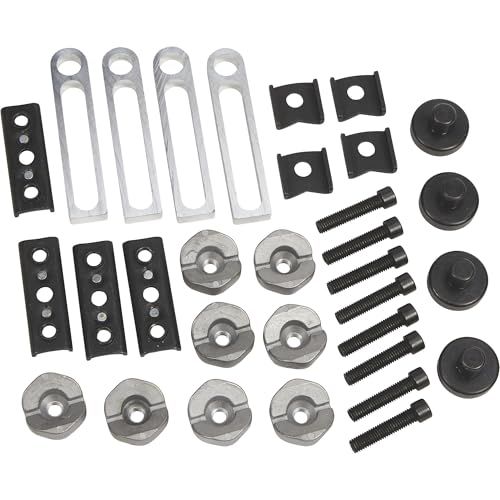
32-pc. kit includes parts needed to fix round and square tube or plate

Versatile DIY Design with Vintage & Industrial Style: Build custom coffee tables, desks, or open shelving with these industrial pipe legs that deliver a vintage pipe-style aesthetic; These vintage iron table legs are compatible with wood slabs like maple, walnut, or pine, offering endless style options—from industrial metal legs and steampunk to farmhouse or mid-century modern
Simple Tables and Benches
Furniture combines welding with woodworking, finishing, and customer measurements. A small end table or coffee-table base is a better starting point than a large dining table because it uses less material and is easier to keep square.
For a basic frame:
- Create a dimensioned drawing and cut list.
- Cut matching pieces in batches so paired legs and rails remain equal.
- Remove mill scale, rust, oil, and coating from the joint area as required by the process.
- Clamp the frame on a flat surface and tack opposite corners.
- Check diagonals, squareness, twist, and leg length before completing the welds.
- Use a balanced welding sequence to limit distortion.
- Blend only the welds that need a cosmetic finish without removing required weld metal.
- Test the frame for rocking and verify the top attachment before delivery.
Build the first version for your shop and live with it for a few days. A test piece often reveals sharp corners, poor foot placement, awkward top fasteners, or a brace that interferes with normal use.
Firewood Racks and Utility Carts
Firewood racks can be made from square tubing, angle, or flat bar and sold in standard indoor and outdoor sizes. Add feet or a lower tray to keep wood and debris off the floor. Outdoor versions need drainage and a finish suitable for the exposure.
Utility carts can sell to garages, studios, and small shops, but wheel capacity, frame stiffness, handle placement, and tip stability must match the intended load. Use rated casters and hardware, and do not invent a total cart capacity by adding the caster ratings together without considering the frame and load distribution.
Outdoor Welding Projects That Can Handle the Elements
Fire Pits and Grill Grates
Fire pits can command a higher price than small décor, but they also carry more fire and burn risk. Use traceable, suitable material and a design that provides stable support, drainage, controlled airflow, and reasonable clearance from the ground.
Do not use galvanized or zinc-plated steel in areas that will be heated. Heating zinc coatings can produce hazardous fumes. Fabricate from suitable uncoated steel or a suitable stainless alloy, then use only finishes and coatings approved for the temperature and location in which they will be used.
Never make a fire pit, smoker, or grill by cutting into a used propane tank, fuel tank, drum, or unknown container. OSHA’s general hot-work requirements describe the severe controls needed around previously used containers, and other rules prohibit welding on LP-gas containers in covered work.
Give the customer written instructions covering outdoor use, stable placement, combustible clearances, supervision, ash disposal, and local fire restrictions. Do not describe a design as “code-friendly” without verifying the rules that apply where it will be used.
Garden Trellises and Planters
Trellises, arbors, plant supports, and metal planter frames sell well in spring because buyers can see them in use immediately. A diamond, square, or fan pattern can be repeated with a simple layout board.
Ask what plant the support will hold and whether the customer wants a freestanding, wall-mounted, or ground-set design. Post depth and footing requirements depend on the height, wind exposure, soil, frost conditions, and local rules. Do not prescribe one universal burial depth.
For corrosion control, you can fabricate from suitable bare steel and apply a compatible coating system after welding. Another option is to have the completed product professionally galvanized. Welding existing galvanized material requires specific fume controls and restoration of damaged corrosion protection, so it is not a casual home-shop shortcut.
Quick Repair Jobs and the Work You Should Decline
Lower-Risk Repair Opportunities
Repairs can bring repeat customers because people often prefer fixing a useful item instead of replacing it. Beginner-friendly possibilities may include decorative gates, loose nonstructural tabs, garden-tool racks, shop carts, furniture frames, or brackets that do not protect people from falls or keep vehicles on the road.
Before quoting any repair:
- Identify the base material, coating, and likely reason for failure.
- Check whether the damaged part is structural, heat-treated, cast, pressurized, or safety-critical.
- Inspect beyond the visible crack for distortion, corrosion, fatigue, and previous repairs.
- Decide whether you can restore the part without weakening nearby material.
- Write down what is included, what is excluded, and whether replacement is safer.
A repair that failed because of poor design, overload, severe corrosion, or repeated fatigue may fail again beside a new weld. Welding over the visible crack without correcting the cause is not a dependable repair.
Trailer, Hitch, Fence, and Railing Repairs
Trailer tongues, frames, axles, couplers, hitches, and safety-chain attachments should not be treated as quick beginner jobs. These parts experience dynamic road loads, vibration, fatigue, corrosion, and impact. Accept this work only when you have the proper repair information, welding procedure, qualifications, inspection plan, equipment, and insurance.
The same limit applies to guardrails, stair railings, balconies, structural gates, and other fall-protection components. Their height, opening size, design load, anchors, base plates, fasteners, welds, and surrounding structure may be governed by locally adopted codes and approved plans.
The American Welding Society’s current structural steel welding code information shows why structural work involves more than making a bead look clean. Applicable requirements can include design, procedures, qualification, fabrication, and inspection.
Pro Tip: A professional “no” protects your business. Keep a referral list of qualified structural, trailer, aluminum, cast-metal, pressure-vessel, and mobile welders so you can help the customer without accepting work outside your scope.
Example Costs and Selling Prices for Small Welding Projects
The ranges below are planning examples, not guaranteed market prices. Replace every number with your local steel, hardware, finish, labor, delivery, marketplace-fee, and tax costs.
| Project | Example Direct Cost | Typical Shop Time | Example Target Price |
|---|---|---|---|
| Shelf brackets, set of four | $15–$35 | 1–2 hours | $60–$140 |
| Coat rack | $15–$45 | 1.5–3 hours | $70–$180 |
| Wine rack | $20–$60 | 2–4 hours | $90–$240 |
| Plant stand | $25–$70 | 2–5 hours | $100–$280 |
| Small table base | $40–$120 | 4–8 hours | $220–$600, plus the top when applicable |
| Garden trellis | $25–$90 | 3–6 hours | $140–$380 |
| Custom metal sign | $20–$100 | 2–8 hours | $120–$500 |
How to Price Your Welding Side-Hustle Work
A fixed hourly rate plus a simple material markup is not enough for every project. Your price must pay for the time and equipment used before, during, and after welding.
Quoted price = materials + consumables + labor + overhead + finishing + travel or installation + contingency + profit + applicable tax.
- Materials: Steel, wood, fasteners, casters, feet, mounting hardware, and packaging.
- Consumables: Wire, rods, shielding gas, contact tips, nozzles, abrasives, drill bits, saw blades, solvent, and masking supplies.
- Labor: Customer messages, design, buying material, cutting, fitting, welding, grinding, finishing, cleanup, packaging, and delivery.
- Overhead: Electricity, rent or shop allocation, ventilation filters, equipment maintenance, software, insurance, bookkeeping, and tool replacement.
- Finishing: Paint, clear coat, patina, powder coating, outsourced galvanizing, or wood finishing.
- Contingency: A reasonable allowance for uncertain repairs, custom fitting, material defects, or design changes.
- Profit: The return left after all costs and owner labor have been paid.
Worked Pricing Example
Suppose a set of four custom brackets uses $28 in steel and hardware. Consumables total about $7. The complete job takes 1.5 hours, including cutting, welding, grinding, finishing, and packing. At an illustrative labor rate of $55 per hour, labor is $82.50. Add $15 for overhead and $12 for finishing.
| Steel and hardware | $28.00 |
| Consumables | $7.00 |
| Labor | $82.50 |
| Overhead | $15.00 |
| Finish | $12.00 |
| Calculated price before tax or shipping | $144.50 |
You might quote $145 or $150 before applicable tax and shipping. The important point is not the example rate. It is that the quote pays for the entire job instead of only the steel and arc time.
For custom work, use a written scope and collect a deposit before ordering special material or beginning fabrication. Include dimensions, quantity, finish, hardware, installation, delivery, lead time, revision limits, and payment terms. Get written approval for drawings, lettering, names, and other details that cannot be reused if the customer changes direction.
How to Build Faster Without Lowering Quality
Profit improves when you remove repeated setup work rather than rushing the welding itself.
- Create a dimensioned drawing and cut list for every standard product.
- Use stop blocks to cut matching pieces to the same length.
- Build jigs for common angles, hole spacing, and mounting tabs.
- Batch similar cuts, holes, deburring, and cleaning steps.
- Use a consistent welding sequence to control distortion.
- Limit standard products to a manageable set of dimensions and finish choices.
- Track actual time separately for design, fabrication, finishing, and customer communication.
- Review the job record after delivery and update the next quote.
A weld journal is especially useful. Record the machine, process, polarity, wire or electrode, gas, material, thickness, joint, settings, problems, and final result. Use manufacturer guidance or an approved procedure as the starting point, then keep the verified setup attached to the product drawing.
Quality Checks Before a Welding Project Leaves the Shop
Customers judge the finish first, but the full inspection should begin long before paint.
- Material: Confirm the alloy, thickness, condition, and coating match the order.
- Dimensions: Check overall size, hole spacing, diagonals, level, and customer-specific measurements.
- Fit-up: Look for unintended gaps, misalignment, twist, rocking, and poor contact.
- Welds: Inspect for visible cracks, missed joints, lack of tie-in, severe undercut, porosity, and excessive spatter.
- Edges: Remove dangerous burrs, points, slag, and sharp hand-contact surfaces.
- Hardware: Confirm that fasteners, feet, casters, anchors, and moving parts are suitable and installed correctly.
- Finish: Check surface preparation, coverage, runs, bare spots, cure time, and handling damage.
- Function: Assemble and use the product as intended before delivery.
- Records: Photograph the finished item and save the approved drawing, material details, and customer sign-off.
Finding Customers for Small Welding Projects
Different projects sell through different channels. Decorative products can work well at craft fairs, online handmade marketplaces, social media, and local pickup listings. Furniture and garden products often sell through local interior designers, woodworking shops, nurseries, property managers, and referral customers.
A strong listing should show:
- A clean full-product photograph in natural light
- Close-up images of the finish and important details
- Overall dimensions and approximate weight
- Material and finish description
- Available sizes and customization limits
- Mounting hardware included or excluded
- Indoor or outdoor suitability
- Lead time, pickup area, shipping terms, and installation availability
Avoid unsupported phrases such as “unbreakable,” “holds any load,” “code approved,” or “lifetime strength.” Describe what you built and tested without promising performance the design has not established.
Repairs often come through referrals, local equipment owners, property managers, and contractors. Ask satisfied customers for permission to photograph the finished work and request a review that mentions communication, cleanliness, accuracy, or turnaround rather than making unverified strength claims.
Business, Tax, Permit, and Insurance Basics
A welding side hustle is still a business when you regularly sell products or services for profit. Requirements depend on your location and work. The U.S. Small Business Administration explains that licenses and permits can vary by business activity, state, county, and city. Its license and permit guide is a useful starting point.
Before accepting orders, check:
- Home-occupation and zoning rules
- Local fire-code or hot-work restrictions
- Business registration and assumed-name requirements
- Sales-tax registration for products or taxable services
- Contractor or trade licensing that may apply to installation work
- General liability, products-completed-operations, tools, property, and commercial-auto coverage as applicable
- Whether a homeowner’s policy excludes business welding, customer property, or business inventory
- Recordkeeping, invoicing, and estimated-tax requirements
The IRS states that gig-work income is taxable and that a federal return is generally required when net self-employment earnings reach $400, although other filing rules can also apply. Review the IRS gig-work tax guidance and speak with a qualified tax professional about your specific situation.
Keep business income and expenses separate. Save material receipts, marketplace fees, mileage records, equipment purchases, subcontractor invoices, deposits, refunds, and customer payments. Clear records make pricing more accurate and tax preparation easier.
Note: This article provides general fabrication and business information. It is not a welding procedure, engineering design, code approval, legal opinion, insurance recommendation, or tax advice for a specific job.
Wrapping It Up: Your Path to Welding Profits
Small welding projects can produce steady side income when you choose repeatable products, track the complete cost, and stay inside your qualifications. Shelf brackets, coat racks, plant stands, wine racks, small furniture, trellises, signs, and decorative metalwork give you room to improve your skills without beginning with the highest-liability jobs.
Build one sample, record the cut list and actual labor, inspect it carefully, and create a clear listing. After the first sale, update the design and price from real shop data. That cycle—build, measure, improve, and repeat—is more dependable than chasing large jobs or copying an hourly rate that does not cover your costs.
Frequently Asked Questions
Can beginners really make money with small welding projects?
Yes. Start with decorative or lightly loaded products such as hooks, coat racks, plant stands, simple wine racks, yard art, and standard shelf brackets. Practice on matching scrap, build a finished sample, and confirm that your selling price covers labor, materials, consumables, overhead, and profit.
What is the easiest welding project to sell from home?
A coat rack or set of wall hooks is a practical first product. It uses short pieces of steel, can be built with a basic jig, fits in a small shop, photographs well, and is easier to ship than furniture. Shelf brackets and simple plant stands are also strong choices.
How do I price welding side-hustle work?
Add materials, consumables, all labor, overhead, finishing, travel or installation, contingency, profit, and applicable tax. Track the actual time for design, shopping, cutting, fitting, welding, grinding, finishing, communication, packing, and delivery. Do not price from material cost alone.
Are there safety risks in home welding for profit?
Yes. Welding and grinding can create hazardous fumes, ultraviolet radiation, hot metal, sparks, fire, electric-shock risk, noise, and flying particles. Use suitable PPE, source-capture ventilation, fire controls, safe cylinder storage, welding screens, and the equipment manufacturer’s instructions. Review coatings and contaminants before applying heat.
What materials work best for profitable outdoor projects?
Suitable uncoated carbon steel is affordable and easy to fabricate when it receives proper surface preparation and a compatible outdoor coating. Suitable stainless steel can reduce corrosion but costs more and requires compatible filler and procedures. Avoid casually welding galvanized material, and never use galvanized steel in heated fire-pit or grill areas.
Should a beginner repair trailer hitches or structural railings?
No. Trailer frames, tongues, couplers, hitches, structural railings, balconies, lifting devices, and similar components can cause severe injury if they fail. Accept them only when you have the applicable design information, qualified procedure, demonstrated qualification, inspection plan, permits, and insurance.
Do I need a license or insurance to sell welding projects?
Requirements vary by location and the type of work. Check city, county, and state rules for zoning, home occupations, business registration, sales tax, contractor licensing, fire safety, and installation work. Discuss general liability, completed-operations, tools, property, and commercial-auto coverage with an insurance professional familiar with welding businesses.
Sources
- OSHA: Controlling Hazardous Fume and Gases During Welding — ventilation, fume exposure, work practices, and respiratory controls.
- OSHA 29 CFR 1910.252: General Welding Requirements — fire prevention, used containers, venting, and hot-work precautions.
- Miller Electric: Setting the Correct MIG Parameters — machine settings, material thickness, wire feed, voltage, and test-weld evaluation.
- American Welding Society: AWS D1.1/D1.1M Structural Welding Code—Steel — structural welding design, fabrication, qualification, and inspection context.
- U.S. Small Business Administration: Apply for Licenses and Permits — state, county, city, activity, and location-based business requirements.
- Internal Revenue Service: Manage Taxes for Gig Work — taxable side-hustle income, recordkeeping, filing, and estimated-tax considerations.