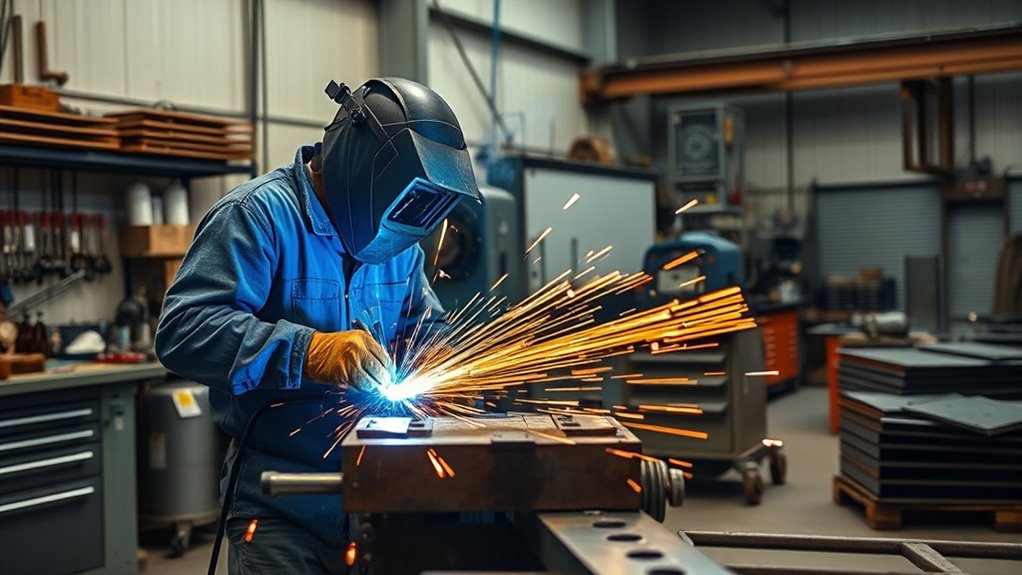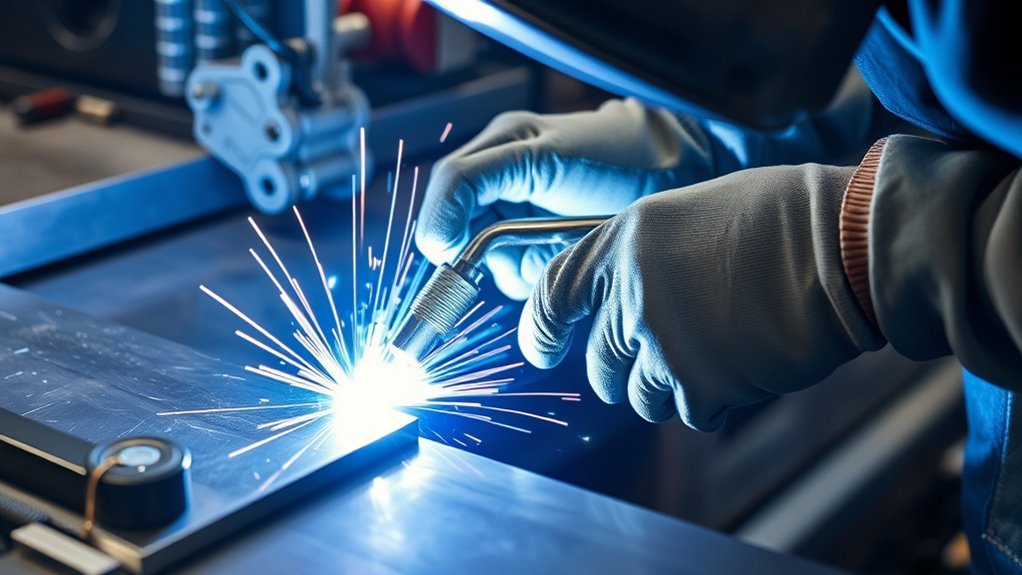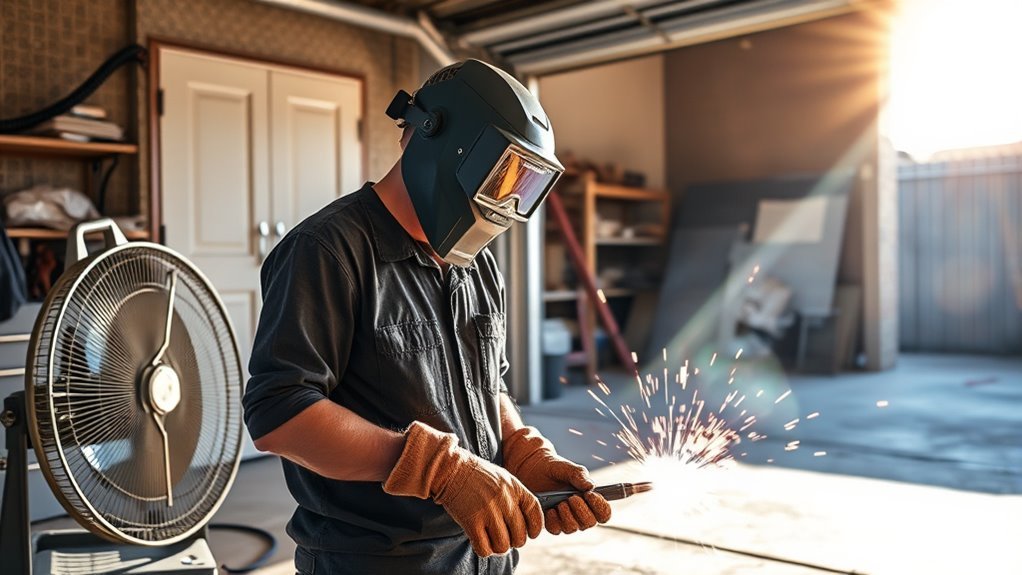
Welding stainless steel versus mild steel changes far more than the metal you place on the table. It affects joint preparation, filler metal, shielding gas, heat control, root protection, cleanup, and corrosion protection. Mild steel is usually cheaper and more forgiving. Stainless steel can provide much better corrosion resistance, but only when you identify the grade and protect the weld from excess heat, oxidation, and contamination.
Quick Answer
Mild steel is usually easier and less expensive to weld, making it practical for frames, repairs, brackets, and general fabrication. Stainless steel needs cleaner tools, grade-matched filler, tighter heat control, and proper oxide removal, but it lasts longer in wet, sanitary, marine, chemical, and outdoor environments.
Key Takeaways
- Mild steel is normally the easier starting material because common grades weld well with MIG, TIG, stick, and flux-core processes.
- Common 304 and 316 stainless steels are readily weldable, but they hold heat near the joint and are less forgiving of oxidation and carbon-steel contamination.
- Identify the exact stainless grade before choosing filler. A magnet or surface appearance cannot confirm the alloy.
- Stainless TIG commonly uses argon, while stainless MIG gas depends on the wire and transfer mode. A mild-steel MIG blend is not automatically suitable.
- Full-penetration stainless tube, pipe, and open-root welds may need an inert back purge to prevent root-side sugaring.
- Passivation does not remove heavy heat tint or oxide scale. The oxide must be removed by an appropriate mechanical, chemical, or electrochemical method first.
At a Glance
| Easier First Material | Mild steel |
| Better Corrosion Resistance | Correctly selected, welded, and cleaned stainless steel |
| Main Mild-Steel Task | Remove contamination and protect the finished surface with paint, coating, oil, or another suitable system |
| Main Stainless Task | Control heat, prevent iron contamination, protect the root, and remove harmful welding oxides |
| Critical Limitation | Neither material should be welded on safety-critical work without the required procedure, qualifications, inspection, and engineering controls |
What’s the Difference Between Stainless Steel and Mild Steel?
Mild steel is a low-carbon steel made mainly from iron with a relatively small amount of carbon. It is affordable, easy to cut and form, and generally easy to weld. Its main weakness is corrosion. Bare mild steel can rust when moisture and oxygen reach the surface.
Stainless steel is a family of iron-based alloys rather than one material. According to World Stainless, stainless steels contain at least 10.5% chromium by mass. Chromium helps form a thin passive surface film that can reform after minor damage when enough oxygen is available.
Stainless steel starts with at least 10.5% chromium, but the weld area only keeps its expected corrosion performance when the alloy, filler, shielding, root condition, and final surface treatment are suitable for the environment.
| Factor | Mild Steel | Stainless Steel |
|---|---|---|
| Main advantage | Low cost, easy forming, broad process compatibility | Corrosion resistance, cleanability, and an unpainted finished appearance |
| Main challenge | Rust prevention after welding | Grade identification, heat buildup, oxidation, and contamination control |
| Common processes | MIG, TIG, stick, gas-shielded flux core, and self-shielded flux core | TIG, MIG, stick, and stainless flux-core processes when the grade and application allow them |
| Post-weld work | Slag or spatter removal followed by a corrosion-protection system | Inspection for tint, scale, sugaring, and free-iron contamination followed by the required cleaning treatment |
If you need fast, affordable fabrication and can coat the part, mild steel is often the practical choice. Stainless steel makes more sense when the correct grade can reduce long-term damage from water, salt, food residues, cleaning chemicals, or weather exposure.
Why Does the Exact Stainless Grade Matter?
The phrase “stainless steel” covers several alloy families. Advice that works for common 304 or 316 austenitic stainless may be wrong for ferritic, martensitic, precipitation-hardening, or duplex stainless steel.
- Austenitic stainless: Common grades such as 304, 304L, 316, and 316L are generally weldable. They tend to hold heat near the joint and can distort more than mild steel.
- Ferritic stainless: Some grades are weldable, but grain growth, toughness, filler selection, and heat input can require tighter control.
- Martensitic stainless: These grades can harden and crack during welding. Preheat, controlled cooling, or post-weld heat treatment may be required.
- Duplex stainless: Heat input, filler, shielding, and interpass temperature must protect the intended ferrite-austenite phase balance and corrosion performance.
- Precipitation-hardening stainless: Welding and later heat treatment must match the required strength condition.
Outokumpu’s stainless welding guidance explains that welding parameters and limits vary by stainless family. Do not copy a 304 stainless procedure onto an unknown stainless part.
How Should You Identify the Metal Before Welding?
Start with a material test report, purchase record, drawing, grade stamp, or reliable positive material identification result. Appearance alone cannot separate 304, 316, 409, duplex, or another stainless grade. A magnet also cannot confirm the exact alloy because some stainless grades are magnetic and some nominally nonmagnetic grades can respond after cold working.
For mild steel, also check whether the surface is bare, painted, plated, galvanized, powder-coated, or exposed to oil and chemicals. Unknown coatings can create hazardous fumes and can contaminate the weld.
Warning: Do not weld through an unknown coating or residue. Paint, plating, zinc coatings, solvents, oils, and process chemicals can create hazardous fumes or gases. Identify the coating, review its safety information, remove it by an approved method, and use the required ventilation and PPE.
How Should You Prepare Stainless Steel and Mild Steel?
Both metals need a sound joint, but stainless work requires stricter contamination control. Complete the following checks before striking an arc:
- Confirm the base-metal grade and thickness.
- Choose the process, filler classification, gas, joint design, and polarity specified for that combination.
- Remove oil, moisture, marker residue, paint, plating, rust, and loose scale from the weld zone.
- Use clean, nonchlorinated products that are approved for the metal and welding operation.
- Fit the joint consistently so a changing gap does not force extra heat and filler into the weld.
- Dedicate brushes, files, abrasives, clamps, and work surfaces to stainless where corrosion performance matters.
- Clean the filler rod and protect open wire spools from dust and moisture.
- Plan root shielding before fitting stainless tube, pipe, or a full-penetration joint.
- Make a test coupon when changing metal grade, thickness, filler, gas, or transfer mode.
Pro Tip: Mark stainless-only brushes and abrasives clearly and store them away from carbon-steel grinding dust. A tool does not become safe for stainless just because its visible surface looks clean.
How Does Corrosion Resistance Affect Welding?
Mild steel does not have a chromium-rich passive layer. The weld, heat-affected zone, and ground surfaces can rust if they remain bare. After welding, remove slag, loose scale, spatter, oil, and dust before applying the primer, paint, powder coat, galvanizing system, oil, or other protection specified for the part.
Stainless corrosion resistance depends on alloy chemistry and surface condition. Welding can create heat tint, oxide scale, root oxidation, arc strikes, embedded iron, rough crevices, and weld defects. These conditions can make the weld area less corrosion resistant than the surrounding metal.
Stainless is also not immune to corrosion. The wrong grade can suffer pitting, crevice corrosion, stress-corrosion cracking, or attack from chlorides and chemicals even when the weld looks clean. Material selection must match the actual service environment.
Warning: Stainless steel welding can generate chromium-containing fumes, including hexavalent chromium. OSHA’s welding-fume guidance calls for hazard assessment, ventilation, exposure controls, training, and suitable PPE. Keep your head out of the plume, capture fumes near the source, and follow confined-space procedures. Argon, helium, and carbon dioxide can displace oxygen and create an asphyxiation hazard.
What Welding Process Is Best for Each Metal?
The best process depends on thickness, weld position, finish, production rate, access to the root, required mechanical properties, and the governing code or procedure. No single process is always best.
| Process | Mild Steel | Stainless Steel |
|---|---|---|
| MIG | Fast and practical for sheet, frames, brackets, automotive work, and production | Fast for production and thicker work, but requires suitable stainless wire, gas, transfer mode, and heat control |
| TIG | Clean and controllable for thin or visible joints, but slower than MIG | Excellent control for sheet, tube, pipe, exhaust, and visible joints; root purging may be required |
| Stick | Rugged for field repairs, thicker steel, and outdoor work | Useful for repair and field work with the correct stainless electrode, but produces slag and more cleanup |
| Flux Core | Self-shielded wire is practical outdoors; gas-shielded wire offers high deposition for heavier fabrication | Available for selected grades and production work, but wire, gas, slag removal, and procedure requirements are application-specific |
Mild Steel Welding Techniques
MIG welding is often the easiest all-around process for mild steel. It is productive on brackets, frames, sheet metal, and shop projects. Solid-wire MIG requires shielding gas, while self-shielded flux-core wire can be useful when wind would disturb an external gas shield.
Stick welding works well on thicker material, field repairs, and outdoor jobs. Electrode selection changes penetration, position capability, hydrogen control, slag behavior, and mechanical properties. E6010, E6011, E6013, and E7018 are not interchangeable simply because they can all weld steel.
TIG welding gives precise puddle and filler control. It is useful for thin material and visible joints but is slower and demands cleaner preparation than many general MIG or stick jobs.
Flux-core welding is useful when deposition rate, outdoor operation, or thicker fabrication matters. Remove slag fully between passes and before coating.
Stainless Steel Welding Techniques
TIG welding is common for 304 and 316 stainless sheet, tubing, pipe, exhaust components, and visible joints. Use a clean tungsten, suitable filler, stable gas coverage, controlled arc length, and enough post-flow to protect the hot weld and tungsten.
MIG welding is productive on thicker stainless and repeated fabrication. Use wire that matches the base metal and service requirements. Confirm that the drive system, liner, contact tip, gas, and transfer mode are suitable for the wire.
Stick welding can join stainless in field and repair applications. Use the specified stainless electrode and follow its storage, polarity, current, and position requirements. Remove all slag between passes.
A smooth face does not prove that a stainless weld is acceptable. Inspect the root side, heat-affected zone, fusion, undercut, porosity, cracking, and the final surface condition.
Note: TIG is common in sanitary fabrication, but a TIG bead is not automatically food-grade or hygienic. Sanitary work also depends on joint design, penetration, internal finish, cleanability, inspection, and the applicable procedure or standard.
Can You Use the Same Welder for Stainless and Mild Steel?
Many constant-voltage MIG machines and DC TIG machines can weld both metals within their rated output. The machine may stay the same, but the consumables and setup often change.
- Install the correct filler wire or rod.
- Use the shielding gas recommended for that filler and transfer mode.
- Confirm polarity and output mode in the machine and consumable instructions.
- Use a clean liner, drive rolls, contact tip, torch parts, and work clamp when contamination matters.
- Remove carbon-steel dust from the welding table and nearby grinding area.
- Reset voltage, wire speed, amperage, pulse settings, gas preflow, and post-flow for the new material and thickness.
A machine setting copied from mild steel can overheat thin stainless or produce poor stainless MIG wetting. Start with the equipment and filler manufacturer’s chart, then test on scrap of the same grade, thickness, and joint shape.
How Should You Choose Filler Metal?
Filler metal must match more than the metal’s appearance. Consider the base-metal specification, joint type, dilution, required strength, corrosion environment, service temperature, process, code, and heat treatment.
For mild-steel MIG welding, Hobart Brothers identifies ER70S-6 as a common solid-wire choice. Its deoxidizers can help with light mill scale or rust, but the surface should still be cleaned whenever practical. ER70S-3, metal-cored wire, flux-cored wire, and different stick electrodes may be better for other joint and service requirements.
For common austenitic stainless applications:
- 308L filler is commonly used for 304 and 304L stainless.
- 316L filler is commonly used for 316 and 316L stainless when the weld needs compatible molybdenum-bearing corrosion performance.
- 309L filler is commonly used for selected austenitic-stainless-to-carbon-steel joints and dissimilar applications.
The “L” suffix identifies a low-carbon version that helps reduce the risk of chromium-carbide-related intergranular corrosion in suitable applications. It does not remove the need for proper heat input, shielding, cleaning, or grade verification.
Do not assume 308L, 316L, or 309L is correct for ferritic, martensitic, duplex, precipitation-hardening, high-temperature, pressure, or code work. Those applications may require a different stainless or nickel-alloy filler and a qualified welding procedure.
Products Worth Considering

ER308L WIRE: A low-carbon stainless steel wire engineered to minimize intergranular carbide precipitation. This enhances corrosion resistance without the need for stabilizers, making it ideal for critical applications.

This solid wire REQUIRES a shielding gas

Premium Low Carbon Mig Wire: Achieve high-grade welding results with our ER308L stainless steel MIG wire. Featuring a low carbon content, it minimizes intergranular carbide precipitation, enhancing corrosion resistance without the need for stabilizers.
Why Is Shielding Gas Selection Critical in Welding?
Shielding gas protects the molten pool and hot weld metal from the surrounding air. The wrong gas can cause porosity, oxidation, spatter, unstable transfer, poor wetting, an irregular bead, excessive carbon pickup, or poor mechanical and corrosion performance.
For mild-steel MIG welding, 100% carbon dioxide and argon/CO₂ blends are common. Carbon dioxide is economical and can provide strong penetration, but it normally creates more spatter. Argon/CO₂ blends often run more smoothly and can reduce spatter.
For stainless TIG welding, 100% argon is a common starting gas. Argon is also commonly used for root purging. Helium-containing blends may be selected for greater heat or travel speed in specific procedures.
For stainless MIG welding, the correct gas depends on the wire, thickness, transfer mode, and required weld properties. A helium/argon/low-CO₂ trimix is commonly specified for some short-circuit stainless applications. Argon-rich blends with small controlled additions of oxygen or carbon dioxide may be specified for spray or pulsed transfer.
Do not select stainless MIG gas by habit. Read the filler data sheet and welding procedure. A gas that runs well with one wire and transfer mode may perform poorly with another.
Note: More gas flow is not automatically better. Excess flow can create turbulence and draw room air into the shielding envelope. Use the flow range specified for the torch, cup or nozzle, joint, draft conditions, and procedure.
Products Worth Considering

Enhanced Arc Stability: With an internal flux core, ARCCAPTAIN E308LFC-O Flux Cored Stainless Steel Welding Wire stabilizes the arc, enhancing operational performance and providing a protective barrier.

ER308L STAINLESS STEEL: ER308L is a low-carbon stainless steel TIG welding rod for general-purpose welding where moderate corrosion resistance and cryogenic performance are required.
When Does Stainless Steel Need Back Purging?
Back purging protects the root side of a full-penetration weld from oxygen while the metal is molten and hot. It is especially important for stainless tube, pipe, vessels, and open-root joints where the back of the weld cannot be shielded by the torch gas.
Without adequate root protection, stainless can develop heavy black or crusty oxidation known as sugaring. Sugaring creates a rough surface, traps contamination, and can reduce corrosion resistance. It is not repaired by brushing only the visible face of the weld.
Miller’s stainless tube and pipe guidance recommends argon for TIG shielding and purging in common applications. The purge setup must displace air before welding and maintain protection until the root is cool enough to resist oxidation.
- Seal the purge area without creating a dangerous pressure buildup.
- Provide a controlled outlet so displaced air can escape.
- Use a purge flow that replaces air without causing turbulence.
- Confirm the purge before welding when the procedure requires oxygen measurement.
- Keep the purge in place for the time specified by the procedure.
- Inspect the completed root, not only the external bead.
Warning: Purge gases can displace breathable oxygen. Do not release argon, helium, nitrogen, or carbon dioxide into an occupied confined space without the required ventilation, atmospheric testing, entry procedure, and rescue controls.
How Do Heat Control and Distortion Compare?
Both materials distort because the weld area expands during heating and contracts during cooling. Common austenitic stainless steels usually expand more and conduct heat away from the joint less effectively than mild steel. Heat can therefore remain concentrated near the stainless weld and increase warping, discoloration, or local metallurgical damage.
Ferritic and duplex stainless grades do not behave exactly like 304 or 316. Their allowable heat-input, interpass, preheat, and cooling practices may differ. Follow grade-specific procedure limits rather than using one stainless temperature rule.
Use these habits to control distortion without sacrificing fusion:
- Use consistent joint fit-up and the smallest suitable weld size.
- Tack the assembly in a sequence that holds alignment.
- Use short segments, skip welding, or balanced welding when the design permits it.
- Distribute welds around the assembly instead of placing all heat on one side.
- Use enough current for fusion, but avoid slow travel that leaves excess heat in the joint.
- Allow controlled cooling between passes when required.
- Use backing bars, fixtures, or chill blocks only when they are suitable for the metal and procedure.
- Avoid severe restraint that can trade distortion for cracking or high residual stress.
Do not use a universal preheat or interpass number from a general article. Thin low-carbon mild steel often needs no preheat in ordinary shop work, while thick, highly restrained, high-carbon-equivalent, or code work may require it. Austenitic stainless is commonly welded without preheat, while martensitic and duplex grades can require specific temperature controls.
How Do Weld Quality and Post-Weld Cleaning Vary?
For mild steel, inspect fusion, penetration, bead size, profile, cracking, porosity, undercut, overlap, slag inclusion, and arc strikes. Remove slag and loose spatter. Before painting, also remove oil, rust, dust, loose scale, and silicate islands that could interfere with coating adhesion.
For stainless steel, inspect the same weld defects plus the root condition, heat tint, oxide scale, embedded iron, rough grinding marks, and crevices that can collect corrosive material.
| Treatment | What It Does | Important Limit |
|---|---|---|
| Mechanical cleaning | Removes surface deposits, tint, scale, or roughness with stainless-dedicated tools | Can smear contamination or leave harmful oxide if the method and abrasive are unsuitable |
| Pickling | Chemically removes heat tint, oxide scale, and the affected surface layer | Uses hazardous chemicals and requires trained handling, PPE, ventilation, rinsing, neutralization, and disposal controls |
| Passivation | Helps remove free iron and supports formation of a clean passive surface | Does not replace removal of heavy weld oxide or heat tint |
| Electropolishing | Electrochemically removes a controlled surface layer and can improve smoothness and cleanability | Requires specialized equipment, chemicals, process control, and suitable part geometry |
Outokumpu’s post-fabrication guidance explains that proper pickling removes welding oxides and that separate chemical passivation is not automatically required after a correctly pickled surface.
Warning: Stainless pickling products can contain nitric acid and hydrofluoric acid. Hydrofluoric acid exposure can cause severe injury and systemic poisoning. Do not use pickling paste without the product-specific SDS, training, chemical-resistant PPE, ventilation, emergency procedures, and approved waste handling.
How Do Welding Strength and Durability Compare?
Neither metal automatically makes the stronger weld. Strength depends on the exact base-metal grades, filler classification, weld size, joint design, fusion, heat input, defects, loading direction, temperature, corrosion, and fatigue conditions.
Mild steel performs well in frames, brackets, stands, trailers, gates, fixtures, and repair work when the joint is correctly designed and the surface is protected. Its lower cost also makes thicker sections economical in many projects.
Stainless steel is often selected for durability where corrosion would weaken mild steel or create unacceptable maintenance. It may last longer around water, salt, food residues, washdown chemicals, and exterior exposure, but only when the grade is suitable for those conditions.
Do not compare strength by looking only at the words “mild” and “stainless.” Some stainless grades have higher strength than common mild steel, while others may have different toughness, fatigue, or high-temperature limits. Use the material specification and design calculation.
How Do the Metals Perform in Harsh Environments?
In a dry indoor shop, coated mild steel may offer the best value. In wet, salty, sanitary, or chemical service, a suitable stainless grade often lowers maintenance. However, 304 stainless is not automatically the right choice for every chloride or marine environment, and 316 is not immune to pitting or crevice corrosion.
The weld area can become the weak point in either material:
- Mild-steel welds can rust where coating coverage is thin, damaged, or trapped behind a crevice.
- Stainless welds can corrode where heat tint, sugaring, arc strikes, free iron, rough roots, or crevices remain.
- Dissimilar joints can create galvanic conditions that accelerate corrosion of the carbon-steel side.
- Poor drainage and trapped deposits can defeat an otherwise suitable material choice.
What Controls Long-Term Performance?
- Environment: Consider water chemistry, chlorides, acids, temperature, humidity, washdown products, and trapped deposits.
- Grade: Choose the actual stainless or carbon-steel grade for the exposure and load.
- Joint design: Avoid unsealed laps, sharp crevices, inaccessible roots, and water traps where possible.
- Weld quality: Fusion, profile, root condition, cracking, and surface finish matter more than decorative bead appearance.
- Protection: Mild steel usually needs a coating; stainless may need oxide removal and contamination control.
- Maintenance: Plan inspection, cleaning, coating repair, and access before fabrication.
- Compatibility: Check contact with other metals, fasteners, gaskets, and process chemicals.
How Do Cost Factors Influence Material Selection?
Mild steel usually costs less to buy and fabricate. Common filler metals and gases are widely available, and many shops already have suitable tooling and experience. For painted frames, fixtures, brackets, and general repairs, it often provides excellent cost-to-strength value.
Stainless steel can cost more in base metal, filler, shielding gas, dedicated abrasives, purging equipment, cleanup, and labor. A stainless mistake can also be expensive because overheating or contamination may not become obvious until rust staining or service corrosion appears.
Upfront price is only one part of the decision. Include:
- Surface preparation and coating cost
- Inspection and post-weld treatment
- Cleaning and maintenance
- Coating repairs and downtime
- Expected service life
- Replacement and disposal
- Consequences of contamination or corrosion failure
A painted mild-steel part may remain the lowest-cost choice in a controlled environment. Stainless can offer the lower lifecycle cost when it prevents repeated coating work, rust repairs, sanitation problems, or premature replacement.
What Welding Applications Are Best for Each Type of Steel?
| Best Choice | Typical Applications | Why It Fits |
|---|---|---|
| Mild steel | Frames, brackets, gates, trailers, tables, shop fixtures, farm repairs, stands, and coated general fabrication | Low material cost, easy forming, broad filler availability, and straightforward coating |
| Stainless steel | Food equipment, washdown fixtures, marine hardware, exhaust parts, chemical equipment, architectural work, tanks, tubing, and cleanable surfaces | Grade-specific corrosion resistance, cleanability, appearance, and reduced dependence on paint |
The application labels do not replace engineering. Automotive exhaust may use ferritic 409 stainless rather than 304. Marine and chemical work may need a higher-alloy grade. Food-contact equipment requires hygienic design and finish requirements in addition to stainless material.
Can You Weld Stainless Steel to Mild Steel?
Yes. Stainless steel can be welded to mild steel, but the joint is a dissimilar-metal weld. Filler selection must account for dilution from both base metals, and the carbon-steel side remains vulnerable to corrosion.
For many common austenitic-stainless-to-mild-steel joints, a 309L-type filler is used because its higher alloy content can tolerate dilution better than 308L. The correct choice still depends on the stainless family, base-metal grades, thickness, service temperature, corrosion exposure, and governing procedure.
Prepare the joint carefully:
- Identify both base metals.
- Remove rust, mill scale, oil, paint, plating, and other contamination.
- Use stainless-dedicated tools on the stainless side.
- Control heat and avoid an oversized weld.
- Protect a full-penetration stainless root when required.
- Clean harmful oxide and contamination from the stainless side.
- Apply the specified corrosion protection to the mild-steel side.
Galvanic corrosion can occur when stainless and carbon steel are electrically connected and exposed to a conductive liquid. The mild steel is normally the more vulnerable side. Coating design, drainage, isolation, area ratio, and the service environment all matter. Do not rely on a small stripe of paint over the weld as the only corrosion plan.
Note: Pressure piping, pressure vessels, structural members, lifting equipment, vehicle-safety parts, sanitary systems, and high-temperature dissimilar joints require the applicable design rules, approved welding procedure, qualified welder, and specified inspection. A general 309L recommendation is not enough for critical work.
Troubleshooting Stainless and Mild Steel Welds
| Problem | Likely Causes | What to Check |
|---|---|---|
| Porosity | Dirty metal, moisture, drafts, leaking gas system, long stickout, poor torch angle, or contaminated filler | Cleanliness, hose connections, flow at the torch, nozzle blockage, wind protection, and filler storage |
| Black stainless root or sugaring | Missing or inadequate purge, air leak, purge stopped too early, or excess heat | Purge sealing, outlet, pre-purge time, oxygen level when specified, heat input, and root inspection |
| Rust stains on stainless | Carbon-steel contamination, grinding dust, unsuitable tools, weld oxide, or an unsuitable grade | Tool segregation, nearby grinding work, cleaning records, surface treatment, alloy grade, and service exposure |
| Thin stainless warps | Long welds, slow travel, excess filler, poor sequence, wide gaps, or uneven restraint | Fit-up, tack sequence, weld size, travel speed, skip pattern, fixture design, and cooling between passes |
| MIG bead does not wet into the toes | Wrong gas, low voltage, excessive stickout, poor angle, low heat, or incorrect transfer mode | Wire data sheet, gas label, polarity, voltage, wire speed, stickout, torch angle, and base-metal cleanliness |
| Coating peels from mild steel | Slag, silicates, oil, rust, spatter, moisture, or poor surface profile under the coating | Coating preparation standard, cleanliness, abrasive profile, primer window, humidity, and cure conditions |
Common Mistakes to Avoid
- Guessing the stainless grade: Surface color and magnet response cannot confirm the exact alloy.
- Using carbon-steel tools on stainless: Embedded iron can create rust staining and local corrosion.
- Copying mild-steel settings: Thin stainless can overheat or warp before the operator recognizes the heat buildup.
- Using the wrong MIG gas: Gas must match the filler and transfer mode.
- Using mild-steel wire on a corrosion-resistant stainless joint: The weld deposit can rust and will not preserve the intended stainless chemistry.
- Ignoring the root: A clean face can hide severe backside oxidation.
- Calling passivation an oxide remover: Heavy heat tint and scale must be removed before passivation can address free iron or passive-surface condition.
- Overgrinding stainless: Deep scratches, overheating, embedded abrasive, and uneven surfaces can harm appearance and corrosion performance.
- Painting over dirty mild steel: Slag, silicates, rust, oil, and loose scale can cause early coating failure.
- Treating every stainless family like 304: Ferritic, martensitic, duplex, and precipitation-hardening grades can need different fillers and thermal controls.
- Relying on bead color alone: Color is affected by heat, shielding, surface finish, and viewing conditions; acceptance must follow the applicable specification.
Frequently Asked Questions
What is the main difference between mild steel and stainless steel welding?
Mild steel welding is usually less expensive and more forgiving. Stainless welding requires exact grade identification, suitable filler and gas, tighter contamination control, and careful management of heat and root oxidation so the weld area keeps the required corrosion performance.
Which metal is harder to weld, stainless steel or mild steel?
Mild steel is usually easier for beginners. Common 304 and 316 stainless steels are readily weldable, but they are less forgiving of excess heat, poor shielding, root oxidation, and iron contamination. Martensitic, duplex, and other stainless families can require much more specialized procedures.
What is the golden rule in welding?
There is no single official golden rule for every welding process. A useful shop principle is to identify the metal, clean and fit the joint, use the specified filler and shielding, and apply enough heat for fusion without adding unnecessary heat. Critical work must follow its approved welding procedure.
Can you weld stainless steel with mild-steel wire?
Mild-steel wire can physically fuse some stainless parts, but the weld deposit will not provide the corrosion resistance expected from a stainless joint and may rust. Use the stainless or dissimilar-metal filler specified for the base-metal grades and service conditions.
Can you use 75% argon and 25% CO2 to MIG weld stainless steel?
Do not assume a common 75/25 mild-steel blend is suitable. Some noncritical setups may produce a bead, but the high CO2 level can change arc behavior, oxidation, carbon pickup, and weld properties. Use the gas listed for the stainless wire, transfer mode, and procedure.
What shielding gas should you use for stainless steel versus mild steel?
Mild-steel MIG commonly uses 100% CO2 or an argon/CO2 blend. Stainless TIG commonly starts with 100% argon. Stainless MIG may use a helium trimix or another argon-rich low-oxidizing blend, depending on the wire and transfer mode. Follow the filler data sheet and procedure.
Does stainless steel always need back purging?
Not every surface weld needs a back purge. Full-penetration tube, pipe, vessel, and open-root welds often do because the root side would otherwise contact air while hot. The joint design, grade, service, and welding procedure determine the required root shielding.
Do stainless steel welds need cleaning after welding?
Inspect every stainless weld for heat tint, scale, sugaring, and iron contamination. The required treatment may be mechanical cleaning, pickling, electropolishing, passivation, or a specified combination. Passivation alone does not remove heavy weld oxide.
Can the same MIG or TIG machine weld both stainless and mild steel?
Many machines can weld both metals if their output range and modes are suitable. Change the filler, gas, consumable path, polarity or settings as required, and prevent carbon-steel contamination. Test the complete setup on matching scrap before welding the part.
Is a magnet a reliable way to identify stainless steel?
No. Some stainless grades are magnetic, while some austenitic stainless can become partly magnetic after forming or welding. A magnet may provide a clue, but it cannot identify the exact grade or select the correct filler. Use documentation or reliable material identification.
What are the properties of MS versus SS?
MS, or mild steel, is generally affordable, ductile, easy to form, easy to weld, and prone to rust without protection. SS, or stainless steel, is a family of chromium-containing alloys selected for corrosion resistance, appearance, strength, temperature performance, or cleanability.
Conclusion
Stainless steel and mild steel can both produce strong, durable welds, but they should not be prepared, welded, or finished as though they are the same material. Mild steel is often the practical choice for low-cost fabrication and coated parts. Stainless steel is often the better choice when a suitable grade can reduce corrosion, sanitation, or maintenance problems.
Start by identifying the exact metal. Then match the process, filler, shielding gas, root protection, heat input, cleaning method, and safety controls to the joint and service environment. For structural, pressure, sanitary, lifting, vehicle-safety, or other critical work, use the required engineered design, qualified procedure, welder qualification, and inspection instead of a generic shop setup.
Sources
- World Stainless: Introduction to Stainless Steels — supports the 10.5% minimum chromium content and stainless-alloy overview.
- OSHA: Controlling Hazardous Fume and Gases During Welding — supports chromium-fume, ventilation, coating, shielding-gas, and confined-space safety guidance.
- Outokumpu: Welding Stainless Steel — supports stainless-family, heat-input, interpass, and grade-specific procedure guidance.
- Outokumpu: Post-Fabrication Treatment of Stainless Steel — supports heat-tint removal, pickling, passivation, and chemical-safety guidance.
- Miller Electric: Stainless Steel Tube and Pipe Welding — supports TIG shielding, argon purging, root protection, and stainless tube-welding practices.
- Hobart Brothers: Choosing Solid Welding Wire, Lincoln Electric 308L, Lincoln Electric 316L, and Lincoln Electric 309/309L — support the general mild-steel, stainless, and dissimilar-metal filler guidance.