Disclosure: As an Amazon Associate, we earn from qualifying purchases. If you click a link on this page and make a purchase, we may receive a small commission at no extra cost to you.
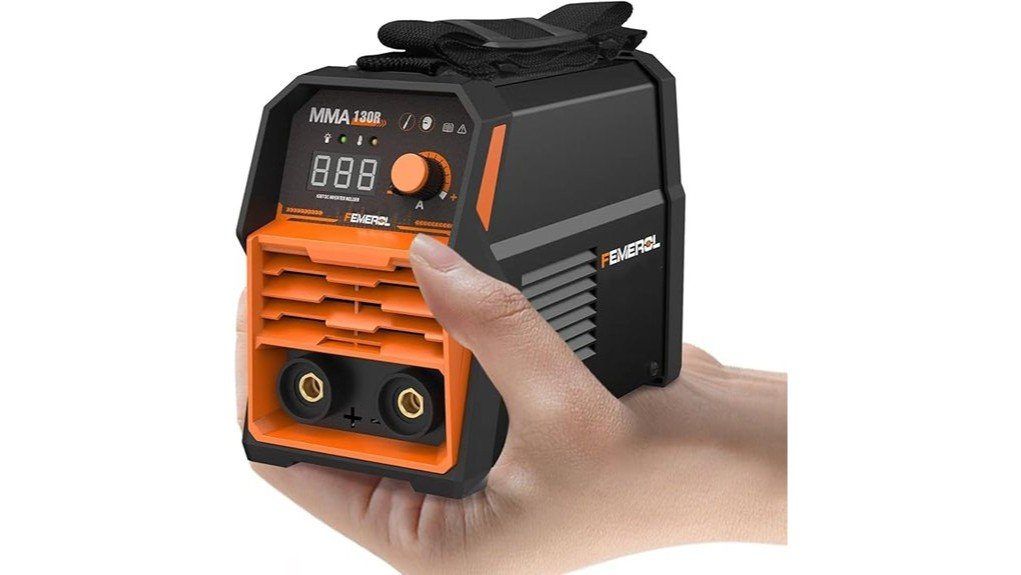
Choosing a small stick welder can be tricky because portability, output, rod support, and duty cycle all matter. The 130A Stick Welder is built for users who want a lightweight welding machine for repairs, practice, and light fabrication without moving a large shop unit around.
At 15 pounds, it focuses on easy transport while supporting common rods such as E6013, E6011, E6010, E7018, and E308-16. This review helps you decide where it fits well, where it falls short, and what you should confirm before using it for more demanding work.
Its biggest advantage is mobility, but its compact 130A class also creates limits. You should treat it as a light to medium-duty tool, not a replacement for a high-output industrial welder.
Quick Verdict
Rating: 8/10 Recommended with caveats
Best For: DIY repairs, beginner stick welding practice, light fabrication, and mobile backup work
Bottom Line: The 130A Stick Welder is easy to carry and flexible with several common electrode types. It is not the right choice for heavy industrial welding, long high-amp sessions, or users who need MIG or TIG capability.
| Specification | Detail |
|---|---|
| Product Type | 130A stick welder |
| Design | Compact inverter-style welding machine |
| Brand / Model | Not specified in the supplied product details |
| Weight | 15 pounds |
| Welding Process | Stick welding |
| Rod Compatibility | E6013, E6011, E6010, E7018, E308-16 |
| Materials Supported | Carbon steel, mild steel, medium carbon steel, stainless steel |
| Safety Features | Overload protection, overheating protection, anti-stick, hot start |
| Duty Cycle | Approx. 60% as stated in the product description |
| Portability | Adjustable carry strap and compact frame |
| Best Use | DIY repair, light fabrication, mobile repair, welding practice, backup use |
| Not Designed For | Heavy continuous industrial welding or MIG/TIG work |
What Is the 130A Stick Welder?
The 130A Stick Welder is a compact inverter-style machine for basic repair work, light fabrication, and portable stick welding tasks. It is designed for users who need a smaller unit that can move between a garage, workshop, farm area, or job site more easily than a larger welding machine.
The supplied product details identify it by output class rather than by a separate verified brand or model name. Because of that, this review focuses on the listed specifications: 130A output class, 15-pound weight, multiple rod compatibility, and built-in protection features.
Its main selling point is flexibility in a lightweight body. You can use common stick electrodes for different repair needs, but you still need to match the rod, amperage setting, material thickness, and duty cycle to the job.
Who Should Buy It?
Best For
- DIY users doing gates, brackets, fences, shop repairs, and light fabrication
- Beginners who want a simple stick welder for learning arc control
- Mobile users who need a 15-pound backup welder for quick repair jobs
Skip If
- You need heavy industrial welding or long continuous high-output sessions
- You require MIG, TIG, spool gun, or advanced multi-process functionality
- You need verified input voltage, plug type, included leads, or warranty details before purchase
Before You Buy: Confirm the current Amazon listing for input voltage, plug type, electrode diameter range, included accessories, and warranty terms before ordering. Those details were not verified in the supplied article, and they can affect whether the welder fits your setup.
Key Features Breakdown
Portability and Design
The 15-pound weight is the most practical advantage of this welder. A lighter unit is easier to carry around a garage, move to a fence line, or store on a shelf when you only weld occasionally.
The adjustable carry strap also helps when you need both hands free for cables, rods, clamps, or other tools. This matters most for small repair jobs where moving a full-size welder would slow you down.
Welding Performance
The listed rod compatibility includes E6013, E6011, E6010, E7018, and E308-16. That gives you useful range for common mild steel repairs, some rougher repair work, and stainless applications when the correct stainless electrode and setup are used.
E6013 often suits general light fabrication and practice because it can be easier to manage. E7018 can be useful for stronger welds when stored and used correctly, while E308-16 supports stainless work when the base metal and welding conditions match.
The 130A output class is better matched to light and medium tasks than thick structural work. For deep penetration, heavy plate, or long production welding, a higher-amp machine will usually make more sense.
Safety and Protection Systems
Overload and overheating protection help protect the machine when it is pushed too hard or used for longer periods. These features are helpful, but they do not remove the need to follow duty cycle limits and safe welding habits.
Anti-stick and hot start features can make the welder easier to use, especially for beginners. Hot start can help start the arc more smoothly, while anti-stick helps reduce the frustration of electrodes sticking to the workpiece.
Rod and Material Compatibility
The article lists support for carbon steel, mild steel, medium carbon steel, and stainless steel. That range covers many common home, shop, and maintenance jobs, but your results still depend on rod choice, metal prep, and correct settings.
Clean metal usually gives better arc stability and bead quality. Rust, paint, oil, moisture, and poor grounding can make a compact stick welder feel weaker than it really is.
Pro Tip: Store electrodes in a dry place and test your settings on scrap metal before welding the final workpiece. Moist rods, dirty steel, and the wrong amperage can cause hard starts, spatter, weak beads, and inconsistent arc control.
Setup Tips Before First Use
Before your first weld, read the product manual and confirm the correct input power, polarity, rod size, and amperage range for your electrode. Do not assume every 130A machine uses the same setup or supports the same rod diameter.
Start with clean scrap steel that is close to the thickness of your real project. This lets you adjust travel speed, rod angle, and amperage before working on a gate, bracket, trailer part, or other useful piece.
Give the machine cooling breaks when you work near its upper range. The article lists an approximate 60% duty cycle, which means you should avoid treating it like a continuous industrial welder.
Compatibility and Safety Notes
This welder uses electricity, heat, ultraviolet light, sparks, and molten metal, so personal protective equipment matters. Use an appropriate welding helmet, gloves, protective clothing, and safe ventilation for the material you are welding.
Keep the welder away from rain, standing water, and wet work areas. The article notes outdoor usefulness because of its lightweight frame, but outdoor welding still requires dry conditions, safe power access, and a stable work area.
For stainless steel or coated materials, check the safety guidance for fumes and surface preparation before welding. When a repair affects load-bearing parts, vehicles, pressure vessels, or safety-critical structures, use a qualified welder or professional inspection.
How It Performs in Real Use
For Home Repairs
For gates, fences, small brackets, and light shop repairs, the 130A Stick Welder offers enough flexibility to handle common stick welding practice and maintenance tasks. The 15-pound body makes it easier to bring the welder to the repair instead of moving the part to a large machine.
For Outdoor Work
The compact frame and carry strap make outdoor repair work more practical when the job site has safe power access. You still need to protect the unit from rain and moisture, and you should avoid welding in unsafe weather or poor ground conditions.
For Learning and Training
Beginners benefit from simple stick welding controls, hot start, anti-stick, and support for common rods. You should still expect a learning curve, since stable bead shape depends on rod angle, arc length, travel speed, and metal preparation.
For Emergency Backup Use
This welder can make sense as a backup unit when a larger machine is not available or would be inconvenient to move. It is best for quick fixes and non-production repairs, not for all-day fabrication or thick structural welding.
Pros and Cons
Pros
- Lightweight 15-pound body is easy to carry, store, and move between jobs
- Supports several common rods, including E6013, E6011, E6010, E7018, and E308-16
- Works with listed materials such as mild steel, carbon steel, medium carbon steel, and stainless steel
- Overload and overheating protection add useful protection during extended use
- Hot start and anti-stick features can make arc starts easier for new users
Cons
- Not designed for heavy-duty continuous industrial welding
- Lower output than larger 140A to 200A inverter welders
- Key buying details such as voltage, plug type, included accessories, and warranty are not verified in the supplied article
Want a Portable Stick Welder?
Check the current listing details before you decide if this 130A unit fits your setup.
Is It Worth the Price?
This welder fits the budget-friendly to mid-range category depending on seller pricing. It offers strong value for the price if your main priorities are portability, basic stick welding capability, and support for several common electrode types.
You get the most value from it when you need a compact unit for home repair, light fabrication, training, or occasional mobile work. Its 15-pound weight and carry strap matter more in those situations than maximum output.
It is not the best fit if you need long duty cycles, verified heavy fabrication performance, or a multi-process machine. For daily professional welding, a higher-amp model with more complete published specs may be worth comparing.
How It Compares to Alternatives
Compared with larger 140A to 200A inverter welders, this 130A unit is easier to carry but less powerful. Larger machines from brands such as Forney or YESWELDER often provide more output or more features, but they may cost more and take up more space.
The 130A Stick Welder makes the most sense if you want a smaller stick-only machine for repairs, learning, and backup use. Choose a larger machine if you regularly weld thicker steel, need longer duty cycles, or want MIG/TIG options.
Frequently Asked Questions
Is the 130A Stick Welder good for beginners?
Yes, it can work well for beginners because it has a simple stick-welding focus, hot start, and anti-stick support. You will still need practice to control arc length, travel speed, bead shape, and rod angle.
What rods can it use?
The supplied article lists E6013, E6011, E6010, E7018, and E308-16 compatibility. Always match the rod type and diameter to the metal, amperage range, and instructions for the machine.
Can it weld stainless steel?
The article lists stainless steel support and E308-16 rod compatibility. For best results, confirm the correct electrode, base metal, polarity, and settings before welding stainless parts.
Can it handle outdoor welding?
Yes, the 15-pound weight and carry strap make it practical for outdoor repair work when conditions are safe. Keep the unit dry, use safe power access, and avoid welding in rain or wet areas.
Does it overheat easily?
It includes overheating protection, which helps protect the machine during extended use. You should still follow duty cycle limits, especially when welding near the upper output range.
What does a 60% duty cycle mean?
The article lists an approximate 60% duty cycle as stated in the product description. In practical terms, you should plan cooling breaks instead of welding nonstop for long high-output sessions.
Does it replace a MIG or TIG welder?
No, this is a stick welder based on the supplied article details. Skip it if you specifically need MIG wire-feed welding, TIG control, aluminum TIG work, or a multi-process setup.
What should you check before buying?
Check the current listing for input voltage, plug type, electrode diameter range, included leads, clamp details, manual, and warranty terms. Those details are important because they affect setup, compatibility, and long-term value.
The Bottom Line
The 130A Stick Welder is a good fit if you want a lightweight stick welder for DIY repairs, beginner practice, light fabrication, or mobile backup use. Its strengths are portability, common rod compatibility, hot start, anti-stick support, and built-in protection features.
You should skip it if you need heavy continuous welding, verified professional-duty specs, or MIG/TIG functionality. The 8/10 rating fits because it offers useful portability and flexibility, but the missing verified brand, voltage, accessory, and warranty details create real buying caveats.