Disclosure: As an Amazon Associate, we earn from qualifying purchases. If you click a link on this page and make a purchase, we may receive a small commission at no extra cost to you.
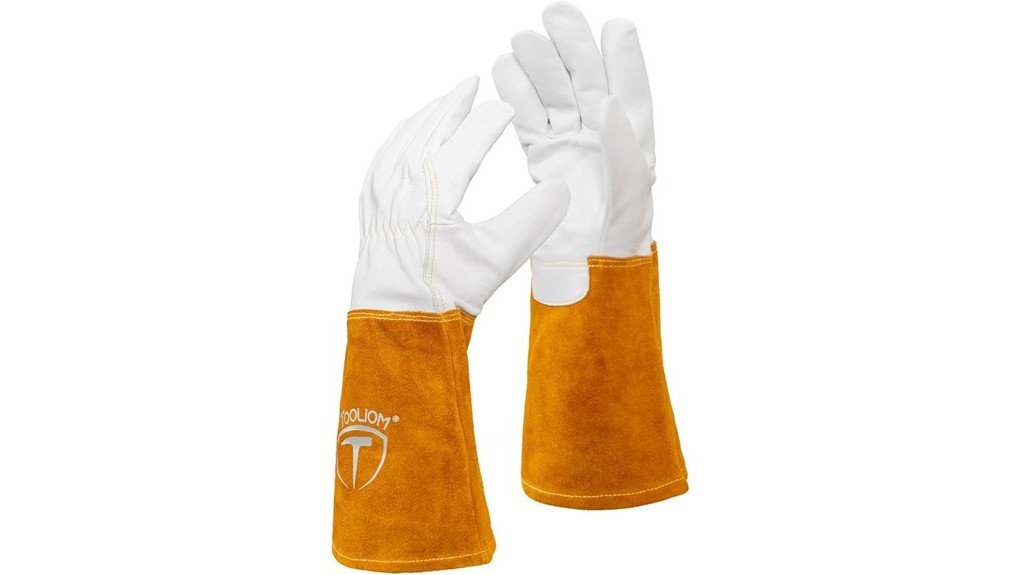
Good TIG welding gloves need to protect your hands without making the torch feel clumsy. The TOOLIOM Premium Goatskin TIG Welding Gloves focus on that balance with natural goatskin leather, a 14-inch cuff, Kevlar stitching, a wing thumb, and a seamless index finger. This review helps you decide whether they make sense for precise TIG work, light fabrication, and general shop tasks. They offer strong dexterity and forearm coverage, but they are not the best choice when you need thick insulation for extreme heat or heavy spatter.
Quick Verdict
Rating: 8.5/10
Best For: TIG welders, light fabrication work, and users who need precise torch control
Bottom Line: These gloves are a strong pick if you want flexible goatskin gloves with a long cuff and durable stitching. Skip them if your work involves heavy stick welding, constant spatter, or extreme heat where thicker gloves make more sense.
Key Specifications
| Specification | Detail |
|---|---|
| Brand | TOOLIOM |
| Product Type | TIG welding gloves |
| Material | Natural goatskin leather |
| Length | 14 inches |
| Stitching | Kevlar thread |
| Thumb Design | Wing thumb |
| Index Finger Design | Seamless index finger |
| Interior | Sweat-absorbent lining |
| Size Range | M, L, XL |
| Best Use | TIG welding, metalwork, light fabrication, and general workshop handling |
| Safety Note | Not intended as the thickest option for extreme heat, heavy spatter, or heavy industrial welding |
What Are the TOOLIOM Premium Goatskin TIG Welding Gloves?
The TOOLIOM Premium Goatskin TIG Welding Gloves are protective work gloves made for welding tasks that need both hand protection and fine control. Their natural goatskin leather construction helps you feel the torch, filler rod, and small workpieces better than many thicker leather gloves.
The 14-inch length extends past the wrist and gives your lower forearm more coverage near sparks, warm metal, and radiant heat. Kevlar stitching supports seam durability, while the wing thumb and seamless index finger help reduce stiffness during detailed TIG work.
They make the most sense for welders who need control more than maximum bulk. For heavy stick welding, heavy spatter, or long exposure to very hot parts, a thicker welding glove may be safer and more comfortable.
Who Should Buy It?
Best For
- TIG welders who want better fingertip feel and torch control
- Light fabrication work where you handle small parts, filler rod, or thin metal
- Shop users who want a 14-inch cuff for extra wrist and forearm coverage
Skip If
- You mainly do heavy stick welding or high-spatter work
- You need maximum insulation for repeated contact with very hot materials
- You prefer thick, rigid gloves over flexible gloves with better hand feel
Build Quality and Materials
Goatskin leather is the main material, and that choice shapes how these gloves feel in use. It gives you a softer, more flexible hand feel than heavier cowhide gloves, which helps when you need to adjust filler rod angle or make small torch movements.
The Kevlar thread stitching helps reinforce the seams in areas that bend often during welding and shop work. This matters because gloves fail quickly when seams weaken from heat cycles, hand movement, and repeated gripping.
The 14-inch cuff is one of the most useful protection details. It gives you more coverage than short work gloves, especially when your wrist and lower forearm sit close to the weld area.
Dexterity and Control Performance
The wing thumb design supports a more natural grip when you hold a TIG torch, pliers, or small shop tools. That can reduce hand strain during longer sessions because your thumb does not feel as boxed in.
The seamless index finger is also useful for precision work. Fewer pressure points around the index finger can make it easier to feed filler rod, control a trigger, or position a workpiece without fighting bulky seams.
The tradeoff is clear. A flexible TIG glove gives you better control, but it does not offer the same thick barrier as heavy-duty welding gloves made for more aggressive heat and spatter.
Comfort, Fit, and Sizing
The sweat-absorbent interior lining helps manage moisture during longer work sessions. That can improve comfort and reduce the slippery feeling you may get inside unlined gloves in a warm shop.
The M, L, and XL size range gives you a few fit options, and sizing matters more with TIG gloves than with general work gloves. A snug fit helps your fingertips line up with the glove fingers, while a loose fit can reduce control and make filler rod handling feel less precise.
For the best result, choose the size that gives you secure finger placement without cutting off movement. If your glove fingers extend too far past your fingertips, you may lose the dexterity advantage these gloves are designed to provide.
Before You Buy: These gloves are optimized for precision welding, not heavy industrial stick welding or extreme heat environments where thicker insulation is required.
Pro Tip: Choose the closest comfortable fit for TIG welding. Extra slack at the fingertips can reduce control when you adjust the arc, hold filler rod, or work on thin metal.
Material Safety and Comfort
These gloves are made for hand protection during welding and metalwork, but you still need to use them as part of a complete welding safety setup. Wear proper eye protection, protective clothing, and other PPE that matches your welding process.
Goatskin gives you a flexible contact layer, but it should not be treated as burn-proof. Avoid grabbing hot metal for extended periods, and stop using the gloves if the leather, seams, or lining show damage that exposes your hand.
The sweat-absorbent lining improves comfort, but it can also hold moisture after long sessions. Let the gloves dry fully before storage so the interior does not stay damp between uses.
Fit Tips Before You Buy
Match the glove size to your hand circumference and finger length as closely as possible. TIG welding requires small movements, so a glove that fits poorly can make precise work harder.
Use a snug fit for torch control, but avoid a fit that feels tight across your knuckles. You should still be able to curl your fingers, grip the torch, and move your thumb without strain.
Keep these gloves for TIG, light fabrication, and controlled shop tasks whenever possible. Using them for rough handling, heavy spatter, or repeated hot-metal contact may shorten their useful life.
How It Performs in Real Use
For TIG Welding
The gloves perform best in TIG welding scenarios where fine control matters more than heavy insulation. The goatskin leather helps you feel the torch and filler rod, while the seamless index finger keeps the glove from feeling bulky around your most important control finger.
For Light Metal Fabrication
In light fabrication tasks, the gloves provide useful hand coverage while still allowing you to handle smaller parts. The Kevlar stitching and goatskin construction make them a better choice than basic shop gloves when heat and sparks are part of the work area.
For General Workshop Use
You can use them for light grinding, tool handling, assembly, and moving warm materials. They are not a replacement for purpose-built grinding protection or heavy insulated gloves, so match them to the task and heat level.
For Longer Shop Sessions
The sweat-absorbent lining helps during longer sessions because it reduces moisture buildup inside the glove. The main limitation is ventilation, since welding gloves still trap more heat than open-back work gloves.
Pros and Cons
Pros
- Goatskin leather improves flexibility and grip control for TIG work
- 14-inch length gives your wrist and lower forearm more coverage
- Kevlar stitching supports better seam durability during repeated use
- Wing thumb helps your hand move more naturally around a torch or tool
- Sweat-absorbent lining improves comfort during longer shop sessions
Cons
- Not the best choice for extreme heat, heavy spatter, or heavy-duty stick welding
- Flexible build may feel less protective if you prefer thick, rigid gloves
- Correct sizing matters because extra finger slack can reduce TIG control
Overall, these gloves are best for precision-focused welders who want control, comfort, and longer cuff coverage without the bulk of heavy industrial gloves.
Is It Worth the Price?
These gloves fit the mid-range category for TIG welding gear because they focus on useful materials and control features. The goatskin leather, 14-inch length, Kevlar stitching, wing thumb, and seamless index finger give you more than a basic leather shop glove.
They are a smart buy if your work involves TIG welding, light fabrication, and detailed torch handling. You get the most value when dexterity matters as much as protection.
They are not the best fit if you regularly work around heavy spatter, extreme heat, or rough industrial environments. In that case, a thicker welding glove may offer better heat buffering, even if it reduces finger feel.
How It Compares to Alternatives
Compared to thicker cowhide welding gloves, the TOOLIOM goatskin gloves prioritize flexibility and fingertip control over maximum heat insulation. That makes them better for TIG welding and light fabrication, but less suitable for heavy stick welding.
Compared to lighter mechanic-style gloves, they offer better welding-focused coverage because of the 14-inch cuff and heat-minded construction. They make the most sense when you want more protection than a general work glove without giving up too much hand feel.
Frequently Asked Questions
Are these gloves suitable for TIG welding beginners?
Yes, they are a good match for TIG beginners who need control while learning torch angle and filler rod movement. They provide basic welding protection, but you should still avoid using them for high-spatter or extreme-heat work.
Do these gloves fit tight or loose?
They are meant to support a closer fit because TIG welding depends on fingertip control. Choose the size that feels secure without limiting your finger movement or thumb position.
Can they handle high-temperature welding?
They are suitable for typical TIG welding and light metalwork, but they are not the thickest option for extreme heat. Use heavier insulated gloves when you expect constant spatter or repeated contact with very hot materials.
How do you choose the right size?
Match your hand to the available M, L, or XL size option and focus on fingertip placement. A glove that is too loose can reduce control, while a glove that is too tight can make longer sessions uncomfortable.
Are goatskin gloves better than cowhide for TIG welding?
Goatskin usually gives you better flexibility and finger sensitivity, which helps with TIG welding. Cowhide is often thicker, so it can be better for heavier welding tasks where insulation matters more than precision.
Can you use them for grinding or general shop work?
You can use them for light grinding, assembly, and handling warm parts, but match the glove to the risk level. For aggressive grinding, sharp debris, or heavy heat, use PPE designed for that specific task.
How should you care for these gloves?
Let the gloves dry fully after long sessions, especially if the lining gets damp. Store them away from moisture, chemicals, and direct heat, and replace them if the leather or stitching becomes damaged.
The Bottom Line
The TOOLIOM Premium Goatskin TIG Welding Gloves are a strong choice if you want flexible TIG gloves with 14-inch forearm coverage, Kevlar stitching, and better fingertip control. They fit welders who handle precise torch work, light fabrication, and controlled shop tasks.
Skip them if you need maximum insulation for heavy industrial welding, heavy spatter, or repeated contact with very hot metal. The 8.5/10 rating makes sense because they do their main job well, but they are built for precision rather than the harshest heat exposure.