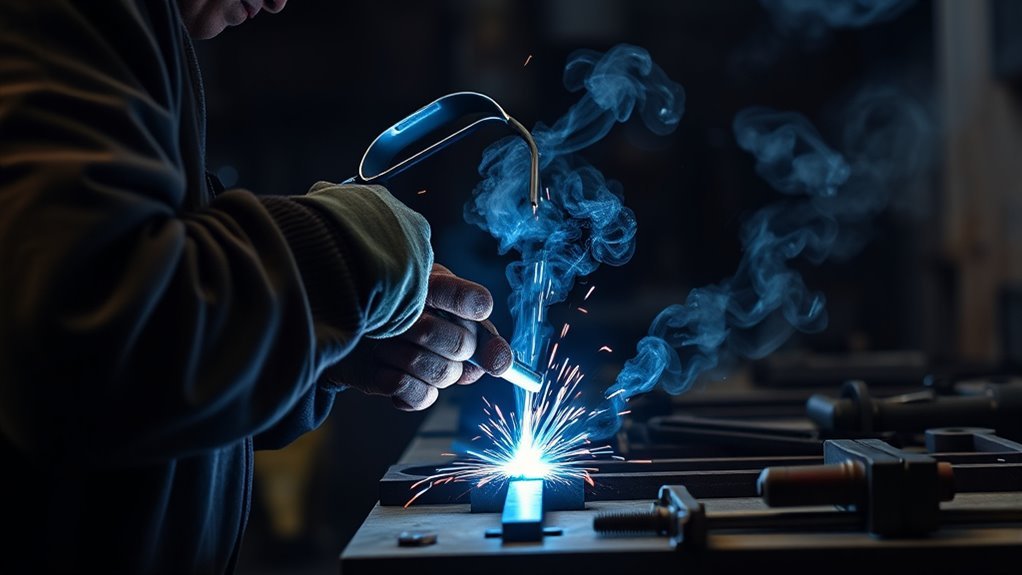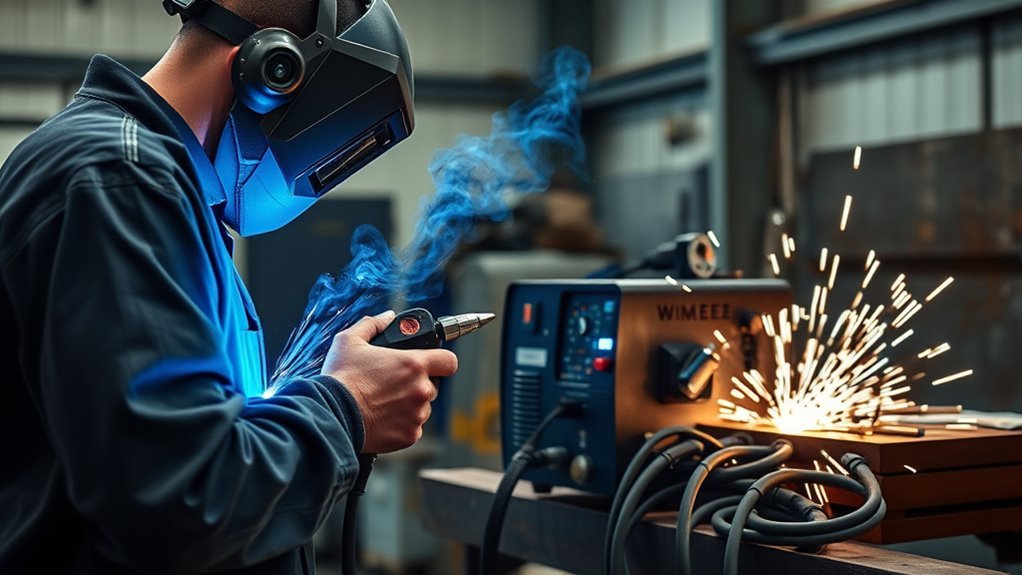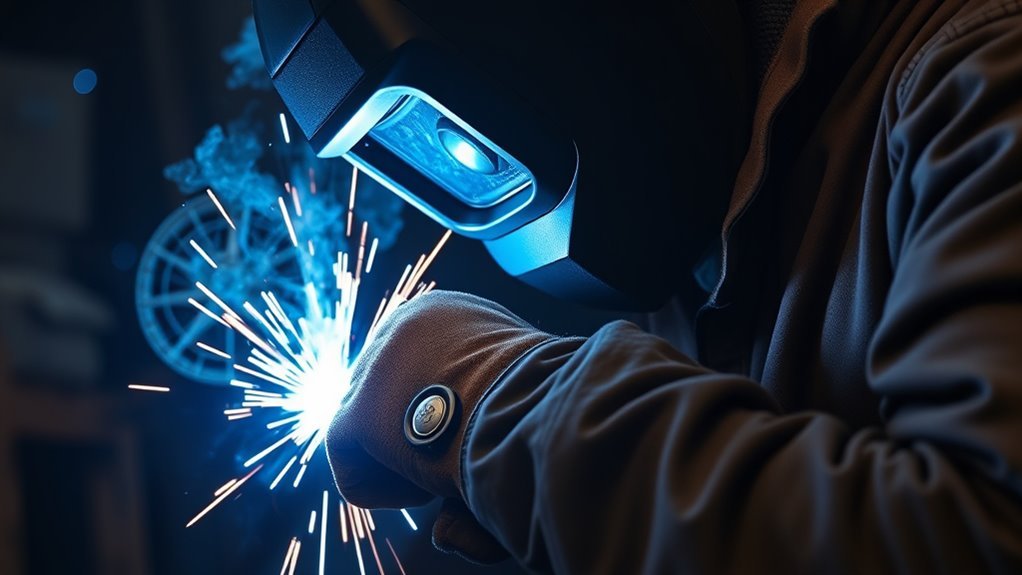
Welding arcs can burn exposed skin because they produce intense ultraviolet radiation along with visible light and infrared radiation. The injury may not become obvious until after the job, especially on the neck, ears, face, scalp, wrists, or forearms. Cover every skin gap, use the correct welding helmet and filter shade, shield nearby people, and inspect your PPE before striking an arc.
Quick Answer
Yes. Welding UV can cause a sunburn-like radiation burn that may become severe after enough exposure. Protect yourself with a welding helmet, the correct filter shade, flame-resistant clothing, gauntlet gloves, neck and ear coverage, welding screens, and controls that reduce reflected arc light.
Key Takeaways
- Welding arcs emit UV radiation that can burn uncovered skin and injure the eyes after a brief intense exposure.
- Reflected UV from metal, walls, ceilings, and light-colored surfaces can reach welders, helpers, and bystanders.
- Use a welding helmet and filter shade matched to the process and amperage. Sunglasses and gas-welding goggles are not substitutes for arc-welding protection.
- Cover the neck, ears, scalp, wrists, waist, and ankles because PPE gaps commonly appear when you bend, reach, or weld overhead.
- Ventilation controls fumes and gases, but it does not block UV radiation. Use both ventilation and radiation barriers when the job requires them.
At a Glance
| Time Required | About 1–2 minutes for a PPE and work-area check, followed by continuous protection during welding |
| Difficulty | Easy to follow, but coverage becomes harder during overhead, vertical, outdoor, or confined-position work |
| Tools Needed | Welding helmet, task-matched filter shade, safety glasses, gauntlet gloves, flame-resistant clothing, long pants, boots, head and neck cover, and welding screens |
| Cost | Varies by the PPE and barriers required; replace damaged, contaminated, or noncompliant equipment before welding |
Warning: Never use sunglasses, ordinary safety glasses, smoked plastic, or gas-welding goggles as your main protection for arc welding. Use a helmet or hand shield with a compliant filter lens. Seek medical care for severe or extensive burns, significant blistering, infection, eye pain, light sensitivity, blurred vision, vision loss, or a skin sore that does not heal.
How Welding UV Damages Skin
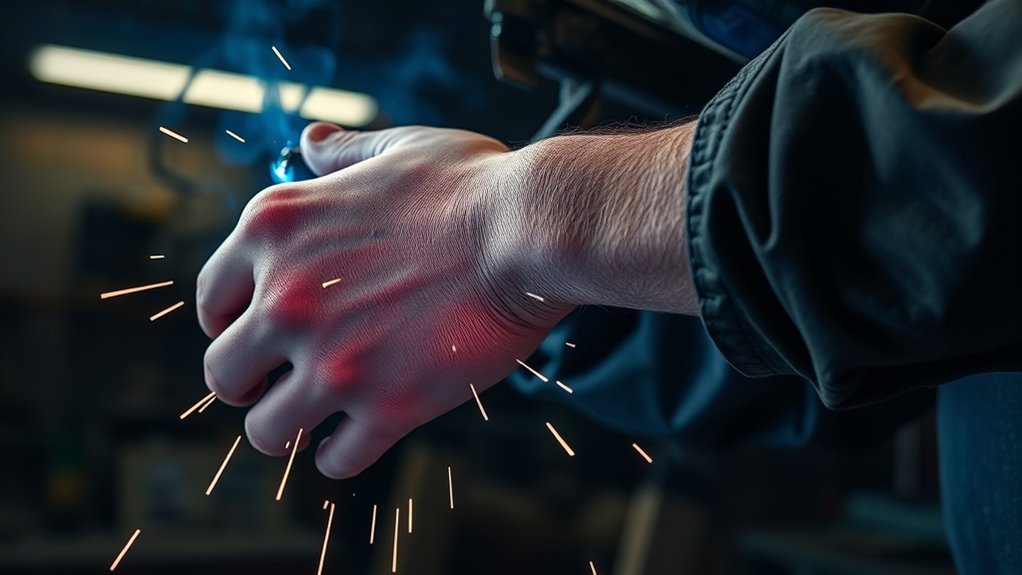
Welding arcs produce radiation over a broad range. The Canadian Centre for Occupational Health and Safety lists wavelengths from about 200 nanometers to 1,400 nanometers. That range includes ultraviolet radiation from 200 to 400 nm, visible light from 400 to 700 nm, and infrared radiation from 700 to 1,400 nm.
UV is the main radiation-related skin-burn concern. It can damage exposed tissue much like sunlight, but the arc is much closer and can be highly intense. Infrared radiation and visible light usually have much less direct effect on the skin, although visible light can overwhelm the eyes and infrared radiation adds heat-related eye hazards.
UV damage can begin before you feel pain. Redness, warmth, tenderness, itching, swelling, or peeling may appear later. A stronger exposure can cause fluid-filled blisters. Common burn locations include the ears, back of the neck, scalp, forearms, wrists, and the narrow gap between a glove and sleeve.
The risk is not limited to direct arc light. UV can reflect from bare or polished metal, walls, ceilings, vehicles, workpieces, and light-colored surfaces. A helper or bystander can therefore receive harmful exposure without striking the arc or staring directly at it.
The long-term concern is repeated exposure. IARC Monographs Volume 118 classifies ultraviolet radiation from welding as carcinogenic to humans. This classification describes a cancer hazard; it does not mean that one brief exposure will cause cancer. Your actual risk depends on the intensity, duration, frequency, distance, work environment, and protection used.
Why Welders Face Higher UV Burn Risk
A welding arc is a close, concentrated source of radiation. Even a narrow opening at the collar, cuff, waist, glove, or boot can become the exact place that burns.
UV from a welding arc can burn unprotected skin directly, while reflected radiation from metal, walls, and ceilings can reach skin from unexpected angles.
Risk increases with longer arc time, higher current, close working distance, reflective surroundings, and positions that pull clothing open. Overhead welding deserves extra care because a helmet or jacket may leave the ears, scalp, upper chest, or back of the neck exposed.
Outdoor welding can combine arc radiation with solar UV. Wind can also move curtains, loosen clothing, or interfere with a temporary enclosure. Secure screens and recheck coverage whenever conditions change.
Bystanders face risk too. A person standing to the side may feel little heat while direct or reflected radiation reaches the eyes and skin. Under OSHA 1910.252, adjacent workers must be protected by suitable screens, shields, or appropriate eye protection.
Long-Term Cancer Risk From Welding UV
UV radiation can damage skin cells and their DNA. The body repairs much of this damage, but repeated exposure increases the chance that some damage will remain. Over time, chronic UV exposure can contribute to premature skin aging, actinic damage, and skin cancer.
The strongest welding-specific human cancer evidence concerns ultraviolet radiation from welding and ocular melanoma. At the same time, UV radiation is a recognized skin-cancer hazard, and CCOHS warns that long-term exposure to welding UV can cause skin cancer. The practical conclusion is clear: prevent both burns today and cumulative exposure over a working lifetime.
- Direct arc UV can strike the face, neck, ears, scalp, forearms, wrists, and hands.
- Reflected UV can reach areas that are outside the welder’s expected line of sight.
- Outdoor welding may combine arc UV with solar UV.
- Repeated small exposures can build over years of welding.
- Correct PPE, screens, low-reflectivity surroundings, and work positioning reduce exposure.
Skin tone affects how easily redness or burning may be seen, but it does not eliminate cancer risk. The National Cancer Institute explains that skin cancer can affect people of every skin tone. Check your skin for new growths, changing spots, unusual discoloration, or a sore that does not heal.
For outdoor welding, broad-spectrum sunscreen can supplement protection from sunlight on skin that remains uncovered while you are away from the arc. It must never replace flame-resistant clothing, gloves, a helmet, or complete skin coverage while welding.
Which Welding Jobs Expose Skin Most
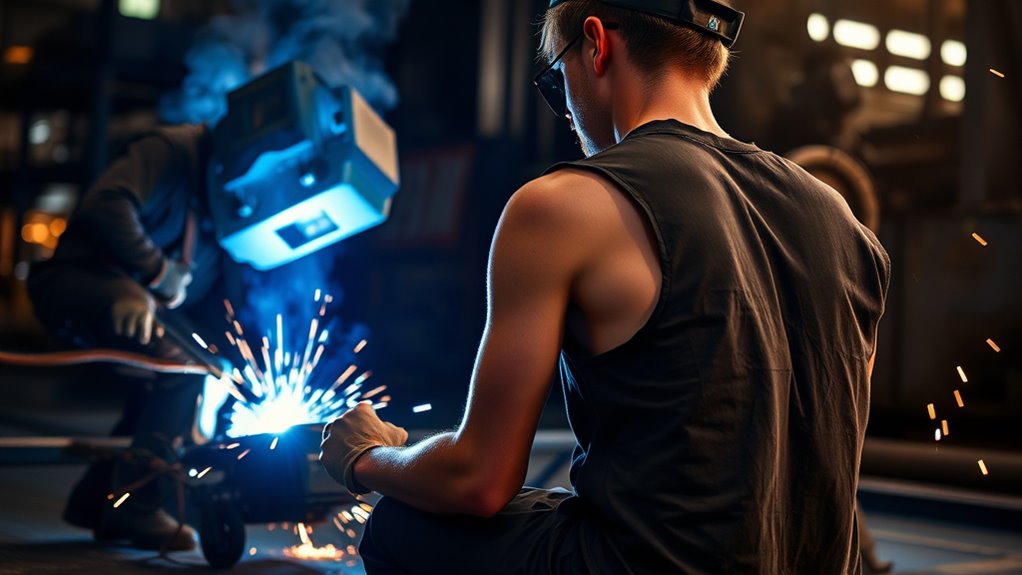
The highest-risk jobs usually involve long arc time, high current, close working distance, a direct view of the arc, poor barriers, or reflective surroundings. Gas metal arc welding, flux-cored arc welding, shielded metal arc welding, gas tungsten arc welding, plasma arc welding, and carbon arc work all require task-matched eye, face, and skin protection.
Do not rank the hazard by process name alone. Current, arc duration, distance, work position, surrounding surfaces, and PPE coverage all affect exposure. A short, low-current weld with an open collar can still burn a narrow strip of skin.
Do not judge UV exposure by how hot you feel. UV can damage skin without producing the heat sensation you would expect from a thermal burn. Instead, judge the setup by arc intensity, exposure time, distance, reflections, and whether every skin area remains covered while you move.
| Higher-Risk Situation | Why It Matters |
|---|---|
| Higher amperage or brighter arc | More intense radiation requires the correct filter shade and complete skin coverage. |
| Long welds or production welding | Radiation dose increases with exposure time, even when each individual exposure feels minor. |
| Polished metal or light-colored walls | Reflected UV can reach the side of the face, neck, hands, and nearby workers. |
| Overhead or out-of-position welding | Sleeves, collars, jackets, and gloves can shift or pull open as the welder moves. |
| Outdoor welding | Solar UV adds to arc exposure, and wind may disturb clothing or welding screens. |
Choose the Correct Welding Filter Shade
A welding helmet protects your eyes and the areas covered by the shell, but only when its filter shade is appropriate for the operation. OSHA requires a shade number suited to the process and current.
Start with a shade that is too dark to see the weld zone. Move to a lighter shade only until you can see the work clearly, and never go below OSHA’s minimum shade for the operation. Follow your employer’s hazard assessment and the helmet manufacturer’s instructions when they require a darker setting.
| Operation | Arc Current | OSHA Minimum Shade |
|---|---|---|
| SMAW / stick welding | Less than 60 A | 7 |
| SMAW / stick welding | 60–160 A | 8 |
| SMAW / stick welding | 160–250 A | 10 |
| SMAW / stick welding | 250–550 A | 11 |
| GMAW / MIG or FCAW | Less than 60 A | 7 |
| GMAW / MIG or FCAW | 60–500 A | 10 |
| GTAW / TIG | Less than 150 A | 8 |
| GTAW / TIG | 150–500 A | 10 |
| Plasma arc welding | Less than 20 A | 6 |
| Plasma arc welding | 20–100 A | 8 |
| Plasma arc welding | 100–400 A | 10 |
| Plasma arc welding | 400–800 A | 11 |
| Carbon arc welding | All listed operations | 14 |
Note: These are OSHA minimum protective shades, not automatic settings for every job. A darker shade may be needed for comfort, visibility, workplace rules, or equipment-specific instructions.
How to Protect Skin From Welding UV
Protecting your skin means blocking the direct arc, controlling reflections, and covering every exposed area. Start with properly selected PPE, then secure the work area before anyone begins welding.
- Wear a welding helmet with the correct filter shade. Use a helmet or hand shield for arc welding. Start with a dark setting, then move lighter without going below the OSHA minimum for the process and current.
- Wear safety glasses under the helmet. Side-shield safety glasses protect against particles when the helmet is lifted, but they do not replace a welding helmet.
- Cover your neck, ears, and scalp. Add a flame-resistant hood, cap, cape sleeve, or neck cover when the helmet shell does not cover these areas completely.
- Wear heavyweight, tightly woven protective clothing. Use suitable wool, cotton, leather, or rated flame-resistant garments. Avoid thin material and synthetic blends that can melt.
- Close every opening. Button the collar and cuffs, cover pockets, and use a jacket long enough to overlap the pants while you reach or bend.
- Protect the glove-to-sleeve gap. Use gauntlet gloves or protective sleeves that continue to overlap during movement.
- Keep pants over boot tops. Avoid cuffs because they can catch hot metal and sparks. Fully lace high-top boots.
- Keep clothing clean. Oil, grease, solvents, and other combustible contamination can ignite. Replace or properly clean contaminated garments.
- Use welding curtains, screens, or booths. Protect helpers, customers, other workers, and anyone who could pass near the work area.
- Reduce reflections. Move polished panels where practical and use low-reflectivity surroundings or suitable screens around the arc.
- Use sunscreen only for supplemental solar protection. During outdoor work, apply it to skin exposed to sunlight away from the arc. Do not leave skin uncovered while welding.
Pro Tip: Perform a “skin gap check” before striking the arc. Turn your head, reach forward, crouch, and raise both arms. If the collar, cuffs, waist, gloves, or pant legs separate during those movements, they can separate during the weld.
Products Worth Considering

HIGH-QUALITY MATERIAL – Crafted from sturdy, pliable cloth that’s wear-resistant and heat-resistant, the Gavaeu welding hood is lightweight yet durable, staying stable for long hours of use.

【Full Coverage】: This hooded welding cape features a hood and cape design that provides full coverage for the head, neck, and shoulders. It protects these areas from sparks or high temperatures.

✅Arc & Flame Resistant for Life - This 7 oz material is a soft, breathable cotton. They will remain arc and flame retardant regardless of the washes and wear cycles. These cotton fr balaclavas are NFPA 70E Compliant, HRC / CAT 2, EBT = 12 cal/cm² and meet ASTM F1506.
Best PPE and Work Practices for Welders
The best welding UV protection combines compliant PPE, careful body position, low-reflectivity barriers, and protection for everyone nearby. PPE must fit comfortably enough to remain closed and in place throughout the job.
Products Worth Considering

Exceptional Safety: Expertly crafted from 310g (11 oz) flame-resistant cotton, this NFPA2112-certified welding jacket is ideal for TIG and MIG welding, providing reliable protection against sparks and molten slag. Designed to be worn by both men and women, it ensures all-day safety and comfort

FLAME-RESISTANT TREATED COTTON: Chemically treated to resist ignition and slow flame spread. Helps protect against flash fires, arc flashes, and molten metal splatter.

Jacket for protecting the arms and torso from welding spatter and heat
Essential Welding PPE
Your basic skin and eye protection should include:
- Welding helmet or hand shield: Use a filter shade matched to the process and current. Never substitute sunglasses, modified glasses, smoked plastic, or gas-welding goggles.
- Safety glasses with side shields: Wear them under the helmet for setup, chipping, grinding, cleanup, and particle protection when the helmet is raised.
- Flame-resistant jacket or sleeves: Cover the arms, shoulders, chest, waist, and neck with heavyweight, tightly woven, clean material.
- Gauntlet welding gloves: Choose gloves long enough to overlap the sleeves while reaching and bending.
- Neck, ear, and scalp protection: Use a flame-resistant hood, cap, cape, or helmet accessory where the helmet leaves gaps.
- Long pants and proper boots: Keep uncuffed pant legs over fully laced boot tops. Add flame-resistant spats when sparks could enter the boots.
- Welding screens or curtains: Use noncombustible or flame-resistant barriers to protect anyone in or near the arc path.
The CCOHS welding PPE guide recommends clothing that blocks UV radiation, sparks, and molten metal. It also warns that synthetic fabrics and synthetic blends can burn vigorously, melt, and cause serious skin injuries.
Safe Work Positioning
Position your body so the arc is not directed toward exposed skin. Lower the helmet before the arc starts, and avoid leaning so far over the weld that reflected light enters below the helmet or around the collar.
Check coverage again whenever you change position. Vertical, overhead, and cramped welding can pull clothing tight or open a gap that was covered while standing normally. Add temporary barriers when working in a tight bay, against bright sheet metal, or near reflective vehicle panels.
Shielding Bystanders Properly
Anyone near a welding arc can be exposed. Bystanders should not watch the arc without proper protection, even for a short tack. Install barriers before work begins rather than waiting for someone to complain about glare.
- Place suitable welding curtains, screens, or fixed shields around the arc path.
- Use low-reflectivity surfaces where practical to reduce reflected radiation.
- Keep helpers outside the direct line of sight unless they are wearing task-appropriate welding PPE.
- Warn nearby workers before striking an arc.
- Move polished panels, bright sheet metal, and reflective parts out of the reflection path when possible.
- Check that the barrier protects seated, standing, and walking eye levels.
- Secure outdoor curtains so wind cannot open an exposure gap.
Ventilation Still Matters, But Not for UV
Ventilation does not stop UV radiation. It controls welding fumes, gases, and airborne contaminants. A fan or exhaust hood may improve breathing-zone safety while doing nothing to protect your skin or eyes from arc radiation.
Use local exhaust, general ventilation, or respiratory protection when the fume assessment requires it. At the same time, keep the helmet, protective clothing, gloves, and screens in place for radiation protection.
Do not block required airflow when setting up welding screens. OSHA states that welding booths and screens should permit air circulation at floor level. A safe setup controls both radiation and airborne hazards rather than trading one hazard for another.
Inspect PPE Before Each Weld
A fast inspection can prevent burns and eye injuries. Check these items before starting:
- Helmet shell: Look for cracks, open seams, warped areas, loose headgear, or light leaks.
- Filter and cover lenses: Replace cracked, pitted, deeply scratched, loose, or hazy lenses.
- Auto-darkening helmet: Confirm the shade range, sensitivity, delay, battery status, sensors, and test function.
- Jacket and sleeves: Repair holes, frayed cuffs, torn seams, damaged closures, or thin spots.
- Clothing cleanliness: Remove garments contaminated with oil, grease, solvents, or other combustible material.
- Gloves: Replace stiff, torn, burned, wet, contaminated, or shrunken gloves that no longer overlap the sleeves.
- Neck and head cover: Confirm that the back of the neck, ears, scalp, and upper chest remain covered while moving.
- Pants and boots: Check that pant legs have no cuffs and continue over the boot tops.
- Screens: Close gaps through which a bystander could see the arc.
Note: A welding helmet protects only the areas covered by the shell and filter assembly. Your neck, ears, scalp, arms, wrists, waist, and legs still need clothing or accessories that block UV and resist sparks.
UV Burn vs. Thermal Burn vs. Arc Eye
Welding can cause several injuries that need different responses. Do not assume every red or painful area is only a mild UV burn.
- UV skin burn: Often resembles sunburn and may not appear immediately. Redness, warmth, tenderness, itching, swelling, peeling, or blistering can develop after exposure.
- Thermal burn: Comes from hot metal, slag, sparks, flame, or heated equipment. Pain may be immediate, and deeper tissue damage can occur.
- Electrical burn: Can result from electric current and may cause damage below the skin that is not obvious from the surface. Electrical injuries require medical evaluation.
- Arc eye: UV injury to the surface of the eye can cause pain, tearing, redness, gritty sensation, and light sensitivity. Symptoms may not begin until several hours after exposure.
Eye pain, blurred vision, vision loss, intense light sensitivity, or a persistent gritty sensation after welding exposure requires prompt medical evaluation. Do not drive yourself if your vision is impaired.
What to Do If You Get a Welding UV Burn
A small, mild UV skin burn may respond to basic burn care, but welding can also involve thermal, electrical, chemical, and eye injuries. When the injury is uncertain, treat it cautiously and contact a medical professional.
- Stop welding and move away from the arc.
- Cool the affected skin with clean, cool running water or a cool, clean compress. Do not apply ice directly to the skin.
- Remove loose clothing or jewelry near the area unless it is stuck to the burn.
- Gently cover the area with a sterile non-stick dressing if it needs protection from rubbing.
- Do not pop or remove the top of an intact blister.
- Drink water and prevent more UV, heat, or friction exposure while the skin heals.
- Review the helmet, clothing, barriers, reflections, and body position before welding again.
The MedlinePlus minor-burn guide recommends cool water rather than ice and advises against breaking blisters.
Get medical care for a burn that is deep, extensive, badly blistered, infected, or located on the face, eyes, hands, feet, major joints, or genitals. Also seek care for worsening pain, spreading redness, drainage, fever, or a burn that does not improve.
Medical Caution: This section provides general first-aid information, not a diagnosis. Eye symptoms, electrical injuries, chemical exposure, severe blistering, or uncertainty about the depth of a burn should be evaluated by a qualified medical professional.
Common Mistakes That Leave Skin Exposed
Many welding UV burns result from small shortcuts or PPE gaps. Watch for these common mistakes:
- Leaving the top shirt button or collar open.
- Wearing short sleeves for a “quick tack.”
- Using lightweight, loosely woven, polyester, nylon, or other synthetic clothing near the arc.
- Wearing clothing contaminated with oil, grease, solvents, or combustible dust.
- Letting the jacket ride above the pants when reaching.
- Allowing gloves and sleeves to separate at the wrist.
- Wearing cuffed pants that can collect sparks.
- Lifting the helmet while someone else is welding nearby.
- Skipping screens because the job will last only a few seconds.
- Using sunscreen as a substitute for protective clothing.
- Ignoring reflected UV from polished metal, walls, ceilings, vehicles, and nearby equipment.
- Using a filter shade that is too light for the process and current.
- Failing to test an auto-darkening helmet before work.
Frequently Asked Questions
How do you protect your skin from welding radiation?
Wear a welding helmet with the correct filter shade, heavyweight flame-resistant long sleeves, long pants, gauntlet gloves, boots, and neck, ear, and scalp coverage. Use welding curtains or screens to block direct and reflected UV from reaching helpers and bystanders.
How long does a welding UV burn last?
A mild UV burn may feel sore for several days, similar to sunburn. A deeper or badly blistered injury can take longer to heal. Seek medical care if the burn is extensive, infected, near the eyes, worsening, or not improving.
What parts of a welder’s body are most often burned by UV light?
Common locations include the face, ears, scalp, neck, upper chest, forearms, wrists, hands, waist, and ankles. The narrow gaps between the helmet and collar, glove and sleeve, or pants and boots are frequent trouble spots.
Can you get UV burns from welding without looking at the arc?
Yes. Reflected UV from metal, walls, ceilings, vehicles, and nearby work can burn skin or injure eyes. Welders and bystanders need barriers and PPE even when they are not looking directly at the arc.
Does sunscreen replace welding PPE?
No. Sunscreen may supplement protection from sunlight during outdoor work, but it does not replace a welding helmet, flame-resistant clothing, gloves, or screens. Skin near an active arc should remain fully covered.
Do darker welding lenses always mean better protection?
Not always. The shade must meet or exceed the minimum for the process and current while still allowing safe control of the weld. Start dark, move lighter only as needed, and never go below OSHA, workplace, or manufacturer requirements.
Does an auto-darkening helmet protect your skin?
It protects the face and other areas covered by the helmet shell when the helmet is undamaged and correctly positioned. It does not cover the scalp, ears, neck, arms, wrists, waist, or legs, so protective clothing is still required.
Can arc-eye symptoms appear hours after welding?
Yes. Eye pain, tearing, redness, gritty sensation, and light sensitivity may not begin until several hours after UV exposure. Obtain prompt medical evaluation if these symptoms occur, especially with blurred vision or vision loss.
Conclusion
Welding UV is more than bright light. It can burn exposed skin, injure the eyes, reflect from nearby surfaces, and add to cumulative UV exposure over a working lifetime. Protect yourself by covering every skin gap, choosing the correct helmet and minimum filter shade, reducing reflections, shielding bystanders, and replacing damaged or contaminated PPE. Treat every arc as a powerful radiation source, even during a short tack.
Sources
- CCOHS: Welding — Radiation and the Effects on Eyes and Skin — supports welding radiation wavelengths, reflected UV, skin burns, arc-eye symptoms, and long-term UV hazards.
- CCOHS: Welding — Personal Protective Equipment and Clothing — supports protective clothing, skin coverage, fabric selection, garment condition, and synthetic-fabric warnings.
- OSHA 1910.133: Eye and Face Protection — supports task-appropriate welding filter shades and minimum shade numbers by process and current.
- OSHA 1910.252: Welding, Cutting, and Brazing — supports welding helmets, protective clothing, low-reflectivity screens, bystander protection, and ventilation around booths.
- IARC Monographs Volume 118 — supports the carcinogenic classification of ultraviolet radiation from welding and the welding-specific evidence concerning ocular melanoma.
- MedlinePlus: Minor Burns — Aftercare — supports cool-water first aid, blister protection, dressing guidance, and medical-escalation criteria.