Disclosure: As an Amazon Associate, we earn from qualifying purchases. If you click a link on this page and make a purchase, we may receive a small commission at no extra cost to you.
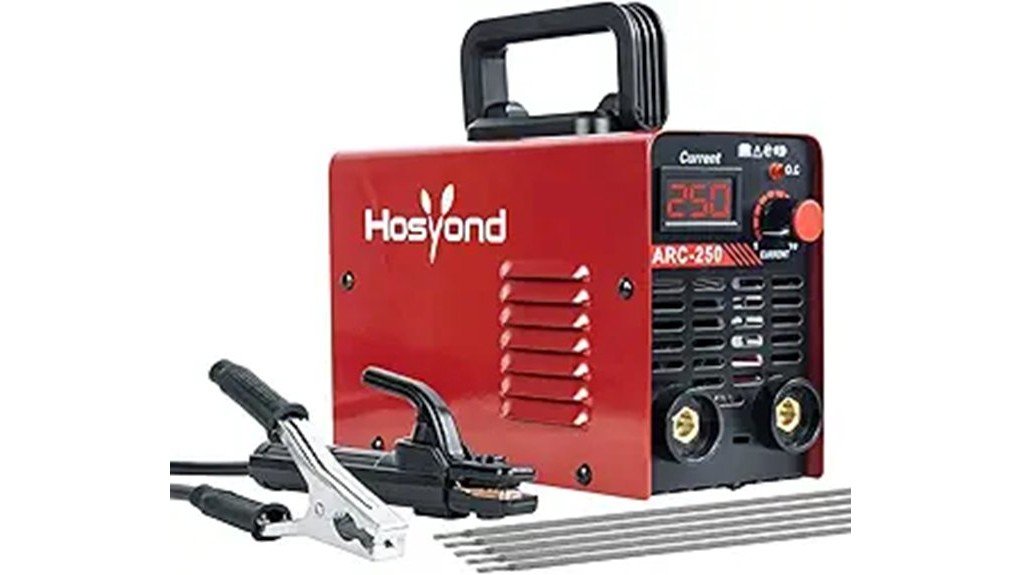
A compact welder can make small repairs easier, but a high amp number on a 110V machine does not guarantee heavy-duty output. The Hosyond 110V 250A Stick Welder ARC-250 combines household-voltage input, a digital display, hot start, arc force, anti-stick support, and a starter accessory bundle. Its low machine weight makes it attractive for practice and occasional repairs. This review explains what the listing supports, what remains unclear, and why you should treat the advertised 250A rating cautiously.
Quick Verdict
Rating: 7.2/10, Recommended with caveats
Best For: Beginners and DIY users making short welds on light mild-steel repairs within the listed 2 to 5 mm range.
Bottom Line: The Hosyond ARC-250 is portable, simple to adjust, and supplied with useful starter items. Its main limitation is the gap between its ambitious 250A and 4000W claims and what a normal 110V household circuit can deliver continuously.
| Specification | Detail |
|---|---|
| Brand | Hosyond |
| Model | ARC-250 |
| Product type | Portable DC inverter stick welder / ARC welder |
| Input | 110V AC, 50/60Hz |
| Advertised output | Up to 250A, seller-listed and not independently verified |
| Rated power claim | 4000W listed, with no input-amperage or power-factor figure stated |
| Duty cycle | 60% listed, test current and standard not stated |
| Insulation class | Class F listed |
| Material thickness | 2 to 5 mm listed |
| Electrode guidance | 2.5 mm electrode and J422 rod listed |
| Machine weight claim | 4.4 lb listed in seller copy |
| Technical listing weight | 6.69 lb listed in product data, likely reflecting the packaged item or full kit |
| Package dimensions | 13.23 × 10 × 6.14 inches |
| Control features | Digital current display, hot start, arc force, and anti-stick |
| Cooling and alerts | Cooling fan, radiator, and listed alarm protection for overheating, low voltage, and short circuit |
| Included accessories | Mask, gloves, welding rod, brush, and manual are confirmed in product data; verify the current listing for leads, holder, clamp, plug, and exact quantities |
| Best use | Short, light-duty welds, practice beads, brackets, and noncritical mild-steel repairs |
What Is the Hosyond 110V 250A Stick Welder?
The Hosyond ARC-250 is a small 110V DC inverter stick welder for users who want shielded metal arc welding without a gas bottle, wire feeder, or multi-process panel.
Its digital display, hot start, arc force, and anti-stick functions can make starting and maintaining the arc less frustrating. They cannot correct dirty metal, a weak work-clamp connection, the wrong rod, or poor technique.
The listed 2 to 5 mm range points to practice and light repair, not structural fabrication. Do not use an unverified budget welder for lifting points, pressure vessels, roll cages, or other safety-critical welds.
How We Evaluated the Listing
This is a specification and buyer-fit review, not laboratory output testing. We matched the ASIN to the Hosyond ARC-250 and checked its title, model, voltage, dimensions, weights, bundle, and features. Conflicting or unusually ambitious figures are labeled as seller claims.
Who Should Buy It?
Best For
- Beginners practicing short beads on clean mild-steel coupons.
- DIY users repairing light brackets, small gates, garden equipment, or noncritical shop projects.
- Occasional welders who value compact storage and a starter bundle more than high duty-cycle performance.
Skip If
- You need verified output, a published input-amperage requirement, or a documented duty-cycle test point.
- You regularly weld thick plate, structural parts, or long production runs.
- You need MIG, TIG, aluminum capability, dual-voltage input, or professional service support.
Before You Buy: A 4000W load at 110V works out to about 36A before accounting for losses. That is far above the continuous capacity of a normal 15A or 20A household branch circuit. Do not assume the welder can deliver its full advertised output from any standard receptacle. Follow the nameplate and manual, use a properly protected circuit, and ask a qualified electrician when the input requirement is unclear.
Design, Weight, and Portability
Portability is the ARC-250’s clearest advantage. Seller copy lists the machine at 4.4 lb, while technical product data lists 6.69 lb. The difference may reflect the bare machine versus the full kit, but the listing does not explain it.
The 13.23 × 10 × 6.14-inch package fits a shelf or small workbench. The tradeoff is less room for heavy cables and large cooling components, so keep the vents clear and allow cooling time when the case becomes hot or an alarm appears.
Power Claims and 110V Circuit Limits
The listing advertises 250A output and 4000W rated power, but it does not publish input amperage, power factor, efficiency, open-circuit voltage, or the current tied to its stated 60% duty cycle. Do not read those figures as a promise of 250A continuous output from a common outlet.
Actual performance depends on the branch circuit, loaded supply voltage, rod, cables, and thermal protection. The useful test is whether the welder holds a stable arc with the correct 2.5 mm rod without tripping the circuit or overheating.
Digital Controls and Arc-Assistance Features
The digital display gives you a repeatable current reference while you learn how rod size, fit-up, and metal thickness affect the bead. Hot start supports ignition, arc force helps prevent a short arc from collapsing, and anti-stick can make a stuck rod easier to release. Treat the display as a setting reference, not proof of calibrated output.
Start with the electrode maker’s recommended range, then test on scrap. Miller’s stick welding calculator can provide a useful starting point, but the rod package and the Hosyond manual should take priority.
Electrode and Material Compatibility
The listing names 2.5 mm electrodes, J422 rods, and a 2 to 5 mm workpiece range. That suits practice coupons, light brackets, thin plate, and small noncritical repairs when preparation is correct.
Rod coating, polarity, diameter, storage, and amperage affect arc behavior. Use dry electrodes approved for the base metal and power source. Grind away paint, oil, rust, plating, and heavy scale, and never weld a sealed container, fuel tank, unknown coated metal, or pressurized part.
Included Components and What You May Need to Upgrade
Technical product data confirms gloves, a mask, welding rod, a brush, and a manual. Bundle imagery also shows leads and holder parts, but contents can change, so check the current listing.
Treat basic safety gear as a starter set. For repeated use, wear a rated helmet, dry leather gloves, flame-resistant clothing, safety glasses, and leather footwear. Replace any loose, cracked, undersized, or heat-damaged electrical part.
How It Performs in Real Use
For Beginner Practice
The compact controls suit short practice sessions. Use clean scrap within the listed thickness range and focus on arc length, travel angle, and steady speed. The digital setting makes it easier to return to a combination that worked with a specific rod.
For Garage and Home Repairs
The ARC-250 is most convincing on small, noncritical steel jobs that can be positioned near a suitable outlet. Brackets, garden tools, light frames, and tack repairs fit its intended role better than thick plate or long multipass joints.
For Outdoor Touch-Ups
Stick welding does not use an external shielding-gas cylinder, so moderate airflow is less disruptive than it can be with gas-shielded MIG or TIG. You still need a dry work area, stable footing, safe leads, and protection from rain or standing water. Wind can also carry sparks and fumes toward people, vehicles, or dry vegetation.
For Longer Welding Sessions
The fan, radiator, alarms, and listed 60% duty cycle suggest thermal management, but the test point is not stated. Stop when an alarm appears, the arc weakens, the cord becomes hot, or the breaker trips. Do not keep resetting a breaker.
Setup Tips Before First Use
Read the manual and the machine nameplate before connecting power. Confirm the required branch circuit, plug rating, polarity, electrode type, and cable connections. Never increase breaker size to stop nuisance trips unless an electrician has verified that the wiring, receptacle, and equipment are rated for the change.
- Inspect the plug, leads, holder, work clamp, case, and insulation before every session.
- Attach the work clamp to clean bare metal as close to the weld area as practical.
- Use dry 2.5 mm electrodes that match the base metal and the machine’s stated capability.
- Set the current before striking an arc, then run a test bead on matching scrap.
- Avoid extension cords when possible. When one is necessary, use only a cord rated for the welder’s actual input and keep it fully uncoiled.
- Keep the fan openings clear and place the machine where grinding dust and sparks cannot enter the case.
- Let the welder cool after a thermal warning instead of cycling power and continuing immediately.
Pro Tip: Mark down the rod type, diameter, display setting, polarity, and metal thickness after a successful test bead. That simple log gives you a reliable starting point the next time you use the same setup.
Safety Features and Precautions
Welding exposes you to electric shock, ultraviolet and infrared radiation, hot metal, sparks, fire, and fumes. Wear a rated welding helmet, safety glasses, dry welding gloves, flame-resistant clothing, and covered leather footwear. Keep cables dry and never weld while standing in water or touching the electrode and workpiece with bare skin.
The listing mentions a cooling fan, radiator, LED alarm prompts, and protection related to overheating, low voltage, and short circuits. These features can help protect the machine, but they do not make an unsafe circuit, damaged lead, or contaminated workspace acceptable.
Remove combustibles, keep a suitable fire extinguisher nearby, and inspect the area after welding for hidden embers. Use source capture or adequate ventilation so fumes do not pass through your breathing zone. OSHA’s welding fume guidance explains why local exhaust and good positioning matter. Do not weld galvanized, painted, plated, stainless, or unknown metal until you understand the coating and fume hazards.
Pros and Cons
Pros
- Compact 110V design is easier to store and move than a large shop welder.
- Digital display provides a repeatable setting reference.
- Hot start, arc force, and anti-stick support can reduce beginner frustration.
- Listed 2 to 5 mm range covers common practice pieces and light repair material.
- Starter accessories reduce the number of separate items needed for an initial setup.
Cons
- The listing does not state input amperage, power factor, open-circuit voltage, or the test point for the 60% duty cycle.
- The advertised 250A and 4000W figures are difficult to reconcile with an ordinary 110V household circuit.
- Weight and package-content details vary within the listing, so you must verify the current bundle before buying.
Is It Worth the Price?
The Hosyond ARC-250 is a budget-oriented option for occasional stick welding. It offers useful convenience when compact storage, simple controls, 110V input, and starter accessories matter most.
It is worth considering for light, noncritical work. It is not the best fit when you need verified electrical specifications, long duty cycles, thick-metal capability, replacement-part support, or professional service.
How It Compares to Alternatives
The ARCCAPTAIN ARC130 is worth comparing when you prefer a more conservative 110V output claim and clearer documentation. A VEVOR 140A dual-voltage ARC/Lift TIG welder adds 220V headroom and a second process. Compare current manuals, input requirements, warranty terms, and leads instead of choosing only by the amp number.
The Hosyond makes the most sense when low weight and a starter kit matter more than published electrical data. For frequent repairs or material above 5 mm, choose a documented 220V machine.
Frequently Asked Questions
Can the Hosyond ARC-250 run on a standard outlet?
It is listed for 110V AC input, but the listing does not state the required input amperage. Because the same listing claims 4000W, you should not assume full output is available from every 15A or 20A receptacle. Check the nameplate, manual, branch circuit, and plug before use.
Does it really produce 250 amps?
The product is advertised as a 250A welder, but no independent output test or complete electrical data is provided. Treat 250A as a seller claim, not a verified continuous-output figure. Judge the machine by stable performance with the correct rod on your actual circuit.
What thickness can this stick welder handle?
The listing states a 2 to 5 mm material range. Joint design, rod selection, fit-up, preparation, and required strength still matter. Do not use the range as proof that the machine is suitable for structural or safety-critical work.
Which welding rods should you use?
The listing names 2.5 mm electrodes and J422 rods. Start with the supplied rod or the exact type named in the manual, and follow the rod maker’s current and polarity guidance. Do not assume all 2.5 mm electrodes have the same operating range.
Is the listed 60% duty cycle reliable?
The seller lists 60%, but does not identify the output current, ambient temperature, or test standard tied to that number. Use the thermal alarm and machine temperature as limits, and give the welder extra cooling time during repeated beads.
What accessories come with it?
Product data confirms gloves, a mask, welding rod, a brush, and a manual. Other bundle descriptions show leads and holder components, but exact contents can vary. Check the current Amazon package list before ordering.
Can you use it outdoors?
Stick welding can tolerate airflow better than gas-shielded processes, but the welder and electrical connections must remain dry. Do not operate it in rain, standing water, or near dry vegetation and other combustibles.
Who should skip this welder?
Skip it if you weld thick steel often, require certified structural work, need long production cycles, or want MIG, TIG, or aluminum capability. It is better suited to practice and occasional light repairs than professional fabrication.
The Bottom Line
The Hosyond 110V 250A Stick Welder ARC-250 is a reasonable compact choice for beginners and occasional DIY users making short welds on light, noncritical steel. Its portability, digital display, arc-assistance features, and starter bundle are useful, but the incomplete electrical data and ambitious 250A/4000W claims keep it in the recommended-with-caveats category.
Buy it when convenience and light-duty use are your priorities. Skip it when you need verified output, thick-metal performance, long duty cycles, or professional support.
Ready to Buy?
Check the latest package contents, electrical details, seller terms, and price before you decide.