Disclosure: As an Amazon Associate, we earn from qualifying purchases. If you click a link on this page and make a purchase, we may receive a small commission at no extra cost to you.
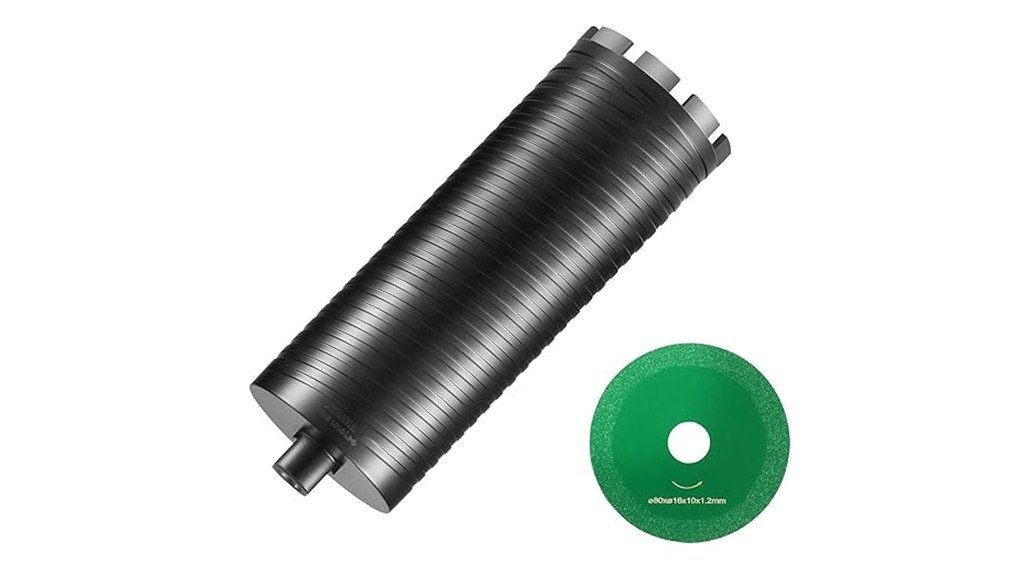
Drilling a clean 4-inch opening through concrete, brick, or block takes more than a standard masonry bit. The VEVOR Core Drill Bit, model 102300AA, is a wet/dry diamond core bit made for large pass-through holes in hard masonry. Its 9.5-inch core depth and included pilot-bit setup make it practical for pipe, conduit, railing, and air-conditioning work. Its main limitation is fit: your drill or adapter must support the bit’s 5/8″-11 inner thread and the load of a 4-inch core cut.
Quick Verdict
Rating: 8.4/10
Best For: DIYers, remodelers, and contractors who need a 4-inch hole in concrete, brick, block, or similar masonry.
Bottom Line: This is a well-equipped wet/dry core bit with useful depth, a pilot bit, and an extra 3.15-inch diamond saw blade. It is only a good buy when your drill, arbor, and adapter are fully compatible with the 5/8″-11 connection.
| Specification | Detail |
|---|---|
| Brand | VEVOR |
| Model | 102300AA |
| Product Type | Wet/dry diamond core drill bit kit |
| Cutting Diameter | 4 in / 101.6 mm |
| Maximum Core Depth | 9.5 in / 241.3 mm |
| Thread | 5/8″-11 inner thread |
| Product Dimensions | 11.4 x 4 x 4 in / 290 x 101.6 x 101.6 mm |
| Net Weight | 4.6 lb / 2.1 kg, including accessories |
| Body and Cutting Head | Carbon-steel components with a diamond-grit cutting head |
| Segment Attachment | Laser welded |
| Application | Wet or dry drilling |
| Listed Materials | Concrete, red brick, foam brick, brick, block, stone, and masonry |
| Compatible Machines | Compatible core-drilling equipment or handheld drill setups using the correct 5/8″-11 connection |
| Included Accessories | Core bit, pilot bit, adapter, and 3.15 in / 80 mm diamond saw blade |
| Package Quantity | 1 core drill bit kit |
| Best Use | Large masonry openings for pipes, conduit, AC lines, sleeves, and railing work |
Key Takeaways
- The 4-inch cutting diameter is sized for large pass-through holes, not anchors or small fasteners.
- The 9.5-inch maximum core depth covers many wall, block, and slab projects.
- The 5/8″-11 inner thread is the most important compatibility detail to check before ordering.
- Wet drilling helps control heat and dust, while dry drilling is available when water is impractical.
- The kit includes a pilot bit, adapter, and 3.15-inch diamond saw blade.
What Is the VEVOR Core Drill Bit?
The VEVOR 102300AA is a 4-inch diamond core bit for making round openings in concrete, brick, block, stone, and related masonry. Unlike a solid masonry bit, the hollow barrel removes a circular core, which makes it better suited to large openings for pipe, conduit, sleeves, and service lines.
VEVOR lists the bit for wet or dry use and gives it a maximum core depth of 9.5 inches. The carbon-steel body uses a diamond-grit cutting head with laser-welded segments, while the pilot bit helps establish the center before the larger cutting edge contacts the surface.
Who Should Buy It?
Best For
- You need a 4-inch opening through concrete, brick, block, stone, or masonry.
- You want one bit that supports both wet and dry drilling.
- You have a suitable drill or core-drill setup with the correct 5/8″-11 connection.
Skip If
- You only need small holes for anchors, screws, or light-duty fasteners.
- Your drill cannot safely handle a 4-inch core bit or the required adapter.
- You expect confirmed performance through rebar or reinforced concrete, which VEVOR does not list for this model.
Before You Buy: A 5/8″-11 thread does not guarantee that every standard hand drill is suitable. Confirm the thread, adapter, available torque, side-handle setup, speed range, and manufacturer-approved bit capacity before use.
Cutting Size and Drilling Depth
The 4-inch diameter creates a 101.6 mm opening. That size works for larger pipe sleeves, conduit bundles, AC line sets, railing posts, and similar pass-throughs where a small hole saw would not provide enough clearance.
The 9.5-inch core depth gives you enough reach for many block walls and masonry assemblies. Measure the full wall or slab thickness before ordering. A surface finish, cavity, or second masonry layer can make the actual path deeper than it first appears.
Build Quality and Included Components
The bit combines carbon-steel components with a diamond-grit cutting head. Its segments are laser welded to the barrel, a construction method intended to keep the cutting sections attached under heat and load.
The kit weighs 4.6 pounds with accessories and measures 11.4 x 4 x 4 inches. It includes the core bit, a pilot bit, an adapter, and a separate 3.15-inch diamond saw blade. The pilot assembly improves starting accuracy, but it still needs to be centered and tightened correctly to reduce wobble.
Fit and Compatibility
The bit uses a 5/8″-11 inner thread. Confirm that your core drill, arbor, or adapter matches this exact thread. Do not rely on the chuck size alone, because the threaded connection and the drill’s approved coring capacity are separate issues.
A 4-inch cut creates far more resistance than a small masonry hole. Use a drill with adequate control, follow its manual, and use the side handle or stand specified by the drill manufacturer. If the setup feels loose, off-center, or underpowered, stop before the bit binds.
Wet vs. Dry Drilling
Wet drilling is the better choice when you can manage water safely. Water cools the cutting edge, helps move slurry away from the cut, and reduces airborne dust. Protect nearby electrical connections and control runoff so water does not create a shock or slip hazard.
Dry drilling is useful where water is not practical, but it produces more airborne dust and usually requires more frequent pauses for cooling and debris removal. Pair dry drilling with suitable dust collection and follow the drill and bit instructions rather than forcing a continuous cut.
Pro Tip: Mark the center, start at low speed with the pilot bit aligned, and keep the barrel square to the surface. Let the diamond edge grind steadily instead of adding heavy pressure.
How to Use the VEVOR Core Drill Bit Effectively
- Inspect the work area: Check both sides of the drilling path for wiring, plumbing, rebar, post-tension cables, and structural concerns.
- Confirm the setup: Verify the drill’s capacity, thread or adapter fit, side handle, speed setting, and power source.
- Secure the pilot assembly: Center and tighten the pilot bit and adapter before the core barrel touches the surface.
- Start slowly: Keep the bit perpendicular and allow the pilot to establish the center.
- Control heat and dust: Use an appropriate water feed or dust-control method, and pause if the bit or drill overheats.
- Clear the core safely: Disconnect power before removing packed debris or the finished core from the barrel.
Common Mistakes to Avoid
- Skipping the thread check: Confirm the full 5/8″-11 setup before buying.
- Starting at full speed: A fast start can make the pilot wander or the barrel chatter.
- Forcing the cut: Excess pressure increases heat and can strain the drill.
- Drilling at an angle: Tilting can produce a rough opening and uneven segment wear.
- Ignoring hidden services: Never core into an unknown wall or slab without checking what is inside.
- Treating dry drilling as dust-free: Use proper dust collection and protective equipment.
Where to Use the VEVOR Core Drill Bit
- Concrete wall and slab openings
- Brick, block, foam brick, stone, and masonry drilling
- Pipe, sleeve, and conduit pass-throughs
- Air-conditioning line-set openings
- Railing post and stair-railing installation
- Construction, repair, and remodeling work
The product listing does not specifically claim reinforced-concrete or rebar-cutting capability. Scan or verify the drilling path first, and use a bit and machine rated for reinforced material when rebar may be present.
How It Performs in Real Use
For Pipe and Conduit Openings
The 4-inch diameter leaves more room than a small hole saw for a pipe sleeve, conduit group, or sealant gap. Measure the required outside diameter before drilling so the opening is neither too tight nor unnecessarily large.
For Air-Conditioning Installation
The depth is useful for masonry walls that need a pass-through for refrigerant lines, wiring, and condensate tubing. Placement matters because the finished hole must align with the equipment and avoid hidden utilities or structural elements.
For Brick and Block Walls
The diamond-grit edge is designed for abrasive masonry. Keep the barrel square as it enters and exits the face material, especially on hollow block or brittle brick where an angled exit can cause extra breakout.
For Occasional Contractor or DIY Work
The included pilot setup and wet/dry flexibility make the kit convenient for planned projects. It is still a large coring accessory, so good results depend more on machine compatibility, alignment, dust control, and patience than on the bit alone.
Maintenance and Storage
Remove concrete dust, brick dust, and slurry after each use. Rinse the bit when appropriate, dry all steel surfaces, and clear debris from the threads before storage. Do not leave wet slurry packed around the diamond segments.
Inspect the barrel, welds, diamond segments, pilot bit, adapter, and threads before every job. Stop using the kit if a segment is missing, the barrel is cracked, the pilot assembly cannot stay centered, or the threaded connection is damaged.
Compatibility and Safety Notes
Concrete, brick, block, mortar, and some stone can release respirable crystalline silica during drilling. Use wet methods or effective local dust collection where appropriate, and follow current OSHA crystalline silica guidance, jobsite rules, and the instructions for your drill and protective equipment.
Wear eye and hearing protection and keep hands, clothing, and cords clear of the rotating barrel. Do not drill into a load-bearing member, post-tensioned slab, reinforced structural element, or unknown wall without locating hazards and getting qualified guidance when needed.
Pros and Cons
Pros
- 4-inch diameter suits larger service and masonry openings.
- 9.5-inch maximum core depth covers many wall and block jobs.
- Wet/dry capability gives you two dust and cooling approaches.
- Laser-welded diamond segments are made for abrasive materials.
- Pilot bit, adapter, and 3.15-inch diamond saw blade add kit value.
Cons
- The 5/8″-11 connection and 4-inch capacity will not suit every drill.
- Dry drilling can create substantial dust and requires proper controls.
- The listing does not confirm use on rebar or reinforced concrete.
Is It Worth the Price?
The VEVOR 102300AA offers strong value for the price when you need a 4-inch masonry opening and already own a compatible drill setup. The pilot bit, adapter, and extra diamond saw blade make the package more complete than a bare core barrel.
The value drops quickly if you need to buy an unsuitable adapter, use an underpowered drill, or hire someone to correct a poorly placed hole. It is worth considering for planned masonry work, but not for small fastener holes or unverified reinforced-concrete cuts.
How It Compares to Alternatives
A 4-inch Milwaukee Diamond Ultra wet core bit is a more specialized option for wet coring with compatible core drills, and its 4-inch model uses a different 1-1/4″-7 thread. Bosch SDS-max rotary-hammer core bits use an SDS-max system and carbide teeth rather than this VEVOR model’s threaded wet/dry diamond design.
The VEVOR bit makes the most sense when you want 9.5 inches of depth, wet/dry flexibility, a 5/8″-11 connection, and included starting accessories. Choose an alternative when your machine requires SDS-max or 1-1/4″-7 tooling, or when you need a bit explicitly rated for reinforced concrete.
Frequently Asked Questions
What materials can the VEVOR Core Drill Bit handle?
VEVOR lists concrete, red brick, foam brick, brick, block, stone, and similar masonry. The listing does not confirm general metal, wood, glass, or reinforced-concrete cutting.
Can you use it for wet and dry drilling?
Yes. Wet drilling helps cool the bit and reduce airborne dust. Dry drilling is possible when water is impractical, but you still need suitable dust control and cooling pauses.
Will it fit a standard electric hand drill?
Only when the full setup supports the 5/8″-11 thread and a 4-inch core bit. Check the drill’s manual, approved capacity, adapter, speed range, and side-handle requirements before use.
What comes in the kit?
The package includes the 4-inch core bit, pilot bit, adapter, and a separate 3.15-inch / 80 mm diamond saw blade. Confirm the current package details on the product page before ordering.
How deep can the core bit drill?
The listed maximum core depth is 9.5 inches / 241.3 mm. Measure the entire drilling path, including finishes and layered wall materials, before deciding whether that depth is enough.
Can it drill through rebar?
VEVOR does not list reinforced concrete or rebar as a confirmed application for model 102300AA. Scan the path first and use tooling specifically rated for reinforced material when rebar may be present.
How do you reduce wobble at the start?
Center and tighten the pilot assembly, begin at low speed, and keep the barrel square to the surface. Stop and correct the setup if the pilot or adapter cannot stay centered.
How do you make the bit last longer?
Avoid excessive pressure, manage heat, clear debris, and clean and dry the bit after use. Inspect the diamond segments, welds, pilot assembly, and threads before each job.
The Bottom Line
The VEVOR 102300AA is a practical choice for buyers who need a 4-inch wet/dry diamond core bit with 9.5 inches of depth and useful starting accessories. Buy it when your drill setup matches the 5/8″-11 connection and the listed masonry materials. Skip it for small holes, uncertain structural cuts, or work that requires confirmed rebar capability.
Ready to Buy?
Check the current price, selected size, and product details before you decide.