Disclosure: As an Amazon Associate, we earn from qualifying purchases. If you click a link on this page and make a purchase, we may receive a small commission at no extra cost to you.
Heat, sparks, and rough metal can punish your hands quickly when your gloves are too short or too thin. The Welding Gloves 16 Inch are made for buyers who want longer wrist and forearm coverage for welding, grilling, cooking, and other hot-surface tasks. This review explains what the available product details support, where the gloves should work best, and which limitations you should check before buying. The main strength is the long, insulated leather build, while the main tradeoff is reduced dexterity compared with thinner work gloves.
Quick Verdict
Rating: 8.3/10
Best For: Welders, grill users, and DIYers who want 16-inch leather gloves for heat, sparks, and forearm coverage.
Bottom Line: These gloves make sense if you want long heat-focused protection with cowhide leather, aluminum foil insulation, a flame-retardant cotton liner, and Kevlar stitching. Skip them if you need certified electrical gloves, very thin fingertip control, or fully verified brand and warranty details before purchase.
| Specification | Detail |
|---|---|
| Product type | Heat-resistant welding gloves |
| Design | Long-cuff leather glove for hand, wrist, and forearm coverage |
| Length | 16 inches |
| Outer material | 1.2mm premium cowhide leather |
| Insulation | Aluminum foil insulation |
| Inner lining | Flame-retardant cotton liner with breathable comfort lining |
| Stitching | Kevlar stitching with heavy-duty Kevlar thread |
| Heat-resistance claim | Up to 932°F, based on the available article details |
| Best use | Welding, grilling, cooking, gardening, and general high-heat handling |
| Care note | Clean gently with mild soap and warm water, avoid soaking, and air dry away from direct heat |
| Safety note | Not suitable for live electrical work unless the seller or manufacturer confirms proper electrical certification |
| Verification note | Brand, model number, exact sizing chart, warranty, and certifications were not confirmed in the available article details |
What Are the Welding Gloves 16 Inch?
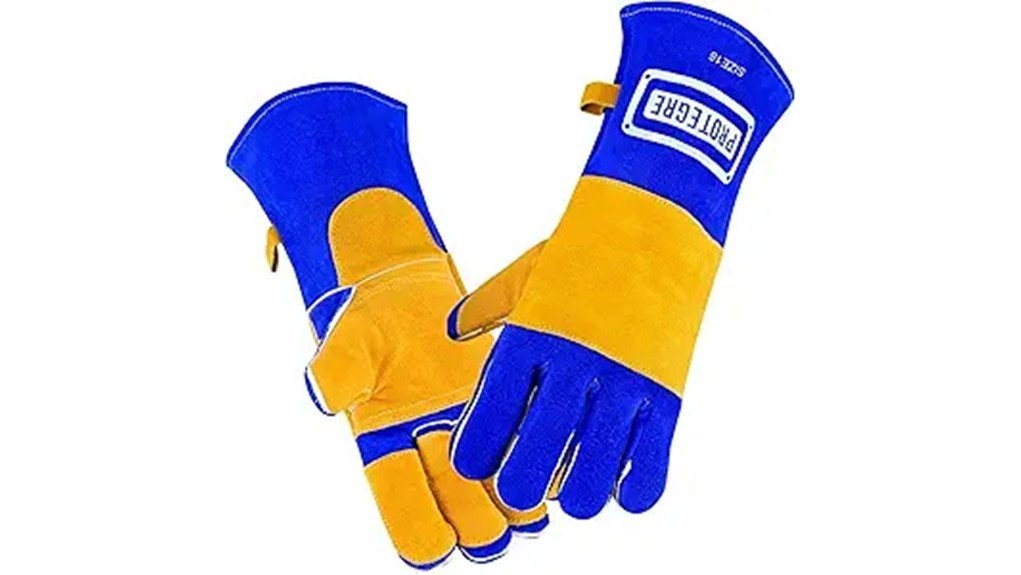
The Welding Gloves 16 Inch are long-cuff protective gloves designed for heat, sparks, hot surfaces, and rough handling. The available build details include 1.2mm cowhide leather, aluminum foil insulation, a flame-retardant cotton liner, and Kevlar stitching.
The 16-inch length is the most important design feature. It extends beyond the wrist and onto the forearm, which helps when sparks, hot debris, grill heat, or cookware edges reach areas that short gloves leave exposed.
These gloves are best viewed as protective heat-handling gloves, not precision mechanic gloves. The extra insulation and long cuff can help with coverage, but they also add bulk around the hand and forearm.
Who Should Buy It?
Best For
- You want 16-inch gloves for welding sparks, hot debris, and forearm coverage.
- You need one heavy glove style for welding, grilling, cooking, and similar heat tasks.
- You prefer cowhide leather gloves with Kevlar stitching for rough work and seam durability.
Skip If
- You need certified electrical gloves or gloves made for live wiring.
- You need thin gloves for fine TIG control, tiny fasteners, or delicate fingertip work.
- You want a fully verified brand page, model number, warranty page, or size chart before buying.
Before You Buy: These gloves are heat-focused, not electrical-rated safety gloves. Do not use them for live electrical work unless the product listing or manufacturer confirms the correct electrical protection for your task.
Material and Construction Quality
The outer shell uses 1.2mm premium cowhide leather. That thickness gives the gloves more structure than a soft kitchen mitt, which helps when you grip tools, move hot metal, or handle rough grill parts.
The Kevlar stitching is a useful durability feature because glove seams often take abuse before the leather panel wears out. Reinforced stitching can help around the fingers, palm, and cuff, especially when the glove rubs against metal, tools, or grill hardware.
The design still has limits. Cowhide and Kevlar stitching can support abrasion resistance, but the gloves are not described as cut-proof, waterproof, chemical-resistant, or certified for every industrial hazard.
Heat Resistance and Forearm Protection
The available article details list heat resistance up to 932°F. Treat that number as a heat-resistance claim, not as permission to hold extremely hot metal for long periods. Contact time, moisture, wear, and heat source all affect how quickly heat reaches your hand.
The aluminum foil insulation and flame-retardant cotton liner add layers between your skin and the heat source. For welding, that helps when sparks or hot debris land on the glove. For grilling and cooking, it helps when you move cookware, adjust grill parts, or handle a hot grate for a short time.
The 16-inch cuff is just as important as the heat rating. It protects more of your wrist and forearm, which is helpful when your arm reaches into a grill, near a weld area, or close to a hot oven rack.
Comfort, Fit, and Dexterity
The gloves use an ergonomic design and a breathable lining. That can make longer sessions more comfortable, especially when you work near radiant heat or a hot grill. It will not make the gloves cool, but it can reduce the harsh feel of stiff leather against your hand.
You should expect a protective fit, not a slim technical fit. The long cuff and insulation help with coverage, but they can limit fingertip feel when you adjust small knobs, pick up tiny hardware, or handle detailed tasks.
Before ordering, check the seller page for the exact size guidance. The available article details do not confirm a full size chart, so buyers with very small or very large hands should be extra careful.
Pro Tip: Keep the gloves dry before high-heat use. Damp leather or lining can transfer heat faster, feel uncomfortable, and shorten the useful life of the glove.
Multi-Purpose Usability
These gloves are not limited to welding. The available article details also support use for grilling, cooking, and gardening, which makes them useful if you want one heavy protective glove for the workshop and home heat tasks.
For grilling and cooking, the long cuff helps when your wrist passes near hot metal, flames, steam, or oven racks. For gardening, the thick leather can help with rough materials and mild abrasion, but it may feel too bulky for delicate planting, pruning, or small hand tools.
This multi-use design is strongest when the task needs protection more than precision. It is weaker when your job depends on fine hand feel or exact fingertip movement.
How It Performs in Real Use
For Welding Tasks
The 16-inch cuff gives these gloves their biggest advantage during welding. It covers more of your forearm than shorter gloves, which helps when sparks and hot debris fall toward your wrist. The cowhide leather and Kevlar stitching also make sense for repeated contact with rough metal and tools.
For Grilling and Cooking
The heat-resistant build can help when you move hot cookware, adjust grill parts, or handle a hot grate. The long cuff is useful around deep grills and ovens where your forearm may pass close to hot surfaces. You should still avoid prolonged direct contact with extreme heat.
For Gardening and Rough Outdoor Tasks
The leather construction can help when you handle rough materials, dirt, and mild abrasion. The tradeoff is dexterity. If your task needs fingertip feel, a thinner gardening glove may be easier to use.
For Longer Work Sessions
The breathable lining and ergonomic shape can help the gloves feel more wearable over time. Still, these are thick heat-protection gloves, so your hands may get warm during extended use. Take breaks when your hands feel hot, sweaty, or tired.
How to Use and Care for Them Correctly
Inspect the gloves before each use. Check the palms, fingers, seams, and cuffs for thinning leather, open stitching, burns, stiff spots, or damp lining. Damaged gloves should not be trusted around sparks, hot surfaces, or rough metal.
Use the gloves for short, controlled contact with heat instead of long holds. Grip hot items firmly, move them with purpose, and set them down before the heat builds through the glove layers. Follow the product listing or label if it gives a stricter time or temperature limit.
For cleaning, use gentle soap and warm water on dirty spots instead of soaking the gloves. Let them air dry away from direct heat. Do not place leather gloves on a heater, grill, or in harsh sun for aggressive drying because that can stiffen or damage the leather.
Common Mistakes to Avoid
Do not treat a 932°F heat-resistance claim as a long-contact rating. A glove can resist heat and still allow heat buildup during extended contact, especially if the leather is worn, wet, or compressed against a hot surface.
Do not use these gloves for hazards they are not designed to handle. Live electrical work, chemical handling, molten metal exposure, and jobsite tasks with formal PPE rules require gloves certified for that exact hazard.
Do not store the gloves while damp or dirty. Moisture and grime can weaken leather, create odors, and reduce comfort the next time you use them.
Material Safety and Limitations
These gloves are made for heat protection, sparks, hot surfaces, and rough handling. They are not described as cut-proof, waterproof, chemical-resistant, or electrical-rated. If your task involves live wiring, chemicals, molten metal, or strict workplace safety rules, choose gloves certified for that specific hazard.
The gloves also touch your skin during sweaty, high-heat work. Stop using them if the lining becomes damaged, heavily soiled, or uncomfortable. Replace the gloves when the leather thins, the seams open, or the insulation no longer feels protective.
Pros and Cons
Pros
- 16-inch length gives added wrist and forearm coverage.
- 1.2mm cowhide leather supports rough handling around tools, grates, and metal.
- Aluminum foil insulation and a flame-retardant cotton liner support high-heat tasks.
- Kevlar stitching helps protect the seams from heat and wear.
- Useful beyond welding, including grilling, cooking, and gardening.
Cons
- Bulkier than short work gloves, so fine-detail dexterity may be limited.
- Not suitable for electrical work unless proper certification is confirmed.
- Brand, exact model, warranty, and full sizing details should be checked on the seller page before purchase.
Is It Worth the Price?
These gloves are worth considering if you need long leather protection for welding, grilling, and other heat-heavy tasks. The best value comes from the mix of 16-inch coverage, cowhide leather, insulation, and Kevlar stitching.
They are a smart buy for everyday heat work if you want one protective glove for several jobs. They are not the best fit if you need certified electrical protection, very high dexterity, or verified brand-specific documentation before buying.
How It Compares to Alternatives
Compared with shorter welding gloves, these 16-inch gloves provide more forearm coverage and better protection from falling sparks. Compared with silicone grill gloves, the leather and Kevlar-stitched build is more suited to rough workshop tasks and abrasion.
Heavier aluminized gloves may be better for specialized radiant-heat work, while thinner mechanic-style gloves may be better for detailed tool handling. These gloves make the most sense when you want a practical middle ground for heat protection, long coverage, and multi-use handling.
Frequently Asked Questions
Can these gloves really handle 932°F heat?
The available article details state that the gloves can withstand temperatures up to 932°F. Treat that as a heat-resistance claim, and avoid holding extremely hot items longer than needed because contact time, moisture, and glove condition still matter.
Are they good for welding?
Yes, they are designed for welding use with cowhide leather, Kevlar stitching, heat insulation, and a long 16-inch cuff. They are best for protection from sparks, heat, and hot debris rather than very fine fingertip control.
Can you use them for grilling or cooking?
Yes, the available article details support use for grilling and cooking. The long cuff helps protect your wrist and forearm when you reach near hot grill parts, oven racks, cookware, or grates.
Are these gloves safe for electrical work?
No, not based on the available details. They are described as heat-resistant welding gloves, not electrical-rated gloves, so you should use properly certified electrical safety gloves for live electrical work.
Will the 16-inch length feel bulky?
It may feel bulkier than a short glove because the cuff covers more of your forearm. That added length improves protection, but it can reduce flexibility for small-detail tasks.
How should you clean and maintain them?
Use gentle soap and warm water on dirty spots, but do not soak the gloves. Let them air dry away from direct heat, then store them in a cool, dry place.
What details should you check before ordering?
Check the seller page for brand details, exact model, size guidance, warranty terms, and any safety certifications. Those details were not fully confirmed in the available article information.
Who should skip these gloves?
Skip them if you need electrical-rated protection, chemical-resistant gloves, waterproof gloves, or thin gloves for fine-detail work. They are best for heat, sparks, hot surfaces, and rough handling.
The Bottom Line
The Welding Gloves 16 Inch are recommended with caveats for buyers who want long leather gloves for welding, grilling, cooking, and other high-heat handling tasks. Their main strengths are 16-inch forearm coverage, cowhide leather, aluminum foil insulation, and Kevlar stitching, while the main limitations are bulk, limited fine dexterity, and incomplete third-party product verification. Skip them if you need certified electrical protection or verified brand-specific documentation before you buy.