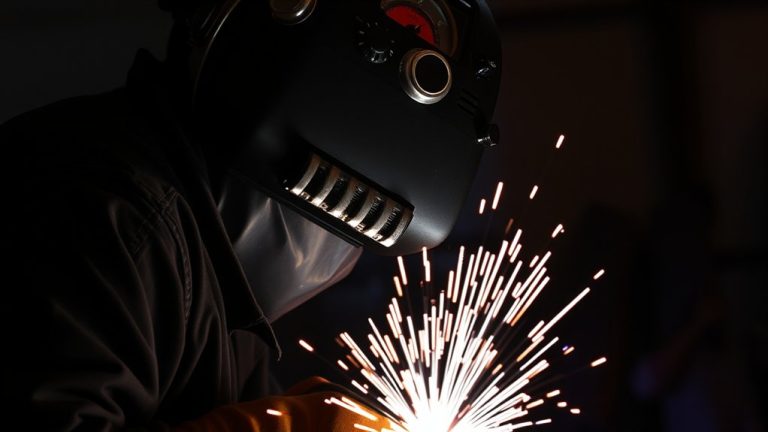
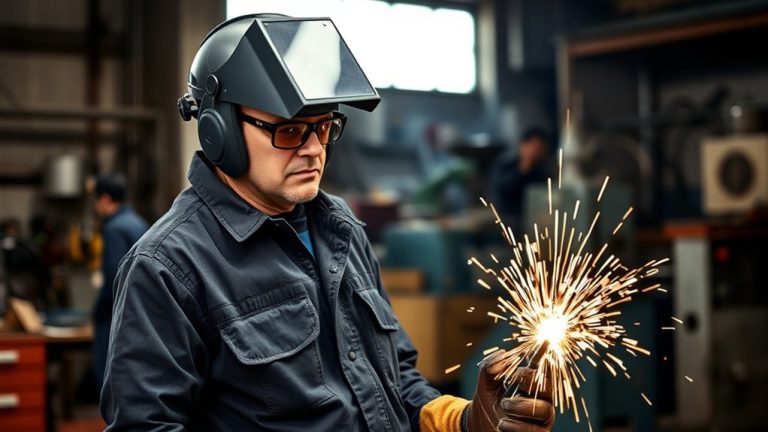
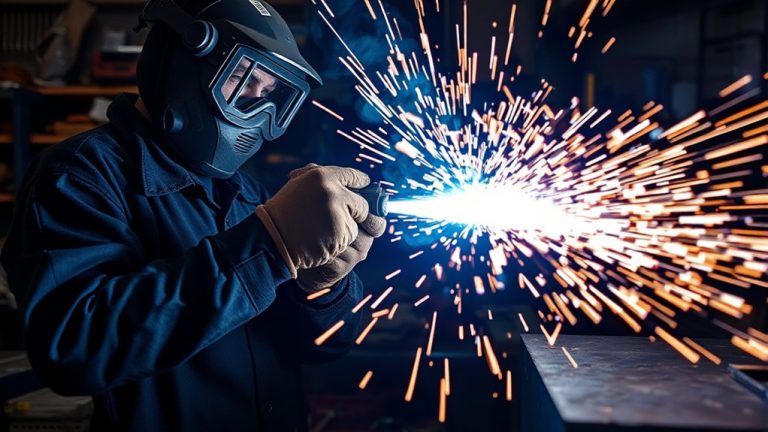
When choosing eye protection for plasma cutting, you must weigh the pros and cons of goggles versus helmets. Helmets offer full-face protection, essential for shielding against splatter, while goggles are lighter and more suited for brief tasks. Consider helmets with auto-darkening technology for ideal visibility and safety. Think about the work duration and protection level required to guarantee you’re adequately safeguarded. What gear meets your needs and guarantees your safety?
Importance of Proper Eye Protection
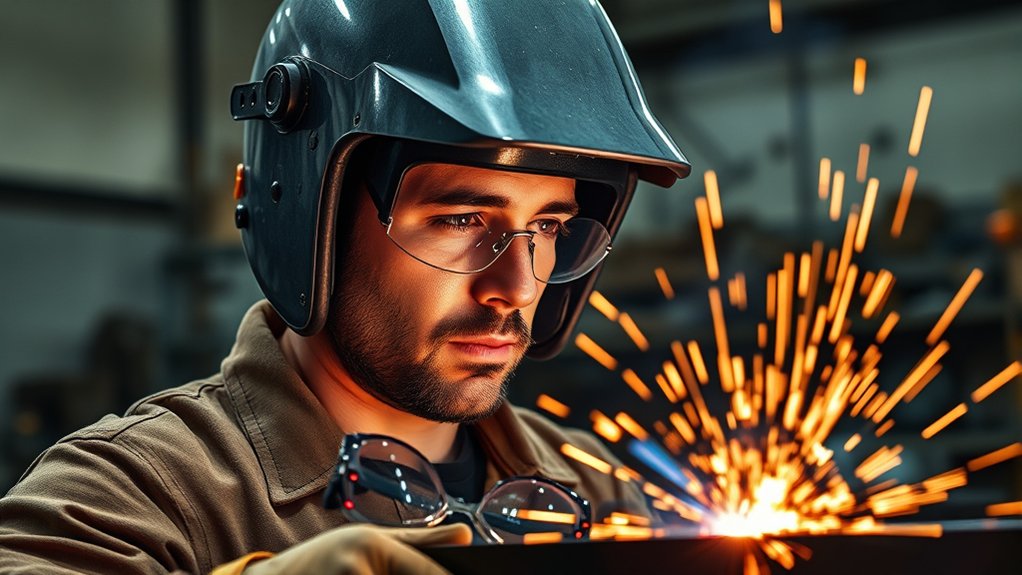
When you’re engaged in plasma cutting, guaranteeing the use of proper eye protection is absolutely vital to safeguard against severe eye injuries like arc eye. Exposure to intense UV and IR radiation during cutting can lead to serious eye damage, including arc eye, which mimics a severe sunburn on the eye’s surface.
Eye injury prevention hinges on recognizing the UV protection importance, as these harmful rays can cause long-term vision loss if proper precautions aren’t taken.
Effective protection requires using full face shields or helmets rather than goggles, as they offer superior defense against splatter and sparks.
It’s important to adhere to safety standards like ANSI Z87.1+ to guarantee your eye protection is up to the task. These standards ensure that the gear effectively shields your eyes from the hazardous conditions created by the plasma arc, allowing you to work safely and maintain eye health throughout your cutting tasks.
Understanding Shade Numbers for Plasma Cutting
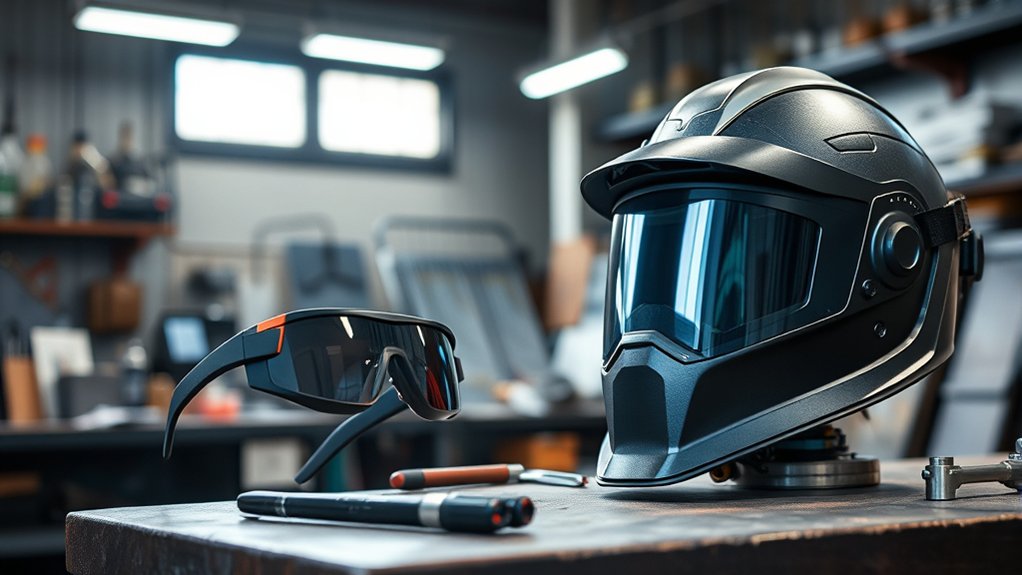
Understanding the importance of shade numbers in plasma cutting is essential for ensuring ideal eye protection and visibility. The shade number significance lies in its ability to filter harmful radiant energy. For plasma cutting safety, choosing the right shade number based on the amperage is vital to prevent eye strain and damage.
| Amperage Range | Recommended Shade Number |
|---|---|
| Under 20 amps | 4 |
| 20-40 amps | 5 |
| 40-60 amps | 6 |
| 60-80 amps | 8 |
| Above 80 amps | 10 |
Higher amperage demands higher shade numbers, providing greater protection. For instance, cutting above 80 amps necessitates a shade 10, essential for safeguarding against intense radiant energy. Ignoring the shade number significance can lead to severe eye injuries like arc eye, compromising plasma cutting safety. Always adhere to safety standards by using at least a shade 5, ensuring both protection and clear visibility of your workpiece.
Comparing Goggles and Helmets for Safety
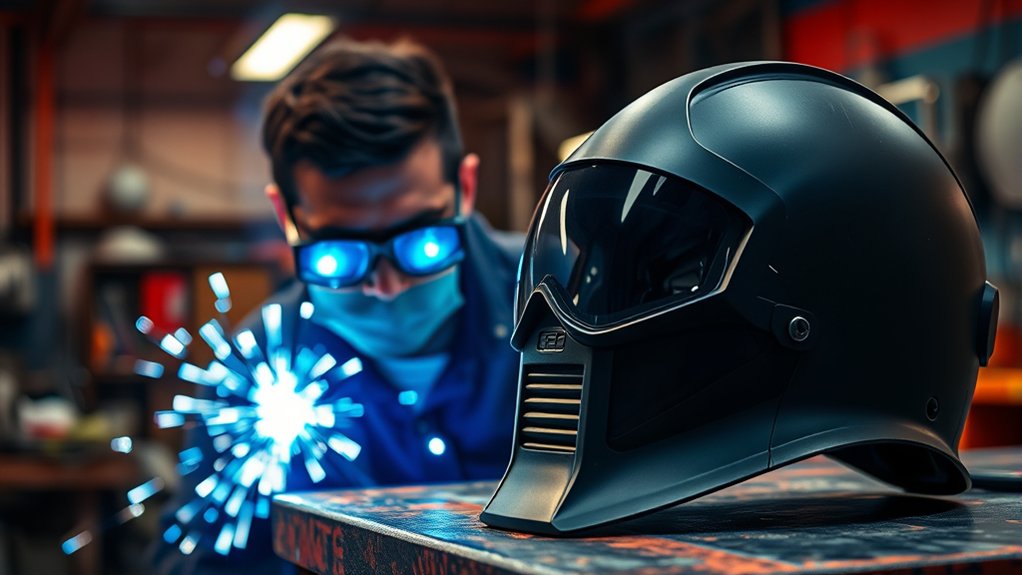
Although both goggles and helmets serve as vital tools for eye protection in plasma cutting, helmets generally offer superior coverage and adaptability for various tasks.
With full face helmets, you’re protected from sparks, heat, and harmful UV/IR radiation, making them critical for intense environments.
Here’s how they compare:
- Coverage: Helmets provide complete face protection against splatter and debris, unlike goggles that might expose parts of your face.
- Durability vs. Weight: While goggles offer lightweight convenience, helmets balance weight with robust construction, enhancing long-term durability.
- Visibility: Helmets with auto-darkening features let you adjust the shade to match amperage and conditions, unlike goggles with a fixed shade, improving visibility and safety.
- Task Suitability: For short, intermittent tasks, goggles are sufficient. For prolonged, high-amperage cutting, helmets are essential.
Always verify your eye protection meets safety standards, like OSHA recommendations, to maximize safety and efficiency in your cutting tasks.
Evaluating Comfort and Versatility in Eye Protection
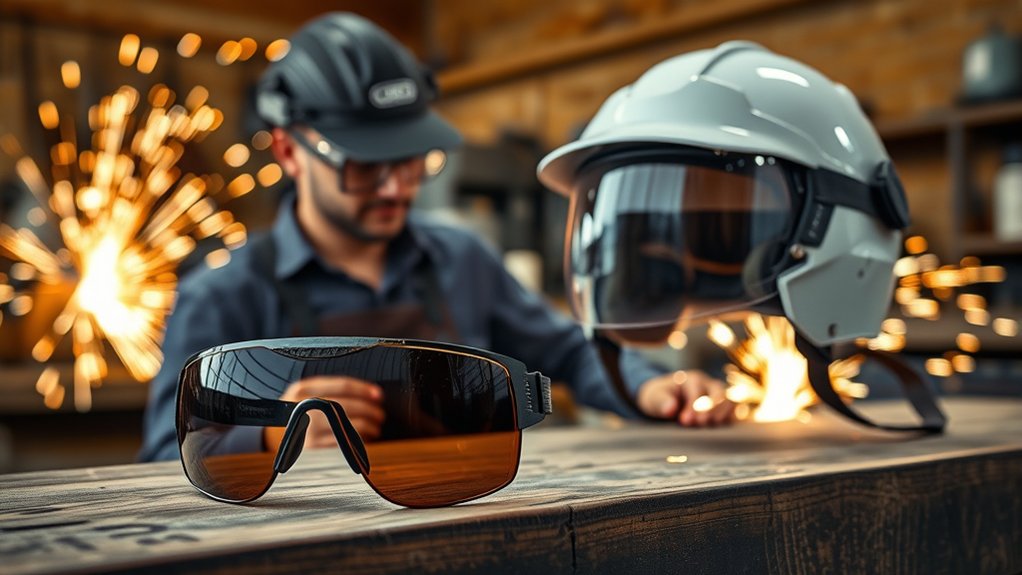
When selecting eye protection for plasma cutting, prioritize comfort and versatility to enhance safety and efficiency.
Goggles with soft-touch temples and anti-fog coatings offer comfort for quick tasks, while welding helmets with auto-darkening features provide adaptability to various lighting conditions.
Consider the specific tasks and environments you face to choose the most suitable gear, ensuring both protection and ease of use.
Comfort in Protective Gear
While engaging in plasma cutting, ensuring comfort in your protective gear is essential for both safety and efficiency. The balance between user comfort and protective fit can notably impact your productivity.
Helmets tend to offer a more secure fit and full coverage, vital for extended sessions. Here’s what to evaluate:
- Welding Helmets: Provide extensive protection with a snug fit, reducing discomfort and offering safety from UV exposure and flying debris.
- Auto-Darkening Helmets: Allow you to adjust shades for comfort, enhancing visibility and protection during varied tasks.
- Goggles: Lightweight and portable but may lack full coverage, requiring a tight fit to block UV rays effectively.
- Safety Glasses: Easy to use but recommended only for low-risk tasks; helmets or face shields are preferable for higher protection levels.
Versatility in Lens Selection
Selecting the right lens for eye protection in plasma cutting is essential due to its impact on both safety and versatility. Lens compatibility and shade adjustments are vital factors.
Auto-darkening helmets allow you to modify shade levels, making them ideal for varied cutting conditions and material thicknesses. This adaptability enhances both comfort and visibility, significant for maintaining safety during prolonged tasks.
For lighter, intermittent work, goggles offer a lightweight alternative, though they may lack advanced shade adjustment options. Shade #5 lenses are generally recommended for under 40 amps, providing a good balance of protection and visibility.
Ultimately, your choice between goggles and helmets should consider comfort, the specific working environment, and the need for features like impact resistance and UV protection.
Adaptability for Various Tasks
Although eye protection varies widely in form and function, one essential factor to take into account is adaptability for different plasma cutting tasks.
Your choice should align with specific needs and versatility. Consider these adaptability features:
- Auto-darkening Helmets: These offer adjustable shade levels, perfect for varying amperage tasks. They enhance visibility and comfort considerably.
- Full Face Shields: With flip-up dark lenses, they blend helmet protection with the ability to swiftly switch to a clear view, ideal for cutting and inspection.
- Safety Glasses: Lightweight shade #5 models guarantee comfort during short sessions, meeting task-specific needs for less bulky protection.
- Goggles: Designed for impact resistance and UV protection, though often lacking ventilation and comfort for extended tasks.
Choose based on your cutting environment, comfort, and protection requirements.
Recommendations for Different Cutting Conditions
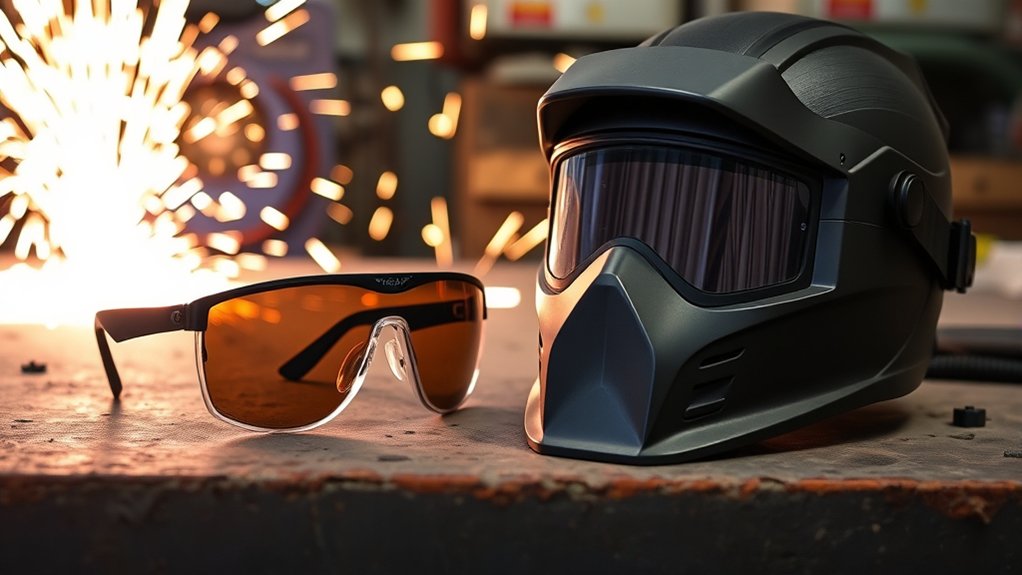
Understanding the appropriate eye protection for various plasma cutting conditions is vital for guaranteeing safety and maintaining ideal visibility. When employing different cutting techniques, aligning your gear with safety standards is imperative.
For operations under 40 amps, shade #5 safety glasses provide effective protection while preserving clear visibility. As amperage increases to 40-60 amps, shift to shade #6 lenses to mitigate the intensified arc light without sacrificing sight. Approaching 80 amps demands shade #8 lenses, delivering maximum protection against radiant energy.
Prolonged cutting sessions benefit from full face shields with flip-up dark lenses, offering both protection and ease of use. Auto-darkening helmets adapt to fluctuating conditions, enabling you to adjust shades based on material thickness, enhancing both safety and comfort.
Expert Tips for Selecting the Right Gear
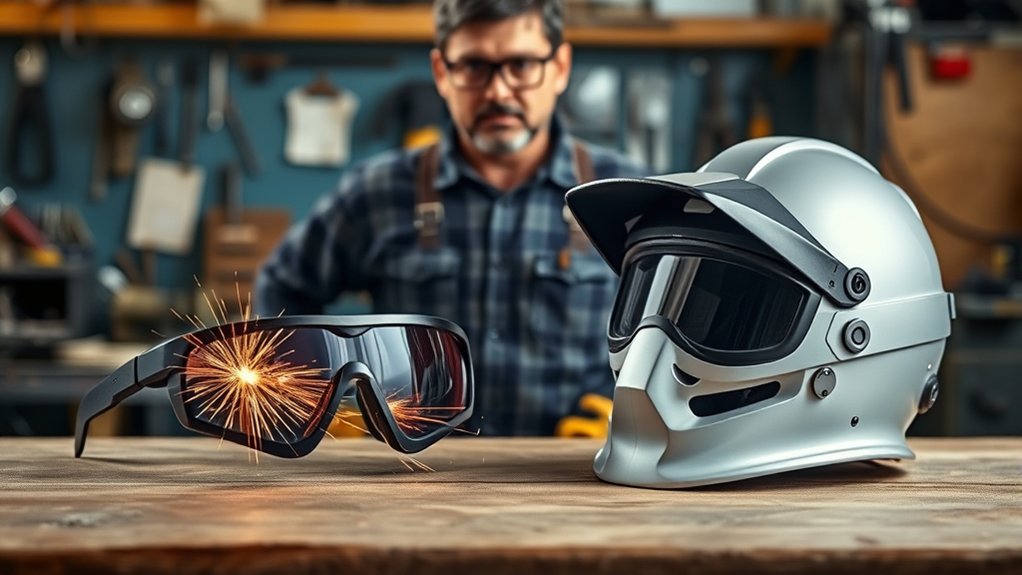
When selecting eye protection for plasma cutting, confirm the shade number aligns with your amperage requirements, using shade #5 for tasks under 40 amps.
Prioritize comfort and visibility, as a snug fit enhances both safety and performance.
Always verify that your gear complies with ANSI Z87.1+ standards to assure it meets essential safety regulations.
Shade Number Selection
Choosing the right shade number for your plasma cutting tasks is critical to guaranteeing both safety and precision. The correct shade adjustment guarantees lens clarity and protects against harmful UV and IR radiation while allowing you to see your workpiece clearly.
Here’s how to select the appropriate shade:
- Below 20 Amps: Use a shade number 4.
- 20 to 40 Amps: Opt for a shade number 5, aligning with OSHA’s minimum safety standard.
- 40 to 60 Amps: A shade number 6 provides adequate protection.
- Above 80 Amps: Use a shade number 10 for maximum safety.
Auto-darkening helmets offer flexibility, allowing you to adjust shades for varying amperages and material thicknesses.
Adhering to these guidelines guarantees both safety and ideal performance.
Comfort and Visibility
While selecting eye protection for plasma cutting, consider both comfort and visibility to guarantee ideal performance and safety. Goggles are lighter, reducing eye strain during brief tasks, while helmets offer full protection for extended use. When it comes to peripheral vision, goggles excel, providing a broader view, whereas helmets can enhance focus by reducing glare with tinted lenses. For cutting under 40 amps, both goggles and helmets with shade #5 are effective.
| Feature | Goggles | Helmets |
|---|---|---|
| Comfort | Lighter for short tasks | Extensive for long sessions |
| Peripheral Vision | Better peripheral view | Focused with glare reduction |
| Shade Adjustment | Fixed-shade, constant protection | Auto-darkening, quick adjustments |
Choose gear based on task duration and environment to optimize safety and efficiency.
Compliance and Safety
To guarantee ideal protection during plasma cutting tasks, compliance with safety standards is essential. Ensuring your gear meets compliance regulations helps protect against hazards like UV and IR radiation.
Here are expert tips for selecting the right gear:
- OSHA Compliance: Use eye protection with a minimum shade of 5 to adhere to OSHA standards, reducing exposure to harmful radiation.
- ANSI Standards: Choose safety glasses that meet ANSI Z87.1+ compliance for impact resistance, critical during welding tasks.
- Shade Selection: Adjust shade levels based on amps—#5 for under 40 amps and #6 for up to 60 amps—to minimize eye strain and prevent injuries.
- Full Face Shields: Opt for full face shields with flip-up dark lenses for thorough coverage, particularly in prolonged sessions.
Considering the environment is essential for added protection.
Frequently Asked Questions
Can Prescription Glasses Be Worn Under Goggles or Helmets?
Yes, you can wear prescription glasses under both goggles and helmets. Confirm prescription lens compatibility by choosing models that accommodate glasses. Prioritize comfort considerations to prevent pressure points and guarantee safety during plasma cutting activities.
Are There Specific Brands Recommended for Plasma Cutting Eye Protection?
You might worry about cost, but brands like Lincoln Electric and ESAB consistently receive high user reviews for plasma cutting. Their products offer superior safety features. Brand comparisons highlight durability and comfort, ensuring your investment’s worthwhile.
How Should I Maintain and Clean My Eye Protection Gear?
To maintain your eye protection gear, regularly inspect for damage. Use gentle cleaning techniques like a microfiber cloth with mild soap and water. Avoid harsh chemicals. Store in a dry, cool place to prolong their lifespan.
Are There Anti-Fog Options Available for Goggles or Helmets?
Yes, 70% of safety goggles and helmets now offer anti-fog coatings. You should choose options with advanced lens treatments to enhance visibility. Prioritize safety by ensuring your gear includes effective anti-fog technology in challenging environments.
What Are the Signs My Eye Protection Needs Replacement?
You’ll know it’s time to replace your eye protection when you notice cracks, scratches, or warping. These signs of damage compromise safety and reduce effectiveness, indicating the eye protection lifespan has ended. Always prioritize safety by inspecting regularly.
Conclusion
You’ve got to choose the right eye protection for plasma cutting—it’s not just a choice; it’s a life-or-death decision. Helmets with auto-darkening technology are nothing short of miraculous, adjusting like a chameleon to safeguard your eyes during intense, prolonged sessions. Meanwhile, goggles, though lighter than air, offer only fleeting comfort for brief tasks. Prioritize safety and precision; your eyes deserve the ultimate fortress against flying debris and searing light. Make the smart choice—your vision’s worth it.