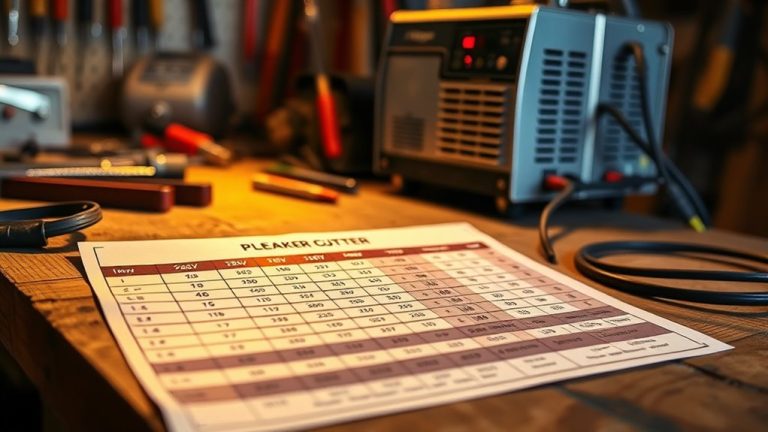
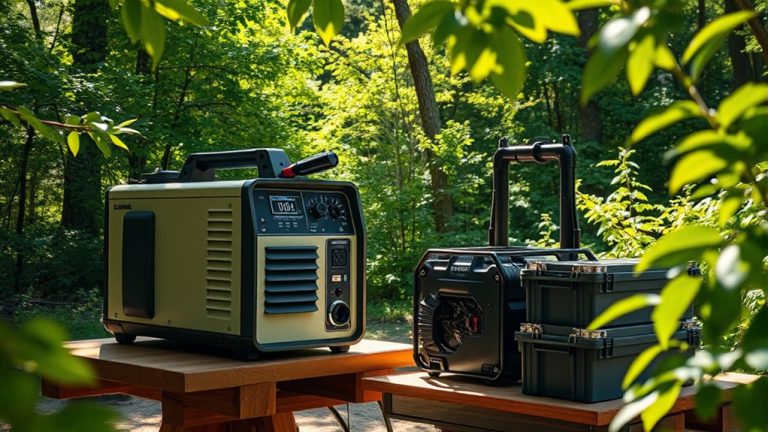
Getting the right generator for your plasma cutter comes down to matching power output to the cutter’s actual needs. You’ll need to account for the duty cycle, starting wattage, and input voltage. A good rule of thumb: choose a generator rated 1.5 to 2 times your cutter’s maximum draw. A sizing chart makes the selection process much easier. Here’s everything you need to know.
Quick Answer
- Most plasma cutters in the 20–60 amp range need a generator between 7 kW and 30 kVA.
- Always size your generator at 1.5 to 2 times the plasma cutter’s maximum power draw to handle surges safely.
- Use an inverter generator with a Total Harmonic Distortion (THD) of 6% or less for clean, stable power.
- Factor in starting wattage, which can spike up to 50% above running wattage.
- Check both the generator’s voltage output and frequency (typically 60 Hz) to match your cutter’s specs.
Understanding Plasma Cutter Power Requirements
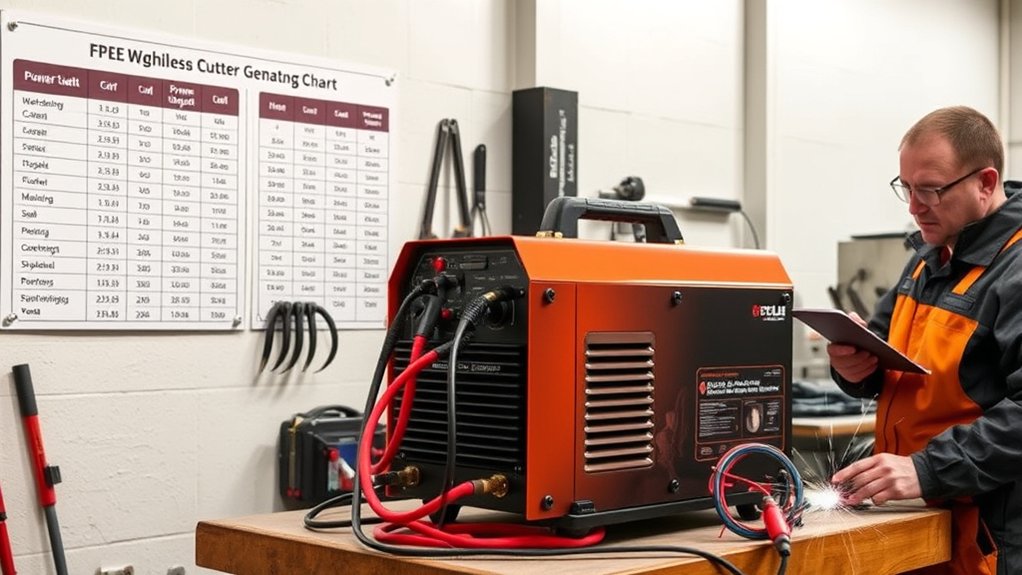
Before you pick a generator, you need to know exactly how much power your plasma cutter demands. Every cutter has specific wattage and amperage ratings tied to how plasma cutting technology works.
Start by checking your cutter’s input voltage and current draw. A 40-amp plasma cutter, for example, typically needs a 6–8 kW generator.
Your calculations should also include the starting wattage. This initial surge often exceeds running wattage by up to 50%. On top of that, pay attention to the duty cycle percentage. This tells you how long you can run the cutter continuously before it needs to cool down. A 60% duty cycle at 40 amps means six minutes of cutting within every 10-minute window.
Regular cutter maintenance helps keep power consumption predictable. Neglected cutters can develop power surges that affect both performance and how hard the generator has to work. When you understand these numbers, you can match the right generator size and extend your cutter’s lifespan.
Factors to Consider When Choosing a Generator
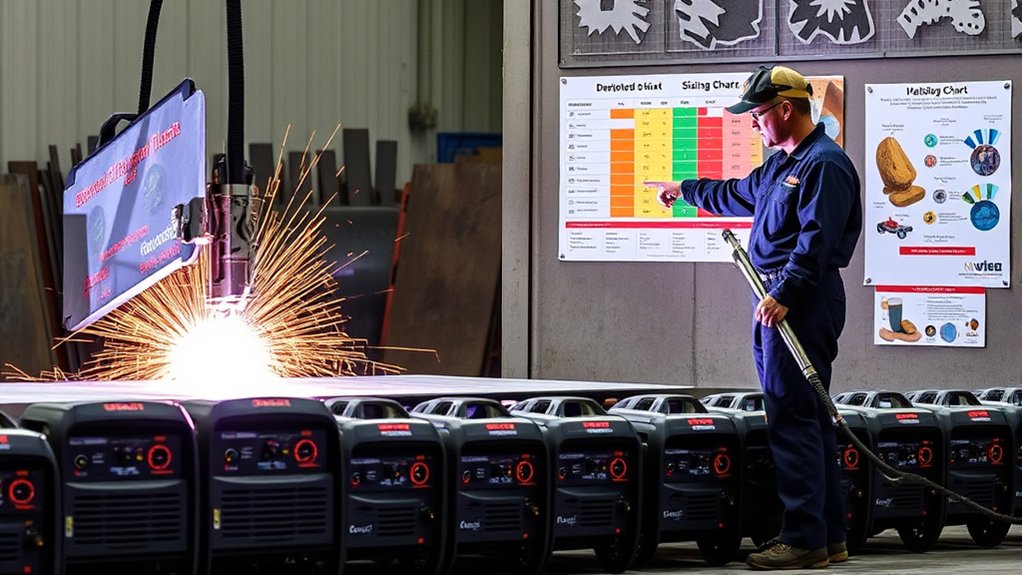
Picking the right generator involves more than just matching power numbers.
First, think about the generator type. Inverter generators deliver stable power with low harmonic distortion, which is ideal for the sensitive electronics inside plasma cutters. Conventional generators are often more rugged but can produce inconsistent voltage. Your choice should depend on how sensitive your plasma cutter is to power quality.
Next, consider the fuel source. Gasoline generators are portable but need frequent refueling and produce more emissions. Diesel generators offer better fuel efficiency and tend to last longer, making them a solid pick for heavy-duty work. Propane generators run cleaner and the fuel stores longer, though the tanks take up more space.
Think about where you’ll be using the generator too. Extreme temperatures and high altitudes can reduce a generator’s power output. If you’re working in a noise-sensitive area, inverter generators tend to run much quieter.
Finally, add up your total power needs. If you’re running a compressor, lights, or other tools alongside the plasma cutter, the generator needs enough capacity to handle everything at once.
Determining the Right Generator Size for Your Plasma Cutter
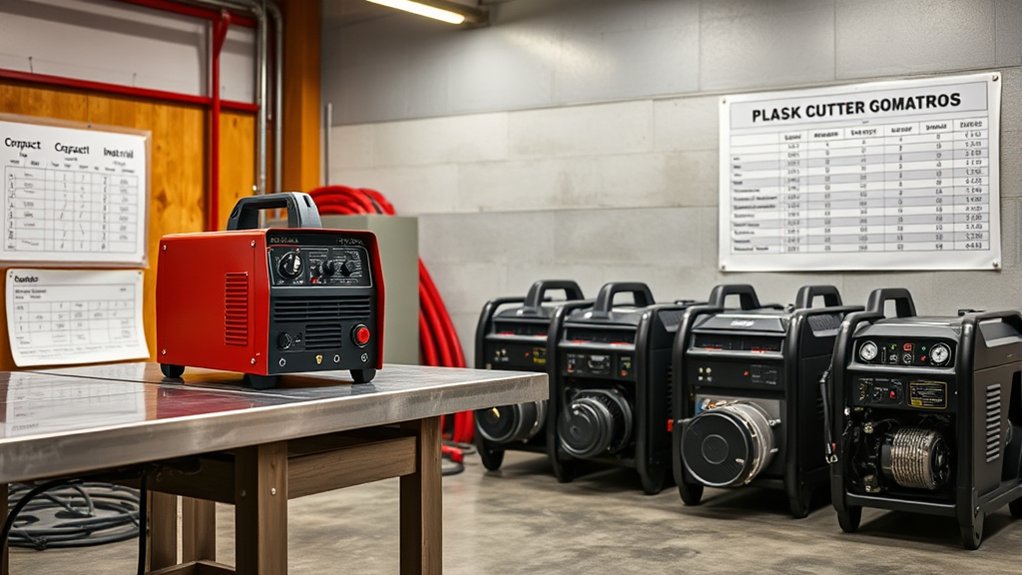
Start by looking at your plasma cutter’s amperage rating. A Hypertherm Powermax 45, for instance, needs a generator delivering at least 42 amps at 230 volts. That translates to a minimum 20 kVA generator. To handle power surges and keep things running smoothly, aim for a generator rated 1.5 to 2 times the cutter’s maximum power draw.
| Plasma Cutter | Required Amps | Recommended Generator Size (kVA) |
|---|---|---|
| Hypertherm 45 | 42 | 20 |
| Cutter Model X | 50 | 25 |
| Cutter Model Y | 35 | 18 |
| Cutter Model Z | 60 | 30 |
Don’t forget the duty cycle. Ignoring it can lead to overloading. Always double-check that your generator’s capacity lines up with these numbers to keep your plasma cutting safe and efficient.
Importance of Generator Frequency and Voltage Rating
The right frequency and voltage rating are critical for getting clean cuts from your plasma cutter.
Most plasma cutters in North America need a generator running at 60 Hz. If the frequency drifts, you’ll see uneven arc performance and lower cut quality. Voltage consistency matters just as much. Plasma cutters usually need a specific voltage, such as 120V or 240V. If the voltage swings outside that range, you’ll get poor cuts or the cutter may not work at all.
Here’s what to focus on:
- Frequency Stability: Make sure your generator holds a steady 60 Hz. Frequent shifts will disrupt the arc.
- Voltage Consistency: Confirm that the generator’s output stays within your plasma cutter’s required voltage range.
- Compatibility: Check your cutter’s manual and match its specs to the generator’s frequency and voltage ratings.
Tips for Handling Startup Surges With Generators
Startup surges are one of the biggest challenges when pairing a generator with a plasma cutter. Peak power can spike to 3–4 times the cutter’s rated draw. To handle this, choose a generator with a surge capacity that’s 2–3 times its continuous rating.
An automatic voltage regulator (AVR) or an inverter-based generator helps by delivering stable, clean power. This reduces the strain that startup surges put on your equipment.
You can also add a capacitor or a soft-start device to your setup. These smooth out the power delivery and soften the initial surge. Always check the manufacturer’s specs for both the generator and the plasma cutter to find the right sizing and configuration. These steps protect your cutter’s performance and help it last longer.
Ensuring Compatibility Between Generator and Plasma Cutter
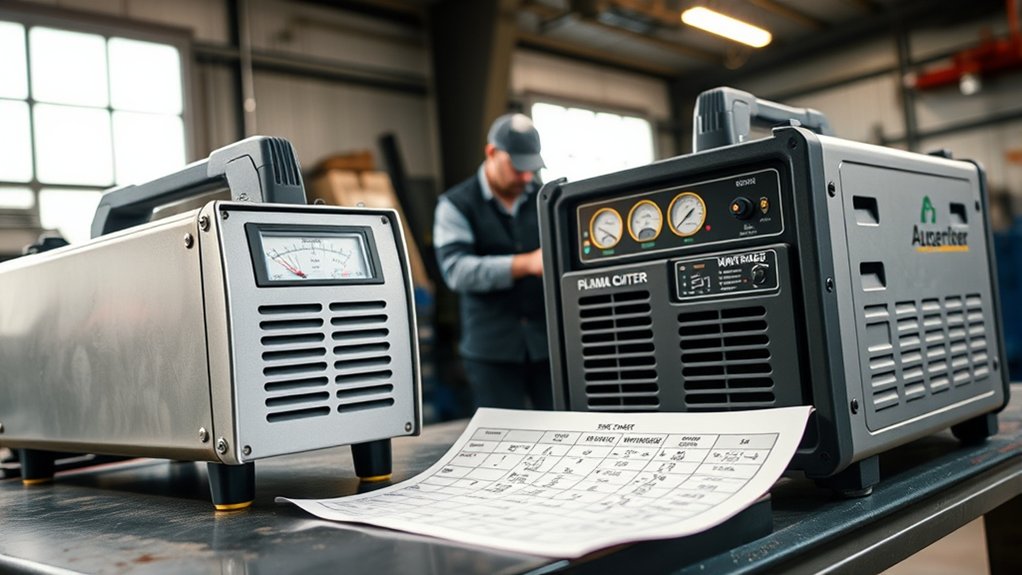
Compatibility between your generator and plasma cutter requires a careful look at both sets of specs.
Check your plasma cutter’s manual for the recommended generator size and type. Many plasma cutters, like the Hypertherm Powermax series, need a minimum of 20 kVA and a pure sine wave generator. A generator with a THD rating (Total Harmonic Distortion) of 6% or less is important to protect the cutter’s sensitive electronics.
Keep these factors in mind:
- Power Requirements: Match the generator’s output to the cutter’s power needs, which typically range from 20 to 100 amps.
- Voltage Stability: The generator must handle the cutter’s maximum power draw without voltage drops that cause poor cut quality.
- Duty Cycle and Material Type: Thicker materials and longer duty cycles demand more sustained power. Make sure the generator can keep up.
How to Calculate Generator Wattage for Your Plasma Cutter
If you want to do the math yourself, here’s a straightforward approach:
Step 1: Find your plasma cutter’s input voltage and amperage in the manual or on the nameplate. For example, 240V input at 27 amps.
Step 2: Multiply voltage by amperage to get the running wattage. In this case, 240 × 27 = 6,480 watts (about 6.5 kW).
Step 3: Add 50% for starting wattage. So 6,480 × 1.5 = 9,720 watts.
Step 4: Apply the 1.5–2x safety margin. A generator in the 10–13 kW range would work well here.
Step 5: Add wattage for any extra tools you’ll run at the same time (compressor, grinder, lights, etc.).
This simple calculation keeps you from under-sizing or over-spending on a generator.
Best Practices for Using Generators With Plasma Cutters
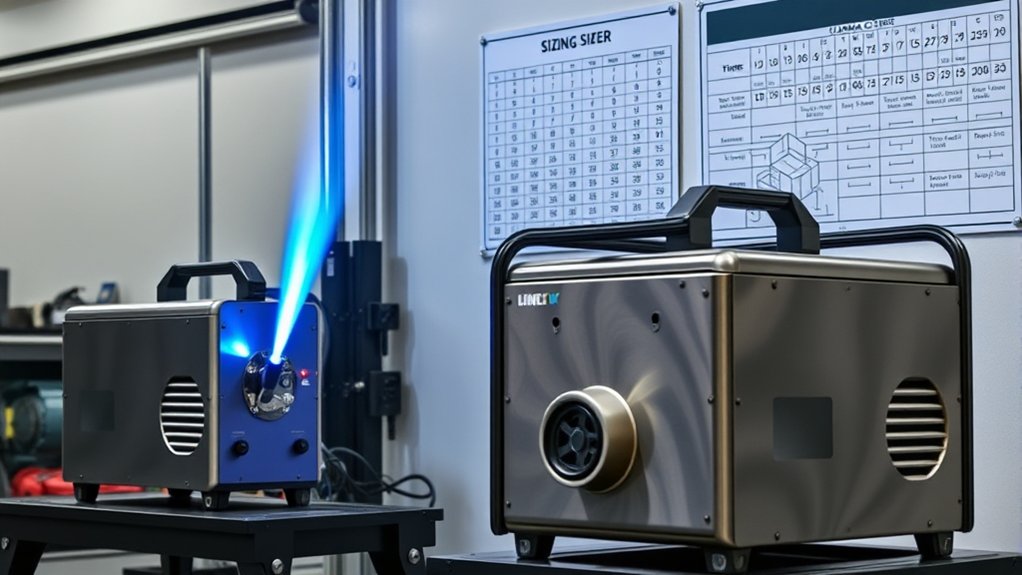
For peak performance, verify that the generator’s power output meets or exceeds the plasma cutter’s maximum amperage requirements, typically between 20–60 amps.
Voltage regulation is just as important. Fluctuations can cause inefficiencies or even damage your cutter. Aim for a generator with a Total Harmonic Distortion (THD) of 6% or less.
Generator Power Compatibility
Precision in power compatibility protects your equipment and keeps your cuts consistent.
Start by choosing a generator with a low Total Harmonic Distortion (THD) rating of 6% or less. This minimizes the risk of damage to your plasma cutter’s electronics. Calculate the generator’s power output to handle the plasma cutter’s continuous load, then add 5–10% extra capacity for surges. A generator with high surge capacity is important for handling the inrush current when the cutter’s ignition system fires.
- Low THD rating: Reduces the risk of equipment damage.
- High surge capacity: Handles ignition system demands.
- Extra power capacity: Provides a buffer for unexpected spikes.
Voltage Regulation Importance
Beyond power compatibility, voltage regulation plays a big role in cut quality. A stable output prevents damage from voltage fluctuation. Choose a generator with low THD (6% or less) and make sure it holds voltage within +/- 5%. This power stabilization protects sensitive components like capacitors from harmful surges.
| Aspect | Recommendation |
|---|---|
| Voltage Regulation | +/- 5% stability |
| Total Harmonic Distortion (THD) | ≤ 6% |
| Voltage Fluctuation Risk | Minimized with proper generator |
| Power Stabilization | Essential for efficiency |
| Component Protection | Prevents damage to capacitors |
Common Mistakes to Avoid When Selecting a Generator
Choosing a generator for a plasma cutter isn’t hard, but a few common mistakes can cause real problems.
Underestimating power requirements is the most frequent error. It leads to generator overload, power fluctuations, frequent shutdowns, and poor cut quality.
Many people also forget about starting wattage, which can spike up to three times the running wattage. If the generator can’t handle that initial surge, it will stall.
Running additional equipment like compressors or work lights at the same time adds to the load. Failing to account for those extras can push the generator past its limits.
Ignoring the duty cycle is another common issue. Heavy-duty cutters can have duty cycles up to 50%, and sizing the generator wrong (too big or too small) hurts efficiency.
Finally, make sure the generator’s total harmonic distortion (THD) stays at 6% or less. Higher THD can damage the plasma cutter’s sensitive components.
- Underestimating power needs: Causes generator overload.
- Ignoring starting wattage: Leads to stalling and power drops.
- Overlooking additional equipment: Risks overloading the generator.
Frequently Asked Questions
Can I Use a Solar Generator With My Plasma Cutter?
Yes, a solar generator can work with a plasma cutter. You’ll need solar panels paired with power inverters, and the system’s total wattage must match your cutter’s requirements. Pay close attention to inverter efficiency and panel output to confirm compatibility.
How Do Weather Conditions Affect Generator Performance?
Weather has a real impact on generator output. High humidity can degrade electrical components over time, and extreme temperature swings may cause overheating. Keep an eye on conditions and adjust your expectations for generator performance accordingly.
Are There Eco-Friendly Generator Options for Plasma Cutters?
There are eco-friendly options available. Solar-powered and propane generators both produce fewer emissions. Just make sure the power output matches your plasma cutter’s requirements so you don’t sacrifice cutting performance.
What Maintenance Is Required for a Generator Used With Plasma Cutters?
Perform oil changes every 100 hours of use and replace filters every 200 hours. Regularly check spark plugs, inspect electrical connections, and clean the fuel system. Consistent maintenance keeps the generator running reliably with your plasma cutter.
Can a Battery Backup System Support a Plasma Cutter?
A battery backup can support a plasma cutter, but it has to meet the cutter’s full power requirements. Check the voltage, amperage, and peak power ratings of the backup system before relying on it.
Conclusion
Matching the right generator to your plasma cutter takes a bit of homework, but it pays off. You’ve covered duty cycles, starting surges, and voltage requirements. By sizing your generator correctly and checking compatibility, you set yourself up for clean, consistent cuts every time. Take the time to get it right, and your equipment will reward you with reliable performance for years to come.