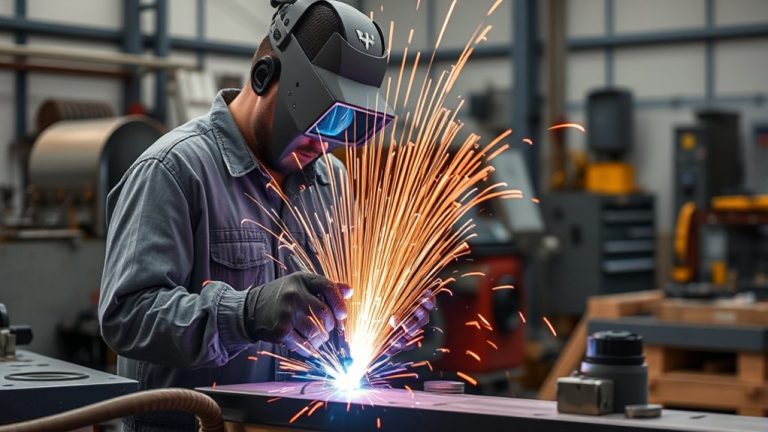
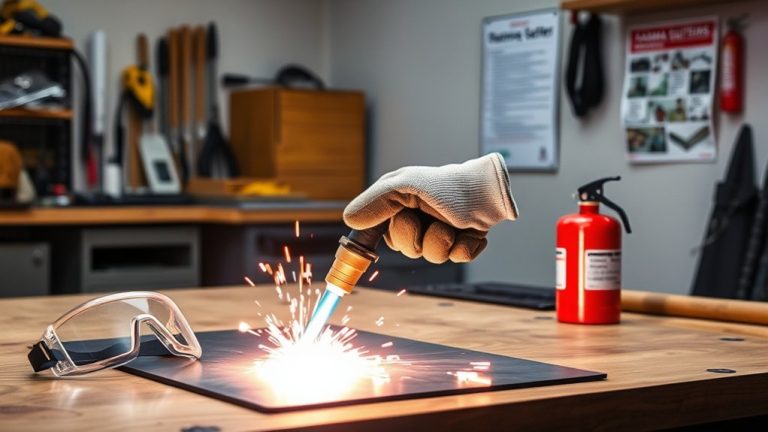
Imagine the sparks flying as you master the art of plasma cutting. You need thorough training to excel, including hands-on experience with CNC equipment and a solid grasp of safety protocols. Certifications from organizations like AWS or FMA can greatly boost your credibility and job prospects. Courses at institutions such as Hypertherm Cutting Institute cover essential concepts and practical skills. Your journey into advanced techniques and continuous learning awaits, promising precision and expertise.
Understanding Plasma Cutting Basics
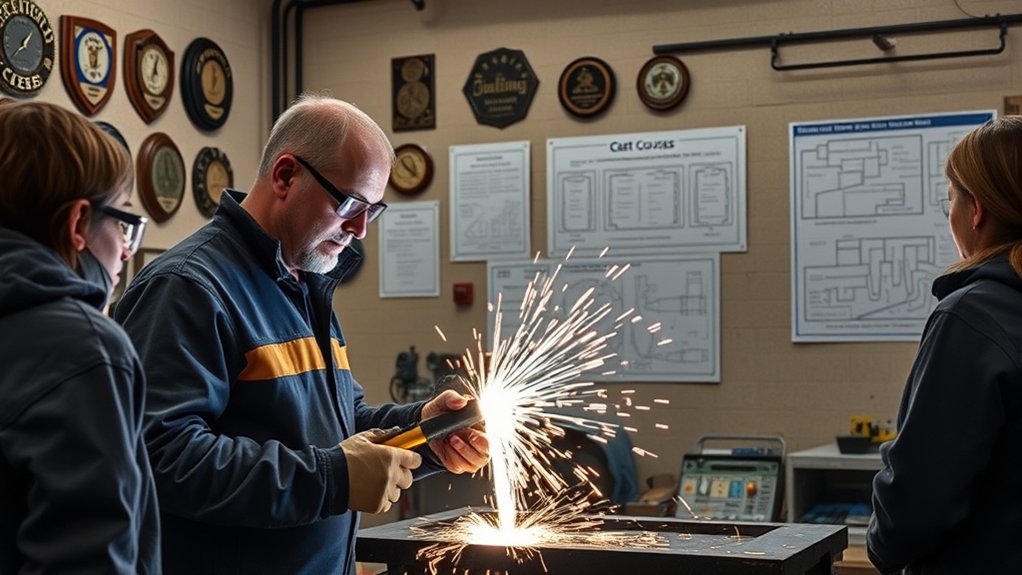
While plasma cutting may seem complex initially, understanding its basics sets a solid foundation for effective use. At its core, plasma cutting fundamentals involve using a high-velocity jet of ionized gas to slice through electrically conductive materials efficiently.
The process requires key equipment: a plasma cutter, proper consumables, and an understanding of machine settings to accommodate different metal thicknesses. Mastery of these elements allows you to perform clean cuts, maximizing travel speeds and minimizing dross formation.
Equipment maintenance is essential for the longevity and performance of your plasma cutting system. Regularly check and replace consumables to maintain cutting quality and prevent equipment damage.
Familiarize yourself with SheetCAM software to convert AutoCAD files efficiently, streamlining the cutting process. By integrating these technical skills, you’ll enhance operational efficiency and guarantee your equipment functions at its best, paving the way for precision and productivity in your cutting endeavors.
Safety Protocols and Best Practices
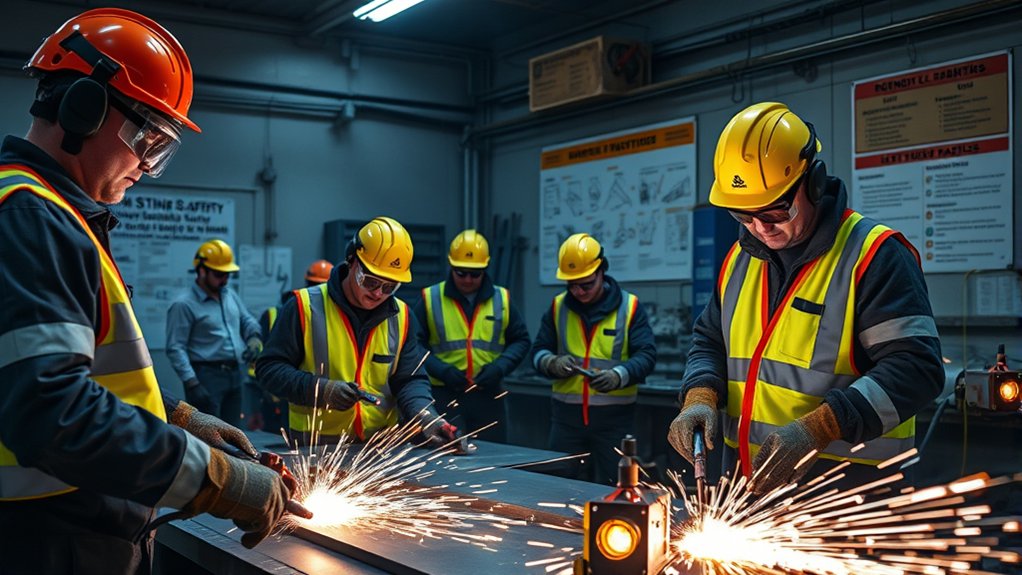
When you’re operating plasma cutters, it’s essential to prioritize safety by wearing full-coverage clothing made of natural fibers, complemented by leather and closed-toe shoes to protect against burns and foot injuries.
Verify proper handling of equipment by familiarizing yourself with the setup and use of personal protective equipment (PPE), while maintaining adequate ventilation to prevent inhalation of harmful fumes.
Regular maintenance and inspection of your tools are non-negotiable practices that contribute markedly to both your safety and the effectiveness of your cutting operations.
Essential Safety Gear
A essential aspect of plasma cutting safety is the appropriate use of important safety gear, which protects operators from the inherent risks of the process. Wearing full-coverage clothing made of natural fibers is essential. Pair this with leather, closed-toe shoes to shield against flying sparks and heat. Safety glasses, gloves, and face shields are indispensable protective equipment, guarding you from flying debris and harmful UV radiation. Always maintain a tidy workspace, ensuring flammable materials are far from the cutting area. Regular safety drills reinforce these practices, keeping you sharp and safe.
| Protective Gear | Purpose |
|---|---|
| Safety Glasses | Protects eyes from debris and UV |
| Gloves | Shields hands from heat and sparks |
| Face Shield | Offers full face UV protection |
| Leather Shoes | Guards feet against heat and debris |
Proper Equipment Handling
Effective equipment handling in plasma cutting hinges on strict adherence to safety protocols and best practices. Start by donning full-coverage clothing made of natural fibers and closed-toe leather shoes. These prevent burns and injuries.
Integrate equipment maintenance into your routine; check consumables and adjust machine settings for peak performance. Keep a safe distance from flammable materials and guarantee your personal protective equipment (PPE) includes gloves and face shields.
Familiarize yourself with emergency shut-off procedures and the location of safety gear like fire extinguishers. Your familiarity with this setup is vital.
Formal training, such as that from Hypertherm Cutting Institute, enhances your competency in these practices, making sure you’re prepared to manage any situation with precision and confidence.
Essential Equipment and Software Training
Proficiency in plasma cutting demands a thorough understanding of both equipment and software, forming the backbone of effective operation.
You need to master CAD/CAM software to convert your design files into formats compatible with your plasma cutting machine. Software compatibility is essential, and using tools like SheetCAM can streamline this process.
Beyond software, consumable management is critical. Familiarize yourself with consumables such as electrodes and nozzles, which play an important role in maintaining your equipment and guaranteeing precise cuts.
Efficient consumable management can notably impact cut quality and equipment lifespan.
Safety training can’t be overlooked. Always wear full-coverage clothing and closed-toe shoes to protect yourself during operations.
Additionally, understanding basic troubleshooting and maintenance procedures will help you address common issues and extend the life of your CNC plasma cutter.
With these skills, you’ll guarantee both your safety and the machine’s peak performance.
Hands-On Experience With CNC Plasma Cutters
Gaining hands-on experience with CNC plasma cutters is vital for mastering their basic operations, enabling you to cut materials up to 1/2″ thick, including metals like steel, bronze, and gold.
Understanding the intricacies of CNC settings and material types can greatly enhance your efficiency and precision. You’ll need to familiarize yourself with SheetCAM software, essential for converting AutoCAD and DXF files into a format your CNC plasma cutter can interpret.
Practical training sessions often incorporate safety guidelines, stressing the importance of wearing full-coverage clothing made of natural fibers and closed-toe shoes to maintain a safe working environment.
These sessions typically include hands-on demonstrations of machine setup and operation, allowing you to gain confidence in handling the equipment. By mastering these skills, you can efficiently manage various CNC settings, ensuring the cutter operates effectively across diverse material types, ultimately enhancing your cutting capabilities.
Certification Programs and Their Benefits
Building hands-on experience with CNC plasma cutters lays the groundwork for pursuing certification programs that can greatly boost your career in this field.
While there’s no universally recognized plasma cutting certification, obtaining credentials from organizations like AWS or FMA offers significant certification advantages. These certifications enhance your credibility and increase your job prospects by demonstrating your commitment to excellence and industry standards.
Obtaining AWS or FMA credentials boosts credibility and job prospects by showcasing commitment to industry standards.
Courses from the Hypertherm Cutting Institute (HCI) equip you with essential plasma cutting knowledge, covering fundamental concepts and crucial safety measures.
Even if formal certifications aren’t always required, showcasing practical competency through skill demonstrations can often hold similar weight in the eyes of employers. Training programs, including online and vocational school offerings, guarantee you understand CNC plasma cutter operations and software intricacies.
Additionally, these programs provide networking opportunities, fostering industry recognition and opening doors to mentorship and career advancement within the plasma cutting field.
Advanced Techniques for Precision Cutting
To enhance your precision cutting, focus on mastering beveling techniques and carefully optimizing machine settings to minimize dross formation.
You’ll need to adapt travel speeds and maintain consumables effectively to guarantee superior cut quality tailored to different material thicknesses.
Stay ahead by leveraging CNC technology and continuous learning opportunities, which are essential for executing precise and intricate designs.
Mastering Beveling Techniques
Mastering beveling techniques in plasma cutting transforms your ability to produce clean, angled edges essential for precise assembly and welding.
You’ll need to understand how bevel angles vary with different material types. Adjusting travel speed and machine settings based on the material’s thickness is critical for precision.
Your plasma cutter’s capabilities, such as torch angle and height, are fundamental to achieving the correct bevel profile.
Consistent bevel quality relies heavily on maintaining consumables like nozzles and electrodes, which extend your equipment’s lifespan.
Access practical demonstrations and instructional videos for visual insights into effective beveling techniques. These resources help you sidestep common pitfalls and refine your skills, ensuring your cuts meet the highest standards of accuracy and quality.
Avoiding Dross Formation
Achieving precision in plasma cutting demands a keen focus on avoiding dross formation, a common challenge that can mar the quality of your cuts.
Effective dross prevention strategies start with optimizing cutting speeds tailored to the metal thickness. Slow speeds often cause molten material to pool, resulting in unwanted dross. Fine-tune machine settings, such as amperage and voltage, to match the material type and thickness, ensuring cleaner cuts.
Regularly maintain and replace consumables like nozzles and electrodes to keep performance consistent. Try dragging the torch at a slight angle for a smoother cut profile and reduced dross.
Finally, experiment with different cutting gases, like nitrogen or oxygen, as these can considerably impact the thermal dynamics affecting dross formation.
Enhancing Cut Quality
Precision in plasma cutting isn’t just about avoiding dross; it’s about fine-tuning every aspect of the process to enhance cut quality.
Start by maintaining ideal travel speeds; this means adjusting based on metal thickness to achieve clean cuts. Your machine settings, particularly amperage and voltage, need precise adjustments for each specific material. This attention to detail in optimization techniques is essential.
Keep consumables in top shape—regularly replace nozzles and electrodes to guarantee consistent performance.
For advanced techniques like beveling, you’ll need to tweak the cutting angle and speed precisely to improve edge quality and minimize post-processing.
Finally, leveraging CNC plasma technology can greatly boost precision and repeatability, allowing for intricate designs and increased efficiency in your operations.
Continuous Learning and Skill Development
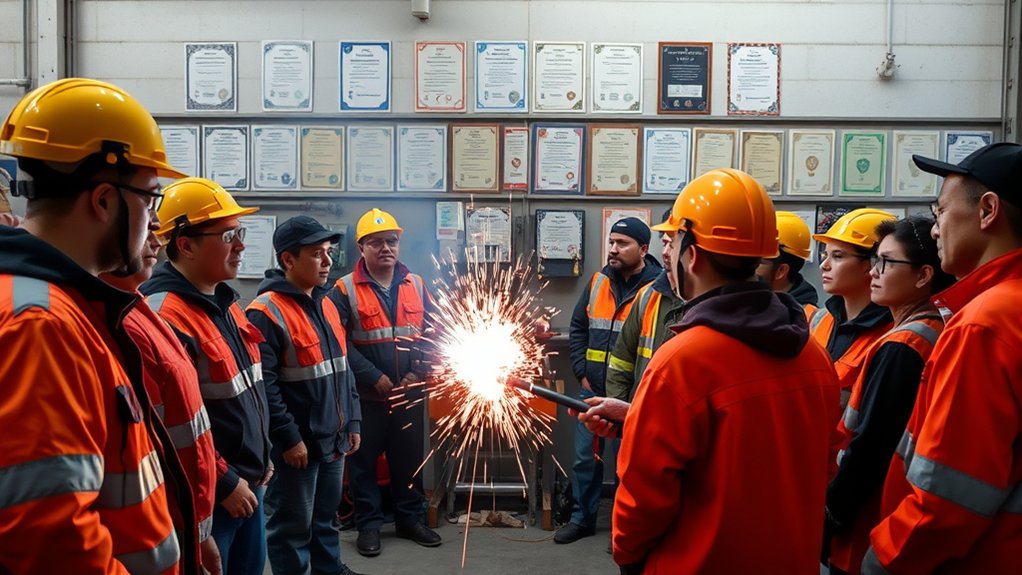
While diving into the field of plasma cutting, continuous learning and skill development are vital for staying ahead in this ever-evolving industry. Online resources, such as the Hypertherm Cutting Institute, offer self-guided and certified courses that cater to all skill levels. These courses are a great way to enhance your understanding of both foundational and advanced plasma cutting techniques.
Don’t underestimate the power of professional networking; connecting with seasoned experts through trade shows and online communities can provide invaluable insights and mentorship opportunities.
Connecting with industry experts can offer valuable insights and mentorship opportunities.
For practical experience, participating in hands-on workshops focused on CNC plasma cutting basics and safety is essential. Engaging with industry resources like video tutorials and on-demand webinars will further refine your troubleshooting capabilities.
Additionally, earning certifications from respected bodies like AWS or FMA not only validates your expertise but greatly boosts your job prospects. This commitment to learning guarantees you remain competitive and proficient in plasma cutting technology.
Frequently Asked Questions
What Are the Costs Associated With Plasma Cutting Training Programs?
You’re looking at training costs ranging from $500 to $2,000, depending on the program fees. These costs cover materials, instructor expertise, and equipment usage, ensuring you gain the technical skills needed for efficient plasma cutting.
How Long Does It Take to Become Proficient in Plasma Cutting?
Proficiency in plasma cutting takes time, typically around four to six months. Practice precision, perfect plasma cutting techniques, and pursue skill mastery. You’ll find that frequent focus and hands-on experience are essential for excelling in this field.
Are There Online Courses Available for Plasma Cutting Training?
Yes, you can find online courses for plasma cutting training. Utilize online resources and virtual workshops to gain technical skills. These platforms offer detailed tutorials and interactive sessions, helping you master the techniques efficiently from anywhere.
Can Plasma Cutting Skills Be Self-Taught Without Formal Training?
You can certainly teach yourself plasma cutting. In fact, 70% of beginners do. Focus on self-taught techniques, like practicing straight cuts on scrap metal, honing your skills through trial and error, and mastering practice methods for precision.
What Career Opportunities Are Available After Certification in Plasma Cutting?
After certification in plasma cutting, you’ll find job prospects in industries like manufacturing, automotive, and construction. Industry demand is high for skilled cutters, offering roles such as fabricators, welders, and CNC operators, ensuring diverse career paths.
Conclusion
To truly excel in plasma cutting, remember that “practice makes perfect.” By immersing yourself in thorough training and hands-on experience, you’ll master the intricate dance of CNC equipment. Certifications from esteemed bodies like AWS or FMA not only bolster your credibility but also enhance job prospects. Engage in courses from institutions like Hypertherm Cutting Institute and leverage online resources to refine your skills continually. Always prioritize safety, as understanding protocols is just as essential as perfecting your technique.