Understanding Plasma Cutter Input Voltage
Plasma cutter voltage can confuse you fast because the machine uses power in two different ways. Input voltage feeds the cutter from your wall outlet or generator, while output voltage helps create and control the cutting arc. Once you understand both, you can choose the right setup, protect your equipment, and avoid poor cuts or electrical problems.
Quick Answer
Most plasma cutters use 110/120V or 220/240V input power, depending on the model and job size. The output voltage is much higher and helps maintain the plasma arc during cutting. For CNC plasma use, you must match the cutter’s voltage output signal to the CNC controller’s accepted input.
Key Takeaways
- Input voltage controls how much power your plasma cutter can draw from the power source.
- Higher input voltage often helps with thicker metal and steadier cutting performance.
- Output voltage supports the cutting arc and affects CNC torch height control signals.
- Raw and divided voltage signals must match your CNC controller requirements.
- Blowback start usually works better around sensitive electronics than high-frequency start.
How Plasma Cutter Input Voltage Affects Performance
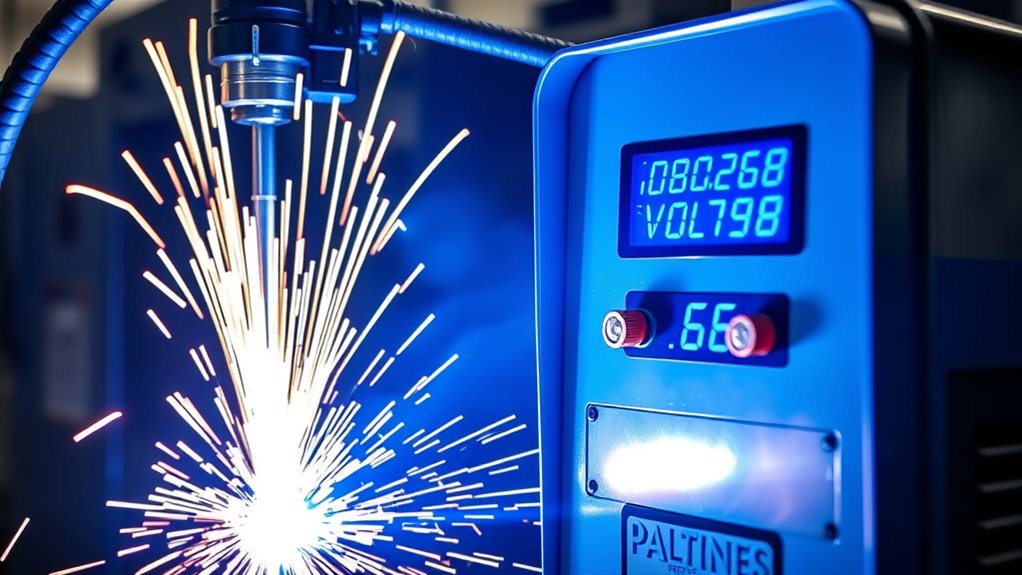
Input voltage tells you what power source your plasma cutter needs. Most small and mid-size machines use 110/120V or 220/240V, and some dual-voltage models can use both.
The correct input voltage matters because it affects the cutter’s maximum amperage output. It also affects the material thickness you can cut cleanly.
A 220V input usually supports stronger performance than 110V on thicker metal. It can also help reduce voltage drop when you use a proper circuit and cable size.
You should always match the machine’s electrical rating to your outlet, breaker, plug, and extension cord. Incorrect input voltage can reduce performance, trip breakers, or damage the cutter.
Warning: Never modify plugs, bypass breakers, or guess at wiring because plasma cutters draw high current.
Products Worth Considering

POWERFUL CUTTING THICKNESS: This plasma cutter handles 1/2" (12mm) steel at 120V/35A and 5/8" (16mm) at 240V/60A. Dual voltage auto-detection (10-35A@120V / 30-60A@240V) with PSI guidance (70-75 PSI / 0.48-0.52MPa). Optimized for quick, efficient cuts in automotive repairs and metal fabrication

MAX POWER - Full 15 Amp - 1875 Watts 125 Volts AC, 14 AWG SJTW Wire (Rough Service Weather Cord)

30 Amp to 50 Amp Welder Adapter: our NEMA 14-30P to 6-50R welder adapter cord helps you connect welding machines, plasma cutters or EV to 4 prong dryer outlet; Connect 14-30P plug to 4 prong home dryer wall sockets, and connect 6-50R receptacle to 3 prong welder plug; Support max 30 Amp overload, 240V, max wattage 7500 watts. ETL Listed
What Output Voltage Does During Plasma Cutting
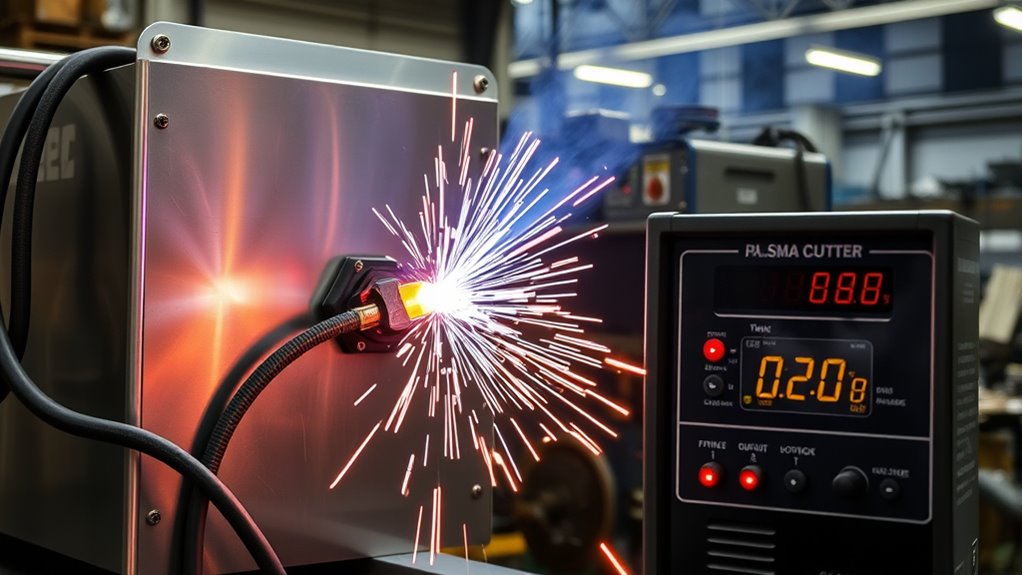
After input power enters the machine, the cutter converts it into the output needed for plasma cutting. Many plasma cutters work with output voltage in the 200 to 400 VDC range during the cutting process.
This output voltage helps maintain the arc that creates the heat needed to cut metal. A steady arc supports cleaner edges, better speed, and fewer interruptions during the cut.
You may see two output voltage signal types: raw voltage and divided voltage. Raw voltage uses the cutter’s direct output signal, while divided voltage lowers that signal for safer use with CNC systems.
Common divided voltage ratios include 50:1, but the exact ratio depends on the machine. You should check your plasma cutter manual and your CNC controller manual before connecting them.
Why Voltage Ratios Matter for CNC Compatibility
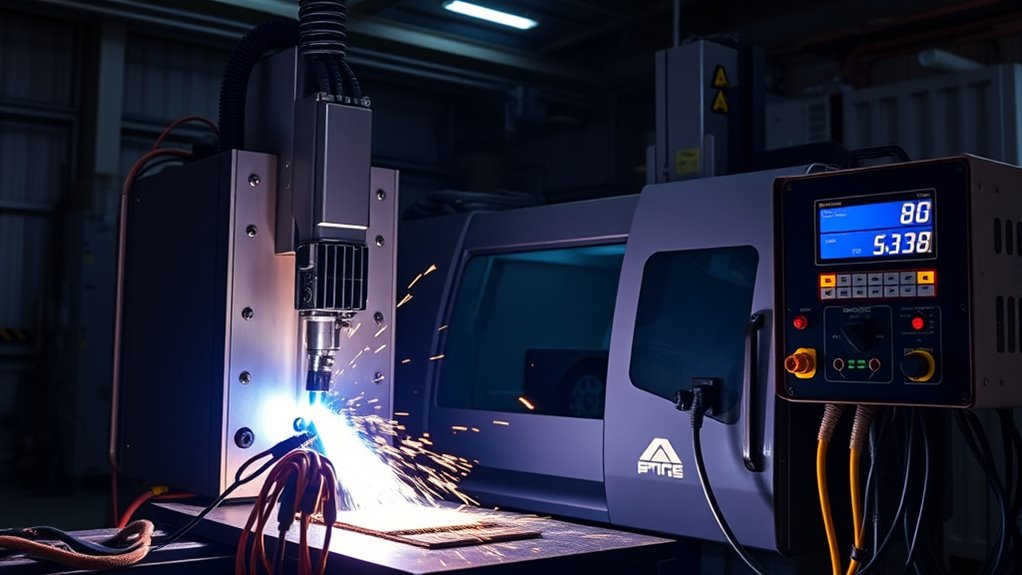
Voltage ratios matter because a computer numerical control (CNC) table needs the right signal from the plasma cutter. The signal helps the controller manage torch height and maintain a steady cut.
A 1:1 ratio sends raw voltage from the plasma cutter. Some CNC setups can use this, but raw voltage can create risk if the controller does not support it.
A divided ratio, such as 50:1, lowers the voltage signal before it reaches the controller. This setup protects sensitive CNC electronics and improves compatibility with many torch height control systems.
Before you connect a plasma cutter to a CNC table, confirm whether the controller accepts RAW or DIV inputs. This simple check can prevent poor performance and possible control box damage.
Some machines, such as the Crossfire Pro, can accept more than one input type. You still need to confirm your plasma cutter’s voltage ratio specifications before you connect any wires.
Note: CNC voltage settings can vary by brand, so your manuals should guide the final wiring choice.
110V vs 220V Plasma Cutter Input Options
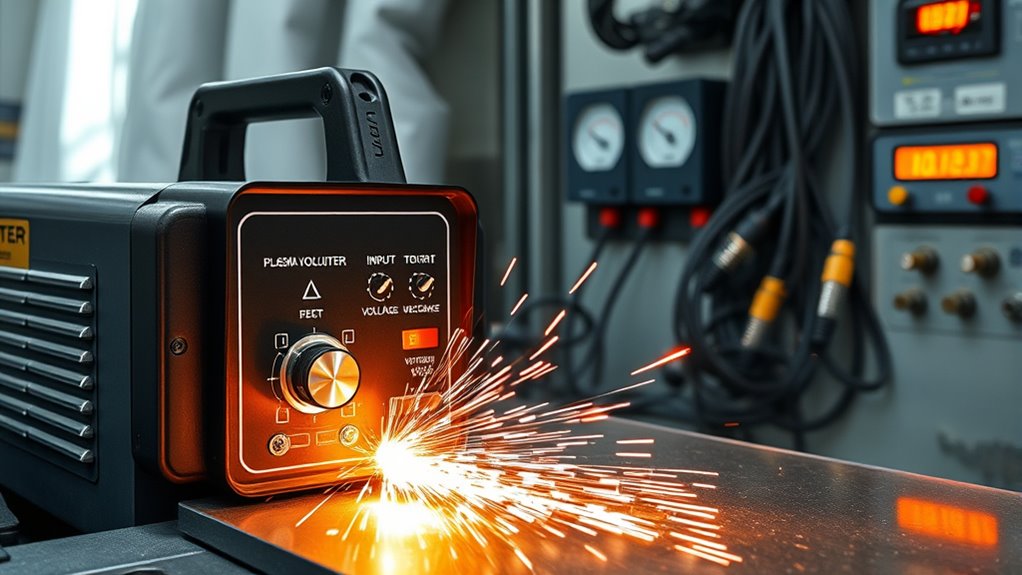
When you choose a plasma cutter, input voltage affects both convenience and cutting ability. A 110/120V machine works with many standard household outlets, but it may limit amperage and metal thickness.
A 220/240V setup gives the machine more power for demanding work. It often helps you cut thicker steel with better speed and fewer power limits.
Dual-voltage plasma cutters give you more flexibility. You can use lower voltage for light work and higher voltage when your shop has the correct circuit.
You should not choose voltage by outlet type alone. Match the cutter to the metal thickness, duty cycle, breaker size, plug type, and air supply you plan to use.
Products Worth Considering
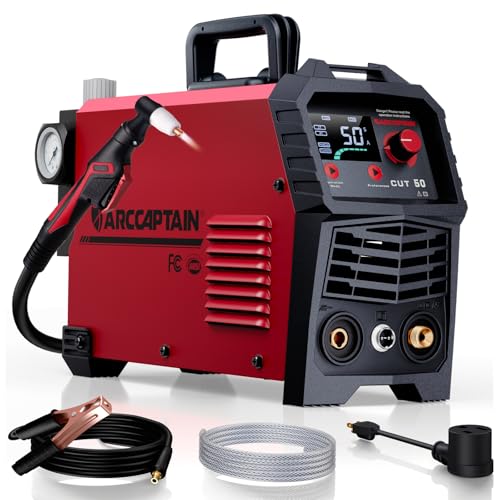
【Powerful Cutting Ability】Switch effortlessly between 110V and 220V for home or workshop use. Achieve professional 1/2" clean cuts on steel, aluminum, and copper with advanced LGBT technology. Perfect for DIY projects and heavy-duty tasks. Recommended maximum cutting thickness: 12mm @ 35A / 110V / 55 PSl; 18mm @ 50A / 220V / 75 PSI. Note: Requires compressed air (compressor sold separately).

Powerful Cutting: This VEVOR plasma cutter delivers a maximum output current of 65A for powerful cutting. It supports clean cuts up to 1/2" (12mm) at 110V and 9/16" (14mm) at 220V, with a maximum cutting thickness of 5/8" (16mm) at 110V and 3/4" (20mm) at 220V

[Powerful Cutting Ability] Dual voltage 110/220V good for home, workshop and hardware shop use. Professional performance 1/2" clean cuts on Iron, Steel aluminum and copper with Inverter IGBT Technology. Very powerful for DIY and heavy duty project. The Maximum cutting thickness is recommended to 1/2" @35A 110V 50PSI; 2/3" @50A 220V 65PSI. Dry and compressed air is required. Power breaker up to 60A@110V 35A; Up to 50A@220V 50A.
High-Frequency vs Blowback Start Methods
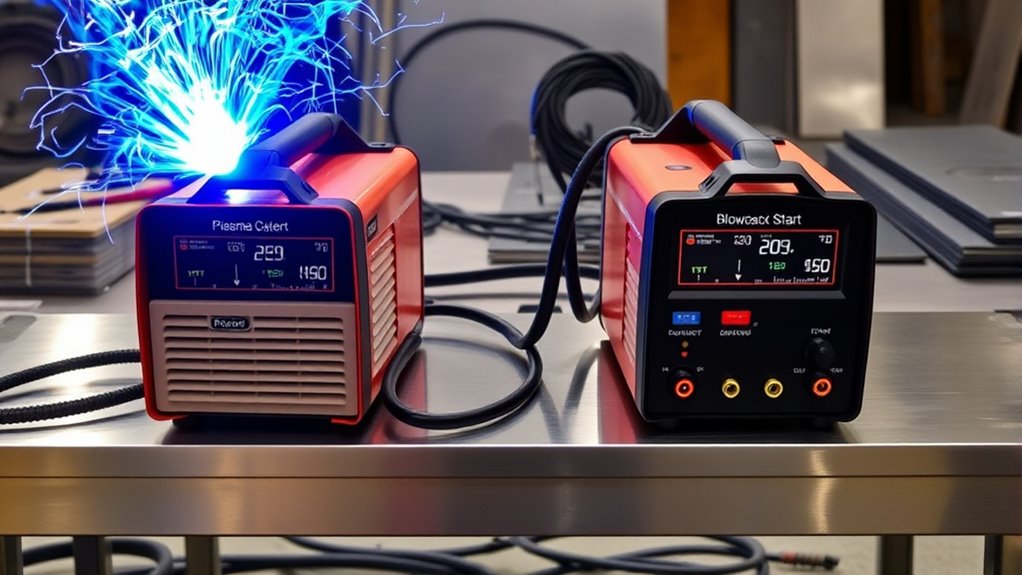
Plasma cutters use different methods to start the arc. Two common options are high-frequency start and blowback start methods.
High-frequency (HF) start uses a high-frequency signal to start the arc. This method can create electrical interference around sensitive electronics, including some CNC systems and nearby controls.
High-frequency start can interfere with sensitive electronics, so check CNC compatibility before you use it near controllers.
HF start may also perform poorly on dirty or rusty materials when the surface does not conduct well. Clean metal usually helps the arc start more reliably.
Blowback start avoids the same high-frequency signal. That makes it a better choice for many CNC tables and work areas with sensitive electronics.
Blowback start can also support non-touch pilot arc capabilities. This helps you cut painted, rusty, or dirty metal with fewer arc-start issues.
How to Choose the Right Voltage Setup
Start with the metal you cut most often. Thin sheet metal may work well on 110/120V, while thicker plate usually needs the extra power of 220/240V.
Next, check your shop power. Your outlet, breaker, plug, and wiring must match the plasma cutter’s rating before you run the machine.
You should also check your air compressor. Even the right voltage will not help if your cutter lacks clean, dry, and steady air pressure.
- Use 110/120V for light work, small repairs, and portable jobs.
- Use 220/240V for thicker metal, longer cuts, and shop work.
- Choose dual voltage when you need one cutter for different locations.
- Choose CNC-friendly voltage output when you plan to use torch height control.
Common Plasma Cutter Voltage Mistakes to Avoid
Many voltage problems start before the first cut. You can avoid most issues by checking the cutter, power source, and CNC input before setup.
- Don’t run a high-amp cutter on an undersized breaker.
- Don’t use a long or thin extension cord for heavy cutting.
- Don’t connect raw voltage to a CNC controller unless it supports raw input.
- Don’t assume all divided voltage ratios match your controller.
- Don’t ignore duty cycle when cutting thicker metal.
Pro tip: Label your CNC voltage wires after setup so you can avoid future connection mistakes.
Frequently Asked Questions
What Safety Precautions Should You Take When Using a Plasma Cutter?
You should wear protective gloves, safety glasses, flame-resistant clothing, and a welding helmet or face shield. Keep your work area ventilated, inspect cables before use, and keep flammable materials away from sparks.
Can a Plasma Cutter Operate on a Generator?
Yes, a plasma cutter can run on a generator if the generator meets the cutter’s wattage and surge requirements. Check the plasma cutter manual first because some machines need clean, stable power.
How Does Ambient Temperature Affect Plasma Cutter Performance?
High heat can make a plasma cutter reach its thermal limit faster. Cold or changing conditions can also affect air quality, moisture, and cut consistency.
What Maintenance Helps a Plasma Cutter Work Well?
Clean and inspect the torch often, replace worn consumables, and check cables and air fittings. You should also drain moisture from the air system to protect cut quality.
Are Consumables Universal Across Different Plasma Cutter Models?
No, plasma cutter consumables are not universal. You need tips, electrodes, shields, and nozzles that match your exact torch and cutter model.
Is 220V Always Better Than 110V for Plasma Cutting?
220V usually gives you more cutting power, but it is not always necessary. If you cut thin metal and need portability, a 110/120V or dual-voltage cutter may fit your work better.
Safety Disclaimer: This article is for informational purposes only and does not replace professional electrical or welding safety guidance. Consult a qualified electrician or trained welding professional before wiring circuits, modifying equipment, or connecting a plasma cutter to a CNC system.
Conclusion
The most important point is simple: input voltage powers the machine, while output voltage controls the cutting arc and CNC signal. You need both to match your work, power source, and controller setup.
Before you cut, check your machine label, manual, circuit, and CNC voltage input. A few minutes of setup can protect your cutter, improve cut quality, and make your plasma work safer.
When your voltage setup matches the job, your plasma cutter becomes easier to control and more reliable.