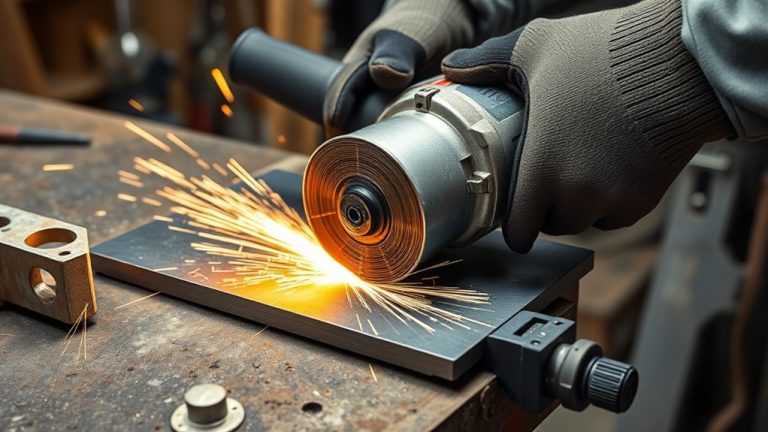
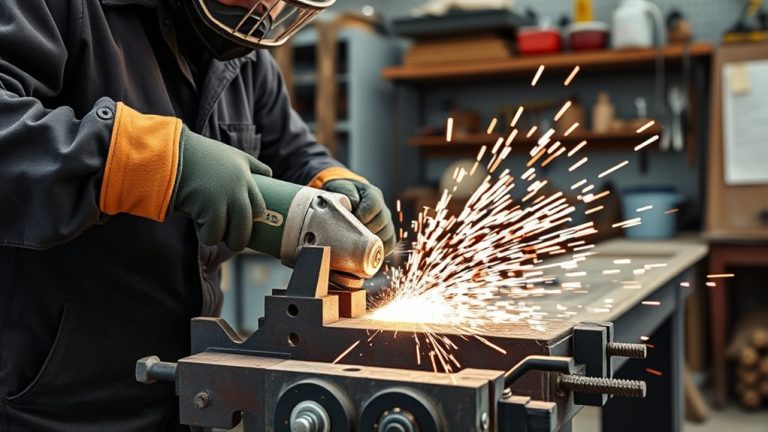
Angle grinder sparks happen because of intense friction and heat. The grinding disc hits the metal and creates temperatures that can reach 1100°C. The type of steel you grind plays a big role. Hypoeutectoid steels shoot out simple, fast-splitting sparks. Hypereutectoid steels contain more carbon, producing complex spark patterns. These factors affect how bright the sparks are and how far they travel. This creates real fire safety risks. Keep reading to learn how to manage these effects safely.
Quick Answer
- Sparks form from high-speed friction between the grinding disc and metal, reaching temperatures up to 1100°C.
- Ferrous metals like steel spark heavily, while non-ferrous metals like aluminum do not.
- High-carbon steel creates complex, exploding spark patterns. Low-carbon steel produces simpler, straighter sparks.
- Always wear safety gear, remove flammable items within a 35-foot radius, and keep a fire watch for 30 minutes after grinding.
Essential Safety Measures When Using Angle Grinders
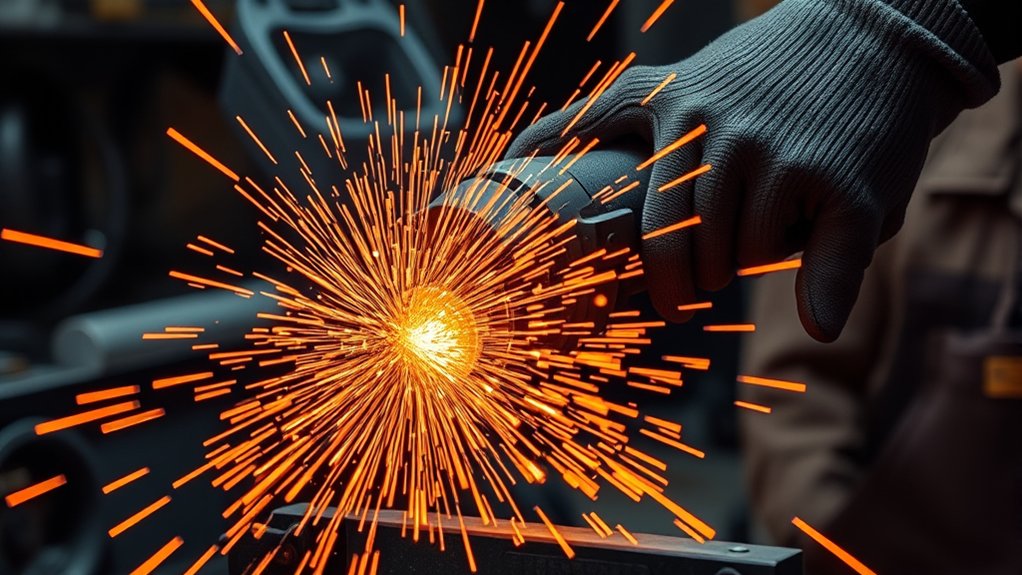
When using angle grinders, you must prioritize safety measures to prevent accidents. Always wear proper personal protective equipment (PPE). You need a face shield and safety goggles to block flying debris while cutting metal. Make sure your work area has no flammable materials. Keep at least a 35-foot radius clear from any hot work to lower fire risks. Check your angle grinder regularly. Inspect the safety guards and handles to avoid dangerous kickbacks. Direct the sparks away from yourself and anything that can catch fire. After you finish grinding, set up a fire watch procedure. Monitor the area for at least 30 minutes to catch smoldering fires early. Following these steps keeps you safe and helps you work better.
What Causes Sparks From Angle Grinders?
You need to know what causes sparks from angle grinders to stay safe and work efficiently. Sparks happen mainly because of friction and heat. The grinding disc touches the metal and throws off tiny metal particles. These particles oxidize in the air and glow. Three main factors cause this:
- Material Type: Ferrous metals like steel create lots of sparks. Non-ferrous metals like copper and aluminum barely spark.
- Heat Generation: Grinding creates extreme heat. The flying metal bits can hit 1100°C, making them glow brightly.
- Grinding Force: Pressing harder pushes sparks farther. The roughness of the disc also changes the spark intensity.
Knowing how these factors work helps you manage sparks better. This improves both your safety and your cutting speed.
How Your Steel Choice Affects Sparks
Your choice of steel changes how the sparks behave. This affects your safety and cutting style. Cutting hypoeutectoid steels (under 0.8% carbon) makes simple sparks. These sparks split fast and look like tiny explosions. Hypereutectoid steels (over 0.8% carbon) act differently. The carbon is not distributed evenly. This creates gas pocket formation inside the sparks. As a result, the sparks split multiple times in the air and become unpredictable.
The oxidation process in hypoeutectoid steel builds internal pressure from carbon monoxide pockets. This makes the sparks split more aggressively. When you grind stainless steel with a silicon carbide disc, sparks fly at about 34 meters per second. The steel type controls this speed more than your grinding force. Knowing these details helps you pick the right abrasive for the metal.
The Role of Temperature in Angle Grinder Sparks
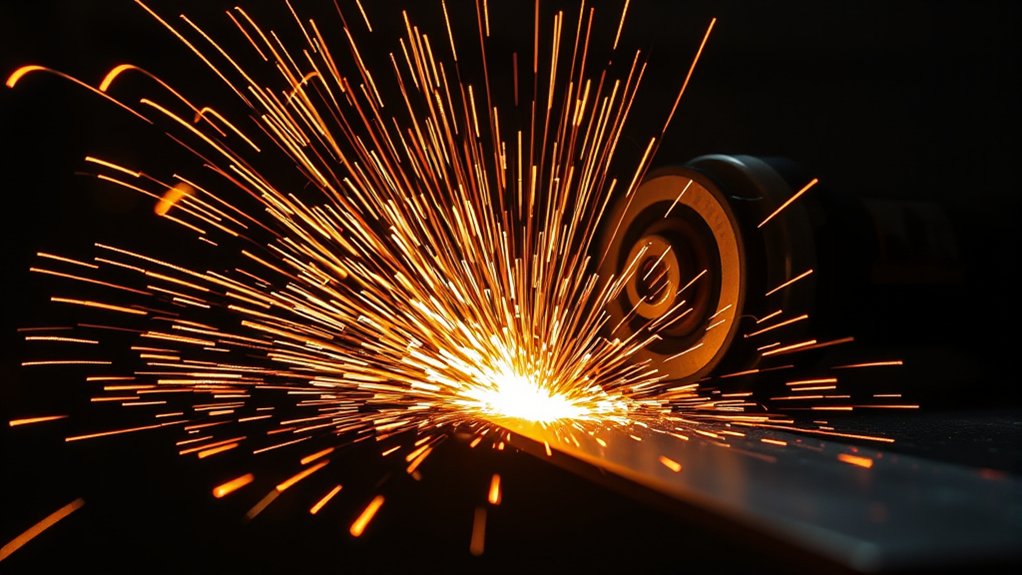
Temperature controls how sparks form, but many people ignore it. Grinding steel at high speeds creates intense friction. This friction heats the metal dust up to 1100°C. Several things change this heat level:
Temperature controls spark formation during angle grinding, with friction generating metal particles that can hit 1100°C.
- Type of Steel: Different metals burn at different temperatures.
- Applied Force: Pushing harder on the grinder creates more heat and brighter sparks.
- Presence of Oxygen: The air causes the metal bits to oxidize, changing how they look and act.
These hot sparks cool down very quickly. They form a tough oxide layer on the outside. This layer lowers the chance of them starting a fire. Knowing how heat works helps you grind safer and smarter.
How Temperature Influences Spark Splitting and Its Fire Safety Implications
Temperature changes how sparks split in the air. This directly changes your fire hazards. Pressing harder makes sparks hotter. When they hit 1100°C, they become highly visible and more likely to start a fire. The internal pressure from carbon monoxide pockets changes the splitting pattern. This varies based on the steel’s structure and the exact heat of the spark. As the sparks cool off, they oxidize and build a protective layer. This drops their temperature and lowers the fire risk.
You must keep a 35-foot clear zone around your work area. Move all flammable materials out of this radius. Use your left hand on the side handle to control the grinder better. The same fire safety rules apply if you switch to a plasma cutter. Watch where your sparks land. Even a quick touch on a flammable item can start a major fire.
Recognizing Dangerous Motor Sparks
Normal sparks fly from the grinding disc hitting the metal. However, sparks coming from inside the grinder’s plastic housing are a warning sign. These electric sparks happen at the motor brushes. A few small flashes inside the cooling vents are normal during startup. Large, bright flashes or a burning smell mean the carbon brushes are failing or the motor is burning out. Stop using the tool immediately if you see thick smoke or continuous internal sparking to prevent electric shock.
Frequently Asked Questions
Why Is My Angle Grinder Sparking?
Your angle grinder sparks because of the high-speed friction between the cutting disc and the metal. This is completely normal when cutting steel. Check your discs for damage and wear your safety gear to manage these sparks safely.
Can Sparks From an Angle Grinder Cause Fire?
Yes, sparks from an angle grinder can easily start a fire. You need to keep a 35-foot clear radius around your work area. Remove all flammable items, keep a fire extinguisher nearby, and monitor the area for smoldering fires after you finish.
How to Control Grinding Sparks?
You can control sparks by adjusting the angle of your grinder. Direct the spark trail toward a safe, non-flammable area. Use spark deflection shields, apply less pressure, and choose the correct disc for your specific metal.
What Is the Main Cause of Electric Spark?
Electric sparks inside the tool itself happen at the motor’s carbon brushes. Heavy sparking usually means the brushes are worn out, dirty, or damaged. Keep the tool’s vents clean and replace old brushes to prevent motor failure.
Conclusion
Sparks tell you exactly how your angle grinder is cutting. Knowing why they happen helps you work faster and stay safe. Match your grinding disc to your steel type and watch your heat levels. Treat grinding sparks like an open flame. Clear your workspace, wear your safety gear, and always monitor where the sparks land to keep your shop safe.