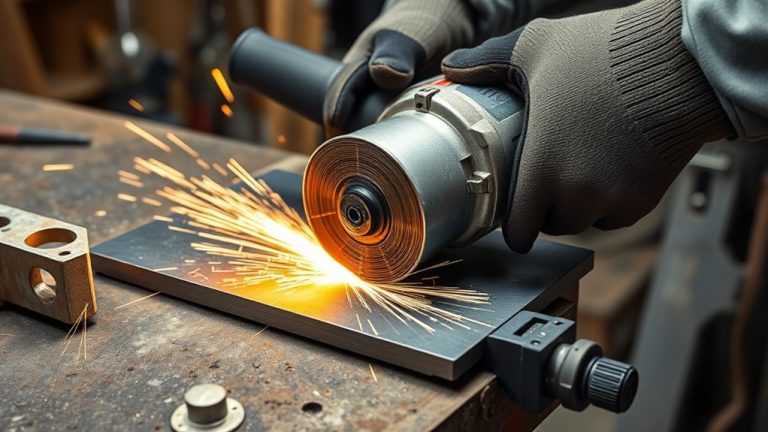
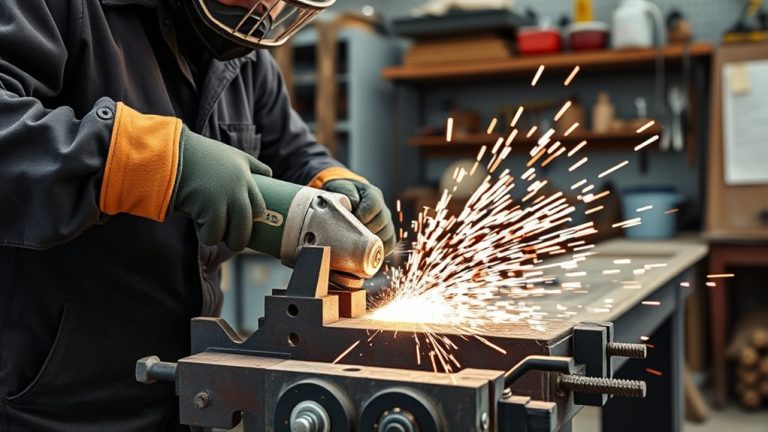
When you grind metals, sparks vary in color and pattern because of the metal’s composition. High-carbon steels produce dull red sparks, while mild steels emit bright white ones. Softer metals, like mild steel, release longer and narrower sparks compared to high-carbon steels, which produce shorter, bushier sparks. Understanding these characteristics not only aids in metal identification but is also essential for safety, helping you protect yourself from potential hazards. Discover further insights on this topic.
How Spark Formation Varies With Different Metals During Grinding
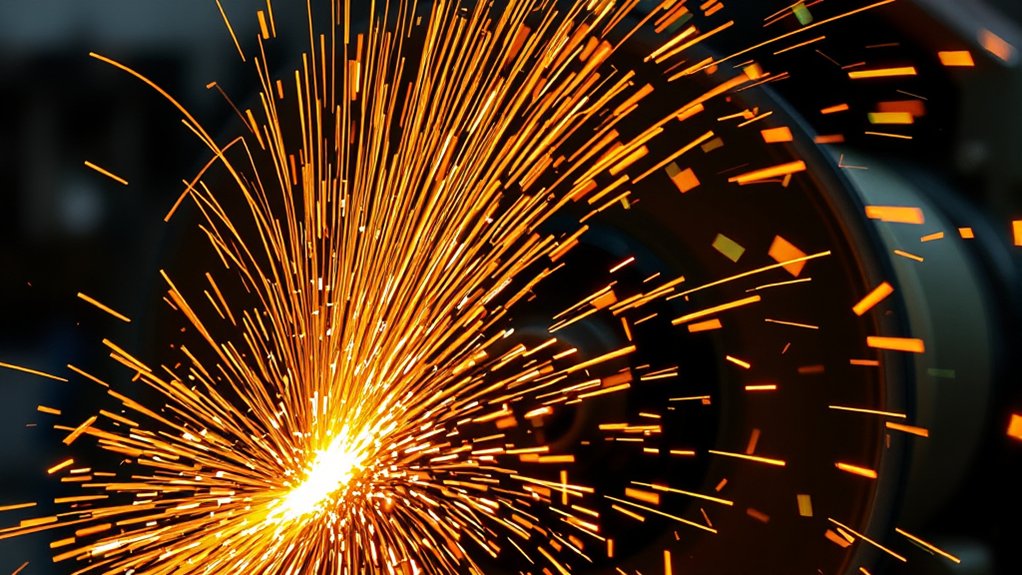
When you grind different metals, the sparks produced exhibit distinct characteristics that reflect the material’s properties. For instance, high-carbon steel generates dull red sparks, while mild steel emits brighter, whiter sparks due to its higher energy levels. The length of the spark is also essential; longer sparks indicate softer metals, whereas the bushier sparks from high-carbon steels are shorter and more concentrated.
The behavior of the sparks, including their forking patterns, results from pressure build-up from carbon dioxide during the grinding process. This is influenced by the metal’s carbon distribution. Wrought iron, for example, produces straight-flowing sparks with widened tails, while manganese steel’s medium-length sparks fork twice due to its unique composition. Finally, the applied force during grinding considerably impacts spark characteristics, as increased force raises the temperature, enhancing visibility and altering color and behavior. Understanding these differences is critical for effective metalworking practices.
How Metal Composition Influences Spark Color and Behavior in Metalworking
Understanding how metal composition influences spark color and behavior during grinding is essential for optimizing metalworking techniques. The carbon content in steel plays a vital role; high-carbon steels produce shorter, bushy sparks, while low-carbon steels create longer, narrower sparks due to larger particles ejected during spark testing. Softer metals, like mild steel, emit bright, white sparks from higher energy releases, contrasting with the duller, redder sparks from harder steels. Alloying elements also greatly impact spark behavior—molybdenum shapes sparks into ‘arrowheads,’ and vanadium leads to inverted umbrella formations. Furthermore, hypoeutectoid steels (under 0.8% carbon) produce explosive spark splits, whereas hypereutectoid steels (over 0.8% carbon) exhibit complex splitting patterns. Increased grinding temperatures enhance spark visibility, further influencing color differentiation. Recognizing these nuances allows you to tailor your approach for more efficient metalworking.
Why Safety Matters When Dealing With Grinding Sparks
Grinding sparks, while a natural byproduct of metalworking, present significant safety risks that must not be overlooked. These sparks can ignite flammable materials, making it essential to maintain a clean workspace. To protect yourself effectively, prioritize the following:
- Wear safety goggles to shield your eyes from flying sparks and metal particles.
- Don protective clothing, including gloves and long sleeves, to prevent burns and cuts from hot sparks and sharp fragments.
- Implement proper ventilation to reduce inhalation risks from metal dust and fumes.
Additionally, using a spark guard or shield can contain sparks, enhancing safety for both you and nearby personnel. By acknowledging these flame hazards and taking proactive measures, you empower yourself to work in a safer environment. Remember, your safety is paramount when dealing with grinding sparks; don’t compromise it for any reason.
How to Identify Metals Using Spark Testing and Its Applications?
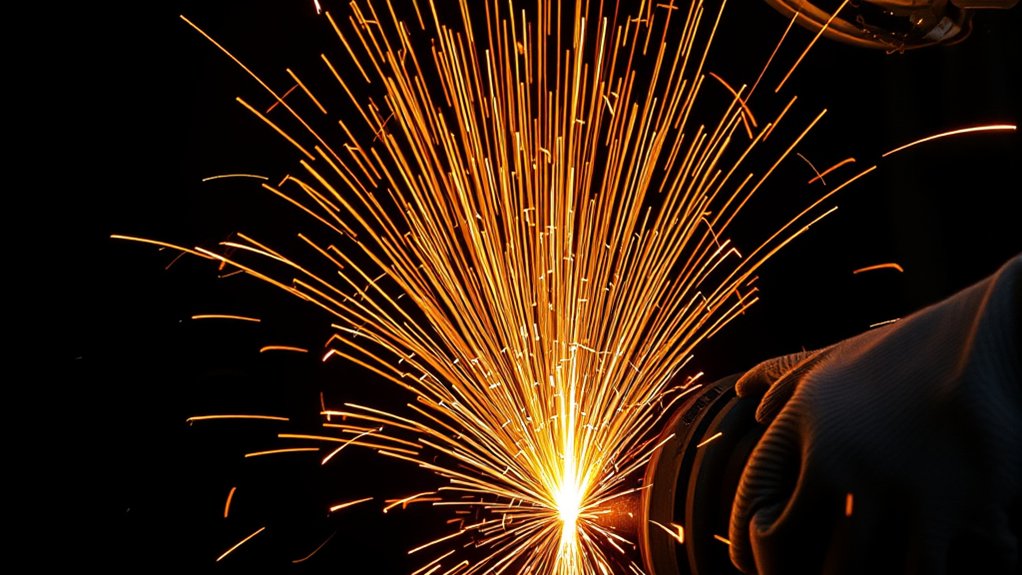
Spark testing is an effective and practical method for identifying various ferrous metals based on their unique spark characteristics. When you grind different metals, observe the sparks produced; they reveal essential information about the material. For instance, carbon steel generates distinct spark patterns—high-carbon steel emits dull, red sparks, while mild steel produces bright, white sparks. The length of these sparks also varies: low-carbon steels create longer, narrower sparks, whereas high-carbon steels result in shorter, bushy sparks. Additionally, the phenomenon of spark forking occurs due to internal pressure from carbon dioxide, influenced by the carbon distribution in the steel. This method is not only quick but also cost-effective, making it invaluable in applications such as scrap metal recycling and metallurgy. By mastering spark testing, you can efficiently sort and classify ferrous metals, enhancing your metalworking proficiency and decision-making.
Debunking Myths About Sparks Produced During Metalworking
While many believe that all metals produce strikingly similar sparks during grinding, this notion is misleading. The reality is that spark characteristics vary considerably based on the metal’s properties.
- Spark Color: Harder metals emit duller, redder sparks, while softer metals like mild steel generate brighter, whiter sparks.
- Carbon Content: Higher carbon levels result in shorter sparks, as the energy removal during grinding is intensified.
- Spark Forking: This phenomenon occurs due to pressure buildup from carbon dioxide, linked to uneven carbon distribution in the steel.
Moreover, not all metals create sparks; for example, aluminum and copper won’t produce any. Understanding these differences enhances your metalworking proficiency and safety. Embracing the unique spark behavior of ferrous metals can empower your craft, making you more adept with the grinding wheel.
Frequently Asked Questions
What Are the Sparks From Grinding Metal?
Sparks from metal grinding result from heat generation, ejecting metal particles that glow. You’ll notice distinct spark characteristics, like color and pattern, which vary with the metal’s properties, indicating energy levels and cooling rates.
What Are the White Sparks When Grinding?
When you grind metals, white sparks indicate high-carbon steel presence. These sparks’ characteristics reflect intense heat and oxidation, revealing significant information about the metal’s properties. Understanding spark color significance aids in refining your metal grinding techniques.
What Causes Sparks When Cutting Metal?
When cutting metal, sparks ignite through spark formation mechanisms driven by friction. Metal composition effects determine spark characteristics, while grinding wheel materials influence intensity, creating a dance of light that symbolizes the energy released in your work.
What Is the Spark Test for Metal Identification?
The spark test is a rapid method for metal identification, utilizing distinct spark patterns and colors for metallurgical analysis. By observing these characteristics, you can effectively distinguish between various ferrous metals during grinding processes.
Conclusion
In conclusion, understanding how spark formation varies with different metals is essential for both safety and identification. By recognizing the influence of metal composition on spark color and behavior, you can effectively navigate the complexities of metalworking. Remember, a little knowledge goes a long way in preventing accidents and enhancing your skills. So, the next time you grind, keep these insights in mind to guarantee you’re always ahead of the game and working safely.