The best TIG filler rod is not simply the brand with the highest rating. You need the correct alloy classification for the base metal, a diameter that suits the puddle, and a pack that will stay clean before you use it. This guide compares compact and bulk ER308L stainless rods with ER70S-6 mild-steel rods so you can choose by material, diameter, quantity, and job type.
Important: ER308L and ER70S-6 are not interchangeable. ER308L is commonly used on compatible 304 and 304L-type stainless, while ER70S-6 is intended for mild and carbon steel. For 316 stainless, dissimilar joints, aluminum, unknown alloys, pressure work, or code work, follow an approved welding procedure and use the specified filler classification.
Quick Verdict
ARCCAPTAIN ER308L 1/16-inch, 5 lb is the best overall stainless shop pack. TOOLIOM ER70S-6 1/16-inch, 5 lb is the best bulk mild-steel choice. Choose a smaller Convivium, Blulu, UNIFAMILY, Verdanzia, YXINANOM, or WISUNO pack when you weld only occasionally. Move to 3/32-inch filler only when the puddle and joint can accept the faster filler addition.
Top Picks
| Category | Product | Alloy and Size | Best For |
|---|---|---|---|
| Best Overall Stainless | ARCCAPTAIN ER308L | ER308L stainless 1/16″ x 16″ |
Frequent 304/304L-type stainless work |
| Best Small Starter Pack | Convivium ER308L | ER308L stainless 1/16″ x 16″ |
Beginners and occasional stainless repairs |
| Best Budget Mild-Steel Pack | Blulu ER70S-6 | ER70S-6 mild steel 1/16″ x 16″ |
Hobby mild-steel TIG projects |
| Best Bulk Mild-Steel Pack | TOOLIOM ER70S-6 | ER70S-6 mild steel 1/16″ x 16″ |
Frequent mild-steel fabrication |
| Best for Heavier Stainless Joints | ARCCAPTAIN ER308L 3/32 | ER308L stainless 3/32″ x 16″ |
Faster filler addition on compatible stainless |
| Best Small Pack for Heavier Mild Steel | Blulu ER70S-6 3/32 | ER70S-6 mild steel 3/32″ x 16″ |
Medium mild-steel joints without buying bulk |
| Best Project Pack | UNIFAMILY ER308L | ER308L stainless 1/16″ x 16″ |
Several small stainless projects |
| Best Bargain Stainless Pack | YXINANOM ER308L | ER308L stainless 1/16″ x 16″ |
Non-critical stainless practice |
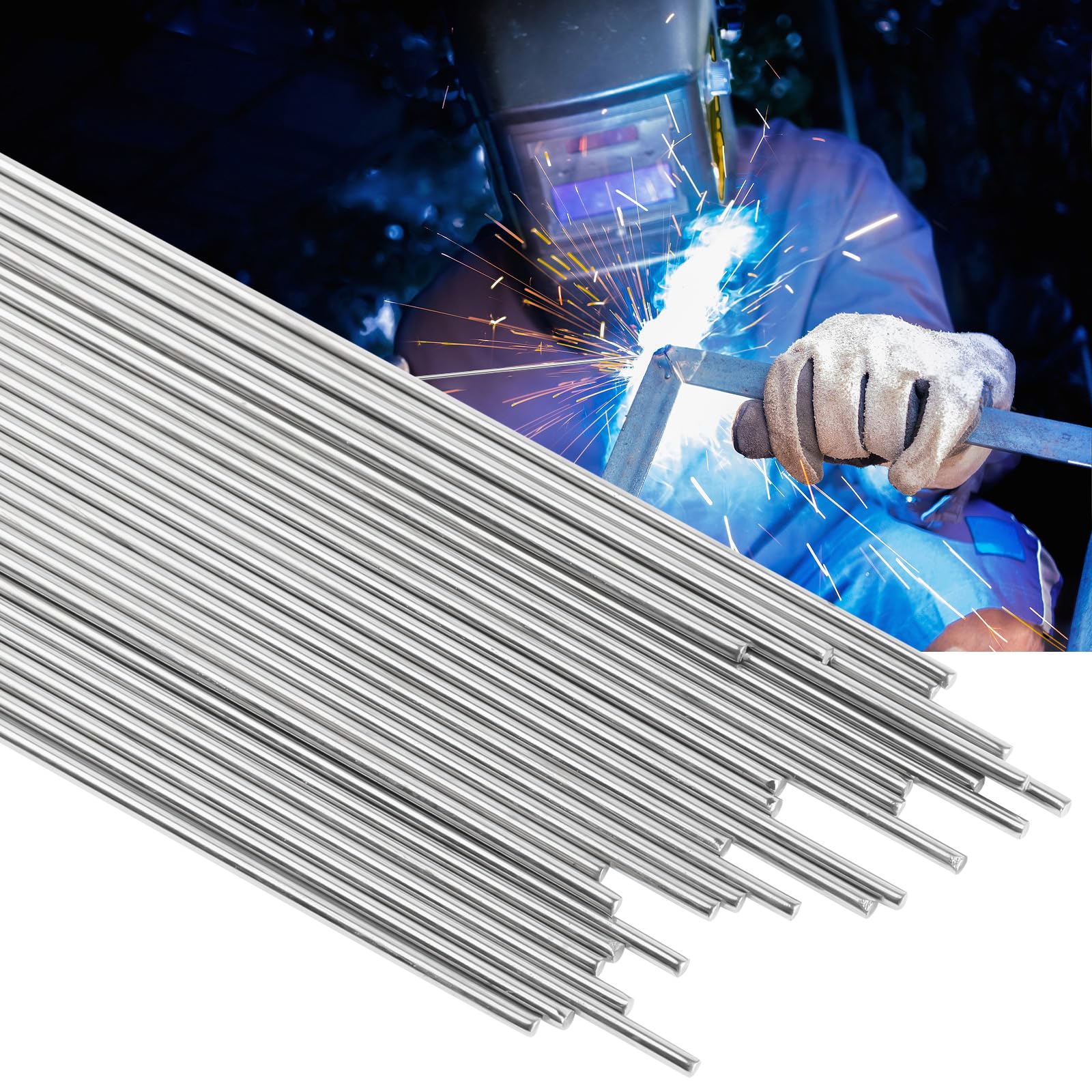
| Best Mid-Size Piece Pack | Verdanzia ER308L | ER308L stainless 1/16″ x 16″ |
Occasional stainless repairs |
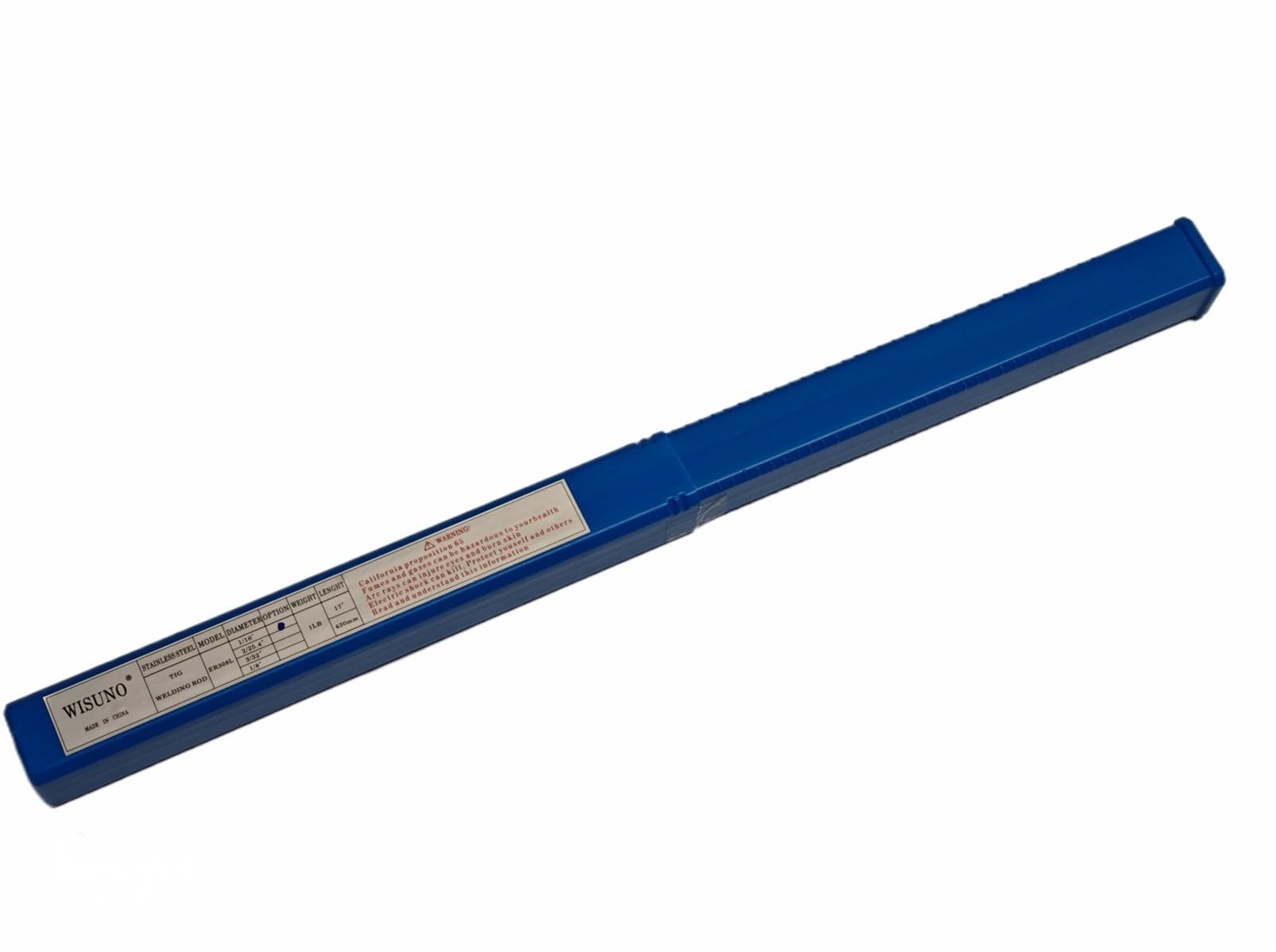
| Best 17-Inch Short Rod | WISUNO ER308L | ER308L stainless 1/16″ x 17″ |
A little more reach in a compact pack |
How We Chose These TIG Filler Rods
Selection criteria:
- Product relevance: Every retained item is sold as TIG filler rod in either ER308L stainless or ER70S-6 mild steel.
- Useful diameter: The list covers 1/16-inch rods for controlled additions and 3/32-inch rods for larger puddles.
- Pack fit: Choices range from 20-piece starter packs to 5 lb shop packs.
- Listing clarity: Products with ambiguous marketplace copy receive a clear verification warning.
- Honest limitations: Ratings, review counts, “low spatter,” and brand marketing are not treated as proof of weld quality.
Check Product Details on Amazon
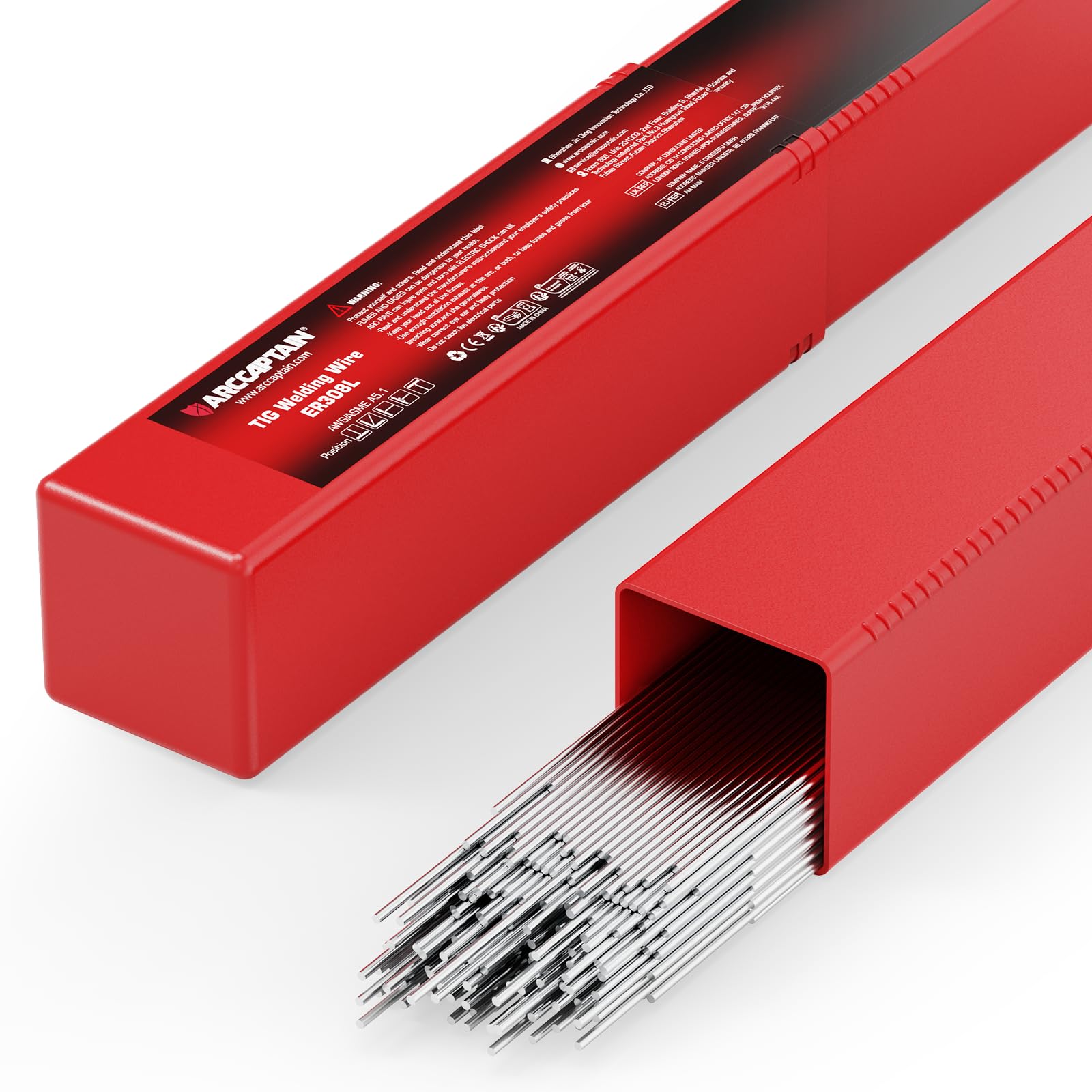
1. ARCCAPTAIN ER308L 1/16-Inch, 5 lb — Best Overall Stainless
This is the most practical all-around choice for readers who regularly TIG-weld common 304 or 304L-type stainless and want a larger shop pack. The 1/16-inch diameter is easier to meter into a small puddle than thicker filler, while the 5 lb quantity reduces frequent reordering.
Why You’ll Like It
- Useful balance of fine filler control and shop-size quantity
- ER308L is intended for compatible 18-8 stainless grades such as 304 and 304L
- Protective packaging helps limit shop dirt and handling contamination
- Good format for tubing, brackets, exhaust sections, and general stainless fabrication
What to Check Before Buying
- A 5 lb pack is excessive for a one-time repair
- The 16-inch length requires more rod changes than standard 36-inch shop rods
- Do not assume ER308L is correct for 316 stainless, dissimilar joints, or unknown alloys
Choose this if: You routinely weld compatible 304/304L-type stainless and want a bulk 1/16-inch pack.
Choose another option if: You need only a few rods, prefer 36-inch lengths, or require certified filler documentation for code work.
Review Snapshot
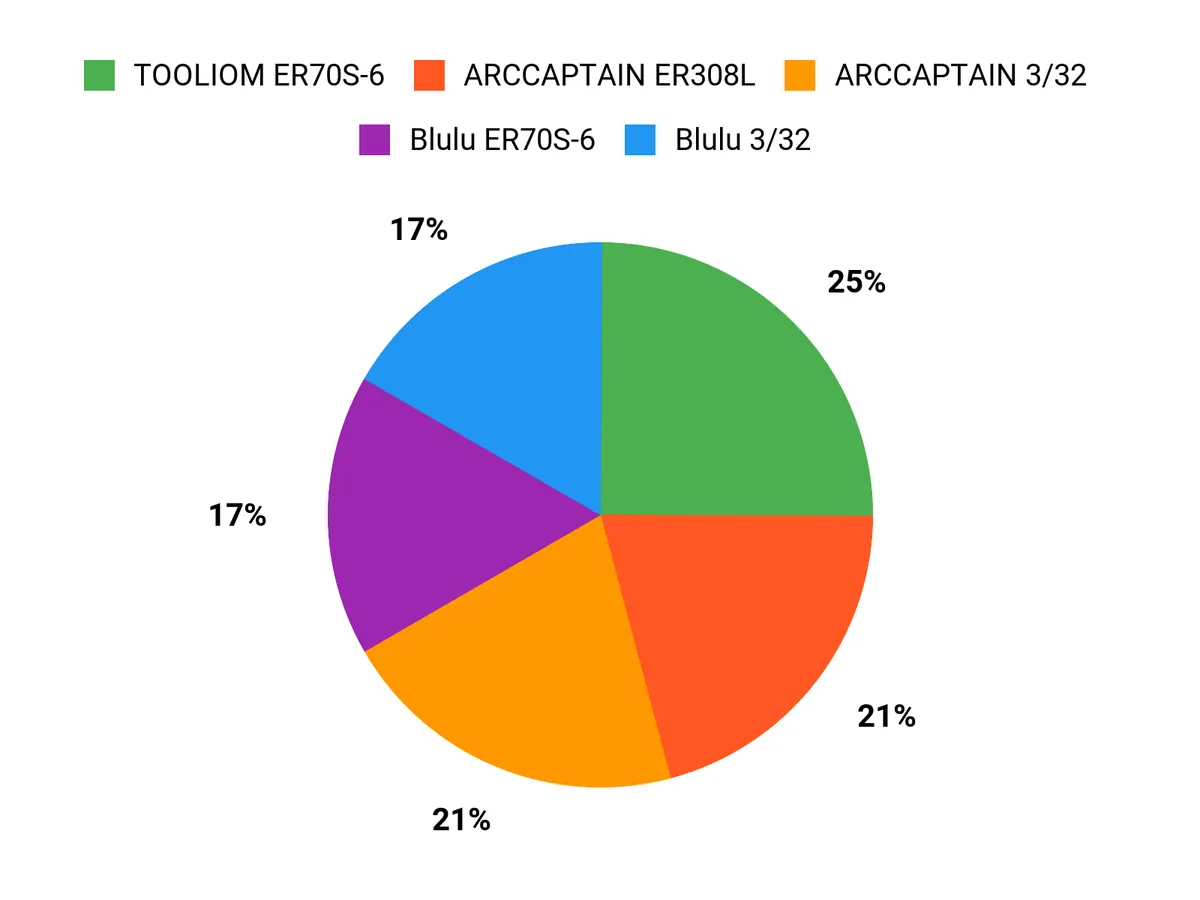
The source review snapshot emphasizes clean condition, straight rods, and convenient bulk quantity. Treat the chart as a historical buying snapshot rather than a substitute for checking the current listing, selected diameter, and documentation.

Practical TIG Tip
Keep stainless filler separate from carbon-steel tools and grinding dust. Clean the joint and filler with a suitable residue-free cleaner, use TIG-appropriate inert shielding gas, and keep the hot end of the rod inside the shielding envelope between dips.
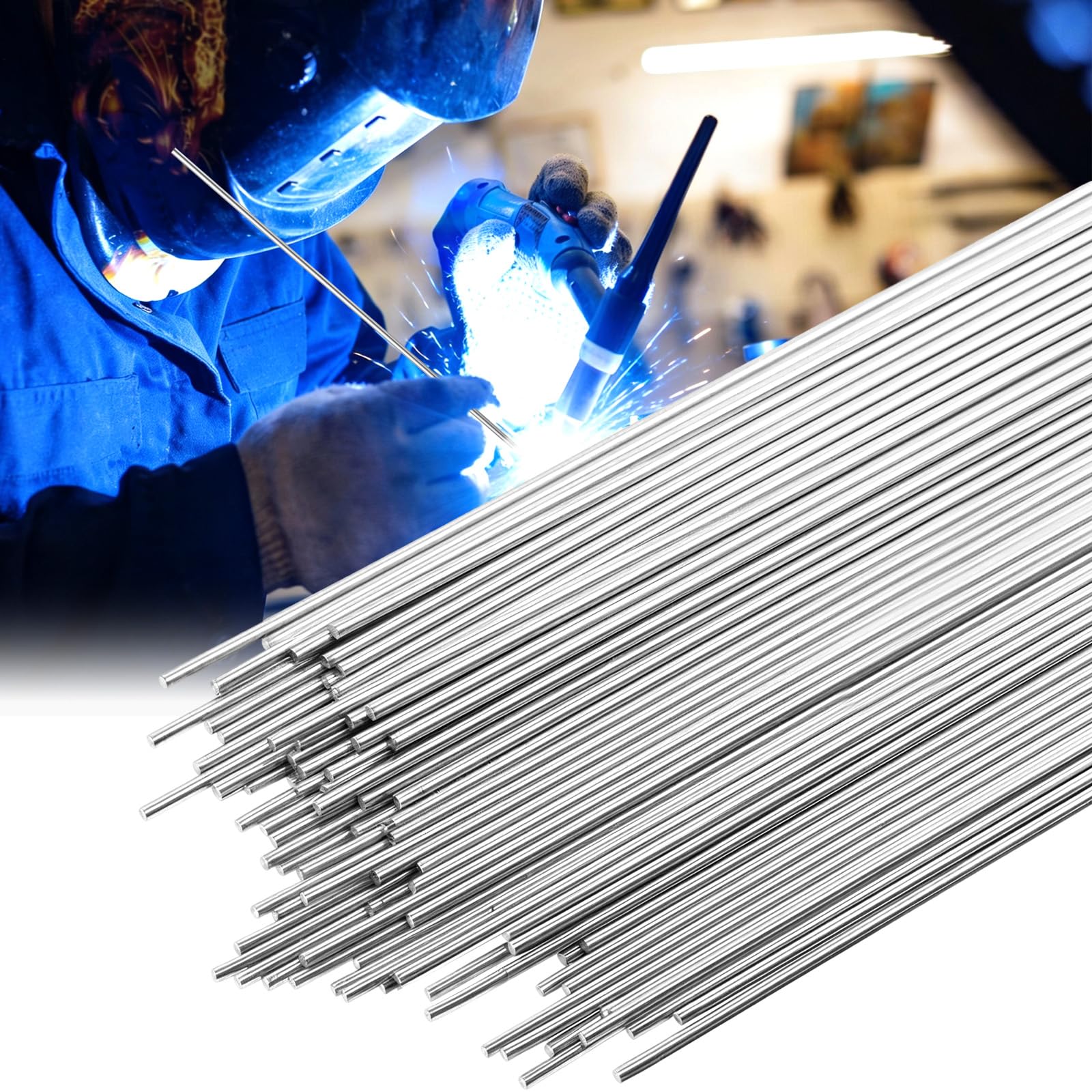
2. Convivium ER308L 1/16-Inch, 20-Piece Set — Best Small Starter Pack
This compact set makes more sense than a multi-pound pack when you are learning TIG, completing a small repair, or keeping a few stainless rods in a portable kit. Its 1/16-inch size suits controlled filler additions on lighter material, provided the base alloy is compatible with ER308L.
Why You’ll Like It
- Low commitment for occasional stainless work
- 1/16-inch diameter is manageable for thin tubing and small joints
- Compact quantity is easier to store than a bulk pack
- Useful as a backup supply for a home garage or mobile kit
What to Check Before Buying
- Twenty rods can disappear quickly during practice or longer seams
- Small consumer packs may not include traceability for critical work
- Confirm the selected variant remains 1/16 inch by 16 inches before ordering
Choose this if: You want a small ER308L pack for learning, practice, or occasional compatible stainless repairs.
Choose another option if: You expect frequent fabrication or need mill certificates and lot traceability.
Review Snapshot
The review snapshot focuses on convenience and easy handling. Because small-pack listings can change quickly, verify the current piece count, selected size, and packaging shown on Amazon.

Practical TIG Tip
Keep the rods covered until needed. Clean the base metal and filler, keep the rod tip inside the shielding envelope, and avoid touching the tungsten when adding filler.
3. Blulu ER70S-6 1/16-Inch, 2 lb — Best Budget Mild-Steel Pack
Choose this when your work is mainly mild or carbon steel and a 5 lb pack would be wasteful. ER70S-6 contains deoxidizers that can be useful on ordinary fabrication steel, but the joint still needs proper cleaning. The 1/16-inch diameter favors smaller beads and lighter material.
Why You’ll Like It
- Appropriate classification for many mild-steel TIG repairs
- Smaller 2 lb quantity fits hobby and occasional shop use
- 1/16-inch rod gives better control on lighter joints
- Useful for brackets, tabs, sheet, and general carbon-steel fabrication
What to Check Before Buying
- This is not a stainless-steel filler rod
- For TIG, use an inert shielding gas such as argon, not MIG-style CO2 shielding
- Basic packaging should be placed inside a clean, dry storage tube
Choose this if: You TIG-weld mild steel occasionally and want a manageable 1/16-inch pack.
Choose another option if: You need stainless filler, long 36-inch rods, or documented filler for a qualified procedure.
Review Snapshot
The review snapshot centers on value and predictable handling for routine mild-steel work. Check the current listing for the selected diameter and pack weight because variant titles can be easy to misread.

Practical TIG Tip
Remove oil, paint, heavy scale, and rust before welding. ER70S-6 has deoxidizers, but it is not a replacement for joint preparation. Add filler to the leading edge of a stable puddle without touching the tungsten.
4. TOOLIOM ER70S-6 1/16-Inch, 5 lb — Best Bulk Mild-Steel Pack
This is the stronger value choice for a garage or small shop that repeatedly welds mild steel. You get the same 1/16-inch control as the smaller Blulu pack, but with enough material for practice, fixtures, brackets, and recurring fabrication jobs.
Why You’ll Like It
- Bulk quantity for regular carbon-steel TIG work
- 1/16-inch diameter supports controlled filler additions
- ER70S-6 is commonly used for general mild-steel fabrication
- Requires less frequent reordering than a 1 or 2 lb pack
What to Check Before Buying
- The 16-inch length is less efficient for long seams than 36-inch rod
- Some marketplace descriptions mix MIG gas advice into TIG listings
- Use TIG-appropriate inert shielding gas rather than CO2 or a common MIG blend
- Transfer the rods to a clean tube if the package does not seal well
Choose this if: You frequently TIG-weld mild steel and want a 5 lb supply of 1/16-inch ER70S-6.
Choose another option if: You weld only stainless or need a smaller pack that will not sit open in storage.
Review Snapshot
The review snapshot highlights predictable use and bulk value. Ignore MIG-specific gas wording that may appear in marketplace copy and follow your TIG machine manual and welding procedure.

Practical TIG Tip
Store the copper-colored rods away from moisture and shop debris. Use clean gloves, prepare the joint thoroughly, and avoid dipping the filler directly into the tungsten.
5. ARCCAPTAIN ER308L 3/32-Inch, 5 lb — Best for Heavier Stainless Joints
The 3/32-inch version is for welders who need to add more filler per dip on heavier compatible stainless joints. It can reduce how often you feed the rod compared with 1/16-inch filler, but it also demands a puddle with enough heat to accept the larger diameter.
Why You’ll Like It
- Larger diameter adds filler faster on heavier joints
- 5 lb quantity supports repeated shop use
- ER308L suits compatible 304 and 304L-type stainless applications
- Useful when 1/16-inch rod feels too slow for the puddle
What to Check Before Buying
- It is too large for many thin-sheet jobs
- A thicker filler rod does not automatically create deeper penetration or a stronger joint
- Confirm the base metal and welding procedure call for ER308L
Choose this if: You already weld compatible stainless and want faster filler addition on heavier sections.
Choose another option if: Your work is mostly thin sheet, tiny tubing, or low-amperage precision welding.
Review Snapshot
The review snapshot favors the larger diameter for heavier work. The main buying decision is whether your material thickness, joint design, amperage, and procedure actually suit 3/32-inch filler.

Practical TIG Tip
Do not force a cold 3/32-inch rod into a small puddle. Establish adequate puddle size first, add the filler to the leading edge, and move back to 1/16-inch rod when the larger diameter repeatedly chills or overfills the weld.
6. Blulu ER70S-6 3/32-Inch, 2 lb — Best Small Pack for Heavier Mild Steel
This variant fills the gap between a thin practice rod and a large bulk purchase. The 3/32-inch diameter is useful when a 1/16-inch rod cannot add filler quickly enough to a medium-size carbon-steel puddle, while the 2 lb pack remains reasonable for occasional jobs.
Why You’ll Like It
- Faster filler addition than 1/16-inch rod
- ER70S-6 classification for common mild-steel work
- Two-pound pack limits excess stock for occasional users
- Useful for medium-size brackets, frames, and repair joints when the procedure permits
What to Check Before Buying
- Marketplace variant data for this listing can be inconsistent
- Confirm that the cart shows the 3/32-inch option before ordering
- It is not ideal for thin sheet or very small puddles
- Use argon or another TIG-approved inert gas, not CO2
Choose this if: You need 3/32-inch ER70S-6 for occasional medium mild-steel work.
Choose another option if: You want 1/16-inch control, bulk quantity, or formal traceability documentation.
Review Snapshot
The review snapshot is generally favorable, but this listing needs an extra variant check. Make sure the cart shows the intended diameter and pack weight before buying.

Practical TIG Tip
If the rod repeatedly balls up instead of entering the puddle, the puddle may be too small or cold for 3/32-inch filler. Increase heat only within the procedure limits or switch to a smaller rod.
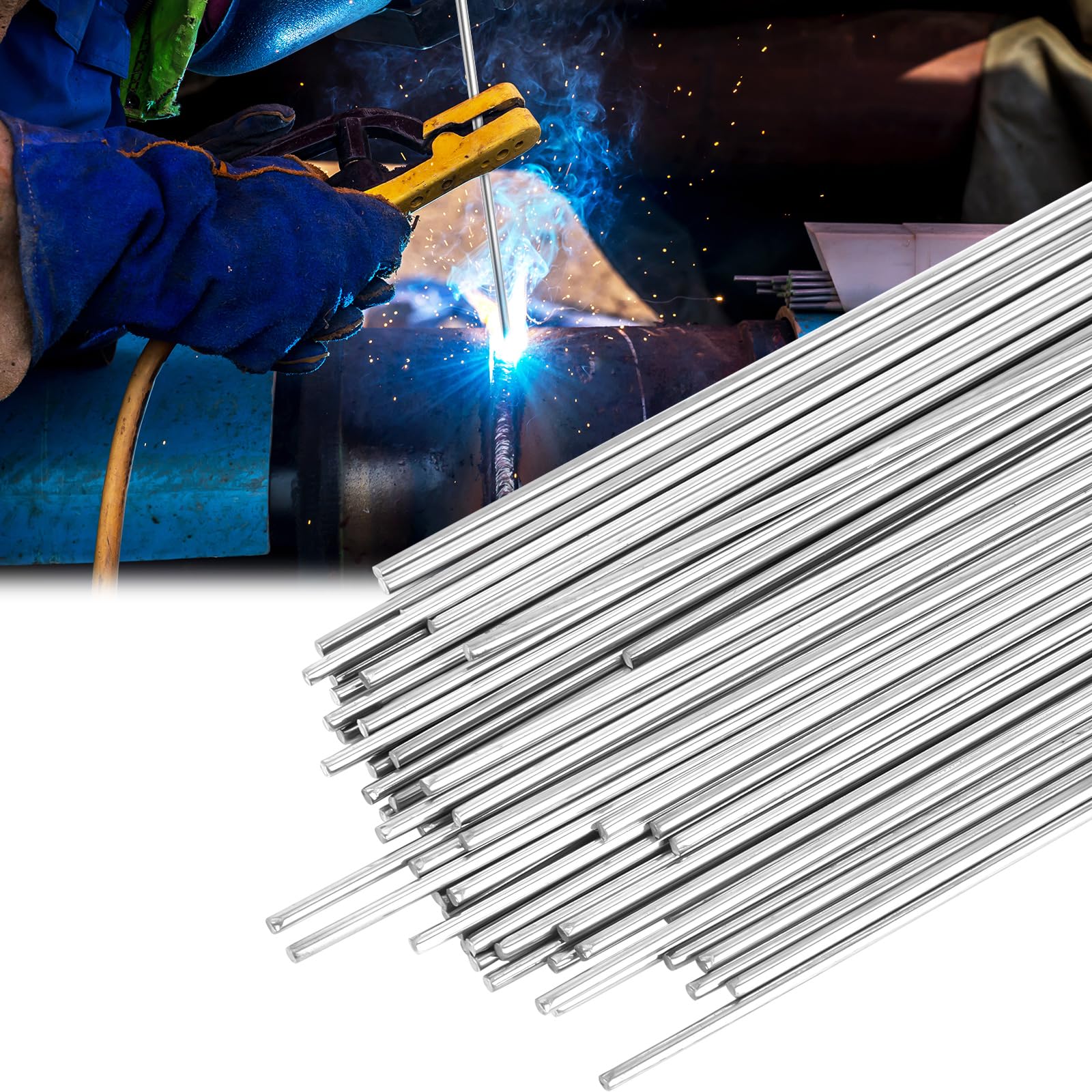
7. UNIFAMILY ER308L 1/16-Inch, 50-Piece Pack — Best Project Pack
This pack is aimed at DIY users who want more than a tiny starter set but do not need 5 lb of stainless filler. The 50-piece format is easy to count and carry, and the 1/16-inch diameter works well for controlled additions on light compatible stainless.
Why You’ll Like It
- Middle-ground quantity for several small jobs
- 1/16-inch size suits lighter stainless fabrication
- Easy-to-count piece format
- Compact pack for a home shop or portable kit
What to Check Before Buying
- Some third-party catalog descriptions conflict with the Amazon product title
- Verify that the current listing still identifies the rods as ER308L stainless
- Do not use on unknown stainless grades simply because the rods are labeled stainless
- Consumer packaging may not include certificates for critical work
Choose this if: You want enough 1/16-inch ER308L for several small compatible stainless projects.
Choose another option if: You need bulk stock, 36-inch rods, or certified chemistry and lot traceability.
Review Snapshot
The review snapshot highlights convenience for small repairs. Because syndicated product data has shown inconsistent material wording, rely on the current Amazon variant details rather than copied marketplace descriptions.

Practical TIG Tip
Separate the rods from carbon-steel dust and identify the container clearly as ER308L. Never place an unidentified offcut back into a labeled filler tube.
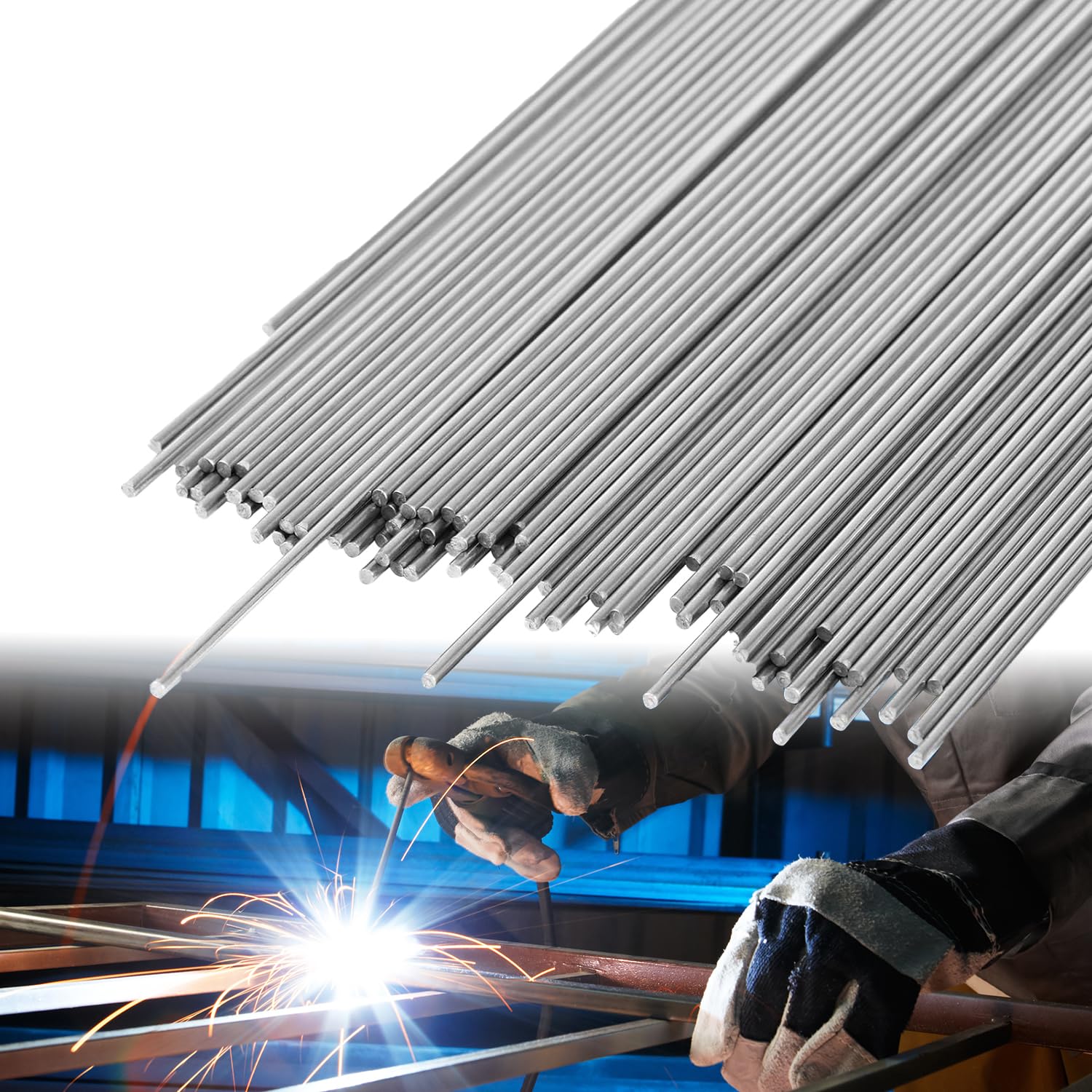
8. YXINANOM ER308L 1/16-Inch, 1 lb — Best Bargain Stainless Pack
This is the value-oriented option for practice beads, hobby fabrication, and non-critical 304/304L-type repairs. The listed 1 lb quantity avoids a large commitment, but the lesser-known brand means you should inspect the rods and verify the current listing carefully.
Why You’ll Like It
- Small pack for occasional use
- 1/16-inch diameter for lighter work
- Lower commitment than a 5 lb tube
- Reasonable fit for practice when the alloy match is known
What to Check Before Buying
- Limited independent product documentation was easy to verify
- Inspect the rods for contamination, damage, mixed material, or incorrect diameter
- Avoid code, pressure, sanitary, or safety-critical welds unless the documentation meets the job requirements
Choose this if: You need a small, economical ER308L pack for practice or non-critical compatible repairs.
Choose another option if: The job requires lot traceability, certification, or a well-documented industrial filler brand.
Review Snapshot
The source review snapshot is positive, but independently verifiable product information is limited. Treat this as a hobby option rather than a substitute for traceable filler on critical work.

Practical TIG Tip
Wipe and visually inspect each rod before use. Stop if a rod shows embedded debris, unusual coating, heavy discoloration, or markings that do not match the ordered filler classification.
9. Verdanzia ER308L 1/16-Inch, 30-Piece Pack — Best Mid-Size Piece Pack
The 30-piece count sits between the Convivium starter set and the 50-piece UNIFAMILY pack. It is best viewed as an occasional-use supply for small compatible stainless jobs rather than a production pack.
Why You’ll Like It
- Useful middle quantity for several repair sessions
- 1/16-inch diameter for controlled hand feeding
- Compact storage footprint
- Suitable category for common 304/304L-type stainless when the base metal matches
What to Check Before Buying
- Piece-count packs may offer little formal traceability
- The pack will not last long during practice plus a larger project
- Verify the current Amazon listing, piece count, and alloy label before ordering
Choose this if: You want a mid-size piece pack for occasional compatible stainless TIG work.
Choose another option if: You need bulk quantity, 36-inch rods, or certified filler for controlled procedures.
Review Snapshot
The review snapshot favors the convenient pack size. Current marketplace information supports the general size and classification, but you should still check the selected option and documentation at checkout.

Practical TIG Tip
Place the rods in a labeled sealed tube after opening. Store stainless filler away from carbon-steel grinding dust, dirty rags, and unmarked filler offcuts.
10. WISUNO ER308L 1/16-Inch x 17-Inch, 1 lb — Best 17-Inch Short Rod
WISUNO stands out mainly because the listed rods are 17 inches rather than the 16-inch length used by most products here. That extra inch is modest, but it may reduce how often you reposition your filler hand during short bench welds. The 1 lb pack remains easy to store.
Why You’ll Like It
- Slightly longer than the other compact rods in this roundup
- 1/16-inch diameter for lighter stainless work
- One-pound pack avoids a large bulk purchase
- Convenient for a toolbox, bench, or occasional repair kit
What to Check Before Buying
- One extra inch does not replace the efficiency of standard 36-inch rods
- Rod length alone does not prove cleaner or stronger weld quality
- Confirm that ER308L matches the actual stainless grade and service conditions
Choose this if: You want a compact 1 lb ER308L pack with slightly more reach than a 16-inch rod.
Choose another option if: You need true long rods, bulk supply, or documented filler chemistry for critical work.
Review Snapshot
The review snapshot is favorable, but the strongest verifiable differentiator is the listed 17-inch length. Choose it for format and pack size, not an unsupported promise of superior finish quality.

Practical TIG Tip
The extra inch provides only a small handling difference. Keep the rod supported and avoid bending it sharply, especially when feeding 1/16-inch filler in an awkward position.
TIG Filler Rod Buying Guide
Match the Filler Classification to the Base Metal
Start with the alloy, not the brand. ER308L is a common choice for compatible 304, 304L, and related 18-8 stainless applications. ER70S-6 is a carbon-steel filler with manganese and silicon deoxidizers for many mild-steel jobs. Neither classification is universal.
A 316 stainless joint normally calls for a compatible 316-series filler. A stainless-to-carbon-steel joint may require a classification such as 309L under an approved procedure. Aluminum requires an aluminum filler such as ER4043 or ER5356, depending on the base alloy and service requirements.
Choose 1/16 Inch or 3/32 Inch by Puddle Size
A 1/16-inch rod is easier to add in small amounts and is usually the safer choice for thin tubing, sheet, small fillets, and practice. A 3/32-inch rod adds more metal per dip and can suit larger puddles, thicker joints, or higher-deposition work.
The thicker rod does not create penetration by itself. Penetration depends on the joint design, fit-up, amperage, arc length, travel speed, heat input, and welding technique.
Compare Rod Length, Not Just Pack Weight
Most products in this roundup use compact 16-inch rods, while WISUNO lists 17-inch rods. These lengths are convenient for shipping and small benches, but they require more rod changes than standard 36-inch industrial filler.
For long seams or production work, a longer certified rod may be more efficient even if the initial package costs more.
Buy a Pack You Can Keep Clean
A large pack is economical only when you can store it correctly. Keep rods dry, covered, labeled, and separated by alloy. Do not leave stainless filler beside carbon-steel grinding dust. Avoid handling clean filler with oily gloves, and discard any rod with uncertain identity.
Check Documentation for Critical Work
Consumer marketplace rods may be adequate for hobby projects but may not include the lot traceability, AWS classification evidence, certificate of conformance, or material test report required by a customer, code, or welding procedure specification.
For pressure vessels, food or sanitary systems, structural work, safety-critical repairs, or inspected jobs, buy filler that meets the documented procedure.
FAQ
What Is the Best TIG Filler Rod for 304 Stainless Steel?
ER308L is a common choice for compatible 304 and 304L stainless applications. Confirm the exact base metal, service conditions, and welding procedure before selecting it. Do not automatically use ER308L on 316 stainless or an unknown stainless alloy.
Is ER70S-6 Good for TIG Welding Mild Steel?
Yes. ER70S-6 is available as TIG filler rod and is used for many mild-steel applications. It contains manganese and silicon deoxidizers, but you should still clean the joint thoroughly and use TIG-appropriate inert shielding gas.
Should I Buy 1/16-Inch or 3/32-Inch TIG Filler Rod?
Use 1/16 inch when you need fine control on thin or small joints. Choose 3/32 inch when the puddle is large enough to accept more filler per dip. Material thickness matters, but the joint gap, position, amperage, and technique also affect the correct diameter.
Can I Use Argon and CO2 With These TIG Rods?
For conventional TIG welding, use the shielding gas specified by your machine manual and welding procedure. Pure argon is the common choice for TIG on steel and stainless. CO2 and common argon/CO2 blends are associated with MIG or MAG welding and can contaminate the tungsten and disrupt a TIG arc.
Why Does My Filler Rod Ball Up or Stick to the Joint?
Common causes include using a rod that is too large or too cold for the puddle, dipping outside the shielding envelope, contaminating the filler, using poor torch angle, or touching the tungsten. Stabilize the puddle first, maintain a short arc, keep the filler tip shielded, and use controlled dips.
Do Amazon TIG Rods Work for Certified or Structural Welding?
Do not assume they do. A product can weld adequately and still lack the documentation required by a code, customer, or qualified welding procedure. Check the classification, manufacturer data, lot traceability, and required certificates before using any filler on critical work.
How Should I Store TIG Filler Rods?
Keep each alloy in a labeled, sealed, dry tube or container. Protect rods from moisture, oil, shop dust, grinding debris, and cross-contamination. Stainless filler should be stored away from carbon-steel particles and handled with clean gloves.
What Welders Usually Prioritize
Experienced buyers usually choose in this order: correct filler classification, correct diameter, clean storage, required documentation, useful rod length, and only then brand or pack price. The chart below remains a visual summary of the original review analysis, but it should not replace alloy matching or procedure requirements.
Bottom Line
Best overall stainless: ARCCAPTAIN ER308L 1/16-inch, 5 lb for frequent compatible 304/304L-type work.
Best bulk mild steel: TOOLIOM ER70S-6 1/16-inch, 5 lb for recurring carbon-steel fabrication.
Best small stainless pack: Convivium ER308L 20-piece set for learning and occasional repairs.
Best heavier-joint options: ARCCAPTAIN ER308L 3/32-inch for compatible stainless and Blulu ER70S-6 3/32-inch for mild steel after confirming the selected variant.
Wrapping Up
Choose TIG filler rod by chemistry first, diameter second, and pack format third. For common compatible stainless work, the ER308L options here cover small project packs through 5 lb shop packs. For mild steel, the ER70S-6 choices cover controlled 1/16-inch filler and faster-feeding 3/32-inch filler.
Keep every rod clean and correctly labeled, verify marketplace variants before checkout, and use traceable filler whenever the job or welding procedure requires it.
Full Comparison Table
| Product | Image | Filler Classification | Diameter and Length | Pack | Best For | Amazon |
|---|---|---|---|---|---|---|
| ARCCAPTAIN ER308L |
 |
ER308L stainless | 1/16″ x 16″ | 5 lb | Frequent 304/304L-type stainless work | View on Amazon |
| Convivium ER308L |
 |
ER308L stainless | 1/16″ x 16″ | 20 pieces | Beginners and occasional stainless repairs | View on Amazon |
| Blulu ER70S-6 |
 |
ER70S-6 mild steel | 1/16″ x 16″ | 2 lb | Hobby mild-steel TIG projects | View on Amazon |
| TOOLIOM ER70S-6 |
 |
ER70S-6 mild steel | 1/16″ x 16″ | 5 lb | Frequent mild-steel fabrication | View on Amazon |
| ARCCAPTAIN ER308L 3/32 |
 |
ER308L stainless | 3/32″ x 16″ | 5 lb | Faster filler addition on compatible stainless | View on Amazon |
| Blulu ER70S-6 3/32 |
|
ER70S-6 mild steel | 3/32″ x 16″ | 2 lb | Medium mild-steel joints | View on Amazon |
| UNIFAMILY ER308L |
 |
ER308L stainless | 1/16″ x 16″ | 50 pieces / listed as 1 lb | Several small stainless projects | View on Amazon |
| YXINANOM ER308L |
 |
ER308L stainless | 1/16″ x 16″ | 1 lb | Non-critical stainless practice | View on Amazon |
| Verdanzia ER308L |
 |
ER308L stainless | 1/16″ x 16″ | 30 pieces | Occasional stainless repairs | View on Amazon |
| WISUNO ER308L |
 |
ER308L stainless | 1/16″ x 17″ | 1 lb | A little more reach in a compact pack | View on Amazon |
Product listings, variants, packaging, and availability can change. Confirm the selected alloy, diameter, length, quantity, and documentation on Amazon before ordering.