Disclosure: As an Amazon Associate, we earn from qualifying purchases. If you click a link on this page and make a purchase, we may receive a small commission at no extra cost to you.
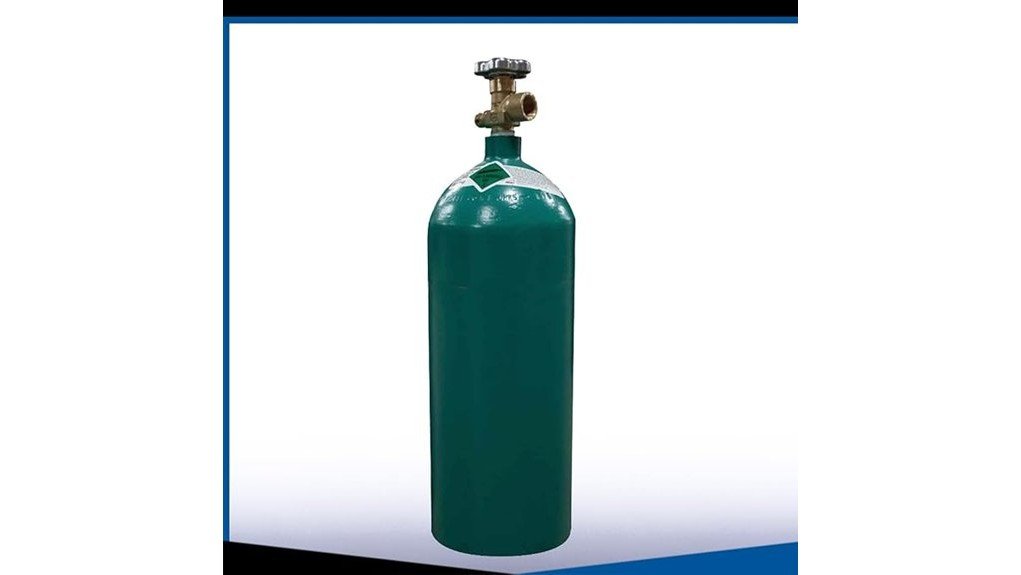
Choosing a welding gas cylinder is not only about capacity. You also need the right gas, valve connection, refill support, and safe storage habits. The 40 cu/ft 100% Argon Welding Gas Cylinder is a compact shielding-gas option for welders who want an owned cylinder instead of relying only on rentals. This review looks at its stated 40 cu/ft capacity, CGA 580 valve, hydrotest details, shipping limits, refill considerations, and the buyer mistakes you should avoid before ordering.
Quick Verdict
Rating: 8/10, recommended with caveats
Best For: TIG welders, aluminum MIG users, and home-shop welders who want a portable 40 cu/ft argon cylinder.
Bottom Line: This cylinder makes sense if you need 100% argon in a manageable size with a CGA 580 valve. The main tradeoff is that refills, exchange policies, and shipping acceptance can vary by local welding suppliers.
Key Specifications
| Specification | Detail |
|---|---|
| Product type | Refillable welding shielding gas cylinder |
| Gas | 100% argon |
| Capacity | 40 cu/ft |
| Valve connection | CGA 580 valve |
| Approximate full weight | About 37 lb, based on the original article |
| Hydrotest note | Original article states a ten-year hydrotest date. Check the stamped date before filling or exchanging. |
| Compliance note | Original article states DOT and ISO compliance. Confirm cylinder markings when received. |
| Best use | TIG welding and welding setups that require 100% argon shielding gas |
| Shipping note | Original article states shipping is limited to the Continental US, lower 48 states. |
| Storage note | Store upright, secured, dry, ventilated, and away from heat sources. |
What Is the 40 cu/ft Argon Welding Gas Cylinder?
The 40 cu/ft Argon Welding Gas Cylinder is a small-shop shielding gas cylinder filled with 100% argon. Its size makes it easier to move and store than large shop cylinders, while still giving you more runtime than disposable gas bottles.
The cylinder is aimed at welders who use processes that call for pure argon, especially TIG welding and aluminum MIG welding. It uses a CGA 580 valve, so you should pair it with a compatible argon regulator or flowmeter before use.
The article-supported details do not confirm a specific brand or model number. Because of that, you should treat the visible cylinder markings, hydrotest stamp, valve type, and refill acceptance as key checks when the cylinder arrives.
Key Takeaways
- The 40 cu/ft capacity suits home shops, mobile repairs, short TIG projects, and backup gas needs.
- The CGA 580 valve is the key compatibility detail for your argon regulator or flowmeter.
- 100% argon is useful for TIG welding and aluminum MIG welding, but it is not the right gas for every MIG steel setup.
- The original article states a ten-year hydrotest date, but you should always check the stamped date before refilling.
- Local refill and exchange policies matter because some suppliers only refill or swap cylinders they sell.
Before You Buy: Call your local welding supply store before ordering. Ask whether they will refill or exchange a customer-owned 40 cu/ft argon cylinder with a CGA 580 valve and the stamped hydrotest date shown on the tank.
Who Should Buy It?
Best For
- Home-shop TIG welders who want a manageable cylinder size.
- Welders using 100% argon with a CGA 580 regulator or flowmeter.
- Buyers who prefer owning a cylinder instead of starting a rental account.
Skip If
- You need an argon and CO2 blend for common MIG welding on mild steel.
- Your local supplier will not fill or exchange customer-owned cylinders.
- You weld for long sessions and need a larger shop-size cylinder to reduce refill trips.
Gas Type and Welding Compatibility
This cylinder contains 100% argon, which is a shielding gas used to protect the weld area from atmospheric contamination. For TIG welding, pure argon is one of the most common choices because it supports a stable arc and clean shielding on many materials.
For MIG welding, compatibility depends on the metal and process. Pure argon is often used for aluminum MIG welding, while mild-steel MIG welding commonly calls for a different gas mix, such as argon and CO2. Check your welder manual, wire type, and welding procedure before assuming this cylinder matches your setup.
Valve Connection and Regulator Fit
The CGA 580 valve is one of the most important details in this review. Your regulator or flowmeter must match the cylinder valve, or you will not have a safe, usable connection.
Do not force a mismatched regulator onto the valve. If the threads, nut, or sealing face do not fit correctly, stop and confirm the regulator type with a welding supply professional.
Compliance and Safety Standards
The original article states that the cylinder complies with DOT and ISO regulations and includes a ten-year hydrotest date. Those are useful claims, but the practical check happens when you inspect the actual cylinder markings.
Before filling or using the cylinder, check the stamped hydrotest date, gas label, valve condition, and visible body condition. A filler may refuse a cylinder with an expired test, damaged valve, missing label, heavy rust, dents, or unclear markings.
- Store the cylinder upright and secure it so it cannot tip.
- Keep it away from heat, sparks, welding spatter, and direct flame.
- Close the valve when you finish welding or before moving the cylinder.
- Use a compatible regulator or flowmeter made for the gas and valve connection.
- Never try to repair the cylinder valve or safety device yourself.
Pro Tip: Take a clear photo of the cylinder shoulder stamp and valve before calling a refill shop. It makes it easier for the supplier to confirm whether they can fill or exchange it before you drive there.
How It Performs in Real Use
For TIG Welding in a Home Shop
The 40 cu/ft size is practical for short TIG sessions, small repairs, hobby projects, and occasional fabrication. It gives you a real refillable cylinder without taking up as much floor space as a large industrial tank.
For Aluminum MIG Welding
If your MIG setup calls for 100% argon, this cylinder can be a convenient size for aluminum work. Make sure your regulator, flow rate, wire, and material thickness match your welding procedure.
For Mobile Repairs and Small Spaces
At about 37 lb when full, this cylinder is easier to move than larger shop cylinders. You still need to secure it during storage and transport, because even a compact compressed gas cylinder can become dangerous if it falls or the valve is damaged.
For Long Welding Sessions
The main limitation is runtime. A 40 cu/ft cylinder can run down quickly if you weld often or use higher flow rates, so heavy users may prefer a larger cylinder to reduce refill trips.
Setup and Usage Tips
Start by confirming that your welder process actually requires 100% argon. Then inspect the valve, connect a CGA 580-compatible regulator or flowmeter, and set your gas flow according to your welder manual, cup size, joint setup, and working conditions.
Open the cylinder valve slowly and stand to the side of the regulator when pressurizing the system. After welding, close the cylinder valve, bleed pressure from the regulator according to its instructions, and store the cylinder upright in a secure location.
Do not use this cylinder in a closed, poorly ventilated space. Argon is not flammable, but it can displace oxygen in confined areas, so ventilation matters during use, leaks, and storage.
Shipping and Availability
The original article states that shipping is limited to the Continental US, specifically the lower 48 states. Treat that as a listing limitation, not a permanent guarantee, because shipping rules for compressed gas products can vary by seller, destination, and carrier.
Before ordering, check the current delivery page, return rules, and local refill options. A cylinder that ships to your address still needs a practical refill path after the first fill runs low.
Pros and Cons
Pros
- 40 cu/ft capacity works well for light shop use and smaller projects.
- 100% argon supports TIG welding and other argon-specific welding setups.
- CGA 580 valve matches common argon regulator and flowmeter setups.
- More practical for storage and transport than many larger cylinders.
- Original article states DOT and ISO compliance plus a ten-year hydrotest date.
Cons
- Not the right shielding gas for every MIG steel application.
- Runtime may be too short for frequent or long welding sessions.
- Refill or exchange acceptance can vary by local welding supply store.
Is It Worth the Price?
This cylinder is worth considering if you want a compact, refillable 100% argon option for occasional welding. It offers stronger practical value for buyers who already know they need argon and already have, or plan to buy, a CGA 580-compatible regulator.
The value depends heavily on refill access. If your nearest welding supplier will fill or exchange customer-owned 40 cu/ft cylinders, this can be a smart buy for everyday small-shop use. If not, the cylinder may become inconvenient even if the upfront purchase looks attractive.
How It Compares to Alternatives
Compared with disposable argon bottles, this 40 cu/ft cylinder is better for repeat use because you can refill or exchange it where supported. Compared with larger 80 cu/ft or 125 cu/ft cylinders, it is easier to move and store but needs refills more often.
Compared with argon and CO2 blend cylinders, this pure argon tank is more specialized. Choose it for processes that require 100% argon, not as a universal shielding gas for every welder.
Frequently Asked Questions
How long does a 40 cu/ft argon cylinder last?
Runtime depends on your flow rate and welding time. A higher cubic-feet-per-hour setting, longer arc time, leaks, and frequent purging will empty the cylinder faster.
Can I refill this cylinder at any welding supply store?
Not always. Many welding supply stores fill or exchange customer-owned cylinders, but some only handle cylinders from their own exchange program.
Does this cylinder work for MIG welding?
It can work for MIG applications that require 100% argon, such as many aluminum setups. For mild steel MIG welding, many users need an argon and CO2 mix instead.
What regulator do I need for this cylinder?
The article states that the cylinder uses a CGA 580 valve. Use a regulator or flowmeter designed for argon service with a CGA 580 connection.
How should I store the argon cylinder safely?
Store it upright, secured, dry, and away from heat sources. Keep the valve closed when not in use and follow the cylinder label, regulator manual, and local safety rules.
What should I check when the cylinder arrives?
Check the gas label, valve type, hydrotest stamp, body condition, and shipping damage before use. Contact the seller or a qualified gas supplier if the markings are unclear or the valve looks damaged.
Who should skip this cylinder?
Skip it if your process needs a different shielding gas, if you weld long sessions often, or if your local supplier will not refill or exchange it. A larger cylinder or a different gas mix may fit those needs better.
The Bottom Line
The 40 cu/ft 100% Argon Welding Gas Cylinder is a practical choice for welders who need pure argon in a compact, refillable format. It is best for TIG work, aluminum MIG setups, and smaller shops, while heavy users or mild-steel MIG welders may need a larger cylinder or a different shielding gas mix.