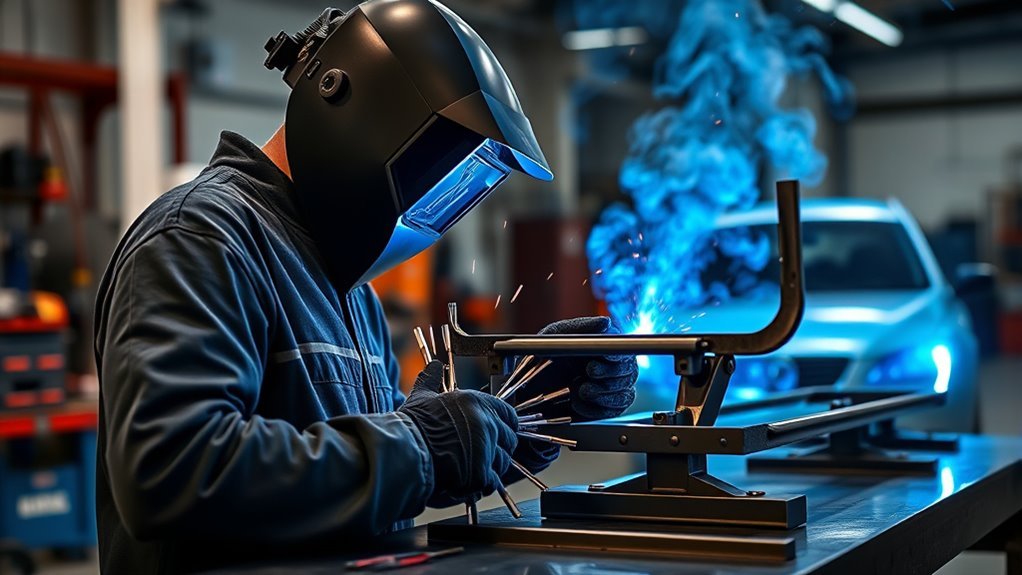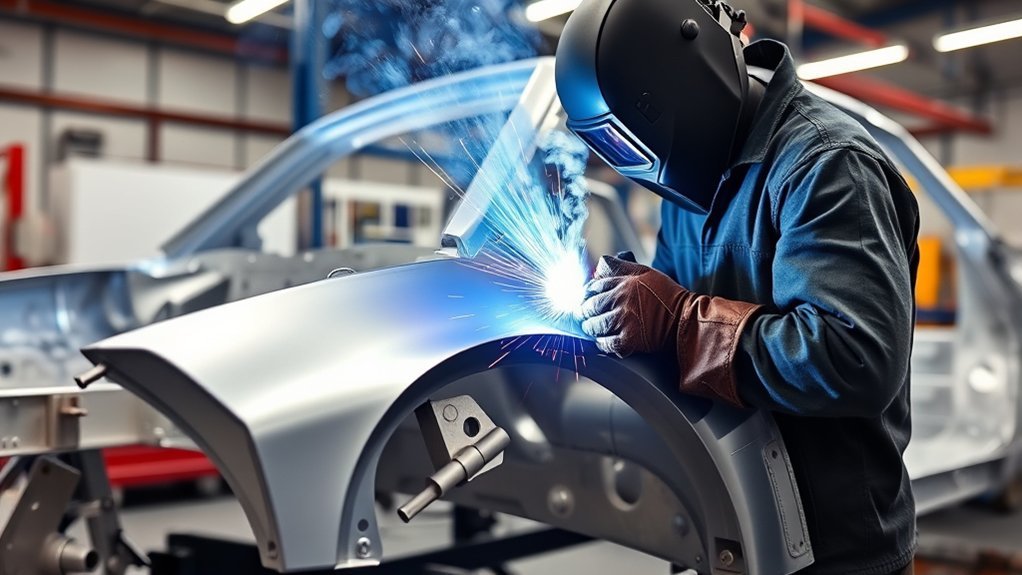
When you weld advanced high-strength steel in cars, you are not treating it like ordinary mild steel. AHSS gets its strength from carefully controlled chemistry, microstructure, and heat cycles, so the wrong welding setup can weaken the part you are trying to repair. Use the OEM repair manual first, identify the steel grade, control heat input, verify weld quality, and restore corrosion protection before the vehicle goes back on the road.
Quick Answer
To weld AHSS in cars, identify the steel grade first, follow the OEM repair procedure, and use the approved process, usually squeeze-type resistance spot welding or GMAW/MIG plug welding only where allowed. Keep heat input low, make test welds, inspect nugget quality, and never heat-straighten AHSS unless the OEM specifically permits it.
Key Takeaways
- AHSS is not just “strong steel.” Its strength comes from multiphase microstructures that can change when overheated.
- Resistance spot welding AHSS often needs less current than mild steel, but may need higher electrode force, adjusted weld time, and verified nugget size.
- MIG/GMAW can be used on some repairs, but only where the OEM procedure allows it and only with controlled heat input.
- Dual phase, TRIP, martensitic, and press-hardened steels can lose intended crash performance if heated or repaired incorrectly.
- Weld testing, corrosion protection, and OEM documentation are part of the repair, not optional extras.
At a Glance
| Time Required | 30 to 90 minutes for setup, test welds, and verification; actual weld time depends on the repair procedure. |
| Difficulty | Advanced. Structural AHSS repair is not a beginner welding job. |
| Tools Needed | OEM repair information, approved resistance spot welder or GMAW/MIG setup, clamps, clean test coupons, PPE, weld inspection tools, and corrosion-protection materials. |
| Cost | Varies widely. The major cost is usually approved equipment, repair-data access, preparation, and weld verification. |
Warning: Do not weld or heat-straighten structural AHSS on a vehicle unless the OEM repair procedure allows that exact repair. Many AHSS parts protect the passenger cell, crash load paths, airbags, and seat belt systems. A weld that looks clean can still reduce crash performance if the heat-affected zone, nugget size, or repair location is wrong.
What Makes AHSS Different in Cars?
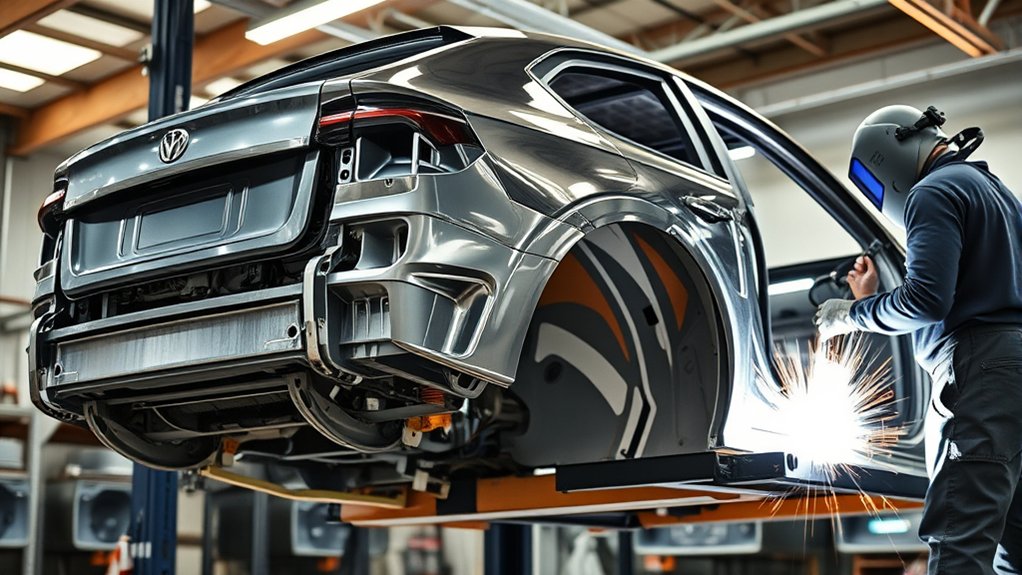
Advanced High-Strength Steel (AHSS) is used in modern vehicles because it can help reduce weight while keeping crash structures strong. According to WorldAutoSteel AHSS Guidelines, AHSS includes martensitic and multiphase steels with a minimum specified tensile strength of at least 440 MPa.
The key difference is microstructure. Conventional mild steel is mostly ferrite. AHSS can include martensite, bainite, austenite, retained austenite, or other phase combinations. These phases give grades such as Dual Phase (DP), Transformation Induced Plasticity (TRIP), Complex Phase (CP), Ferrite Bainite (FB), Martensitic (MS), and Press-Hardened Steel (PHS) their strength and energy absorption.
That strength is useful in pillars, rockers, rails, bumper reinforcements, and crush zones. It also means repair welding has less room for guesswork. If heat changes the microstructure, the part may no longer behave the way the vehicle engineer intended during a collision.
Why AHSS Welds Need Tight Control
You need tighter control with AHSS because small changes in heat input, weld time, electrode force, travel speed, or fit-up can change weld strength and the heat-affected zone. In resistance spot welding, heat input depends on current, resistance, and time. That is why the same setting that works on mild steel may be wrong for AHSS of the same thickness.
WorldAutoSteel guidance on resistance spot welding AHSS notes that AHSS often needs less current than conventional mild steel because of higher electrical resistivity. At the same time, many AHSS stacks may need higher electrode force, adjusted weld time, a larger tip diameter, or a multi-pulse schedule.
Material Sensitivity
AHSS responds sharply to heat. Dual Phase steel, for example, gets its strength from martensite in a ferrite matrix. TRIP steel uses retained austenite and bainite to improve work hardening and energy absorption. Martensitic and press-hardened grades depend on even harder microstructures.
When the weld zone or repair area gets too hot for too long, those phases can soften, harden, crack, or lose the balance of strength and ductility the part needs. This is why you should treat AHSS as a controlled repair system, not just as “strong sheet metal.”
Precise Weld Parameters
For resistance spot welding, do not adjust only current. Use the full welding schedule from the OEM or steel supplier. If you do not have that data, use approved reference guidance only to begin test weld development, not as a final production setting.
| Parameter | AHSS Response | Risk if Wrong |
|---|---|---|
| Current | Often lower than mild steel at the same gauge | Expulsion, undersized nugget, or overheating |
| Electrode force | Often higher as steel strength rises | Poor contact, indentation, or weak fusion |
| Weld time | May need adjustment for the stack | Too little fusion or too much HAZ damage |
| Tip condition | Must stay dressed and matched to the schedule | Inconsistent nuggets and surface damage |
| Fit-up | Must be tight and repeatable | Expulsion, gaps, and poor load transfer |
Pro Tip: Make test welds on matching scrap or approved coupons before welding the vehicle. A clean surface and a good-looking spot are not enough. You need the correct nugget size and acceptable failure behavior for that stack.
How to Identify AHSS Before You Weld
Before you weld any structural automotive steel, identify what you are working on. You cannot reliably identify AHSS by color, thickness, or how hard it feels under a grinder. Vehicle makers use different grades in different locations, and the same model can change by year, trim, or market.
- Check the OEM repair manual. Look for steel-strength maps, sectioning rules, weld type, squeeze-type spot weld requirements, and “replace only” notes.
- Confirm the part location. Pillars, rockers, rails, bumper reinforcements, roof rails, and intrusion beams often use AHSS or press-hardened steel.
- Read the allowed process. The manual may specify squeeze-type resistance spot welding, plug welds, MIG brazing, mechanical fasteners, adhesive bonding, or replacement.
- Check coating and corrosion requirements. Galvanized or coated AHSS needs proper prep, ventilation, and corrosion restoration.
- Document the repair. Record the OEM procedure, weld settings, test weld results, and corrosion-protection steps.
How AHSS Changes Spot Weld Failure Modes
AHSS spot welds can fail differently than mild steel spot welds. The main modes you will hear about are full-button pull-out, plug failure, partial plug failure, and interfacial fracture. A full-button pull-out often suggests good fusion and ductility, but the failure mode alone is not the only measure of quality.
WorldAutoSteel’s weld testing guidance explains that AHSS weld performance depends on microstructure, loading mode, loading rate, and weld constraint. It also notes that interfacial fractures in AHSS may still carry high load, so the weld’s load-bearing capacity and approved acceptance criteria matter.
As strength rises, the weld nugget can become harder and less tough. Stress concentration near the nugget edge can increase. That is why you should not judge AHSS welds only by appearance. Use the inspection method required by the OEM or procedure, such as destructive peel testing on coupons, chisel testing where allowed, or ultrasonic spot-weld inspection.
How to Spot Weld AHSS Correctly
Spot welding AHSS correctly starts with the right equipment and a verified schedule. In collision repair, this often means a modern squeeze-type resistance spot welder with enough electrode force and current control for the specified stack. A small hobby spot welder is not enough for structural AHSS repairs.
Spot Weld Workflow
- Read the OEM procedure. Confirm allowed weld locations, number of welds, electrode arm access, and whether squeeze-type resistance spot welding is required.
- Clean the faying surfaces. Remove paint, sealer, adhesive residue, rust, and contamination only as directed. Do not remove protective coating beyond the required area.
- Clamp the stack tightly. Gaps increase resistance in the wrong places and can cause expulsion or weak nuggets.
- Set the full schedule. Use current, weld time, electrode force, hold time, pulse mode, and tip size from the approved procedure.
- Dress and align tips. Worn tips change current density and indentation.
- Make test welds. Use matching material and stack thickness whenever possible.
- Inspect the welds. Check button size, plug behavior, indentation, expulsion, cracks, and any required ultrasonic readings.
- Restore protection. Apply weld-through primer only where specified, then seam sealer, cavity wax, and coatings after welding as required.
Failure Modes to Watch
When you test AHSS resistance spot welds, watch for these signs:
- Full-button pull-out: Often a good sign, especially when the button size meets the procedure.
- Plug or partial plug failure: May be acceptable depending on the OEM criteria and load result.
- Interfacial fracture: Can signal low toughness or poor weld development, but AHSS standards may require load-based interpretation.
- Expulsion: Usually means too much heat, poor fit-up, poor tip condition, or the wrong schedule.
- Undersized nugget: Often caused by too little current, too little time, low force, coating issues, or poor contact.
How to Weld AHSS to Mild Steel
Welding AHSS to mild steel is common in vehicle structures, but you should treat the stack as a mixed-material joint. The AHSS side and mild steel side do not heat, expand, or deform the same way. Coatings, thickness differences, and access also affect the final weld.
For resistance spot welding, set the schedule for the actual stack, not for only one sheet. WorldAutoSteel’s RSW parameter guidance explains that heat input must change with steel gauge and grade, and that AHSS at the same gauge as low-strength steel often needs less current. When stack groups differ, electrode cap size, force, or power source may need special attention.
For GMAW/MIG plug welds, use them only when the OEM allows them as a replacement for spot welds. Keep heat input controlled, avoid oversized holes, and do not add extra welds unless the procedure calls for them. More weld is not always safer. Extra heat can enlarge the HAZ and change the part’s crash behavior.
How GMAW/MIG Welding Fits AHSS Repair
GMAW, often called MIG welding, is common in collision repair because it is flexible and accessible. It can be used for some AHSS repairs, especially plug welds or sectioning joints, but only where the OEM procedure allows it. Some AHSS parts require squeeze-type resistance spot welding, bonding, fasteners, brazing, or complete replacement instead.
WorldAutoSteel’s GMAW overview explains that GMAW uses a continuously fed wire and shielding gas. It also notes that electrode extension, shielding gas, current, and travel speed affect heat and weld profile. With AHSS, those details matter because excess heat can soften or transform the heat-affected zone.
Use short, controlled welds. Avoid long beads on thin automotive AHSS unless the OEM procedure specifically calls for them. Let the procedure guide plug size, spacing, wire type, shielding gas, and whether MIG brazing is preferred over fusion welding in a specific joint.
How Heat Changes AHSS Properties
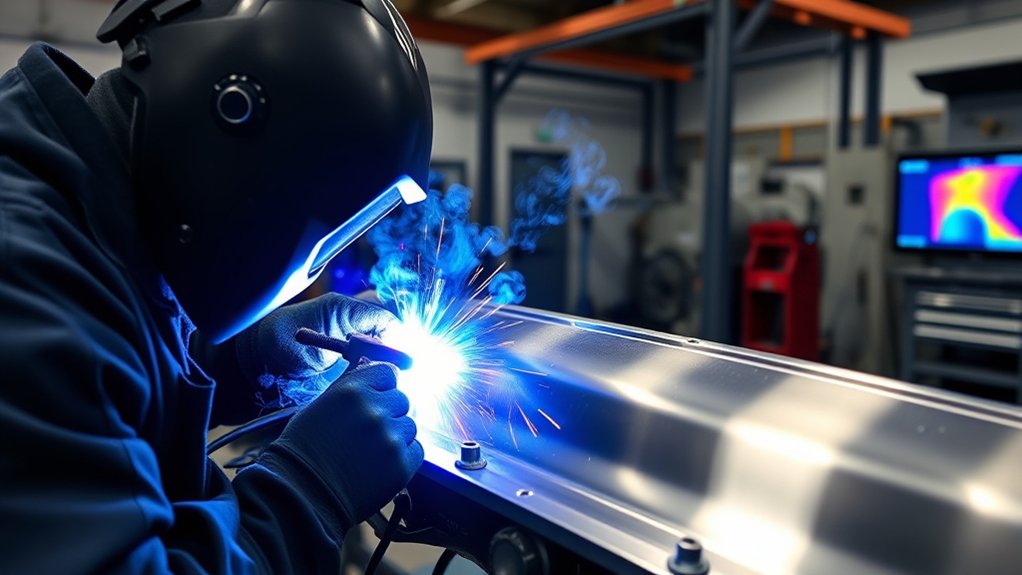
Heat is the main reason AHSS repair rules are strict. AHSS grades are made with controlled thermal cycles. Welding or flame straightening can expose the part to a second thermal cycle that was never part of the original design.
WorldAutoSteel’s AHSS repairability guidance notes that DP steels tested at elevated temperatures changed mechanical behavior much faster than conventional steels. It specifically warns that once the DP microstructure is changed, it is very difficult to return it to its original state in a repair shop, so removal and replacement is recommended where the OEM procedure requires it.
Thermal Sensitivity in AHSS
Dual Phase and TRIP steels can be especially sensitive because their properties come from a designed balance of soft and hard phases. Martensitic and press-hardened steels are even more dependent on hard microstructures. Heat can soften some areas, harden others, or create brittle behavior near the weld.
- Limit heat input to the approved procedure.
- Do not heat-straighten AHSS unless the OEM specifically allows it.
- Do not use color as a temperature gauge. Use approved methods if temperature control is required.
- Do not assume cooling restores the original strength.
Repair Heat Effects
Repair heat can change the HAZ even when the weld itself appears clean. In GMAW of DP 600, research summarized by WorldAutoSteel found that the original microstructure near the weld is destroyed and a new HAZ microstructure develops. Softened regions can form where plastic strain concentrates.
For a repairer, the rule is simple: identify the grade, follow the OEM procedure, keep heat input within the approved window, and replace parts when the procedure says to replace them.
Common AHSS Welding Mistakes
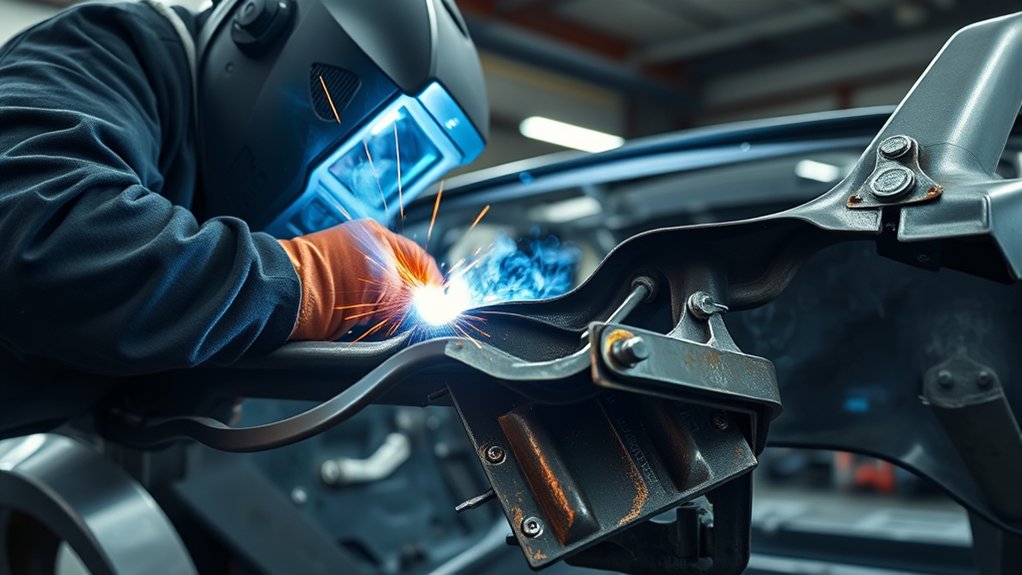
Most AHSS welding mistakes come from treating the material like mild steel. Avoid these errors:
- Skipping the OEM procedure. You need the correct weld type, sectioning location, and repair limits.
- Using mild-steel settings. AHSS may need lower current, higher electrode force, different weld time, or a different process.
- Ignoring fit-up. Gaps cause inconsistent resistance and weak welds.
- Overheating the part. Too much heat can soften or embrittle the HAZ.
- Judging by appearance only. AHSS welds need testing or inspection, not just a visual check.
- Grinding too aggressively. Removing too much material can reduce section thickness and strength.
- Forgetting corrosion protection. Burned coatings, open seams, and bare metal can corrode from the inside out.
- Welding “replace only” parts. Some press-hardened and martensitic parts are not meant to be sectioned or repaired.
Note: Zinc-coated steel can release fumes when welded, and coating behavior can affect weld quality. Use ventilation, respiratory protection where required, and the coating prep method specified by the repair procedure.
How to Repair AHSS After a Crash
Repairing AHSS after a crash starts before you strike an arc. You need to know whether the damaged part can be repaired, sectioned, or must be replaced. The answer depends on the vehicle maker, the part, the grade, the damage location, and the allowed joining process.
- Measure the structure first. Confirm the vehicle is within repairable alignment limits.
- Find the steel grade and part role. Safety cage parts, reinforcements, and intrusion beams often have stricter rules.
- Check heat limits. Do not flame-straighten or shrink AHSS unless the OEM allows it.
- Use approved cut lines. Never invent a sectioning location.
- Use the specified joining method. This may be STRSW, GMAW plug welds, MIG brazing, rivets, adhesive, or replacement.
- Test welds before production welds. Confirm nugget or plug quality on matching material where possible.
- Protect the repair. Reapply primer, seam sealer, cavity wax, and coatings as specified.
If a DP, TRIP, martensitic, or press-hardened part has been overheated, kinked in a restricted zone, torn, or damaged outside repair limits, replacement is often the safe repair path. The OEM repair manual controls that decision.
Where to Find AHSS Welding Help
Good AHSS welding help starts with sources that control or validate the repair. Use these in order:
- OEM repair information: The vehicle maker’s procedure is the controlling source for collision repair.
- Steel supplier data: Use grade-specific data sheets and welding recommendations when designing or validating a process.
- WorldAutoSteel AHSS Guidelines: Use them to understand grades, weld behavior, repair heat sensitivity, and testing concepts.
- Equipment manufacturer guidance: Resistance spot welders and GMAW machines may have approved automotive repair programs.
- Training providers: Use collision-repair training for AHSS, STRSW, MIG brazing, and weld inspection.
If you cannot confirm the grade or repair method, do not guess. Treat the part as safety-critical until proven otherwise.
How to Choose the Right AHSS Grade
If you are designing or fabricating a vehicle component, choose the AHSS grade by matching strength, ductility, formability, crash load path, coating, and joining method. Dual Phase steel often balances strength and formability. TRIP and 3rd Gen AHSS can add ductility and energy absorption. Martensitic and press-hardened steels are used where very high strength and intrusion resistance are needed.
If you are repairing a production vehicle, you usually do not choose the grade. You identify what the manufacturer used and follow the approved procedure. Substituting a different sheet, moving a weld line, or changing a joining method can affect crash performance.
Products Worth Considering

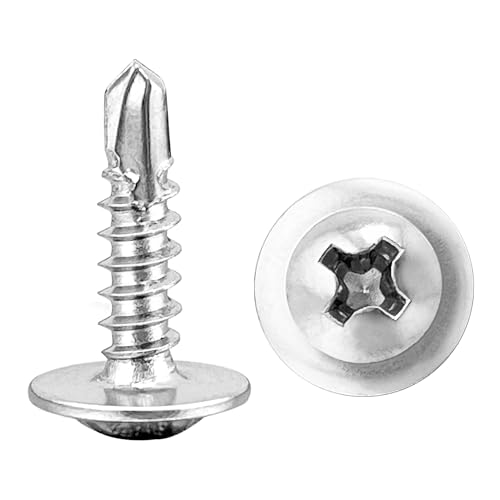
Premium 410 Stainless Steel Material Crafted from high-quality 410 stainless steel, these self-tapping screws offer exceptional corrosion resistance, rustproof durability, and high strength. The material is environmentally friendly, non-toxic, and twice as hard as copper, ensuring long-lasting performance without deformation. Perfect for demanding applications, these screws are magnetic-absorbing and resistant to stripping, making them ideal for both professional and DIY use.

Premium 410 Stainless Steel Material Crafted from high-quality 410 stainless steel, these self-tapping screws offer exceptional corrosion resistance, rustproof durability, and high strength. The material is environmentally friendly, non-toxic, and twice as hard as copper, ensuring long-lasting performance without deformation. Perfect for demanding applications, these screws are magnetic-absorbing and resistant to stripping, making them ideal for both professional and DIY use.
How to Test AHSS Weld Quality
AHSS weld testing should match the repair or production procedure. Common checks include:
- Visual inspection: Look for expulsion, cracks, burn-through, excessive indentation, and poor fit-up.
- Peel or destructive coupon test: Confirms button size and fracture behavior before welding the vehicle.
- Chisel testing: Use only where allowed, because AHSS panels can deform permanently during testing.
- Ultrasonic testing: Useful in some production and repair settings for checking spot weld quality without destroying the panel.
- Plug-weld inspection: Check fill, fusion, edge burn, porosity, spacing, and grinding limits.
Do not rely on a shiny weld face. AHSS weld quality depends on the nugget, HAZ, load path, and repair specification.
Products Worth Considering

Durable HSS Construction: Our spot weld cutter set is made of HSS for better durability and wear resistance. The double-sided blades ensure long-term use and consistent performance, making it the ideal tool of choice for metal cutting
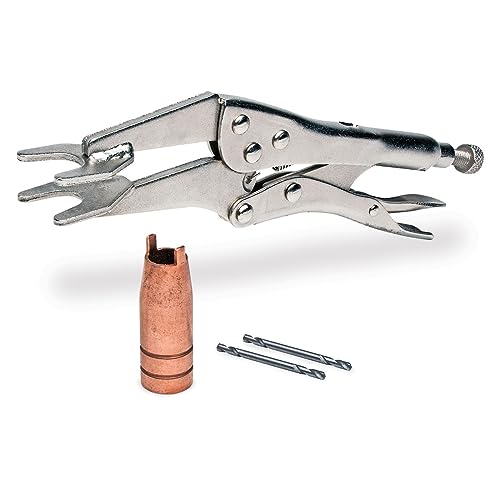
Duplicate full-penetration OE spot welds from one side with your existing MIG welder

18-Pack Comprehensive Kit: The spot weld removal tool kit includes 2 pcs spot Weld Drill, 8 pcs replacement cutting blades and 4 pcs pilot pin replacement. 3 pcs spot weld drill bits include 1/4in (6.5mm), 5/16in (8mm), 3/8in (10mm)—It is easy to replace when the cutter blades begin to dull.
Frequently Asked Questions
What is the difference between high-strength steel and advanced high-strength steel?
High-strength steel is a broad term that can include conventional HSLA steels. AHSS is usually defined by its multiphase or martensitic microstructure and by a minimum specified tensile strength of at least 440 MPa. The important repair difference is that AHSS properties depend heavily on controlled microstructure, so heat and welding procedures matter more.
What type of welder is best for AHSS in cars?
For many structural repairs, the preferred process is squeeze-type resistance spot welding when the OEM procedure calls for it. GMAW/MIG plug welding may be allowed in some locations. MIG brazing, rivets, adhesive bonding, or replacement may be required in others. The best welder is the one approved for that exact vehicle, part, and repair.
Can AHSS be repaired?
Yes, some AHSS parts can be repaired or sectioned, but only within OEM limits. Many AHSS parts cannot be heat-straightened, and some high-strength reinforcements are replace-only. If the repair procedure says to replace the part, welding or heating it is not a safe shortcut.
Can you MIG weld AHSS?
You can MIG weld some AHSS repairs when the OEM procedure allows GMAW or plug welding. You should not assume MIG is acceptable for every AHSS part. Use the specified wire, shielding gas, weld size, spacing, and heat-control method, then verify the welds as required.
What happens if AHSS gets too hot?
Too much heat can change the microstructure that gives AHSS its strength and crash performance. The part may soften, become brittle, distort, or lose its designed energy absorption. Cooling the part afterward does not reliably restore the original properties.
How do I know if my car has AHSS?
Check the OEM body repair manual or service information for steel-strength maps. AHSS is common in pillars, rockers, roof rails, bumper reinforcements, rails, and intrusion beams. Do not rely on spark testing, panel thickness, or appearance to identify it.
Sources
- WorldAutoSteel AHSS Guidelines: Defining Steels – AHSS definition, microstructure, strength naming, and grade families.
- WorldAutoSteel AHSS Guidelines: RSW of Advanced High-Strength Steels – AHSS spot-welding current, force, weld windows, and process adjustments.
- WorldAutoSteel AHSS Guidelines: RSW Parameter Guidelines – heat input, grade and gauge effects, current mode, and parameter setup.
- WorldAutoSteel AHSS Guidelines: Weld Testing and Fracture Modes – button pull-out, interfacial fracture, plug failure, chisel testing, and weld evaluation.
- WorldAutoSteel AHSS Repairability – heat sensitivity, DP/TRIP/MS repair guidance, 650°C behavior, and OEM procedure warnings.
- WorldAutoSteel AHSS Guidelines: HAZ Properties of GMAW DP 600 – GMAW heat-affected-zone changes and softened-zone behavior.
Conclusion
AHSS welding in cars is a controlled repair task, not a general sheet-metal job. Start with the OEM procedure, identify the steel grade, choose the approved welding method, keep heat input within the validated range, and test the welds before trusting the repair. If the part is heat-sensitive, kinked beyond limits, or marked for replacement, replace it. Precision protects the weld, the structure, and the people inside the vehicle.