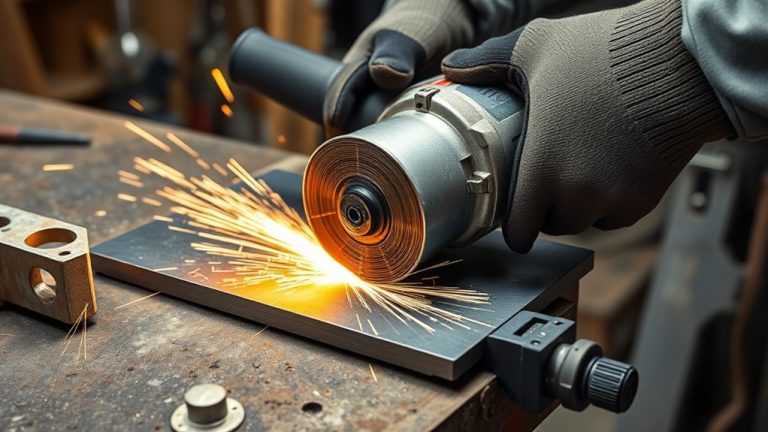
The duty cycle of your angle grinder tells you how long you can use it before it needs to cool down, typically ranging from 20% to 80%. For instance, a 50% duty cycle means you can grind for 5 minutes, then rest for 5 minutes. Higher duty cycles are great for continuous tasks, while lower ones suit short jobs. Following these guidelines helps prevent overheating and extend your tool’s life, and there’s more you can learn about optimizing its use.
Understanding Duty Cycle: What It Means for Your Angle Grinder
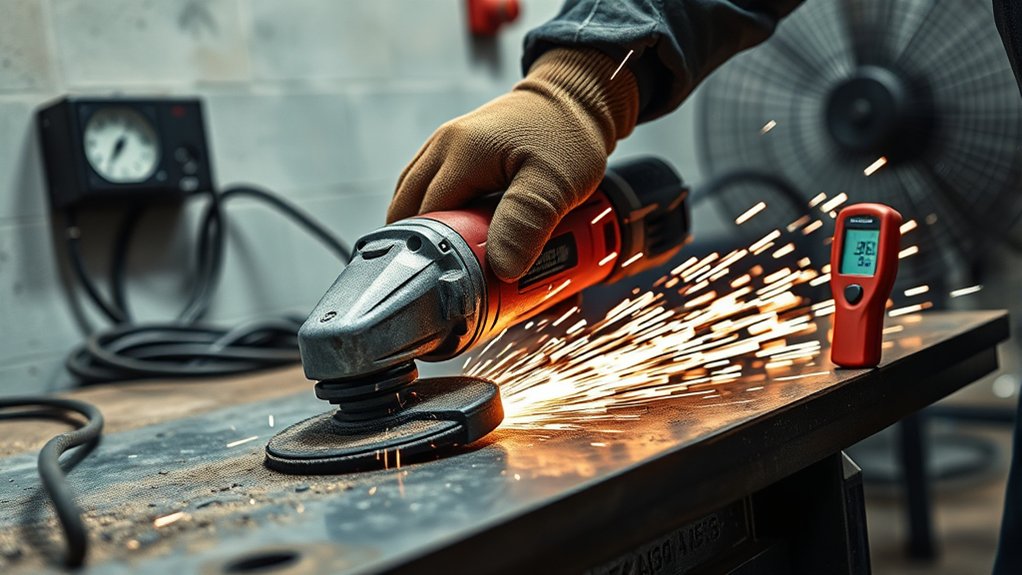
When you’re using an angle grinder, understanding its duty cycle is essential for maintaining performance and safety. The duty cycle indicates how long you can operate the tool before it needs to cool down, typically expressed as a percentage over a 10-minute period. For instance, a 50% duty cycle means you can grind for 5 minutes, followed by 5 minutes of rest. Exceeding this limit can lead to overheating, motor failure, and increased risk of injury.
To guarantee safe use, always check the manufacturer’s specifications for your grinder’s duty cycle. Properly managing this cycle not only enhances performance but also promotes longevity and prevents accidents. Remember, operating within the maximum operating speed while respecting the duty cycle helps you achieve your goals efficiently while safeguarding your well-being. Embrace this knowledge, and you’ll wield your angle grinder with confidence and control.
How to Calculate Your Angle Grinder’s Duty Cycle
To calculate your angle grinder’s duty cycle, you need to understand its definition and the factors that affect it. The duty cycle is expressed as a percentage, showing how long the tool can run before requiring rest. By grasping these concepts, you can better manage your grinder’s performance and longevity.
Understanding Duty Cycle Definition
Understanding the duty cycle of your angle grinder is essential for efficient operation and longevity. The duty cycle is the percentage of time the tool can safely operate within a 10-minute period. For instance, a 50% duty cycle means you can run the grinder for 5 minutes, followed by a 5-minute cooling period to prevent overheating. To calculate your grinder’s duty cycle, assess the motor’s rated load and verify you’re not exceeding the maximum operational limits. Manufacturers typically provide this information in the product manual, guiding you on safe usage. By adhering to the duty cycle, you maintain peak performance and extend the lifespan of your angle grinder, empowering your projects with reliability.
Factors Affecting Duty Cycle
Knowing how to calculate your angle grinder’s duty cycle can greatly impact its performance and longevity. Several factors affect this cycle, and understanding them guarantees safe operation:
- Motor Power Rating: Higher wattage allows longer continuous use.
- Type of Work: Heavy-duty tasks may require more cooling time.
- Material Hardness: Harder materials generate more heat, reducing operational time.
- Manufacturer Guidelines: Always follow specified duty cycles to avoid damage.
- Cooling Design: Different models have varying cooling requirements.
Why You Should Follow Duty Cycle Guidelines
Following duty cycle guidelines is essential for maintaining the performance and longevity of your angle grinder. The duty cycle specifies how long you can operate your tool continuously, guaranteeing it doesn’t overheat. For example, a 50% duty cycle means five minutes of grinding followed by five minutes of cooling. Exceeding this limit can damage the motor and shorten your tool’s lifespan.
Additionally, adhering to these guidelines helps prevent accidents. Continuous operation beyond the duty cycle increases the risk of operator fatigue and loss of control, which can lead to serious injuries. By following the manufacturer’s recommendations, you guarantee safe and effective use of your grinder, allowing you to maintain peak tool speed and performance.
Regularly consulting your user manual and sticking to the duty cycle not only enhances your productivity but also promotes a safer working environment. Prioritize these guidelines for a rewarding and liberated grinding experience.
Factors That Influence Your Angle Grinder’s Duty Cycle
Several factors influence your angle grinder’s duty cycle, impacting its efficiency and longevity. Understanding these elements can help you maximize your tool’s performance:
Several factors affect your angle grinder’s duty cycle, influencing its efficiency and lifespan. Understanding these can enhance performance.
- Motor’s power rating: Higher wattage means longer continuous operation without overheating.
- Material being worked on: Harder materials generate more heat, requiring longer rest periods.
- Ambient temperature: Elevated temperatures can lead to quicker overheating, reducing operation time.
- Proper maintenance: Regular inspection and cleaning guarantee better airflow and cooling.
- Usage patterns: Frequent, heavy use can stress the tool, shortening its effective duty cycle.
Signs Your Angle Grinder Needs a Cooldown?
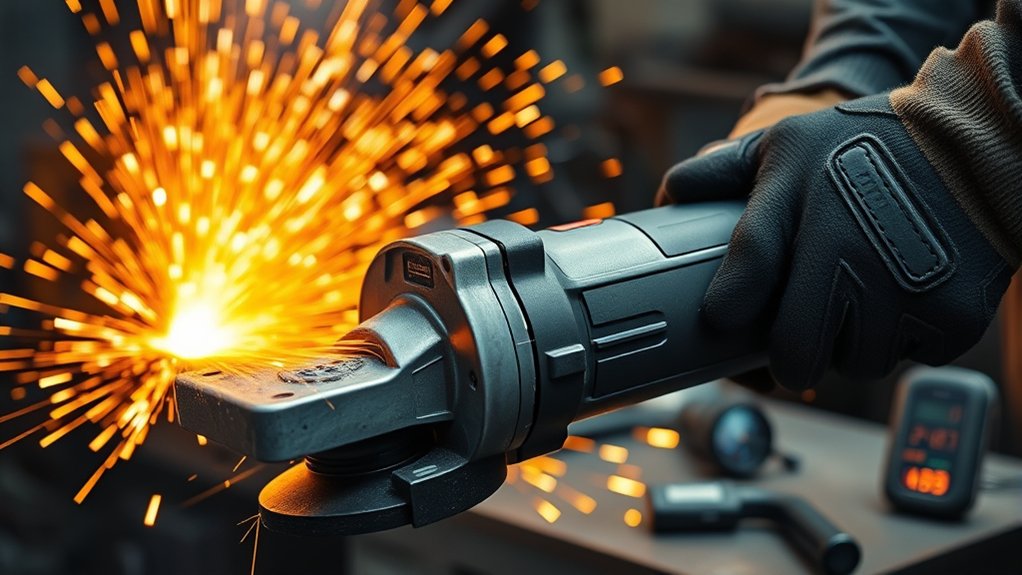
Your angle grinder can show several signs that it needs a cooldown to prevent overheating. If it feels excessively hot to the touch, it’s time to pause. A noticeable drop in performance or grinding speed can also signal that your tool requires a break. Smoke or strange odors are clear indications of overheating, and you should allow it to cool down before using it again. Grinding for extended periods without breaks risks exceeding the manufacturer’s recommended duty cycle, jeopardizing both your tool’s longevity and your safety. Generally, it’s advisable to adhere to the manufacturer’s guidelines, which typically suggest a cooldown after about 15-30 minutes of continuous use. By recognizing these signs, you can maintain your grinder’s performance while ensuring safe operation, ultimately enhancing your grinding experience. Don’t ignore these cues—taking a moment to let your tool cool can save you from bigger problems down the line.
Tips to Maximize Your Angle Grinder’s Duty Cycle
Recognizing when your angle grinder needs a cooldown is just the beginning of effective tool management. To maximize your grinder’s duty cycle and guarantee longevity, keep these tips in mind:
- Choose the right tool: Select a grinder with a duty cycle that matches your tasks to avoid overheating.
- Monitor temperature: Regularly check if the grinder is too hot to touch; if it is, give it a break.
- Use appropriate discs: Confirm your grinding discs are rated for your grinder’s RPM and the specific task.
- Implement scheduled breaks: Plan routine pauses during extended use; this helps cool the motor and prolongs performance.
- Stay aware of usage: Keep track of grinding time to prevent exceeding the duty cycle limits.
How to Select an Angle Grinder Based on Duty Cycle
When selecting an angle grinder, understanding duty cycle ratings is essential for matching the tool to your tasks. If you’re tackling continuous work, opt for a higher duty cycle to avoid downtime. For lighter, intermittent use, a lower duty cycle might suffice, making it easier to choose the right grinder for your needs.
Understanding Duty Cycle Ratings
Selecting an angle grinder involves understanding its duty cycle, which defines how long the tool can operate before needing a break. This rating is essential for selecting the appropriate model to avoid serious injury from overheating. Here’s what to take into account:
- Rated Maximum: Check the percentage; this indicates continuous run time versus cool down.
- Material: Harder materials may require a lower duty cycle to prevent overheating.
- Workload: Match the duty cycle to your intended tasks—professional-grade models often support longer use.
- Cooling Time: Factor in rest periods to maintain efficiency and tool longevity.
- Manufacturer Specs: Always refer to these for accurate duty cycle ratings.
Being informed helps you choose wisely and work safely.
Matching Grinder to Tasks
Understanding your tasks is key to selecting the right angle grinder based on duty cycle. Choosing the right grinder guarantees your tool runs efficiently without overheating, especially when working on metal parts. Here’s a quick guide:
| Task Type | Recommended Duty Cycle |
|---|---|
| Heavy-duty (metal fabrication) | Above 75% |
| Moderate (cutting, grinding) | 50-75% |
| Light (sanding, polishing) | Around 50% |
For high speeds and continuous use, opt for a grinder with a higher duty cycle to minimize downtime. For lighter tasks, a lower duty cycle suffices, allowing you to take breaks without risking damage. Always consider the power rating and cooling features for peak performance.
Continuous vs. Intermittent Use
Choosing between continuous and intermittent use for your angle grinder is crucial for optimizing its performance and lifespan. Understanding the duty cycle helps you select the right tool for your tasks, minimizing the risk of overheating. Here’s what to take into account:
- Continuous use: Ideal for long projects; select grinders with higher duty cycles (70%+).
- Intermittent use: Best for quick tasks; lower duty cycles (20%-50%) suffice.
- Cooling time: A 50% duty cycle means 5 minutes of grinding, then 5 minutes of cooling.
- Manufacturer specs: Always consult for duty cycle recommendations.
- Overheating risk: Running beyond the duty cycle can lead to motor burnout.
Make an informed choice to guarantee your angle grinder serves you well!
Safety Precautions for Extended Use of Angle Grinders
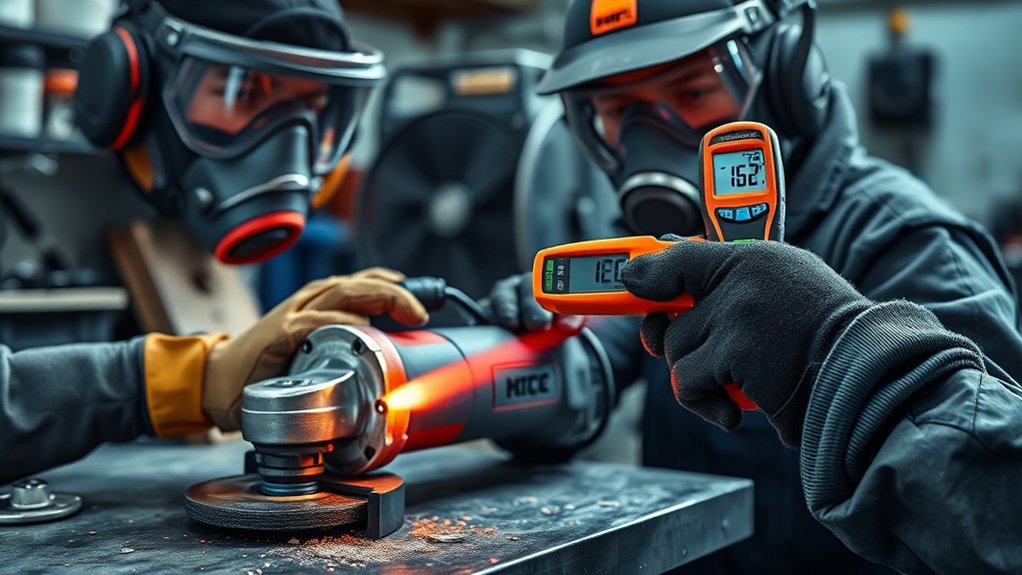
When using an angle grinder for extended periods, it’s vital to prioritize safety to prevent overheating and equipment failure. Always wear appropriate personal protective equipment, including goggles, gloves, and a dust mask. This protects you from flying debris and reduces health risks. Confirm the wheel guard is properly installed; it helps prevent accidental contact with the rotating disc.
Monitor the grinder’s temperature closely. If it feels too hot, take a break and allow it to cool for at least half the run time before resuming work. Using the right disc for your material can optimize performance and minimize strain on the motor, extending its effective duty cycle. Regular maintenance, like cleaning and inspecting components, is essential for safety and reliability during prolonged use. By following these precautions, you can enhance your grinding experience while keeping safety at the forefront.
Frequently Asked Questions About Angle Grinder Duty Cycles
Have you ever wondered how long you can safely use your angle grinder without risking damage? Understanding the duty cycle of your tool is essential for maintaining its longevity and performance. Here are some common queries:
Understanding your angle grinder’s duty cycle is crucial for its longevity and optimal performance.
- What is a duty cycle? It’s the percentage of time your grinder can run before needing to cool down.
- How do I know the duty cycle? Check the manufacturer’s specifications for your specific model.
- What happens if I exceed it? Overheating can occur, leading to reduced performance or damage.
- What’s a typical duty cycle range? Most grinders fall between 20% to 80%.
- How should I manage my work area? Guarantee proper ventilation to help cool your tool during breaks.
Frequently Asked Questions
How Long Can I Use an Angle Grinder For?
You can usually grind for about 15 minutes before needing a break to prevent motor overheating. Pay attention to user fatigue and always follow safety precautions to keep both you and your tool in good shape.
What Is the Duty Cycle of an Angle Grinder?
The duty cycle of an angle grinder measures its performance, dictating how long you can grind before needing a break. Prioritize motor efficiency and tool maintenance to maximize safety features and achieve peak results.
Why Are 9 Inch Angle Grinders Banned?
Nine-inch angle grinders are banned due to safety regulations prioritizing user experiences. Their power and tool specifications increase injury risks, making alternative options safer and more suitable for various applications in skilled trades.
How to Angle Grind Safely?
Before you start grinding like a boss, gear up with safety gear, maintain your tool, use proper posture, and master grinding techniques. Stay alert, take breaks, and keep an eye on your equipment’s condition.
Conclusion
In the grand arena of metal and masonry, knowing your angle grinder’s duty cycle is like wielding Excalibur itself! By respecting these guidelines, you’ll not only keep your tool humming like a well-oiled machine but also prevent it from turning into a fiery dragon of doom. So, gear up, grind smart, and release your inner craftsman while keeping safety in mind. With these tips, you’re not just grinding; you’re conquering territories of DIY mastery!