Disclosure: As an Amazon Associate, we earn from qualifying purchases. If you click a link on this page and make a purchase, we may receive a small commission at no extra cost to you.
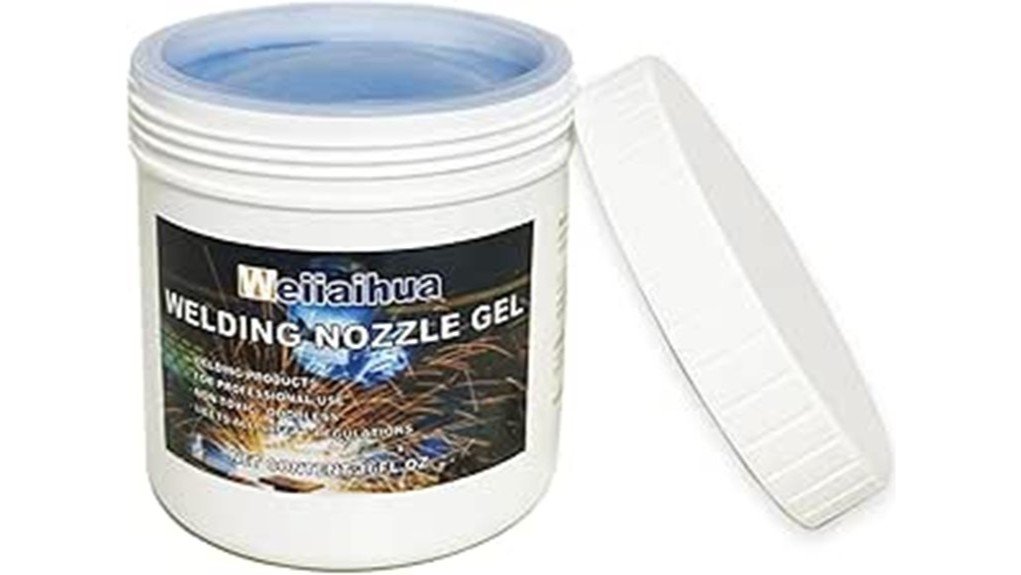
Weld spatter can slow you down, clog your MIG nozzle, and leave you cleaning more than welding. The Anti-Spatter Welding Nozzle Gel is made to coat MIG nozzles and contact tips so spatter has a harder time sticking during use. This review looks at how the gel helps, where it fits best, and what you should know before adding it to your welding setup. It is a simple, practical product, but it still needs correct use and regular reapplication to work well.
Quick Verdict
Rating: 7.5/10
Best For: MIG welders who want less nozzle spatter, easier cleanup, and longer contact tip life.
Bottom Line: This nozzle gel is worth considering if you regularly deal with spatter buildup during MIG welding. Its main strength is simple application, but it is not a one-time fix and still needs reapplication during longer sessions.
| Specification | Detail |
|---|---|
| Product Type | Anti-spatter welding nozzle gel |
| Primary Use | Reducing spatter buildup on MIG welding nozzles and contact tips |
| Compatibility | Article-supported compatibility with MIG welding nozzles and contact tips |
| Application Method | Dip the nozzle or contact tip into the gel for coverage before welding |
| Best Use | Manual and automated MIG welding tasks where spatter buildup slows cleanup |
| Maintenance Note | Reapply after prolonged use or when the protective coating wears down |
| Storage Note | Keep the container sealed and stored in a cool, dry place when not in use |
| Safety Note | Follow the product label and normal welding safety practices, including proper ventilation and PPE |
What Is the Anti-Spatter Welding Nozzle Gel?
The Anti-Spatter Welding Nozzle Gel is a welding accessory designed to reduce spatter buildup on MIG torch nozzles and contact tips. Instead of cleaning stuck metal particles as often, you coat the nozzle with gel before welding so spatter is less likely to cling to the surface.
This product is mainly for MIG welders who want cleaner operation, less interruption, and longer usable life from their nozzle parts. The article supports use with MIG nozzles and contact tips, but it does not provide verified dimensions, container size, material formula, warranty terms, or brand details.
Before You Buy: Product-specific listing details could not be independently verified from the supplied link during this edit. Check the Amazon listing for current package size, included quantity, seller details, safety label, and compatibility notes before ordering.
Who Should Buy It?
Best For
- MIG welders who clean spatter from nozzles often.
- Shops that want to reduce downtime between welds.
- DIY users who want a simple add-on for cleaner torch maintenance.
Skip If
- You need a verified product size, brand, or formula before buying.
- You expect the gel to replace proper machine settings or surface prep.
- You do not use MIG nozzles or contact tips that need spatter protection.
Benefits of Using Anti-Spatter Welding Nozzle Gel
The main benefit is easier nozzle maintenance. When you apply the gel to the nozzle or contact tip, it creates a protective coating that helps reduce spatter accumulation during welding. Less buildup can mean fewer pauses for cleaning and a smoother workflow.
The gel can also help protect nozzle parts from heavy spatter deposits. That matters because clogged or dirty nozzles can affect shielding gas flow and make your welding process less consistent. A cleaner nozzle helps you stay focused on torch angle, travel speed, and bead control instead of stopping to scrape debris.
It is still important to treat this gel as a support product, not a cure for every spatter problem. If your voltage, wire feed speed, stickout, gas flow, or surface prep is off, you can still get excess spatter even with gel on the nozzle.
Fit and Compatibility
The supplied article states that the gel is compatible with MIG welding nozzles and contact tips. That makes it useful for welders who use common MIG setups in garages, fabrication shops, repair work, and automated welding stations.
Compatibility does not mean every setup needs the same amount of gel. A small hobby MIG welder, a shop torch, and an automated station may all create different heat and spatter conditions. You should follow the product label and use enough gel to coat the working area without creating a messy excess.
Application Process and Techniques
Using the gel is straightforward. Dip the welding nozzle or contact tip into the gel so the area that catches spatter gets covered. A consistent coating is better than a thick clump because it helps protect the part without adding unnecessary mess.
After longer welding sessions, check the nozzle and reapply as needed. The gel works best when there is still a protective layer on the surface. If the coating burns off, wipes away, or becomes loaded with debris, performance can drop.
Pro Tip: Keep the gel near your welding station and make nozzle checks part of your normal setup routine. A quick dip before a long weld is easier than stopping later to chip heavy buildup from the nozzle.
Performance and Compatibility Analysis
In daily use, the gel is most useful when spatter buildup is one of your regular pain points. By reducing how much debris sticks to the nozzle, it can make cleanup faster and help maintain a more consistent welding rhythm.
The article also supports use in high-temperature welding conditions. That is important because nozzle products must hold up near the heat of the arc area. Still, you should avoid making assumptions about exact heat ratings unless the current product label or manufacturer details confirm them.
For automated welding, the value is mostly consistency. A cleaner nozzle can reduce interruptions, but the gel should still be paired with scheduled inspection and normal equipment maintenance.
Materials, Build, and Safety Notes
The article does not provide a verified chemical formula or material breakdown for the gel. Because of that, you should avoid using it on surfaces, tools, or processes beyond the product label. Use it only as directed for welding nozzle and contact tip protection.
Welding already involves heat, fumes, UV light, and molten metal. Wear proper PPE, work in a ventilated area, and keep the container away from direct arc exposure or open flame unless the label says otherwise. If the gel contacts surfaces that will later be painted, coated, or finished, clean the work area according to your normal finishing process.
How It Performs in Real Use
For Short Repair Jobs
For quick MIG repairs, the gel can help keep the nozzle cleaner from the start. This is useful when you only have a few welds to complete and do not want frequent cleanup to slow the job down.
For Longer Welding Sessions
During longer sessions, the gel is helpful but not maintenance-free. You should inspect the nozzle during breaks and reapply when the coating wears down. This helps maintain a spatter-resistant surface across the session.
For Shop or Production Use
In a shop setting, less spatter buildup can support faster workflow and fewer interruptions. The benefit is strongest when the product is used as part of a routine that includes nozzle inspection, tip replacement, and machine setting checks.
For Outdoor Welding
The original article says the gel can be used in outdoor welding conditions. Even so, wind, dirt, moisture, and surface contamination can still affect weld quality. Keep the gel container closed between uses and protect your work area as much as possible.
Common Mistakes to Avoid
Do not use nozzle gel as a substitute for correct welder settings. Too much spatter can still come from poor voltage selection, incorrect wire feed speed, dirty base metal, wrong stickout, or poor shielding gas coverage.
Do not overapply the gel. A useful coating is enough to help reduce sticking, while excess gel can create mess around the nozzle and work area. Also avoid leaving the container open, since the article notes that hardening can become an issue if the gel is not stored well.
Pros and Cons
Pros
- Helps reduce spatter buildup on MIG nozzles and contact tips.
- Simple dip-style application does not require a complex setup.
- Can reduce cleanup time during regular welding work.
- Supports longer nozzle life when paired with normal maintenance.
- Useful for both manual and automated MIG welding routines.
Cons
- Needs reapplication during longer or heavier welding sessions.
- Does not fix spatter caused by poor settings or dirty metal.
- Specific package size, brand details, and formula were not verified from the supplied article.
Is It Worth the Price?
This gel is best viewed as a low-complexity maintenance add-on for MIG welding. It can be a strong value for the price if you spend noticeable time cleaning spatter from your nozzle or replacing parts affected by buildup.
You get the most value if you weld often enough for nozzle cleanup to become a repeated hassle. It is less useful if you only weld occasionally or if your spatter problem is mainly caused by incorrect setup, poor metal prep, or gas coverage issues.
How It Compares to Alternatives
Compared with anti-spatter sprays, nozzle gel is more focused on the torch nozzle and contact tip area. Sprays are often used across a wider work surface, while gel is better when your main concern is buildup on the nozzle itself.
Compared with cleaning alone, gel is more preventive. You may still need a nozzle cleaning tool or pliers, but applying gel before welding can reduce how often you need to stop and scrape stuck spatter.
Frequently Asked Questions
Is this gel for MIG welding?
Yes, the supplied article supports use with MIG welding nozzles and contact tips. You should still confirm the current Amazon listing and product label before buying for a specific torch setup.
How do you apply anti-spatter nozzle gel?
Dip the nozzle or contact tip into the gel so the spatter-prone area gets coated. Use a consistent layer, then reapply when the coating wears down during use.
How often should you reapply it during welding?
Reapplication depends on how long and how hot you are welding. For longer sessions, check the nozzle during breaks and add more gel when the surface no longer looks protected.
Will nozzle gel stop all weld spatter?
No. It helps reduce spatter sticking to the nozzle, but it does not solve problems caused by wrong settings, dirty metal, poor gas flow, or bad technique.
Can you use it outdoors?
The original article supports outdoor use, but outdoor welding still needs care. Wind, moisture, dirt, and poor shielding gas coverage can affect weld quality even when the nozzle is coated.
What should you do if the gel hardens?
Keep the container sealed when not in use to reduce hardening. If the gel hardens, follow the product label before trying to reuse it, and avoid unsafe heating methods unless the manufacturer allows them.
Who should skip this product?
Skip it if you do not use MIG welding nozzles or if you need fully verified product specs before purchase. You should also skip it if you expect a gel to fix a machine setup problem instead of correcting your settings and prep work.
The Bottom Line
The Anti-Spatter Welding Nozzle Gel is a practical choice for MIG welders who want cleaner nozzles, fewer cleanup stops, and easier contact tip maintenance. It is best for regular welding use, but you should skip it if you need verified brand, size, or formula details before buying. It earns a recommended-with-caveats verdict because the use case is clear, while independent product verification was limited.