Disclosure: As an Amazon Associate, we earn from qualifying purchases. If you click a link on this page and make a purchase, we may receive a small commission at no extra cost to you.
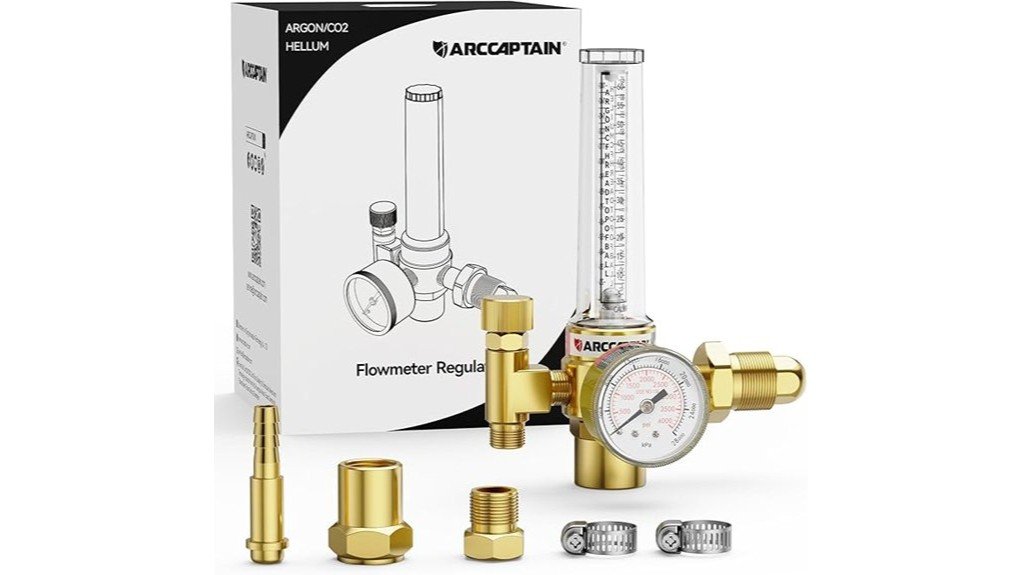
Choosing a welding gas regulator is not just about getting gas to the torch. You need the right inlet connection, clear flow control, and safety features that match the gases you plan to run. The ARCCAPTAIN Argon/CO2/Helium Regulator is built around a brass body, a CGA-580 inlet connector, a pressure relief valve, and separate flow ranges for argon, carbon dioxide, and helium. It looks like a practical choice for welders who want one regulator for common shielding gases, but you should confirm your cylinder connection before buying.
Quick Verdict
Rating: 8.4/10
Best For: MIG and TIG welders who need a brass gas regulator for argon, CO2, or helium setups using a compatible CGA-580 connection.
Bottom Line: The ARCCAPTAIN regulator gives you useful gas range flexibility, a sturdy brass build, and built-in safety features. The main tradeoff is compatibility, since CGA-580 and gas-specific fittings must match your cylinder and welding setup.
| Specification | Detail |
|---|---|
| Brand | ARCCAPTAIN |
| Product type | Argon, CO2, and helium welding gas regulator |
| Material | Brass body |
| Inlet pressure range | 0-4000 PSI |
| Argon output range | 0-60 CFH |
| Carbon dioxide output range | 0-65 CFH |
| Helium output range | 0-180 CFH |
| Inlet connector | CGA-580 |
| Safety features | Pressure relief valve and inlet filter for impurities |
| Included accessories | Hose clamps |
| Best use | Welding setups that use argon, CO2, or helium and match the regulator connections |
What Is the ARCCAPTAIN Argon/CO2/Helium Regulator?
The ARCCAPTAIN Argon/CO2/Helium Regulator is a welding gas regulator designed to help control shielding gas flow for welding applications. It supports argon, carbon dioxide, and helium flow ranges, which makes it useful for welders who work across MIG or TIG tasks and need different gas behavior for different jobs.
The regulator uses a brass body, which is a practical material choice for durability in shop environments. It also includes a pressure relief valve and a filter at the CGA-580 inlet connector to help reduce the chance of pressure-related problems and impurity issues during setup.
Before You Buy: This regulator is not a universal fit for every gas cylinder. Confirm your cylinder valve, gas type, hose connection, and welder requirements before ordering.
Who Should Buy It?
Best For
- Welders who use argon, CO2, or helium with a compatible setup.
- MIG or TIG users who want adjustable CFH output for different gas needs.
- Home garage and shop users who want a brass regulator with a pressure relief valve.
Skip If
- Your cylinder does not use a compatible CGA-580 connection.
- You need a regulator for gases outside argon, CO2, or helium.
- You need verified warranty terms before buying, since the original article does not provide a clear warranty period.
Key Features of the ARCCAPTAIN Regulator
The main strength of this ARCCAPTAIN regulator is its flexible gas support. The article-supported ranges are 0-60 CFH for argon, 0-65 CFH for carbon dioxide, and 0-180 CFH for helium. Those ranges give you room to dial in gas flow based on the process, the joint, and the environment.
The inlet pressure range is listed as 0-4000 PSI. That gives the regulator a broad working range, but it does not remove the need to follow cylinder, welder, and gas supplier instructions. For welding, a stable and correctly set flow matters because too little shielding gas can lead to porosity, while too much can waste gas and may disturb the shielding zone.
Materials and Build Quality
The regulator body is made from brass, which is a common choice for gas fittings and regulators because it handles regular shop use well. For a buyer, the benefit is simple: a metal regulator body is better suited to repeated setup, storage, and adjustment than a lightweight part that feels fragile.
The article also notes an inlet filter for impurities. This is useful because contaminants in the gas path can affect regulator performance over time. You should still keep cylinder caps, fittings, and hose ends clean, because the filter is only one part of a safe gas setup.
Pressure Relief Valve and Safety Design
The built-in pressure relief valve is one of the most buyer-useful features in this review. It adds a layer of protection if pressure moves outside the intended range. That does not make the regulator risk-free, but it is a meaningful safety feature for a pressurized gas accessory.
Use this regulator only with the gases and connections it is designed to support. Do not modify fittings, force mismatched threads, or use damaged hoses. If a connection does not thread by hand at first, stop and confirm the fitting type before applying pressure.
Installation and Compatibility
Installation is designed to be straightforward. The original article notes a CGA-580 inlet connector and included hose clamps, so the basic setup should be simple when your cylinder and hose match the regulator. Tight connections matter because leaks waste gas and can create unsafe working conditions.
Compatibility is the main detail to check before you buy. The regulator is described for argon, CO2, and helium, but your actual fit depends on the cylinder valve, hose size, outlet connection, and welding process. If you switch between gases, label your setup clearly and check each connection before opening the cylinder valve.
Pro Tip: Before first use, connect everything with the cylinder valve closed, back the adjustment out, then open the cylinder slowly and check every joint for leaks according to your regulator and gas supplier instructions.
Performance and Application
For welding use, this regulator is best judged by how well it helps you control gas flow. The separate CFH ranges for argon, CO2, and helium are helpful because these gases are often used for different shielding needs. Argon is common in TIG and mixed-gas work, CO2 is common in MIG welding, and helium may be used when more heat input or a different shielding behavior is needed.
The regulator should suit both amateur and professional users who need flexible gas control, but it is not a substitute for proper machine settings or correct welding technique. Gas flow is only one part of weld quality. Material prep, travel speed, wire or tungsten choice, and wind protection also affect the final weld.
How It Performs in Real Use
For Garage MIG Welding
For MIG users running CO2 or a compatible shielding gas setup, the listed 0-65 CFH carbon dioxide range gives enough adjustment room for common shop work. The key is to set flow for the job rather than turning it up too high, since excess gas use can add cost without improving the weld.
For TIG Welding With Argon
For TIG users, the listed 0-60 CFH argon range gives practical control for shielding. This is useful when working on cleaner welds where gas coverage matters. You still need a compatible torch, hose, and cylinder connection.
For Helium Use
The listed 0-180 CFH helium range is wider than the argon and CO2 ranges. That can be useful for welders who use helium for specific applications, but helium setups should be checked carefully because the gas, flow rate, and application can vary by material and process.
For Long-Term Shop Use
The brass body, pressure relief valve, and inlet filter make the regulator better suited to repeated use than a bare-bones regulator with fewer safety details. Long-term performance still depends on storage, clean fittings, and regular inspection for damage, leaks, or sticky adjustment behavior.
Setup Tips Before First Use
- Confirm the cylinder connection: Match the CGA-580 inlet to your cylinder before buying or installing.
- Inspect the threads: Do not use the regulator if threads are damaged, dirty, or cross-threaded.
- Use the included hose clamps: A tight hose fit helps reduce leaks and pressure loss.
- Open the cylinder slowly: Avoid sudden pressure shock when pressurizing the regulator.
- Check for leaks: Follow the product instructions or gas supplier guidance before welding.
- Store it clean and dry: Keep dust and metal grit away from the inlet and outlet connections.
Common Mistakes to Avoid
The most common mistake is assuming every welding cylinder uses the same connection. This regulator is built around a CGA-580 inlet, so you should not force it onto a cylinder that does not match. A second mistake is setting flow too high to compensate for poor weld prep or wind. If shielding is poor, check drafts, torch angle, distance, and leaks before wasting more gas.
Another mistake is ignoring small leaks. If you hear hissing, see unstable readings, or notice gas dropping faster than expected, stop and inspect the full setup. A small leak can become expensive and unsafe over time.
Pros and Cons
Pros
- Supports argon, carbon dioxide, and helium flow ranges.
- Brass construction is suitable for regular welding shop use.
- Pressure relief valve adds a useful safety feature.
- CGA-580 inlet includes a filter to help reduce impurities.
- Included hose clamps make setup easier when your hose size matches.
Cons
- Not a universal fit for every cylinder or gas connection.
- Warranty details are not clearly supported by the original article.
- Correct setup and leak checks are still required for safe use.
Is It Worth the Price?
The ARCCAPTAIN Argon/CO2/Helium Regulator looks like a strong value for the price if you need one regulator for the supported gas types and your cylinder setup is compatible. The brass construction, pressure relief valve, inlet filter, and included hose clamps make it more complete than a very basic regulator.
It is a smart buy for everyday use if your work involves MIG or TIG welding and you want practical gas flow control without overcomplicating your setup. It is not the best fit if you need a verified warranty period, a different cylinder connection, or a regulator for gases outside the supported range.
How It Compares to Alternatives
Compared with a basic argon-only flowmeter, the ARCCAPTAIN regulator gives you more gas flexibility because it lists output ranges for argon, CO2, and helium. Compared with a premium industrial regulator, it may not offer the same level of documentation or clearly stated warranty support in the article.
The ARCCAPTAIN makes the most sense if you want a practical brass regulator with safety-focused features and you have already confirmed connection compatibility. If you need brand-certified specs, advanced shop documentation, or a gas-specific industrial setup, compare it with Victor, Harris, or Western-style regulator options before buying.
Frequently Asked Questions
What gases does the ARCCAPTAIN regulator support?
The article supports use with argon, carbon dioxide, and helium. It lists output ranges of 0-60 CFH for argon, 0-65 CFH for CO2, and 0-180 CFH for helium.
Is it suitable for both MIG and TIG welding?
Yes, the article describes it as suitable for both MIG and TIG welding when the gas and connection match your setup. MIG users may care more about CO2 or mixed-gas use, while TIG users often focus on argon flow control.
What does the CGA-580 connector mean for buyers?
The regulator uses a CGA-580 inlet connector, so your cylinder valve must match that connection. Check your cylinder, gas supplier notes, and welder requirements before buying.
What materials are used in the regulator?
The regulator is described as having a brass body. Brass is a practical material for a shop regulator because it is sturdy enough for repeated setup and adjustment.
Does it include safety features?
Yes. The article lists a pressure relief valve and an inlet filter for impurities. You should still inspect connections, check for leaks, and follow the product instructions before welding.
How often should you replace the regulator?
There is no fixed replacement schedule supported by the article. Replace it if you see damaged threads, unstable readings, leaks, worn fittings, or reduced performance that cleaning and proper setup do not fix.
Can it be used with gas types outside argon, CO2, and helium?
The article only supports argon, carbon dioxide, and helium use. Do not assume it is safe or compatible with other gases unless the product label or manufacturer documentation confirms it.
Who should skip this regulator?
Skip it if your tank does not use a compatible connection, if you need a regulator for other gases, or if you require fully verified warranty terms before purchase. It is also not ideal if you are not comfortable checking fittings and leaks during setup.
The Bottom Line
The ARCCAPTAIN Argon/CO2/Helium Regulator is worth considering if you need a brass welding gas regulator with flexible CFH ranges, a CGA-580 inlet, a pressure relief valve, and support for argon, CO2, and helium. It is best for welders who can confirm compatibility before buying, and it is less suitable for anyone who needs a different cylinder connection or a regulator for unsupported gases.