Plasma cutter torches are not universal parts. A replacement can have the right-looking plug and still use the wrong ignition system, control wiring, gas path, consumables, or current capacity. Before you connect one, identify the plasma cutter and torch by exact model and part number, then verify the complete combination in the manufacturer’s documentation.
Quick Answer
Some plasma cutter torches are interchangeable, but only when the power source, torch, lead, connector, start method, control circuit, amperage, gas or cooling system, and consumables are compatible. A purpose-built retrofit torch may support several machines; a torch that merely fits the socket is not proven safe or functional.
Key Takeaways
- Use the exact plasma cutter model, torch part number, and manufacturer compatibility chart—not plug shape alone.
- Match the ignition system, current range, duty cycle, lead assembly, trigger and interlock circuits, gas requirements, and cooling method.
- A higher-amp torch is not automatically compatible; it must be approved for the power source and process.
- Adapters solve only the functions they were designed to solve. Use an identified adapter kit for the exact torch-and-power-source combination.
- Disconnect input power and gas before inspection, and leave internal wiring changes to a qualified service technician.
At a Glance
| Time Required | About 15–30 minutes for a documentation check; longer if an approved service test is required |
| Difficulty | Moderate for part-number verification; advanced for electrical or control-interface work |
| Tools Needed | Power-source manual, torch parts list, compatibility chart, flashlight, camera, and—only when the manual calls for it—a properly rated meter used on a de-energized circuit |
| Cost | The verification itself is free; torch, lead, adapter, and consumable costs vary by approved system |
Warning: Plasma cutters contain hazardous voltage. Turn the machine off, disconnect input power, isolate the gas supply, and follow the manual’s lockout and capacitor-discharge instructions before removing a torch or cover. Never bypass a parts-in-place, retaining-cap, trigger, or other safety interlock. Internal testing and rewiring should be performed only by a qualified technician.
How Plasma Torches Work and Key Components
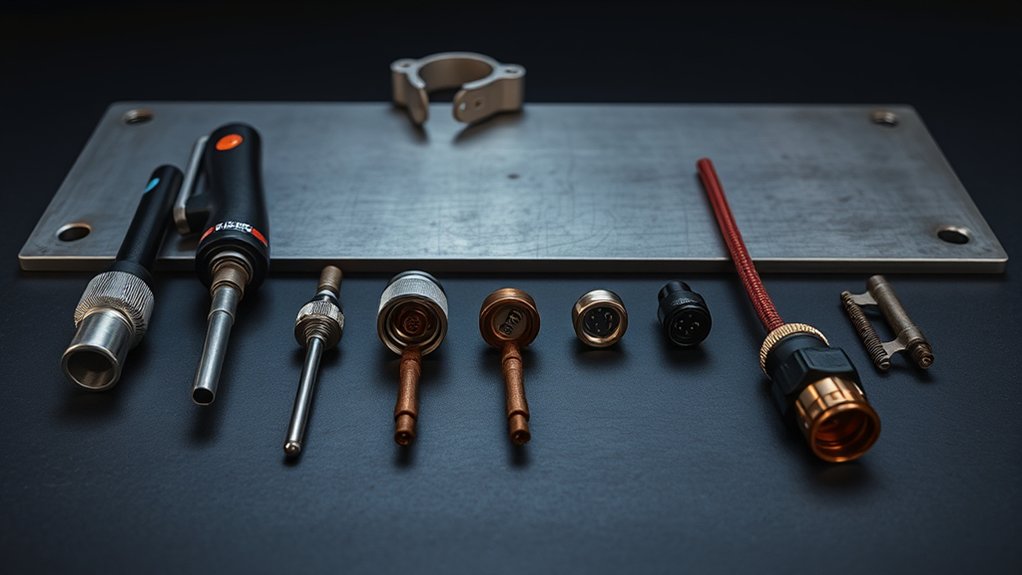
A plasma torch directs gas through a small nozzle while the power source supplies direct current. The gas becomes electrically conductive, forming a concentrated plasma jet that melts the workpiece. Gas flow then removes the molten metal from the kerf. Miller’s plasma-cutting guide explains the same basic sequence: gas passes around an electrode, becomes ionized, and exits through the torch tip.
A torch is part of an engineered system. The power source, lead set, start circuit, gas path, consumables, and safety interlocks must work together.
In a normal transferred plasma-cutting arc, the electrode is negative and the workpiece is positive. The pilot arc first forms inside or near the torch, then transfers to the conductive workpiece. The nozzle constricts and focuses the gas and arc. The swirl ring controls gas movement and electrically separates parts inside the torch.
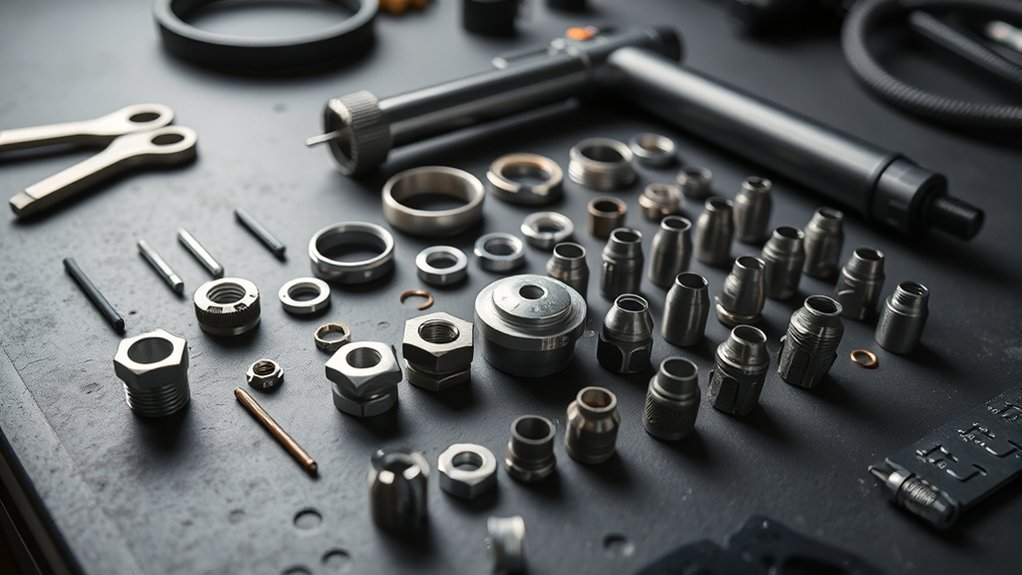
The shield, shield cap, retaining cap, or deflector varies by torch design. Depending on the system, these parts can protect the nozzle from spatter, direct secondary gas, help cool nearby consumables, support drag cutting, and operate a parts-in-place safety circuit. Use the exact stack shown in the torch manual.
Electrodes and nozzles are selected for a specific torch family and current range. The wrong or worn parts can cause hard starts, double-arcing, a wider kerf, heavy bevel, excess dross, and short consumable life. Air-plasma systems also need the specified volume of clean, dry, oil-free air. Hypertherm notes that contaminated gas can damage internal components and reduce cut quality and consumable life.
Types of Torches and Starting Methods: HF vs. Blowback
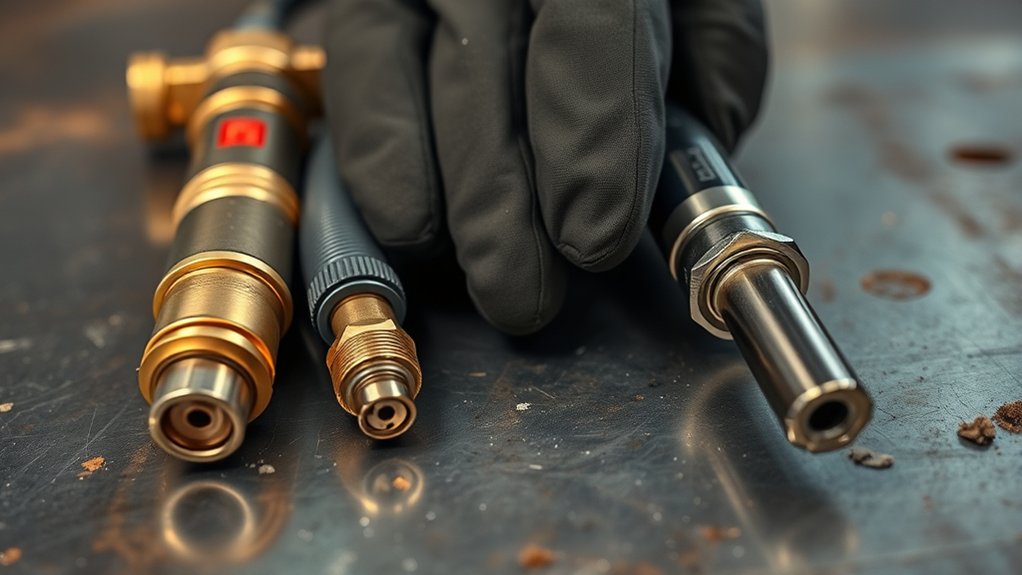
The ignition method is one of the first compatibility checks. Common systems include high-frequency or high-voltage spark start, moving-electrode or blowback start, touch start, and other manufacturer-specific pilot-arc designs. These methods use different torch parts and power-source circuits.
Do not assume that a standard HF torch can replace a blowback torch, or the reverse. However, this is not an absolute ban on every cross-system retrofit. For example, ESAB’s Thermal Dynamics 1Torch is designed to support several starting systems when installed with the correct lead and connection. Likewise, Hypertherm Duramax retrofit torches are made for named older Powermax and MAX systems. The approved configuration—not the general torch category—decides compatibility.
High-Frequency Start Basics
HF-start systems use a high-voltage, high-frequency signal to ionize the gas and establish the pilot arc. The power source, torch lead, grounding, shielding, and nearby controls must be designed for that electrical environment.
High-frequency starting can create substantial electromagnetic interference. This matters around CNC controls, computers, motor drives, communication cables, and torch height controllers. Follow the plasma-system manual for cable separation, bonding, grounding, and shielding. Do not try to cure interference by removing a protective earth connection.
- Confirm that the power source and replacement torch support the same HF-start arrangement.
- Use the specified lead, connector, adapter, and pilot-arc components.
- Keep high-frequency and control cables separated as the manufacturer directs.
- Verify the retaining-cap and parts-in-place safety circuit.
- Use the consumable set and gas settings listed for that torch and process.
Blowback Start Compatibility
A moving-electrode or blowback torch creates the pilot arc by mechanically separating internal contacts as gas pressure builds. This generally produces less electrical noise than HF start, but it does not make every blowback torch interchangeable.
| Criterion | What Must Match | Why It Matters |
|---|---|---|
| Starting design | The exact moving-electrode or pilot-arc system approved by the manufacturer | Controls ignition timing and pilot-arc operation |
| Current range | Torch, lead, and consumables rated for the intended output | Prevents overheating and unstable cutting |
| Connector and adapter | Exact part number and pin functions | A similar shell can hide different electrical paths |
| Trigger and interlocks | Switch logic, cap sensor, parts-in-place circuit, and pilot sense | Keeps the start command and safety system working correctly |
| Gas and mechanical action | Required pressure, flow, valve location, and electrode movement | The torch may not start if gas dynamics differ |
Note: “Pilot arc” is a broad function, not a universal connector standard. Two machines can both advertise pilot-arc cutting and still require different torches, leads, pinouts, and consumables.
Compatibility Factors: Amperage, Wiring, and Connector Styles
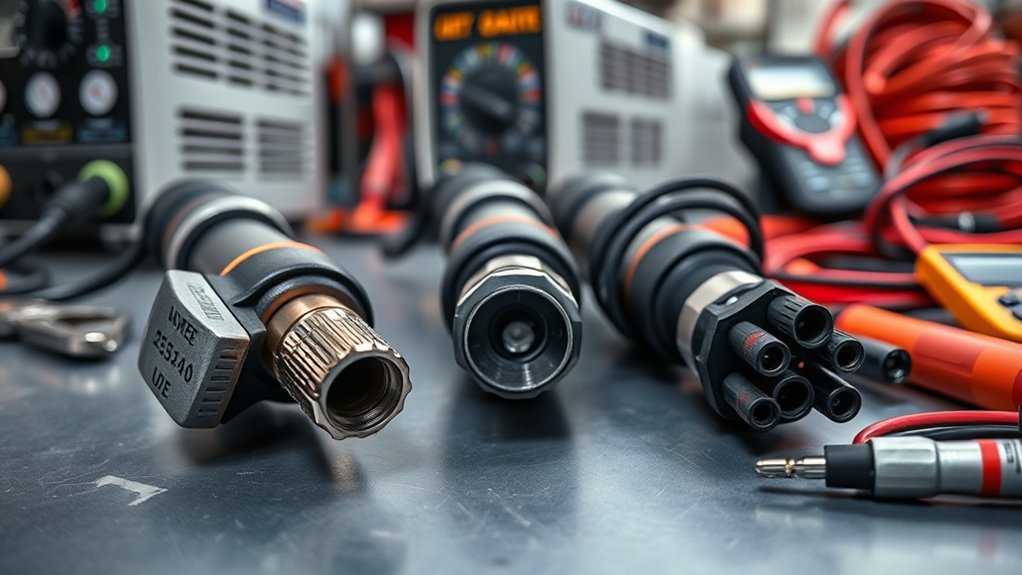
A safe match requires more than equal amperage. Treat the torch, lead set, power connector, control connector, gas connection, cooling circuit, and consumables as one assembly. The manufacturer’s approved-torch list or retrofit chart is the primary reference.
Products Worth Considering

APPLICATION: Apply to YESWELDER CUT-65DS/CUT-55DS PRO/CUT-55NHF/CUT-55NHF PLUS plasma cutters. Replacement for the S45 Plasma Cutting Torch.

Fit for: SG-55 AG-60 plasma cutter torch head.

PT31 Plasma Torch: standard length: 16ft; air pressure: 4.5-5.5bar; duty cycle for 60% with 30A
Matching Amperage Ratings and Duty Cycle
The torch and lead must be rated for the machine’s maximum current or for a manufacturer-approved restricted output. An under-rated assembly can overheat and fail. A higher-rated torch may still be incompatible because its ignition parts, gas flow, lead resistance, connector, cooling, or consumable design can differ.
- Compare the power source’s maximum output with the torch and lead rating.
- Check the torch duty cycle and cooling requirements at the planned current.
- Use the nozzle or cartridge specified for the selected amperage.
- Confirm that lead length and conductor size are approved for the power source.
- Do not assume that reducing the front-panel amperage makes an otherwise unapproved torch safe.
Handheld vs. Machine Torch
Handheld and machine torches can share a consumable family, yet they are not automatically interchangeable. A machine torch may need a straight body, mounting sleeve, remote-start circuit, divided arc-voltage connection, and CNC transfer signal. A hand torch needs a guarded trigger and may use different safety logic.
For CNC use, confirm the approved machine interface. Never connect raw torch voltage directly to a controller unless the manufacturer’s manual specifically provides that connection and the controller is rated for it.
Start Method and Pilot-Arc Compatibility
Match the exact start technology and pilot-arc arrangement. The replacement must operate with the power source’s open-circuit voltage, pilot relay or electronic start circuit, moving electrode or spark system, and arc-transfer detection. A fault, no-start condition, or repeated consumable damage after a swap often points to a mismatch in this area.
Plug, Pinout, Interlocks, and Adapters
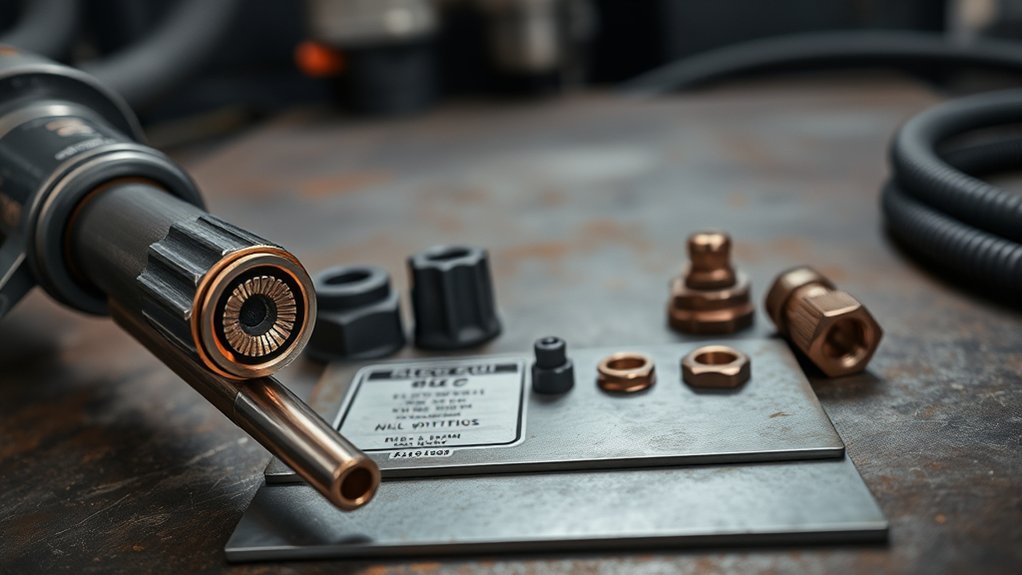
Connector shape proves only mechanical fit. Compare every documented function: main cutting-current path, pilot lead, torch switch, cap or parts-in-place sensor, gas connection, remote-start contacts, arc-transfer signal, voltage-divider output, and any identification or communication circuit.
Do not identify circuits by wire color alone; colors are not a universal standard. Use terminal numbers, pin labels, and the exact wiring diagram. An adapter should have a manufacturer or supplier part number that names both the power source and torch. A generic pigtail with no verified circuit map is not enough.
- Match keyed plugs, locking rings, seals, and strain relief.
- Compare documented pin functions—not just pin count.
- Confirm the adapter’s current, voltage, insulation, and environmental ratings.
- Check that every safety interlock remains active.
- Use continuity tests only on a disconnected, discharged circuit and only as directed by service documentation.
Gas Flow, Valves, and Cooling
The torch must receive the correct gas at the specified inlet pressure and flow. Some systems place a gas valve in the torch; others control gas from the power source. Water-cooled and air-cooled torches also require different hoses, fittings, sensors, and protection logic.
Match the gas type, hose size, valve arrangement, flow direction, pressure range, filtration, and postflow requirements. Never run a water-cooled torch without the required coolant circuit, and never substitute oxygen or another cutting gas unless the complete system is approved for it.
How Consumables Affect Plasma Torch Interchangeability
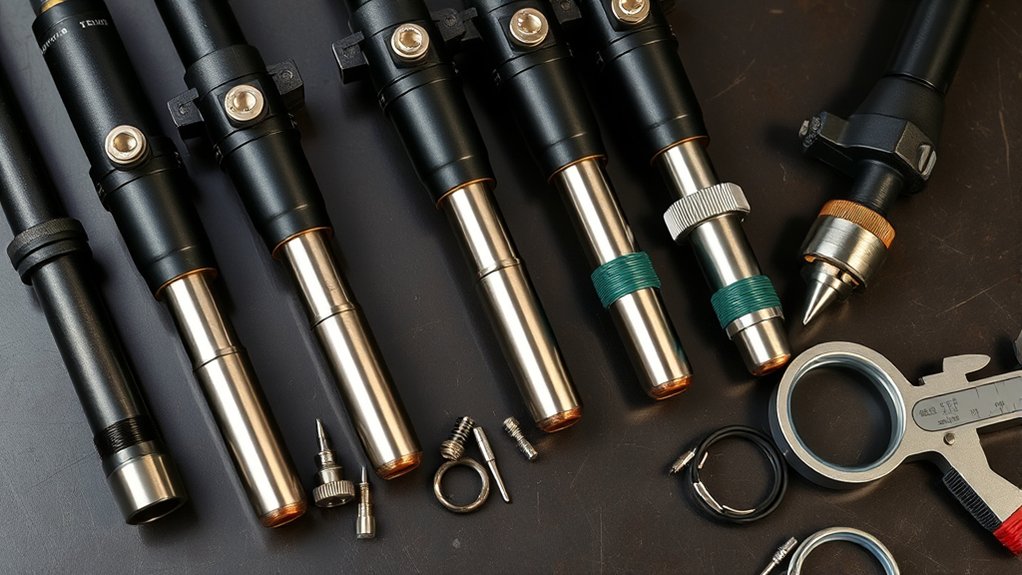
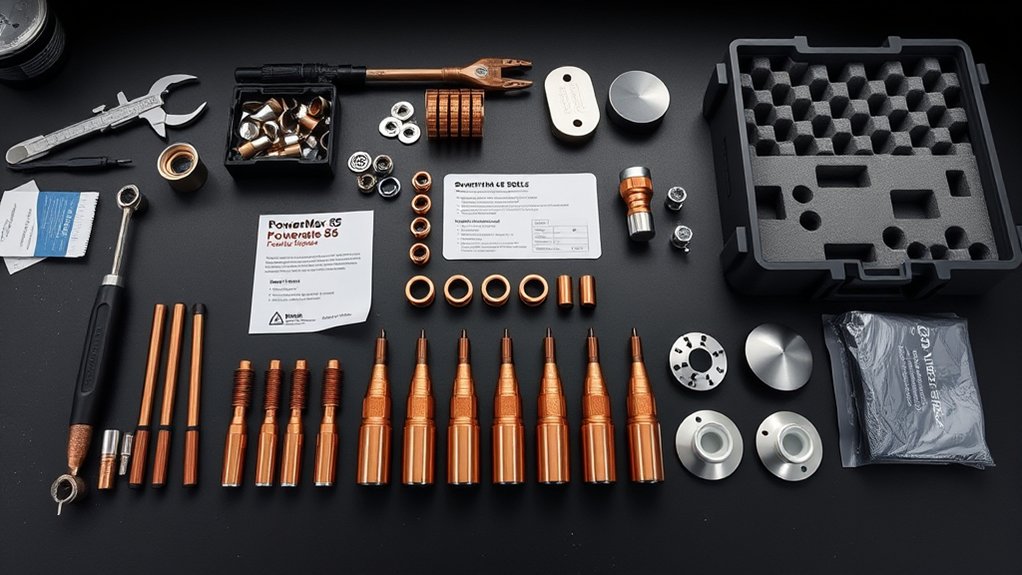
Consumables do more than fit inside the torch. Their dimensions, materials, gas passages, seals, and current ratings shape the pilot arc and cutting arc. A part that threads into place may still be wrong for the torch or process.
| Parameter | Why It Matters | What to Check |
|---|---|---|
| Consumable family | Controls fit, sealing, cooling, and arc geometry | Exact part numbers in the torch manual |
| Amperage | An undersized nozzle can overheat or lose arc control | Listed current range for the electrode and nozzle pair |
| Nozzle orifice | Affects arc focus, kerf, speed, and gas velocity | Correct nozzle for material, current, and process |
| Electrode design | Affects pilot-arc action and arc-root stability | Correct electrode or cartridge series |
| Swirl ring and gas path | Controls gas direction and internal insulation | Correct holes, orientation, seals, and gas specification |
| Shield and retaining cap | Protects parts and may complete a safety circuit | Correct cutting, gouging, drag, or mechanized configuration |
Inspect consumables before a test. Replace parts at the wear limits in the manual. Common warning signs include a deeply pitted electrode, an oval or damaged nozzle opening, cracked swirl rings, burned seals, loose retaining caps, and heavy spatter. Worn consumables can make a compatible torch appear defective.
Pro Tip: Photograph the original consumable stack and record every part number before disassembly. Similar-looking electrodes, nozzles, shields, and caps are easy to mix up.
Products Worth Considering

[Achieve Precise Cuts] PT31 Plasma Cutting Consumables – Your Essential Tool for Efficient Cutting! Whether you're working with sheet metal, steel, or any other material, superior cutting performance ensure clean, accurate, and smooth cuts.

PACKAGE INCLUDED: 5 Pcs Cup-15 Pcs Electrodes-10 Pcs Ring-30 Pcs Tip(Standard)

⚡【Precision Compatibility】 Exact fit for YESWELDER CUT 55DS Pro & 65DS (2019-2024 models). Replaces OEM# IPT40-55DS/65DS.
Brand-Specific Fit and Warranty Concerns
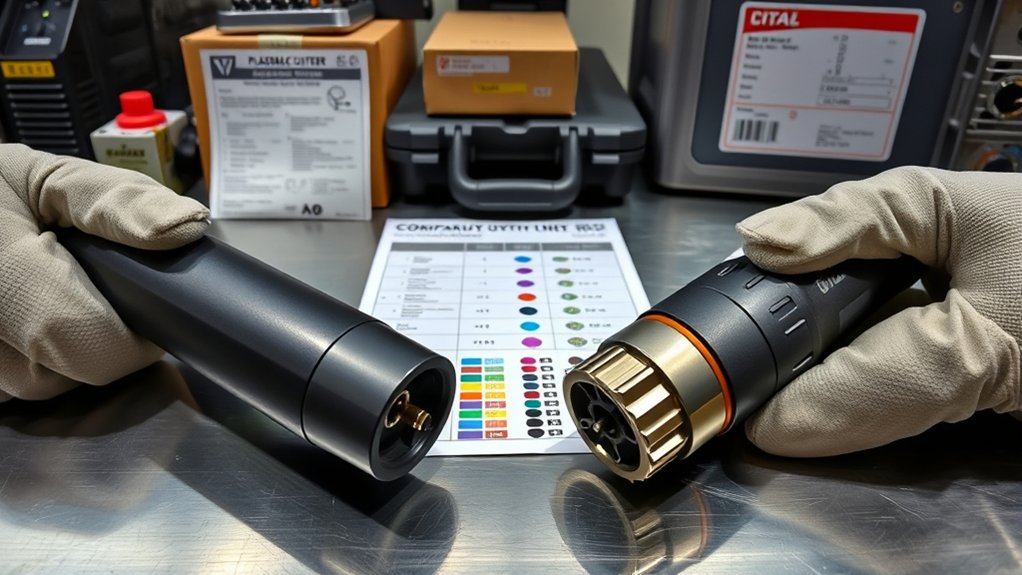
Manufacturers do not use one shared plasma-torch standard. Even within one brand, different generations can use different connectors, start circuits, consumables, communication features, and torch leads. Start with the power-source model and serial-number range, not the brand name alone.
There are three common replacement paths:
- Direct OEM replacement: The torch is listed for the exact power source and normally uses the original connection and process data.
- Manufacturer-approved retrofit: A newer torch is packaged with the lead, adapter, consumables, and instructions needed for named older systems.
- Third-party replacement: Compatibility depends on the supplier’s documented model list, adapter, electrical design, ratings, and warranty terms.
A warranty is not automatically void merely because an aftermarket part exists, but damage caused by an unapproved or incorrectly installed torch may not be covered under the equipment maker’s terms. Read the current warranty and keep the torch invoice, adapter part number, compatibility statement, and installation instructions.
In a workplace, school, insured shop, or code-regulated installation, a modification can also affect the equipment’s listing, risk assessment, or inspection status. Ask the manufacturer, the authority having jurisdiction, or the insurer when the change falls outside an approved replacement procedure.
How to Verify Fit With Part Numbers, Manuals, and Compatibility Guides
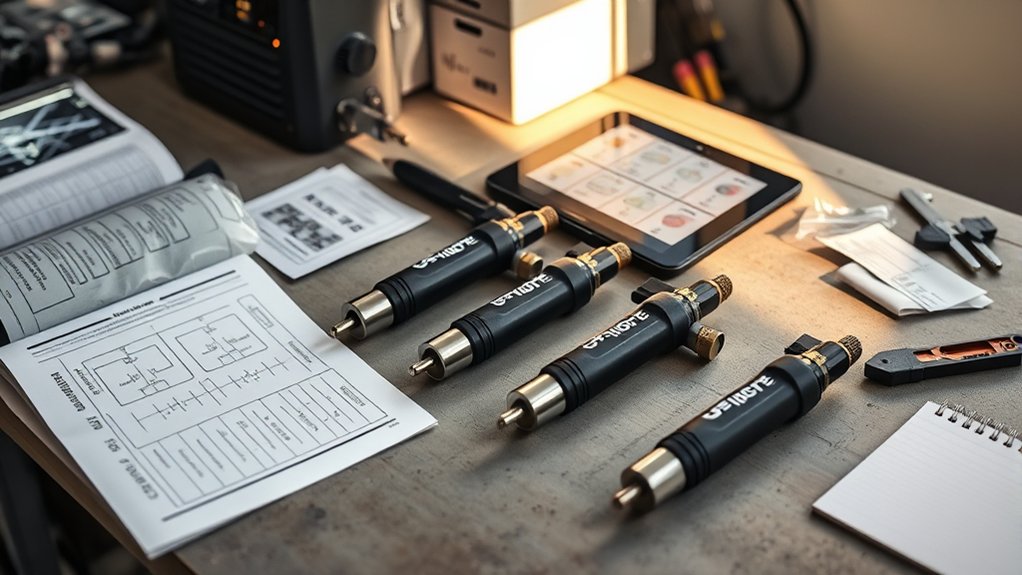
Use this process before buying or connecting a replacement torch. If the manual does not identify the torch or an approved retrofit, contact the manufacturer or an authorized service center with the model and serial number.
- Record the power source. Photograph the nameplate and write down the model, serial number, maximum output, input power, and duty-cycle rating.
- Identify the original torch. Record the torch body, complete lead assembly, connector, and consumable-series part numbers.
- Find the correct documents. Use the current operator manual, parts list, service bulletin, and manufacturer compatibility or retrofit chart.
- Match torch type. Confirm handheld or machine use, body style, mounting requirements, lead length, and remote-start needs.
- Match ignition and pilot-arc design. Confirm HF, blowback, touch, capacitor-discharge, or another named system.
- Match electrical capacity. Check torch and lead current rating, duty cycle, insulation, and cooling method.
- Match the interface. Verify the exact connector or approved adapter, pin functions, trigger circuit, pilot lead, interlocks, and CNC signals.
- Match gas and consumables. Confirm gas type, pressure, flow, filtration, valve location, postflow, electrode, nozzle, swirl ring, shield, and retaining cap.
- Check CNC and THC data. For mechanized cutting, confirm start contacts, arc-transfer signal, voltage-divider ratio, cut charts, pierce height, cut height, and target arc voltage.
- Inspect and test safely. Reassemble exactly as instructed, restore guards and interlocks, then make a short test cut on suitable scrap while watching for faults, gas leaks, abnormal sound, overheating, unstable arc, and poor cut quality.
Pro Tip: Ask for compatibility in writing. A useful confirmation names the power-source model and serial range, torch and lead part number, adapter part number, approved amperage range, consumable family, and any changed cut-chart settings.
Stop the swap if: you cannot identify a pin, an interlock would be bypassed, the torch needs a different cooling system, the gas path does not match, bare conductors or damaged seals are present, or no authoritative document confirms the combination.
Best Practices for Adapting Plasma Torches
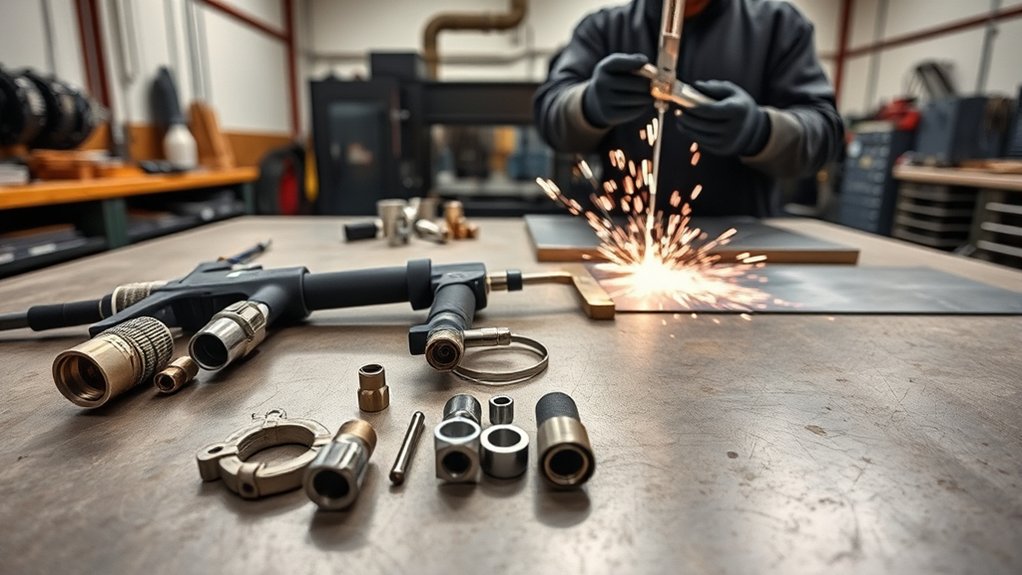
A full torch swap is rarely plug-and-play. The safest route is a direct replacement or a documented retrofit package. A good retrofit specifies the exact machines it supports and includes the correct connection, lead, consumables, and setup instructions.
What an Adapter Can and Cannot Do
An adapter can change a mechanical connector and route documented circuits. A complete retrofit may also provide the correct pilot connection, switch wiring, and fittings. An adapter cannot make an under-rated torch carry more current, convert air cooling to water cooling, create a missing safety interlock, or make unknown control logic compatible.
- Use only an adapter identified for both the torch and the power source.
- Keep the original strain relief, seals, shielding, and protective earth arrangement intact.
- Do not splice the main current lead or pilot lead unless an approved procedure specifically requires it.
- Do not bypass a retaining-cap or parts-in-place circuit to make the torch fire.
- Label the installed torch, adapter, and approved consumable set for future service.
Test Cut and Documentation
Start with new or serviceable consumables, the correct gas settings, and a clean work-clamp connection. Use scrap of a familiar material and thickness. Follow the approved cut chart, then check start reliability, arc transfer, kerf width, bevel, dross, cut speed, gas leakage, lead temperature, fault codes, and postflow.
For a CNC table, verify pierce height, cut height, target arc voltage, voltage-divider ratio, and transfer signal before production. Hypertherm explains that a THC uses arc voltage to maintain torch-to-work distance, and its cut charts note that arc voltage can rise as consumables wear. A different approved torch or lead may therefore require the cut data supplied for that retrofit rather than the old presets.
Troubleshooting After a Plasma Torch Swap
If the replacement is approved but the system does not work correctly, stop repeated firing and compare the installation with the manual. Repeated failed starts can quickly damage consumables.
| Symptom | Likely Checks | Safe Next Step |
|---|---|---|
| No gas and no arc | Trigger or remote-start circuit, parts-in-place interlock, connector seating, machine fault | Power down and compare the installed lead and adapter part numbers with the manual |
| Gas flows but no pilot arc | Wrong start system, damaged or misassembled consumables, incorrect gas pressure, pilot circuit mismatch | Inspect the consumable stack and have a qualified technician test the start circuit |
| Pilot arc forms but will not transfer | Work clamp, transfer distance, material conductivity, pilot-to-main current transition, incorrect consumables | Clean and secure the work connection and use the manual’s standoff and consumables |
| Arc sputters or consumes nozzles quickly | Wet or oily air, wrong pressure, mismatched electrode/nozzle, loose cap, incorrect current | Correct air quality and replace damaged parts with the approved set |
| Machine or CNC resets when the torch starts | HF interference, poor bonding, cable routing, shield termination, incompatible start technology | Stop and apply the manufacturer’s grounding, shielding, and cable-separation instructions |
| THC runs too high or too low | Old voltage preset, wrong divider ratio, different lead length, worn consumables, incorrect cut chart | Load the approved torch’s cut data and verify actual cut height before changing voltage |
| Torch, lead, or connector becomes unusually hot | Under-rated parts, loose connection, excessive duty cycle, failed cooling, damaged conductor | Stop immediately, disconnect power, and have the assembly inspected |
Compatibility Checklist Before You Swap a Plasma Torch
Use this checklist before connecting a replacement. A “no” or “unknown” answer means the match is not yet confirmed.
- The power-source model and serial-number range are known.
- The complete replacement torch and lead part number is approved for that power source.
- The torch is the correct handheld or machine style.
- The start method and pilot-arc design match or are covered by an approved retrofit.
- The torch, lead, connector, and consumables support the intended current and duty cycle.
- The air- or water-cooling system matches.
- The gas type, pressure, flow, filtration, valve arrangement, and postflow match.
- The connector, pin functions, trigger, pilot lead, and safety interlocks match.
- Any adapter has an exact part number for both sides of the conversion.
- The consumable family and complete stack are correct.
- CNC start, transfer, divided-voltage, grounding, shielding, and THC requirements are documented.
- The warranty, workplace, inspection, and listing implications have been checked where relevant.
- The installation passes a short, supervised test without faults, leaks, overheating, abnormal noise, or unstable cutting.
Frequently Asked Questions
Are all plasma cutter torches interchangeable?
No. Some direct replacements and retrofit torches work across named models, but there is no universal plasma-torch standard. Verify the exact power source, torch and lead part number, start method, connector and pinout, current rating, cooling, gas path, interlocks, and consumables.
Can I put a higher-amp torch on a lower-amp plasma cutter?
Only when the manufacturer or retrofit supplier approves that exact combination. Extra current capacity does not guarantee compatible start parts, gas flow, lead resistance, connector wiring, cooling, or consumables. Follow the approved output range and cut chart.
Does a matching plug prove that the torch will work?
No. The same-looking shell can carry different main-current, pilot, trigger, interlock, gas, and CNC functions. Compare documented pin functions and use the exact approved connector or adapter.
Can torch interchangeability affect CNC controller noise or interference?
Yes. A change in start technology, lead construction, grounding, shielding, or cable routing can change EMI behavior. HF-start systems are especially demanding around sensitive controls. Follow the plasma and CNC manufacturers’ grounding and cable-separation instructions.
Do interchangeable torches change duty cycle or cooling requirements?
They can. A replacement may have a different current rating, lead size, air-cooling limit, water-cooling requirement, or postflow need. Use the lowest applicable duty-cycle limit for the approved power-source-and-torch combination.
How does torch weight affect fatigue and cut consistency?
A heavier or poorly balanced hand torch can increase fatigue during long cuts, making standoff, angle, and travel speed harder to hold. Lead stiffness and strain relief also matter. Choose an approved torch that suits the work and use a guide when practical.
Are there insurance or safety-certification issues when swapping torches?
Possibly. An approved replacement normally follows the manufacturer’s documented service path. An undocumented modification can affect a workplace risk assessment, equipment listing, warranty claim, or insurer review. Check with the manufacturer, authority having jurisdiction, or insurer when required.
Will torch swapping affect arc-voltage calibration for THC systems?
It can. Target arc voltage depends on the approved cut process and is influenced by torch-to-work distance, consumable condition, gas flow, lead length, and installation. Use the replacement torch’s cut chart and verify physical cut height before fine-tuning voltage.
Are plasma torch consumables interchangeable between brands?
Usually not unless the consumable maker explicitly lists the exact torch family and part cross-reference. Similar size or threads do not prove correct gas flow, sealing, current capacity, pilot action, or safety-interlock operation.
Conclusion
Some plasma cutter torches can be interchanged, but only through a documented direct replacement or retrofit. Verify the power source, torch and lead part number, ignition system, amperage, duty cycle, connector and pin functions, interlocks, gas or cooling requirements, consumables, and CNC settings before power-up. When any item is unknown, use the approved OEM torch or get written guidance from the manufacturer or a qualified service center.
Sources
- ESAB Thermal Dynamics 1Torch — documents a purpose-built torch platform that supports several plasma starting systems with the correct connection.
- Hypertherm Duramax Retrofit Torches — shows model-specific retrofit torches and part-numbered assemblies for older systems.
- Hypertherm Torch Height Control Guide — explains how arc voltage is used to control torch-to-work distance on CNC systems.
- Hypertherm Clean Gas Line Guidance — supports clean, dry gas requirements for cut quality, consumable life, and component protection.
- Hypertherm Powermax Operator Manual — covers power isolation, safety interlocks, torch restrictions, and torch service precautions.
- OSHA Welding, Cutting, and Brazing Hazards and Solutions — summarizes electrical shock, burns, fumes, UV exposure, and PPE hazards relevant to plasma cutting.