Disclosure: As an Amazon Associate, we earn from qualifying purchases. If you click a link on this page and make a purchase, we may receive a small commission at no extra cost to you.
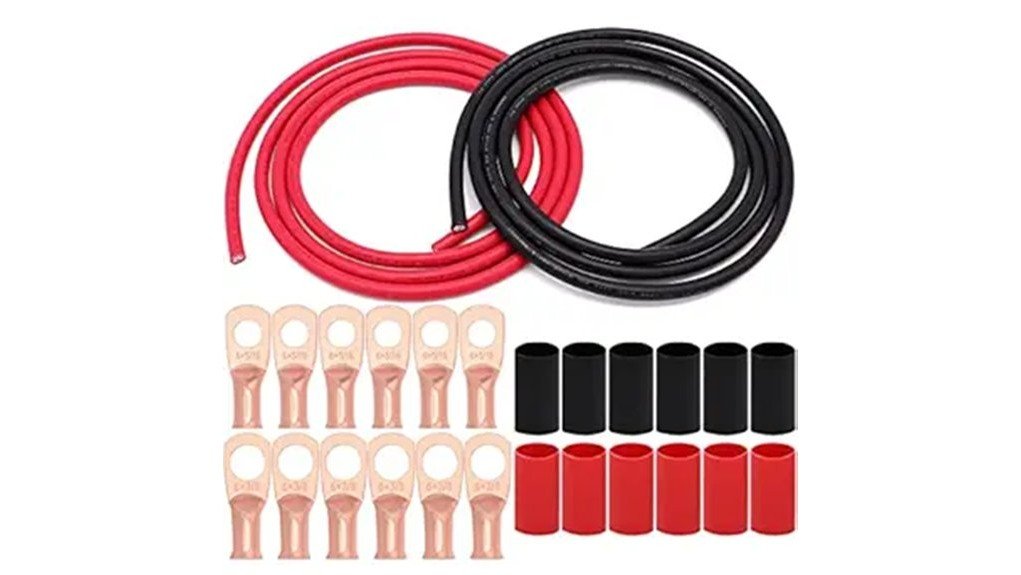
Choosing the right 6 AWG wire matters when your setup needs steady power, low voltage drop, and durable insulation. This 6 AWG gauge wire is built around high strand count tinned oxygen-free copper, a 600-volt maximum rating, and PVC insulation designed to resist moisture, flame, and chemicals. It is best suited for buyers who need flexible power cable for automotive, marine, battery, outdoor, or other demanding electrical projects. The main tradeoff is that you still need to confirm length, lug size, amp rating, fuse protection, and code requirements before installing it.
Quick Verdict
Rating: 8.0/10, Recommended with caveats
Best For: automotive wiring, marine power runs, battery connections, and high-current low-voltage projects that need tinned copper and tough insulation.
Bottom Line: This 6 AWG gauge wire makes sense if you want flexible tinned copper cable with PVC insulation and included cable lugs. Skip it if you need a verified brand, a specific cable length, a listed certification, or a code-approved building wire for permanent household wiring.
Before You Buy: Confirm the cable length, lug hole size, conductor material, temperature rating, and ampacity for your exact installation. Wire size alone does not make an electrical setup safe. Fuse size, cable run length, connection quality, heat exposure, and local electrical rules all matter.
| Specification | Detail |
|---|---|
| Product type | 6 AWG electrical wire kit |
| Wire size | 6 AWG gauge wire |
| Conductor material | High strand count tinned oxygen-free copper |
| Insulation | PVC insulation |
| Maximum voltage rating | 600 volts |
| Temperature range | -55°C to +125°C |
| Current capacity note | Often listed around 55 to 75 amps depending on insulation rating, installation method, and application |
| Included accessories | Copper cable lugs |
| Best use | Automotive wiring, marine applications, battery connections, high-current low-voltage systems, and outdoor power runs |
| Safety note | Use the correct fuse, breaker, lug size, crimping method, and installation standard for your project. |
Key Takeaways
- The 6 AWG gauge wire uses high strand count tinned copper, which helps improve flexibility, conductivity, and corrosion resistance.
- Its low-resistance design can help reduce voltage drop when the cable run is sized correctly for the load.
- PVC insulation adds protection against moisture, flame, and chemicals, making it useful for demanding indoor, outdoor, automotive, and marine settings.
- The article-supported rating is 600 volts, with a stated temperature range of -55°C to +125°C.
- Included copper cable lugs can make installation easier, but you still need to confirm lug size and crimp quality before use.
What Is the 6 AWG Gauge Wire?
This 6 AWG gauge wire is a heavy electrical cable made for power transfer in systems that need more current capacity than smaller wire sizes can safely support. The source article describes it as a high strand count tinned oxygen-free copper wire with PVC insulation, a 600-volt maximum rating, and a wide operating temperature range.
The tinned copper construction is a key reason to consider it. Tin plating helps copper resist corrosion, which matters in damp, outdoor, marine, and engine-bay environments. The high strand count also makes the cable more flexible than a solid conductor of similar size, which helps when routing wire around batteries, panels, terminals, or tight equipment spaces.
This is not a one-size-fits-all cable. You still need to match the wire to the load, cable length, fuse or breaker, terminal hardware, and installation environment. For household branch circuits, permanent building wiring, or code-regulated electrical work, check local requirements or ask a qualified electrician before you buy.
Who Should Buy It?
Best For
- DIY automotive and marine users who need corrosion-resistant tinned copper cable.
- Battery, inverter, amplifier, and low-voltage power projects where 6 AWG is the correct size.
- Installers who want flexible stranded wire with PVC insulation and included copper cable lugs.
Skip If
- You need a verified brand, exact cable length, certification, or warranty before purchase.
- Your project requires building wire that must meet a specific local electrical code.
- You do not have the correct crimping tool, fuse protection, or installation plan.
Performance Characteristics of 6 AWG Gauge Wire
The main performance benefit of this 6 AWG gauge wire is its balance of conductivity, flexibility, and durability. The high strand count tinned copper conductor helps move power efficiently while staying easier to bend and route than solid wire. That matters in vehicle, boat, battery, and equipment installations where cable paths are rarely straight.
Because 6 AWG is a larger conductor size, it can carry more current than many smaller wire gauges when installed correctly. The original article lists a typical maximum current range of 55 to 75 amps, but the safe rating depends on insulation temperature, cable bundling, ambient heat, run length, and the protection device used in the circuit.
Low resistance can also help reduce voltage drop. This is especially useful in battery-powered systems, where a long run or undersized wire can cause weak performance, heat buildup, or unreliable equipment operation. For best results, measure the full round-trip cable run and size the wire for both current and distance.
Pro Tip: Size your fuse or breaker to protect the wire and the connected equipment, not just the device you want to power. If you are unsure, use the equipment manual, a voltage drop calculator, or a qualified installer.
Quality of Materials and Construction
Material quality is the biggest reason to choose this type of wire over a cheaper generic cable. The source article describes the conductor as tinned oxygen-free copper, which is a better choice than copper-clad aluminum for many high-current projects. Copper conducts better than aluminum, while tin plating helps protect the surface from corrosion.
The PVC insulation is also buyer-useful. It gives the cable a protective outer layer against moisture, chemicals, flame exposure, and abrasion from normal routing. This does not mean you should leave the wire unprotected in every environment. Use conduit, loom, clamps, grommets, or abrasion protection anywhere the cable may rub against metal, sharp edges, or moving parts.
The included copper cable lugs add convenience, especially for battery and terminal connections. Still, the lugs only help if they match your stud size and cable size. A loose lug, poor crimp, or exposed conductor can create heat, resistance, and failure points.
Fit and Compatibility
This wire is most relevant for projects where 6 AWG is already the correct size. Common examples include automotive power runs, marine wiring, auxiliary battery systems, solar battery connections, car audio power cable, winch wiring, and inverter connections. In each case, you need to confirm current draw, run length, voltage, temperature, and fuse placement.
Do not choose 6 AWG only because it looks heavy-duty. Oversizing wire can be fine in many low-voltage systems, but it may create fit issues at terminals, fuse holders, breakers, and cable glands. Undersizing wire is worse because it can cause voltage drop, overheating, and equipment problems.
Installation and Lug Setup
The included cable lugs are useful for battery posts, bus bars, distribution blocks, and other stud-style connections. Before you install them, check that the lug barrel fits 6 AWG cable and that the ring hole fits your terminal stud. A lug that is too loose or too tight should not be forced into service.
Use a proper crimping tool for the lug type. After crimping, gently pull-test the connection, cover exposed metal with heat shrink where appropriate, and keep the cable supported so vibration does not stress the terminal. In automotive and marine setups, route the cable away from exhaust heat, sharp brackets, fuel lines, and moving parts.
Compatibility and Safety
Electrical wire safety depends on the full system, not just the cable label. The 600-volt rating and wide temperature range are helpful, but your real-world safety depends on proper sizing, overcurrent protection, connector quality, insulation condition, and installation method.
For automotive and marine projects, place the fuse or breaker close to the power source when the system design calls for it. For boats, RVs, solar systems, or code-regulated installations, follow the equipment manual and any applicable standards. For permanent household wiring, ask a licensed electrician because flexible automotive-style cable may not be approved for that use.
Applications and Benefits of Using 6 AWG Gauge Wire
This 6 AWG gauge wire fits a wide range of electrical projects where flexibility, conductivity, and durability matter. Its tinned copper construction makes it more attractive for damp or corrosion-prone environments than bare copper cable, while the PVC insulation helps protect the conductor from common job-site and vehicle hazards.
- Automotive wiring: useful for power delivery to amplifiers, auxiliary batteries, winches, and distribution blocks when 6 AWG is correctly sized.
- Marine applications: tinned copper helps resist corrosion in humid and salt-prone environments.
- Battery connections: low resistance helps reduce power loss when the run length and fuse protection are correct.
- High-current systems: the larger conductor size supports heavier loads than smaller-gauge wire when used within rating.
- Outdoor installations: PVC insulation helps protect against moisture and chemical exposure, though extra protection may still be needed.
How It Performs in Real Use
For Automotive Wiring
In cars, trucks, and off-road builds, flexible stranded 6 AWG wire is easier to route through tight spaces than stiff solid wire. The tinned copper conductor is also a useful upgrade when the cable may face moisture, road salt, or engine-bay humidity. Use clamps and protective loom where the cable passes near metal edges.
For Marine and Outdoor Use
Marine wiring benefits from tinned copper because corrosion can raise resistance and shorten cable life. The PVC insulation adds moisture and chemical resistance, but it should not be treated as a substitute for proper routing, sealed connections, and strain relief. Check the cable and lugs regularly if the setup is exposed to water or vibration.
For Battery and Inverter Connections
Battery and inverter systems need low-resistance wiring because voltage drop can affect performance. A 6 AWG cable can be a solid choice for the right amp range and run length, but it is not automatically correct for every inverter or battery bank. Always check the equipment manual for the required wire size and fuse rating.
For Long-Term Use
The tinned copper conductor and PVC insulation can support long service life when the cable is stored and installed correctly. Keep unused wire in a cool, dry place away from direct sunlight, oil, and sharp objects. During use, inspect for cracked insulation, heat discoloration, loose lugs, or stiff sections that may indicate damage.
Setup Tips Before First Use
- Measure the full cable path before cutting, including bends, service loops, and routing around heat or moving parts.
- Check your device manual for current draw, fuse size, and recommended wire gauge.
- Confirm that the included lugs match both the wire size and the terminal stud size.
- Use a quality crimping tool, not pliers, to secure cable lugs.
- Protect the cable anywhere it passes through metal panels, bulkheads, or tight openings.
- Label the cable if it is part of a larger battery, solar, marine, or vehicle power system.
Pros and Cons
Pros
- High strand count tinned copper helps with flexibility and corrosion resistance.
- 600-volt maximum rating supports many demanding electrical projects.
- PVC insulation helps protect against moisture, chemicals, flame, and normal wear.
- Useful for automotive, marine, battery, outdoor, and high-current low-voltage systems.
- Included copper cable lugs add convenience for terminal-style connections.
Cons
- Brand, exact length, warranty, and certifications were not verified from the provided source.
- May not fit every fuse holder, terminal block, lug size, or equipment connection.
- Requires correct crimping, fuse protection, and installation knowledge for safe use.
Is It Worth the Price?
The value depends on the live Amazon price, cable length, lug quantity, and whether the listing still matches the article-supported specs. If the current listing includes 6 AWG tinned oxygen-free copper wire, PVC insulation, and usable copper lugs, it can be a smart buy for everyday automotive, marine, battery, and outdoor power projects.
It is worth considering if you care more about corrosion resistance and flexible routing than getting the cheapest possible cable. It is not the best fit if you need a clearly verified brand, exact certification, or a product made for permanent household electrical wiring.
How It Compares to Alternatives
Compared with bare copper cable, tinned copper wire is usually better for damp, marine, and outdoor environments because it offers added corrosion resistance. Compared with copper-clad aluminum wire, true copper is usually the better choice when conductivity and heat performance matter.
Welding cable can also be flexible and durable, but you still need to verify voltage rating, insulation type, temperature range, and application approval. This 6 AWG gauge wire makes the most sense if you need a tinned copper cable kit for low-voltage power delivery and the current Amazon listing matches your project requirements.
Frequently Asked Questions
What is the maximum current rating for 6 AWG wire?
The original article lists a typical range of 55 to 75 amps. The safe rating depends on insulation temperature, installation method, wire length, ambient heat, and whether the wire is bundled with other conductors.
Can this 6 AWG wire be used for automotive applications?
Yes, it can be useful for automotive power wiring when 6 AWG is the correct size for the load and cable run. Common uses include auxiliary battery wiring, amplifiers, distribution blocks, and other low-voltage power connections.
Is tinned copper better than bare copper for marine use?
Tinned copper is often preferred in marine and damp environments because the tin coating helps resist corrosion. You should still use proper connectors, sealed terminals, strain relief, and regular inspection.
How do you properly install the cable lugs?
Match the lug barrel to 6 AWG cable and the ring hole to your terminal stud. Use a proper crimping tool, cover the connection with heat shrink when appropriate, and check that the connection is tight before powering the circuit.
Is this wire suitable for high-temperature environments?
The article-supported temperature range is -55°C to +125°C, which is strong for many demanding environments. Even so, keep the wire away from exhaust parts, direct engine heat, and surfaces that exceed the insulation rating.
Can this wire be used for household electrical wiring?
Do not assume it is approved for permanent household wiring. Building wiring has code, listing, conductor, insulation, and installation requirements, so check local rules or ask a licensed electrician.
What is the best way to store unused 6 AWG wire?
Store unused wire in a cool, dry place away from direct sunlight, moisture, oil, and sharp objects. Keep it loosely coiled so the insulation does not kink or crack during storage.
The Bottom Line
This 6 AWG gauge wire is a strong choice if you need tinned copper, PVC insulation, a 600-volt rating, included cable lugs, and flexible routing for automotive, marine, battery, or outdoor power projects. It is less ideal if you need a verified brand, exact length, listed certification, or code-approved building wire. Match it to your load, cable run, fuse protection, and terminal hardware before you buy.