Choosing plasma cutter wire size starts with the machine’s electrical input—not the amperage setting shown on the cutting controls. The correct conductor depends on the cutter’s rated input current, supply voltage, phase, breaker or fuse, cable type, installation method, temperature, and distance. Mixing up these values can cause weak cutting, hot plugs, nuisance trips, damaged equipment, or an electrical fire.
Quick Answer
Size the circuit from the plasma cutter’s input-current rating—not the torch’s output amperage. Start with the data plate and operator manual, then account for voltage, phase, breaker or fuse size, conductor material, installation method, temperature, and one-way length. Use the manufacturer’s extension-cord table and local electrical code.
Key Takeaways
- Do not use the cutter’s 30 A, 45 A, 65 A, or other output setting as the branch-circuit load.
- Find the rated input current, input voltage, phase, and required fuse or breaker in the exact operator manual.
- Branch-circuit wire, extension cords, factory power cords, torch leads, and work leads use different sizing rules.
- Check ampacity first. Check voltage drop, temperature, installation method, and run length after that.
- Have a licensed electrician install or alter fixed wiring, receptacles, disconnects, breakers, and hardwired connections.
At a Glance
| Time Required | About 15–30 minutes to review the manual and measure the run; installation time varies |
| Difficulty | Moderate for planning; advanced and hazardous for circuit installation |
| Tools Needed | Operator manual, data-plate information, tape measure, circuit information, and a voltage-drop calculator; electrician’s test and torque tools for installation |
| Cost | Varies by cord length, conductor size, receptacle, breaker, disconnect, permit, and electrician labor |
Warning: Never increase a breaker or fuse size by itself. The conductors, receptacle, plug, disconnect, grounding path, equipment instructions, and local code must all support the new rating. Fixed wiring and hardwired connections should be handled by a licensed electrician.
How Plasma Cutter Input Amps and Duty Cycle Affect Wire Size
A plasma cutter has at least two different amperage values:
- Output current: The DC cutting current delivered to the plasma arc. This is often the 30 A, 45 A, 65 A, or similar number used in the product name.
- Input current: The AC current the machine draws from the building circuit at a stated voltage and phase.
Use the input-current rating for supply-circuit planning. The output setting alone cannot tell you the required branch-circuit conductor or extension-cord gauge.
A 65 A output plasma cutter does not necessarily draw 65 A from the wall. For example, the Powermax65 SYNC is rated at 44 A input on 240 V single-phase power and 27 A input on 240 V three-phase power.
The example shows why voltage and phase matter. Two cutters with the same maximum output may need different circuits because their input design, efficiency, power factor, voltage, and phase differ.
What Duty Cycle Changes
Duty cycle states how long the cutter can operate at a specified output during a set test period before it must cool. Higher output and longer cutting periods increase heat in the power supply, torch, work lead, connectors, and supply system.
Do not invent your own duty-cycle conductor reduction. Start with the input ratings and installation instructions supplied by the manufacturer. A qualified electrician can then apply any permitted welding or cutting-equipment provisions in the locally adopted electrical code.
Note: The machine’s data plate may show more than one input-current value. Follow the manual’s instruction about which value to use for installation. Hypertherm, for example, directs installers to use the higher HYP input-current value on applicable Powermax equipment.
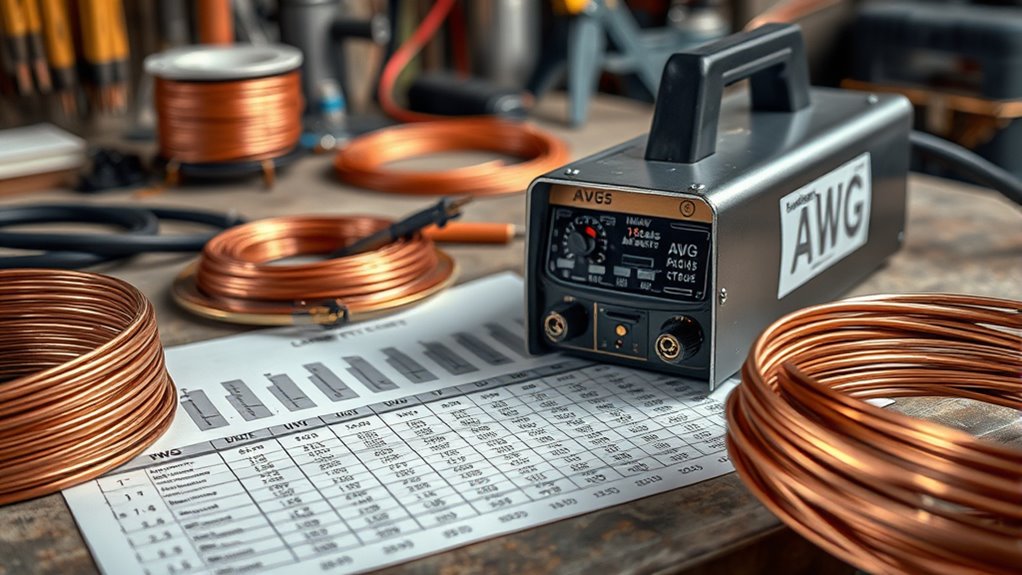
AWG Chart: Match the Gauge to the Correct Cable Type
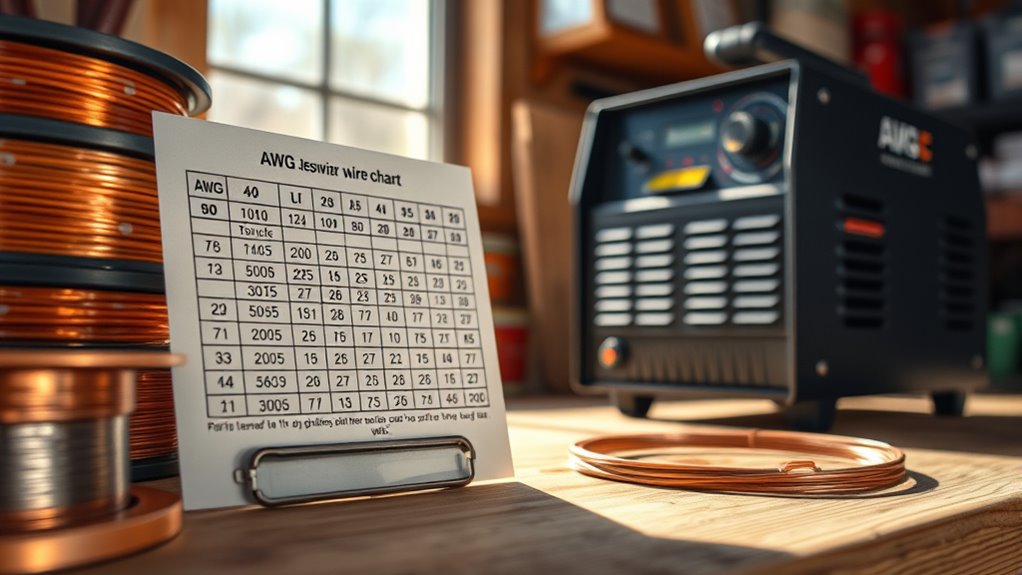
There is no safe universal chart that converts plasma output amps directly into an AWG supply-wire size. First identify which cable you are selecting.
| Cable or Conductor | What Determines Its Size | Who Should Select It |
|---|---|---|
| Fixed branch-circuit wiring | Machine input rating, breaker or fuse, conductor material, wiring method, terminal ratings, temperature, conductor count, voltage drop, and adopted code | Licensed electrician |
| Factory power cord | Manufacturer design and product listing | Do not modify unless the manual authorizes it |
| Extension cord | Manual-approved gauge, voltage, phase, length, plug, receptacle, grounding conductor, and cord listing | User may select a complete listed cord that meets every requirement |
| Work lead and clamp | Maximum cutting output, duty cycle, length, connector, and manufacturer design | Use the approved manufacturer assembly |
| Torch lead | Machine design, current, gas path, control conductors, insulation, and connector system | Use only a compatible manufacturer-approved lead |
Products Worth Considering
![ANDELI 40Amp 50ft Welder Extension Cord 8 AWG [ETL Listed], 250V NEMA 6-50 Heat-Resistant Welding Cord 3 Prong for MIG/TIG/MMA Welder, Plasma Cutter(8-50ft)](https://m.media-amazon.com/images/I/412CDiI2M-L._SL500_.jpg)
AUTHORITATIVE & SAFE: This professional 220v extension cord has great performance: 50ft length provides a safe distance from the power source. 8AWG(wire gauge), 40Amp, 3 conductors, NEMA 6-50P to 6-50R. Unlike other products on the market, our 240v extension cords have a more authoritative listed, ensuring safe and reliable power supply in any environment.

Universal Compatibility: 50 ft welder cord fits most 30Amp 3 prong welders on the market; The 10 gauge welding power cord is rated 250Volt, 7500Watts, NEMA 6-50p to NEMA 6-50r, ETL Listed

50 Amp Welder Adapter Cord: our 20FT 50Amp 10-50P to 6-50R welder adapter cord helps you connect welding machines, plasma cutters or EV to Range, Stove, Oven socket or other 10-50 power socket; Connect 10-50P plug to 3 prong 50amp outlet, and connect 6-50R receptacle to 3 prong welder plug; Support max 50 Amp overload, 240V, max wattage 12500 watts. ETL Listed
Input Amps vs. Output Amps
Read the electrical section of the exact operator manual. Record:
- Input voltage
- Single-phase or three-phase supply
- Input current at rated output
- Maximum or installation input current identified by the manufacturer
- Recommended breaker or fuse type and rating
- Required plug, receptacle, and power-cord configuration
- Any model-specific extension-cord table
For example, the current Powermax45 SYNC operator manual lists a 45 A cutting output but a 33–40 A input-current range at rated output on 200–240 V single-phase power. It also specifies a 50 A time-delay fuse for those configurations. Those figures are equipment-specific and should not be copied to another cutter.
Manufacturer Extension-Cord Example
The following table reproduces the gauge pattern given for a Powermax45 SYNC operating on 200–240 V single-phase power. It is an example of how conservative a manufacturer table can be; it is not a universal plasma-cutter extension-cord chart.
| Input | Phase | Extension-Cord Length | Manual Recommendation |
|---|---|---|---|
| 200–240 VAC | Single-phase | Up to 50 ft | 8 AWG |
| 200–240 VAC | Single-phase | More than 50 ft through 100 ft | 6 AWG |
| 200–240 VAC | Single-phase | More than 100 ft through 150 ft | 4 AWG |
Note: An extension-cord recommendation is not automatically the same as the minimum branch-circuit building-wire size. Flexible cord and fixed building wiring have different construction, ampacity tables, installation conditions, and listing requirements.
Voltage Drop and Why Distance Changes Your Gauge Choice
Every conductor has resistance. As current travels through a long circuit, part of the supply voltage is lost across that resistance. The cutter then receives less voltage than the panel or generator provides.
Excessive voltage drop can cause:
- Reduced cutting capacity
- Difficulty starting or transferring the arc
- Input-voltage fault codes
- Higher current draw in some operating conditions
- Hot plugs, receptacles, or cord ends
- Nuisance breaker trips
Use the machine’s input current in the voltage-drop calculation. For a single-phase circuit, account for the complete current path to the machine and back—not just the one-way measurement used when describing the run.
A basic expression is:
Voltage drop percentage = (current × total circuit resistance ÷ supply voltage) × 100
Resistance changes with conductor material, size, length, and temperature. Phase configuration also changes the calculation. A tool such as the Southwire Voltage Drop Calculator can help with preliminary planning, but its result must still be checked against the machine manual and locally adopted code.
Many designers aim for about 3% voltage drop on a branch circuit. Treat that figure as a design target rather than the only test. A conductor must also have adequate ampacity, suitable insulation, approved terminals, the correct grounding conductor, and the proper installation method.
Pro Tip: When a cutter performs well near the panel but poorly on a long cord, test the supply voltage at the receptacle under load. A normal no-load reading can hide excessive drop caused by an undersized cord, worn receptacle, loose terminal, or weak generator.
Copper vs. Aluminum for Plasma Cutter Power Circuits
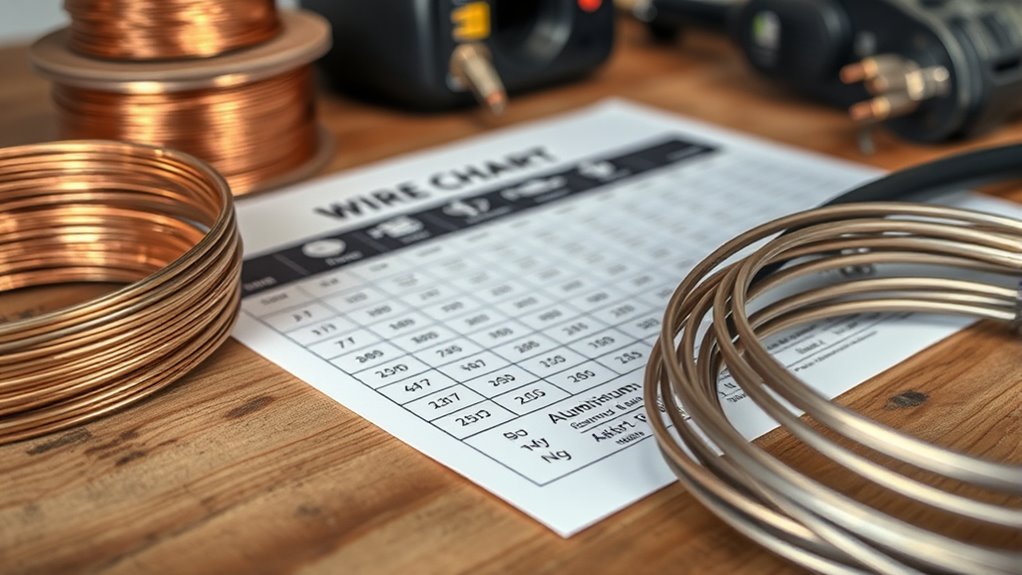
Copper is the usual choice for portable plasma-cutter power cords because it offers low resistance in a smaller conductor and is widely available in listed flexible-cord assemblies. It is also compatible with the factory plugs and connectors used on most portable cutters.
Aluminum is common in some fixed building feeders and larger circuits, but it is not a direct substitute for a copper extension cord or factory lead. An aluminum installation generally needs a larger conductor, aluminum-rated terminals, correct preparation, specified torque, and protection from movement or mechanical damage.
Conductivity, Resistance, and Terminals
For the same gauge and length, aluminum has more resistance than copper. A code-compliant conversion therefore requires more than changing the material name on a chart.
An electrician must verify:
- The required aluminum conductor size
- Whether the breaker, disconnect, receptacle, and other terminals are listed for aluminum
- Permitted conductor alloy and insulation
- Temperature and ampacity limits
- Preparation and torque instructions
- Whether the wiring method permits aluminum at that size
Weight and Flexibility
Aluminum is lighter than copper, but aluminum building wire should not be assumed to be a suitable flexible portable cord. Flexibility depends on the strand count, conductor construction, insulation, jacket, and product listing.
Do not replace a factory power cord, work lead, or torch lead with loose aluminum cable. Use the manufacturer’s replacement assembly or a specifically approved equivalent.
Grounding, Connectors, and Practical Installation Tips
“Ground” can describe several different parts of a cutting system. Using the terms correctly prevents dangerous wiring mistakes.
- Equipment grounding conductor: The green or green-and-yellow conductor that connects the cutter chassis to the electrical system’s fault-current path.
- Work lead and clamp: The cutting-current return between the workpiece and plasma power supply. It is not a replacement for the equipment grounding conductor.
- Grounding electrode system: The building’s connection to earth. Do not add a separate rod or improvised earth connection to a portable cutter unless the manufacturer, engineered system design, and applicable code specifically require it.
The OSHA arc-welding and cutting standard requires cutting-machine frames to be grounded through the grounding conductor in the supply cable or through a suitable conductor grounded at the source. The current Powermax45 SYNC manual likewise requires protective grounding through the power cord and prohibits a two-wire single-phase service.
Warning: The work clamp is not a safety-grounding conductor. Never remove a grounding pin, use a two-wire adapter, connect the cutter chassis to a random pipe, or rely on the cutting table to clear an electrical fault.
Products Worth Considering

Amp & Cable Capacity: Rated 300A and fits welding cables up to 1/0 AWG, providing a secure, stable connection between the welder and workpiece for reliable grounding.
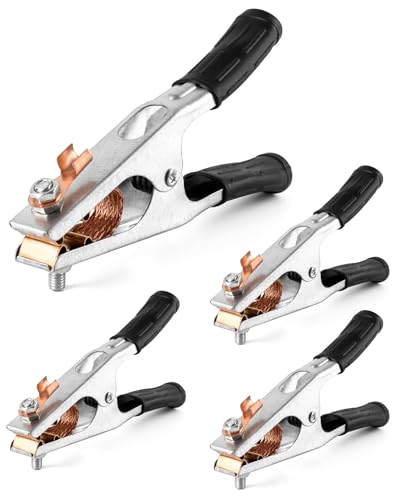
Durable: The welding grounding clamp is processed by electroplating technology, has good wear resistance, and can be used for a long time

7 inch long with 1-3/4 inch jaw opening.
Equipment Grounding Conductor Size
The equipment grounding conductor is not automatically the same gauge as the phase conductors. Its minimum size depends on the circuit’s overcurrent protection and applicable code rules. When phase conductors are enlarged for a long run, the grounding conductor may also need to be enlarged.
Have the electrician verify the requirement under the locally adopted edition of NFPA 70, National Electrical Code.
Plugs, Receptacles, and Connectors
Every component must match the voltage, phase, current rating, conductor size, and environment. Check that:
- The plug configuration matches the receptacle and machine instructions.
- The receptacle grips the plug firmly and has no cracks, discoloration, or melted areas.
- The cord has an intact grounding conductor from end to end.
- Terminals accept the conductor material and size.
- Connections are tightened to the manufacturer’s torque specification.
- Strain relief protects conductors from pulling and bending at terminals.
- The cord is protected from hot metal, sharp edges, vehicle traffic, water, oil, and pinch points.
OSHA’s flexible-cord guidance explains that grounded equipment needs a three-wire extension cord and that cords must be protected from damage and strain at their terminations.
Calculating Wire Size Step by Step for Your Setup
Use the following process before buying wire, a receptacle, or an extension cord.
| Step | Action | What to Verify |
|---|---|---|
| 1 | Identify the exact cutter | Model, regional version, serial range, and current manual revision |
| 2 | Record the input data | Voltage, phase, rated input current, installation current, and recommended fuse or breaker |
| 3 | Identify the conductor type | Fixed building wire, factory cord, extension cord, work lead, or torch lead |
| 4 | Measure the one-way run | Panel or receptacle to cutter, including routing rather than straight-line distance |
| 5 | Check ampacity | Material, insulation, wiring method, terminal temperature, ambient heat, and conductor bundling |
| 6 | Calculate voltage drop | Actual input current, voltage, phase, conductor resistance, and complete circuit path |
| 7 | Verify the complete circuit | Breaker or fuse, disconnect, receptacle, plug, grounding conductor, and manufacturer instructions |
| 8 | Install and test | Correct torque, grounding continuity, supply voltage, loaded voltage, heat, and normal cutting operation |
Example: Why the Front-Panel Amperage Is Not Enough
For one current 200–240 V single-phase Powermax45 SYNC configuration, the manufacturer lists:
- Maximum cutting output: 45 A
- Input current at rated output: 33–40 A, depending on supply voltage
- Input current during arc stretch: 36–44 A
- Recommended time-delay fuse: 50 A
- Factory power cord: 10 AWG, three-wire
- Recommended extension cord through 50 feet: 8 AWG
The factory power cord, extension cord, and fixed branch circuit do not all use the same gauge because they are different products operating under different rules and conditions.
Ampacity Adjustments the Simple Charts Miss
A generic ampacity table is only a starting point. Final conductor selection may change because of:
- High shop or outdoor temperature
- Multiple current-carrying conductors in one raceway or cable
- Terminal temperature limitations
- Flexible-cord ampacity rules
- Long conduit runs or difficult heat dissipation
- Copper versus aluminum conductors
- Local amendments and the code edition in force
These conditions are why a web chart cannot replace the equipment manual and a site-specific electrical review.
Common Mistakes and Safety Rules When Sizing Plasma Cutter Cables
- Sizing from output amperage: A cutter’s arc setting is not its branch-circuit input load.
- Using a universal output-amp chart: The same output rating can have very different input requirements at different voltages and phases.
- Increasing only the breaker: A larger breaker can leave the existing conductors, receptacle, or plug without proper protection.
- Ignoring the manual: Manufacturer instructions may specify a particular fuse type, disconnect, plug, power cord, or extension-cord gauge.
- Daisy-chaining cords: Multiple plug connections add resistance and create more points that can loosen or overheat.
- Leaving a cord coiled: A tightly coiled cord cannot release heat as well. Lay the cord out fully without creating a trip hazard.
- Using household adapters: An adapter must not defeat grounding, change voltage incorrectly, or connect a machine to an undersized circuit.
- Using the work clamp as ground: The work lead carries cutting current and does not replace the power cord’s equipment grounding conductor.
- Ignoring connector heat: A hot or discolored plug often points to a loose, worn, dirty, overloaded, or damaged connection.
- Repairing damaged cords casually: Replace cords with exposed conductors, burned insulation, crushed jackets, loose pins, or damaged strain relief using an approved assembly.
Stop Using the Cutter If: The plug or receptacle becomes hot, insulation smells burned, the grounding pin is missing, the cord has exposed conductors, the breaker trips repeatedly, or voltage falls outside the machine’s permitted range. Do not solve repeated trips by installing a larger breaker without a complete circuit evaluation.
Troubleshooting Low Voltage or Repeated Tripping
Check these items in order:
- Confirm that the circuit voltage and phase match the machine.
- Remove the extension cord and test the machine on the approved receptacle, when safe and permitted.
- Inspect the plug, receptacle, cord ends, and grounding pin.
- Verify that no other large load shares the circuit.
- Compare the cord gauge and length with the exact manual table.
- Check supply voltage while the cutter is operating.
- Have an electrician inspect breaker condition, conductor size, termination torque, and voltage drop.
- Have the cutter serviced if the electrical supply is correct but the fault remains.
Frequently Asked Questions
Can I use an extension cord safely with a plasma cutter?
Yes, when the manufacturer permits one and the complete cord matches the required voltage, phase, plug, receptacle, grounding arrangement, conductor gauge, and length. Use a listed heavy-duty cord, keep it as short as practical, uncoil it fully, protect it from damage, and never daisy-chain cords.
How does ambient temperature affect wire ampacity for a plasma cutter?
High ambient temperature makes it harder for a conductor to release heat and can reduce its permitted ampacity. An electrician may need to apply a temperature correction, select higher-temperature insulation, change the wiring method, or use a larger conductor. The terminal ratings still limit the final design.
Are inverter plasma cutters different for wire sizing?
Their input characteristics can differ, but the sizing method is the same: use the exact input-current ratings, voltage, phase, protective-device instructions, and extension-cord table supplied for that model. Do not assume that an inverter’s efficiency automatically permits a smaller conductor.
What wire insulation type is best for plasma cutter leads?
There is no single insulation type that is best for every part of the system. Use the factory torch and work leads. For supply cords, use a complete listed cord type approved for the voltage, current, environment, and manufacturer instructions. Oil resistance, water resistance, heat rating, flexibility, jacket durability, and connector listing all matter.
Can battery-powered plasma cutters use the same wire gauges?
Not as a general rule. A battery system can carry very high DC current at a lower voltage, so an AC branch-circuit or extension-cord chart does not apply to its internal battery cables. Use only the manufacturer-designed battery, charger, connectors, fuses, and internal conductors.
Is the plasma cutter work clamp an electrical ground?
The work clamp is part of the cutting-current return circuit. It must make clean, secure contact with the workpiece, but it does not replace the equipment grounding conductor in the power cord. The cutter chassis still needs the protective grounding connection required by the manufacturer and electrical code.
Why does my plasma cutter trip the breaker or make the plug hot?
Possible causes include an undersized or overly long extension cord, low supply voltage, a loose or worn receptacle, poor terminal torque, another load on the circuit, the wrong breaker or fuse type, excessive arc stretch, or an equipment fault. Stop if a connector becomes hot or discolored and have the circuit inspected.
Conclusion
The right plasma cutter wire size cannot be selected from cutting-output amperage alone. Begin with the exact machine’s input-current rating, voltage, phase, protective-device instructions, and power-connection requirements.
Next, identify whether you are dealing with fixed branch-circuit wire, a factory power cord, an extension cord, a work lead, or a torch lead. Check ampacity before voltage drop, and verify conductor material, temperature, terminals, installation method, grounding, plug, receptacle, and run length.
Use manufacturer-approved cords and leads, keep temporary cords short and fully uncoiled, and stop using any connection that becomes hot or damaged. Have a licensed electrician make changes to breakers, receptacles, disconnects, or fixed wiring.
Sources
- Hypertherm Powermax45 SYNC Operator Manual, Revision 3 — input-current ratings, grounding, factory power cord, fuse, and extension-cord recommendations
- Hypertherm Powermax65 SYNC Specifications — example of how output current differs from input current by voltage and phase
- NFPA 70, National Electrical Code — electrical-installation and conductor requirements
- OSHA Flexible-Cord Safety Guidance — cord grounding, damage prevention, strain relief, and jobsite cord requirements
- OSHA 1926.351, Arc Welding and Cutting — cutting-cable capacity, connectors, machine-frame grounding, and work-return requirements
- Southwire Voltage Drop Calculator — preliminary voltage-drop and conductor-size calculations