You want a budget-friendly plasma cutter that has enough power for your projects without creating setup problems or unnecessary expense. This guide compares five dual-voltage cutters for garage work, automotive repair, metal art, farm maintenance, and light fabrication. Focus on the start system, usable output on 110/120V versus 220/240V, air requirements, consumable availability, duty cycle, and lead length before you choose.
Quick Verdict
LOTOS LTP5000D is the most balanced choice for buyers who want an established 50A pilot-arc model. bestarc BTC500DP 8GEN offers strong value with a large display and useful air-pressure monitoring. Choose the YESWELDER CUT-60DS PRO when a non-high-frequency blowback start matters, the TOOLIOM TL-50C/HF Pro when you want adjustable 2T/4T and post-flow controls, or the S7 CUT50 for a simpler entry-level setup.
Top Picks
| Category | Product | Why It Stands Out |
|---|---|---|
| 🏆 Best Overall | LOTOS LTP5000D | Established 50A pilot-arc design, dual-voltage flexibility, and a practical balance of portability and cutting capacity. |
| 💰 Best Value | bestarc BTC500DP 8GEN | Large display, visible air-pressure data, pilot-arc timing, and 2T/4T controls at a hobby-shop price level. |
| 🎛️ Best Control Options | TOOLIOM TL-50C/HF Pro | High-frequency non-touch start with adjustable post-flow and selectable 2T/4T operation. |
| ⚡ Best Non-HF Start | YESWELDER CUT-60DS PRO | A 60A-class machine with a blowback-style, non-high-frequency start that is more suitable around sensitive electronics. |
| 🔰 Best Basic Starter | S7 CUT50 | Straightforward dual-voltage controls and a common CUT50-style platform for occasional garage cutting. |
How We Picked These Cutters
We compared the published specifications and buyer-facing features that matter most in a budget plasma cutter: start method, output on each input voltage, stated clean-cut and severance guidance, duty cycle, air-pressure and airflow needs, torch and ground-lead setup, consumable type, portability, control layout, warranty information, and recurring buyer concerns.
Advertised maximum thickness is not the same as a fast, clean production cut. Actual performance changes with voltage, material type, air quality, compressor flow, consumable condition, travel speed, and operator technique. For that reason, this guide treats maximum-thickness claims as upper limits rather than guaranteed everyday capacity.
Before You Buy
- Confirm that your outlet, breaker, plug, and extension cord match the machine’s manual.
- Check the required air pressure and CFM, not just the compressor tank size.
- Verify that replacement electrodes, nozzles, shield cups, and torches are easy to source.
- Expect lower usable output and thinner clean cuts when operating on 110/120V.
- Choose a non-high-frequency start if you plan to use the cutter near CNC controls or sensitive electronics.

If you want one cutter that covers common garage and light-fabrication work without an overly complicated control panel, the LOTOS LTP5000D is the strongest all-around choice here. It supports dual-voltage operation and uses a non-touch pilot arc, so it can start on painted, rusty, expanded, or uneven metal without requiring the nozzle to contact the workpiece.
Its main advantage is balance. It is portable enough to move around a home shop, but it still has enough output on 220/240V for plate, brackets, automotive work, farm repairs, and general fabrication. On 110/120V, expect reduced output and thinner clean-cut capacity.
Why You’ll Like It
- Non-touch pilot arc helps with rough, painted, and rusty surfaces.
- Dual-voltage operation supports both home and workshop use.
- Front-mounted air regulation keeps routine adjustments accessible.
- Common use cases include weld preparation, brackets, panels, scrap cutting, and repair work.
- The established model line makes setup information and replacement parts easier to research.
Who Should Buy This
Choose it if you want a proven 50A-class machine for regular DIY work, occasional mobile repairs, or a small fabrication shop with access to 220/240V power and a suitable external compressor.
Who Should Avoid This
Skip it if you need a built-in compressor, production-level duty cycle, or a non-high-frequency start for use next to sensitive CNC controls. Also check the included torch and lead lengths before purchase if your work area is large.
What People Say
Common buyer-feedback themes include easy starts, useful cutting power for garage work, and manageable portability. Recurring complaints involve short leads, ground-clamp quality, setup confusion, and occasional early failures. Treat review comments as owner experiences rather than guaranteed performance.
Overall Sentiment: Positive, with recurring setup and cable-length concerns.

Ease Of Use
| Feature | Ease Level |
|---|---|
| Initial Setup | Easy to Moderate |
| Torch Handling | Easy |
| Controls & Settings | Moderate |
| Consumable Changes | Moderate |
| Mobility/Transport | Easy |
Safety And Durability Notes
Use the model-specific air-pressure guidance, dry compressed air, suitable PPE, strong ventilation, and a properly grounded circuit. Do not open the enclosure or attempt internal repairs unless you are qualified to service high-voltage equipment. Inspect the power cord, torch, ground lead, fittings, and consumables before use.
Check Product Details on Amazon
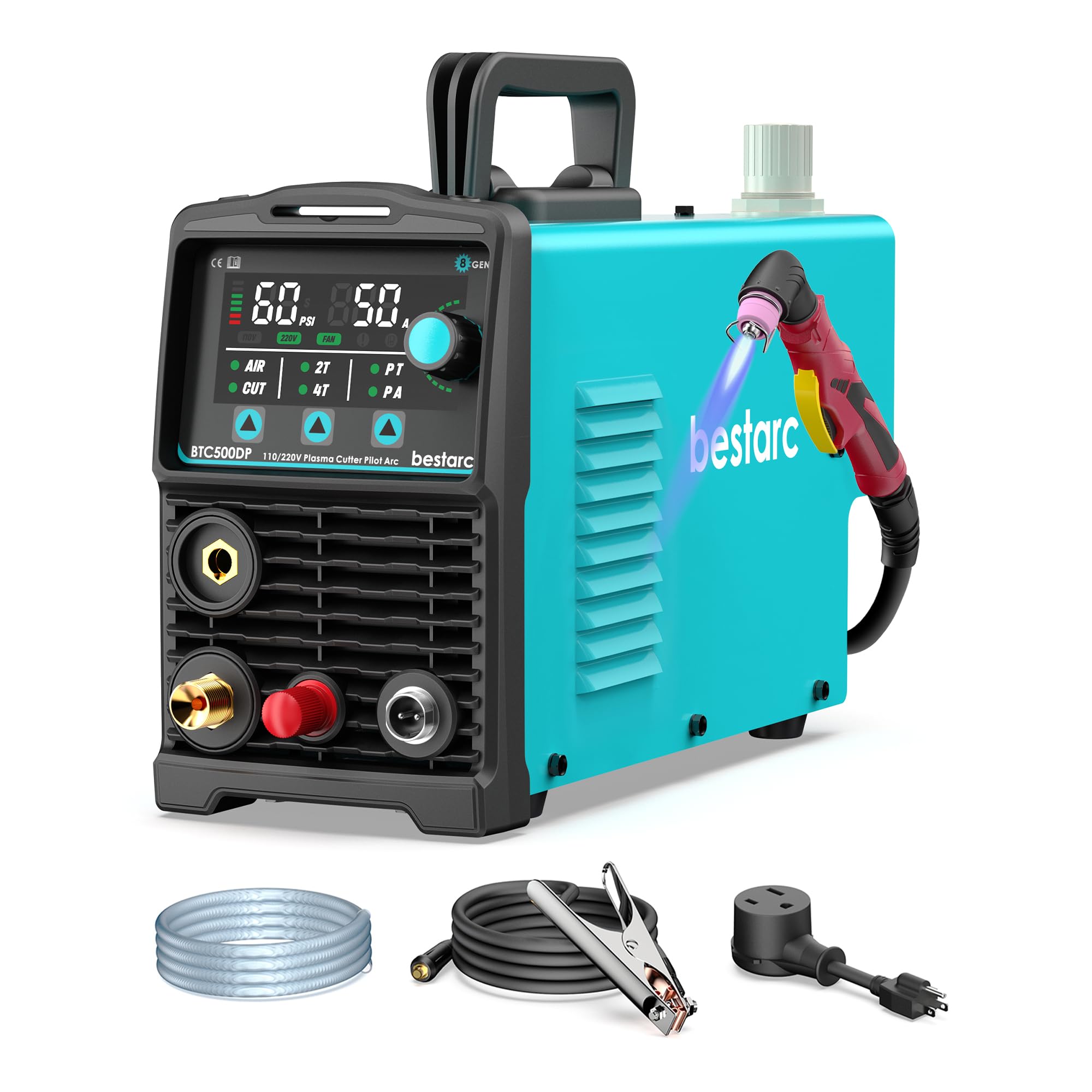
The bestarc BTC500DP 8GEN is a strong value pick if you want more setup information on the front panel. Its display shows key operating data, while the air sensor and regulator help you monitor pressure rather than relying only on an unmarked knob.
The machine uses a high-frequency non-touch pilot arc and supports 110/220V input. Adjustable pilot-arc timing, post-flow, and 2T/4T operation give it more control options than many basic CUT50-style machines. The external compressor must still provide the pressure and airflow required by the current product manual.
Why You’ll Like It
- Large display makes current, voltage, pressure, and error information easier to see.
- Non-touch pilot arc is useful on mesh, paint, rust, and uneven surfaces.
- Adjustable post-flow helps cool the torch after a cut.
- 2T/4T modes can reduce trigger fatigue during longer cuts.
- AG60P-style consumables are commonly available from multiple sellers.
Who Should Buy This
It suits DIY fabricators and small shops that want a feature-rich 50A cutter, visible air-pressure information, and the flexibility to work from 110V for lighter jobs or 220V for higher output.
Who Should Avoid This
Choose another model if you need a non-HF start for a CNC table or sensitive electronics. Buyers who prefer the simplest possible control panel may also find the timing and mode settings unnecessary.
What People Say
Buyer feedback commonly praises the display, pilot arc, and cutting ability for hobby work. Repeated concerns include fitting leaks, short leads, inconsistent accessories, and occasional quality-control problems. Inspect all external connections before first use and contact the seller rather than opening the case if something appears loose or damaged.
Overall Sentiment: Positive, with some quality-control cautions.

Ease Of Use
| Feature | Ease Level |
|---|---|
| Initial Setup | Easy to Moderate |
| Torch Handling | Easy |
| Controls & Settings | Moderate |
| Consumable Changes | Moderate |
| Mobility/Transport | Easy |
Safety And Durability Notes
Set pressure while air is flowing if the manual directs you to do so, and confirm that your compressor can maintain the required CFM. High-frequency arc starting may interfere with nearby electronics. Keep the machine dry, use a moisture separator, and stop cutting when the stated duty cycle requires a cooling period.
Check Product Details on Amazon

The TOOLIOM TL-50C/HF Pro is aimed at users who want a compact cutter with adjustable operating modes. It combines dual-voltage input, a high-frequency non-touch pilot arc, a front display, post-flow adjustment, and selectable 2T/4T trigger control.
It is a practical fit for weekend fabrication, automotive sheet metal, brackets, and general repair work. As with the other 50A-class machines, the cleanest results will normally come on material well below the advertised maximum severance figure, especially when using 110V.
Why You’ll Like It
- Selectable 2T/4T modes provide more trigger-control flexibility.
- Adjustable post-flow helps cool the torch and protect consumables.
- Non-touch pilot arc starts without dragging the nozzle on the work.
- Front pressure display makes setup and troubleshooting easier.
- Dual-voltage input works for light home use and higher-output shop use.
Who Should Buy This
It is best for hobbyists who want more control than a basic analog CUT50 machine and who are comfortable following the manual for pressure, current, and post-flow settings.
Who Should Avoid This
Skip it if you need a non-HF start, verified CNC compatibility, or industrial duty cycle. The seller’s thickness wording has varied across listings, so confirm the current model manual before buying for a specific plate thickness.
What People Say
Positive feedback often mentions easy pilot-arc starts and useful control features. Common complaints focus on hoses, fittings, regulator quality, and inconsistent quality control. These are reasons to inspect the external setup carefully, not reasons to open the machine.
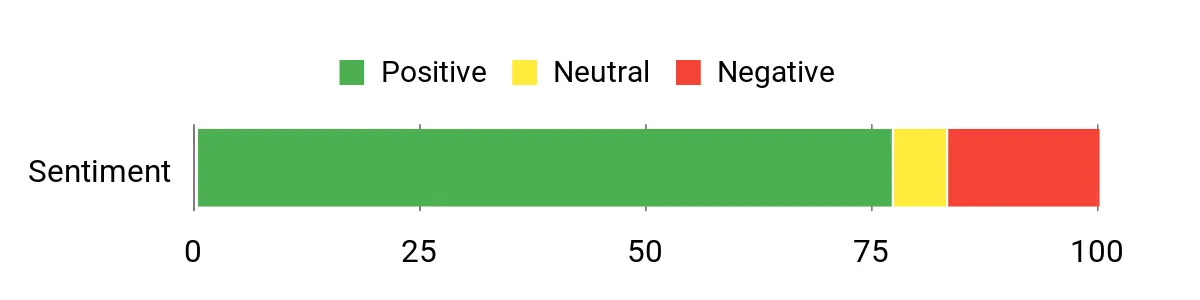
Overall Sentiment: Generally positive, with accessory-quality concerns.
Ease Of Use
| Feature | Ease Level |
|---|---|
| Initial Setup | Easy to Moderate |
| Torch Handling | Easy |
| Switching Voltage | Moderate |
| Controls & Settings | Moderate |
| Consumable Changes | Moderate |
Safety And Durability Notes
Use dry air, a suitable moisture trap, and the pressure specified for the selected voltage. Do not switch input voltage while the machine is connected to power. Follow the manual for plug and breaker requirements, and have damaged fittings, cords, or internal components handled by a qualified service technician.
Check Product Details on Amazon
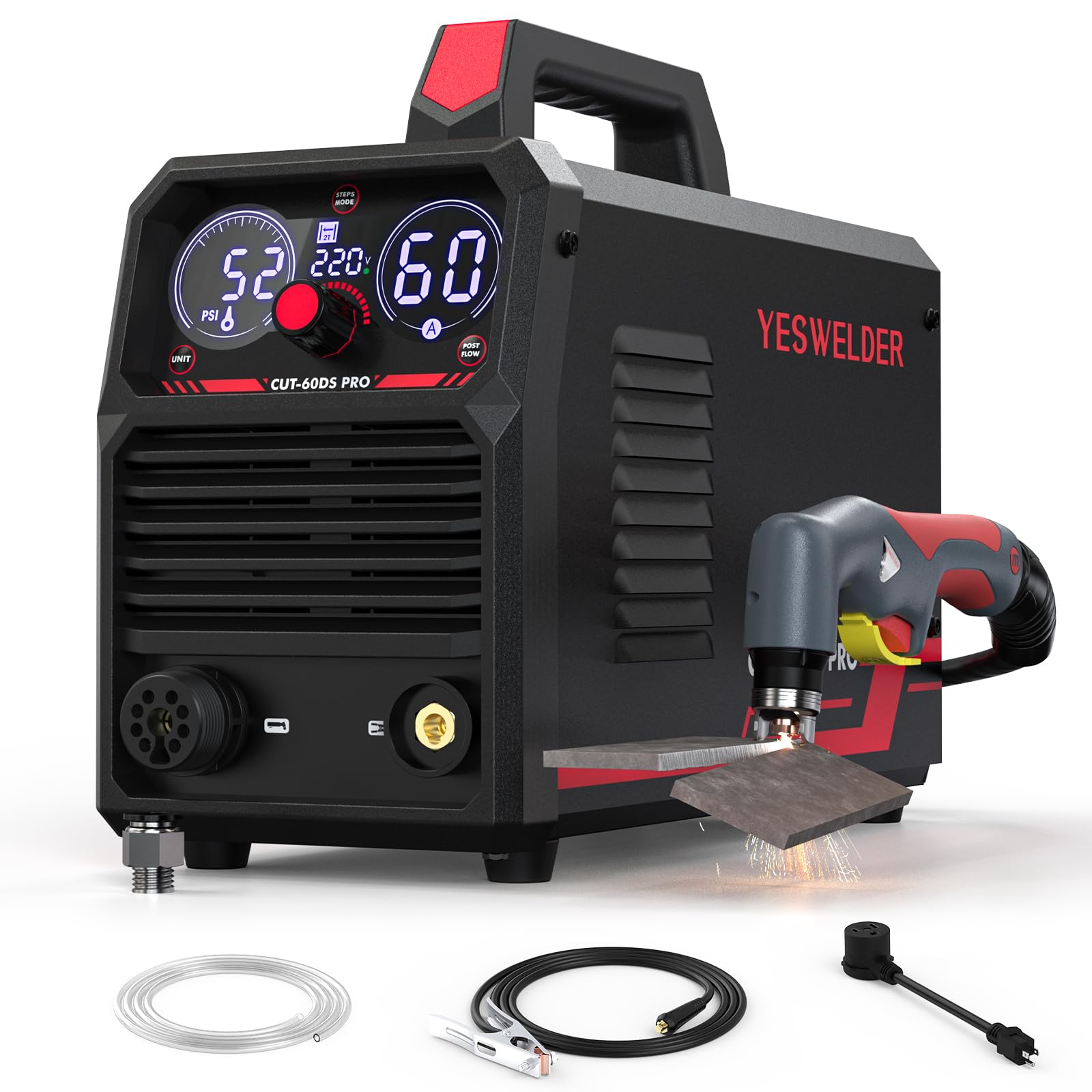
The YESWELDER CUT-60DS PRO is the best fit in this group when you want a non-high-frequency blowback start. That design reduces the electrical interference associated with HF starting, which can matter near CNC controls, computers, and other sensitive equipment.
It also offers more output than the 50A models when connected to suitable 220V power. The higher maximum rating does not mean every 1-inch cut will be clean or fast. Use the model’s ideal-cut guidance for routine work and treat maximum-cut figures as occasional severance limits.
Why You’ll Like It
- Non-HF blowback start is better suited to work near sensitive electronics.
- 60A-class output provides more headroom on 220V.
- Digital display helps with settings and fault information.
- Non-touch pilot arc works on rusty, painted, and uneven material.
- Post-flow and 2T/4T modes support longer or repeated cuts.
Who Should Buy This
Choose it for automotive fabrication, thicker plate work on 220V, or a shop where electrical interference is a concern. It is also the most logical option here for a future CNC setup, subject to confirming torch and interface compatibility.
Who Should Avoid This
It may be more machine than you need for occasional thin sheet metal. It also needs a capable power circuit and compressor to deliver its higher output, so it is not the best choice when you only have a shared 110V outlet.
What People Say
Buyers often like the cutting power, clean arc starts, digital display, and dual-voltage flexibility. Reported drawbacks include loose external fittings, consumable wear, and inconsistent accessories. Check the package and external connections before operation and use seller support for defects.
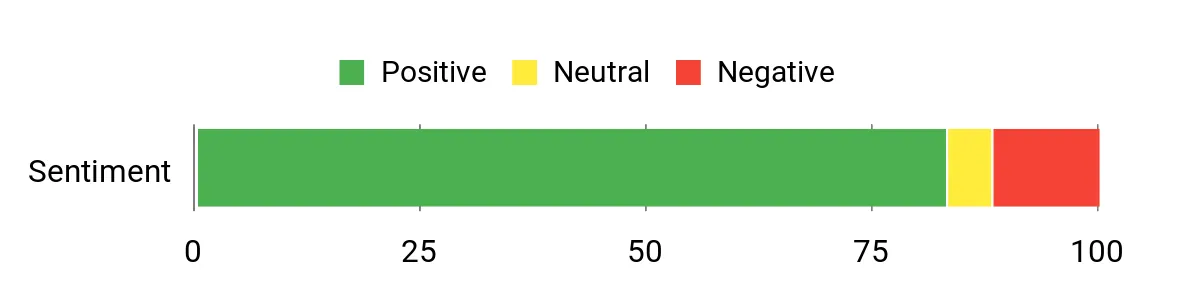
Overall Sentiment: Positive, especially for 220V performance.
Ease Of Use
| Feature | Ease Level |
|---|---|
| Initial Setup | Moderate |
| Torch Handling | Easy |
| Switching Voltage | Moderate |
| Controls & Settings | Moderate |
| Consumable Changes | Moderate |
Safety And Durability Notes
Use the correct circuit, breaker, plug, grounding, pressure, and airflow specified in the current manual. IP21-type protection does not make a plasma cutter safe for wet use. Keep the machine dry, maintain ventilation, protect nearby people from arc rays and sparks, and observe the duty cycle.
Check Product Details on Amazon

The S7 CUT50 is the simplest entry-level option in the group. It uses a familiar CUT50-style layout, supports dual-voltage input, and is intended for occasional repair, sheet-metal, bracket, and light plate work.
Its main appeal is straightforward function rather than advanced controls. However, S7 listings and manuals have used inconsistent 50A and 55A wording, so confirm the exact current output, torch type, pilot-arc function, included regulator, and plug configuration on the live listing before ordering.
Why You’ll Like It
- Simple controls are approachable for first-time plasma-cutter owners.
- Dual-voltage input provides more flexibility than a 110V-only machine.
- IGBT inverter design keeps the unit relatively compact.
- Common CUT50-style consumables may be easier to find, but verify torch compatibility.
- Suitable for occasional garage repairs and basic fabrication.
Who Should Buy This
It is best for a budget-conscious beginner who will cut occasionally and is willing to verify the exact listing details, power requirements, and consumable type before purchase.
Who Should Avoid This
Choose a better-documented model if you need dependable production use, precise published duty-cycle data, CNC compatibility, or strong manufacturer support. It is also a poor fit if you do not want to troubleshoot basic hose, regulator, or lead issues.
What People Say
Positive comments usually focus on value and adequate power for occasional home-shop work. Common concerns include thin or short leads, fitting leaks, accessory quality, inconsistent documentation, and occasional early failures.
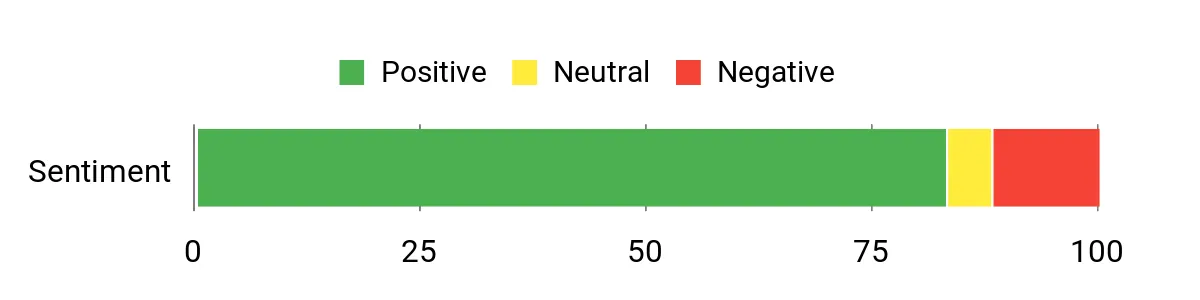
Overall Sentiment: Mixed to positive, with more documentation and quality-control uncertainty than the leading picks.
Ease Of Use
| Feature | Ease Level |
|---|---|
| Initial Setup | Moderate |
| Torch Handling | Easy |
| Switching Voltage | Moderate |
| Controls & Settings | Easy to Moderate |
| Consumable Changes | Moderate |
Safety And Durability Notes
Verify the exact plug, breaker, output, and air requirements for the unit you receive because listing details can change. Inspect the external cord, adapter, regulator, torch, and ground lead before use. Do not continue operating if a cord, plug, or connection becomes hot, damaged, or unstable.
Check Product Details on Amazon
Quick Comparison
| Product | Image | Output Class | Start Type | Cutting Guidance | Best For |
|---|---|---|---|---|---|
| LOTOS LTP5000D Plasma Cutter |
 |
50A class, dual voltage | Non-touch pilot arc | Published guidance is lower on 110/120V and higher on 220/240V; use maximum figures as severance limits. | Balanced garage and light-shop use |
| bestarc BTC500DP 8GEN |
 |
50A class, dual voltage | High-frequency non-touch pilot arc | Up to about 1/2-inch advertised clean-cut capacity on 220V; cleaner routine cuts will usually be on thinner stock. | Display, air monitoring, and value |
| TOOLIOM 50A Plasma Cutter |
 |
50A class, dual voltage | High-frequency non-touch pilot arc | Seller thickness wording has varied; verify the current manual for clean-cut and severance limits. | 2T/4T and post-flow controls |
| YESWELDER CUT-60DS PRO |
 |
60A class, dual voltage | Non-HF blowback pilot arc | Higher output on 220V; treat the largest published figure as a maximum cut, not an everyday clean-cut target. | Higher output and reduced HF interference |
| S7 CUT50 Plasma Cutter |
 |
50A/55A listing class, dual voltage | Listing-dependent; verify current model | Documentation and listings vary, so buy for lighter routine work unless the current manual confirms otherwise. | Occasional entry-level cutting |
How To Choose A Budget Plasma Cutter
Match The Machine To Your Real Cut Thickness
Do not buy from the largest number in the listing. Compare ideal clean-cut thickness, maximum severance thickness, input voltage, amperage, material type, and duty cycle. A cutter may sever thick plate slowly while producing its best edge quality on much thinner metal.
Understand Pilot Arc, HF Start, And Blowback Start
Pilot arc describes the ability to establish an arc without maintaining direct nozzle contact with the work. High-frequency and blowback are different ways to start that arc. HF systems are common and effective but may cause interference around electronics. Blowback starts are usually a better choice near CNC controls and sensitive devices.
Check Your Power Before Ordering
Dual voltage does not mean full rated output from every outlet. Most machines reduce maximum amperage on 110/120V. Confirm the required breaker, plug, conductor size, grounding, and extension-cord limits in the manual. Hire a qualified electrician when a new 220/240V circuit is needed.
Size The Compressor By Pressure And CFM
A tank size alone does not tell you whether a compressor can keep up. Compare the cutter’s required pressure and airflow with the compressor’s delivered CFM at that pressure. Add a regulator, water separator, and dryer when recommended. Wet air can shorten consumable life and cause unstable cuts.
Check Consumables And Torch Compatibility
Find the torch model before buying and confirm that electrodes, nozzles, shield cups, and replacement torches are available. Low machine cost can become poor long-term value if consumables are hard to source or listings use multiple torch versions.
Consider Duty Cycle And Lead Length
Duty cycle tells you how long the machine can cut within a set test period before cooling. Compare ratings at the amperage you expect to use, not only at a reduced setting. Also check torch, ground, and power-cord lengths because short leads can make a portable machine awkward in a real shop.
FAQ
How Do I Choose The Best Budget Plasma Cutter For My Needs?
Start with the metal type and thickness you cut most often. Then compare clean-cut guidance at your available voltage, start method, duty cycle, air-pressure and CFM requirements, torch and consumable availability, lead length, and warranty support. Choose extra capacity rather than planning to operate at the advertised maximum on every cut.
What Power And Air Setup Do I Need For Reliable Cutting?
Use the circuit and compressor specifications in the current manual for your exact model. Higher-output cutting normally requires 220/240V power, while 110/120V operation is better for thinner work. Your compressor must maintain both the required pressure and CFM. Clean, dry air and a solid ground connection are essential for consistent arc performance and consumable life.
How Do I Get Cleaner Cuts And Make Consumables Last Longer?
Use the correct amperage, air pressure, standoff, and travel speed for the material. Attach the ground clamp to clean metal, keep the torch square to the work, avoid unnecessary pilot-arc time, drain moisture from the air system, and replace worn electrodes or nozzles as a matched set when the manual recommends it.
Can I Run A Dual-Voltage Plasma Cutter On A Regular Household Outlet?
Usually, but output is commonly limited on 110/120V. A shared circuit, undersized extension cord, or weak outlet can cause voltage drop and breaker trips. Confirm the manual’s input-current and breaker requirements before use.
Is A High-Frequency Plasma Cutter Safe For CNC Use?
HF start can interfere with CNC controllers, computers, and nearby electronics if the system is not designed and grounded correctly. For a CNC table, a blowback or other non-HF start is generally easier to integrate, but you must still confirm torch compatibility, trigger control, grounding, and manufacturer guidance.
Do These Plasma Cutters Include An Air Compressor?
No built-in compressor is shown for the five models in this guide. Plan to supply a compatible external compressor, air hose, and any moisture-control equipment required by the manual.
What Buyers Prefer
Most budget-plasma-cutter buyers prioritize clean cutting at their usual thickness, stable performance on available power, easy air setup, affordable consumables, and dependable support. Advanced displays and timing controls are useful, but they do not replace a suitable circuit, adequate compressor flow, dry air, and correct technique.
Wrapping Up
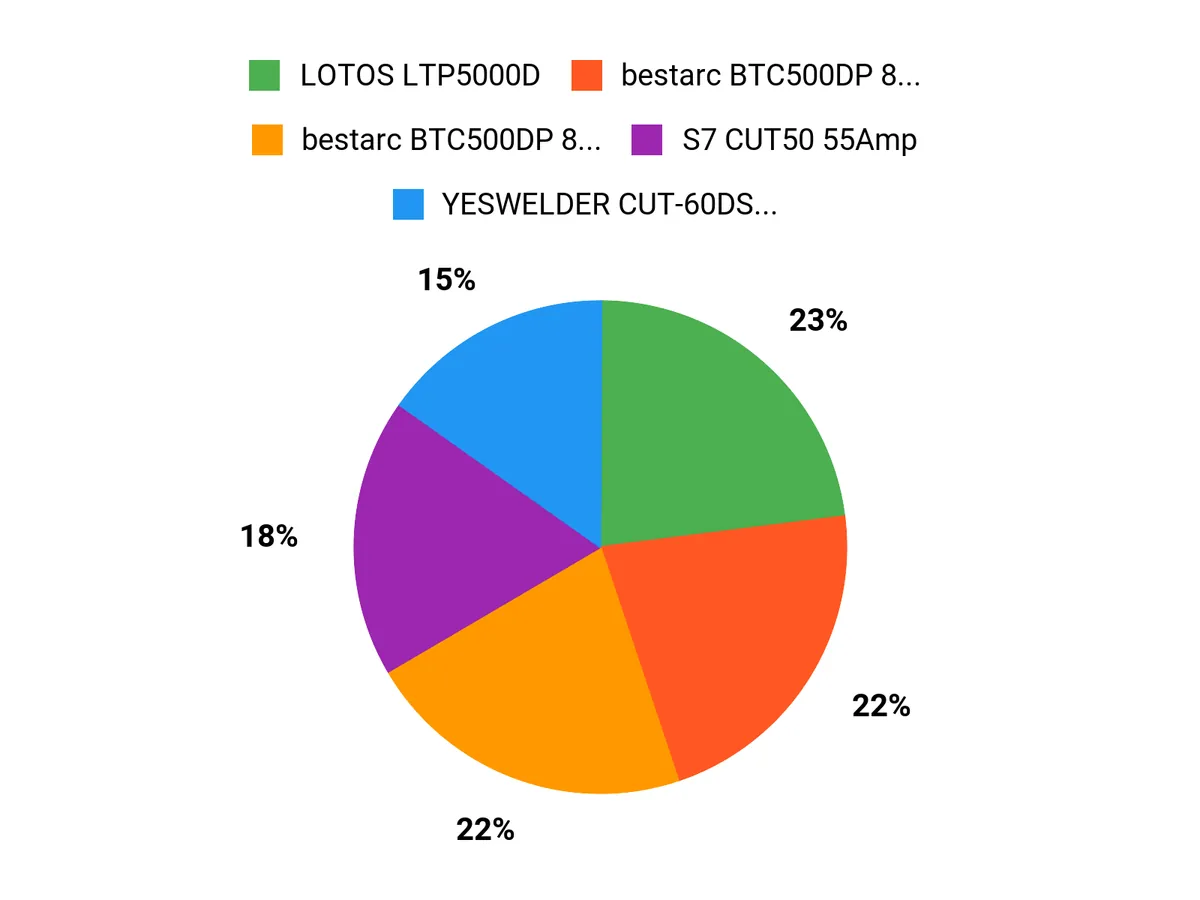
LOTOS LTP5000D remains the best overall choice for a balanced garage or light-shop setup. bestarc BTC500DP 8GEN is the value pick when you want a large display and more control over pilot-arc and post-flow settings. The YESWELDER CUT-60DS PRO is the better choice for higher 220V output and a non-HF blowback start.
Choose the TOOLIOM TL-50C/HF Pro for adjustable 2T/4T and post-flow controls, or the S7 CUT50 only when low entry cost matters more than documentation consistency and long-term support. Before ordering, verify the live listing, current manual, input plug, breaker requirement, compressor CFM, torch model, and included accessories.
Final Recommendation
For most home-garage buyers, start with the LOTOS LTP5000D. Move to the YESWELDER CUT-60DS PRO when non-HF starting or extra 220V capacity is more important. Pick the bestarc when front-panel monitoring and value are your top priorities.