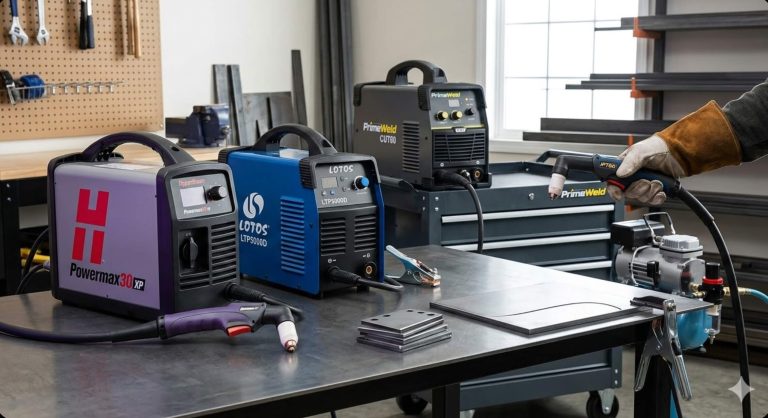
What is the BestArc BTC500XP? It’s a CNC-friendly plasma cutter built around IGBT inverter tech and a blowback (non-HF) pilot arc start. In real use, it delivers clean cuts up to about 1/2 inch, and it includes an arc-voltage output for Torch Height Controllers (THC).
✅ Verdict
- Should you buy it? Yes, if you want an affordable plasma cutter that’s genuinely CNC-compatible and avoids HF interference.
- Best for: Hobby CNC tables, light shop work, and prototyping where value matters more than production speed.
- Not for: Heavy daily production, or anyone who needs a built-in voltage divider for a picky THC setup.
- Biggest pro / con: Non-HF blowback start and CNC ports for the money, but the THC voltage output is 1:1 (raw), and 120V use can be hard on home circuits.
Quick note on the Amazon listing: At the time of this update, the linked Amazon page shows “BTC650XP” in the technical details. If you’re buying specifically for the BTC500XP (50A) reviewed here, double-check the style/model selection on the product page before checkout.
Best for / Not for
- Best for
- Budget CNC users who want a non-HF start to reduce electronic interference.
- Home shops that mostly cut 1/8″ to 1/4″, with occasional thicker work.
- People who want front-panel air control and simple, readable settings.
- Not for
- Production cutting where you want a premium torch, long duty cycles, and more refined cut quality on thick plate.
- THC setups that require a scaled voltage divider signal (like 50:1) instead of raw torch voltage.
- Anyone limited to weak 120V circuits who plans to run max power for long periods.
Quick specs (from the Amazon listing)
- Dual voltage 110/220V plasma cutter listing with non-HF (blowback) pilot arc and CNC connectivity.
- CNC connectors called out on the listing: 2-pin arc-voltage output (1:1) and 5-pin signal control.
- Listing claims can vary by setup, but it advertises up to 5/8″ clean cut and up to 1.18″ max cut on 220V.
- Listed size and weight: 6.5 x 11.6 x 15.59 inches, 29.7 lb.
📦 Unboxing and First Impressions
The BestArc BTC500XP arrives well-packed with custom-cut foam and solid padding. That’s a good sign for a budget machine, since plasma cutters do not love being bounced around in shipping.
In the box you get the basics: air hose, ground clamp and cable, extra consumables, a 120-volt adapter, and the torch. It also includes adapters for CNC table mounting and labeled cables, which makes the first setup less of a guessing game.

⚙️ Design and Important Features
This unit stands out because it aims to be CNC-compatible without the usual CNC price tag. It was around $325 at the time of testing (price may vary on Amazon). Several details are worth calling out:
- Blowback Pilot Arc Start: Uses a moving electrode, so it starts without a High Frequency (HF) signal. That’s important on CNC tables because HF can mess with electronics.
- Integrated CNC Connectivity: Rear ports for control signals and arc-voltage reading. The listing also calls out a 2-pin arc-voltage output and a 5-pin signal connector, which is what most CNC users want to see.
- Front-mounted Air Regulator: The regulator and pressure knob are on the front, so you can adjust air while the machine is flowing air.
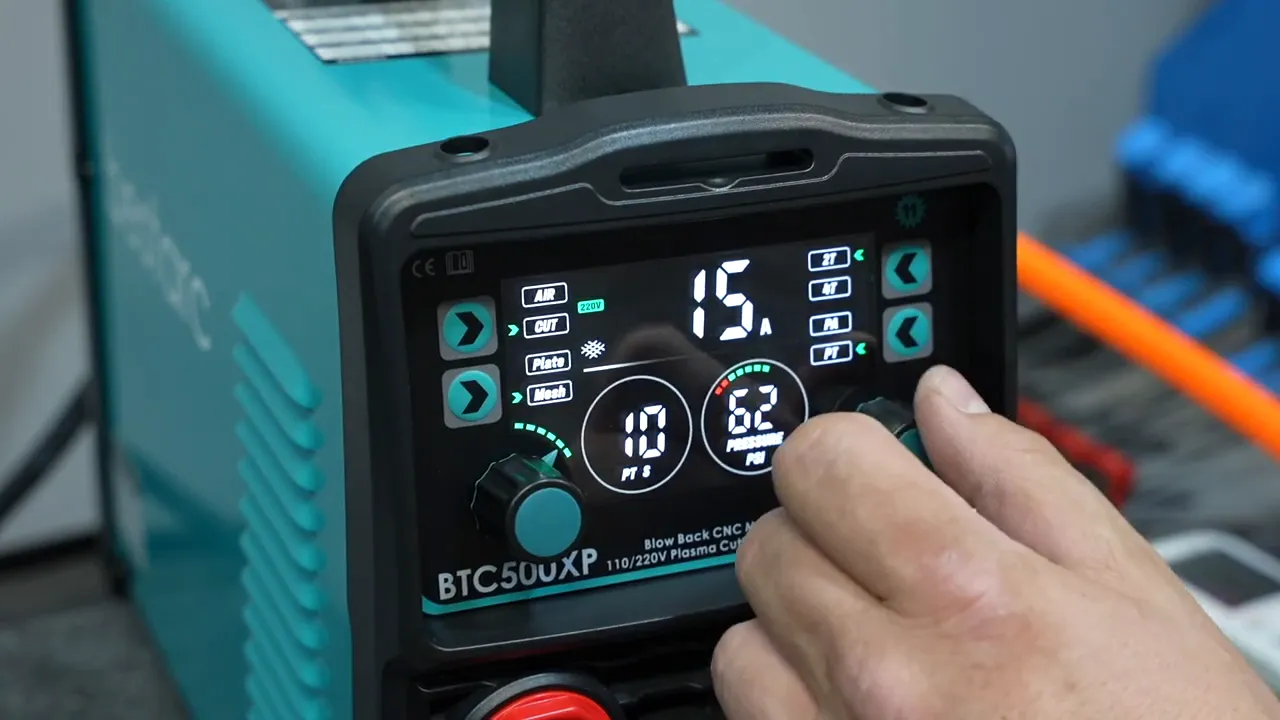
- Graphic Panel: Bright, easy-to-read screen with settings for amperage, pilot arc time, post-flow time, and 2T/4T modes.
- IP60 Style Torch: The sleeve is thinner than what you see on high-end torches. It works fine, but long-term durability is the question mark.
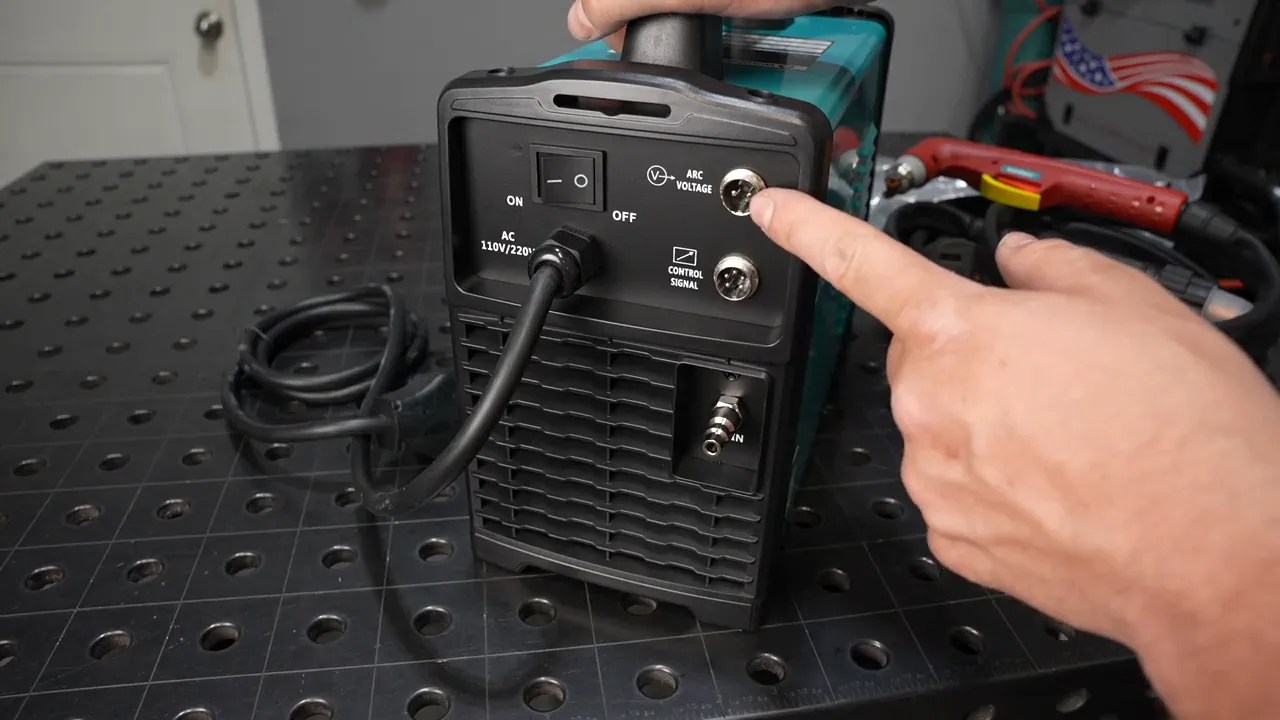
A major technical point: the voltage output is at a 1:1 ratio, meaning the THC sees raw torch voltage. Many higher-end machines use a 50:1 divider to send a scaled, safer signal. The 1:1 approach can work, but you need to be careful about what electronics you connect.
🔌 Initial Connections and Setup
Hookup is straightforward: torch connector, air line, and ground clamp. From the front panel, you can set:
- Amperage
- Pilot arc time
- Post-flow time
- 2T/4T Mode
- A mode called “mesh” (not well explained in the included documentation)
To set air pressure the easy way, open the air flow and adjust the front knob while it’s flowing. That simple step can make or break cut quality.
🛡️ Safety and Consumables
Eye protection matters more than most people think with plasma. For the amperages used in testing, a Shade 5 was used. If you’re running higher amps, a welding helmet with an appropriate shade is the safer move.
If you want deeper guidance, OSHA has a straightforward eye-protection fact sheet for welding and cutting, and NIOSH has a report focused on optical radiation hazards in plasma cutting:
- OSHA: Eye protection against radiant energy during welding and cutting (PDF)
- CDC/NIOSH: Optical radiation hazards from plasma arc cutting (PDF)
View Shade 5 Safety Glasses on Amazon
Regarding consumables, the torch can use drag-style consumables. You can also install a drag shield over the nozzle for template or stencil work, which is handy for repetitive parts on a CNC table.
🔧 Performance in Manual Cuts
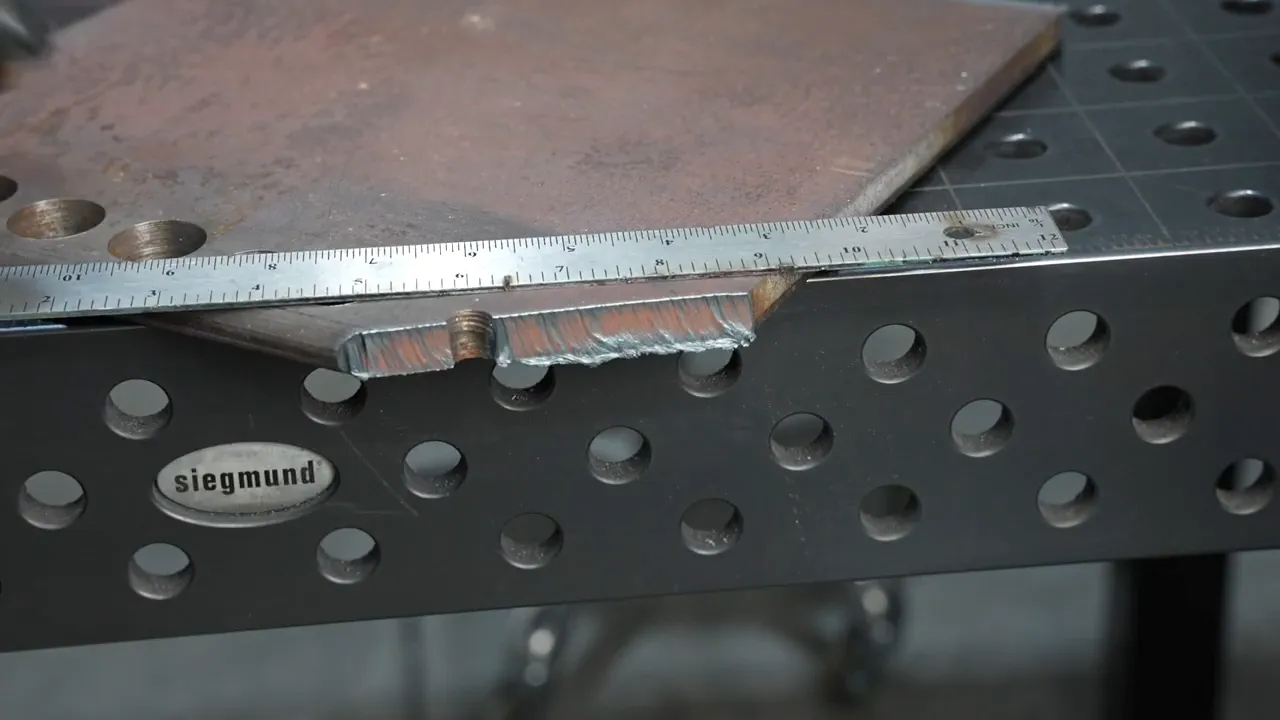
The unit was tested on 1/2″ and 1/4″ plate. Maxed at 50 amps, it can pierce 1/2″ with decent results, but dross shows up. On thicker cuts, that’s usually the machine nearing its comfort zone.
On 1/4″ and in piercing tests, the cut quality was much cleaner. There was one spot that needed a second pass, but the cut line stayed defined and straight sections had minimal dross.
🔩 Power Consumption and 120V Considerations ⚡
On the 120-volt adapter and set to maximum, input draw can get high. In our measurement, it exceeded 40 amps of input draw. That can stress typical home circuits.
Practical recommendation: check circuit capacity and avoid outlets or cords not rated for high current peaks. If your shop wiring is limited, 240V power is the better choice for long jobs or full-power cutting.
🕸️ “Mesh” Mode and Expanded Metal
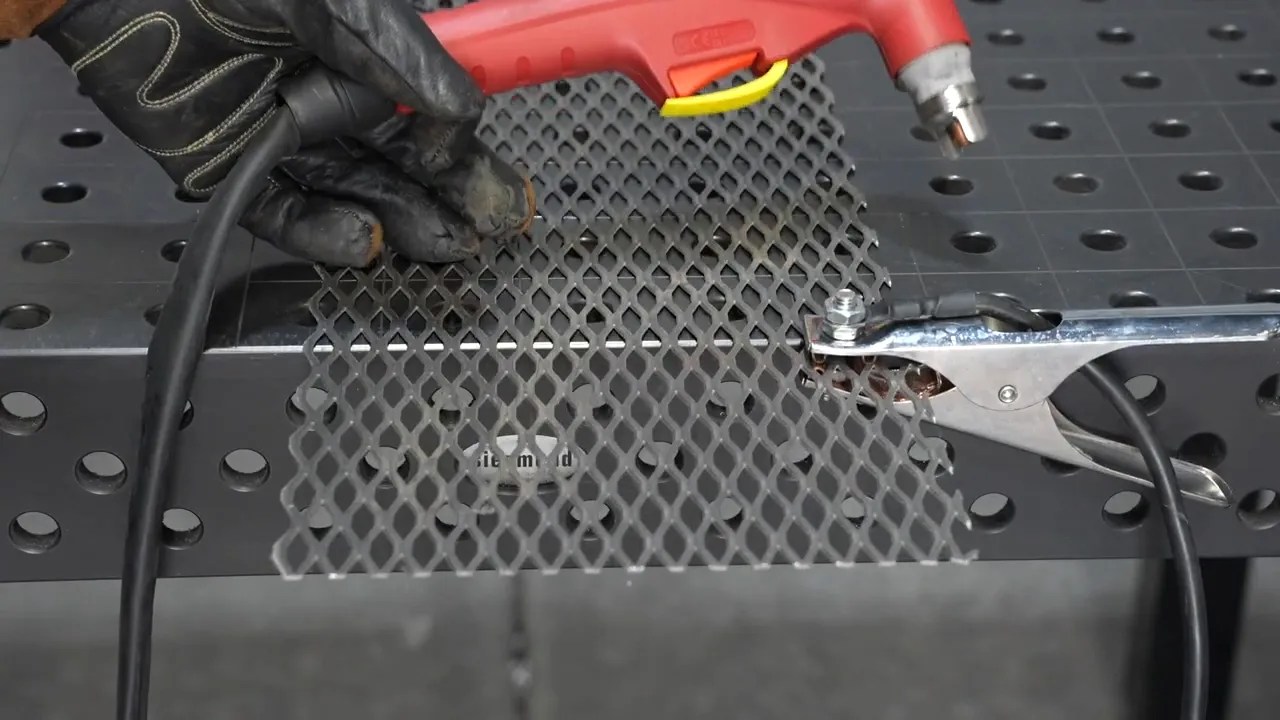
The machine includes a mesh mode intended for cutting expanded metal. In testing, the pilot arc still needed to re-ignite between sections, which caused pauses. We compared it to normal mode and did not see a clear improvement.
🖥️ CNC Integration and Torch Height Control (THC) 🔭
The BestArc BTC500XP was integrated with a Langmuir Crossfire Pro table and a Langmuir THC box that accepts raw voltage for its reading. When connecting the voltage output at 1:1, the THC showed approximately 135V in our test, and it functioned as intended.
To get good results with THC:
- Make sure the voltage signal reaches the controller cleanly and consistently.
- Verify calibration so the reading matches actual arc distance.
- If you see taper (narrowing toward the top), the cut height is often too high. Lowering height or adjusting arc voltage usually helps.
🧭 CNC Cutting Results
Circular cuts and more complex shapes were tested on 1/8″, 3/16″, and 1/4″ using the CNC table. Key points:
- Curves and corners showed a bit more dross, which is common when the table slows down.
- Straight sections cleaned up well with the right travel speed.
- Some bevel and taper looked like setup and parameter issues, mainly cut height and arc voltage.
With speed and voltage adjustments, we improved consistency and cut definition. For a budget unit, the finished parts were solid: acceptable edges, limited dross in most areas, and repeatable cuts once the table was dialed in.
✅ Pros and ❌ Cons Summary
After several tests, here is a practical summary to decide if this machine fits your needs.
- Pros
- Very competitive price for a CNC-compatible unit.
- Clear interface and bright, easy-to-read screen.
- Convenient front-mounted air regulator for real-time tweaks.
- Connectors and adapters for table mounting included.
- Cons
- 1:1 voltage output (no divider), which can be less ideal for some THC controllers.
- High current draw on 120V, which can overload home circuits.
- Torch sleeve and overall torch build feel more budget than pro.
- Limited manual and documentation, and “mesh” mode is not clearly explained.
🛠️ Practical Tips for Better Cuts
- Set air pressure while the torch is flowing. Small changes can reduce dross fast.
- If you see taper, lower cut height and re-check arc voltage. Both affect kerf shape.
- On CNC, slow a bit for corners and curves, then speed up on straight lines. Watch dross to find the sweet spot.
- On 120V, assume current peaks can be high. If your circuit is marginal, use 240V for long or high-power jobs.
- Keep spare consumables on hand, and use a drag shield for templates and repeated thin cuts.
Frequently Asked Questions (FAQ)
Is this plasma cutter compatible with CNC tables?
Yes, it has ports for control signals and a voltage output for THC. The voltage output is 1:1, so it works with controllers that accept raw voltage.
Does it need high frequency to start the arc?
No. It uses a blowback pilot arc start, so it does not require a high-frequency signal. That helps reduce interference around electronics.
What are the thickness limitations?
It can cut 1/4″ and 1/2″ with reasonable results depending on settings and speed. On thicker material, expect more dross as you reach the machine’s limit.
Can I use it on a 120V home network?
Yes, but be careful. Input draw can exceed 40A at max peaks. Check your circuit or use 240V for longer jobs and full-power cutting.
Does mesh mode improve cutting on expanded metal?
In our tests, no clear difference was observed. Documentation is limited, so results may vary depending on your setup.
What maintenance does the torch require?
Regularly inspect consumables (electrodes and nozzles) and replace them when worn. Keep the torch and sleeve clean to avoid unexpected cutouts.
🔚 Final Thoughts
The BestArc BTC500XP is a strong option if you want CNC capability without paying pro-machine prices. The blowback start, front air regulation, and THC connectivity make it practical for real projects, not just occasional use.
For home projects and prototyping, it offers a lot of value. For steady production work, it’s still worth looking at machines with built-in voltage dividers and higher-end torch setups. With the right speed and voltage tuning, the BTC500XP can produce repeatable, usable cuts.