When choosing between brushed and brushless angle grinder motors, your decision hinges on longevity and efficiency. Brushed motors are cheaper and easier to repair but only last 1,000 to 8,000 hours. In contrast, brushless motors offer a lifespan of 10,000 to 100,000 hours, require less maintenance, and operate more efficiently. While brushed models might suit casual DIYers, serious users will benefit from the higher performance and durability of brushless options. Discover more about the distinct advantages of each type.
Brushed vs. Brushless Motors: Key Differences
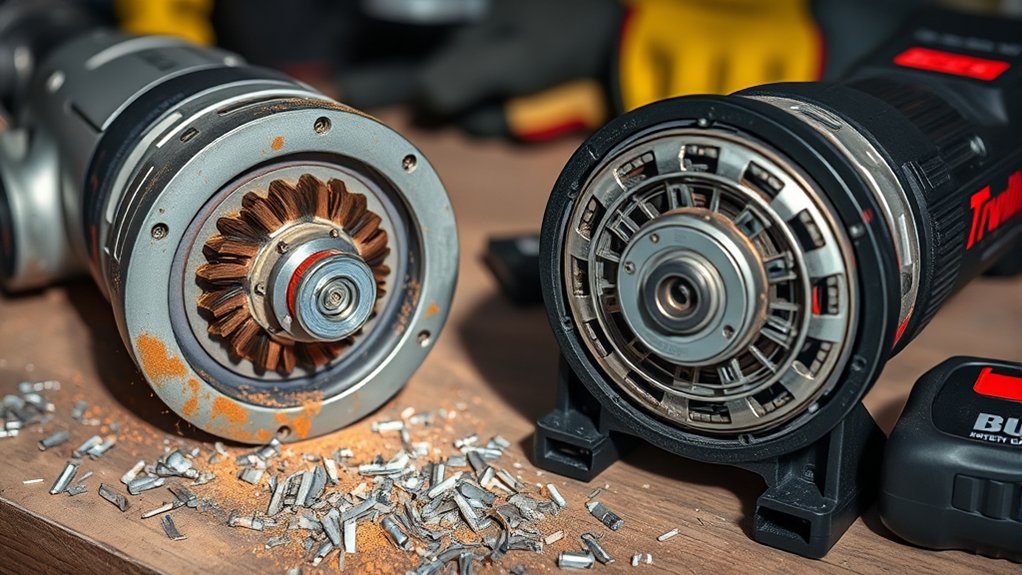
When you’re choosing between brushed and brushless angle grinder motors, it’s essential to understand their key differences. Brushed motors rely on carbon brushes and commutators, which create friction and wear, resulting in a lifespan of about 1,000 to 8,000 hours. In contrast, brushless motors eliminate these components, boasting a lifespan of 10,000 to 100,000 hours due to reduced wear.
Brushless motors also excel in efficiency, operating at 85-90% compared to 75-80% for brushed motors. This higher efficiency translates to better performance under load and longer battery life. Maintenance is another factor; brushless motors require minimal upkeep, while brushed motors need regular brush replacements and cleaning. Additionally, brushless motors operate more quietly, producing less noise and vibration. Although they come with a higher initial cost, their longevity and efficiency often justify the investment, making them a smart choice for those seeking liberation in their work.
Pros and Cons of Brushed Angle Grinder Motors
Brushed angle grinder motors come with distinct advantages and disadvantages that users should consider. One of the main benefits is their lower upfront cost, making them accessible for DIY enthusiasts. Brushed motors are also simpler to repair, as worn carbon brushes can be easily replaced without specialized knowledge. However, they produce more friction and heat, leading to increased mechanical wear and a shorter lifespan, typically between 1,000 to 8,000 hours of operation. During heavy use, you might notice reduced performance, as these motors can stall under demanding conditions. Additionally, maintenance requirements are higher; dust from worn brushes necessitates regular cleaning to maintain peak performance. So, while brushed motors can be a cost-effective choice, keep in mind the trade-offs in lifespan and maintenance when deciding on your angle grinder.
Key Advantages of Brushless Angle Grinders
While traditional brushed motors have their merits, brushless angle grinders stand out for their impressive performance and longevity. With lifespans ranging from 10,000 to 100,000 hours, they notably outlast brushed motors, which only last 1,000 to 8,000 hours due to brush wear. Their efficiency shines, operating between 85% to 90%, compared to 75% to 80% for brushed models. This means you get more work done per charge.
Brushless motors eliminate friction and heat generation from brushes, resulting in smoother operation and reduced stalling, especially at high speeds and torque. Plus, they require less maintenance since you won’t need to replace brushes, lowering long-term costs. The absence of brushes also contributes to noise reduction, making brushless grinders ideal for quieter work environments. If you value efficiency and longevity, a brushless angle grinder is a smart choice.
Performance of Brushless vs. Brushed Angle Grinders
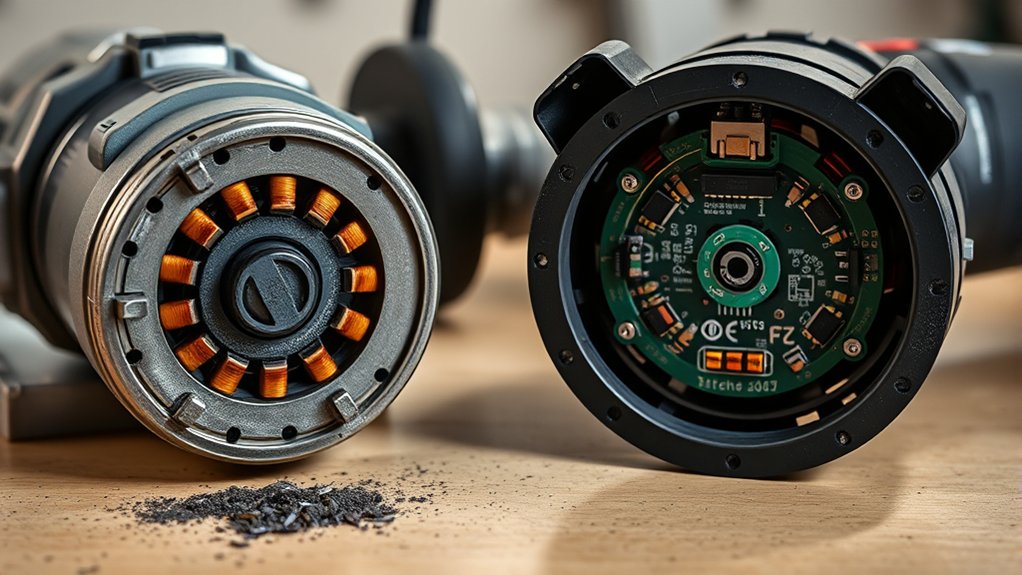
Angle grinders equipped with brushless motors deliver superior performance compared to their brushed counterparts, especially for demanding tasks. The advantages of brushless motors are significant:
- Motor Power: Brushless grinders provide more torque, reducing the risk of stalling during operation.
- Efficiency: With an efficiency rating of 85% to 90%, they extend battery life, unlike brushed motors’ 75% to 80%.
- Lifespan: Brushless models can last between 10,000 to 100,000 hours, while brushed motors typically last only 1,000 to 8,000 hours, thanks to reduced friction.
- Performance Under Load: Brushless grinders maintain consistent performance without overheating, a common issue with brushed models.
How to Pick the Best Motor for Your Angle Grinder
Choosing the right motor for your angle grinder can greatly impact your project’s success. If you’re a casual DIYer, brushed motors might be your best bet due to their lower upfront costs and ease of repair. However, if you need power tools for heavy, continuous use, consider investing in brushless motors. They offer superior efficiency, longer battery life, and enhanced torque, making them perfect for demanding tasks.
Think about your performance needs—brushless motors excel in reducing stalling during operation, while their longevity can last up to 100,000 hours compared to just 8,000 hours for brushed motors. While the initial investment may be higher, the long-term savings on battery replacements and maintenance make brushless options worthwhile. Ultimately, evaluate your budget and how often you’ll use the tool to make the best choice for your angle grinder.
Frequently Asked Questions
Which Is Better Brushless or Brushed Angle Grinder?
Brushless angle grinders are better. They offer superior power efficiency, lower maintenance requirements, enhanced torque, and consistent performance. Though they cost more upfront, their lightweight design and battery compatibility improve your overall user experience considerably.
What Are the Downsides of a Brushless Motor?
Brushless motors have higher initial costs, complex maintenance requirements, and potential heat generation issues. They can also be bulkier, may produce more noise, and their torque output and lifespan differences might not suit every project.
Which Is Better, a Brush or a Brushless Motor?
A brushless motor’s better due to higher efficiency, power output, and torque response. It requires less maintenance, generates less heat, and operates quieter, making it more suitable for demanding applications despite the higher initial cost.
Do Brushless Motors Last Longer Than Brushed Motors?
Yes, brushless motors last longer than brushed ones due to better motor efficiency, reduced heat generation, and lower maintenance requirements. Their durability factors make them suitable for demanding applications, despite higher initial costs in a cost comparison.
Conclusion
In choosing between brushed and brushless angle grinder motors, consider your specific needs. While brushed motors may be cheaper upfront, they often wear out faster. Brushless motors, though pricier, offer longer life and better performance, making them a smarter long-term investment. Don’t let initial costs deter you; think of the savings in maintenance and replacements. By selecting the right motor, you’ll enhance your efficiency and achieve better results in your projects.