Disclosure: As an Amazon Associate, we earn from qualifying purchases. If you click a link on this page and make a purchase, we may receive a small commission at no extra cost to you.
Thin sheet metal can burn through quickly when the weld puddle has no clean backing surface. The Copper Spoon Welder is a copper backer tool made to support MIG spot welding, plug-weld-style repairs, and small panel work where control matters more than force. This review helps you decide whether its flat, curved, and 90-degree copper spoon heads fit your welding setup. It offers useful access and heat control, but it is still an accessory, not a standalone welding machine.
Quick Verdict
Rating: 7.5/10, Recommended with caveats
Best For: MIG spot welding support, automotive patch panels, sheet metal repair, and angled access work
Bottom Line: The Copper Spoon Welder gives you three copper backing shapes for better weld-puddle support on flat, curved, and corner areas. Its main tradeoff is narrow compatibility, since it only helps when you already have the right welding setup and technique.
| Specification | Detail |
|---|---|
| Brand | Diycoming |
| Product Name | Copper Spoon Welder Backer Tools |
| Model | Cooper spoon-3p |
| ASIN | B0F1C78SLL |
| Product Type | Copper welding backer and heat-sink support tool |
| Design | Interchangeable spoon heads with handle |
| Material | Listed as 99.99% pure copper |
| Spoon Types | Flat, curved, and 90-degree angle |
| Spoon Thickness | Listed as 2mm |
| Temperature Resistance | Listed as 752℉ to 932℉ |
| Compatibility | Best suited for MIG welding support, depending on your torch access and workpiece |
| Included Accessories | 3 copper spoon heads and handle |
| Package Note | Regional listing data shows a compact package around 15.3 x 8.6 x 8.4 cm and about 595 g |
| Best Use | Automotive patch panels, sheet metal holes, corners, seams, and light fabrication repairs |
| Safety Note | Use welding gloves, eye protection, and cooling time before touching or changing spoon heads |
What Is the Copper Spoon Welder?
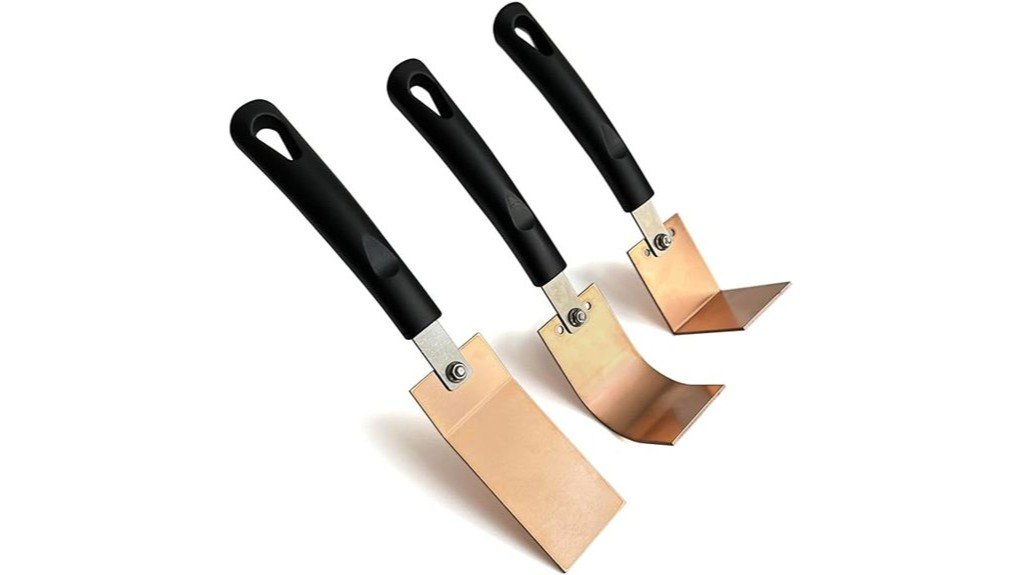
The Copper Spoon Welder is a handheld copper backing tool for MIG welding support. You place the copper spoon behind or against the work area to support the weld puddle, control heat spread, and reduce the chance of burning through thin metal.
The Diycoming Cooper spoon-3p set includes three spoon shapes: flat, curved, and 90-degree angle. That makes it more useful than a single flat copper paddle when you work around wheel arches, door frames, brackets, seams, or small repair patches.
This tool is best for welders who already understand MIG settings, tack welding, and heat control. It does not create welds by itself, and it will not fix poor machine settings or dirty metal prep.
Who Should Buy It?
Best For
- DIY auto body repair users working on thin sheet metal patches
- MIG welders who need backing support for holes, seams, and edge repairs
- Fabricators who want flat, curved, and angled copper contact options in one set
Skip If
- You need a complete welding machine, torch, clamp, or power source
- You mostly weld thick structural steel where backing spoon access is not useful
- You are new to welding and have not learned safe MIG setup and heat control
Key Features and Build Quality
Three Spoon Head Design
The main advantage is the three-head layout. The flat spoon works best on broad sheet metal areas, the curved spoon helps on rounded panels, and the 90-degree spoon gives you access in corners where a straight paddle feels awkward.
This design matters most when you cannot place a scrap backing plate behind the repair. You can choose the spoon shape that gives the most stable contact instead of fighting the panel angle.
Pure Copper Construction
The spoons are listed as 99.99% pure copper. Copper conducts heat well and is commonly used as a weld backer because it helps draw heat away from the weld area and is less likely to fuse with steel than a steel backing piece.
The listed 2mm thickness gives each spoon enough body for light to medium repair work. It is still a compact hand tool, so you should avoid long continuous heat exposure that can overheat the head and handle area.
Heat Resistance Range
The product lists a temperature resistance range of 752℉ to 932℉. That supports short welding bursts, tack work, and spot-weld-style repairs, but it does not mean you can hold the spoon in the weld zone without breaks.
For best results, use short welds and allow cooling time between passes. This protects the spoon head, keeps your hand safer, and helps prevent heat distortion in thin sheet metal.
Quick Switching Handle
The handle lets you swap between the flat, curved, and angled spoon heads. That can save time when you move from a broad panel repair to a corner or curved edge.
You should still let the copper cool before changing heads. Copper can hold enough heat to burn skin or damage gloves if you rush the switch after repeated welds.
Pro Tip: Use the largest spoon face that fits the repair area. Better surface contact gives you more stable backing and helps spread heat more evenly.
Fit and Compatibility
This tool is most useful with MIG welding setups used for sheet metal and automotive repair. It does not attach to every torch or machine in a universal way, since it works as a handheld backing tool rather than an electrical welding attachment.
Compatibility depends on your access to the back side or edge of the repair. If the panel shape blocks your hand or the spoon head cannot sit flat enough, the tool may not give the clean support you expect.
It can help with thin metal, small holes, plug-weld-style spots, and edge repairs. It is less useful for thick structural welds, heavy fabrication, or areas where you cannot safely position the copper behind the weld zone.
How It Performs in Real Use
Automotive Patch Panels
The Copper Spoon Welder makes the most sense for small auto body repairs. When you fill pinholes or support a patch seam, the copper backer can help keep the weld puddle from dropping through thin sheet metal.
The curved spoon is especially useful on body panels that are not perfectly flat. It gives you better contact on rounded surfaces than a straight backing plate.
Corner and Edge Welding
The 90-degree spoon helps when you work near brackets, flanges, door frames, and tight corners. A flat spoon may not sit behind these areas, but the angled head can reach spaces with limited clearance.
You still need to hold the tool steady. If the spoon shifts during a tack weld, the backing support can become uneven and leave a rougher weld surface.
Small Fabrication Projects
For light fabrication, the set works well as a helper tool when you need temporary backing behind small gaps or holes. It can reduce your need to cut a custom scrap copper or metal plate for every small repair.
It is not a replacement for clamps, fixtures, or proper joint fit-up. You will get better results when the workpiece is clean, aligned, and supported before you start welding.
Repeated Spot Welding
The copper build helps during repeated short weld cycles, especially when you pause between tacks. Short bursts give the spoon time to manage heat without becoming too hot to handle safely.
Continuous use is a weakness. If you run long welds without cooling breaks, the spoon can overheat, and the tool becomes harder to control.
How to Use It Correctly
Start with clean metal and a clean copper spoon face. Dirt, coatings, paint, rust, and spatter can reduce contact quality and make the weld area less predictable.
Place the spoon fully against the back side of the hole, seam, or edge before you strike the arc. Keep steady pressure without forcing the panel out of shape. Use short tacks, then let the area cool before adding more weld.
Switch spoon heads based on the repair shape. Use the flat head for open sheet metal, the curved head for contours, and the 90-degree head for corners or tight seam access.
Before You Buy: This is not a standalone welder. It is a copper backing accessory, so you still need a compatible welding machine, proper safety gear, and enough access to position the spoon behind or beside the weld area.
Material Safety and Build Notes
The spoons are listed as high-purity copper, which helps with conductivity and heat control. During welding, the copper can still become extremely hot, so you should always use welding gloves and avoid touching the head after use.
Do not use the tool on painted, coated, oily, or unknown materials without proper prep and ventilation. Welding can create hazardous fumes, and copper backing does not remove the need for standard welding safety practices.
Allow the spoon to cool before changing heads or storing it. Place it on a safe, heat-resistant surface after repeated tack welds.
Common Mistakes to Avoid
The most common mistake is using the spoon as if it can correct poor weld settings. It can help support the puddle, but it cannot fix too much heat, dirty metal, bad wire speed, or weak fit-up.
Another mistake is using the wrong spoon shape. If the copper does not contact the metal evenly, heat control becomes less consistent, and the weld may look rougher than expected.
You should also avoid holding the spoon in one place through long welds. Short tack welds with cooling pauses are safer and more useful for the type of thin metal work this tool supports.
Pros and Cons
Pros
- Three spoon angles improve access on flat panels, curves, corners, and seams
- Listed 99.99% copper construction supports heat transfer during short weld bursts
- 2mm spoon thickness gives the heads practical durability for light to medium use
- Useful for automotive patch work, sheet metal holes, and small fabrication repairs
- Swappable heads reduce the need for several separate copper backing tools
Cons
- Not a welding machine and not useful without a compatible welding setup
- Works best only when you have safe access to position the spoon correctly
- Can overheat during long welds or repeated use without cooling breaks
Is It Worth the Price?
The Copper Spoon Welder fits the budget-friendly to mid-range category for welding helper tools. It is worth considering if you do regular sheet metal repair and want one set with flat, curved, and angled copper backing options.
You get the most value if you already own a MIG welder and often work on automotive body panels, small holes, or thin metal seams. For one-time repairs, a single copper backing plate may be enough.
The main value limitation is its narrow use case. It is a smart buy for controlled backing support, not for general welding, heavy structural work, or users who need a complete welding setup.
How It Compares to Alternatives
Compared with a basic single-tip copper spoon, this set gives you more shape options for real repair work. The flat, curved, and 90-degree heads make it easier to match the tool to the panel instead of forcing one shape into every job.
Compared with industrial copper backing bars or professional body-shop tooling, this set is more compact and practical for DIY or light repair use. Heavy-duty shops may still prefer larger copper blocks, clamped backing bars, or purpose-built fixtures for repeated production work.
Frequently Asked Questions
What is the Copper Spoon Welder used for?
It is used as a copper backing tool for MIG spot welding support, sheet metal repair, and automotive patch work. You place the spoon behind or against the weld area to support the puddle and help control heat.
Is this a complete welding machine?
No. This product is a welding backer accessory, not a welder, torch, clamp, or power source. You need a compatible welding setup and proper safety gear to use it.
What spoon heads are included?
The set includes three spoon heads: flat, curved, and 90-degree angle. These shapes help you work on broad sheet metal, rounded panels, and tighter corner areas.
Is it compatible with all MIG welders?
It does not depend on a special machine connection because it works as a handheld backing tool. Still, your results depend on your MIG setup, torch access, metal thickness, and ability to position the spoon safely.
Can it help prevent burn-through on thin metal?
It can help when used correctly because the copper backing supports the weld area and helps draw heat away. It will not prevent burn-through if your settings are too hot, the gap is too large, or the metal is not prepared well.
How hot can the copper spoons get?
The product lists a temperature resistance range of 752℉ to 932℉. Even within that range, the spoon can become hot enough to burn you, so use gloves and allow cooling time before touching or changing heads.
Who should skip this tool?
Skip it if you need a full welder, mostly weld thick structural steel, or cannot access the back side of your repair area. It is also not ideal for beginners who have not learned basic MIG safety and heat control.
How should you clean and store it?
Let the spoon cool fully, then remove debris or spatter from the contact face before storage. Keep the heads dry and stored where the edges will not get bent or contaminated.
The Bottom Line
The Copper Spoon Welder is a practical support tool for welders who handle thin sheet metal, automotive patch panels, and small MIG repair jobs. Its biggest strength is the three-shape copper head set, while its main limitation is that it only helps when you can position it correctly and already have a proper welding setup.
Buy it if you want more control on holes, edges, curves, and tight corners. Skip it if you need a complete welder, heavy-duty industrial tooling, or a beginner-friendly solution that works without welding experience.