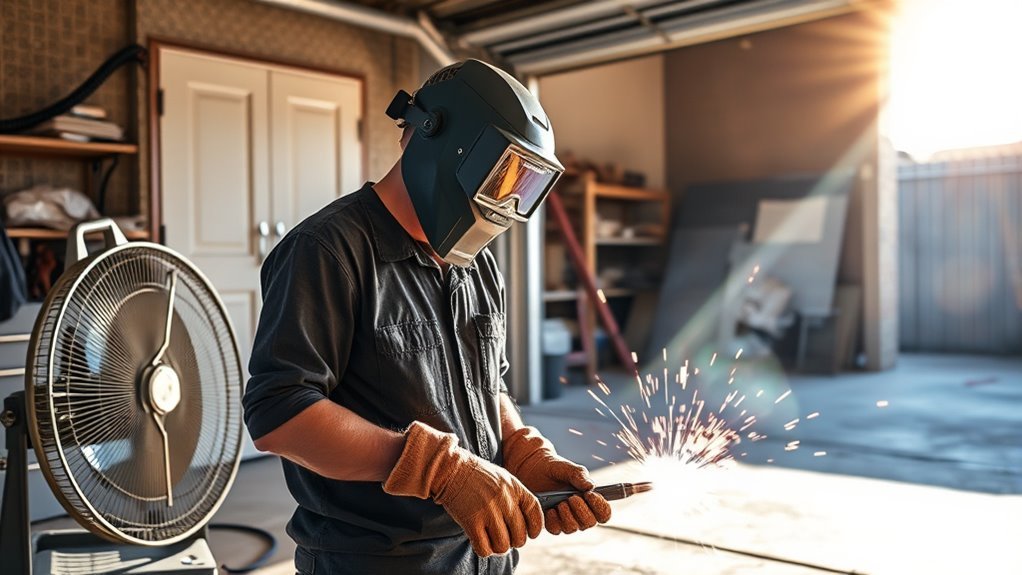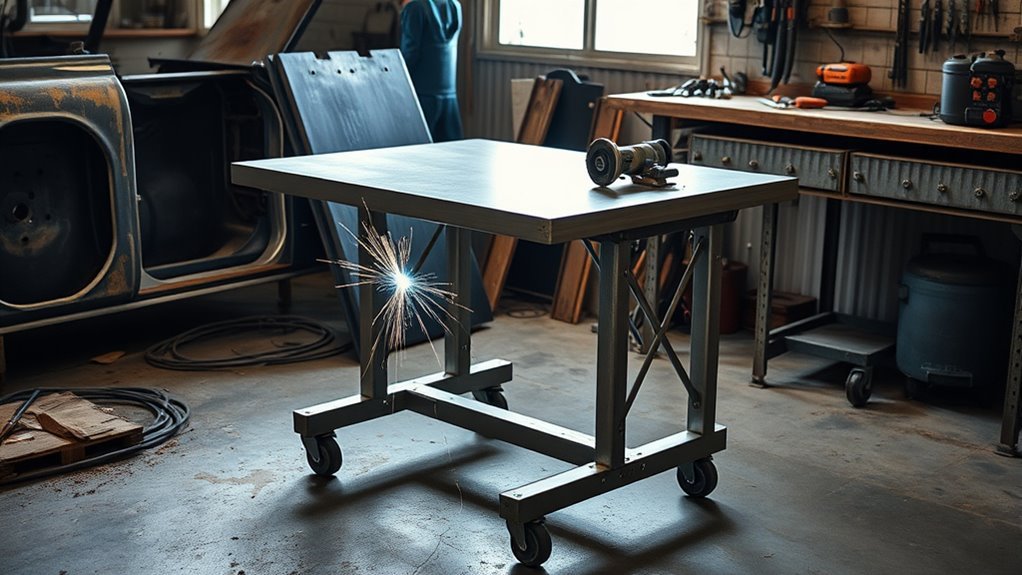
A typical car body contains about 5,000 spot welds, though the exact number changes by vehicle size, body structure, material mix, and factory joining strategy. Some cars use fewer, while larger or more complex bodies may use several thousand more. The count matters because each weld helps overlapping panels act like one controlled structure.
Quick Answer
Most modern car bodies use roughly 5,000 resistance spot welds. The real count varies by model, body size, steel grade, aluminum use, structural adhesives, rivets, laser welds, and crash-zone design. Collision repairs should follow the vehicle maker’s repair procedure, not a generic weld count.
Key Takeaways
- A typical automotive body-in-white has about 5,000 spot welds, but the number is not universal.
- Spot welds are concentrated in pillars, rockers, roof rails, wheelhouses, floor sections, door openings, and closure panels.
- Steel, high-strength steel, aluminum, adhesives, rivets, and laser welds all affect the final weld count.
- Factory welds are placed for strength, stiffness, crash load paths, and repeatable high-volume production.
- For repairs, use the OEM body repair manual and approved welding method instead of copying a general spacing number.
How Many Spot Welds Are in a Typical Car?
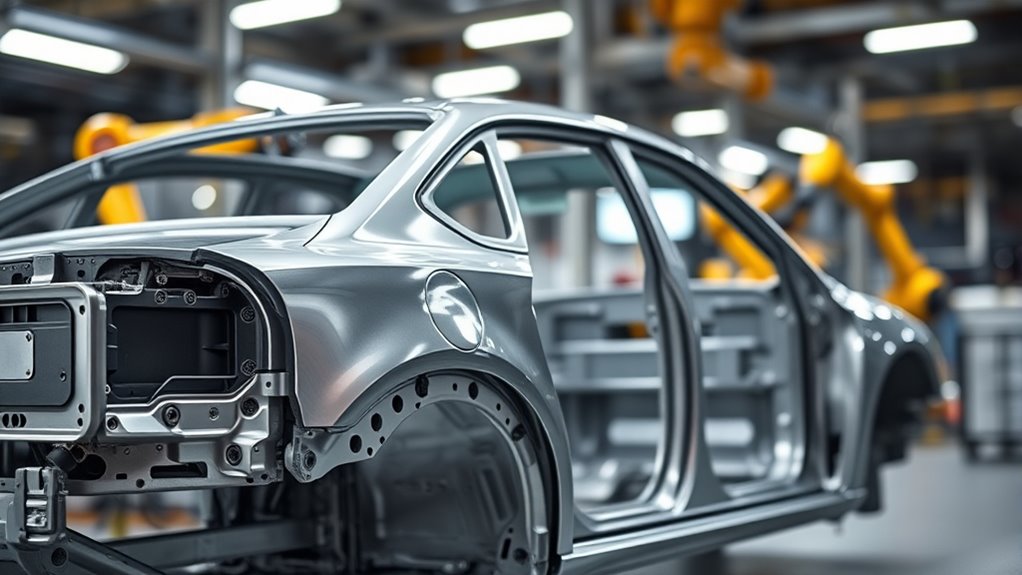
A typical car body has about 5,000 resistance spot welds. That figure is often used as a practical benchmark for a body-in-white, which is the welded body shell before paint, trim, glass, and powertrain installation. A research review on automotive resistance spot welding notes that a typical car body contains about 5,000 spot welds joining metal sheets of different materials and thicknesses.
You will find these welds wherever overlapping sheet-metal panels need to act as one structure. Common locations include the floor pan, roof rails, pillars, rocker panels, wheelhouses, door openings, quarter panels, hoods, doors, and trunk or liftgate structures. Each weld creates a small fused area called a weld nugget, and thousands of these nuggets work together to give the body shell stiffness and strength.
A car does not rely on one large weld seam. It relies on thousands of small, controlled welds placed where the body needs strength, stiffness, and crash-load control.
Note: The exact number of spot welds is usually not published for every vehicle. Treat “about 5,000” as a typical body-shell estimate, not a fixed rule for every sedan, truck, SUV, or electric vehicle.
Why Cars Use Thousands of Spot Welds
Cars use thousands of spot welds because the body shell is made from many stamped panels that overlap at flanges, seams, reinforcements, and mounting points. Spot welding lets automakers join those panels quickly without adding heavy brackets or long weld beads.
In resistance spot welding, two copper electrodes clamp overlapping sheets together. Electric current flows through the joint area, heat forms at the contact surfaces, and the metal fuses into a small nugget. This makes the process fast, repeatable, and well suited to robotic automotive assembly.
The high weld count is not waste. It spreads loads across the body shell, reduces panel movement, and helps the vehicle resist vibration, twisting, and crash forces. A single spot weld is small, but thousands of properly placed welds help the body act as a controlled safety structure.
Which Car Parts Need Spot Welding Most
Spot welds are most concentrated where panels overlap and where the body must carry major loads. Door openings, roof rails, pillars, rocker panels, floor crossmembers, wheelhouses, and front or rear structural rails often have dense weld patterns because these areas help control stiffness and crash behavior.
Closure panels also use many spot welds. Doors, hoods, liftgates, and trunk lids often have an outer skin joined to an inner frame. Spot welding helps those parts keep their shape without adding too much weight.
- Pillars and roof rails: support the cabin structure and help maintain occupant-space integrity.
- Rocker panels and floor sections: carry side-impact and underbody loads.
- Wheelhouses and quarter panels: tie outer panels to structural reinforcements.
- Doors, hoods, and liftgates: join outer skins to inner frames and braces.
- Brackets and reinforcements: secure mounting points without large weld beads.
How Spot Welding Strengthens Car Bodies
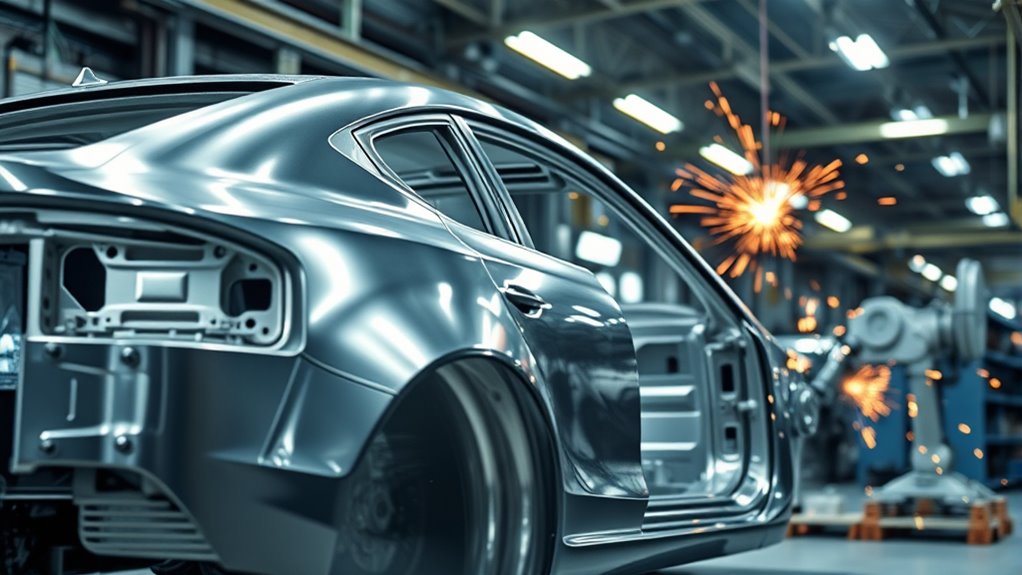
Spot welding strengthens car bodies by joining sheet-metal layers at many planned points. Each weld forms a small fused nugget between panels. When those nuggets are placed in the right pattern, they help the panels share load instead of flexing separately.
This matters because the body shell must handle normal road vibration, door opening loads, suspension loads, and crash forces. Properly placed spot welds help keep gaps consistent, reduce squeaks and rattles, and maintain the shape of the passenger compartment.
Spot weld quality depends on several factors, including electrode force, current, weld time, material thickness, coating, surface condition, and electrode condition. Too little heat can create a weak bond. Too much heat can cause expulsion, excessive indentation, or burn-through.
Pro Tip: In production and repair, the goal is not simply “more welds.” The goal is the correct weld size, placement, spacing, and process for the specific panel stack.
Why Light Steel and Aluminum Matter
Material choice has a major effect on spot weld count and weld strategy. Mild steel, high-strength low-alloy steel, advanced high-strength steel, and aluminum do not all respond the same way to resistance spot welding.
High-strength steels can help reduce weight while preserving crash performance, but they need controlled weld schedules and proper repair procedures. Aluminum can also be resistance spot welded, but it conducts heat and electricity differently from steel, so it often requires higher current, tighter surface preparation, and careful electrode management.
Modern car bodies may also combine spot welds with structural adhesive, self-piercing rivets, clinch joints, flow-drill screws, laser welds, or MIG brazing. When those joining methods are used, the number of spot welds may change. That is one reason the total weld count varies from one vehicle platform to another.
Factory Spot Welds vs. Repair Spot Welds
Factory spot welds are installed with controlled equipment, clean panel stacks, precise fixtures, and validated weld schedules. Collision repair is different because the technician may be working on a partial panel replacement, a multi-layer joint, coated steel, limited electrode access, or a section where adhesive is also required.
That means you should not use the factory’s total weld count as a repair guide. A repair procedure may call for squeeze-type resistance spot welds, plug welds, MIG brazing, rivets, adhesive, or a combination of methods. The approved method depends on the vehicle maker, panel location, steel grade, and available equipment.
Warning: Spot weld repair can affect crash performance. Follow the OEM body repair manual, use approved equipment, make test welds when required, and do not add or remove welds based only on a general internet spacing rule.
Products Worth Considering

Heavy-Duty HSS Spot Weld Cutter : Made from premium High-Speed Steel (HSS) with cutting edge hardness up to 63–66 HRC, this spot weld cutter delivers exceptional durability, sharpness, and strong penetration power for fast and efficient metal cutting

Durable HSS Construction: Our spot weld cutter set is made of HSS for better durability and wear resistance. The double-sided blades ensure long-term use and consistent performance, making it the ideal tool of choice for metal cutting

Separates Spot Welded Panels.
How Car Makers Test Spot Weld Quality
Car makers test spot weld quality because a hidden weak weld can affect strength, durability, and crash behavior. The most important quality target is usually the weld nugget, which must be large enough and properly fused for the panel stack.
Common quality checks include destructive testing on samples, peel or chisel testing, visual checks for expulsion and indentation, ultrasonic inspection, and process monitoring. In modern production, welders can also collect process data such as current, voltage, force, time, and dynamic resistance. Those signals help engineers detect drift and adjust the process before defects spread.
Ultrasonic Weld Inspection
Ultrasonic inspection uses high-frequency sound waves to evaluate the weld area without cutting the part apart. In spot weld inspection, ultrasonic methods can help identify missing welds, undersized nuggets, lack of fusion, or weak bonds when the equipment and procedure are suitable for the panel stack.
This method is valuable because a spot weld is often hidden between overlapping sheets. A surface view alone may not show whether the nugget formed correctly inside the joint.
Destructive and Process Monitoring Checks
Destructive testing is still important because it shows how the weld actually fails. A test coupon can be peeled, chiseled, or pulled apart to confirm nugget size and failure mode. Production teams may use sample-based destructive tests along with nondestructive checks and weld data monitoring.
| Quality Check | What It Helps Find | Typical Use |
|---|---|---|
| Visual inspection | Missing welds, heavy expulsion, excessive indentation, poor access | Fast screening |
| Peel or chisel testing | Nugget size and failure mode | Sample validation and repair test coupons |
| Ultrasonic inspection | Hidden weld quality problems without cutting the part | Nondestructive quality checks |
| Process monitoring | Changes in current, force, time, and resistance trends | High-volume production control |
What Affects the Number of Spot Welds?
The number of spot welds in a car is not fixed. It depends on the body structure, material stack, crash targets, joining methods, and manufacturing process. A compact sedan, body-on-frame truck, aluminum-intensive vehicle, and electric SUV may all use different weld counts and joining strategies.
- Vehicle size and body style: larger bodies and complex closures usually need more joints.
- Crash structure: pillars, rockers, rails, and reinforcement zones need carefully controlled weld patterns.
- Material thickness: thin and thick sheet combinations require different schedules and spacing.
- Steel grade: HSLA and advanced high-strength steels may need stricter process control.
- Aluminum use: aluminum changes heat flow, electrode wear, and weld schedule needs.
- Adhesive and rivets: structural adhesive or mechanical fasteners may reduce, replace, or supplement spot welds.
- Factory access: electrode access affects where resistance spot welds can be placed.
In short, every weld reflects an engineering tradeoff. Automakers balance strength, weight, production speed, cost, repairability, and crash performance.
How Far Apart Are Spot Welds on Cars?
Spot weld spacing varies by joint design. You may see general references to spacing in the 20 to 50 mm range on some sheet-metal seams, but that is not a universal rule. Some areas need closer spacing, while other areas can use wider spacing or a different joining method.
For repairs, the correct answer is always the vehicle maker’s repair procedure. OEM instructions may specify weld locations, weld count, plug weld size, adhesive use, sectioning points, or whether squeeze-type resistance spot welding is allowed.
How to Choose a Spot Welding Partner
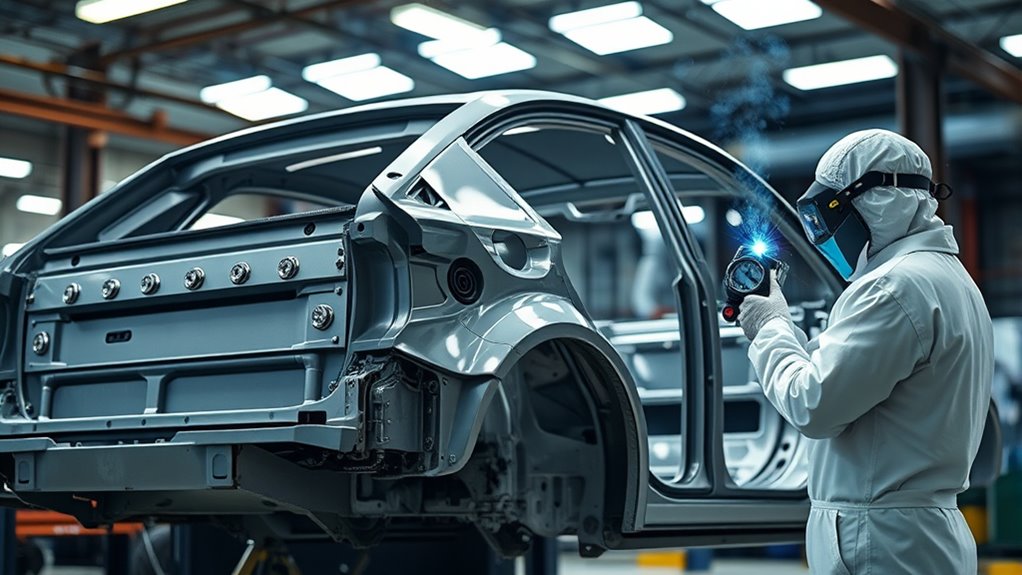
If you are choosing a production spot welding partner, focus on process control first. A good supplier should be able to explain its weld schedules, electrode maintenance, fixture control, test methods, data logging, and nonconforming-part handling.
For automotive work, IATF 16949 certification is a strong quality-management signal, but it is not enough by itself. You should also review the supplier’s experience with your material stack, part geometry, annual volume, inspection plan, and documentation requirements.
Products Worth Considering

Two types of Trigger Flexibility & Safety: The maximum current is 1,380 A, and the power is 11.5 KW. Seamlessly switch between hands-free foot pedal operation and precise hand control (Trigger) for versatile workflows and enhanced safety when handling sensitive batteries.

5 Minute Quick Start Spot Welder: We use a wide voltage input of 100-240V and an adapter of 15amp high current for fast charging Connect the spot welding machine to the power supply using our adapter, and quickly reach the spot welding mark within 5 minutes (the display screen shows OK for spot welding), which can be used anywhere in the world.

5 Minute Quick Start Spot Welder: We use a wide voltage input of 100-240V and an adapter of 15amp high current for fast charging Connect the spot welding machine to the power supply using our adapter, and quickly reach the spot welding mark within 5 minutes (the display screen shows OK for spot welding), which can be used anywhere in the world
Quality Standards
Ask how the supplier controls current, force, weld time, electrode dressing, cooling, and part fit-up. Ask for sample weld reports, destructive test records, inspection frequency, and process capability data where appropriate.
A reliable partner should be able to document:
- approved weld schedules for the material stack,
- test coupon results and nugget requirements,
- electrode maintenance and replacement intervals,
- fixture control and part-positioning checks,
- operator or technician training,
- traceability for production batches and inspection records.
Nearshoring Benefits
Nearshoring can help when shipping time, engineering communication, and supply-chain response matter. A closer supplier may make it easier to review samples, resolve fit issues, and adjust production quickly.
Still, geography does not replace quality control. Whether the supplier is local, nearshore, or overseas, judge the partner by weld capability, documentation, inspection discipline, and automotive experience.
Spot Welding Safety Basics
Resistance spot welding uses high current, clamping force, heat, and moving equipment. OSHA’s resistance welding standard addresses operator competence, guarding, shields for flying sparks, low-voltage initiating circuits, grounding, and equipment maintenance records.
For shop work, wear proper eye and hand protection, keep hands away from electrode pinch points, protect nearby people from sparks, and stop using equipment if it has damaged cables, loose connections, poor cooling, or faulty controls.
Frequently Asked Questions
How many welds are on a car?
A typical car body has about 5,000 resistance spot welds. The exact number varies by model, body size, material mix, and whether the vehicle also uses structural adhesives, rivets, laser welds, or other joining methods.
How far apart should spot welds be?
Spot weld spacing depends on the joint, material thickness, load path, and OEM procedure. A general sheet-metal seam may use spacing in the 20 to 50 mm range, but repair work should always follow the vehicle maker’s body repair manual.
How hard is it to spot weld?
Basic spot welding looks simple because the machine clamps and welds quickly. Good automotive spot welding is harder because the technician must control material fit-up, electrode access, current, weld time, force, panel coatings, and test weld quality.
Are factory spot welds the same as repair spot welds?
Not always. Factory welds are made with fixtures, robotic equipment, validated schedules, and clean new panels. Repairs may involve different access, replacement panels, adhesives, plug welds, rivets, or OEM-approved alternatives.
Can aluminum car bodies be spot welded?
Yes, aluminum can be resistance spot welded, but it usually needs tighter control than mild steel because aluminum conducts heat and electricity differently. Many aluminum-intensive vehicles also use adhesives, self-piercing rivets, or other joining methods.
What is the $3,000 rule for cars, and does it relate to spot welds?
The $3,000 rule is a budgeting shortcut some owners use when deciding whether a repair is worth doing. It is not a welding rule. For structural spot weld repair, the important guide is the OEM repair procedure and the vehicle’s safety requirements.
Conclusion
Most car bodies use about 5,000 spot welds, but the number changes with the vehicle’s structure, material mix, crash design, and joining methods. Those small welds work together to hold panels in alignment, control stiffness, and support crash performance. If you are repairing or sourcing welded parts, focus less on a generic count and more on the correct weld locations, approved process, test results, and documented quality control.
Sources
- Functional clustering methods for resistance spot welding process data in the automotive industry — supports the typical 5,000 spot weld count and RSW use in body-in-white assembly.
- Improved Training Strategies for Physics-Informed Neural Networks using Real Experimental Data in Aluminum Spot Welding — supports current context on aluminum resistance spot welding and weld nugget quality assessment.
- NIST Journal of Research: Spot Weld Analysis with 2D Ultrasonic Arrays — supports ultrasonic spot weld inspection discussion.
- OSHA 1910.255 Resistance Welding — supports resistance welding safety, guarding, shields, operator competence, and maintenance requirements.
- IATF 16949:2016 — supports automotive quality-management certification context for production suppliers.