What’s in This Article
- How Plasma Cutting Works and Why Gas Choice Matters
- When Compressed Air Is All You Need
- Oxygen for Faster, Cleaner Mild Steel Cuts
- Nitrogen for Stainless and Aluminum
- Argon-Hydrogen Mix for Thick Nonferrous Metals
- Choosing a Shield or Secondary Gas
- Cut Quality, Speed, and Consumable Life Trade-offs
- Air System Setup: Compressors, Dryers, and Filters
- Material Thickness and Gas Selection Guide
- Cost Considerations and Practical Setups
- Frequently Asked Questions
A plasma cutter can make a clean cut or leave you grinding rough edges for half the day. Gas choice plays a major role, but you don’t always need a separate shielding gas. Dry, clean compressed air handles many mild steel, stainless steel, and aluminum jobs, while oxygen, nitrogen, and argon-hydrogen help when speed, finish, or alloy sensitivity matters. This guide explains when each gas makes sense, what trade-offs to expect, and how to keep your air system from hurting cut quality.
Quick Answer
You don’t always need a separate shielding gas for plasma cutting. Many air-plasma cutters use clean, dry compressed air as both the plasma gas and the shield for general shop work. Use oxygen for faster mild steel cuts, nitrogen for cleaner stainless steel and aluminum edges, and argon-hydrogen mixes for thick nonferrous plate.
Key Takeaways
- Use clean, dry compressed air for most general plasma cutting jobs.
- Choose oxygen when you need faster, cleaner cuts on mild steel.
- Use nitrogen to reduce oxidation on stainless steel and aluminum.
- Pick argon-hydrogen for thick stainless steel or aluminum when finish matters.
- Protect cut quality with the right compressor, dryer, filters, and gas flow.
How Plasma Cutting Works and Why Gas Choice Matters

Although it looks like a simple spark, plasma cutting uses a controlled electrical process. The machine drives an arc through a high-velocity gas stream, turns that gas into plasma, then melts and ejects metal from the cut.
You create a conductive path, and the torch nozzle constricts the arc. That keeps current density, gas speed, and heat input within the range needed for stable cutting.
Gas selection affects energy transfer, arc constriction, and cut quality. The working gas sustains the arc and forms plasma, while the shield gas helps protect the kerf from air and contamination.
Air works for many jobs, but its oxygen content can leave oxides and nitrides on the cut face. For critical weld prep or corrosion-resistant alloys, inert or reducing gases can produce cleaner edges.
Nitrogen can improve edge smoothness on thinner stainless steel and aluminum. Argon-hydrogen excels on thicker stainless steel and aluminum because it produces a hotter arc, reduces oxidation, and improves edge shape.
When Compressed Air Is All You Need

You can run many plasma jobs on compressed air alone. Many light and medium-duty machines cut mild steel, stainless steel, and aluminum up to about 1 inch with acceptable edge quality when the system matches the job.
You also cut costs because you don’t need bottled specialty gases for routine work. Still, you need to budget for routine compressor upkeep, dryer service, and filter changes.
Keep the air clean and dry to match the plasma cutter manufacturer’s specs. Moisture, oil mist, and particles can weaken arc stability, hurt the cut finish, and shorten consumable life.
Versatility Across Metals
Compressed air gives you one simple setup for mild steel, stainless steel, and aluminum. That makes it a practical choice when your shop moves between different metals during the day.
You can cut stainless steel and aluminum without swapping cylinders or changing shield gases on many air-plasma systems. Modern power supplies often tune the arc for air, which helps maintain steady cuts while keeping operational costs low.
Air does not leave grit or loose residue, but it can leave oxides on some edges. Standard grinding, sanding, or weld prep can usually handle that issue on general fabrication work.
- Cut steel, stainless steel, and aluminum with one setup.
- Spend less on gas and cylinder handling.
- Get cleaner edges when the air supply stays dry.
- Keep every pierce and contour more consistent with proper pressure.
Cost and Maintenance
Cost control starts with air. You avoid bottled gases, regulators, and frequent changeovers, so daily cutting costs drop quickly.
Focus maintenance on the compressor, dryer, hoses, and filters. That protects cut quality from particles, oil mist, and moisture.
Air can leave oxidized edges on some metals. Proper edge prep and the right filler metal help keep welds within your shop’s requirements.
| Focus | Action | Outcome |
|---|---|---|
| Cost | Use compressed air only | Lower consumables, fewer logistics |
| Metals | Mild steel, stainless steel, aluminum | Broad capability up to 1 in |
| Maintenance | Service compressor, replace filters | Stable arc, consistent cut quality |
| Contamination | Monitor particulate/oil | Fewer defects, cleaner edges |
| Weldability | Adjust prep and filler | Reliable joints, minimal rework |
Dry Air Quality
Although plasma systems can run on shop air, cut quality depends on a clean, dry supply gas. Use compressed air as your shielding gas only when it stays free of particles, oil mist, and moisture.
Pair a dedicated compressor with a refrigerated dryer and staged filtration. This setup helps control dew point and protect consumables.
Clean, dry air helps you cut mild steel, stainless steel, and aluminum efficiently while lowering gas costs. Poor air quality can cause double-arcing, rough edges, and early nozzle wear.
- Protect your investment because dry air helps prevent double-arcing, dross, and early nozzle wear.
- Preserve cut quality because moisture can create rough edges and more rework.
- Control downstream results because stainless steel may need surface prep before welding.
- Spend smarter by saving premium gases for specs that require nitrogen or argon-hydrogen.
Oxygen for Faster, Cleaner Mild Steel Cuts
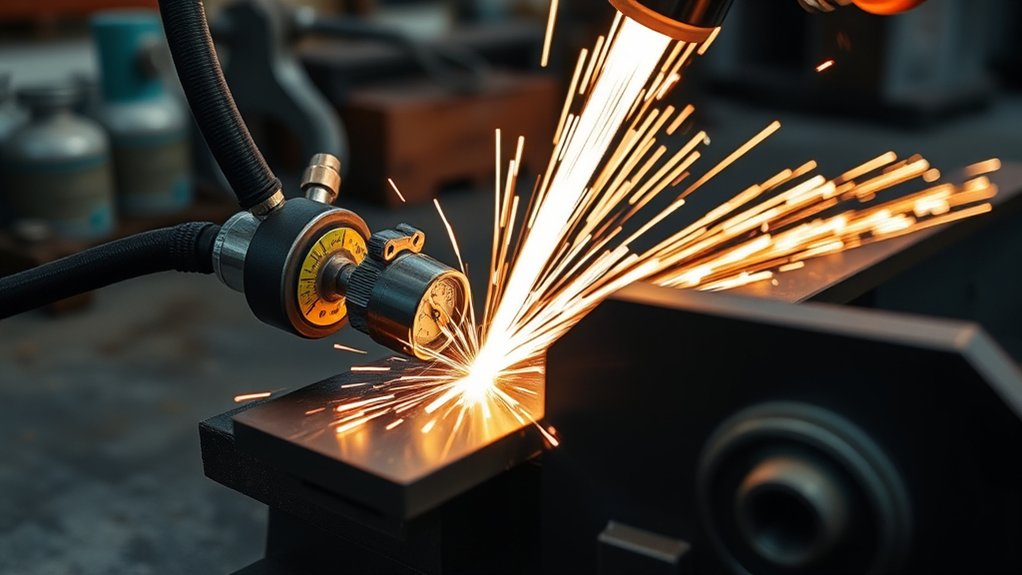
Oxygen is a strong choice for mild steel when you need speed and clean edges. With the right plasma cutter setup, oxygen can improve kerf evacuation and reduce secondary grinding.
Oxygen creates a fine, high-energy plasma stream that helps eject molten steel from the cut. It often works well on mild steel up to about 1 1/4 inches, depending on machine power, consumables, and manufacturer settings.
| Parameter | Typical Benefit | Notes |
|---|---|---|
| Speed | Faster cutting | Depends on amperage, thickness, and setup |
| Edge Quality | Low dross, narrow kerf | Cleaner cuts reduce rework |
| Thickness | Up to about 32 mm | Machine rating controls the real limit |
Watch your process variables closely. Amperage, gas flow, travel speed, and standoff all affect dross, bevel, and edge quality.
Use oxygen-rated consumables when the torch requires them. Oxygen’s reactivity can speed consumable wear, so replace nozzles before taper or rough edges appear.
Verify gas purity and dryness to protect swirl rings and maintain arc stability. For stainless steel and nonferrous alloys, choose a different process gas.
Products Worth Considering

[Achieve Precise Cuts] PT31 Plasma Cutting Consumables – Your Essential Tool for Efficient Cutting! Whether you're working with sheet metal, steel, or any other material, superior cutting performance ensure clean, accurate, and smooth cuts.

Package Include: 10 Shield Cups, 50 Nozzles, 20 Swirl Baffle, and 30 Electrodes.

PACKAGE INCLUDED: 5 Pcs Cup-15 Pcs Electrodes-10 Pcs Ring-30 Pcs Tip(Standard)
Nitrogen for Stainless and Aluminum

For stainless steel and aluminum, nitrogen plasma helps produce clean, oxidation-minimized cuts. Oxygen can discolor or damage the edge on these metals, so nitrogen often gives better results.
You can see superior cut quality on stainless steel and aluminum because nitrogen reduces oxide formation at the kerf. It can also support thick-section cutting when your plasma system, torch, and consumables allow it.
Use nitrogen as the primary gas when finish and edge integrity matter. Pairing nitrogen with compressed air as a secondary gas can help balance cut quality and cost on some systems.
Good nitrogen setups can also improve consumable life. Your actual starts per electrode and nozzle depend on amperage, pierce technique, gas quality, and torch design.
- Protect stainless steel finishes by reducing heat tint and oxide staining.
- Keep aluminum edges cleaner for less sanding and grinding.
- Cut thicker plate when your machine rating supports it.
- Reduce rework with cleaner cuts and less slag.
Products Worth Considering

40 CU FT NITROGEN CYLINDER - Mid-size steel nitrogen tank perfect for HVAC, beverage dispensing, and industrial applications. 2524 PSI service pressure. Portable design with 7" diameter x 22.3" height, 29 lb tare weight. Letter designation: B. Great capacity-to-portability ratio for mobile work

MULTIFUNCTIONAL USE: This professional Weldpro welding cart is compatible with most standard welding equipment, including MIG welders, TIG welders, stick welders, and plasma cutters. Its versatile design makes it suitable for a wide range of scenarios—whether for DIY projects at home, garage repairs, or industrial fabrication workshops
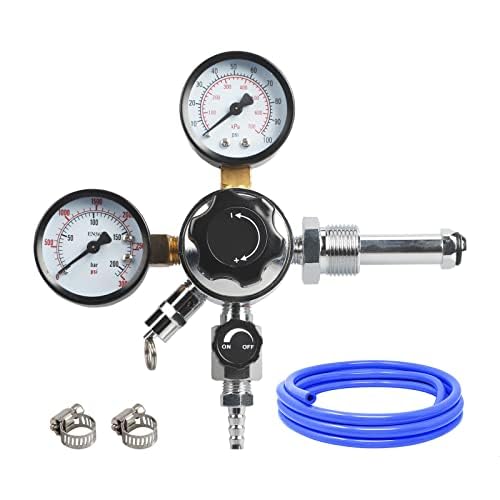
【RICH PACKAGE】 : Dual Gauge Nitrogen Regulator CGA580(1 PCS), 5ft Red Gas Line 5/16" ID, 9/16"OD(1 PCS), Free Worm Clamps(2 PCS)
Argon-Hydrogen Mix for Thick Nonferrous Metals

When cut quality and penetration on thick nonferrous plate matter, an argon-hydrogen mix can help. A common industrial blend uses 65% argon and 35% hydrogen, but you should follow your torch manufacturer’s approved gas chart.
This argon-hydrogen mixture creates a hotter plasma jet for stainless steel and aluminum. Argon helps stabilize the arc, while hydrogen increases heat transfer and helps move molten metal out of the kerf.
Use it on thick sections where air, oxygen, or nitrogen struggle to maintain penetration and edge quality. The right system can produce smoother faces, tighter bevels, and less oxidation.
In industrial applications, shops often pair the primary mix with a compatible shield gas, such as nitrogen. This can further suppress oxidation and improve edge finish on high-alloy steels and aluminum plate.
Set gas delivery by the manufacturer’s specifications. Use calibrated flow meters, check hoses and regulators, and monitor consumable wear to maintain process consistency.
Choosing a Shield or Secondary Gas

Match the shield gas to the base metal and the primary gas. Use nitrogen for many stainless steel and aluminum jobs, air for many oxygen-cut mild steel setups, and approved argon-hydrogen systems for thick nonferrous work.
Verify air quality with dryers and filters. Clean, dry air helps prevent oxidation, porosity, and nozzle wear.
Balance gas cost against consumable life, cut rate, and post-cut cleanup. Cheap air can cost more if it creates heavy dross, while premium gases can lower the total cost per cut when they reduce rework.
Match Gas to Metal
Plasma cutters can run on several gases, but you’ll get better results when you match the shield or secondary gas to the base metal. The right shielding gases protect the arc, reduce contamination, and help control oxidation.
Use air as an economical secondary gas on many mild steel cuts. Switch to nitrogen on stainless steel and aluminum when you need smoother kerfs, less slag, and fewer heat-tint zones.
Avoid oxygen as a shielding gas on nonferrous metals and stainless steel unless your manufacturer specifically calls for it. Oxygen can speed wear and promote oxidation on the wrong material.
- Protect your investment by extending consumable life.
- Improve edge quality by reducing slag and contamination.
- Respect the alloy by preserving stainless steel corrosion resistance.
- Control heat effects by reducing discoloration and rework.
Air Quality Matters
Even with the right gas selected, dirty air will hurt plasma performance. You need tight control of air quality to keep the arc stable and the kerf clean.
Oil mist, moisture, and particles can erode electrodes, disturb the arc, and leave dross. Use compressed air with a dedicated compressor, a refrigerated dryer, and staged filters.
Maintain drains, replace elements on schedule, and verify dew point and pressure per manufacturer specs. Inspect hoses, fittings, and regulators so the air does not pick up contamination before it reaches the torch.
Warning: Plasma cutting creates fumes and hot metal, so use ventilation, eye protection, gloves, and fire-safe work practices.
Cost vs. Consumables
Clean, dry air sets the baseline, but gas choice affects what you spend on consumables and cleanup. In plasma cutting, compressed air costs less, but oxidation on stainless steel and aluminum can force extra prep.
Oxygen works well for mild steel, but it can shorten consumable life on the wrong setup. Nitrogen can improve cut quality, stabilize the arc, and lower cost per cut when it reduces rework.
Argon-hydrogen excels on stainless steel and aluminum, especially on thick sections. Cylinder costs run higher, so use it when finish, penetration, or post-processing savings justify the price.
- Pay less now with air, but plan for edge prep later.
- Protect cut quality and consumables with nitrogen when finish matters.
- Use argon-hydrogen for premium nonferrous cuts with fewer finish fixes.
- Match gas to material to control total operational costs.
Cut Quality, Speed, and Consumable Life Trade-offs

While some plasma systems cut without a separate shielding gas, your gas choice still sets the balance between cut quality, speed, and consumable life. For mild steel, oxygen as a primary gas can increase speed and improve edge quality.
Higher heat and reactive gas can also wear tips and electrodes faster. When you prioritize durability, nitrogen can limit oxidation, stabilize the arc, and improve consumable life on stainless steel and aluminum.
Argon-hydrogen mixtures perform well on thicker sections. They can produce smooth faces and steady kerfs, though some jobs still need secondary cleanup at the edge.
Select gases by material and thickness to control both efficiency and finish. Air or nitrogen can improve surface finish by reducing oxidation, oxygen can raise productivity on steel, and argon-hydrogen can improve penetration on heavy plate.
Set clear expectations before you cut. Higher speed often costs tip life, and cleaner edges may require slower travel or more expensive gas.
Air System Setup: Compressors, Dryers, and Filters

Size the compressor by matching the plasma cutter’s required standard cubic feet per minute (SCFM) at operating pressure. Add enough duty cycle and tank capacity to avoid pressure sag during long cuts.
Pair the compressor with a refrigerated dryer and a staged filtration train. Use particulate, coalescing, and optional oil-vapor filters when your air supply needs them.
Set drain management and maintenance intervals before problems appear. A clean, dry system gives you better cuts without constant bottled gas costs.
Compressor Sizing and Duty
Even if your plasma cutter doesn’t use separate shielding gas, its air system depends on proper compressor sizing and duty. Match compressor sizing to the cutter’s specs, not a rough guess.
Many light-to-medium plasma cutters need about 4 to 6 cubic feet per minute (CFM) at 90 pounds per square inch (PSI), but your machine may need more or less. Check the manual for your exact air flow and pressure requirements.
An undersized compressor causes pressure sag and rough cuts. An oversized compressor can waste power and space, so match the unit to your workload.
Control moisture with the right dryer and filters. Maintain the compressor by fixing leaks, draining tanks, replacing elements, and logging pressures.
- Starve the torch and expect jagged kerfs.
- Ignore duty cycle and risk shutdowns during long cuts.
- Let moisture in and you’ll damage consumables faster.
- Skip maintenance and you’ll pay through poor cut quality.
Drying and Filtration Setup
A strong drying and filtration train turns compressed air into a stable, contamination-free process gas. Pair your dedicated air compressor with a refrigerated dryer to remove moisture before the air reaches the torch.
Downstream, stage the filtration systems in the right order. Use a particulate prefilter, a coalescing oil-mist filter, and a final fine filter when your setup needs it.
This sequence delivers a clean supply and helps protect arc stability, nozzle life, and cut quality. Inspect drains, differential pressure gauges, and elements on schedule.
Replace saturated cartridges according to manufacturer specifications. Automatic condensate drains can help prevent water carryover.
Pro tip: Place a final filter close to the plasma cutter so hoses don’t reintroduce oil or moisture before the torch.
Material Thickness and Gas Selection Guide

Thickness affects gas choice because it changes heat input, arc stability, and metal removal. In modern plasma systems, gas selection must match the material, thickness, amperage, and torch design.
For mild steel, oxygen works well up to about 1 1/4 inches on suitable systems. Compressed air can be acceptable to roughly 1 inch across many common alloys.
When cutting stainless steel or aluminum, nitrogen often gives cleaner edges and better consumable life. For thicker nonferrous alloys, an argon-hydrogen mixture can deliver smoother faces and stronger penetration.
- Match thickness to gas to reduce warping, taper, and blowback.
- Stabilize the arc with the gas your machine recommends for the material.
- Improve edge quality by limiting oxidation on stainless steel and aluminum.
- Protect productivity by raising cut quality without forcing too much amperage.
Use air as a secondary gas with nitrogen only when your system supports that setup. Always start with the manufacturer’s cut chart.
Cost Considerations and Practical Setups

Although high-end gases can sharpen results on tough alloys, many shops cut costs with dry, clean compressed air. In many air-plasma systems, that air acts as both plasma gas and shield.
You can lower operational cost by investing once in a dedicated compressor, refrigerated dryer, and staged filtration. That practical setup prevents moisture and oil from hurting cut quality and consumables.
Use compressed air for most carbon steel and general work. It gives adequate cut quality without separate shielding gas lines or cylinders.
For cutting stainless steel and aluminum, nitrogen can tighten kerfs and reduce oxidation. Factor in cylinder rental, refills, regulators, and compatible torch parts before you decide.
Practical setups checklist:
- Compressor sized for duty cycle and CFM
- Refrigerated dryer to control moisture
- Coalescing and particulate filters near the plasma cutter
- Short, leak-free hoses
- Routine dew-point and filter inspections
Frequently Asked Questions
What Kind of Gas Do You Use With a Plasma Cutter?
You can use air, oxygen, nitrogen, or argon-hydrogen gas mixtures. Compare plasma cutter gases by material, thickness, gas quality, cost, and finish needs.
Can You Use Regular Air on a Plasma Cutter?
Yes, you can use regular compressed air on many plasma cutters. The air must stay clean and dry, and it must meet your cutter’s pressure and flow requirements.
Do All Plasma Cutters Need a Separate Shielding Gas?
No, many air-plasma cutters don’t need a separate shielding gas cylinder. Some industrial systems use separate plasma and shield gases to improve edge quality, speed, or consumable life.
What Eye Protection Do You Need to Use a Plasma Cutter?
You need proper protective eyewear for plasma cutting. Use a welding helmet with the shade your machine and amperage require, plus safety glasses that meet applicable impact standards.
Are the Fumes From a Plasma Cutter Toxic?
Yes, plasma cutting fumes can harm your health. Fume risk depends on the metal, coatings, ventilation, and cut settings, so use local exhaust, safe work practices, and the right respiratory protection when needed.
Conclusion
You don’t always need shielding gas, but you do need the right gas for the metal, thickness, and finish. Start with clean, dry compressed air for general work, then move to oxygen, nitrogen, or argon-hydrogen when the job demands better speed or edge quality. Check your machine’s cut chart before you change gases or consumables. When your gas, air system, and settings work together, your cuts get cleaner and your cleanup time drops.
References
- Plasma Cutting Safety — Occupational Safety and Health Administration
- Hexavalent Chromium — Occupational Safety and Health Administration
- Welding and Cutting Safety Resources — American Welding Society