Plasma gas can be a small line item or a major operating cost. The result depends on the cutter, amperage, material, gas process, air quality, and total gas-on time. This guide explains how to estimate plasma cutter gas consumption, choose the right gas, size an air supply, and reduce waste without hurting cut quality.
Quick Answer
Plasma gas use depends on the cutter, amperage, process gas, and how long gas flows before, during, and after each cut. Handheld air-plasma systems may require roughly 4 to 9 scfm at the specified inlet pressure, but the machine manual sets the correct requirement. Clean, dry gas and leak-free plumbing reduce waste.
Key Takeaways
- Use the cutter’s required flow at the stated pressure; tank size alone does not show whether a compressor can keep up.
- Measure pressure while gas is flowing, not only when the system is idle.
- Choose gas by metal, thickness, cut-quality target, and torch compatibility.
- Include preflow, piercing, cutting, postflow, leaks, and rejected parts when calculating cost.
- Dry, oil-free air protects consumables and helps the torch hold a stable arc.
At a Glance
| Time Required | About 10–20 minutes to inspect the supply, check flowing pressure, and record a baseline cut |
| Difficulty | Easy for an air-plasma cutter; intermediate for dual-gas or production systems |
| Tools Needed | Machine manual or cut chart, regulated gas supply, pressure gauge, approved filters or dryer, and leak-check solution |
| Cost | Shop air is usually the lowest-cost gas; bottled oxygen, nitrogen, and specialty blends add gas, rental, delivery, and handling costs |
What’s in This Article
- Factors That Affect Plasma Gas Consumption
- SCFM, CFM, and PSI: What the Numbers Mean
- Compressed Air Usage Rates and Cost Impacts
- Oxygen and Nitrogen: Consumption vs. Cut Quality
- Argon-Hydrogen and Specialty Mixes: When Higher Flow Pays Off
- How to Reduce Gas Use: Setup, Filtration, and Best Practices
- Common Gas Flow Mistakes That Raise Cutting Costs
- How to Size Air Supply for a Plasma Cutter
- How to Estimate Plasma Gas Cost per Cut
- Plasma Gas Troubleshooting by Symptom
- Safety and Fume Control When Plasma Cutting
- Frequently Asked Questions
- Conclusion
- Sources
Factors That Affect Plasma Gas Consumption

Plasma gas consumption is the amount of air or bottled gas used while the system is flowing gas. The biggest drivers are the torch design, consumable or cartridge, process amperage, gas type, cut length, pierce count, and postflow time.
Higher-capacity systems often need more flow than smaller cutters, but amperage is not a universal flow control. Many machines set pressure automatically or use a fixed requirement for a group of processes. Follow the exact cut chart for the installed torch and consumables instead of raising flow by guesswork.
Material thickness changes total use mainly because thicker plate takes longer to pierce and cut. A job with many short parts may also use more gas than one long cut because every start can add preflow, pierce delay, and postflow.
Choose gas by the finished part, not by cylinder price alone. Compressed air is economical for many general cuts. Oxygen, nitrogen, or a specialty mix can cost more per minute yet lower the cost per good part when it improves speed, dross, edge chemistry, or rework.
The useful number is not gas cost per hour. It is total gas, consumable, labor, and rework cost per accepted part.
Shop conditions also matter. Humidity, oil, dirt, undersized hoses, clogged filters, unstable inlet pressure, and leaks can disturb the gas jet and shorten consumable life. Inspect the compressor, dryer, regulators, filters, hoses, fittings, nozzles, electrodes, swirl rings, and shields as one system.
SCFM, CFM, and PSI: What the Numbers Mean
Flow and pressure are different measurements. SCFM is standard cubic feet per minute, a normalized gas-flow value. CFM is cubic feet per minute and may be stated at a specific pressure. PSI is pressure, not flow.
Always compare the cutter’s required SCFM or CFM with the compressor’s delivered CFM at the same pressure. A compressor advertised with a high displacement number may deliver much less air at 90 psi. Check the rated output, not only horsepower or tank gallons.
Note: Check pressure while the torch is in gas-test mode or otherwise flowing gas. Static pressure can look normal even when a restriction, leak, or undersized compressor causes pressure to collapse during a cut.
Compressed Air Usage Rates and Cost Impacts

Compressed air is the most common plasma gas for portable and light-industrial cutters. It is convenient, but it is not free. Electricity, compressor maintenance, dryer power, filters, leaks, and pressure loss all contribute to operating cost. The U.S. Department of Energy provides tools for evaluating compressed-air system cost and efficiency.
Manufacturer specifications show why a single generic flow number can mislead. A 30-amp Hypertherm Powermax30 XP lists 4 scfm at 80 psi. A 125-amp Powermax125 lists 550 standard cubic feet per hour at 85 psi, which equals about 9.2 scfm. Other machines can differ.
| Example system | Published cutting-air requirement | What it shows |
|---|---|---|
| 30-amp handheld cutter | 4 scfm at 80 psi | A small cutter still needs steady flow, not only a full tank |
| 125-amp air-plasma cutter | 550 scfh at 85 psi, or about 9.2 scfm | Larger output can require more sustained flow |
Clean, dry, oil-free air helps the arc stay stable and protects the torch. Hypertherm notes that air quality affects cut quality, performance, and consumable life and recommends added filtration when shop conditions require it. Review the manufacturer’s air-filtration guidance for filter placement and moisture control.
Track compressor kilowatt-hours, loaded run time, filter pressure drop, dryer condition, and leak repairs. These numbers reveal the real cost of shop air more clearly than torch flow alone.
Oxygen and Nitrogen: Consumption vs. Cut Quality

Oxygen and nitrogen solve different cutting problems. Gas choice depends on the metal, thickness, torch design, edge requirements, and whether the machine uses separate plasma and shield gases.
Oxygen is commonly used as the plasma gas for high-quality mild-steel cutting on systems designed for it. It can provide fast cuts with low dross and a weld-ready edge. Do not feed oxygen into an air-only cutter or use consumables that are not approved for oxygen service.
Nitrogen is commonly used on stainless steel and aluminum. In a multi-gas system, it may be paired with air, carbon dioxide, water, or another approved shield process. Nitrogen can also provide long consumable life on supported processes.
The gas with the lower flow rate is not automatically the cheaper process. Compare the full cut chart, including plasma flow, shield flow, speed, pierce time, consumable life, and finishing work. Hypertherm’s plasma gas selection guide recommends oxygen with an air shield for the best mild-steel results, nitrogen-based processes for many stainless and aluminum jobs, and clean shop air when economy is the main goal.
| Material and goal | Common gas approach | Important limit |
|---|---|---|
| General-purpose cutting on conductive metals | Clean, dry compressed air | Edge appearance and chemistry may not match a dedicated gas process |
| Best mild-steel quality and speed | Oxygen plasma with an approved shield gas | Only on equipment and consumables designed for oxygen |
| Stainless steel or aluminum below about 1/2 inch | Nitrogen plasma with an approved secondary gas | Use the exact torch-maker cut chart |
| Thick stainless steel or aluminum | Argon-hydrogen plasma with nitrogen shield on compatible systems | Higher gas cost and added hydrogen-safety requirements |
Argon-Hydrogen and Specialty Mixes: When Higher Flow Pays Off

For thick stainless steel and aluminum, an argon-hydrogen blend can produce a hotter arc and a smooth cut face. A common blend is H35: 35% hydrogen and 65% argon. Nitrogen is often used as the shield gas.
These processes are chosen for capability, not the lowest hourly gas bill. Higher gas expense can be justified when the process increases cut speed, reduces dross, limits grinding, or prevents rejected parts.
Warning: Use argon-hydrogen only with a system, torch, gas console, hoses, regulators, ventilation plan, and consumables approved for that blend. Do not improvise gas connections or substitute a hydrogen blend into an air-plasma machine.
Calibrate each specialty process with the manufacturer’s cut chart. Record material grade, thickness, amperage, plasma flow, shield flow, pressure, torch height, speed, dross, bevel, and edge finish. Use test coupons before full production.
How to Reduce Gas Use: Setup, Filtration, and Best Practices

Start with a stable gas supply. Use a compressor that can deliver the required flow at pressure after hose, dryer, and filter losses. In humid or oil-contaminated systems, use the filtration and drying equipment specified by the cutter manufacturer.
Set pressure in the machine’s test mode or while gas is flowing. Leak-test fittings, hoses, regulators, and quick-connects. Record inlet pressure before and during a long cut so you can see pressure sag.
Replace filter elements by the manufacturer’s service interval or measured pressure drop. A clogged filter starves the torch. Excessive pressure can waste gas or cause process faults, and it does not repair dross caused by speed, torch height, or worn consumables.
Pro Tip: Keep one setup record for every repeat job. Log material, thickness, consumables, amperage, speed, flowing pressure, gas flow, pierce count, and accepted-part rate. A proven baseline prevents wasteful trial-and-error adjustments.
Calibrate torch height before changing gas settings. Then match speed to the cut chart. Cutting too slowly can overheat the edge and increase gas-on time. Cutting too fast can leave dross or fail to sever the plate.
Inspect nozzles, electrodes, swirl rings, shields, seals, and torch leads. Worn or mismatched parts disturb the gas jet and can make a correct pressure setting perform like a bad one.
Products Worth Considering

Desiccant Air Dryer System: Engineered with a compressor desiccant air filter dryer system that effectively traps water vapor, oil aerosols, and dirt particles from the air supply. This unit functions as a reliable air line dryer, helping to prevent moisture-related damage to pneumatic tools and ensuring smoother operation for workshop projects.
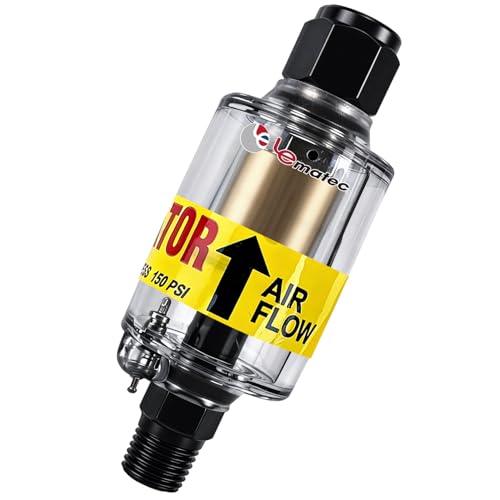
Moisture Protection: 1-micron reusable element removes air compressor oil and water from compressed air systems; essential for precise spray painting and plasma cutting

【Designed for Drying】The Desiccant Air Dryer allows the Air to be Thoroughly Dried and Cleaned before it Enters your Pneumatic Tools. The Desiccant Beads need to be Added to the Metal Bowl. When it needs to be Replaced, the Beads will Change from Blue to Pink.
Common Gas Flow Mistakes That Raise Cutting Costs
Many gas problems begin with a small setup error. Raising pressure may hide a symptom for a few cuts while the real cause remains unchanged.
- Setting pressure while the gas is off instead of checking flowing pressure
- Sizing the compressor by tank gallons rather than delivered CFM at pressure
- Using long, narrow hoses or restrictive quick-connects that cause pressure drop
- Skipping air drying and oil removal in humid or contaminated shops
- Mixing gases or consumables without confirming torch compatibility
- Ignoring leaks in hoses, fittings, regulators, valves, or gas consoles
- Blaming gas flow for dross caused by travel speed, torch height, or worn consumables
- Comparing gas cost per hour instead of cost per accepted part
Fix the root cause before increasing pressure or flow. This protects cut quality, gas supply components, and consumable life.
How to Size Air Supply for a Plasma Cutter
Start with the cutter’s required SCFM or CFM at the stated inlet pressure. Compare it with the compressor’s delivered CFM at that same pressure. The compressor must meet the demand continuously for the length and duty cycle of your work.
- Find the cutter’s cutting-air requirement in the current manual or data plate.
- Check the compressor’s delivered CFM at the same psi.
- Account for dryer, filter, hose, fitting, and piping pressure loss.
- Add practical headroom for long cuts, hot weather, filter loading, and future leaks.
- Test the system while gas is flowing and during the longest expected cut.
A larger receiver tank can delay pressure drop, but it cannot make an undersized compressor produce more continuous air. A small tank may handle brief cuts if compressor output is adequate, while a large tank will eventually empty if output stays below torch demand.
Products Worth Considering
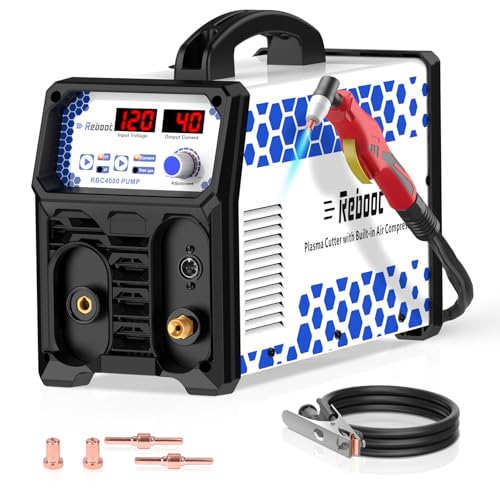
𝐁𝐔𝐈𝐋𝐓-𝐈𝐍 𝐀𝐈𝐑 𝐂𝐎𝐌𝐏𝐑𝐄𝐒𝐒𝐎𝐑, 𝐙𝐄𝐑𝐎 𝐄𝐗𝐓𝐄𝐑𝐍𝐀𝐋 𝐔𝐍𝐈𝐓𝐒 𝐍𝐄𝐄𝐃𝐄𝐃: Integrated high-efficiency air pump eliminates the need for separate air compressors. Start cutting immediately with simplified setup
【Powerful Cutting Ability】Switch effortlessly between 110V and 220V for home or workshop use. Achieve professional 1/2" clean cuts on steel, aluminum, and copper with advanced LGBT technology. Perfect for DIY projects and heavy-duty tasks. Recommended maximum cutting thickness: 12mm @ 35A / 110V / 55 PSl; 18mm @ 50A / 220V / 75 PSI. Note: Requires compressed air (compressor sold separately).

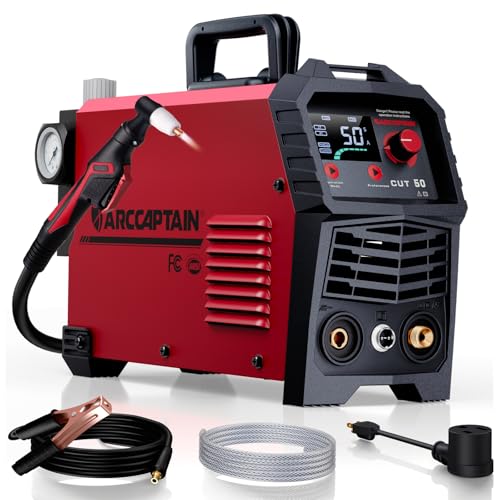
CUTTING THICKNESS UP TO 20MM: Featuring a brand-new MCU technology upgrade, the plasma cutter machine has a high degree of internal integration, combining full digitalization for more precise control of cutting parameters such as current and voltage. This results in better cutting effects and improved stability. Cutting thickness: Quality 12mm (1/2"), maximum 20mm (3/4").
How to Estimate Plasma Gas Cost per Cut
Measure total gas-on time, not only arc-on time. Include preflow, piercing, cutting, programmed delays, postflow, and gas used during testing. For dual-gas systems, calculate plasma and shield gas separately.
Note: Gas volume in standard cubic feet equals flow in scfm multiplied by gas-on time in minutes. At 6 scfm for 5 total gas-on minutes, the process uses 30 standard cubic feet.
Bottled-gas formula:
Gas used per part = flow rate in scfm × total gas-on minutes per part
Gas cost per part = gas used per part × delivered gas cost per standard cubic foot
For a dual-gas process, calculate the plasma-gas cost and shield-gas cost separately, then add cylinder rental, delivery, and purge losses allocated to the production run.
Compressed-air formula:
Electricity cost for the run = measured compressor kilowatts × loaded operating hours × electricity rate per kilowatt-hour
Add the share of dryer power, filters, maintenance, and leak loss. Divide by the number of accepted parts, not the number started.
Total process formula:
Cost per good part = (gas or air cost + consumable cost + labor + finishing + scrap) ÷ accepted parts
Keep the same test pattern when comparing gases or settings. Record amperage, flowing pressure, flow, speed, thickness, pierce count, gas-on time, dross, bevel, and edge finish.
Plasma Gas Troubleshooting by Symptom
| Symptom | Likely causes | First checks |
|---|---|---|
| Pressure falls during a long cut | Low compressor output, clogged filter, restrictive hose, or leak | Compare flowing pressure and delivered CFM with the manual |
| Air use seems higher than expected | Long postflow, frequent pierces, excessive set pressure, or leaks | Time the full gas cycle and leak-test the supply |
| Heavy dross despite adequate pressure | Wrong speed, torch height, amperage, or worn consumables | Return to the cut chart before changing gas flow |
| Short nozzle or electrode life | Moisture, oil, wrong parts, poor piercing technique, or low flow | Inspect filters, consumables, seals, and pierce height |
| Unstable or sputtering arc | Contaminated gas, pressure fluctuation, poor work connection, or damaged torch parts | Verify gas quality, flowing pressure, work clamp, and torch condition |
Safety and Fume Control When Plasma Cutting
Plasma cutting creates metal fumes, gases, ultraviolet and infrared radiation, hot sparks, molten metal, noise, and electrical hazards. OSHA lists metal-fume exposure, UV radiation, burns, eye damage, and electrical shock among the hazards of welding and cutting work. Review OSHA’s welding, cutting, and brazing guidance before setting up the work area.
Warning: Use local exhaust ventilation near the cut, appropriate eye and face protection, hearing protection, flame-resistant clothing, gloves, and respiratory protection when the exposure assessment requires it. Never cut a sealed or previously used tank, drum, or container unless a qualified procedure has made it safe.
Coated, painted, plated, galvanized, stainless, and unknown metals can create additional hazards. Identify the base metal and coating, review the safety data sheet when available, and remove coatings only by an approved method. Keep solvents and chlorinated vapors away from the arc.
Secure gas cylinders, protect valves, use regulators and hoses rated for the gas, and keep combustible material away from sparks. Do not use oxygen or hydrogen blends unless the plasma system and work area are designed for them.
Frequently Asked Questions
Is a 6-gallon air compressor enough for a plasma cutter?
Sometimes, but tank size is not the deciding number. A 6-gallon compressor may support brief, low-demand cuts when its delivered CFM meets the cutter’s requirement. It will struggle with long cuts if compressor output is below torch demand. Compare delivered CFM at the specified psi and test flowing pressure.
How much air does it take to run a plasma cutter?
Small and medium handheld air-plasma systems may require roughly 4 to 9 scfm, but the exact figure varies by machine. For example, official specifications list 4 scfm at 80 psi for one 30-amp cutter and about 9.2 scfm at 85 psi for one 125-amp cutter. Use your current manual.
What gas do you need to run a plasma cutter?
Compressed air works for many general-purpose cuts. Supported multi-gas systems may use oxygen for mild steel, nitrogen for stainless steel or aluminum, and argon-hydrogen for thick stainless steel or aluminum. Use only gases, regulators, consumables, and pressures approved by the equipment manufacturer.
Are plasma cutter fumes toxic?
Plasma fumes can contain fine metal particles and gases that may harm the lungs. The risk depends on the base metal, coating, process gas, ventilation, and exposure time. Use source-capture ventilation and complete a hazard assessment before cutting coated, galvanized, stainless, painted, or unknown metal.
Why does my plasma cutter use more air than expected?
Common causes include leaks, pressure set too high, long postflow, frequent pierces, clogged filters, undersized supply lines, worn consumables, or a compressor that cycles heavily. Time the complete gas cycle and check pressure while gas is flowing before changing the process.
Does higher plasma pressure make a cleaner cut?
Not necessarily. Pressure above the approved setting can waste gas or create faults. Dross and bevel are often caused by speed, torch height, amperage, consumable condition, or the wrong process. Return to the manufacturer’s cut chart and verify flowing pressure first.
Conclusion
The best plasma gas setup produces the required cut quality with the lowest repeatable total cost. Start with the current torch manual, verify flow and pressure while gas is moving, and keep the supply clean, dry, and leak-free. Then tune speed, amperage, torch height, and consumables with test cuts. Track gas-on time and accepted parts so you can improve cost without guessing.
Sources
- Hypertherm Gas Selection Guide — common plasma and shield gases by metal and thickness
- Hypertherm Powermax30 XP Specifications — example low-amperage air-flow and pressure requirement
- Hypertherm Powermax125 Specifications — example high-amperage air-flow and pressure requirement
- Hypertherm Air-Filtration Guidance — air-quality, moisture, and filter-placement considerations
- OSHA Welding, Cutting, and Brazing Hazards and Solutions — fumes, radiation, burns, electrical hazards, and controls
- U.S. Department of Energy Compressed Air Systems — system-cost and efficiency tools