Resistance seam welding in automotive manufacturing is a fast way to join overlapping sheet metal with heat, pressure, and rotating electrode wheels. Instead of making separate spot welds, the machine forms a line of overlapping weld nuggets, which can create a strong, leak-tight seam when the setup, surface prep, cooling, and inspection are correct.
Quick Answer
Resistance seam welding joins overlapping metal sheets by rolling copper-alloy electrode wheels along the joint while current and pressure are applied. The heat forms a chain of overlapping weld nuggets, making it useful for automotive fuel tanks, enclosures, body parts, radiators, and other thin-sheet parts that need repeatable, sealed seams.
Key Takeaways
- Resistance seam welding uses wheel electrodes, force, current, and travel speed to create a continuous line of overlapping weld nuggets.
- It is best suited to thin sheet-metal parts with lap joints, clean surfaces, and repeatable production fixtures.
- Current, weld time, wheel pressure, wheel speed, cooling, and surface condition control weld strength and leak performance.
- Common defects include weak seams, leaks, expulsion, electrode wear, shunting, distortion, and poor fit-up.
- This is an industrial machine process, not a DIY substitute for MIG, TIG, or stick welding.
At a Glance
| Time Required | Milliseconds per current pulse, with total seam time set by wheel speed, seam length, material, and weld schedule. |
| Difficulty | Advanced industrial setup. Operators need training, guarded equipment, approved procedures, and routine quality checks. |
| Tools Needed | Resistance seam welder, water-cooled copper-alloy wheel electrodes, weld controller, fixtures, cleaning tools, inspection tools, and PPE. |
| Cost | High equipment cost, but low per-part cost in repeatable high-volume production. |
What Is Resistance Seam Welding?
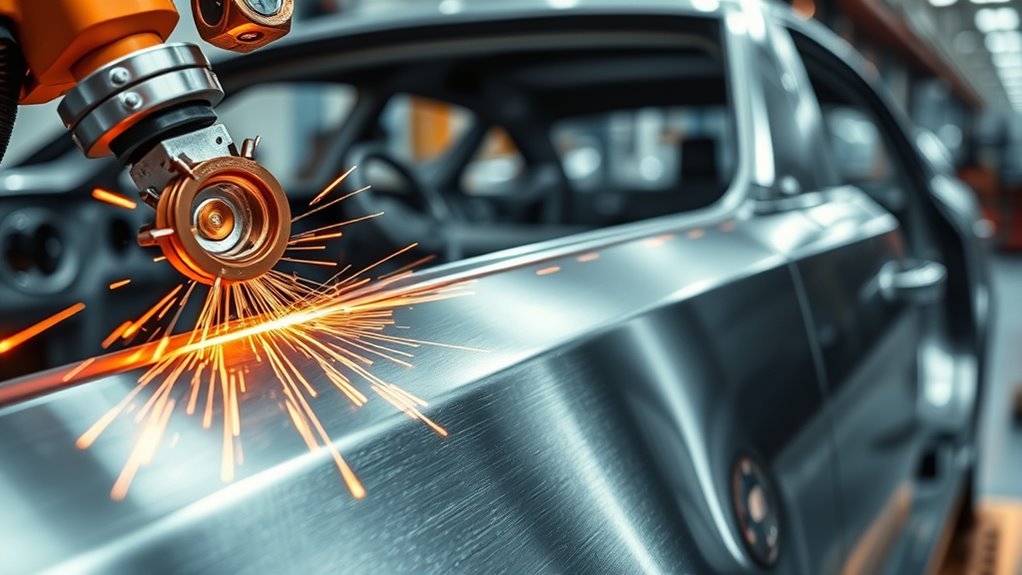
Resistance seam welding is a resistance-welding process that joins overlapping sheets of metal. The machine presses the sheets together with rotating electrode wheels, then sends current through the joint. Electrical resistance at the contact area creates heat, and that heat forms the weld.
The contact area between the sheets is called the faying surface. In simple terms, it is the hidden surface where the two sheets touch. That area must be clean, tight, and aligned so current flows where you want the weld to form.
The American Welding Society’s Resistance Welding Manufacturing Alliance supports resistance welding best practices, technical standards, and training for industries such as automotive, aerospace, and industrial manufacturing.
A good seam weld is not just a line of heat. It is a controlled chain of weld nuggets made with the right current, force, speed, cooling, and surface prep.
How Resistance Seam Welding Works
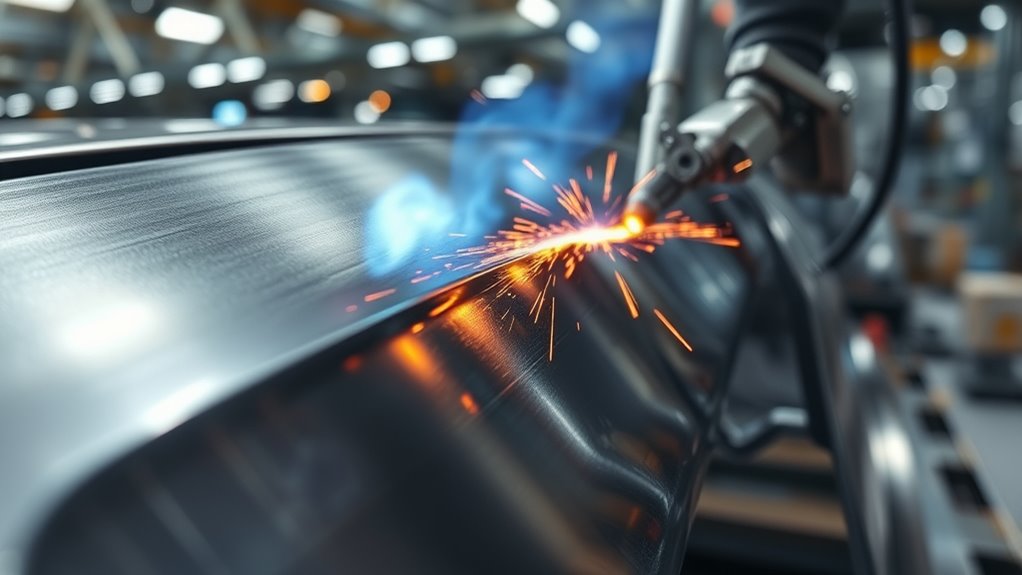
Resistance seam welding works by combining pressure, current, and motion. The electrode wheels clamp the sheets together, roll along the joint, and deliver current in a controlled schedule. As the wheels move, the welds overlap to form a seam.
- The sheets overlap. Most automotive seam welds use a lap joint because it gives the wheels a stable contact path.
- The wheels apply force. Pressure holds the sheets tight and keeps electrical contact stable.
- Current flows through the joint. Heat builds at the sheet-to-sheet interface, where resistance is highest.
- Weld nuggets form. Each pulse or heated section creates a small fused area.
- The nuggets overlap. As the wheels move, the nuggets connect into a seam.
- The seam cools under pressure. Continued force helps the joint solidify with less distortion and fewer gaps.
Note: Seam welders may use AC, DC, or medium-frequency DC power depending on the machine, material, coating, thickness, and production requirements.
Welding Wheel Pressure
Wheel pressure is one of the main controls in resistance seam welding. You need enough force to hold the sheets together and keep contact resistance stable. If force is too low, the weld can overheat, spark, or form weak nuggets. If force is too high, the wheels can mark the sheet, reduce heat at the interface, or squeeze molten metal out of the joint.
Good pressure control also depends on wheel condition. Dirty, worn, overheated, or misaligned wheels change the contact area, which changes heat input. That is why wheel dressing, cooling, and alignment checks matter in production.
Current and Heat Generation
The weld forms because electrical resistance turns current into heat. Current has a strong effect on heat input, so small current changes can cause a large change in weld size. Too little current makes a weak seam. Too much current can cause expulsion, heavy indentation, burn-through, or distortion.
Weld time also matters. A short pulse may not build enough heat. A pulse that lasts too long can overheat the joint. The best schedule balances current, time, force, wheel speed, and material condition.
Seam Formation and Cooling
As the wheels travel, each weld nugget overlaps the next one. That overlap is what separates seam welding from ordinary spot welding. The result can be a sealed seam instead of isolated weld spots.
Cooling protects both the weld and the machine. Many resistance seam welders use water-cooled wheels and transformers because the wheels stay in contact with hot metal during long production runs. Poor cooling can lead to fast electrode wear, inconsistent nugget size, and unstable weld quality.
Main Types of Resistance Seam Welding
Resistance seam welding is usually grouped by how the wheels move and how current is applied. The right type depends on whether you need a fully sealed seam, controlled spacing, or lower heat input.
| Type | How It Works | Best Use |
| Continuous seam welding | The wheels keep moving while the welds overlap closely. | Fuel tanks, sealed containers, radiator parts, and fluid-tight seams. |
| Intermittent seam welding | Current is applied at intervals, leaving spaced welds. | Parts that need strength and speed but not a fully sealed seam. |
| Step seam welding | The machine indexes, welds, then moves to the next position. | Short seams, precise locations, and parts that need tight control. |
Products Worth Considering

PREMIUM FLAME RETARDANT (FR) FABRIC – This coat is made from ASTM D6413 compliant 9 oz. FR black cotton which prevents and extinguishes fire / flames. The fabric also has an anti-static coating for added longevity and protection.

FR Shirts Fabric: This flame-resistant shirt is crafted using flat-seam stitching and is knitted from 6 ounces of 100% flame-resistant cotton. This lightweight, high-visibility flame-resistant shirt is breathable, comfortable, and stand wear and tear.

【MATERIAL】- Made of high-quality fiber and copper material, corrosion-resistant, not easy to deform, owning a long service life.
Seam Welding vs. Spot Welding
Resistance seam welding and resistance spot welding use the same basic heat source: electrical resistance under pressure. The difference is the weld pattern. Spot welding makes separate welds. Seam welding uses wheel electrodes to create a row of overlapping welds.
| Feature | Seam Welding | Spot Welding |
| Electrodes | Rotating wheels | Fixed tips or caps |
| Weld pattern | Overlapping weld nuggets | Separate weld nuggets |
| Best for | Sealed or long straight seams | Fast sheet-metal attachment points |
| Main limit | Needs wheel access and a weld path the wheel can follow | Does not create a sealed seam by itself |
Products Worth Considering

FR welding Cap:Updated New Functin on Surface(Water Repellent and Oil Resistant) we use the 10oz heavy weight flame resistant cotton duck(canvas) outside and inner material Flame Resistant cotton. More heat and arc resistant ATPV 14 Calories/cm2+8.2 Calories/cm2

Traditional Khaki FR Cloth Welding Jacket - XLarge

7.5 oz cotton twill FR treatment, FR reflective tape, FR zipper. Double seam 2-inch silver reflective tape ANSI/ISEA 107-20 Grade 1 O-Type 1. The bottom, side pockets, and back pocket are covered with double loop tape in the reflective area. More FR info On Neck Tag About UL Certification.We Attached A Small Sample Inside Package For Cunstomers Simple FR Try
Why Car Makers Use Seam Welding
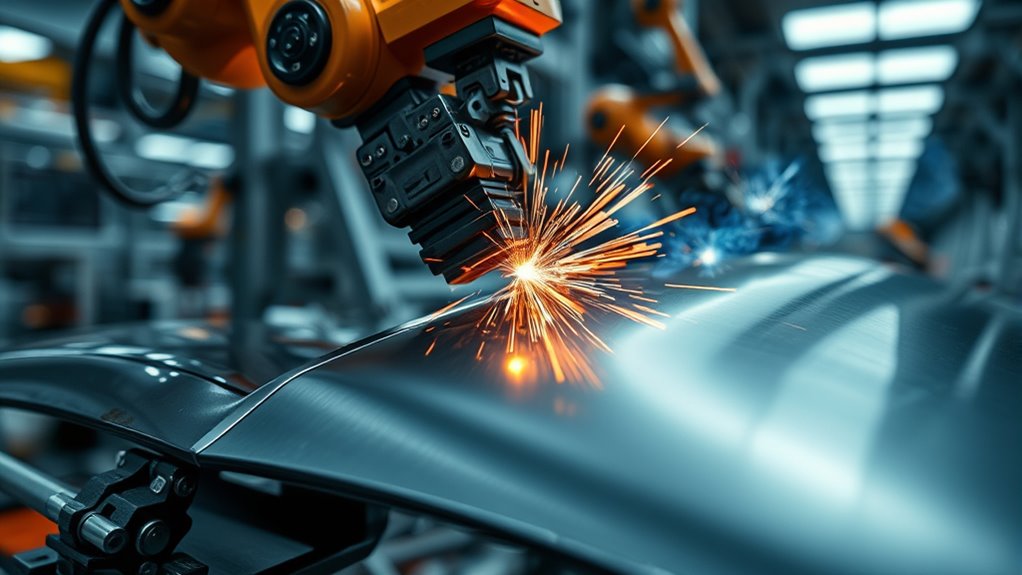
Car makers use resistance seam welding because it is fast, repeatable, and well suited to automated sheet-metal production. Once the weld schedule is proven, the same machine can repeat the seam over and over with tight control.
The biggest benefits are:
- Sealed joints: Properly made seams can hold fluids or gases better than spaced spot welds.
- High production speed: Wheel electrodes move along the joint, which supports automated production lines.
- No filler metal: The process joins the base sheets directly, so there is no wire, rod, or flux to add.
- Controlled heat input: The heat is focused at the joint, helping reduce distortion compared with slower, wider heat processes.
- Repeatability: Weld schedules can be monitored and adjusted for consistent production quality.
Materials and Joint Prep for Seam Welding
The seam starts with the right material and clean prep. Resistance seam welding is most common on thin sheet metal, especially low-carbon steel, coated steel, stainless steel, and some aluminum alloys. The exact thickness range depends on the machine, alloy, coating, electrode design, and weld schedule.
Low-carbon steel is usually easier to seam weld than aluminum because it has higher electrical resistance and lower thermal conductivity. Aluminum can be welded, but it often needs higher current, stronger cooling, tighter surface control, and more frequent electrode maintenance.
Before welding, remove oil, paint, heavy oxide, dirt, adhesive residue, and loose coating from the weld path. The sheets must overlap evenly, sit flat, and stay clamped so the wheel pressure does not push them out of line.
Pro Tip: If the seam quality changes during a production run, check wheel face condition, water flow, surface contamination, and part fit-up before changing current. Many seam problems start with contact, not power.
Process Controls That Affect Weld Quality
Resistance seam welding is sensitive to small changes. You do not control quality with one setting. You control it with a weld schedule, stable tooling, clean parts, and regular inspection.
| Control | What It Does | If It Is Wrong |
| Current | Creates the heat needed for the weld nugget. | Low current causes weak welds. High current can cause expulsion or burn-through. |
| Weld time | Controls how long heat is applied. | Too short makes small nuggets. Too long overheats the seam. |
| Wheel force | Holds the sheets together and controls contact resistance. | Too low causes sparks and instability. Too high can reduce heat or mark the sheet. |
| Wheel speed | Sets nugget spacing and seam overlap. | Too fast can leave gaps. Too slow can overheat the part. |
| Cooling | Protects electrodes and keeps heat input stable. | Poor cooling speeds electrode wear and causes inconsistent welds. |
| Surface prep | Keeps current flowing through the intended joint path. | Contamination can cause shunting, porosity, weak seams, or leaks. |
Common Seam Welding Problems and Fixes
Most seam welding defects come from unstable heat, poor contact, poor fit-up, or worn electrodes. The table below shows the problems you are most likely to see in automotive sheet-metal work.
| Problem | Likely Cause | Fix |
| Weak seam | Low current, short weld time, high speed, poor contact, or dirty sheets. | Clean the joint, check fit-up, verify force, then adjust the approved weld schedule. |
| Leaks | Nuggets do not overlap, gaps exist in the lap joint, or the seam is contaminated. | Reduce wheel speed if approved, improve clamping, clean surfaces, and leak test the part. |
| Expulsion | Too much heat, low force, poor fit-up, or coating buildup. | Check force first, then reduce heat input within the qualified procedure. |
| Electrode wear | Heat, friction, contamination, poor cooling, or abrasive coatings. | Dress or replace wheels, confirm water flow, and shorten inspection intervals. |
| Shunting | Current takes a path away from the intended weld zone. | Improve part spacing, electrode alignment, surface prep, and weld sequence. |
| Distortion | Too much heat, poor fixturing, thin sheet, or uneven cooling. | Use better support, check cooling, and reduce heat input only within the approved schedule. |
Electrode Wear
Electrode wear changes the shape of the contact area. When the wheel face widens, becomes dirty, or loses alignment, current spreads out and the seam can become weaker. Aluminum and coated sheets can speed up wear, so these jobs often need more frequent wheel cleaning or dressing.
Shunt Effects
Shunting happens when current finds an easier path than the intended weld area. It can steal heat from the joint and leave weak or uneven nuggets. It is more likely when parts are misaligned, sheets are dirty, previous welds are too close, or the material conducts current easily.
Leaks and Weak Seams
Leaks usually mean the seam is not truly continuous. The nuggets may be too small, too far apart, or broken by gaps in the lap joint. Weak seams can also come from low heat, worn wheels, surface contamination, or pressure that is too high or too low.
Inspection and Testing
A seam that looks acceptable can still leak or fail, so production parts need inspection. The right test depends on the part, material, and engineering requirement.
- Visual inspection: Checks wheel marks, burn-through, expulsion, skips, edge alignment, and obvious surface defects.
- Destructive sample checks: Peel, chisel, sectioning, or macro-etch tests can confirm nugget size and overlap during setup or audits.
- Leak testing: Fuel tanks, heat exchangers, and sealed containers may need air, water, pressure-decay, helium, or other approved leak tests.
- Process monitoring: Current, voltage, force, wheel speed, water flow, and dynamic resistance data can help detect drift before defects spread.
- Maintenance records: Wheel dressing, electrode replacement, water-flow checks, and machine inspections should be tracked.
Safety Requirements for Resistance Seam Welding
Resistance seam welding equipment can create electrical, mechanical, heat, spark, fume, and pinch-point hazards. OSHA’s resistance welding standard covers items such as qualified installation, competent operators, guarded controls, spark shields, grounding, and periodic inspection. OSHA also provides broader guidance for welding, cutting, and brazing hazards.
Warning: Do not operate or service a resistance seam welder unless you are trained and authorized. Keep guards in place, lock out power before service, protect against pinch points, and follow the machine manual and site safety rules.
Basic safety checks include:
- Confirm guards, shields, interlocks, and emergency stops are working.
- Keep fingers, gloves, and loose clothing away from wheels, clamps, chains, gears, and pinch points.
- Use proper eye, face, hand, and heat protection for sparks and hot parts.
- Check cooling water flow before production starts.
- Use ventilation or fume control when coatings, oils, or metals can release fumes.
- Report defects and stop using unsafe equipment until repairs are made.
Common Automotive Seam Welding Applications
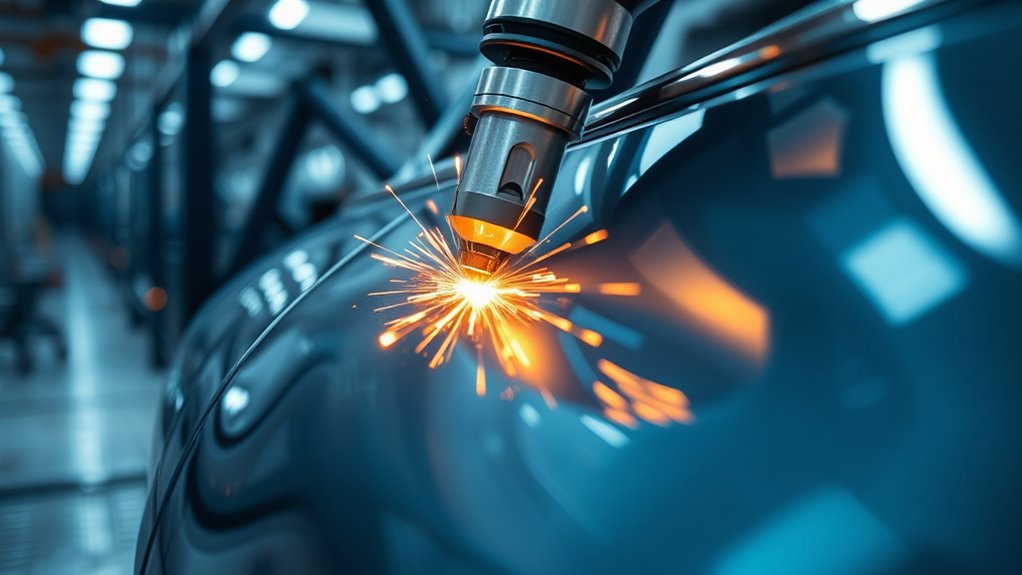
Resistance seam welding is useful when an automotive part needs a long, repeatable seam instead of separate spot welds. It is especially helpful when a joint must resist leaks, support thin-sheet strength, or run quickly on a production line.
Common uses include:
- Fuel tanks and fluid containers: Sealed seams help reduce leak paths when the part is properly welded and tested.
- Radiators and heat exchangers: Thin metal parts need controlled heat and consistent seams.
- Body panels and closures: Continuous or intermittent seams can improve stiffness in selected areas.
- Mufflers and exhaust components: Seam welding can join thin rolled sections efficiently.
- Battery trays and enclosures: Some designs use resistance welding when material, coating, access, and sealing needs fit the process.
When Not to Use Resistance Seam Welding
Resistance seam welding is not the best choice for every automotive joint. It works best when the wheel electrodes can reach the joint and roll along a controlled path. Complex shapes, thick sections, heavy gaps, dirty surfaces, and parts that cannot be clamped evenly may need another joining method.
You may need MIG, TIG, laser welding, adhesive bonding, mechanical fastening, or spot welding instead when:
- The joint is too curved, boxed-in, or obstructed for wheel access.
- The material stack is too thick for the available machine.
- The coating or oxide layer makes resistance control unstable.
- The part cannot tolerate wheel marks or indentation.
- The seam does not need to be sealed and spot welding is faster or cheaper.
- The design uses dissimilar materials that need a qualified alternative process.
Frequently Asked Questions
What are the disadvantages of resistance seam welding?
The main disadvantages are high equipment cost, limited joint access, electrode wear, strict surface-cleaning needs, and sensitivity to material thickness, coatings, force, current, and wheel speed. It also works best on lap joints and relatively thin sheet metal, so it is not a universal welding method.
What is resistance seam welding used for in automotive manufacturing?
It is used for thin-sheet parts that need long, repeatable, and often sealed seams. Common examples include fuel tanks, radiators, heat exchangers, mufflers, selected body panels, and other sheet-metal assemblies where a continuous seam is better than separate spot welds.
How much do welders who work with resistance welding make?
Pay depends on location, plant type, shift, experience, and whether the job is production operation, maintenance, setup, quality, or engineering support. The U.S. Bureau of Labor Statistics lists the 2024 median pay for welders, cutters, solderers, and brazers at $51,000 per year, with the highest 10 percent earning more than $75,850.
What is the main drawback of resistance welding?
The main drawback is that the process depends on access, clean contact, controlled pressure, and repeatable electrical resistance. If the parts do not fit tightly, the surface is contaminated, or the electrodes cannot reach the joint, weld quality can drop quickly.
Is resistance seam welding the same as roll welding?
Not exactly. Resistance seam welding uses rotating electrode wheels that apply both pressure and welding current. Some people describe it as a rolling resistance process because of the wheel electrodes, but it is still an electric resistance welding process, not a general mechanical rolling or roll-bonding process.
Can resistance seam welding be used on aluminum?
Yes, but aluminum is harder to control than low-carbon steel because it conducts heat and electricity well and forms surface oxide. It usually needs higher current, excellent cleaning, tight fit-up, strong cooling, and more frequent electrode maintenance.
Conclusion
Resistance seam welding is one of the most useful resistance-welding methods for automotive thin-sheet parts that need long, repeatable, and leak-tight seams. It works by pressing overlapping sheets between rotating electrode wheels while current creates heat at the joint. The process can be fast and consistent, but only when the weld schedule, wheel pressure, cooling, surface prep, fixture alignment, safety controls, and inspection plan are all managed together.
For automotive production, its value is clear: it can join fuel tanks, radiators, mufflers, body parts, and other thin-sheet assemblies without filler metal and with strong process repeatability. Its limits are just as important. If the part has poor access, dirty surfaces, heavy gaps, thick material, or complex geometry, another joining method may be safer, stronger, or more cost-effective.
Sources
- American Welding Society, Resistance Welding Manufacturing Alliance — industry context, resistance welding standards, best practices, and training.
- OSHA 1910.255, Resistance Welding — machine installation, guarding, operator instruction, shields, grounding, and inspection requirements.
- OSHA Welding, Cutting, and Brazing — general welding hazards, standards, and safety resources.
- U.S. Bureau of Labor Statistics, Welders, Cutters, Solderers, and Brazers — current wage, training, and job outlook data.