Disclosure: As an Amazon Associate, we earn from qualifying purchases. If you click a link on this page and make a purchase, we may receive a small commission at no extra cost to you.
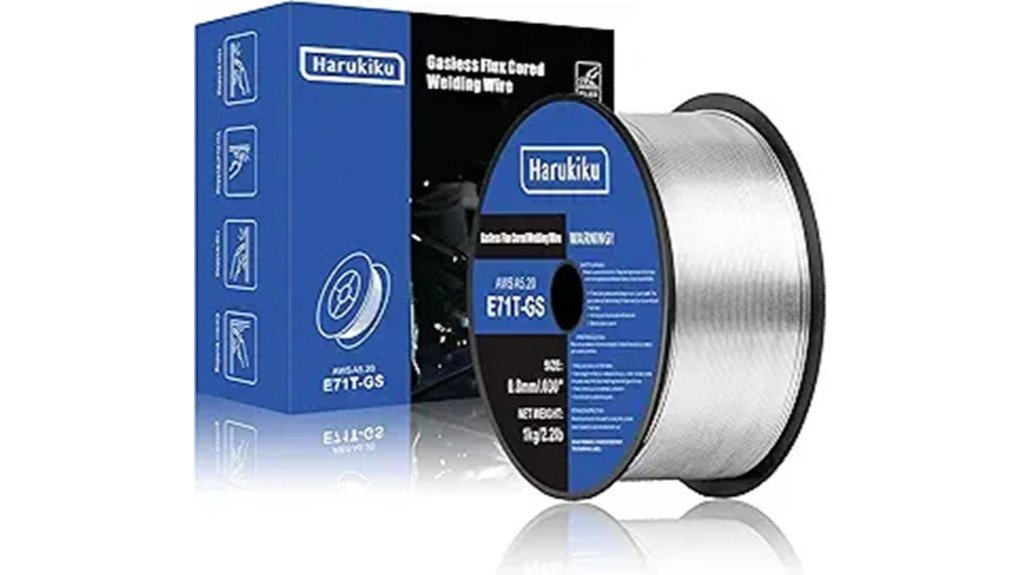
Flux-core wire can make small welding jobs easier because you do not need a separate shielding gas bottle. This Flux Core Welding Wire is described as a .030-inch wire for mild steel, with smooth arc action, low spatter, and support for single-pass and multi-pass welding. It is a practical choice if you want a simple wire for repairs, outdoor work, and general shop projects. The tradeoff is that flux-core welding still creates smoke and slag, so you need proper setup, ventilation, and cleanup.
Quick Verdict
Rating: 8.1/10
Best For: DIY welders, repair work, mild steel projects, and jobs where you want to avoid shielding gas.
Bottom Line: This .030-inch flux-core wire is worth considering if you want a gasless wire that can handle common mild steel welding tasks. It is not the cleanest choice if you dislike slag removal or need the neatest possible bead finish.
Key Takeaways
- No shielding gas is required, which makes setup simpler for small jobs, repairs, and outdoor welding.
- The .030-inch diameter is a common size for light to medium mild steel work when your welder supports it.
- Smooth arc action and reduced spatter can help you make cleaner beads with less cleanup than rough-feeding wire.
- Single-pass and multi-pass use gives you flexibility for different joint types and project thicknesses.
- Flux-core welding still produces slag and smoke, so you need ventilation, PPE, and slag removal between passes.
| Specification | Detail |
|---|---|
| Product type | Flux-core welding wire |
| Wire classification | E71T-GS, as stated in the article FAQ |
| Wire diameter | .030 inch |
| Base metal | Mild steel |
| Shielding gas | Not required for the stated flux-core setup |
| Welding style | Semi-automatic wire-feed welding |
| Supported applications | Single-pass and multi-pass welding |
| Position support | Described as suitable for all positions |
| Quality details | CE testing stated in the article |
| Warranty | 30-day return/exchange option and 6-month warranty stated in the article |
| Best use | Mild steel repair, DIY welding, outdoor projects, and gasless wire-feed welding |
What Is the Flux Core Welding Wire?
This product is a .030-inch flux-core welding wire made for mild steel work. Instead of relying on an external gas cylinder, the flux inside the wire helps shield the weld as it burns. That makes it useful when you want a simpler setup or when outdoor air movement would make gas-shielded MIG welding harder to control.
The article identifies the wire as E71T-GS, a common self-shielded flux-core type used for general mild steel repair and fabrication. It is described as suitable for semi-automatic welding, single-pass work, multi-pass work, and welding in different positions. For a home shop, farm repair area, or small garage setup, the main appeal is convenience.
You should still match the wire to your machine, contact tip, drive roller, and welding chart before you start. A .030-inch wire will not perform well if your welder is set up for a different wire size, the wrong polarity, or a wire-feed speed that is too high or too low.
Before You Buy: Confirm that your welder supports .030-inch flux-core wire and that you have the correct contact tip, drive roller, and polarity setup. The wire can be a poor match if your machine is designed only for solid MIG wire or a different wire diameter.
Who Should Buy It?
Best For
- DIY welders who want a gasless wire for mild steel projects.
- Garage, farm, and outdoor repair jobs where wind can affect shielding gas.
- Beginners who want fewer setup parts than a gas-shielded MIG system.
Skip If
- You need the cleanest possible bead appearance with minimal slag.
- Your welder does not support .030-inch flux-core wire.
- You are welding aluminum, stainless steel, or specialty alloys not supported by this wire.
Welding Performance and Efficiency
The main performance benefit is the gasless setup. Since the flux inside the wire provides shielding during welding, you do not need a high-pressure shielding gas bottle for the stated use. That reduces the amount of gear you need to move, store, and maintain.
The article also notes smooth arc action, high wire feed capacity, and minimal spatter. Those details matter because rough feeding can make the arc surge, pop, and leave a messy bead. A smoother feed gives you a better chance of keeping a steady travel speed and a consistent weld puddle.
For best results, use clean mild steel, clamp your work securely, and run a short test bead on scrap before welding the real joint. Even good flux-core wire can produce porosity, excessive spatter, or poor fusion if the surface is dirty, the wire speed is wrong, or your travel angle is too steep.
Key Features That Matter
| Feature | Why It Helps | Buyer Note |
|---|---|---|
| Flux-core design | Removes the need for shielding gas. | Useful for portable and outdoor work. |
| .030-inch diameter | Fits many light and medium-duty wire-feed welders. | Check your machine and tip size first. |
| Mild steel compatibility | Matches common repair and fabrication material. | Do not assume it works for every metal. |
| Single-pass and multi-pass use | Gives you flexibility for different joints. | Chip and brush slag between passes. |
| Smooth arc action | Helps reduce spatter and improves bead control. | Machine setup still affects results. |
Fit and Compatibility
Compatibility starts with wire size. This wire is described as .030 inch, so your welder should be able to feed .030-inch flux-core wire without crushing, slipping, or bird-nesting the wire. You should also use the matching .030 contact tip unless your welder manual says otherwise.
Check your drive roller before loading the spool. Flux-core wire is softer than solid wire, so many welders use a knurled drive roller for better grip. If the roller pressure is too high, it can deform the wire. If it is too low, the wire may slip and cause an uneven arc.
This wire is meant for mild steel. It is not a general-purpose answer for aluminum, stainless steel, cast iron, or critical structural work. For safety-critical welds, load-bearing repairs, or vehicle frame work, follow the proper welding procedure or consult a qualified welding professional.
Build Quality and Wire Feed
The article highlights smooth arc action and high wire feed capacity. These are important because flux-core welding depends on steady feeding from the spool to the contact tip. If the wire feeds unevenly, your bead may become lumpy, narrow, or full of spatter.
A good feeding setup also helps beginners focus on puddle control instead of fighting the machine. You still need to set wire speed, voltage, and stickout correctly. If the bead piles up, burns through, or sounds harsh, stop and adjust your settings before continuing.
Pro Tip: Before welding the final piece, run a 3-inch test bead on scrap from the same material. Adjust wire speed and voltage until the arc sounds steady and the bead ties into both sides of the joint.
How It Performs in Real Use
For Outdoor Repairs
This wire makes sense for outdoor repair work because it does not depend on external shielding gas. That is helpful when you are fixing mild steel gates, brackets, racks, or shop equipment in a breezy space. You still need to protect the work area from strong wind, rain, flammable materials, and poor visibility.
For Garage and DIY Projects
For garage projects, the .030-inch size gives you a practical balance between ease of feeding and common mild steel repair work. It can be a good match for small fabrication jobs, practice coupons, and general patching. Beginners should start on scrap material and work up to more visible projects after the settings feel stable.
For Multi-Pass Welding
The article states that this wire can be used for multi-pass welding. That can help when a single bead is not enough for the joint. The key is to chip and brush away slag after each pass, because trapped slag can weaken the weld and create defects.
For Cleanup and Finish
Flux-core welding is not as clean as gas-shielded MIG welding. You should expect slag, smoke, and some cleanup after welding. The smoother the setup and travel speed, the less time you will spend grinding and brushing after the weld cools.
How to Use It Correctly
Start by confirming the wire diameter, contact tip size, drive roller type, and polarity recommended by your welder or the product label. Load the wire carefully so it feeds smoothly from the spool. Keep the liner and contact tip clean, because drag inside the gun can cause stuttering and burnback.
Prepare the steel before welding. Remove paint, rust, heavy mill scale, oil, and moisture from the joint area. Flux-core wire can tolerate less-than-perfect shop conditions better than some processes, but dirty steel still increases the risk of porosity and weak fusion.
Use steady travel speed and keep the stickout consistent. If you move too fast, the weld may sit on top of the metal without good fusion. If you move too slowly, you may create excess buildup or burn-through on thinner material.
Safety Notes Before Welding
Flux-core welding creates heat, sparks, ultraviolet light, smoke, and slag. Wear a proper welding helmet, welding gloves, long sleeves, closed-toe footwear, and flame-resistant clothing. Keep flammable items away from the work area and have a fire-safe plan before you strike an arc.
Ventilation matters. Flux-core welding can produce more smoke than some gas-shielded MIG work, so do not weld in a closed space without proper airflow and respiratory protection when needed. If you are welding coated, painted, galvanized, or unknown metal, stop and confirm the material is safe to weld.
Let the weld cool before handling it, and remove slag with eye protection in place. Chipped slag can fly off sharply. A chipping hammer and wire brush are basic tools for cleaning flux-core welds between passes and after the final bead.
Quality Assurance and Customer Support
The article states that the wire is designed for MIG-style wire-feed welding and has undergone CE testing. It also mentions a 30-day return/exchange option and a 6-month warranty. Those details can add confidence, especially if you are trying a new spool for the first time.
Customer support is also described as available by email. That is useful if you need help with the product, but it does not replace your welder manual or a tested welding procedure. For important repairs, use a proven setup and inspect the weld carefully before putting it into service.
Pros and Cons
Pros
- No external shielding gas required for the stated flux-core setup.
- .030-inch diameter works with many compatible wire-feed welders.
- Made for mild steel, one of the most common repair materials.
- Supports single-pass and multi-pass welding according to the article.
- Smooth arc action can help reduce spatter when the machine is set correctly.
Cons
- Creates slag, so cleanup is still required after welding.
- Not suitable for metals outside the wire’s stated mild steel use.
- Requires the right welder setup, contact tip, drive roller, and settings.
Is It Worth the Price?
This wire offers strong value for the price if you need a simple gasless welding wire for mild steel. You get the main benefits shoppers usually want from flux-core wire: less equipment, easier portability, and better outdoor practicality than gas-shielded MIG in breezy conditions.
It is a smart buy for everyday use if your welder supports .030-inch flux-core wire and your projects are mostly repairs, brackets, practice work, or mild steel fabrication. You may get less value if you want the cleanest bead finish, weld mostly indoors with shielding gas, or need wire for a metal this product does not support.
How It Compares to Alternatives
Compared with solid ER70S-6 MIG wire, this flux-core wire is easier to use without a gas bottle, but it leaves slag and usually creates more smoke. Solid MIG wire can produce cleaner-looking welds in a controlled indoor shop, but it depends on shielding gas and is less convenient outdoors.
Compared with gas-shielded flux-core wire, this self-shielded style is simpler for portable work. Gas-shielded flux-core wire may be better for heavier production welding when the setup, shielding gas, and procedure are matched correctly. This wire makes the most sense when you want a practical mild steel wire with fewer setup parts.
Frequently Asked Questions
What materials can you weld with E71T-GS flux-core wire?
The article identifies this wire for mild steel. Do not assume it is suitable for aluminum, stainless steel, cast iron, or specialty alloys unless the product label and your welding procedure clearly support that use.
Does this flux-core wire need shielding gas?
No shielding gas is required for the stated flux-core setup. The flux inside the wire helps protect the weld puddle, which makes the wire useful for portable and outdoor welding work.
Is .030-inch wire a good size for beginners?
It can be a good size if your welder supports it and your work is mild steel. Beginners should check the machine chart, use the right contact tip, and practice on scrap before welding the final piece.
Can you use this wire outdoors?
Yes, flux-core wire is often chosen for outdoor work because it does not rely on a separate shielding gas stream. You should still avoid unsafe weather, wet work areas, strong wind, and flammable surroundings.
Why does flux-core wire leave slag?
The flux creates a protective slag layer as the weld cools. That layer helps protect the weld, but it must be chipped and brushed away after the pass, especially before adding another bead.
What safety equipment should you use with flux-core welding?
Use a welding helmet, gloves, flame-resistant clothing, closed-toe footwear, and eye protection when chipping slag. Work with proper ventilation and keep flammable materials away from sparks and hot metal.
How should unused welding wire be stored?
Store unused wire in a cool, dry place away from moisture and dust. Keeping the wire dry helps reduce rust, feeding problems, and weld contamination later.
Who should skip this wire?
Skip it if your welder does not support .030-inch flux-core wire or if you need wire for metals other than mild steel. You may also prefer solid MIG wire if you weld indoors with gas and want a cleaner bead with less slag.
The Bottom Line
The Flux Core Welding Wire is recommended with caveats for DIY welders who want a .030-inch gasless wire for mild steel repair and fabrication. Its biggest strengths are simple setup, outdoor practicality, and support for single-pass or multi-pass work. Skip it if your welder is not compatible, you need specialty metal wire, or you want the cleanest MIG-style finish with minimal slag.