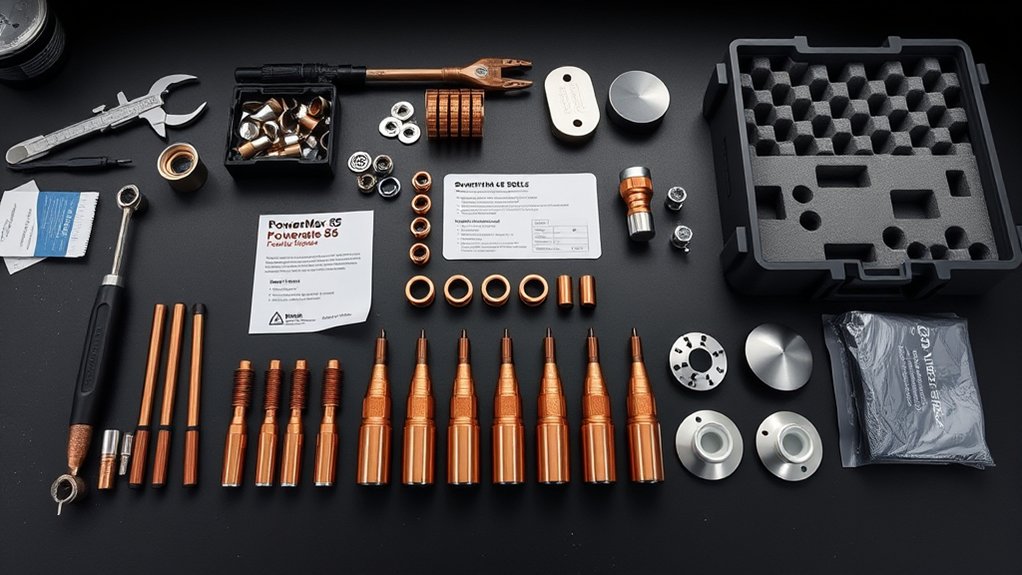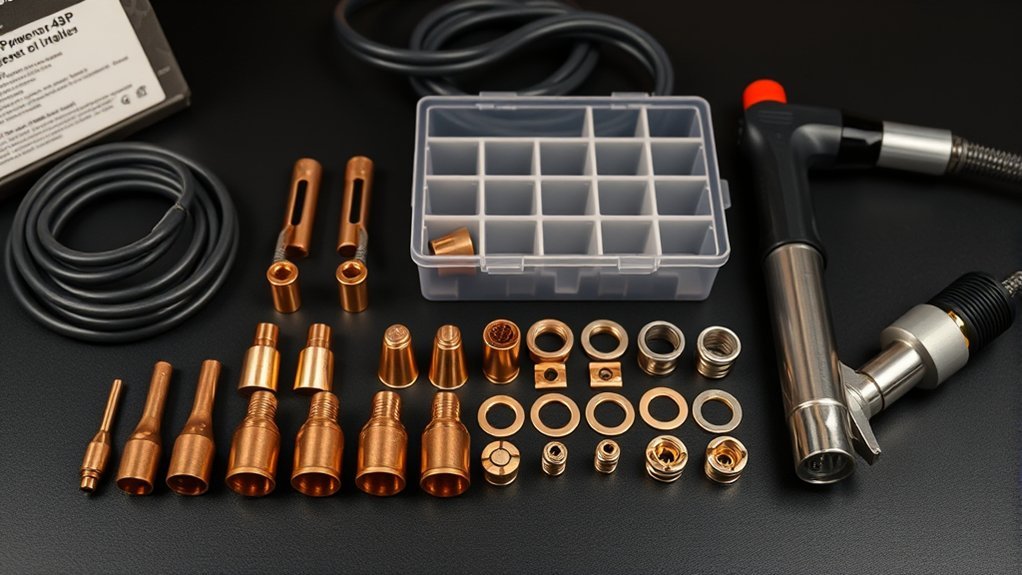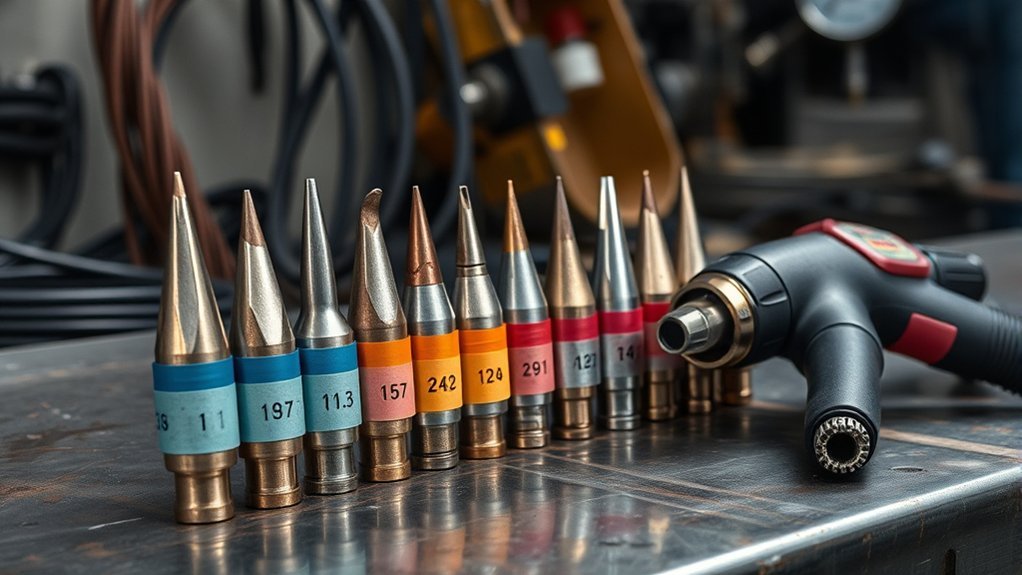
Plasma cutter tips do not have a universal lifespan based on amperage alone. A nozzle may last through several hundred pierces and roughly one to two hours of arc-on time in some modern air- or oxygen-plasma systems, but the real replacement point depends on the torch, consumable set, material, gas, pierce count, cut height, and the cut quality you need.
Quick Answer
A useful starting benchmark is about one to two hours of arc-on time and several hundred pierces, not a fixed number of shop hours. Replace the tip when its orifice is no longer round or cut quality declines. Correct consumables, clean dry gas, proper pierce height, and fewer unnecessary starts usually extend life.
Key Takeaways
- Do not schedule tips by amperage alone. Track arc-on time, starts, pierces, material thickness, and cut-quality changes.
- Match the nozzle to the process. Use the exact consumable set and cut-chart settings listed for your torch, material, thickness, and gas.
- Inspect the orifice. An oval, notched, enlarged, or damaged nozzle opening is a clear replacement sign.
- Control contamination and height. Wet or oily air, low gas flow, low pierce height, arc stretching, and torch crashes can shorten life quickly.
- Change parts before they damage the torch or scrap a job. A small consumable cost is usually cheaper than rework or torch repair.
At a Glance
| Time Required | About 5–15 minutes to inspect, replace, reassemble, and make a test cut |
| Difficulty | Beginner, provided you follow the torch manual and lock out power and gas first |
| Tools Needed | Correct replacement consumables, operator manual or cut chart, good lighting, magnifier, and a clean dry towel |
| Cost | Varies widely by torch and consumable design; replace only with compatible parts specified by the manufacturer |
Warning: Plasma cutting can expose you to electric shock, ultraviolet radiation, hot metal, fire, noise, and hazardous fumes. Before inspecting the torch, switch the machine off, unplug or isolate input power, disconnect the gas supply, and allow the torch to cool. Use the eye, face, hearing, hand, body, and ventilation protection required by your machine manual and workplace rules.
How Long Do Plasma Cutter Tips Last?
Hypertherm reports that normal parts life for modern air- and oxygen-plasma systems can be one to two hours of arc-on time and several hundred pierces, with some systems reaching 1,000 or more starts. Treat that as a broad industry benchmark, not a promise for every 20–100 amp cutter.
A handheld 30 amp machine making long edge-start cuts on thin sheet may consume parts differently from a 100 amp CNC system piercing thick plate. Even two identical machines can produce different results if one has wet air, worn torch-height control, frequent pilot-arc starts, or a lower cut-quality standard.
The best replacement schedule is not “every X hours.” It is the point where your logged starts, arc-on time, and inspection results show that the nozzle can no longer hold the cut quality your work requires.
Understanding Plasma Tips and Amperage Ratings
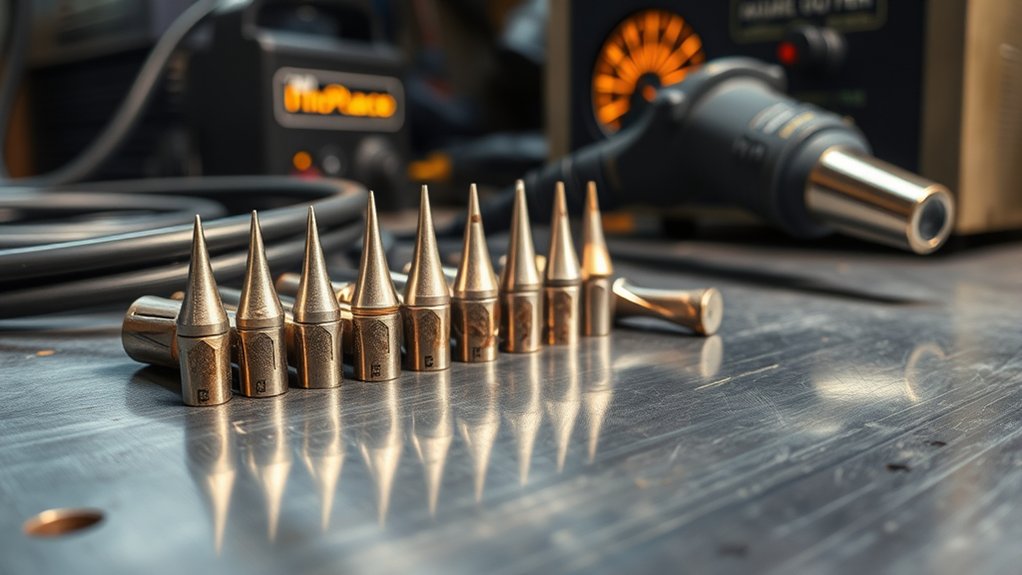
In everyday shop language, “tip” usually means the copper nozzle that constricts and focuses the plasma arc. The full consumable stack may also include an electrode, swirl ring, shield, and retaining cap. These parts work as a matched system, so a damaged electrode or blocked swirl ring can ruin a new nozzle.
Match the nozzle rating, not just the machine’s maximum output
Choose the consumable set listed for the exact torch, process, material, thickness, and gas. A 60 amp machine may accept several nozzle ratings, and a fine-cut nozzle can have different limits from a general-purpose nozzle. Hypertherm notes that the best cut quality and parts life are usually achieved near 95% of the nozzle’s rated amperage, rather than by automatically reducing the machine to half power.
Duty cycle is not tip life
Duty cycle tells you how long the power source can operate within a 10-minute period under stated conditions. It is a machine thermal rating. It does not tell you how many hours a nozzle will last. Consumable wear depends more directly on starts, pierces, gas quality and flow, torch height, material thickness, and whether the process follows the cut chart.
What Amperage Can—and Cannot—Tell You About Tip Life
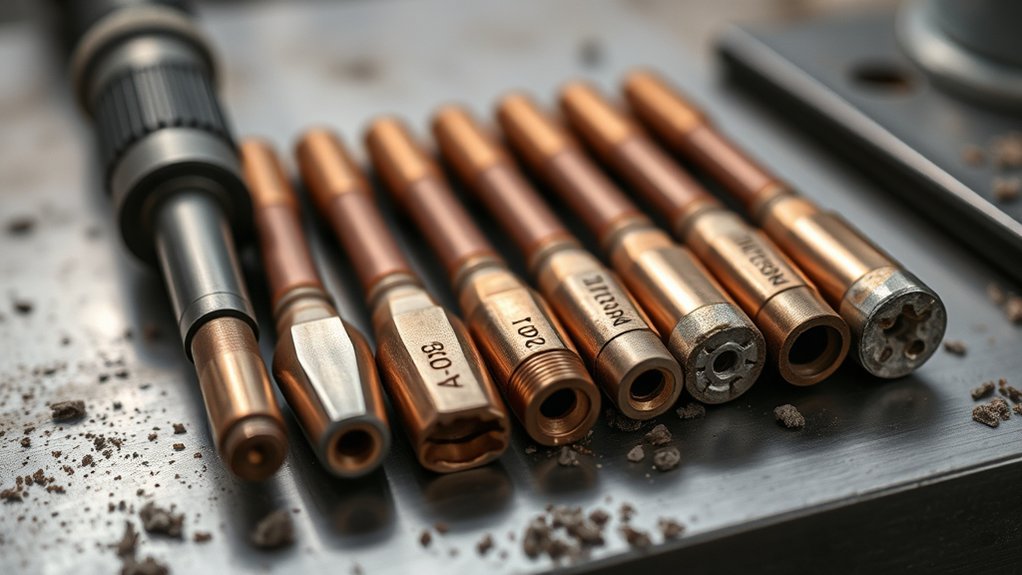
Higher-amperage processes usually carry more energy and are often used on thicker metal, but amperage alone does not create a reliable lifespan chart. The same nozzle can fail early at a low setting if the torch pierces too low or receives contaminated air. A higher-current nozzle can last well when the entire process is correctly matched.
| Common setting | Reasonable expectation | What matters most |
|---|---|---|
| 20–30 A | Often used for thin material. Life may be favorable when the nozzle is designed for this current, but no universal 2–5 hour guarantee exists. | Correct low-amp nozzle, steady travel, minimal pilot-arc time, clean air |
| 40–60 A | Common general-fabrication range. Actual life can vary from a short run to many jobs depending on pierces and setup. | Pierce height, cut-chart speed, gas pressure and flow, material thickness |
| 80–100 A | Often used on thicker work. Repeated maximum-pierce or severance cutting can shorten life, but one hour is not a universal limit. | Recommended thickness range, starts, lead-ins, height control, cooling and gas flow |
Use the amperage range to select the correct nozzle and cut chart. Use your own production log to decide when that consumable has reached the end of its useful life.
How to Choose the Right Tip Size
Do not select a nozzle by measuring its hole or by matching only the advertised amperage of the power source. Find the manufacturer’s consumable chart for your exact torch, then match all of the following:
- Process: drag cutting, standoff cutting, fine cutting, mechanized cutting, gouging, or marking
- Material: mild steel, stainless steel, aluminum, or another approved metal
- Thickness: stay within the recommended cut and pierce capacity, not only the severance rating
- Gas: compressed air, nitrogen, oxygen, or another gas approved for that torch
- Current: the nozzle’s marked or listed amperage
- Companion parts: the specified electrode, swirl ring, shield, and retaining cap
An oversized or incorrect nozzle may produce a broad, poorly focused arc. An undersized or overdriven nozzle may overheat or suffer rapid orifice damage. Mixing look-alike parts from different torch families can also change gas flow and alignment.
Note: ISO 9001 certification describes a supplier’s quality-management system; it does not prove that an aftermarket nozzle has the correct dimensions, materials, gas passages, safety approvals, or compatibility for your torch. Verify the exact part number and warranty requirements.
Products Worth Considering

[Achieve Precise Cuts] PT31 Plasma Cutting Consumables – Your Essential Tool for Efficient Cutting! Whether you're working with sheet metal, steel, or any other material, superior cutting performance ensure clean, accurate, and smooth cuts.

Fit for: SG-55 AG-60 plasma cutter torch head.

Fit for : AG-60 AG-60P SG-55 WSD-60 Plasma cutter torch head
Factors That Accelerate or Extend Tip Wear
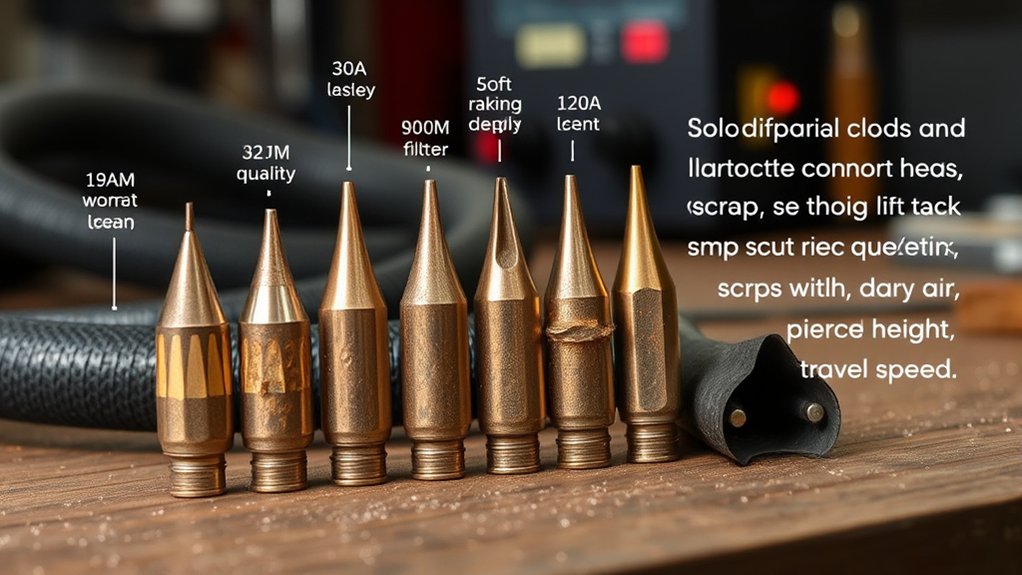
| Wear factor | What it does | Corrective action |
|---|---|---|
| Wet, oily, or dirty air | Disrupts gas flow and can shorten electrode, nozzle, and torch life. | Drain the compressor, service filters, inspect the bowl, and add a correctly sized dryer or coalescing filtration when needed. |
| Incorrect gas pressure or flow | Too little flow reduces cooling; too much pressure can cause hard starts and faster electrode wear. | Set pressure while gas is flowing and follow the torch manual. |
| Piercing too low | Throws molten metal onto the nozzle and shield and can cause double arcing. | Use the listed pierce height; a common rule of thumb is 150–200% of cut height when the manual does not state otherwise. |
| Long pilot arcs and unnecessary starts | Each start and non-transferred arc adds wear. | Edge-start when practical, group cuts, and avoid firing the torch without cutting. |
| Arc stretching | Lets the arc attach to the nozzle wall at the beginning or end of a cut. | Center edge starts correctly and time lead-outs so the arc turns off before running far off the plate. |
| Wrong travel speed | Too slow can widen the kerf and create heavy low-speed dross; too fast can cause bevel and hard dross. | Start with the cut-chart speed and adjust only after a test coupon. |
| Maximum-pierce or severance work | Places more stress on the consumable than cutting within the recommended production range. | Edge-start thick material when permitted or use a higher-capacity system. |
| Torch contact or crashes | Can deform the shield, nozzle, or torch body immediately. | Use the correct drag shield or standoff and maintain the height-control system. |
Air Quality, Dryers, and Plasma Gas
ISO 8573-1:2010 classifies compressed-air contamination by particles, water, and oil. It does not prescribe one universal purity class for every plasma cutter. Your torch manufacturer’s pressure, flow, filtration, and air-quality requirements take priority.
Products Worth Considering

Desiccant Air Dryer System: Engineered with a compressor desiccant air filter dryer system that effectively traps water vapor, oil aerosols, and dirt particles from the air supply. This unit functions as a reliable air line dryer, helping to prevent moisture-related damage to pneumatic tools and ensuring smoother operation for workshop projects.

【Designed for Drying】The Desiccant Air Dryer allows the Air to be Thoroughly Dried and Cleaned before it Enters your Pneumatic Tools. The Desiccant Beads need to be Added to the Metal Bowl. When it needs to be Replaced, the Beads will Change from Blue to Pink.
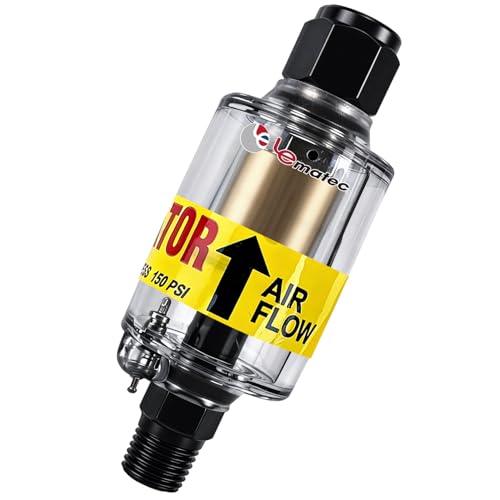
Moisture Protection: 1-micron reusable element removes air compressor oil and water from compressed air systems; essential for precise spray painting and plasma cutting
Which dryer works best?
- Water separator or particulate filter: useful as a first stage, but it may not remove vapor or fine oil aerosols.
- Refrigerated dryer: a practical shop choice for lowering moisture in many climates when correctly sized for flow and ambient conditions.
- Desiccant dryer: provides a much lower pressure dew point and may be useful in very humid, cold, or high-demand installations, but it needs maintenance and can add pressure drop.
- Membrane dryer: compact and useful for some point-of-use setups, but performance depends on inlet air quality, flow, and purge requirements.
Watch the filter bowl and test the line at the machine, not only at the compressor. Long piping runs can cool the air and create condensation downstream.
Can nitrogen or oxygen extend tip life?
Gas choice depends on the torch and material. Hypertherm’s plasma gas selection guide notes that oxygen is favored for high-quality mild-steel cutting, while nitrogen is commonly used for aluminum and stainless steel. Parts life varies by system; oxygen does not automatically outlast compressed air, and using an unapproved gas can damage equipment or create hazards.
Maintenance Practices to Maximize Pierce Count and Torch Time
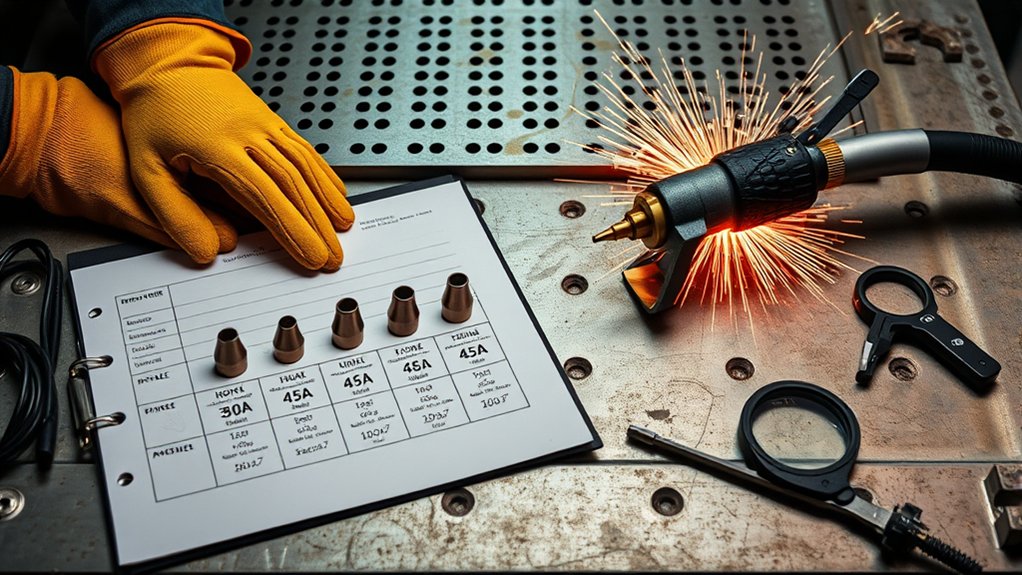
Use a repeatable inspection and logging routine instead of a generic “change every few hours” rule.
- Record the new set. Note the date, nozzle and electrode part numbers, amperage, gas, material, thickness, and starting pierce count.
- Check the air system. Drain the compressor as required, inspect the filter bowl for water or oil, and confirm pressure while gas is flowing.
- Inspect consumables regularly. Hypertherm recommends daily consumable inspection for its Powermax systems. Follow the interval in your own manual.
- Load the correct cut chart. Set amperage, pierce height, pierce delay, cut height, arc voltage, and travel speed for the actual material and thickness. Do not copy a fixed delay or “plunge rate” from another machine.
- Use a test coupon. Check kerf width, bevel, dross, top-edge rounding, and whether sparks exit the bottom of the plate.
- Log results at replacement. Record arc-on time, pierces, reason for replacement, and any damaged companion part.
- Compare like with like. Judge two consumable sets only when material, thickness, amperage, gas, speed, height, and quality standard are similar.
Pro Tip: Track cost per acceptable cut, not cost per nozzle. A cheap part that causes bevel, dross, misfires, or rework can cost more than a higher-priced compatible consumable.
For a CNC table, add these fields to the job log: program name, total pierces, arc-on minutes, material heat or batch, cut-chart revision, torch-height-control faults, and operator notes. This makes a sudden life drop easier to trace.
Signs Your Tip Is Spent and How to Replace It
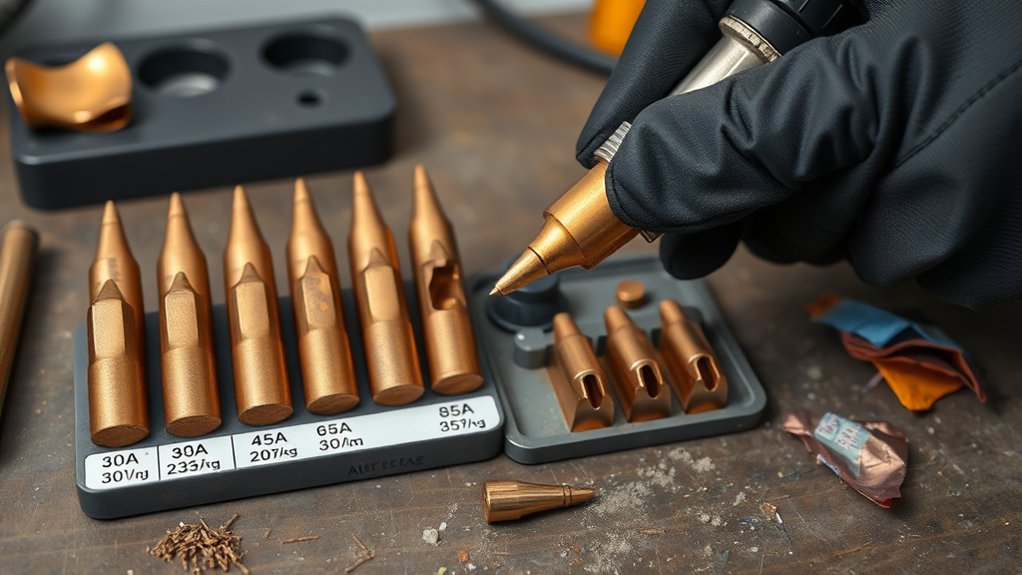
The strongest visual sign is an orifice that is no longer round and concentric. Cut symptoms can include a changing kerf, increased bevel, rough or wandering edges, more dross, difficult starts, or a slower cut at the same settings. Confirm the process settings before blaming the nozzle, because poor speed, height, grounding, or air supply can create similar symptoms.
| Part | Inspect for | Action |
|---|---|---|
| Nozzle or tip | Oval, notched, enlarged, or damaged orifice; heavy face damage; loss of a straight arc | Replace when the opening loses roundness or cut quality is no longer acceptable |
| Electrode | Deep or wide emitter pit, cracks, overheating, or heavy pitting | Use the manufacturer’s pit-depth limit; for some Powermax parts, Hypertherm lists 1/16 inch (1.6 mm) |
| Swirl ring | Cracks, blocked or deformed gas holes, burns, or contamination | Replace if damaged; do not enlarge or probe gas holes |
| Shield and retaining cap | Cracks, severe spatter, burns, deformation, damaged threads, or blocked vents | Clean only as directed and replace damaged parts; tighten to the manual’s specification |
Replacement procedure
- Make the system safe. Switch it off, isolate input power, disconnect the gas supply, and let the torch cool.
- Remove parts in order. Follow the torch manual and place the parts on a clean surface so debris does not enter the torch.
- Inspect the full stack. Compare the nozzle opening with a new part under good light. Check the electrode, swirl ring, shield, cap, O-rings, torch threads, and gas passages.
- Clean only as approved. Use a clean dry towel for accessible surfaces and clean compressed air where the manufacturer permits it. Do not file the nozzle, force a wire through the orifice, or use solvents that the manual does not approve.
- Install the matched set. Use the correct orientation and tightening method. Many handheld retaining caps are finger-tight only, but your manual controls.
- Restore settings and test. Reconnect gas and power, verify pressure and the cut chart, then make a test cut on scrap before returning to production.
Troubleshooting Short Plasma Tip Life
| Symptom | Likely causes | First checks |
|---|---|---|
| New nozzle fails after a few pierces | Piercing too low, wrong consumable stack, damaged electrode, torch contact, low gas flow | Part numbers, assembly order, pierce height, gas pressure and flow |
| Orifice becomes oval or notched | Double arcing, arc stretching, low chamber pressure, torch collision | Leaks, lead-in and lead-out, cut height, shield condition |
| Sudden drop in life during humid weather | Water reaching the torch, saturated filter or dryer, condensation in long lines | Drain points, filter bowl, dryer service, line pressure and temperature |
| Heavy dross but nozzle looks usable | Wrong speed, height, current, gas, work connection, or worn electrode | Cut chart, ground connection, electrode condition, material thickness |
| Frequent misfires or hard starts | Excess gas pressure, damaged consumables, contamination, poor assembly | Flowing pressure, filter, consumable seating, torch fault codes |
If a replacement set fails immediately after these checks, stop using the torch and consult the manufacturer or an authorized service center. Continuing to fire a damaged or incorrectly assembled torch can turn a consumable problem into a torch failure.
Frequently Asked Questions
How do different air dryers affect tip life in humid climates?
A correctly sized dryer can reduce water reaching the torch, which helps prevent premature wear. Refrigerated dryers suit many shops; desiccant dryers provide a lower pressure dew point for demanding conditions; membrane dryers can work at the point of use. Performance depends on inlet temperature, flow, pressure drop, maintenance, and downstream condensation. Follow the plasma manufacturer’s air specification rather than choosing a dryer by dew point alone.
Are aftermarket tips as durable as OEM consumables?
Some compatible aftermarket parts may perform acceptably, while others may have different dimensions, materials, coatings, gas passages, or quality control. There is no fair universal answer. Compare verified part compatibility, safety and warranty requirements, cut quality, starts, arc-on time, and cost per acceptable cut. Avoid counterfeit parts and unsupported claims based only on ISO 9001 certification.
What cut-quality changes indicate impending tip failure during automated runs?
Watch for a wider or changing kerf, increasing bevel, rougher edges, more dross, top-edge rounding, reduced speed at the same settings, or a wandering arc. These symptoms can also come from height, speed, gas, grounding, or an electrode problem. Inspect the nozzle for a round concentric orifice and compare a test coupon with your baseline. ISO 9013:2017, including its 2024 amendment, provides a formal framework for classifying thermal-cut geometry and quality tolerances.
How does CNC pierce-height calibration affect tip longevity?
Piercing too low is a major cause of molten backsplash, double arcing, and premature nozzle damage. Piercing too high can prevent arc transfer. Use the exact cut-chart value when available; otherwise, a common manufacturer rule of thumb is 150–200% of cut height. Recheck initial-height sensing when plate condition, torch parts, or table setup changes.
Can nitrogen or oxygen plasma gases extend tip life over compressed air?
Sometimes, but not as a universal rule. Gas affects cut chemistry, speed, dross, and parts life differently by material and torch design. Oxygen is commonly selected for high-quality mild-steel cutting, while nitrogen is often used for aluminum and stainless. Use only gases and pressures approved for your system.
Should I measure tip life in hours or pierces?
Track both. Long cuts add arc-on wear, while every start and pierce adds a separate wear event. A useful log includes arc-on minutes, pierces, material, thickness, amperage, gas, consumable part numbers, and the reason you changed the set.
Should I replace the nozzle and electrode together?
Inspect them as a pair because one worn part can damage the other. Some manufacturers recommend replacing both together for particular systems; others allow individual replacement based on inspection. Follow the manual for your torch and replace any part that exceeds its wear limit.
Conclusion
Plasma tip life is best managed as a process-control problem, not an amperage countdown. Start with the broad one-to-two-hour and several-hundred-pierce benchmark, then build your own baseline for each torch, nozzle, material, thickness, and gas. Keep the air clean and dry, use the exact cut chart, pierce at the correct height, limit unnecessary starts, and replace a nozzle when its orifice loses roundness or cut quality falls outside your standard.
Before every replacement, inspect the electrode and the rest of the consumable stack. A disciplined five-minute check can prevent rework, protect the torch, and make consumable cost predictable.
Sources
- Hypertherm — Extending Parts and Consumables Life — arc-on-time benchmarks, nozzle wear, and failure clues
- Hypertherm — 10 Common Plasma Arc Cutting Mistakes — amperage matching, gas contamination, pierce height, speed, and arc stretching
- Hypertherm — Powermax Preventive Maintenance — shutdown steps, daily inspection, orifice condition, electrode wear, and filter service
- Hypertherm — Plasma Gas Selection Guide — gas choices for mild steel, stainless steel, and aluminum
- ISO 8573-1:2010 — compressed-air contaminant and purity classes
- OSHA — Welding, Cutting, and Brazing Hazards and Solutions — fumes, ultraviolet radiation, burns, electric shock, and PPE