A rushed cleaning job can turn a good welding setup into an unstable arc, a porous bead, or a joint that needs to be ground out and welded again. Rust, mill scale, oil, paint, moisture, and grinding debris can all enter the weld pool or interfere with fusion.
The right preparation depends on the welding process, joint design, steel condition, and any procedure that controls the job. In most cases, the safest order is to identify coatings, remove grease, abrade unwanted rust or scale, clean the joint faces and root side, perform a final wipe, and let everything dry before welding.
Quick Answer
To clean mild steel for welding, identify any coating first, remove oil with a residue-free non-chlorinated cleaner, and then abrade rust, paint, and unwanted mill scale from the joint. Clean the root side when contamination could enter the weld, remove dust, and let all solvent evaporate before striking an arc.
Key Takeaways
- Identify paint, plating, galvanizing, and unknown coatings before grinding or welding.
- Remove oil and grease before using abrasives so you do not spread contamination into fresh scratches.
- Use a scraper, wire brush, flap disc, sanding disc, or blasting process that matches the amount of contamination.
- Never use chlorinated brake cleaner or allow chlorinated-degreaser vapor near a welding operation.
- Keep the grinder guard installed and verify that every wheel, disc, or brush is undamaged and rated for the grinder’s speed.
- TIG normally requires the cleanest surface, but MIG and stick welding also benefit from sound preparation.
- Follow the welding procedure specification, drawing, code, or coating-removal requirement whenever one controls the work.
At a Glance
| Time Required | About 15–45 minutes for a small part; longer for thick rust, paint, complex joints, or blasting |
| Difficulty | Beginner to intermediate; unknown coatings and structural work require qualified oversight |
| Tools Needed | Clean rags, non-chlorinated cleaner, scraper or wire brush, suitable abrasive, grinder with guard, clamps, and required PPE |
| Cost | Often under $10 in cleaner, rags, and abrasive wear when the grinder and PPE are already available |
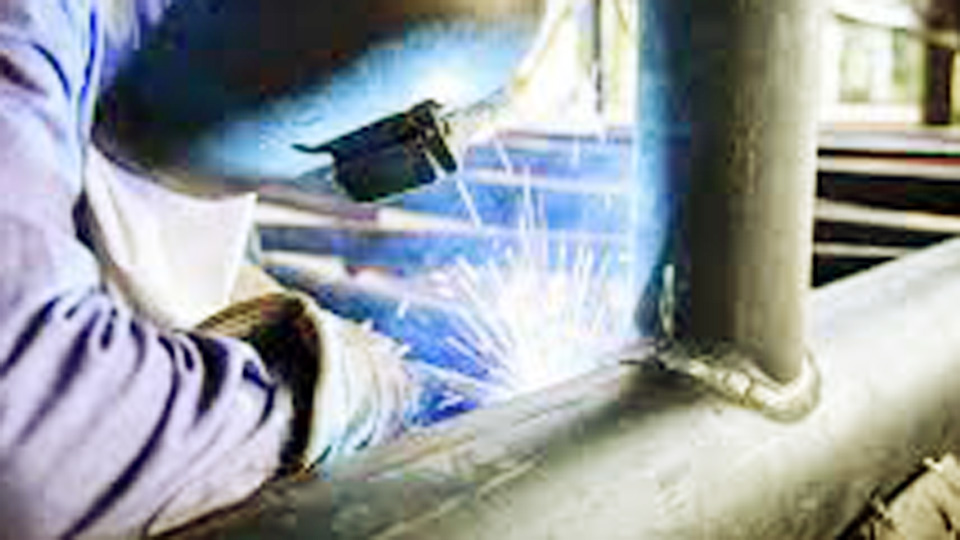
Image by aradbranding
What’s in This Article
- Why Cleaning Mild Steel Matters
- What Is Mild Steel and Why Does It Get Dirty?
- Tools and Materials for Cleaning Mild Steel
- Before You Begin
- Step-by-Step Guide to Cleaning Mild Steel
- Cleaning Methods: Pros and Cons
- Cleaning for Different Welding Processes
- How Much Steel Should You Clean?
- Common Mistakes and Fixes
- Joint Prep and Filler Compatibility
- Real-World Applications
- Advanced Cleaning Tips for Pros
- Frequently Asked Questions
- Sources
Why Cleaning Mild Steel Matters
Mild steel appears in beams, brackets, trailer frames, automotive parts, tubing, and shop furniture. During manufacturing and storage, it can collect mill scale, rust, oil, grease, cutting fluid, paint, marker residue, dirt, and moisture.
These contaminants can disturb the arc, reduce weld-pool wetting, contribute to porosity or inclusions, and make it harder to see the joint edges. Heavy scale or coatings may also hide cracks, pitting, thinning, and poor fit-up that should be found before welding.
Cleaning does not guarantee a sound weld, but it removes variables that make welding and inspection harder. Correct settings, fit-up, filler metal, shielding, heat input, and technique still matter.
Prepare the joint until the welder can see sound base metal and no nearby contamination can reasonably enter the weld pool.
If a code, drawing, job specification, or welding procedure applies, follow it first. For structural-steel work, the current American Welding Society publication is AWS D1.1/D1.1M:2025-AMD1, but the contract or authority having jurisdiction may require a different adopted edition.
What Is Mild Steel and Why Does It Get Dirty?
Mild steel, also called low-carbon steel, is widely used because it is affordable, formable, and weldable with gas metal arc welding (GMAW), gas tungsten arc welding (GTAW), and shielded metal arc welding (SMAW).
The contamination often begins before the steel reaches your workbench. Hot rolling can leave mill scale. Outdoor or damp storage can cause rust. Handling and machining can add fingerprints, cutting fluid, grease, wax, marker residue, and metal chips.
Used steel may also carry paint, undercoating, galvanizing, electroplating, powder coating, adhesive, sealant, or an unknown preservative. Identify these layers before you choose a cleaning method.
Common Contaminants on Mild Steel
- Mill scale: A dark oxide layer created during hot rolling. Loose, thick, or uneven scale can affect arc behavior, wetting, fusion, and inspection.
- Rust: Iron oxide caused by moisture exposure. Heavy rust may hide deep pitting or metal loss that cleaning cannot repair.
- Oil and grease: Residue from handling, machining, storage, or shop equipment. When heated, it can create smoke, fumes, and weld contamination.
- Paint and coatings: Paint, primer, zinc, plating, powder coating, and undercoating can contaminate the weld and create hazardous fumes.
- Dirt and dust: Loose material can affect the arc, hold moisture, and contaminate a freshly prepared surface.
- Marker, adhesive, and sealant: Some layout products and adhesives burn or leave residue. Keep them outside the heated area unless the manufacturer identifies them as weld-safe.
- Moisture: Water, condensation, and damp rust can contribute hydrogen and contamination. The joint and consumables should be dry before welding.
Identify Unknown Coatings Before You Grind
Do not assume that old paint or plating is harmless. Records, container labels, safety data sheets, supplier information, or testing may be needed to determine whether a coating contains zinc, lead, cadmium, chromium, or another hazardous substance.
Warning: Grinding an unknown coating can create hazardous dust before welding begins. Stop and have the coating identified when its composition is unknown, especially on old, salvaged, industrial, marine, agricultural, or plated parts.
Tools and Materials for Cleaning Mild Steel
You do not need a complex setup for ordinary mild-steel preparation. You do need a tool that removes the contaminant without gouging, overheating, or thinning the part.
Products Worth Considering
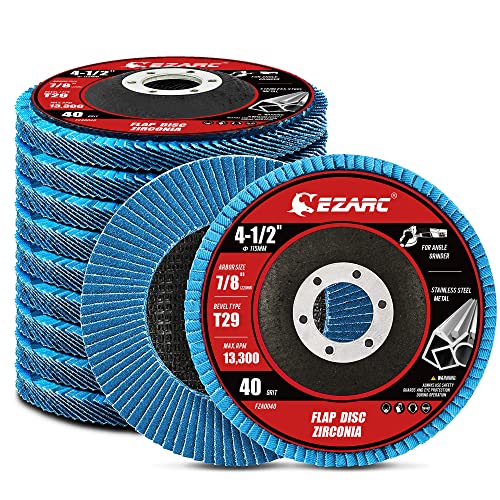
【Great Performance】EZARC flap sanding discs are made of hard zirconia material which lasts longer than standard aluminum oxide abrasive material, built for a more robust and economical grinding wheel

Package Include 24 pcs grinding wheels 4 1/2 inch grit 40 60 80 120,6 of each

STRONGEST FIBER BACKING THAN OTHER PRODUCTS:4 1/2 grinding wheels made for TOP-LEVEL Hard zirconia.Good material for griding wheel. This Flap Disc is constructed of industrial grade high density premium zirconia material, increased durability than standard flap discs, built for a more robust and economical grinding wheel
Essential Cleaning Tools
- Scraper or putty knife: Removes thick paint, adhesive, slag, and loose material before finer cleaning.
- Hand wire brush: Useful for light rust, corners, edges, threads, and places a power tool cannot safely reach.
- Angle grinder: A guarded grinder with a suitable flap disc, surface-conditioning disc, grinding wheel, or wire brush can remove rust, paint, and scale.
- Sanding discs: Medium and fine abrasives can smooth the joint after heavier removal. An 80- to 120-grit finish is practical for many clean-up jobs, but the required finish depends on the procedure.
- Nonwoven abrasive: Useful for light oxidation and final surface conditioning without removing as much metal as an aggressive grinding wheel.
- Non-chlorinated cleaner: Acetone or another residue-free cleaner may remove oil when its label and safety data sheet permit the use. Keep all ignition sources away.
- Clean lint-free rags: Use more than one so the first rag removes contamination and the final rag does not spread it back over the steel.
- Clamps or a vise: Secure the part so it cannot shift while it is brushed or ground.
- Blasting equipment: Useful for large areas or complex shapes when the enclosure, media, ventilation, PPE, and waste controls are suitable.
Check the Grinder Before Use
Keep the manufacturer-supplied guard installed and positioned between you and the accessory. Inspect the grinder, cord or battery, spindle, handle, guard, and accessory before each use.
- Confirm that the disc, wheel, or brush is intended for the grinder and the work being performed.
- Make sure the accessory’s maximum speed rating equals or exceeds the grinder’s no-load RPM.
- Do not use a cracked, bent, wet, heavily worn, or damaged accessory.
- Install the correct flange, nut, backing pad, and guard for that accessory.
- Use the side handle when the tool is designed for one, and maintain a two-handed grip.
- Direct sparks and debris away from your body, hoses, cylinders, vehicles, glass, wiring, and combustible material.
OSHA’s portable-tool requirements address guarding, wheel inspection, and verifying that machine speed does not exceed the wheel’s marked operating speed.
Personal Protective Equipment and Ventilation
Wear safety glasses with side protection whenever flying particles are possible. Add an appropriate face shield for grinding and wire-wheel work; a face shield does not replace safety glasses. Wear snug work gloves, hearing protection suited to the noise exposure, long nonflammable work clothing, and sturdy footwear.
Use local exhaust or suitable mechanical ventilation to capture dust and welding fume near its source. Do not aim a fan so strongly across a gas-shielded weld that it strips away the shielding gas.
A disposable dust mask or random cartridge is not suitable for every coating, metal, vapor, or fume. In a workplace where respiratory protection is required, respirator selection, medical evaluation, training, fit testing, maintenance, and cartridge change schedules must follow the applicable respiratory-protection program.
Warning: Never use chlorinated brake cleaner or another chlorinated degreaser near welding. Read the product label and SDS. OSHA requires chlorinated-degreasing vapors to be kept out of the atmosphere surrounding welding operations.
Before You Begin
Plan about 15 to 45 minutes for basic preparation on a small part. Thick rust, several paint layers, complex tubing, or a large blasted assembly can take much longer.
Move combustible materials away from sparks and heat. Clamp the part securely. Keep solvent containers closed when they are not in use, and move used solvent rags away from the grinding and welding area in accordance with the product instructions and shop rules.
- Confirm the steel is sound enough to weld and is not deeply thinned, cracked, or perforated by corrosion.
- Identify paint, galvanizing, plating, undercoating, or other surface treatments.
- Read the cleaner and coating safety data before creating dust, vapor, or heat.
- Select the least aggressive tool that will remove the contamination.
- Check the face, back side, root, bevel, edges, and inside of open tubing where contamination may enter the weld.
- Review the WPS, drawing, repair procedure, or code when one applies.
Note: Cleaning cannot restore steel that has lost too much thickness to corrosion. Replace or professionally evaluate deeply pitted structural, trailer, suspension, pressure-containing, or load-bearing material.
Step-by-Step Guide to Cleaning Mild Steel
Use this sequence for practice coupons, shop projects, and ordinary fabrication. Adjust the abrasive, cleaning width, and finish to the steel condition, welding process, and applicable procedure.
Step 1: Inspect the Steel and Identify Coatings
Inspect the workpiece under bright light. Look for oil shine, loose rust, mill scale, paint, plating, moisture, cracks, pits, laminations, and thinning. Check both sides of the joint and the inside of tubing when it is accessible.
Mark problem areas with soapstone or a marker placed outside the heated zone. Salvaged steel often needs more investigation because old paint, road grime, undercoating, and internal rust may not be obvious.
Step 2: Secure the Part and Control Fire Hazards
Clamp the steel so the abrasive cannot grab it and throw it. Install the correct grinder guard and accessory, confirm the speed rating, and arrange the work so sparks travel toward a clear, noncombustible area.
Keep the cleaner container, unused rags, fuel, paper, sawdust, gas cylinders, hoses, and other vulnerable materials away from the spark path. Have suitable fire-extinguishing equipment available for the work area.
Step 3: Remove Oil and Grease
Remove oil before grinding. Apply a small amount of acetone or another approved residue-free, non-chlorinated cleaner to a clean lint-free rag instead of flooding the part. Wipe the joint and the surrounding area that will be heated.
Use a second clean rag to lift away the dissolved contamination. Replace the rag when it becomes dirty rather than spreading oil over the surface. Repeat until the rag remains clean and the steel has no oily shine.
Pro Tip: Degrease before using an abrasive. Grinding through oil can carry it across the joint and press residue into scratches that are harder to clean later.
Step 4: Remove Paint, Rust, and Unwanted Mill Scale
Start with a scraper or hand brush for loose material. Use a wire brush or nonwoven abrasive for light rust. For heavier rust, paint, or scale, use a suitable flap disc, grinding wheel, or surface-preparation accessory.
Keep the grinder moving and use only enough pressure to let the accessory cut. Do not hold it in one spot, dig a groove beside the joint, round over an important edge, or thin sheet metal. Stop often and inspect the surface.
Remove contamination from the weld faces, bevels, and root. Clean the back side when an open root, thin material, full penetration, or heat could draw contamination into the puddle.
Step 5: Prepare the Joint Edges
Remove burrs, slag, sharp loose edges, and cutting residue. If the joint requires a bevel, root face, root opening, or specific fit-up, prepare it to the drawing or WPS rather than guessing at an angle.
After beveling, clean the newly exposed faces again. Check fillet joints and lap joints for gaps that could trap oil, moisture, paint, or grinding dust.
Step 6: Smooth and Condition the Surface
Use an 80- to 120-grit sanding disc or a suitable nonwoven abrasive when the joint needs a smoother finish after heavy grinding. The goal is clean, sound metal rather than a mirror polish.
TIG work normally benefits from bright, even metal with no scale at the joint. MIG and stick welding may tolerate more surface variation, but removing excessive scale, rust, paint, oil, and moisture still improves consistency.
Step 7: Remove Dust and Perform the Final Wipe
Vacuum or brush away loose debris without blowing contaminated dust through the shop. Wipe the prepared area with a fresh rag and approved cleaner to remove fine abrasive dust and fingerprints.
Let the cleaner evaporate completely. The surface should be dry, cool enough to handle safely, and free from visible liquid or solvent odor before welding begins.
Step 8: Inspect and Protect the Clean Surface
Use bright, angled light to look for oil shine, remaining paint, dark scale, rust in pits, loose abrasive, and missed areas at the root. Run a clean rag over the joint and confirm that it does not pick up grease or heavy residue.
Handle the prepared surface by its edges or with clean gloves. Weld soon after cleaning when humidity is high because freshly exposed mild steel can develop flash rust. If rust or shop contamination returns, clean the joint again.
Cleaning Methods: Pros and Cons
Each method solves a different problem. Match the tool to the contaminant before removing base metal.
| Method | Best Use | Pros | Limits and Precautions |
|---|---|---|---|
| Hand Scraper | Thick paint, adhesive, slag, and loose coating | Low dust and little base-metal removal | Slow on hard scale; sharp edges can cause cuts |
| Wire Brush | Light rust, corners, edges, and final brushing | Cheap, portable, and easy to control | Slow on heavy scale; powered brushes can throw wires and require guarding and face protection |
| Flap Disc or Grinder | Heavy rust, paint, scale, bevels, and weld cleanup | Fast and effective | Creates sparks and dust; can gouge or thin the steel; accessory must be guarded and speed-rated |
| Nonwoven Abrasive | Light oxidation and final conditioning | Removes less base metal and leaves an even finish | Too slow for thick scale or several coating layers |
| Sanding Disc | Smoothing after coarse removal and TIG preparation | Controlled finish with several grit choices | Loads quickly on paint or grease and may need several discs |
| Blasting | Large areas, complex shapes, and widespread corrosion | Cleans evenly and reaches recesses | Requires containment, ventilation, clean media, suitable PPE, and waste control |
| Chemical Cleaner | Oil, grease, fingerprints, and final wiping | Removes organic residue without grinding away metal | Does not remove heavy rust; may be flammable or toxic; chlorinated products must be kept away from welding |
Products Worth Considering
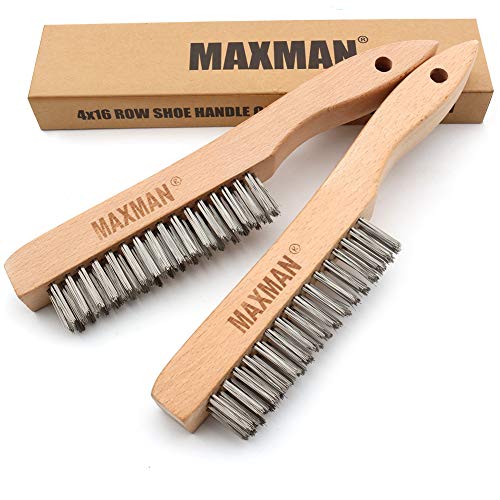
MULTI-FUNCTION: Stainless steel wire brush for heavy duty jobs, Remove rust and paint quickly with this welding brush, Wire brushes are ideal for removing paint stains, rust, welding slag,solder,scale, Great for remove corrosion and more from parts, equipment, machinery and other surfaces, steel brush also great for cleaning aluminum or stainless and other hard surfaces threads, grills or tile.
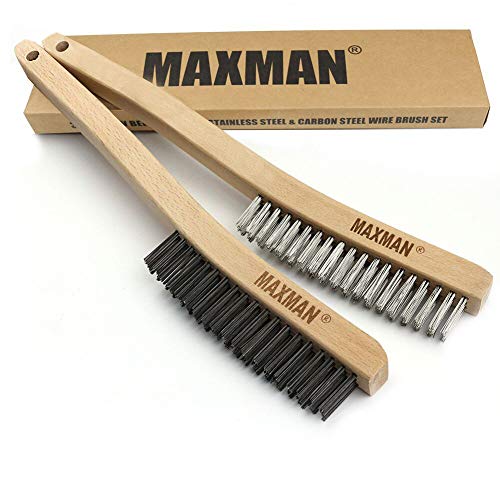
PRACTICAL: Remove rust and paint quickly with this wire welding brush set, Wire brushes are ideal for removing paint stains, rust, welding slag,solder,scale, Great for remove corrosion and more from parts, equipment, machinery and other surfaces. Also great for cleaning threads, grills or tile.

15 pieces Stainless Steel Wire Brush: The stainless steel wire cleaning brush length about 17cm/6.7inch, mini stainless steel brushes for cleaning, enough quantity for your daily use.
Cleaning for Different Welding Processes
The required preparation depends on the welding process, consumable, transfer mode, joint, and acceptance standard. “More tolerant” does not mean “safe to weld over unknown coatings or heavy contamination.”
MIG Welding
Gas metal arc welding (GMAW), often called MIG welding, benefits from steel that is free of grease, paint, moisture, loose rust, and heavy scale. Miller recommends removing grease or oil before using abrasives and notes that cleaner metal generally produces fewer problems.
ER70S-6 wire contains deoxidizers and is commonly selected for general mild-steel fabrication. Lincoln’s ER70S-6 data identifies suitability for mill scale, rust, or light contaminants, but the wire should not be treated as a substitute for removing oil, paint, moisture, or excessive scale.
Set voltage and wire-feed speed from the welder’s parameter chart, consumable data, or approved WPS. Thickness alone is not enough to select a reliable voltage because gas, wire diameter, transfer mode, position, and joint design also matter.
TIG Welding
Gas tungsten arc welding (GTAW), often called TIG welding, normally needs the cleanest preparation. Oil, mill scale, paint, and abrasive dust can destabilize the arc, contaminate the tungsten, and make the weld pool harder to control.
Remove scale and coatings from the joint, smooth deep grinding marks when needed, and perform a final approved solvent wipe. Keep the filler rod clean and dry, and avoid touching its working end with bare or oily hands.
ER70S-2 filler works for many mild- and low-alloy-steel TIG applications, but filler selection must match the base metal, required properties, service conditions, and procedure.
Stick Welding
Shielded metal arc welding (SMAW), often called stick welding, can tolerate more surface variation than TIG. Cellulosic electrodes such as E6011 may penetrate through light rust or dirt better than some electrodes, but heavy rust, grease, paint, moisture, and unknown coatings should still be removed.
E7018 is a low-hydrogen electrode and should be handled and stored according to the manufacturer’s instructions and the applicable procedure. Clean the joint, keep the electrode dry, and use the manufacturer’s recommended current range rather than choosing amperage from steel thickness alone.
How Much Steel Should You Clean?
There is no universal rule requiring every joint to be cleaned exactly one inch past the weld. The correct width depends on the coating, process, joint, thickness, heat input, accessibility, and governing procedure.
- At minimum: Clean the weld faces, bevels, root opening, and surfaces that will melt or directly affect fusion.
- Near paint or coatings: Remove enough material that heat cannot burn the coating or pull its residue into the weld. A procedure or coating rule may specify a distance.
- Thin sheet: Clean both sides when heat can burn contamination from the back into the weld.
- Open roots and full-penetration joints: Clean the root side and nearby interior surfaces.
- Tubing: Clean accessible internal oil, rust, and cutting debris, especially near an open end or full-penetration joint.
- Code work: Use the width and finish required by the WPS, project specification, or inspector.
Note: Wider is not automatically better. Excessive grinding can reduce thickness, change the joint geometry, and damage an edge that the drawing or WPS requires.
Common Mistakes and Fixes
Small preparation mistakes can create large weld problems. Use these corrections when the cleaning process begins to slip.
- Mistake: Grinding before removing grease. Fix: Degrease first and replace dirty rags often.
- Mistake: Leaving mill scale because the steel looks smooth. Fix: Check under angled light and remove the scale when the process or procedure requires clean base metal.
- Mistake: Using chlorinated brake cleaner. Fix: Stop, remove the product and vapor source from the welding area, and use an approved non-chlorinated cleaner.
- Mistake: Removing the grinder guard to reach a tight area. Fix: Use a correctly guarded tool or a smaller hand tool designed for the access available.
- Mistake: Installing an accessory without checking its RPM rating. Fix: Confirm that its rating meets or exceeds the grinder’s speed before use.
- Mistake: Using a dirty rag for the final wipe. Fix: Use a fresh lint-free rag and a two-rag cleaning method.
- Mistake: Overgrinding and thinning the steel. Fix: Use lighter pressure, keep the grinder moving, and measure critical material when necessary.
- Mistake: Welding before the cleaner evaporates. Fix: Allow complete drying and keep all ignition sources away from solvent vapor.
- Mistake: Ignoring the root side or inside of tubing. Fix: Inspect every surface from which contamination can enter the weld.
- Mistake: Treating a respirator as the only control. Fix: Identify the hazard, use source capture or ventilation, and follow a compliant respiratory-protection program where required.
Troubleshooting Problems After Cleaning
| Problem | Possible Preparation Cause | What to Check |
|---|---|---|
| Porosity continues | Oil inside tubing, paint on the back, damp rust, dirty filler, or trapped cleaner | Inspect both sides, internal surfaces, gas coverage, consumables, and complete solvent evaporation |
| Arc wanders during TIG | Remaining scale, oily fingerprints, grinding dust, or contaminated tungsten | Reclean the joint and filler, then inspect and reprepare the tungsten |
| MIG arc sputters | Paint, rust, oil, poor ground contact, shielding loss, or wire-feed trouble | Separate surface-preparation causes from gas, ground, liner, tip, and feed-system problems |
| Dark material remains after grinding | Scale may have been polished or burnished instead of removed | Use angled light and a suitable cutting abrasive rather than excessive pressure |
| Rust returns before welding | High humidity, moisture, fingerprints, or long delay after cleaning | Reclean lightly, keep the part dry, and weld sooner after preparation |
Joint Prep and Filler Compatibility
Cleaning helps the joint geometry and filler metal perform as intended. For butt welds on thicker plate, the drawing or procedure may require beveled edges, a root face, or a controlled root opening to provide access and penetration.
Clean every bevel after grinding. For fillet and lap welds, inspect the fit-up because narrow gaps can trap oil, scale, moisture, paint, and abrasive particles. Do not seal contamination inside a joint and expect the arc to remove it safely.
Filler metal should also stay dry and free from shop grime. Keep TIG rod in clean storage, protect MIG wire from moisture and dirt, and handle low-hydrogen electrodes according to the manufacturer’s storage and exposure instructions.
ER70S-6 works for many MIG applications, ER70S-2 suits many TIG applications, and E7018 fits many structural stick-welding procedures. These are common examples rather than universal substitutions. Match the filler classification to the base material, design strength, toughness, service temperature, code, and WPS.
Real-World Applications
Cleaning mild steel looks different from job to job. The goal remains the same: expose sound metal, identify hazardous coatings, and prevent nearby contamination from entering the weld.
DIY Trailer Repair
For a rusty trailer frame, remove grease and road grime first. Brush loose rust and grind heavy scale or paint from the joint and any nearby area that will be heated. Inspect the back side and inside of open tubing where practical.
MIG with ER70S-6 may work well when the steel is sound, the filler is compatible, and the joint is properly prepared. Do not weld over cracked, deeply pitted, perforated, distorted, or badly thinned frame material without determining whether replacement is required.
Trailer repairs can affect road safety. Suspension mounts, couplers, tongues, axles, safety-chain points, and heavily corroded load paths should be evaluated or repaired by a qualified person when their condition is uncertain.
Structural Steel Fabrication
For A36 beams and similar structural work, follow the approved drawings and WPS. Remove contaminants and prepare the joint to the edition of the welding code incorporated into the project documents.
Do not assume that every structural joint requires the same amount of mill-scale removal. The welding process, electrode classification, prequalified details, WPS, contract documents, and inspection requirements control the work.
Clean preparation helps the welder see the joint and can reduce avoidable discontinuities before visual, ultrasonic, radiographic, magnetic-particle, or other specified examination.
Custom Automotive Work
For tubing, brackets, patch panels, and custom automotive parts, clean the steel before fit-up and again after cutting or grinding. Remove undercoating, seam sealer, oil, paint, and galvanizing from any area that will be heated, using the vehicle or repair procedure when one applies.
Thin automotive steel is easy to overgrind. Use a less aggressive abrasive, keep the tool moving, and inspect both sides because coatings on the back can burn even when the weld face looks clean.
TIG work often needs a bright, even surface and a final approved wipe. Any remaining oil, scale, grinding dust, or dirty filler rod can affect bead appearance and control.
Advanced Cleaning Tips for Pros
For large projects, abrasive blasting can save time and produce an even profile. Use clean media that is compatible with the material and downstream coating process. Contaminated media can deposit oil, salts, or particles back onto the steel.
Keep abrasives and wire brushes separated when cross-contamination matters. A brush used on mild steel can carry carbon-steel particles to stainless steel, while a tool contaminated with oil can spread residue across otherwise clean steel.
Some shops use chemical descaling or pickling for controlled applications. Acid products require appropriate training, chemical-resistant PPE, ventilation, spill controls, neutralization, and lawful disposal. Follow the manufacturer’s instructions and workplace chemical program.
Galvanized steel requires special planning because heating zinc produces zinc oxide fume. Remove the coating using the approved procedure, control dust during removal, and provide the ventilation required for the work. Do not rely on an ordinary dust mask to control welding fume.
After final preparation, protect the steel from fingerprints, rain, condensation, machining coolant, oily compressed air, and grinding debris from nearby work. Clean filler and a clean joint should remain separated from dirty fabrication tools until welding begins.
Note: Cleaning improves consistency, but it does not replace correct settings, joint design, heat control, shielding, filler selection, inspection, or welding skill.
Frequently Asked Questions
Why is cleaning mild steel important before welding?
Cleaning removes rust, mill scale, grease, paint, moisture, and debris that can affect arc stability, weld-pool wetting, fusion, porosity, inclusions, and inspection. It also exposes cracks, pitting, thinning, and poor fit-up before they are hidden by the weld.
What is the best way to remove mill scale from mild steel?
For a small or medium joint, use a guarded grinder with a suitable flap disc, grinding wheel, or surface-preparation accessory. A hand or powered wire brush can help at edges, but may polish hard scale instead of removing it. Blasting is useful for large or complex parts when proper containment and ventilation are available.
Can you weld mild steel without cleaning it?
An arc may start on dirty steel, and some processes or consumables tolerate light surface contamination. That does not make heavy rust, paint, oil, moisture, or unknown coatings acceptable. Clean the joint whenever strength, appearance, repeatability, safety, or inspection matters.
What solvent should you use to clean mild steel?
Use a residue-free, non-chlorinated cleaner that the manufacturer approves for the material and operation. Acetone is common, but it is highly flammable and must be used with ventilation and away from ignition sources. Read the label and SDS, use clean rags, and allow complete evaporation before welding.
Can you use brake cleaner before welding?
Do not use chlorinated brake cleaner or allow chlorinated-degreaser vapor near welding. Some non-chlorinated products may also leave residue or create other hazards, so verify the label and SDS rather than relying only on the words “brake cleaner.” Use a cleaner specifically approved for the preparation method.
How clean should mild steel be for TIG welding?
Remove oil, paint, rust, scale, moisture, and loose abrasive from the weld faces and root area. The surface should normally show bright, even metal without an oily film. Keep the filler rod clean and dry, and perform a final approved wipe after abrasive preparation.
Should you clean both sides of the joint?
Clean both sides when an open root, full penetration, thin material, gap, or high heat could draw contamination from the back into the weld. Also inspect the inside of tubing and enclosed sections when oil, rust, paint, or cutting debris may be near the joint.
How far past the weld area should you clean?
There is no universal one-inch rule. Clean the joint faces, root, bevels, and enough surrounding material that heat cannot burn or draw nearby contamination into the puddle. Follow the WPS, coating-removal procedure, or project requirement when it specifies a distance.
Can you use the same wire brush for stainless steel and mild steel?
Use dedicated, clearly marked brushes and abrasives when cross-contamination matters. A brush used on mild steel can transfer carbon-steel particles to stainless steel. Even on mild steel, replace or clean any brush contaminated with oil, paint, or another metal.
Why did rust return after I cleaned the steel?
Freshly abraded mild steel has no protective oil or scale and can flash-rust in humid air. Keep the part dry, avoid touching the joint with bare hands, and weld soon after final preparation. Lightly reclean any rust that forms before welding.
Clean mild steel gives the weld a better starting point. Identify coatings, remove grease first, abrade rust and unwanted scale without thinning the part, clean the root side when needed, perform a final wipe, and inspect the joint under good light.
Your next step is simple: make surface inspection part of every setup instead of waiting for porosity or an unstable arc to reveal a missed contaminant. Careful preparation reduces avoidable rework and helps the welding procedure perform as intended.
Sources
- OSHA 29 CFR 1910.252 — Welding, Cutting, and Brazing — cleaning compounds, chlorinated degreasing, ventilation, coatings, zinc, and fire precautions.
- OSHA 29 CFR 1910.243 — Guarding of Portable Powered Tools — grinder guarding, abrasive-wheel inspection, mounting, and speed ratings.
- OSHA 29 CFR 1910.134 — Respiratory Protection — respirator selection, medical evaluation, training, and fit-testing requirements.
- American Welding Society — AWS D1.1/D1.1M:2025-AMD1 — current structural-steel welding code information.
- Miller — MIG Welding Tips and Techniques — removing grease before abrasives and preparing rust, paint, and scale.
- Lincoln Electric — ER70S-6 Product Data — deoxidizers, general-fabrication use, and qualified tolerance of light scale, rust, or contaminants.