How to Set Up Local Exhaust Ventilation for Angle Grinder Work
Angle grinder dust can spread fast if your ventilation hood sits too far from the work. A local exhaust ventilation (LEV) system helps capture dust near the source before it reaches your breathing zone. This guide shows you how to set up, test, maintain, and use LEV for safer angle grinder work.
Quick Answer
To set up local exhaust ventilation (LEV) for angle grinder work, place the hood close to the grinding point and keep the duct route as straight as possible. Use a fan that can create enough airflow for dust capture, then test the system with smoke tests and an anemometer. Clean filters, inspect ducts, and train workers so the system keeps working safely.
Key Takeaways
- Keep the LEV hood close to the grinder so it can capture dust at the source.
- Use straight duct runs with few bends to protect airflow and reduce blockages.
- Test airflow with smoke checks and an anemometer before regular use.
- Clean filters and inspect ducts often to keep the system working well.
- Train workers to position the hood correctly and report airflow problems early.
Estimated time: A basic LEV setup check can take 1 to 2 hours, but full installation time depends on your shop layout, duct route, fan size, and compliance needs.
Before You Begin With Angle Grinder LEV
Before you install local exhaust ventilation, review the grinding task, the work area, and the dust path. You need enough space to place the hood near the grinder without blocking safe tool movement.
You should also check whether your workplace needs a competent ventilation contractor or safety professional. Angle grinder dust can pose health and fire risks, so your setup must match the material you grind and the rules that apply to your site.
What You’ll Need
- LEV hood that suits the grinding position
- Duct system with the shortest practical route
- Fan sized for the hood, duct, and dust load
- Air filter rated for grinding dust where needed
- Exhaust stack or discharge point away from workers
- Smoke source for airflow checks
- Anemometer for airflow velocity checks
- Maintenance log for inspections, cleaning, and repairs
Key Considerations for Effective Local Exhaust Ventilation With Angle Grinders
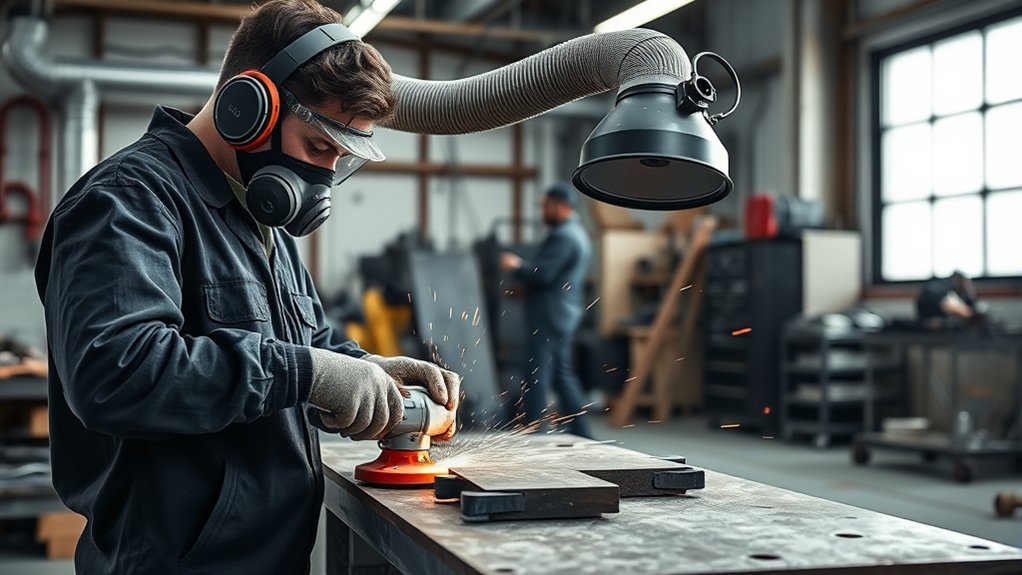
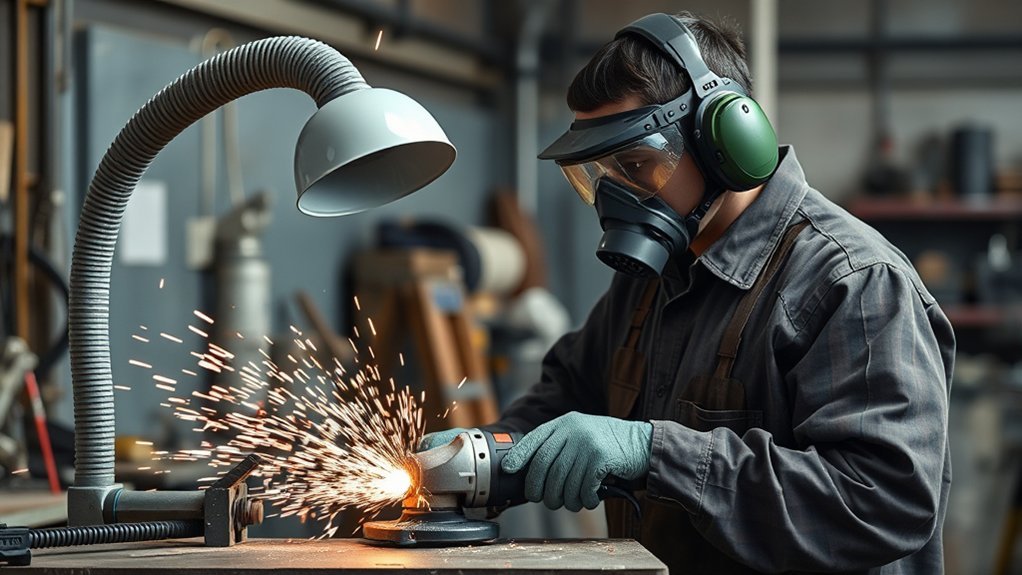
When you set up local exhaust ventilation (LEV) for angle grinder work, position the LEV hood as close as practical to the grinder. Close placement helps capture airborne dust before it spreads across the work area.
Use a properly sized duct system with minimal bends to support strong airflow and reduce blockages. Sharp bends, long duct runs, and crushed duct sections can weaken dust capture.
Inspect and clean filters on a set schedule so they can trap harmful particles. Use smoke tests to check airflow direction, and measure airflow velocity with an anemometer when you need a more reliable result.
Train workers on correct LEV use before they start grinding. They should know how to place the hood, spot poor airflow, and report damaged ducts, clogged filters, or weak suction.
Warning: Do not rely on LEV alone if grinding creates heavy dust, sparks, or hazardous particles. Use the right personal protective equipment and follow your workplace safety rules.
Essential Components of an Effective LEV System
To make your local exhaust ventilation (LEV) system work well for angle grinder tasks, focus on the parts that capture, move, filter, and discharge dust. Each part affects airflow and safety.
| Component | Function | Importance |
|---|---|---|
| Hood | Captures dust at the source | Improves dust control |
| Duct System | Moves contaminated air through smooth paths | Reduces resistance and blockages |
| Air Filter | Traps fine particles where required | Helps protect workers and the workspace |
A properly sized fan helps create negative pressure and keeps contaminated air moving toward the hood. The exhaust stack or discharge point should release air away from workers, doors, windows, and fresh air intakes.
Regular installation checks and maintenance help you find leaks, blockages, and damaged parts early. These checks also help confirm that the system still supports safe angle grinder work.
Products Worth Considering

High Compatibility:Suitable for Angle Grinder under main brand 4-1/2''/5",adapt to 48-51mm Angle grinder front cap and easy to install.Allows collection of harmful dust suface grinding application.

Angle grinder dust extraction suitable for the front cover of most 48-51mm angle grinders. Can be installed on most 5"/4.5" angle grinders.The thickness of Diamond Grinding Disc should not more than 25mm or less than 15mm.
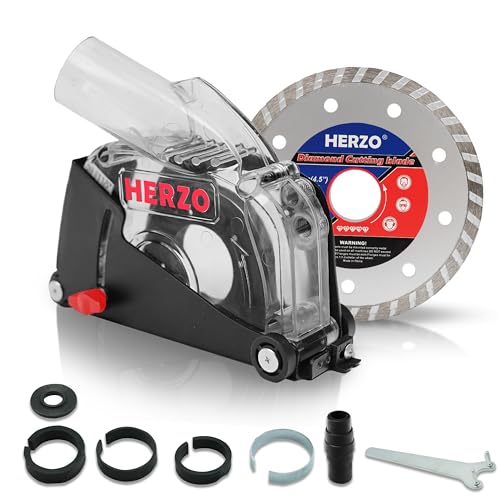
Widely Adapt:Suitable for 80% Main Brand 4-1/2 and 5 inch Angle Grinder
Step-by-Step Installation Process for Angle Grinder LEV
To set up an effective local exhaust ventilation (LEV) system for angle grinder work, choose equipment that matches your task and workspace. Then install each part in a way that supports dust capture, safe airflow, and easy maintenance.
Products Worth Considering

INCLUDES: (1) Wide Mouth Rectangular Dust Hood
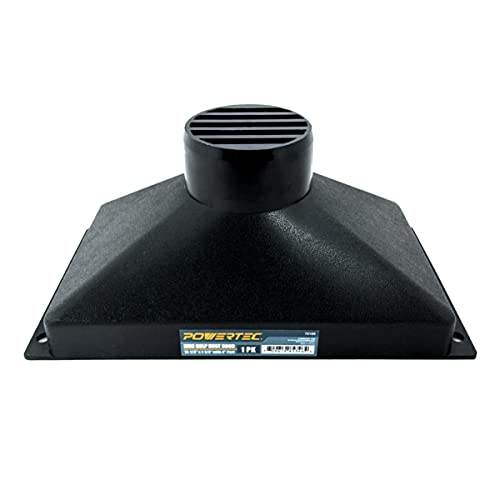
INCLUDES: Mini Dust Hood with 4 Inch Dust Port (Black)

Fit 4-5in Grinding Wheel: Our grinder dust shroud is universal for 100-125mm angle grinders, compatible with 90% of major brands like Hitachi, Makita, DeWalt, Ryobi, and more. Whether for home DIY or professional use, this dust shroud handles it all with ease.
Selecting Appropriate Equipment
Selecting the right equipment for your local exhaust ventilation (LEV) system helps you manage dust and particles from angle grinder work. Good equipment choices can improve workplace health and safety.
| Equipment Type | Purpose | Key Considerations |
|---|---|---|
| Hood | Captures dust at the source | Choose an enclosing or capturing hood |
| Duct System | Transports contaminants to the exhaust point | Use a straight design with few sharp bends |
| Fan | Maintains airflow and negative pressure | Match fan size to hood and duct design |
Installation Best Practices
Follow a clear installation process so your LEV system captures dust as close to the source as possible.
- Assess the grinding task. Check the material, dust level, tool position, and direction of spark travel.
- Choose the hood style. Select a hood that can sit close to the grinding point without blocking safe tool control.
- Plan the duct route. Keep ducts short, smooth, and as straight as practical to protect airflow.
- Install the fan. Use a fan that can maintain airflow through the hood, duct, filter, and exhaust point.
- Add filtration where needed. Use a filter rated for grinding particles if your system or worksite requires one.
- Place the exhaust point safely. Discharge air away from workers, walkways, openings, and air intakes.
- Test the system. Use smoke tests and airflow measurements before you rely on the system for regular grinding.
- Record the setup. Note hood position, test results, maintenance dates, and any needed repairs.
Pro tip: Mark the ideal hood position on the bench or floor so workers can set it up the same way each time.
Testing Airflow Efficiency
Testing airflow efficiency helps confirm that your local exhaust ventilation (LEV) system captures contaminants during angle grinder work. Start with a smoke test so you can see whether air moves toward the hood.
Measure the face velocity at the exhaust hood with an anemometer. Your target airflow should match your system design, the dust type, and any workplace requirements that apply to your site.
Inspect the duct system for blockages, leaks, loose joints, or crushed sections. Even small problems can reduce airflow and make dust capture less effective.
Schedule regular airflow testing and record the results in your maintenance log. Good records help you track performance and show that you manage LEV checks in a consistent way.
Keep Your LEV Running Smoothly: Maintenance Tips
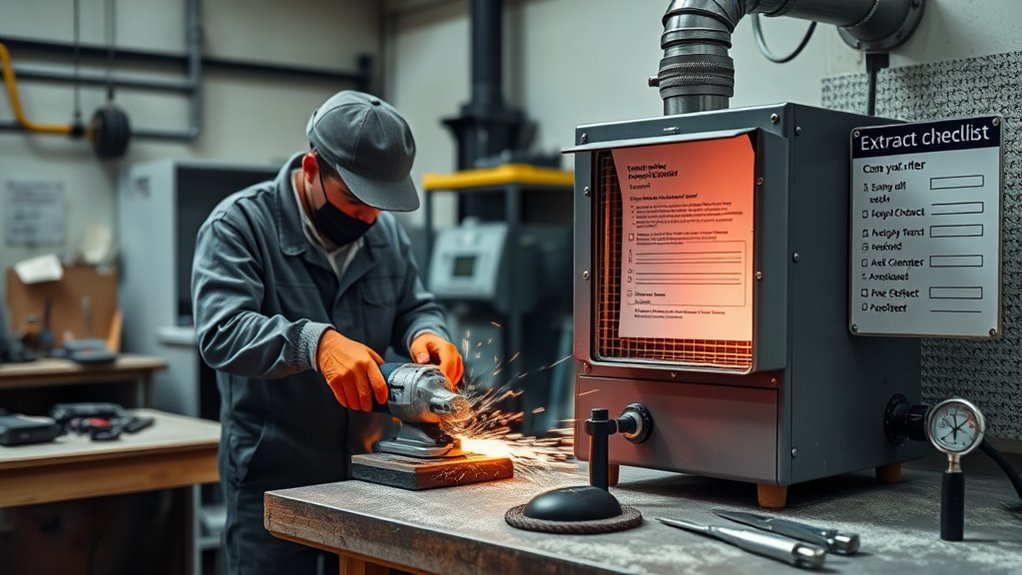
Maintaining your local exhaust ventilation (LEV) system helps it work safely during angle grinder tasks. Start by inspecting and cleaning filters and ducts so dust does not block airflow.
Set a maintenance schedule based on your workplace rules, dust level, and system design. UK workplaces often use a formal LEV examination interval of up to 14 months, but some high-risk tasks may need more frequent checks.
Use an anemometer to monitor airflow velocity and compare results with your baseline readings. If airflow drops, check the filter, duct joints, fan, hood position, and discharge path.
Keep a detailed maintenance log with inspection dates, airflow readings, repairs, filter changes, and worker reports. This record supports compliance and helps you spot repeated problems before they grow.
Common Mistakes to Avoid With Angle Grinder LEV
LEV problems often start with poor hood placement. If the hood sits too far from the grinder, dust can pass your breathing zone before the system captures it.
- Do not place the hood behind the worker instead of near the dust source.
- Do not use long duct runs when a shorter route can work safely.
- Do not ignore weak suction, unusual fan noise, or dust escaping from joints.
- Do not let filters clog before you clean or replace them.
- Do not train workers once and assume they will remember every step.
How to Train Workers for Safe LEV Use
Workers need clear training before they use local exhaust ventilation (LEV) during angle grinder work. Start by showing them how the hood captures dust and why close placement matters.
Use hands-on demonstrations to show correct hood position, safe grinder movement, and basic maintenance checks. Workers should also know how to recognize weak airflow, clogged filters, loose ducts, and damaged parts.
Review the hazards linked to grinding dust and explain how LEV reduces exposure when workers use it correctly. Add refresher training when you change equipment, update procedures, or notice repeated setup errors.
Keep training records with dates, attendance, topics covered, and trainer names. These records help you show that workers received practical LEV instruction.
Frequently Asked Questions
What Are the Methods of Local Exhaust Ventilation?
Local exhaust ventilation methods include capture hoods, enclosing hoods, extraction arms, and booths. The best method depends on the task, dust level, work position, and how close the hood can sit to the source.
Which Five Components Make up a Local Exhaust Ventilation System?
A local exhaust ventilation system commonly includes a hood, duct system, fan, air cleaner or filter, and exhaust stack. These parts work together to capture contaminated air, move it away, clean it where needed, and discharge it safely.
Why Should Grinding Machines Be Fitted With Local Exhaust Ventilation?
Grinding machines should use local exhaust ventilation because grinding can create airborne dust and fine particles. LEV helps capture those particles near the source, which can reduce worker exposure and improve shop air quality.
What Are the Parts of the Local Exhaust Ventilation System?
The main parts include the hood, ductwork, fan, filter or air cleaner, and exhaust outlet. Some systems also include gauges, dampers, inspection ports, and alarms to help workers check performance.
How Close Should the LEV Hood Be to an Angle Grinder?
Place the hood as close as practical to the grinding point without creating a safety hazard. A small increase in distance can reduce capture, so workers should avoid pushing the hood away during grinding.
How Often Should You Check an Angle Grinder LEV System?
Check the hood, duct, fan, and filter before use when the task creates heavy dust. Schedule deeper inspections and airflow tests based on your workplace rules, dust level, and system risk.
Safety Disclaimer: This article is for informational purposes only and does not replace professional workplace safety advice. Always follow your local regulations, safety data sheets, equipment manuals, and guidance from a qualified safety professional before installing or using LEV equipment.
Conclusion
A strong local exhaust ventilation setup starts with one simple goal: capture dust before it reaches your breathing zone. Place the hood close to the grinder, keep airflow paths clear, and test the system before regular use.
Build a simple routine for inspections, cleaning, airflow checks, and worker training. When you treat LEV as part of the job instead of an afterthought, you create a cleaner and safer grinding area.