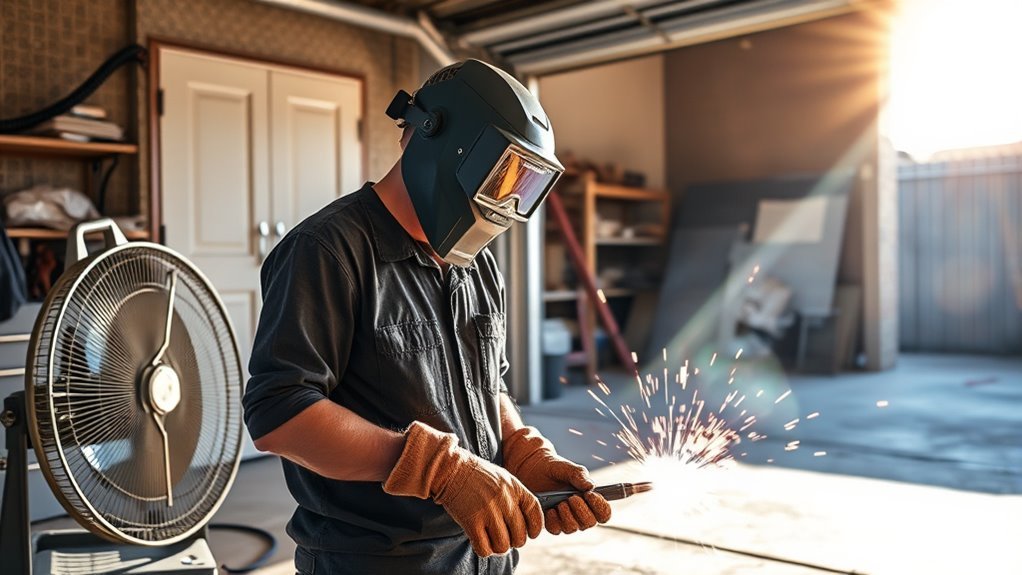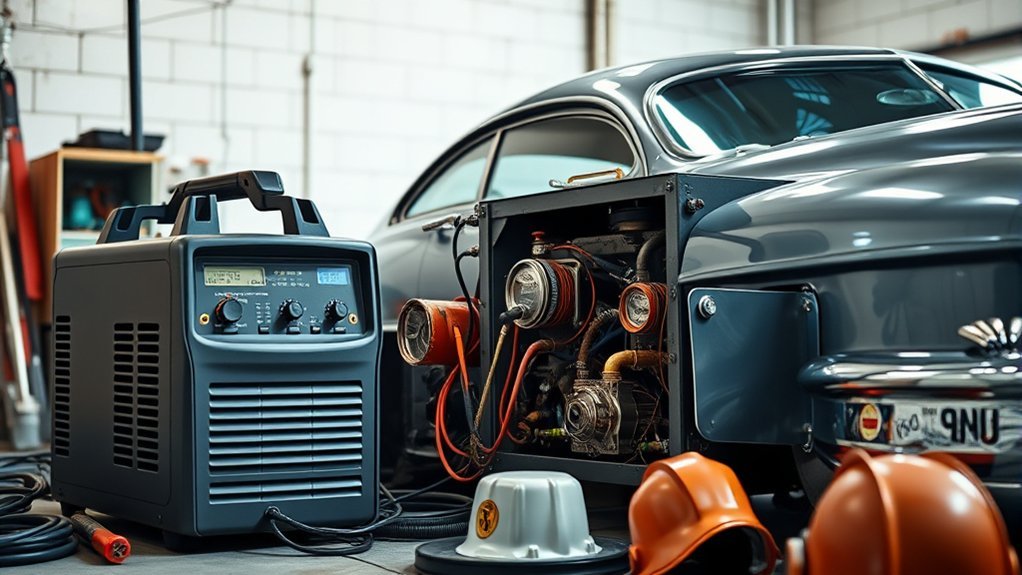
Choosing between an inverter vs transformer welder for automotive work comes down to where you weld, what metal you weld, and how much control you need. Inverter welders are usually the better fit for auto body panels, exhaust work, mobile repairs, and aluminum-capable setups because they are lighter, more efficient, and easier to fine-tune. Transformer welders still make sense when you want a simple, rugged machine for a fixed shop and mostly weld thicker mild steel.
Quick Answer
For most automotive welding, choose an inverter welder. It gives you better portability, smoother arc control, lower power draw, and more useful features for thin sheet metal, TIG work, and aluminum-capable setups. Choose a transformer welder if you mainly need a durable fixed-shop machine for basic steel work.
Key Takeaways
- Inverter welders are usually best for auto body repair, mobile welding, thin steel, stainless exhaust, and aluminum-capable MIG or TIG work.
- Transformer welders are heavier and less adjustable, but they can be very durable and easier to repair in a fixed shop.
- For automotive projects, the best welder is not just “inverter” or “transformer.” Match the machine to the process, metal thickness, input power, duty cycle, and OEM repair procedure.
- Avoid unsupported claims about exact lifespan or monthly power cost. Those numbers depend on the model, settings, duty cycle, and how often you weld.
What Are Inverter Welders and Why Choose Them?
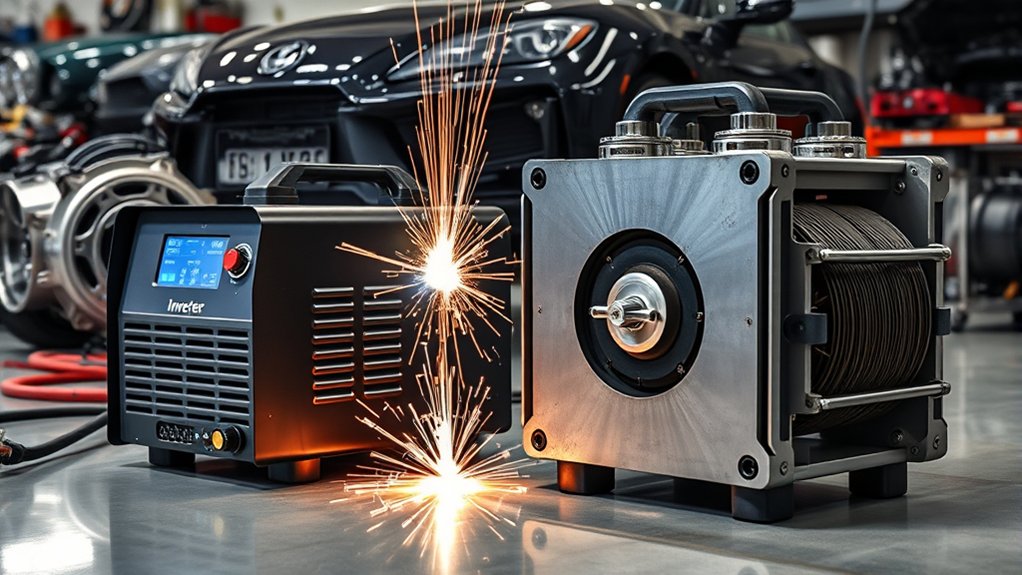
Inverter welders use electronic switching to convert input power into a controlled welding output. Instead of relying on a large 50/60 Hz transformer, an inverter power source switches at a much higher frequency, which allows the machine to use smaller magnetic components and more precise electronic control. Lincoln Electric explains this type of design in its guide to inverter-based welding power supplies.
That design is a major reason inverter machines are so common in modern automotive shops. They are usually lighter, easier to carry, and more flexible than older transformer machines. Many inverter MIG, TIG, and multi-process welders also include digital controls, hot start, arc force, inductance adjustment, pulse settings, spool-gun support, or synergic settings that help you tune the arc for thin sheet metal.
For automotive applications, that extra control matters. Thin body panels can warp or burn through if heat is not controlled. Stainless exhaust tubing benefits from a smooth arc and stable output. Aluminum repairs often require spool-gun MIG, pulse MIG, or AC TIG depending on the job and the machine. An inverter welder does not automatically make you a better welder, but it gives you more tools to manage heat, bead shape, and arc behavior.
Pro Tip: For auto body work, do not shop by amperage alone. Look for low-amp control, stable wire feed, good duty cycle, replacement parts, and settings that help with 18- to 22-gauge sheet metal.
Why Are Transformer Welders a Solid Pick?
Transformer welders use a heavier transformer to step input power down to welding voltage and current. They are older in design, but that does not make them useless. Many experienced welders still like them because they are straightforward, stable, and built with fewer electronic parts than modern inverter machines.
The tradeoff is size and flexibility. Transformer machines are often heavy, bulky, and less convenient for mobile automotive work. They may also offer fewer arc-control features, especially compared with modern inverter MIG and TIG machines designed for thin metal, aluminum, and variable shop conditions.
Proven Durability and Longevity
Transformer welders are known for simple, rugged construction. In a fixed shop, that can be a real advantage. A basic transformer stick welder or MIG machine may keep working for many years if it is kept dry, used within its rated duty cycle, and maintained properly.
Still, avoid treating any lifespan number as guaranteed. A transformer welder can last decades, but service life depends on storage, dust, moisture, input power quality, duty cycle, lead condition, and repair support. An inverter welder can also last a long time when built well and maintained correctly, but its circuit boards, fans, and controls make repairs more specialized.
Robust Design for Tough Environments
If your shop is dusty, rough, and mostly set up for thicker mild-steel work, a transformer welder can be a practical choice. Its weight can even be a benefit when the machine stays on a cart and does not need to be moved often.
For automotive work, the limitation is not just weight. Many transformer machines lack the fine low-end control that helps on body panels. They may also need more input power and a larger circuit than a small inverter welder. That matters in home garages where you may only have a standard 120V outlet or a limited 240V circuit.
Familiarity Among Experienced Welders
Many experienced welders like transformer machines because the controls are simple. You set the tap or amperage, listen to the arc, and weld. There are fewer menus, fewer digital settings, and less confusion for basic steel repair.
That simplicity can be good for heavy brackets, farm equipment, trailers, and general steel fabrication. But automotive welding often needs a softer touch. For body panels, rocker panels, floor pans, exhaust, and aluminum, the added control of a modern inverter machine usually makes the job easier.
Performance Differences: Inverter vs. Transformer Welders
The main performance difference is control. Inverter welders can change the welding output electronically and react quickly to arc changes. That helps with starts, stops, low-amperage welding, and advanced modes such as pulse TIG or pulse MIG on machines that include those features.
Transformer welders can produce strong welds, but they are usually less flexible. Their arc can be dependable, especially on stick welding and basic MIG work, but they often lack the fine adjustment range and software-driven features found on inverter units.
| Factor | Inverter Welder | Transformer Welder |
| Portability | Usually lighter and easier to move around a vehicle or job site. | Usually heavier and better suited to a fixed shop location. |
| Arc control | Often better for fine tuning, low-amp starts, pulse settings, and thin metal. | Simple and stable, but usually less adjustable. |
| Auto body panels | Usually the better choice because thin panels need tight heat control. | Can work if settings are suitable, but low-end control may be limited. |
| Repairability | Board-level repairs can be costly if parts are unavailable. | Often simpler to diagnose and repair on older basic machines. |
| Best fit | DIY auto repair, mobile work, sheet metal, exhaust, TIG, aluminum-capable setups. | Fixed-shop steel work, stick welding, budget machines, rugged basic use. |
Products Worth Considering
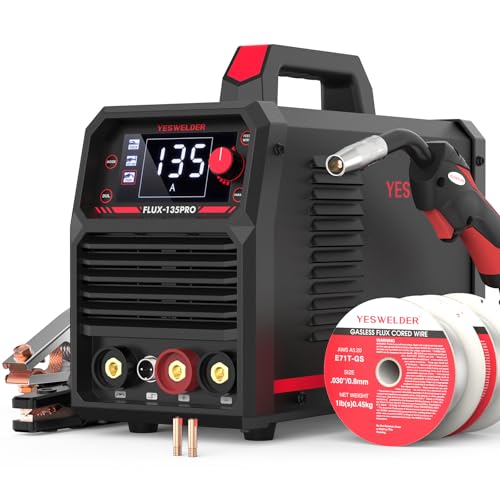
READY OUT OF THE BOX: Start welding immediately! It masterfully handles Gasless Flux Core MIG, Stick, and Lift TIG (Extra Lift TIG torch required). This budget-friendly 3-in-1 machine includes extra E71T-GS .030''&.035'' flux core wires, known for its smooth arc and high feedability. Say goodbye to heavy shielding gas cylinders—perfect for outdoor, windy, or all-position welding.

4-IN-1 MIG Welder: The welder machine offers GAS MIG/Flux Core MIG/Lift TIG/ MMA welding modes (Note: WP-17V TIG torch must be purchased separately). It can easily handle welding stainless steel, carbon steel, and even thicker steel materials, meeting diverse welding requirements.

3-in-1 Multi Process Welder: Designed to handle Gasless MIG welder, MMA, and Lift TIG perfectly, this 110V welding machine is a garage essential for home DIY and fast farm repairs.(Lift TIG Torch NOT included)
Ideal Applications for Inverter and Transformer Welders
Inverter welding machines fit most modern automotive work because they are easier to move, easier to control at low settings, and more likely to include features for thin metal. They are a strong match for patch panels, floor pans, rocker panels, exhaust tubing, brackets, and small fabrication jobs.
Transformer welders are better when portability is not important and the work is mostly mild steel. A fixed shop that repairs trailers, equipment, frames, or thicker brackets may still get good value from a transformer machine, especially if the welder already has the input power and floor space for it.
Best Choice for Auto Body Panels
For thin auto body panels, an inverter MIG welder is usually the easiest starting point. Look for stable wire feed, low-amperage control, gas-shielded MIG capability, and settings that support short tack welds. Thin panels should usually be stitched, skipped around, and cooled between tacks to reduce distortion.
TIG can also work on thin sheet metal, but it is slower and demands more skill. For many DIY and shop repairs, MIG is faster and easier to repeat. If you want to practice MIG welding thin metal without burning through, start on scrap of the same thickness before touching the vehicle.
Best Choice for Exhaust and Stainless Work
For exhaust work, inverter TIG gives clean control on stainless tubing and tight joints. Inverter MIG can also work well for mild-steel exhaust repairs when the machine is set correctly. TIG looks cleaner and gives more control, while MIG is faster and more forgiving for general repairs.
Use proper ventilation and remove coatings, oil, underseal, and contaminants before welding. Stainless and coated metals can produce hazardous fumes, so do not treat exhaust welding as a casual garage job.
Best Choice for Aluminum Repair
Aluminum is where inverter machines often pull ahead. Depending on the repair, you may need AC TIG, pulse MIG, or a spool gun. A basic transformer MIG machine may not support aluminum well unless it is designed for the correct wire-feed setup and shielding gas.
Automotive aluminum repair also depends heavily on the vehicle maker’s procedure. Some panels are not meant to be welded in the field, and many modern repairs use rivets, adhesives, or part replacement instead of traditional welding.
Note: On late-model vehicles, always check OEM repair information before welding structural parts, aluminum panels, advanced high-strength steel, or areas near sensors, batteries, airbags, and wiring harnesses.
Cost: Inverter vs. Transformer
The cost comparison is not as simple as “inverter costs more” or “transformer lasts longer.” Entry-level transformer machines can be inexpensive, but they may be heavy, limited in settings, and less useful for thin automotive sheet metal. Inverter machines can cost more upfront, but they often give you better portability, lower input-power demand, and more process options.
Running cost also depends on the exact machine. Instead of trusting generic monthly cost numbers, compare the rated input current, voltage, duty cycle, and output range on the machine’s specification plate. Then consider your local electricity rate and how many minutes you actually weld under load. Most automotive welding involves short bursts, not continuous arc time for hours.
Repair cost is another factor. A transformer machine may be cheaper to repair if the issue is a lead, switch, fan, or basic component. An inverter machine may need board-level parts or factory service if the electronics fail. Before buying, check whether the brand sells replacement torches, drive rolls, liners, circuit boards, fans, and service parts.
Portability: Which Welder Fits Your Needs?
Portability matters in automotive welding because you often move around the vehicle, work under a lift, weld near a doorway, or carry the machine to another bay. Inverter welders usually win here. They are often light enough to carry by hand and compact enough to fit on a small cart with a gas cylinder.
Transformer welders are better when the machine stays parked. If you have a dedicated welding corner with proper wiring and ventilation, weight may not matter. If you need to load the welder into a truck, repair a vehicle off-site, or move around tight garage space, an inverter is usually easier to live with.
Weight and Dimensions
The exact weight depends on the model, but the pattern is clear: inverter machines are usually smaller for the same general output class. Transformer machines often need more copper, iron, and cabinet space. That extra mass can make them stable, but it also makes them harder to store and move.
| Welder Type | Typical Size Feel | Automotive Impact |
| Inverter Welder | Compact and usually easy to carry or cart. | Better for mobile repairs, tight garages, and moving around vehicles. |
| Transformer Welder | Bulkier and usually better left in one shop area. | Best for fixed workstations and thicker steel jobs. |
Transportation Ease
An inverter welder is easier to carry, but do not forget the full setup. For MIG or TIG, you may also need a gas cylinder, regulator, torch, leads, filler metal, clamps, helmet, gloves, and fire-resistant covers. A compact machine helps, but a good cart and cable management still matter.
Transformer machines can be moved on a cart, but loading one into a vehicle or moving it around a crowded garage is much harder. If you do mobile auto repair, an inverter machine is the practical choice.
Workspace Requirements
Inverter welders often fit smaller workspaces because they take less floor space and may run on more flexible input power. Many models support 120V and 240V input, though output is usually stronger on 240V.
Transformer welders may require a dedicated 240V circuit and more clearance around the machine. Before buying either type, check the manual for input amperage, breaker recommendations, extension-cord limits, and duty cycle. Do not guess on wiring. Use a qualified electrician when a new circuit is needed.
Electrical Input, Duty Cycle, and Heat Control
Input power matters as much as welder type. A small 120V inverter MIG can be convenient for thin sheet metal, but it may not have enough output for thicker brackets or frame work. A 240V machine gives you more headroom, better duty cycle, and stronger performance on heavier steel.
Duty cycle tells you how long the machine can weld within a 10-minute period at a stated output before it needs to cool. For example, a machine rated at 30% duty cycle at a certain amperage can weld for 3 minutes and then needs 7 minutes of cooling at that rating. If you ignore duty cycle, you can overheat the machine, trip thermal protection, or shorten service life.
Automotive welding often uses short welds, so duty cycle may not limit patch-panel work. It matters more when welding thicker steel, long beads, trailer repairs, roll cages, or repeated production work.
Safety Checklist for Automotive Welding
Welding is hot work, and automotive welding adds extra hazards because vehicles contain fuel, oil, undercoating, insulation, wiring, glass, interior trim, brake lines, and electronic modules. OSHA’s welding, cutting, and brazing requirements cover fire prevention, guards, extinguishing equipment, and fire watch conditions. OSHA also lists eye and face protection requirements, including filter lens shade guidance for welding processes.
Warning: Never weld near fuel vapors, leaking lines, oily insulation, undercoating, or hidden interior materials without proper preparation. Keep a fire extinguisher ready, protect nearby parts with welding blankets, and use a fire watch when sparks can reach hidden areas.
- Disconnect and protect electronics: Follow the vehicle maker’s procedure for battery disconnection, modules, sensors, airbags, and hybrid or EV high-voltage systems.
- Remove combustibles: Clear paper, rags, solvents, foam, interior trim, undercoating, and nearby fuel sources before welding.
- Use correct PPE: Wear a welding helmet with the proper shade, safety glasses, gloves, fire-resistant clothing, and hearing protection when needed.
- Control fumes: Use local exhaust or strong ventilation. Do not weld coated, painted, galvanized, oily, or solvent-cleaned metal without removing contaminants and managing fumes.
- Protect brake and fuel lines: Shield or move lines before welding near rocker panels, floors, frames, or exhaust hangers.
- Check the back side: Sparks can ignite insulation, seam sealer, carpet, foam, and wiring behind the panel.
- Inspect after welding: Look for smoldering material, heat damage, leaks, wire damage, and loose grounds.
Maintenance and Repair Considerations
Inverter welders need clean airflow. Keep vents clear, avoid grinding dust intake, and do not store the machine in damp areas. Dust and metal particles can shorten electronics life, especially in garages where grinding and sanding happen near the welder.
Transformer welders are simpler, but they still need maintenance. Check leads, ground clamps, drive rolls, liners, fans, switches, and connections. A rugged transformer machine can still weld poorly if the cables are damaged or the wire-feed system is dirty.
For either machine, support matters. Before buying, check whether you can get contact tips, nozzles, liners, drive rolls, torches, foot pedals, spool guns, circuit boards, and service help. A cheaper machine is not always cheaper if parts are unavailable.
Buying Checklist Before You Choose
Use this checklist before choosing between an inverter and transformer welder for auto work:
- Process: Do you need MIG, TIG, stick, flux-core, or multi-process capability?
- Metal: Will you weld thin mild steel, stainless exhaust, aluminum, or thicker brackets?
- Thickness range: Does the machine run smoothly at the low end for body panels and high enough for your thickest work?
- Input power: Do you have 120V only, or a proper 240V circuit?
- Duty cycle: Is it enough for your longest expected welds?
- Controls: Do you need pulse, AC TIG, spool-gun support, inductance control, or synergic MIG?
- Portability: Will the welder stay parked or move between vehicles and job sites?
- Parts support: Can you buy consumables and repair parts easily?
- Safety setup: Do you have ventilation, PPE, fire protection, and a safe work area?
- OEM procedures: Does the vehicle repair allow welding in that location?
Products Worth Considering

FIVE PROCESSES, ONE MACHINE FOR EVERY JOB - Pulse MIG, SPOT, Flux Core, Lift TIG and Stick in a single 140A welder. Pulse mode smooths the arc for less spatter, and SPOT mode pulses on a timer so thin auto body panels weld without burn-through or warping. Synergic control matches current to wire speed automatically, with no guesswork. The clear digital display shows your settings while you work. One machine replaces three

THREE-PROCESS WELDING STATION BUILT FOR FIRST-TIME USERS - Flux Core MIG, Lift TIG and Stick in one machine, so you can find the process that fits your projects without buying three separate welders. Runs on a standard 110V household outlet or 220V for heavier work - no electrician, no special wiring. Welds carbon steel, low-alloy steel, stainless steel, titanium, copper and cast iron

MULTIFUNCTIONAL: A 4-in-1 welder, capable of Flux Core MIG/Gas MIG/ Stick/Lift TIG (need to purchase extra tig lift torch). This unit caters to a wide range of welding applications and meets your various welding needs.
Final Thoughts on Choosing the Right Welder
For most automotive welding, an inverter welder is the better choice. It is lighter, easier to store, easier to move around a vehicle, and usually better for low-heat control on thin panels. If you plan to weld sheet metal, exhaust, aluminum-capable setups, or mixed repair jobs, a quality inverter MIG, TIG, or multi-process machine will usually serve you best.
A transformer welder still has a place. It is a solid option for a fixed shop, simple steel work, stick welding, and users who value rugged construction over portability and advanced settings. The right choice depends on your work, not on the label alone.
Before you buy, compare the machine’s process support, low-end control, input power, duty cycle, service parts, and safety requirements. A well-matched welder will make cleaner repairs, reduce frustration, and help you avoid overheating thin automotive metal.
Frequently Asked Questions
What type of welder is best for auto body work?
A gas-shielded inverter MIG welder is usually best for auto body work because it is easy to control, fast on patch panels, and better suited to thin steel than many basic transformer machines. TIG can give cleaner results, but it is slower and requires more skill.
Are inverter welders better than transformer welders?
For most automotive work, yes. Inverter welders are usually lighter, more efficient, and more adjustable. Transformer welders can still be better for simple fixed-shop steel work when portability and advanced controls are not important.
What are the disadvantages of inverter welding machines?
Inverter welders can be more sensitive to dust, moisture, overheating, voltage problems, and electronic component failure. Repairs may cost more if a circuit board or digital control fails, especially when parts are hard to get.
What are the disadvantages of transformer welders for auto work?
Transformer welders are usually heavier, less portable, and less adjustable at low output. That can make them harder to use on thin auto body panels where heat control is critical. They may also need more shop space and stronger input power.
Can I weld car panels with a 120V inverter welder?
Yes, many 120V inverter MIG welders can handle thin car panels when set correctly. Use shielding gas, clean metal, short tack welds, and scrap practice pieces. For thicker brackets or structural work, a 240V machine usually gives more output and duty-cycle headroom.
Is an inverter welder good for aluminum automotive repair?
It can be, but only if the machine supports the right aluminum process. You may need AC TIG, pulse MIG, or a spool gun. Always check the vehicle maker’s repair procedure because some aluminum panels should be replaced or bonded instead of welded.
Conclusion
When comparing inverter and transformer welders for automotive applications, the inverter welder is usually the better all-around choice. It is easier to move, easier to tune, and better suited to thin body panels, exhaust, aluminum-capable setups, and mixed repair work.
Choose a transformer welder when you want a simple, rugged machine for a fixed shop and mostly weld mild steel. Choose an inverter welder when you need portability, low-heat control, modern MIG or TIG features, and a machine that fits the way automotive repair is done today.
Sources
- Lincoln Electric — Inverter Based Welding Power Supplies for Welding Aluminum — supports inverter power-source design and aluminum-capable welding context.
- OSHA 1910.252 — Welding, Cutting, and Brazing General Requirements — supports fire prevention, extinguishing equipment, and hot-work precautions.
- OSHA 1910.133 — Eye and Face Protection — supports welding filter lens and eye/face PPE guidance.
- American Welding Society Publications — supports using applicable welding codes, standards, and procedures for automotive and sheet-metal welding work.