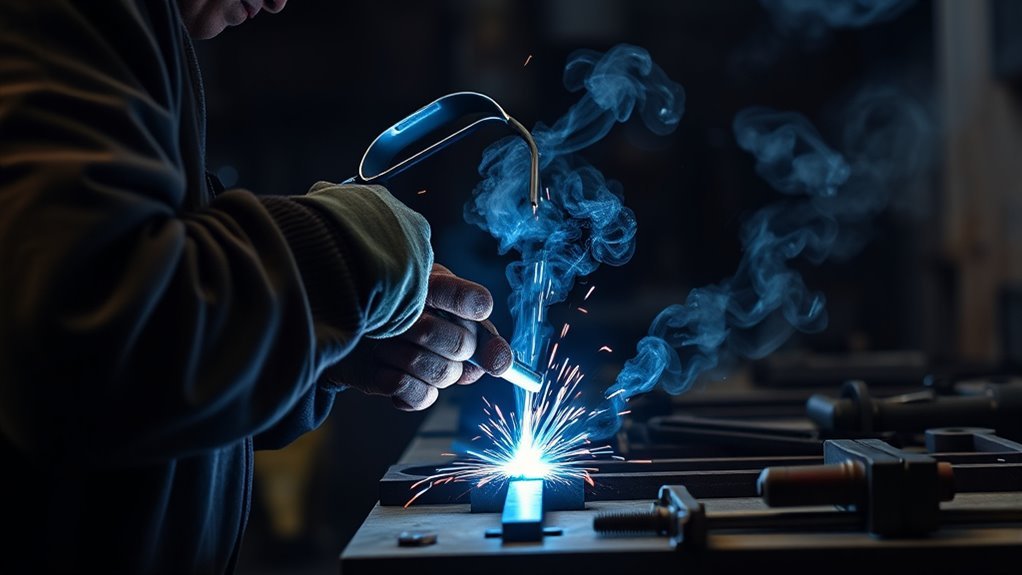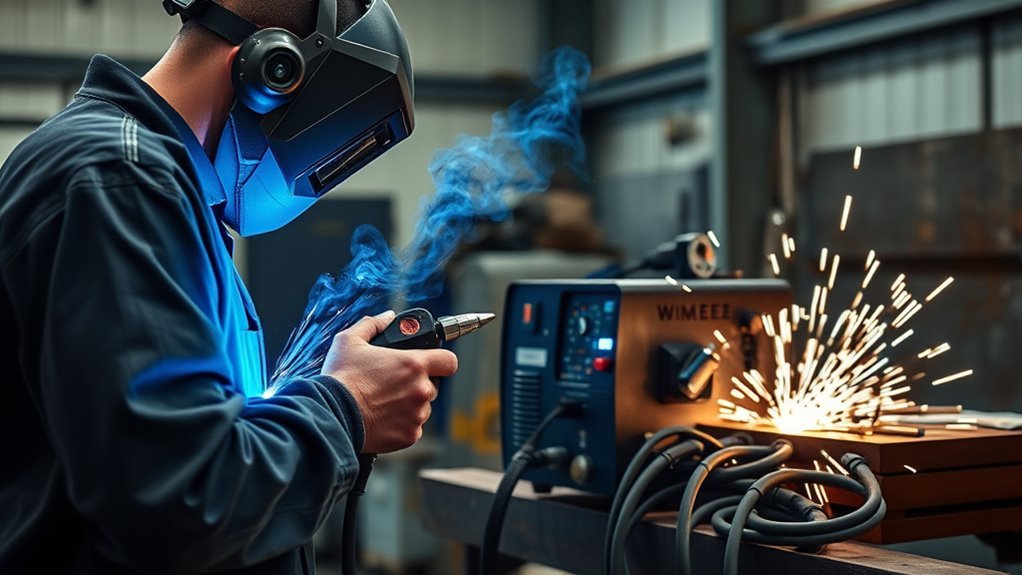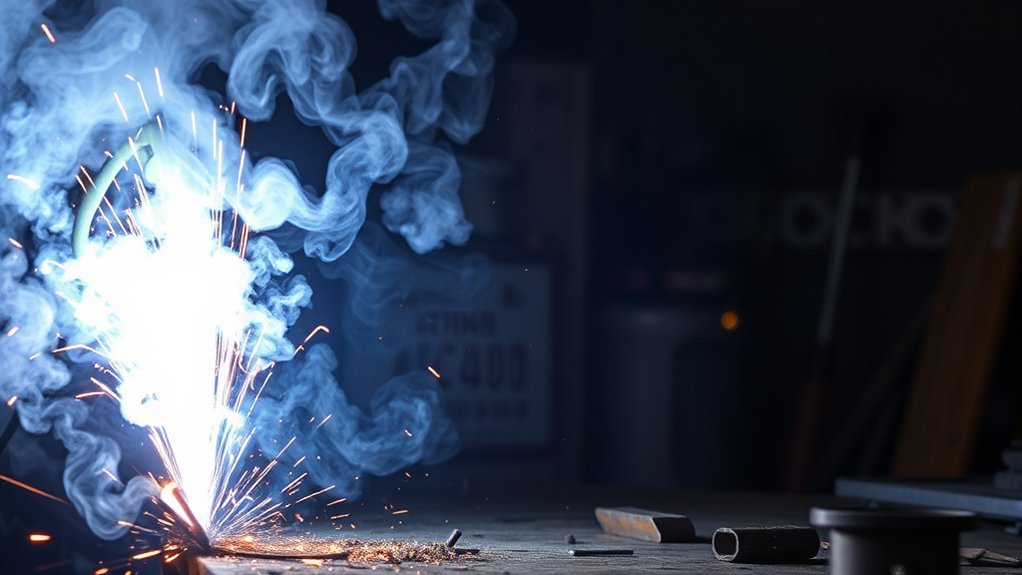
Metal fume fever is a short-term illness that can happen after you breathe freshly formed metal oxide fumes during welding, cutting, brazing, or grinding. It is most often linked with zinc oxide from galvanized steel, but fumes from other metals and coatings can also irritate your lungs. You may feel fine during the job, then develop chills, fever, muscle aches, cough, chest tightness, or a metallic taste later the same day.
Quick Answer
Metal fume fever is a flu-like reaction after inhaling metal oxide fumes, especially zinc oxide from welding galvanized steel. Symptoms often appear within several hours and may include chills, fever, cough, fatigue, muscle aches, and a metallic taste. Leave the area, get fresh air, report the exposure, and seek medical advice if symptoms are serious or worsening.
Key Takeaways
- The biggest welding trigger is zinc oxide fume from galvanized or zinc-coated steel.
- Symptoms can look like the flu, but metal fume fever is tied to a recent fume exposure and is not contagious.
- Fresh air, exposure reporting, and medical guidance matter more than home remedies.
- The best prevention is to remove or avoid toxic coatings, use local exhaust ventilation, position yourself out of the plume, and wear proper respiratory protection when required.
Warning: Do not keep welding through chills, chest tightness, dizziness, shortness of breath, or a metallic taste after fume exposure. Stop work, move to fresh air, and get medical help if symptoms are severe, unusual, or getting worse.
What Is Metal Fume Fever and What Causes It?
Metal fume fever is an acute reaction to inhaled metal oxide fumes. In welding work, the classic cause is zinc oxide created when galvanized steel or other zinc-coated metal is heated. The CDC/NIOSH Pocket Guide for zinc oxide lists inhalation as the exposure route and connects zinc oxide exposure with metal fume fever symptoms such as chills, fever, dry throat, cough, weakness, metallic taste, headache, chest tightness, and breathing difficulty.
Welding fumes can contain more than one hazard at the same time. The metal, filler rod, flux, surface coating, paint, solvent residue, and work location all affect what you breathe. OSHA notes that welding fume can contain metals such as zinc, manganese, chromium, nickel, lead, cadmium, copper, iron, and others, plus gases that may irritate or displace oxygen in enclosed spaces.
The risk is higher when you weld, cut, or grind:
- Galvanized steel, zinc-plated steel, or zinc-rich primer.
- Brass, bronze, or other zinc-containing alloys.
- Painted, plated, or coated metal that has not been identified and cleaned.
- Stainless steel or chromium-containing coatings, which can create separate toxic fume hazards.
- Metal in a garage, tank, trailer, shop corner, or confined area with weak ventilation.
If you need to weld galvanized material, remove the zinc coating from the weld area when the job allows it, use fume extraction close to the arc, and follow your workplace exposure-control plan. For a deeper welding-specific discussion, see this guide on MIG welding galvanized steel.
Identifying Symptoms of Metal Fume Fever
Metal fume fever can feel like a sudden flu-like illness after a welding job. The timing is one of the biggest clues: symptoms usually start after exposure, often later the same day or that evening. You may first notice a sweet or metallic taste, throat dryness, cough, or chest tightness before the chills and fever become obvious.
Common Symptoms Overview
Common symptoms include:
- Fever or feeling feverish.
- Chills, sometimes called “welding shivers.”
- Muscle aches, fatigue, and weakness.
- Headache or general malaise.
- Dry throat, cough, or chest tightness.
- Metallic taste in the mouth.
- Shortness of breath or wheezing in more serious cases.
- Nausea or vomiting in some exposures.
These symptoms are not proof of metal fume fever by themselves. They can overlap with flu, COVID-19, bronchitis, pneumonia, asthma flares, carbon monoxide exposure, and other problems. That is why your recent work history matters.
Duration of Symptoms
Mild cases often improve after exposure stops, but recovery time can vary. Many welders feel better within a day or two, while heavier or repeated exposure can cause symptoms that last longer. If symptoms persist, return after improving, or include breathing trouble, chest pain, confusion, fainting, or bluish lips, treat it as urgent.
| After the job | You may notice a metallic taste, dry throat, cough, or chest tightness. |
| Several hours later | Flu-like symptoms can develop, including fever, chills, aches, headache, and fatigue. |
| Next day or two | Mild symptoms may improve if exposure stops. Worsening symptoms need medical evaluation. |
Distinguishing Factors
Metal fume fever is different from a normal viral illness because it follows a clear exposure pattern. Ask yourself these questions:
- Did you weld, cut, braze, or grind galvanized, coated, plated, or painted metal today?
- Were you working indoors, in a corner, or in a space without strong fume extraction?
- Did the symptoms start after the job rather than before it?
- Did other people doing the same work feel similar symptoms?
- Did you notice a metallic taste, dry throat, cough, or chest tightness soon after the exposure?
If the answer is yes, tell your supervisor or clinician exactly what metal, coating, process, and ventilation setup were involved.
Who Is Most at Risk for Metal Fume Fever?
The highest-risk person is not defined by age or gender. Risk depends on the task, metal, coating, fume level, and airflow. Welders, fabricators, auto repair workers, maintenance techs, pipefitters, construction workers, metal artists, and DIY welders can all be exposed if they heat coated metal without proper controls.
You are at higher risk if you:
- Weld galvanized steel without removing the coating near the weld.
- Use high-heat cutting or grinding on zinc-coated, painted, or plated parts.
- Work with your face directly above the weld plume.
- Rely on open doors or fans instead of local exhaust ventilation.
- Work in a small shop, trailer, tank, crawl space, or other low-airflow area.
- Do not know what coating is on the metal.
- Use a respirator that is not fit-tested, not rated for the hazard, or not part of a workplace respiratory protection program.
Note: Outdoor welding does not automatically make the job safe. Wind direction, body position, coating type, and the amount of fume still matter.
How Is Metal Fume Fever Diagnosed?
A clinician usually starts with your occupational history. The key question is whether your symptoms started after a likely metal fume exposure. Tell the clinician what you were welding or cutting, whether it was galvanized or coated, how long the job lasted, what ventilation was used, and whether you wore respiratory protection.
Occupational History Assessment
Be specific about:
- Base metal: mild steel, galvanized steel, stainless steel, brass, bronze, or unknown scrap.
- Surface coating: zinc, paint, primer, oil, plating, rust treatment, or solvent residue.
- Process: MIG, TIG, stick, flux-core, plasma cutting, oxy-fuel cutting, brazing, or grinding.
- Airflow: local exhaust, fume extractor, open doors, fans, respirator, or none.
- Timing: when the work happened and when symptoms began.
This history helps separate metal fume fever from flu, pneumonia, asthma, chemical pneumonitis, carbon monoxide exposure, and other respiratory problems.
Laboratory Test Evaluation
There is no simple home test for metal fume fever. A clinician may check your temperature, oxygen level, lung sounds, and overall breathing. In some cases, they may order chest imaging, blood work, or other tests to rule out pneumonia, severe inhalation injury, or another illness. Zinc testing may support an exposure review, but diagnosis should not rely on zinc levels alone.
Bring the safety data sheet for the metal, wire, coating, or consumable if you have it. This can help the clinician identify possible fume hazards and decide whether further evaluation is needed.
How Does Metal Fume Fever Compare to the Flu?
Metal fume fever and flu can both cause fever, chills, body aches, headache, cough, and fatigue. The main difference is the trigger. Flu is a contagious respiratory illness caused by influenza viruses, while metal fume fever follows inhalation of metal oxide fumes.
| Factor | Metal Fume Fever | Flu |
| Main trigger | Recent welding, cutting, brazing, or grinding exposure. | Influenza virus exposure. |
| Contagious? | No, but coworkers may be exposed to the same fumes. | Yes. |
| Clue symptom | Metallic taste, dry throat, chest tightness after fume exposure. | Sore throat, runny or stuffy nose, and community spread may be present. |
| What to do | Stop exposure, get fresh air, report it, and seek medical advice for serious symptoms. | Follow medical guidance for viral illness, testing, isolation, and treatment when needed. |
If you are not sure which one it is, do not guess. Tell a medical professional about both the symptoms and the welding exposure.
Proven Methods to Prevent Metal Fume Fever
The best prevention plan follows the same logic used in industrial hygiene: reduce the hazard first, control the fume at the source, then use personal protective equipment when it is needed. PPE should not be your only control.
Products Worth Considering

99.97% Purification Rate: The FumeClear FC100A fume extractor is ideal for small bench soldering. It has a maximum no-load power of 100W and is highly effective at filtering dust particles below 0.3 microns. The purification efficiency far exceeds that of small fume smoker absorbers. Keep your eyes and lungs free from pollution. Note: The FC100A is not suitable for the fume extraction needs of large laser engravers. Please select the FC-2002, FC-2003 and FC-2004 fume extractor models if required

Powerful & Energy-Efficient: Equipped with a high-performance 585W AC motor, it delivers outstanding ventilation performance, achieving an airflow volume of 3198CFM. Quickly and thoroughly eliminate smoke, odors, and hot air.

【Soundproof Chamber with Acoustic + Damping Foam, Exclusive Downward Exhaust】 Most fume extractors have weak suction or loud noise. Zericuf solved this. The all-metal casing houses a soundproof chamber with acoustic and damping foam to trap motor noise—even at 320m³/h, noise stays below 58dB. Exclusive downward-sloping rear vent prevents hot exhaust from blowing onto your desk or floor. This design works with natural convection, dramatically reducing noise. Whether for soldering or laser cutting, Zericuf delivers power without the pain.
Identify and Remove Hazardous Coatings
Before welding or cutting, identify the metal and any coating on it. Do not assume scrap steel is bare steel. Remove paint, solvent residue, oil, primer, galvanizing, or plating from the work area when the job allows it and when removal can be done safely. OSHA advises cleaning welding surfaces of coatings that could create toxic exposure, such as solvent residue and paint.
Use Local Exhaust Ventilation
Local exhaust ventilation is one of the most useful controls because it pulls fumes away from your breathing zone close to the arc. Keep the hood, nozzle, or fume extraction gun close enough to capture the plume without disturbing shielding gas or weld quality.
General ventilation can help lower fume and gas levels, but it may not be enough by itself. A fan that blows fumes past your face can make exposure worse. Position airflow so fumes move away from you and other workers.
Position Yourself Out of the Plume
Your head should not be directly above the weld smoke. Stay upwind when working outdoors, and angle your body so the plume rises away from your breathing zone. This simple habit can reduce how much fume you inhale, especially on small jobs where a fume extractor is not available.
Use Respiratory Protection Correctly
Respirators can help only when they match the hazard, fit your face, and are used under the right program. OSHA notes that respiratory protection may be required when work practices and ventilation do not reduce exposures to safe levels. For zinc oxide, NIOSH lists particulate respirator options for certain exposure ranges, but the right choice depends on measured exposure and workplace rules.
A dust mask grabbed from a shelf is not a full safety plan. For workplace welding, use the required respiratory protection program, fit testing, cartridges or filters, maintenance, and training.
Monitor Air Quality and Train Workers
Air monitoring helps confirm whether fume levels are below exposure limits. This matters because you cannot judge fume exposure by smell or visible smoke alone. Training should cover coated metals, safety data sheets, fume controls, respirator limits, confined spaces, and symptom reporting.
Pro Tip: If you must weld galvanized steel, grind or otherwise remove the zinc coating well beyond the weld zone where safe, use local exhaust at the plume, and keep your face out of the rising smoke.
Confined-Space and Low-Ventilation Work
Confined or enclosed spaces raise the danger because fumes and gases can build up fast. Inert gases such as argon, helium, and carbon dioxide can displace oxygen, and carbon monoxide can form during some hot work. Never weld in a confined space without proper evaluation, ventilation, atmospheric testing, standby procedures, and the required permits or workplace controls.
If you are a DIY welder working in a garage, do not treat a cracked door as a complete ventilation system. Use source capture when possible, move fumes away from your breathing zone, and stop if you smell coatings burning or feel throat, chest, or breathing symptoms.
Products Worth Considering
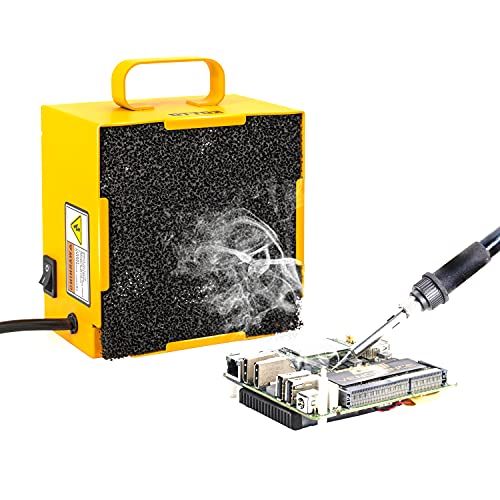
Solder Fume Extractor/Smoke Trap/Smoke Eater/Smoke Filter/Solder Sucker Prevention Absorber DIY Working Extractor Fan for Solder Station.

Fume-Free Workspace in Minutes: The KQZ B1 Fume Extractor equips a high-efficiency centrifugal motor with 168 m³/h airflow. Strong instant suction captures fumes and fine particles. H13 HEPA filter with coal-based activated carbon delivers full purification for a safer working environment

Powerful Suction Capability: The FumeClear FC2002A fume extractor for laser engraver is capable of achieving a significant suction power of up to 260m³/h (153 CFM), effectively absorbing all exhaust gases, powders, wood chips, iron chips, etc. within a 15cm³ range near the hood head. Ideal for various operational scenarios such as 10-40W laser engraving machines, cutting machines, desktop soldering,3D Printing
Steps to Take If You Suspect Metal Fume Fever
If you think you have metal fume fever, act early. The goal is to stop exposure and make sure you are not dealing with a more serious inhalation injury.
- Stop the job and move to fresh air. Do not keep welding to “finish the bead.”
- Tell your supervisor or safety lead. Report the metal, coating, process, location, ventilation, and symptoms.
- Check for serious symptoms. Shortness of breath, chest pain, confusion, fainting, blue lips, severe weakness, or worsening cough needs urgent medical attention.
- Contact a medical professional. Explain that symptoms began after welding or cutting coated metal.
- Rest and hydrate if symptoms are mild. This is supportive care, not a substitute for evaluation if breathing symptoms are present.
- Do not return to the same setup unchanged. Fix the exposure source before welding again.
Warning: Call emergency services or seek urgent care if you have trouble breathing, chest pain, fainting, confusion, persistent dizziness, blue lips, severe weakness, or symptoms that worsen after leaving the fume area.
What to Tell Your Doctor or Clinician
Bring clear exposure details. A short, accurate timeline helps more than a vague “I welded earlier.” Include:
- The time you started and stopped welding, cutting, brazing, or grinding.
- The metal and coating, such as galvanized steel, zinc primer, paint, stainless steel, or unknown scrap.
- The welding process and consumables used.
- Whether you worked indoors, outdoors, or in a confined area.
- What ventilation, fume extraction, or respirator you used.
- When each symptom started and whether it is improving or worsening.
This information helps the clinician decide whether to evaluate for metal fume fever, flu, pneumonia, asthma, carbon monoxide exposure, or another condition.
Frequently Asked Questions
How do you get rid of welding fever?
Stop the exposure, move to fresh air, rest, and drink fluids if you can. Seek medical advice if you have breathing trouble, chest pain, severe weakness, persistent fever, confusion, or symptoms that do not improve. Do not rely on home remedies while continuing to weld through symptoms.
How long does welders’ fever last?
Many mild cases improve within a day or two after exposure stops, but the timeline can vary. Heavier exposure, repeated exposure, asthma, lung disease, or another illness can change recovery. Get medical help if symptoms are severe, persistent, or worsening.
How do you prevent inhaling welding fumes?
Identify the metal and coating, clean hazardous coatings when safe, use local exhaust ventilation close to the plume, keep your head out of the smoke, improve general ventilation, and use proper respiratory protection when ventilation and work practices do not reduce exposure enough.
Can welding give you a fever?
Yes. Welding can lead to fever-like symptoms when you inhale certain metal oxide fumes, especially zinc oxide from galvanized steel. Fever can also come from flu or another infection, so mention your welding exposure when you talk with a clinician.
Is metal fume fever contagious?
No. Metal fume fever is linked to inhaled fumes, not a virus. However, several workers can get symptoms after the same poorly controlled exposure, so shared symptoms in a crew should trigger an exposure review.
Can you weld galvanized steel safely?
It can be done only with proper controls. Remove the zinc coating from the weld area where safe, use fume extraction, keep your face out of the plume, avoid confined spaces unless properly controlled, and use required respiratory protection. If you cannot control the fumes, do not weld it.
Conclusion
Metal fume fever is preventable. The safest approach is to know what metal and coating you are heating, control fumes at the source, keep your breathing zone clear, and use the right respiratory protection when needed. If symptoms appear after welding or cutting, do not push through the job. Stop exposure, get fresh air, report what happened, and seek medical guidance when symptoms are serious or do not improve.
Sources
- OSHA — Controlling Hazardous Fume and Gases during Welding — supports welding fume hazards, cleaning coatings, ventilation, local exhaust, confined-space warnings, and respiratory protection guidance.
- CDC/NIOSH Pocket Guide — Zinc Oxide — supports zinc oxide exposure route, symptoms, exposure limits, and respirator recommendations.
- CDC/NIOSH — Welding Fumes and Manganese — supports welding fume composition, manganese concerns, and confined-space exposure risk.
- PubMed — Inorganic Dust Pneumonias: The Metal-Related Parenchymal Disorders — supports medical background on inhaled metal fumes and metal fume fever.
- CDC — Signs and Symptoms of Flu — supports the flu comparison and contagious viral illness distinction.