Disclosure: As an Amazon Associate, we earn from qualifying purchases. If you click a link on this page and make a purchase, we may receive a small commission at no extra cost to you.
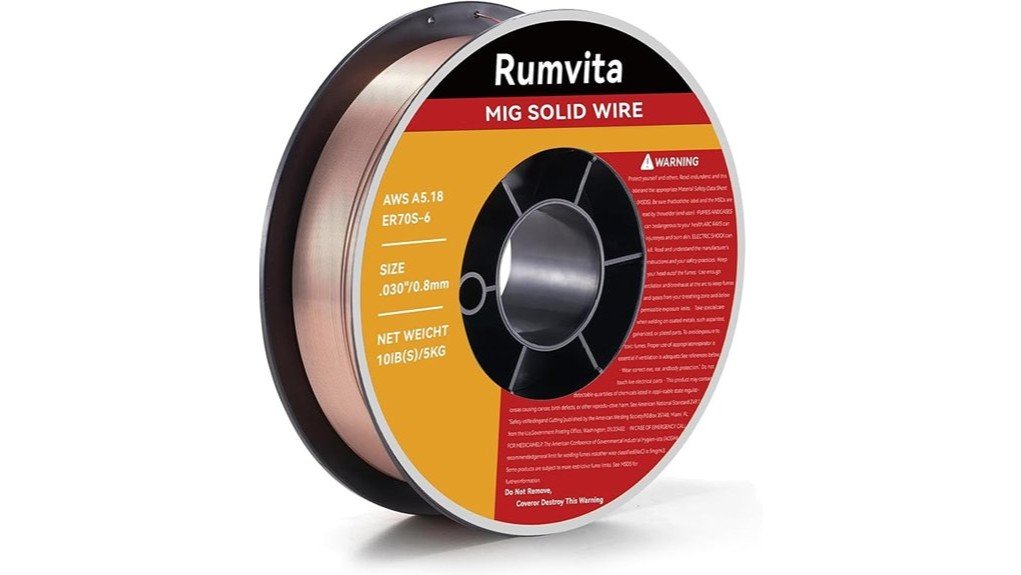
Clean mild steel welds depend on more than your welder settings. The wire diameter, shielding gas, base-metal condition, and storage habits all affect arc stability, spatter, and bead shape. ER70S-6 MIG welding wire is a common choice when you want a copper-coated mild steel wire that feeds smoothly and handles light mill scale better than basic solid wire options. This review helps you decide where it fits, where it falls short, and what to check before you buy.
Quick Verdict
Rating: 8/10
Best For: Mild steel fabrication, shop repairs, automotive work, and users who want stable solid-wire MIG performance
Bottom Line: ER70S-6 MIG welding wire is a strong everyday pick for mild steel because its manganese and silicon content supports smoother puddle flow and lower spatter. It is not a shortcut around proper setup, and it still needs clean storage, the right gas, and correct machine tuning.
| Specification | Detail |
|---|---|
| Product Name | ER70S-6 MIG Welding Wire |
| Product Type | Solid MIG welding wire for gas metal arc welding |
| Material | Copper-coated mild steel |
| Diameter | .030 in (0.8 mm) |
| AWS Classification | AWS A5.18 ER70S-6 |
| Key Alloy Additions | Higher manganese and silicon content than basic mild steel wire types |
| Shielding Gas | 100% CO2 or an argon/CO2 mix |
| Best Use | Mild steel fabrication, maintenance, repair, brackets, frames, and general shop work |
| Not For | Aluminum, stainless steel-specific jobs, or welding without shielding gas |
| Storage Note | Store dry and protected from moisture to reduce rust and feed problems |
What Is the ER70S-6 MIG Welding Wire?
ER70S-6 MIG welding wire is a solid mild steel filler wire for gas-shielded MIG welding. The copper coating helps with feeding and electrical contact, while the wire classification is built around mild steel work rather than aluminum or stainless applications.
The main appeal is the ER70S-6 chemistry. Its higher manganese and silicon content helps the puddle wet out and can improve results on mild steel that has light scale or minor surface contamination. You still need reasonable surface prep, but this wire is more forgiving than a very basic solid wire when the workpiece is not perfectly bright and clean.
The .030 in (0.8 mm) diameter makes it a practical size for many home shops, repair benches, and light fabrication setups. It gives you a balance between thin-gauge control and enough deposition for common mild steel projects.
Who Should Buy It?
Best For
- Mild steel fabrication, brackets, frames, and shop repairs
- Welders using 100% CO2 or argon/CO2 shielding gas
- Users who want smoother beads and less cleanup than basic solid wire may provide
Skip If
- You need aluminum or stainless filler wire
- You want a self-shielded wire for windy outdoor welding without gas
- Your welder, drive rolls, liner, or contact tip do not support .030 in wire
Before You Buy: ER70S-6 is a solid wire, so it needs shielding gas. For exposed outdoor work where wind can disturb the gas shield, a self-shielded flux-cored wire may be the better choice.
Key Performance Features
Arc Stability and Weld Control
This wire is designed to run with a steady arc when your voltage, wire feed speed, polarity, and gas flow are set correctly. That matters on longer beads because a stable arc helps you keep bead width, travel speed, and puddle control more consistent.
The .030 in diameter also gives many small and mid-size MIG machines a useful middle ground. It is easier to control than heavier wire on thinner material, but it still deposits enough metal for everyday mild steel repairs.
Low Spatter and Cleaner Beads
The higher manganese and silicon content helps deoxidize the weld puddle and improve flow on mild steel. In real use, that can mean less spatter, smoother toe blending, and less grinding after the weld.
It will not fix poor setup. Too much stickout, dirty steel, poor gas coverage, or the wrong wire speed can still create spatter and porosity. Treat the wire as part of the setup, not the whole solution.
Feed Consistency and Copper Coating
The copper-coated surface helps the wire feed through the liner and contact tip with fewer interruptions when the spool stays clean and dry. Smooth feeding matters because uneven wire delivery can make the arc sound harsh and leave an inconsistent bead.
Keep the drive-roll tension firm enough to feed without crushing the wire. A liner full of rust dust or debris can cancel out the benefit of good wire, so maintenance still matters.
Shielding Gas Compatibility
ER70S-6 is intended for gas-shielded MIG welding, and your gas choice changes the weld feel. The article-supported options are 100% CO2 and argon/CO2 blends.
- 100% CO2: Often chosen for stronger penetration and lower gas cost, but it can feel harsher and may create more spatter.
- 75/25 argon/CO2: A common choice for smoother short-circuit MIG welding on mild steel.
- 80/20 argon/CO2: Another mild steel option when you want a clean arc and good bead appearance.
Pro Tip: If you are setting up a new spool, run a short test bead on scrap steel first. Adjust wire speed and voltage until the arc sounds steady before welding the actual part.
Setup Tips Before First Use
Match the contact tip, drive roll, and machine settings to .030 in wire before you start. A mismatched tip can cause burnback or poor electrical contact, while incorrect drive-roll tension can flatten the wire or let it slip.
Clean the base metal enough to remove heavy rust, oil, paint, and grease from the weld area. ER70S-6 handles light surface scale better than some wires, but it cannot overcome contamination that blocks fusion or creates gas pockets.
Check gas flow at the nozzle and avoid welding in moving air. Even a good argon/CO2 mix can fail if a fan, open door, or outdoor breeze pushes the shield away from the puddle.
Compatibility and Safety Notes
This wire belongs with mild steel MIG welding setups that use shielding gas. It is not the right filler for aluminum, and it should not replace stainless filler when corrosion resistance or a stainless match matters.
Use proper welding protection, including a welding helmet, gloves, clothing that covers exposed skin, and ventilation suitable for the material you are welding. Grinding coatings off the joint area can reduce contamination, but painted, galvanized, or plated metal may still create hazardous fumes.
Store the spool in a dry area after use. Rusty wire can feed poorly, contaminate the weld, and damage liners over time. If the wire looks corroded or drags through the liner, replace it before working on important parts.
How It Performs in Real Use
General Fabrication Work
For brackets, stands, light frames, and mild steel assemblies, ER70S-6 gives you predictable bead formation when your machine is tuned. It works best when you prep the joint, keep the torch angle steady, and maintain a consistent travel speed.
Automotive and Equipment Repairs
The .030 in diameter suits many repair tasks where you need controlled heat and consistent feeding. It can help with mild steel patch work, tabs, and non-critical repair jobs, but structural or safety-critical repairs should follow the correct welding procedure for the part.
Multi-Pass Welds on Thicker Mild Steel
The wire can support multi-pass work when the joint design and machine capacity are appropriate. Clean each pass before adding the next one so trapped spatter, oxide, or slag-like residue does not weaken the weld.
Controlled Outdoor or On-Site Work
This wire can work outside only when you protect the gas shield from wind. If you cannot block drafts, flux-cored self-shielded wire may give you more reliable protection than solid ER70S-6.
Pros and Cons
Pros
- ER70S-6 chemistry supports smoother puddle flow on mild steel
- Higher manganese and silicon content can reduce spatter and cleanup
- .030 in diameter fits many common MIG welding setups
- Works with 100% CO2 or argon/CO2 shielding gas
- Copper-coated surface supports smoother feeding when stored properly
Cons
- Requires shielding gas, so it is not ideal for unprotected windy work
- Not suitable for aluminum or stainless-specific welding jobs
- Performance still depends on machine tuning, prep, storage, and technique
Is It Worth the Price?
ER70S-6 welding wire is worth considering if you weld mild steel often and want a forgiving solid wire for everyday use. Its value comes from stable feeding, lower cleanup needs, and broad usefulness across repair and fabrication work.
The best value depends on spool size, brand quality, and how well the wire stays protected during shipping and storage. It is not the best fit if you need a gasless setup, a specialty alloy, or a wire for non-steel materials.
How It Compares to Alternatives
Compared with ER70S-3, ER70S-6 is usually the more forgiving choice when mild steel has light mill scale or less-than-perfect surface prep. Compared with ER70S-2, it is often chosen for general MIG work rather than more specialized deoxidizer needs.
If you weld outside often, compare this solid wire with self-shielded flux-cored options such as E71T-11. The ER70S-6 wire makes the most sense when you have shielding gas, controlled airflow, and a mild steel project that needs a clean bead.
Frequently Asked Questions
Can ER70S-6 MIG welding wire be used outdoors?
Yes, but only when you can protect the shielding gas from wind. If airflow pushes the gas away from the puddle, you can get porosity, spatter, and weak-looking welds.
What shielding gas works best with ER70S-6?
A 75/25 argon/CO2 mix is a common starting point for smoother short-circuit MIG welding on mild steel. 100% CO2 can also work, but it may feel harsher and create more spatter.
Is .030 in ER70S-6 good for home MIG welders?
Yes, .030 in wire is a practical size for many home and light-shop MIG welders. Confirm your machine, drive rolls, liner, and contact tips support .030 in wire before ordering.
Can this wire weld aluminum?
No. ER70S-6 is a mild steel wire, so aluminum requires the correct aluminum filler wire, gun setup, and shielding gas for that material.
Does ER70S-6 reduce spatter?
It can help reduce spatter because the manganese and silicon support cleaner puddle behavior on mild steel. Setup still matters, so check voltage, wire speed, gas coverage, stickout, and workpiece cleanliness.
How should you store MIG welding wire?
Store the spool in a dry, low-humidity area and keep it covered when not in use. Rust or dust on the wire can cause feeding problems and contaminate the weld.
Who should skip ER70S-6 solid wire?
Skip it if you need gasless welding, aluminum welding, or stainless-specific filler. You should also skip it if your welder cannot run .030 in wire correctly.
The Bottom Line
ER70S-6 MIG welding wire is a dependable choice for mild steel work when you want a stable arc, smoother bead flow, and less cleanup than basic solid wire may provide. It is best for gas-shielded shop welding, repairs, and fabrication where your machine supports .030 in wire.
Skip it if you need aluminum, stainless-specific filler, or a gasless wire for windy outdoor jobs. For the right mild steel setup, the 8/10 verdict fits because the wire is useful and forgiving, but not a substitute for good prep, correct gas coverage, and proper tuning.