Stop guessing when matching plasma amperage to thickness. Use a standard-driven approach instead. Map amps to inches based on five variables: material, cut speed, duty cycle, pierce method, and consumables. Typical air plasma ranges cover 1/4″ to 1″ with 45 to 105 A, but mild steel, stainless, and aluminum each need specific adjustments. This guide covers exact ranges, pierce vs. edge starts, and setup choices to tighten kerf and cut quality, before you waste consumables.
Quick Answer
- Match amperage to material thickness: 45 A for 1/4″, 65 A for 3/8″, 85 A for 1/2″, and 105 A for 3/4″ mild steel.
- Five variables set your real cutting limit: amperage, process gas, torch height control, air quality, and material condition.
- Use air plasma for mild steel. Switch to nitrogen for stainless and aluminum to cut dross and improve edge color.
- Always match tip size to your amperage setting. A mismatched tip causes arc wander or blows out the nozzle.
- Pierce at 1.5 to 2x cutting height on thick plate. Edge-start on thin stock to protect consumables.
The Five Variables That Determine Thickness
Material thickness is often treated as the same thing as amperage, but five variables together set your real cutting limit:
- Output Amperage: The arc energy density.
- Process Gas Selection: Air for general use; Oxygen or Nitrogen for industrial multi-gas systems.
- Torch Height Control (THC): Arc-voltage-based standoff control.
- Air Supply Quality: Dry, oil-free air is critical for consumable life.
- Material Condition: Alloy type, mill scale, and coatings.
Match amperage to thickness to maintain plasma efficiency. Higher current increases energy density for thicker sections, but you have to coordinate cutting technique with gas choice. Air is the most versatile standard gas. If your machine supports it, Oxygen improves mild-steel speed, while Nitrogen stabilizes stainless and aluminum.
Keep THC within the specified arc-voltage window to control kerf geometry and compensate for plate warp. Make sure your air is dry and oil-free. Moisture and oil accelerate nozzle wear and destabilize the jet.
Quick Reference: Typical Air Plasma Ranges
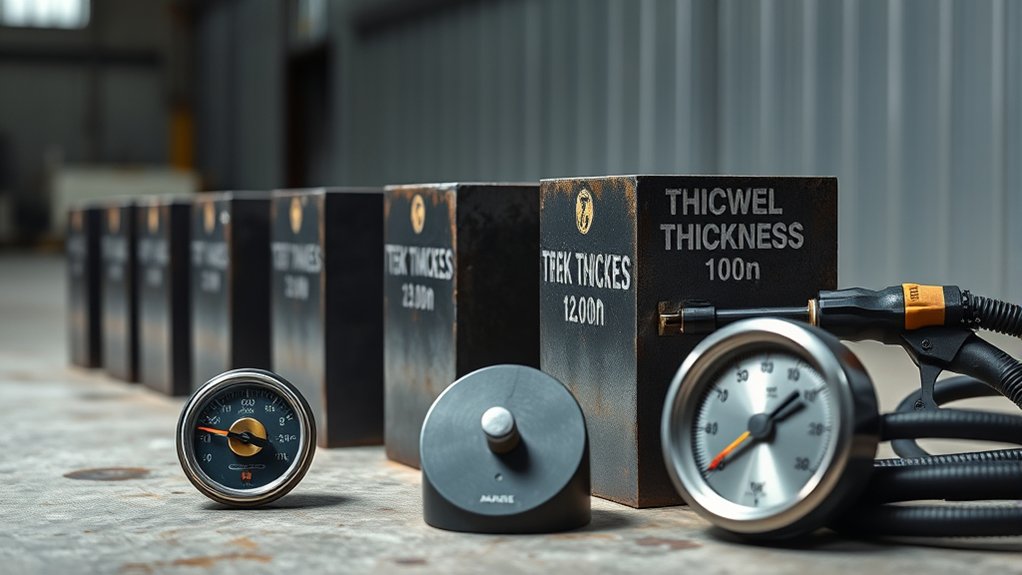
Match your power class to thickness using these typical air plasma ranges.
| Material Thickness | Amperage (Mild Steel) | Approx. Speed (IPM) | Cut Quality |
|---|---|---|---|
| 26 ga – 10 ga | 30 – 45 A | 150+ | Excellent |
| 1/4″ (6 mm) | 45 A | 60 – 80 | Excellent |
| 3/8″ (10 mm) | 65 A | 35 – 45 | Good |
| 1/2″ (12 mm) | 85 A | 20 – 30 | Good |
| 3/4″ (19 mm) | 105 A | 10 – 15 | Rough (Sever) |
Know the difference between quality cut ratings and sever limits. Quality prioritizes edge finish and speed. Sever lets you cut thicker metal, but at slower speeds with rougher edges.
Power Class Ranges
Power classes generally run from 45 A to 130 A. Base your amperage selection on the target material and thickness.
For mild steel, 45 to 65 A handles 1/4 to 1/2 inch with efficient travel speeds and clean kerfs. Move up to 105 to 130 A for up to 1 inch, but expect slower speeds and tighter pierce limits.
Stainless cuts stay viable with air, but edge quality drops as amperage rises. Use the right consumables (tips or cartridges) to maintain edge integrity. Aluminum usually needs higher amperage to offset its high thermal conductivity.
Gas Choice Impacts
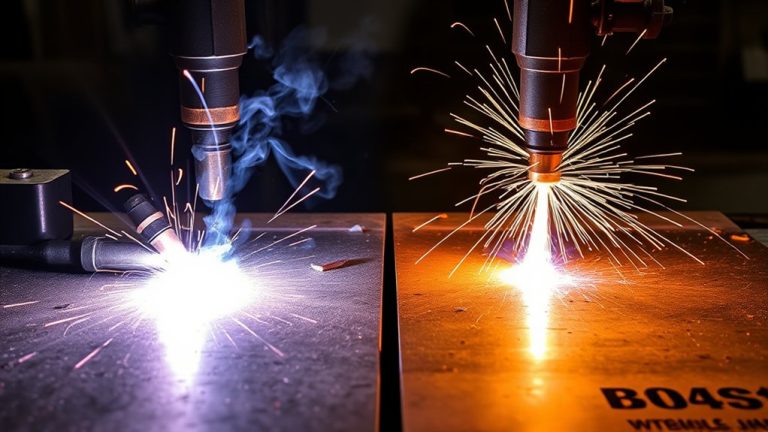
With your amperage class set, gas selection defines cut quality. For a deeper look at how plasma gases affect performance, see Hypertherm’s plasma gas selection overview.
- Shop Air: Economical and standard for most mild steel jobs. Expect acceptable edges and moderate speed.
- Oxygen (O2): Used in industrial systems for faster travel and cleaner kerfs on mild steel.
- Nitrogen (N2): Preferred for stainless and aluminum to improve edge appearance and limit oxidation and dross.
Note: Most handheld units run on shop air only. Check your machine manual before using specialty gases.
Quality vs. Sever Limits
A plasma torch can sever beyond its rated thickness, but quality drops as thickness increases.
For mild steel, typical air plasma settings use 45 to 65 A for 1/4″ to 1/2″ and 85 to 105 A for 3/4″ to 1″. These maintain acceptable kerf geometry and minimal dross. Pushing to sever limits produces wider kerfs, more taper, heavier dross, and heat tint.
Material-Specific Guidance: Mild Steel (A36 and Similar)
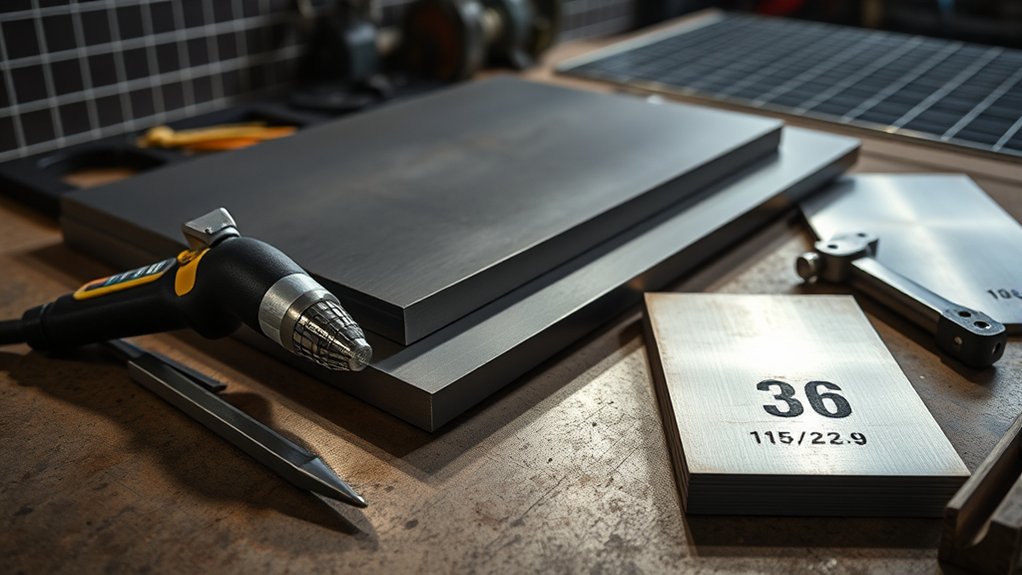
Mild steel (A36) responds predictably to amperage scaling. Match current to thickness for clean kerfs and efficient cycle times.
Match amperage to steel thickness for clean kerfs, controlled dross, and efficient, predictable cutting.
For 1/4″ to 1/2″, run 45 to 65 A to balance edge quality and cost. Step up to 65 to 85 A for 1/2″ to 3/4″ to hold squareness and minimize secondary grinding. For 3/4″ to 1″, use 85 to 105 A. At 1″, 105 to 130 A works, but feed rates drop sharply.
- Verify torch rating, duty cycle, and consumable class at the selected current.
- Tune arc voltage and cut height. Maintain 0.06 to 0.08 in standoff for consistent kerf geometry.
- Calibrate lead-in length and pierce delay to match thickness.
Material-Specific Guidance: Stainless Steel (304/316)
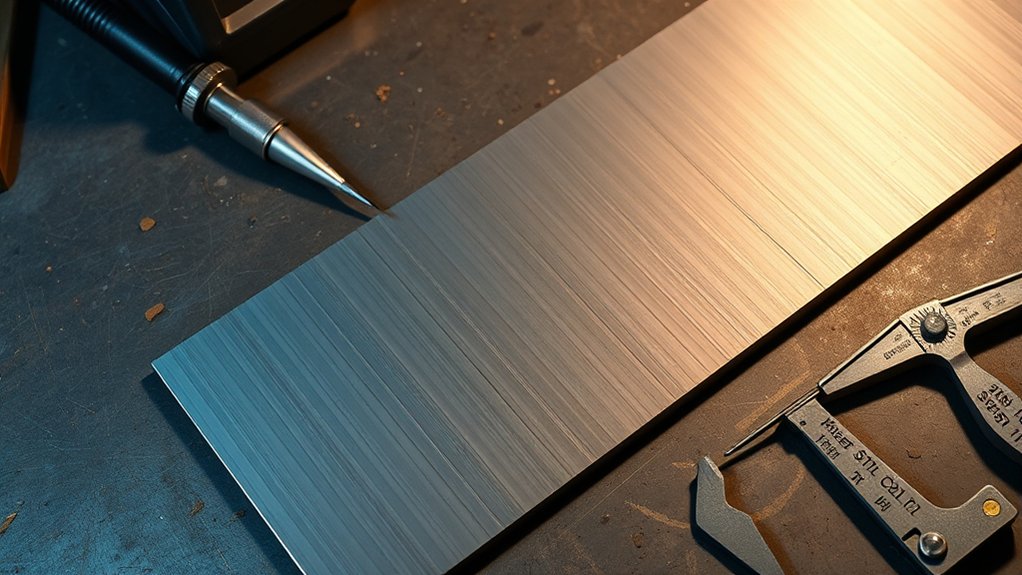
For 304/316 stainless, run 45 A at 1/4 in and up to about 85 A at 3/4 in with air plasma. Switching to N2 or specialty mixes measurably improves edge color and reduces dross.
Air cuts leave a dark, oxidized edge (nitride tint). N2-based processes produce cleaner, silver edges with less secondary cleanup.
Air vs. Nitrogen
Air plasma cuts 304/316 reliably, but it leaves a hard oxidized edge. Nitrogen-based processes improve edge color and cut cleanup time.
If you need a standards-grade appearance on stainless, nitrogen becomes the right call beyond 1/4 in. Pair gas choice with amperage: run 45 to 65 A for 1/4 to 1/2 in, and 65 to 85 A for 1/2 to 3/4 in.
Edge Quality and Dross
Nitrogen’s edge-color advantage over air ties directly to cut quality. You will see cleaner kerfs and lower heat tint when running N2 or specialty mixes. For 1/8″ to 1/4″, target 45 to 65 A. Step to 85 A or higher as thickness increases. Keep a consistent standoff to stabilize the arc.
| Parameter | Stainless 304/316 Guidance |
|---|---|
| Gas | N2 or specialty mix for edge enhancement |
| Amperage | 45 to 65 A (1/8″ to 1/4″), 85 A or higher for thicker |
| Standoff | Constant, per torch spec, to limit heat distortion |
| Maintenance | Replace consumables regularly to sustain cut quality |
Material-Specific Guidance: Aluminum (5052/6061)
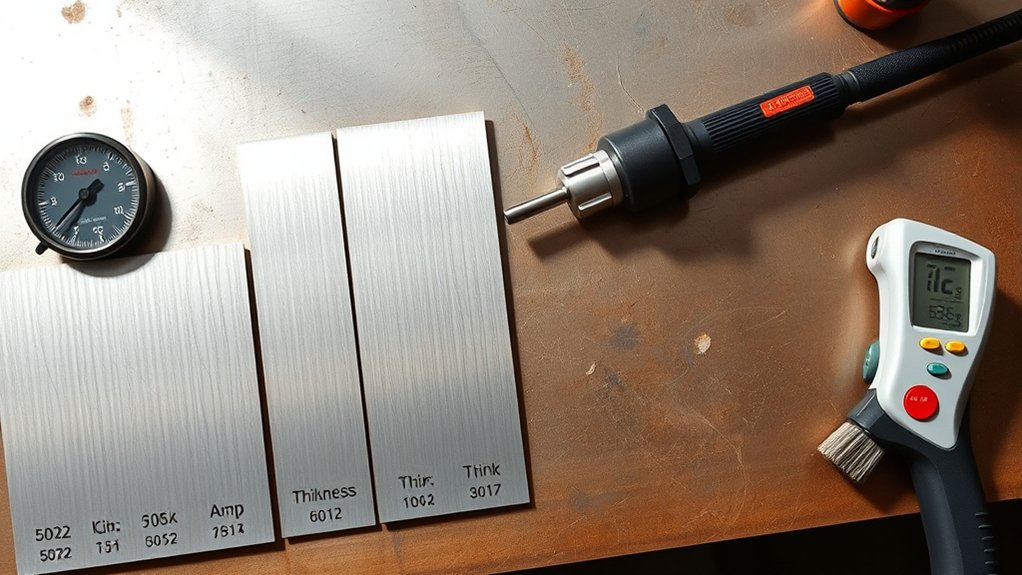
Most aluminum jobs, especially 5052 and 6061, cut cleanly with air plasma. Thicker plate benefits from nitrogen (N2) to tighten the edge and reduce oxide buildup.
Match amperage to thickness to maintain a consistent edge finish. For 5052, target 45 to 65 A for 1/4″ to 1/2″ and 65 to 85 A for 1/2″ to 3/4″. For 6061, step up to 85 to 105 A for 3/4″ to 1″.
Set pierce delay conservatively. Aluminum’s high thermal conductivity punishes over-delays with excessive hole size and spatter.
Choosing a Power Class for Your Work Mix
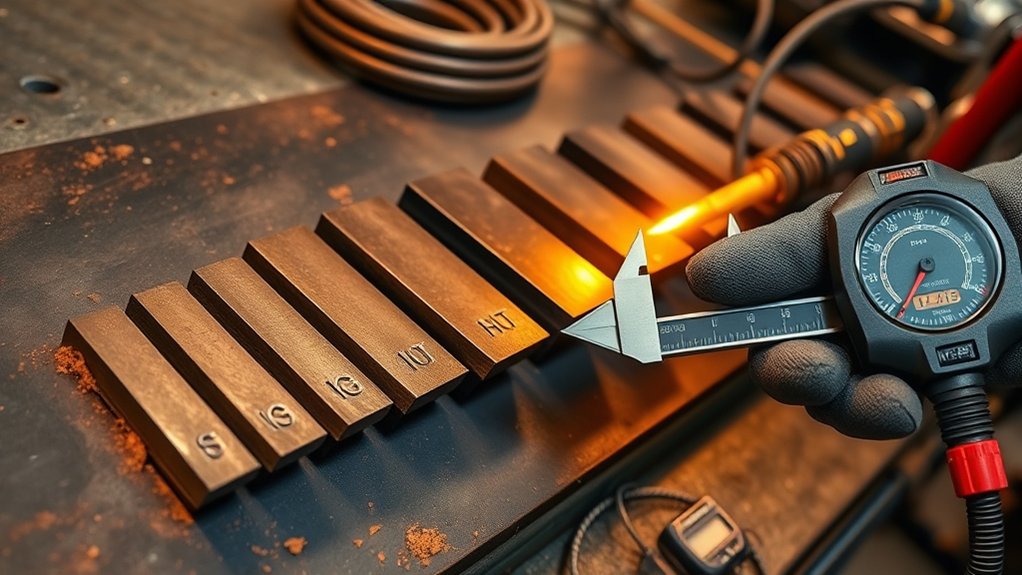
Start with your maximum routine thickness, not the occasional outlier. Pick a system whose rated cut matches that thickness, then move one power class up. This power selection buffer stabilizes arc energy and improves cutting efficiency.
Use common classes (45 A, 65 A, 85 A, 105 A) as discrete steps. If you routinely cut 3/16 to 1/4 in, a 45 to 65 A unit is appropriate. For 3/8 to 1/2 in, consider 65 to 85 A.
Piercing vs. Edge-Starting
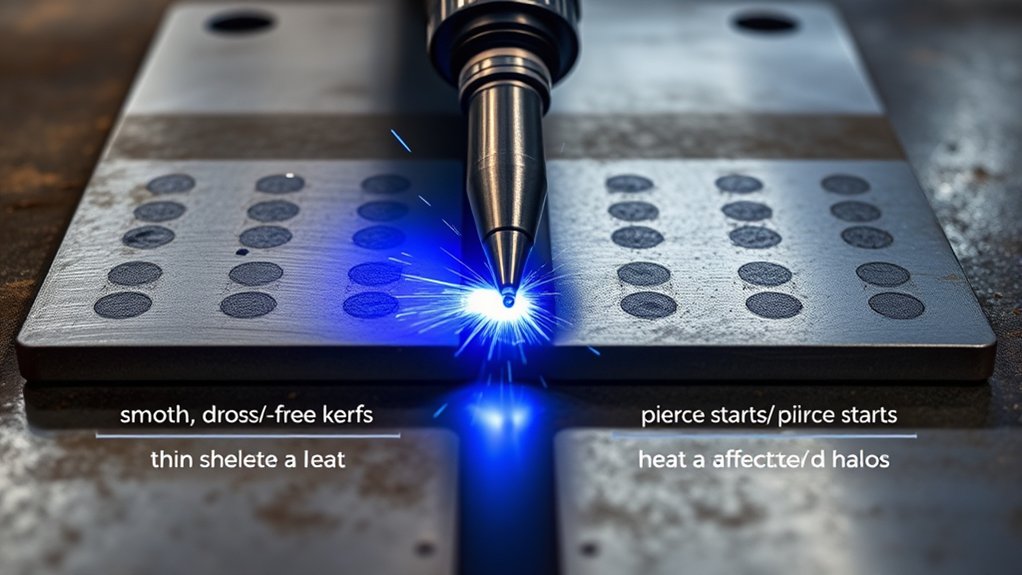
Piercing concentrates heat at a single point, which works for thick sections but stresses consumables. Edge-starting spreads that heat load, making it the better choice for thin stock.
Piercing: Best for internal features or thick plate. Set pierce height to 1.5 to 2.0x cutting height to deflect spatter away from the nozzle.
Edge-Starting: Best for thin stock. Start at the edge of the material to reduce thermal load and consumable wear.
Tip Size, Kerf Width, and Air Settings
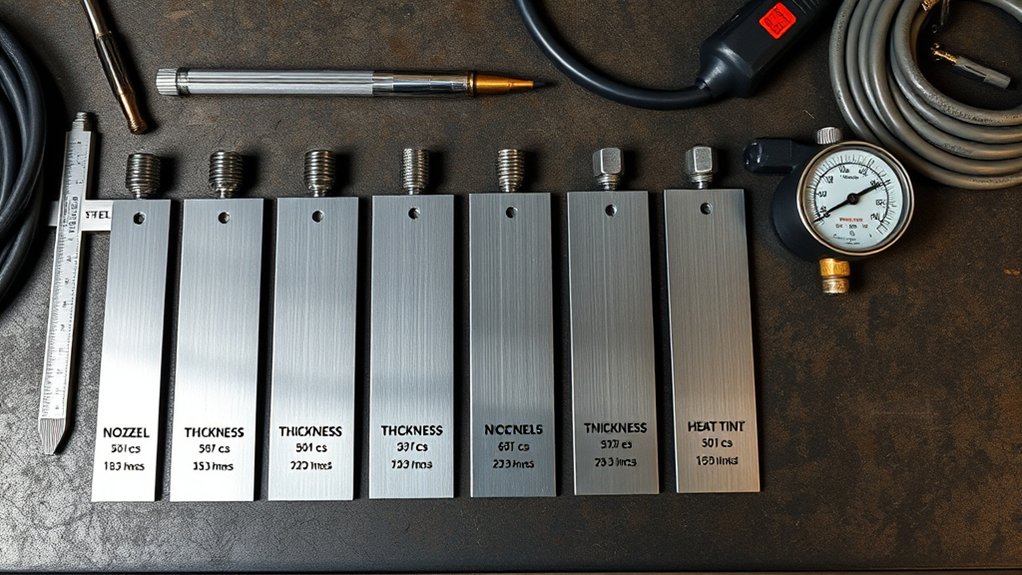
Tip size (or cartridge size) determines how arc energy translates into cut quality. Treat tip selection as an amperage-matched spec: larger orifices support higher current and airflow.
A 45 A machine requires a 45 A tip or cartridge. Using a 60 A tip at 45 A will cause the arc to wander. Using a 30 A tip at 45 A will blow out the nozzle.
Match air pressure to the tip rating. Run 55 to 60 psi for lower amperage and 65 to 75 psi for higher amperage, or follow the machine’s Auto-Set indicators.
Setup Details That Move the Needle
Small setup choices, including amperage, gas selection, standoff, and air pressure, affect cut quality more than raw power output.
- Mild Steel: 45 to 65 A for 1/4″ to 1/2″.
- Stainless: 65 to 85 A at 1/2″ to 3/4″ (use N2 if possible).
- Aluminum: 45 to 65 A at 1/4″ to 1/2″.
Set pressure at the torch under flow, not just at the compressor. Low pressure causes the torch to sputter. High pressure prevents the arc from transferring.
Practical Thickness Targets by Shop Type
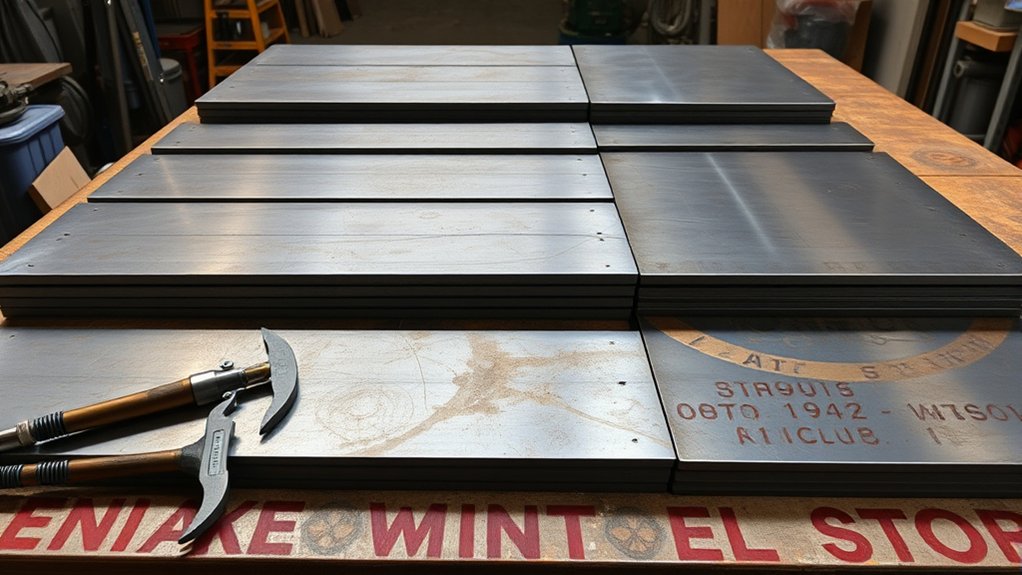
Different shops have different amperage needs.
- Automotive Body Shops: 30 to 45 A for sheet metal to minimize heat distortion.
- General Fabrication: 45 to 65 A for 1/4″ to 1/2″ mild steel brackets and mounting plates.
- Heavy Industry: 105 to 130 A for structural sections over 1″.
Frequently Asked Questions
How Do Duty Cycle and Amperage Affect Continuous Production Cutting?
Duty cycle works like an engine’s redline. A 60% duty cycle means you can cut for 6 minutes out of 10 at rated power. Exceeding this triggers thermal shutdown. For production work, choose a machine with a higher amperage rating than you actually need. That way you can run at 100% duty cycle on thinner materials without overheating.
What Safety Gear Is Essential When Increasing Amperage for Thicker Materials?
Higher amperage produces brighter UV radiation. Use cutting goggles or a welding helmet with Shade 5 (up to 40 A) or Shade 8 (up to 80 A). Always wear FR clothing, leather gloves, and hearing protection. Plasma cutting regularly exceeds 100 dB. For more on protective equipment, see Lincoln Electric’s plasma cutting basics guide.
How Does Input Power Voltage (120/240V) Limit Maximum Amperage Settings?
Input voltage sets available power. On a 120V circuit, most machines cap at 20 to 30 A output, enough to cut roughly 1/4″. You need 240V input to unlock the full 45 to 60+ A capability for thicker plate.
Can CNC Cutting Speeds Be Estimated From Amperage and Thickness Charts?
Yes. Use the manufacturer’s cut charts as a starting point. Then adjust speed based on your specific setup. Slow down if sparks trail behind the cut (drag lines). Speed up if dross accumulates on the bottom edge.
How Do Altitude or Humidity Changes Affect Plasma Arc Performance?
High altitude reduces air density, which lowers cooling efficiency. You may need to derate the machine. High humidity introduces moisture into the air line and rapidly destroys consumables. In humid climates, use a refrigerated air dryer or desiccant system.
Conclusion
Match amperage to thickness, material, and start type, and you will hold tight tolerances. Dial in tip size (or cartridge), airflow, and standoff to spec. Keep pierce limits and edge-start limits separate, and set realistic targets for your shop. When you follow the data, your arc cuts faster, squarer, and cleaner.